Home

A New Eating Disorder, Orthorexia, Is On The Rise, According To Therapists

Leave a comment

Click the link below the picture

.

You may not have heard of orthorexia, but you’ve probably seen it. It’s an eating disorder that’s characterized as an obsession with only consuming “healthy” foods—and it’s on the rise, says Sadi Fox, PhD, a licensed psychotherapist who specializes in eating disorders.

We all have that friend who talks a little too much about things like “clean eating,” or that random food group they’re entirely avoiding in pursuit of better health. Think: carbs, sugar, gluten (provided they don’t have an allergy). The problem? Orthorexia can result in nutritional deficiencies, mental health challenges, and social isolation. It can also be a “slippery slope” for other disordered behaviors, Fox says.

Still, the signs of orthorexia can be very difficult to identify. Since eating healthy is generally perceived as a good thing, people with orthorexia might be praised for their disorder, not know they have a problem, and not end up getting the help they need—which is the case for some patients who work with Fox. “A lot of people are just like, ‘Whoa, I didn’t even realize how deep [into my eating disorder] I was,’” she says.

When it comes to this sneaky mental health condition, signs and symptoms may be hard to spot. Here’s what experts want you to know about orthorexia.

Meet the experts: Sadi Fox, PhD, is a psychotherapist specializing in eating disorders at Flourish Psychology, a Brooklyn-based private psychotherapy practice. Kelli Rugless, PsyD, is a clinical psychologist and eating disorder specialist at the virtual talk therapy practice Flourish Psychology. Emily Van Eck, RD, is a dietitian and intuitive eating counselor at Emily Van Eck Nutrition.

What is orthorexia?

Put simply, orthorexia is when eating healthy goes from a goal to an obsession, skewing what “healthy” even means in the process.

With orthorexia, a person becomes so focused on avoiding foods they think are harmful that they end up depriving their body of the nutrition it needs, says Kelli Rugless, PsyD, a clinical psychologist and eating disorder specialist at the private therapy practice Flourish Psychology. It’s important to note that the foods people avoid aren’t always based on good, accurate information. People with orthorexia might make choices based on different approaches they see on social media, but that doesn’t necessarily mean it’s backed by science, says Fox.

In reality, if you ask a nutritionist, cutting out entire groups of foods, no matter what they are, can result in a pretty unhealthy diet. Because their diets can become so restrictive, people who are orthorexic might lack key nutrients, not get sufficient calories for normal bodily functions, and have digestive issues like constipation, says Emily Van Eck, RD, a nutritionist who works with patients with eating disorders.

It’s not officially recognized in the DSM-5 (the handbook for diagnosing mental disorders), but orthorexia is an eating disorder that has risen significantly over the past few years, according to the experts who treat it. Without formal diagnostic criteria, it’s challenging to determine exactly how many people in the U.S. struggle with orthorexia, per the National Eating Disorders Association—but prevalence varies across countries and populations, ranging from 6.9% in the Italian population to 88.7% in Brazil, per a 2021 review in the International Journal of Environmental Research and Public Health. Other studies suggest orthorexia might be more common in Instagram users (49% prevalence) nutrition students (72% prevalence), and populations that exercise (55% prevalence). Plus, athletes and endurance athletes (runners especially) have higher symptom severity when it comes to orthorexia, according to a 2023 study in Eating and Weight Disorders-Studies on Anorexia, Bulimia and Obesity.

Beyond the physical complications that come with orthorexia, the eating disorder is also associated with mental and emotional challenges, including dealing with shame, guilt, fear, and social isolation when it comes to food, says Rugless. “Their relationship with food becomes obsessive,” says Rugless. They might avoid social situations where they can’t control what they eat. Plus, the stress that comes with an eating disorder can ruin your quality of life, says Van Eck.

Compared to eating disorders like anorexia and bulimia, in which a person’s primary motivation might be to change the look of their body, orthorexia typically starts with the goal to eat the healthiest foods possible, says Rugless. This goal doesn’t happen in a vacuum, though. “It’s diet culture’s newest attack,” says Fox. Media and social media’s support of things like “clean eating,” different harmful dietary practices, and general health misinformation may contribute to fears about “toxic” foods and could be supporting this uptick in orthorexia, per a 2023 study in Nutrients. Basically, social media is playing a role in the increase of this eating disorder, which can have serious consequences on someone’s health.

Signs And Symptoms Of Orthorexia

How can you tell if someone is simply eating healthy or dealing with an eating disorder? Look for rigidity, says Rugless. If a friend is dividing foods into black and white categories (like “good” and “bad”) and cutting out entire food groups aside from allergies or religious and cultural traditions, that’s a sign they could be dealing with something deeper. They also might avoid certain restaurants, bring their own food, or refuse to eat altogether if they can’t access a food they’re okay with. They may also spend a lot of time researching food or spending money on health foods they can’t afford, adds Fox.

People who struggle with orthorexia tend to focus on not eating anything “harmful,” “damaging,” or “bad,” Rugless says. Instead, they consume foods they believe are “pure,” or “clean.”

People are a bit moralistic about it,” says Fox. If you have a friend who feels particularly judgy about food—or even about what you eat—that also might be a sign of an unhealthy relationship with food.

.

https://s.yimg.com/ny/api/res/1.2/IyqIVxq3I.ei4JIts7ph.w--/YXBwaWQ9aGlnaGxhbmRlcjt3PTEyNDI7aD05MzI-/https://media.zenfs.com/en/aol_womens_health_917/02564267abad7e7453f5d508b6d0f9f0

Orthorexia, A Form Of Disordered Eating, Is Rising Kateryna Kovarzh – Getty Images

.

.

Click the link below for article:

https://www.aol.com/articles/eating-disorder-orthorexia-rise-according-174600112.html

.

__________________________________________

Trump levels political attack on Rob Reiner in inflammatory post after his killing

Leave a comment

Click the link below the picture

.

President Donald Trump on Monday blamed Rob Reiner’s outspoken opposition to the president for the actor-director’s killing, delivering the unsubstantiated claim in a shocking post that seemed intent on decrying his opponents even in the face of a tragedy.

The statement, even for Trump, was a shocking comment that came as police were still investigating the deaths of the director and his wife, Michele Singer Reiner, as an apparent homicide. The couple were found dead at their home Sunday in Los Angeles. Investigators believe they suffered stab wounds and the couple’s son Nick Reiner was in police custody early Monday.

Trump has a long track record of inflammatory remarks, but his comments in a social media post were a drastic departure from the role presidents typically play in offering a message of consolation or tribute after the death of a public figure. His message drew criticism even from conservatives and his supporters and laid bare Trump’s unwillingness to rise above political grievance in moments of crisis.

Trump, in a post on his social media network, said Reiner and his wife were killed “reportedly due to the anger he caused others through his massive, unyielding, and incurable affliction with a mind crippling disease known as TRUMP DERANGEMENT SYNDROME.”

He said Reiner “was known to have driven people CRAZY by his raging obsession of President Donald J. Trump, with his obvious paranoia reaching new heights as the Trump Administration surpassed all goals and expectations of greatness.”

The president did not mention his personal connection to Reiner’s wife, who was a photographer. Peter Osnos, the original publisher of “The Art of the Deal,” confirmed Monday that Michele Singer took the cover image of Trump’s 1987 bestseller.

Kentucky Republican Rep. Thomas Massie, who has bucked much of his party’s lockstep agreement with the president, criticized Trump for the comment.

“Regardless of how you felt about Rob Reiner, this is inappropriate and disrespectful discourse about a man who was just brutally murdered,” Massie wrote in a post on X. “I guess my elected GOP colleagues, the VP, and White House staff will just ignore it because they’re afraid? I challenge anyone to defend it.”

Rep. Marjorie Taylor Greene, a Georgia Republican whom Trump branded a “traitor” for disagreeing with him, responded to Trump’s message by saying, “This is a family tragedy, not about politics or political enemies.”

Republican Reps. Mike Lawler of New York and Stephanie Bice of Oklahoma, who are not known for pushing back on the White House, also criticized Trump’s message.

Reiner — a director of beloved films like “The Princess Bride” and “When Harry Met Sally” — was one of the most active Democrats in the film industry and regularly campaigned on behalf of liberal causes and hosted fundraisers. He was a vocal critic of Trump, calling him in a 2017 interview with Variety “mentally unfit” to be president and “the single-most unqualified human being to ever assume the presidency of the United States.”

The White House, which shared the president’s post, did not respond to a message about the criticism it was receiving and calls for Trump to take it down.

Speaking at the White House to reporters later Monday, Trump doubled down on his criticism of Reiner when he was asked if he stood by his post. Using the third person, Trump said Reiner “was a deranged person as far as Trump is concerned.”

“I was not a fan of Rob Reiner at all, in any way shape or form,” Trump said. “I thought he was very bad for our country.”

The unsympathetic message was the latest example of Trump’s unsparing prism through which he views those he perceives as enemies.

He made retribution against political enemies a prime focus of his campaign for the White House last year. And he has in the past made light of violence when it’s befallen those on the other side of the political aisle.

When Nancy Pelosi’s husband, Paul Pelosi, was attacked by an intruder looking for the former House speaker at the family’s San Francisco home in 2022 and beaten over the head with a hammer, Trump later mocked the attack.

That’s despite his comments after the assassination of conservative activist Charlie Kirk earlier this year. Trump said Kirk’s killing was “the tragic consequence of demonizing those with whom you disagree.”

His administration then sought consequences for people who were critical of Kirk or even celebrated his killing.

Jenna Ellis, who was one of Trump’s lawyers and worked on his efforts in 2020 to overturn the results of the presidential election, pointed out Trump’s double standard and called his post “NOT the appropriate response.”

“The Right uniformly condemned political and celebratory responses to Charlie Kirk’s death. This is a horrible example from Trump (and surprising considering the two attempts on his own life) and should be condemned by everyone with any decency,” Ellis said in a post on X.

When Trump spoke at Kirk’s memorial service, he used his remarks to underline how he views his adversaries.

“I hate my opponent,” the president said.


.

Trump response

.

.

Click the link below for article:

https://www.aol.com/articles/trump-sustains-political-attack-rob-165855020.html?soc_src=aolapp

.

__________________________________________
The White House Is a Lost Cause

Leave a comment

Click the link below the picture

.

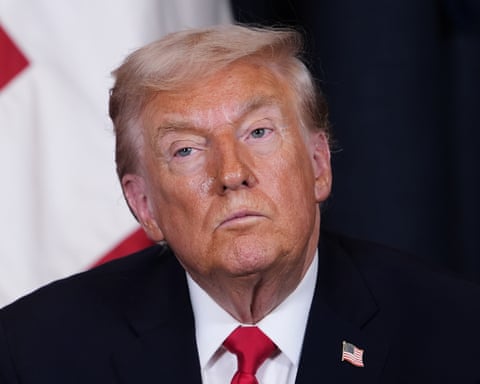
There is a presidency at work in Washington, but it is not clear that there is a president at work in the Oval Office.

Ask Donald Trump about the goings on of his administration, and there is a good chance he’ll defer to a deputy rather than answer the question. “I don’t know her,” he said when asked about his nominee for surgeon general, Casey Means, this year. “I listened to the recommendation of Bobby,” he said, pointing to Robert F. Kennedy Jr., the secretary of health and human services.

Ask Trump for insight into why his administration made a choice or to explain a particular decision, and he’ll be at a loss for words. Ask him to comment on a scandal? He’ll plead ignorance. “I know nothing about it,” Trump said last week, when asked about the latest tranche of photographs released from the estate of Jeffrey Epstein.

None of this on its own means the president isn’t working or paying attention to the duties of his office. But consider the rest of the evidence. He is, by most accounts, isolated from the outside world. He does not travel the country and rarely meets with ordinary Americans outside the White House. He is shuttled from one Trump resort to another to play golf and hold court with donors, supporters and hangers-on.

Ronald Reagan took regular meetings with congressional leaders to discuss his legislative agenda; George H.W. Bush spearheaded negotiations with the nation’s allies and led the United States to war in Iraq; and George W. Bush was, for better or worse, “the decider” who performed leadership for the cameras as much as he tried to exercise it from the Oval Office. Trump is a ubiquitous cultural presence, but there is no outward sign that he is an active participant in running the national government. He was mostly absent during discussions of his signature legislation — the One Big, Beautiful Bill Act — and practically AWOL during the monthlong government shutdown.

It is difficult for any president to get a clear read on the state of the nation; it takes work and discipline to clear the distance between the office and the people. But Trump, in his second term, does not seem to care about the disconnect. Abraham Lincoln once remarked that it would “never do for a president to have guards with drawn sabers at his door, as if he fancied he were, or were trying to be, or were assuming to be, an emperor.” A president has to be engaged — attentive to both the government and the public he was elected to serve.

Trump is neither. He is uninterested in anyone except his most devoted fans, and would rather collect gifts from foreign businessmen than take the reins of his administration. “The president doesn’t know and never will,” Susie Wiles, the White House chief of staff, said in an interview with Vanity Fair, commenting on the work of Elon Musk in the first months of the year. “He doesn’t know the details of these smallish agencies.”

Instead, the work of the White House has been delegated to a handful of high-level advisers. Russell Vought, the director of the Office of Management and Budget, is the de facto shadow president for domestic affairs. As one senior government official told ProPublica, “It feels like we work for Russ Vought. He has centralized decision-making power to an extent that he is the commander in chief.” It was Vought who orchestrated the administration’s assault on the federal bureaucracy, including the wholesale destruction of U.S.A.I.D. It was Vought who either froze or canceled hundreds of billions of dollars in funding for anti-poverty programs, H.I.V. reduction initiatives and research into science, medicine and technology. And it is Vought who has been pushing the boundaries of executive power as he attempts to turn the federal government into little more than an extension of the personal will of the president — as channeled through himself, of course.

If Vought is the nation’s shadow president for domestic policy, then Stephen Miller is its shadow president for internal security. Miller, Trump’s top domestic policy adviser, is using the president’s authority to try to transform the ethnic mix of the country — to make America white again, or at least whiter than it is now. He is the primary force behind the expansion of Immigration and Customs Enforcement and Customs and Border Protection into a roving deportation force. He has pushed both agencies to step up their enforcement operations, targeting schools, restaurants, farms and other work sites and detaining anyone agents can get their hands on, regardless of citizenship or legal status. It is Miller who is behind the militarization of ICE, the use of the National Guard to occupy Democrat-led cities and assist deportation efforts, and the plan to blanket the United States with a network of detention camps for unauthorized immigrants and anyone else caught in his dragnet.

Traditionally, presidents have had a mostly free hand in the conduct of American foreign policy. But here as well Trump has handed the power of the presidency over to a set of figures — inside and outside of government — who are not so much acting on his behalf as they are acting in his stead. Marco Rubio, the secretary of state, and Pete Hegseth, the secretary of defense, are orchestrating a war — and possibly regime change — in Venezuela, while Steve Witkoff, a real estate developer, and Jared Kushner, the president’s son-in-law, are busy pushing a so-called peace deal that would give large parts of Ukraine to Russia, rewarding Vladimir Putin for his decision to wage a war of conquest.

In his foreword to Theodore Sorensen’s 1963 book, “Decision-Making in the White House,” President John F. Kennedy wrote that the “heart of the presidency is therefore informed, prudent and resolute choice” and that the “secret of the presidential enterprise is to be found in an examination of the way presidential choices are made.”

What do we make of a president who chooses not to make these choices?

For Chief Justice John Roberts and the conservative majority on the Supreme Court, the answer is to deliver that president an expansive grant of executive power. In a series of decisions on the court’s so-called shadow docket, Roberts and his allies have backed Trump’s repeated claims to virtually uncontested authority over the entire executive branch. The court has allowed the president to fire officials otherwise shielded by for-cause protections created by Congress, and has signaled quite clearly that it intends to overturn a New Deal-era decision that affirmed the power of Congress to create agencies that are independent of the president’s direct control.

.

https://static01.nyt.com/images/2025/12/17/multimedia/17bouie-ljzm/17bouie-ljzm-superJumbo.jpg?quality=75&auto=webpKenny Holston/The New York Times

.

.

Click the link below for article:

https://www.nytimes.com

.

__________________________________________

Cell Transplant Therapy Offers New Hope for Type 1 Diabetes

Leave a comment

Hmmmm… Give yourself a gold star if you can play the uTube video as described above the link below the picture!

Click the link below the picture

.

Carin Leong: What if people with type 1 diabetes could start making their own insulin?

Scientists have just taken a big step in that direction. They treated a patient with 80 million lab-made insulin-producing cells that are designed to hide from the immune system. This is the first time a cell transplant like this hasn’t triggered a rejection in a human, and researchers say that this opens exciting possibilities for treating diabetes and other autoimmune diseases in the future.

About two million people in the U.S. currently live with type 1 diabetes. It’s an autoimmune disease where the body mistakenly wipes out the cells in the pancreas that make insulin. Without this hormone, people have to rely on injections and pumps every single day to keep their blood sugar in check and avoid serious complications.

Scientists have tried replacing these insulin-producing cells before, but the body kept attacking them. And patients would need to take strong immune-suppressing drugs for life, which come with their own laundry list of side effects.

This time, researchers took donor cells and used the gene-editing technique CRISPR to deactivate two genes that normally flag the immune system to attack foreign cells while also boosting expression of a gene that discourages attacks by the body’s immune cells.

So 12 weeks after injecting these cells into the patient, they were still alive and making insulin in his body. Granted, it wasn’t a ton—about 7 percent of what he’d need to ditch insulin injections entirely. But experts say it’s a major milestone for his body to be producing even a little bit of insulin on its own and, most importantly, without the need for immunosuppressants. They’ll continue monitoring him over the next year and test higher doses of these edited cells. And if all goes well, this could potentially lead us toward a cure for type 1 diabetes.

.

What if people with type 1 diabetes could start making their own insulin?

.

.

Click the link below for article (click the share button on uTube video, then click the on the share screen to Play it):

https://www.scientificamerican.com/video/new-cell-transplant-therapy-restores-insulin-production-in-patient-with-type/

.

__________________________________________
MAGA, the Broligarchs and the Media

Leave a comment

From

Paul Krugman

Click the link below the picture

.

Warner Bros. Discovery, which among other things controls CNN, has agreed to sell itself to Netflix. But it isn’t a done deal, because Paramount has made a rival, hostile bid.

Now, most Americans, even those like me who pay a lot of attention to the economy, don’t usually take much interest in insider baseball about corporate wheeling and dealing. But this is a bigger story than usual, for three reasons.

First, there’s an antitrust issue. In an earlier era, when the U.S. government took monopoly power seriously, both proposed acquisitions would probably have been blocked by regulators.

Second, there’s a financial issue. On its own, there is no way that Paramount, which is deeply in debt and whose credit rating is “a notch below ‘junk’” could afford to buy Warner. It’s able to make a semi-credible bid only because of assurances of support from Larry Ellison, one of the world’s richest men thanks to his stake in the software giant Oracle. But when analysts look closely at the details, they find that Ellison’s promises of support are more than a bit squirrely:

[T]he Warner Bros. Discovery board worried that Mr. Ellison did not personally guarantee the bid under his name and is planning to contribute equity for the deal through a trust with holdings that could be modified at any time.

Adding to the risk of Oracle’s deal is the fact that Oracle is itself shaky according to the estimation of gimlet-eyed financial markets due to its huge, debt-financed bets on AI.

As Bloomberg reports, its investment grade debt now “trades like junk.”

But it’s not just about the money. For the average American, there is something fundamentally important about this corporate cage-match to win Warner Bros. Discovery. And it’s not about entertainment, it’s about democracy. You should understand that Paramount’s hostile bid is, above all, a political move in the pursuit of cementing the dominance of MAGA-supporting tech billionaires and further eroding American democracy.

Back in 2018, during Trump I, the political scientists Steven Levitsky and Daniel Ziblatt published How Democracies Die, which described how nations like Hungary had descended into one-party authoritarianism although the formal, but now toothless, institutions of democracy remain. In the latest edition of Foreign Affairs Levitsky, Ziblatt and Lucan Way say that this process is already well underway here in the U.S.:

In Trump’s second term, the United States has descended into competitive authoritarianism—a system in which parties compete in elections but incumbents routinely abuse their power to punish critics and tilt the playing field against their opposition. Competitive authoritarian regimes emerged in the early twenty-first century in Hugo Chávez’s Venezuela, Recep Tayyip Erdogan’s Turkey, Viktor Orban’s Hungary, and Narendra Modi’s India. Not only did the United States follow a similar path under Trump in 2025, but its authoritarian turn was faster and farther-reaching than those that occurred in the first year of these other regimes.

Now, in some ways America is unusually well-positioned to resist this authoritarian push. As Levitsky et al note, we have a “well-organized and rich civil society” — ranging from law firms to universities to nonprofits — that can push back. And while some of these institutions are led by cowards, not all are. We also have unified political opposition in the form of the Democratic Party, which is very different from the splintered opposition that faced Viktor Orban in Hungary, for example.

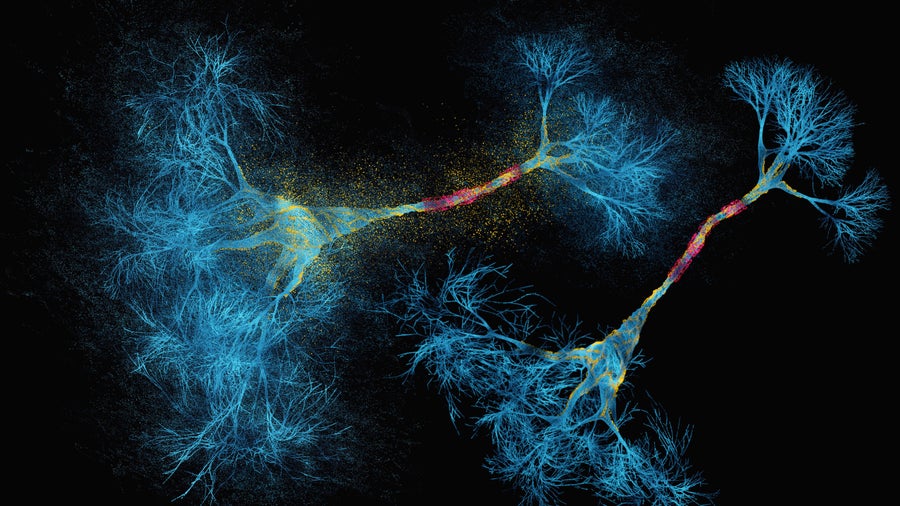
Yet, ominously, Trump and Trumpism have powerful allies that had no counterpart in previous competitive authoritarian regimes. Namely, there is a network of deeply anti-democratic tech billionaires, of which Ellison is a very significant player. The Authoritarian Stack project, which tracks that network, calls it the “Authoritarian Tech Right”. I’ve put their chart of some of the keyplayers at the top of this post. Some of us refer to that network, less formally, as the “broligarchy.”

As I have written recently, the broligarchy has deep antipathy to liberal principles in general and to democracy in particular, which they don’t try to hide. Peter Thiel has declared, “I no longer think that freedom and democracy are compatible.” Musk has derided empathy and made common cause with the German neo-Nazi party AfD. Alex Karp, head of the Pentagon contractor Palantir, has said that he hopes killing helpless shipwrecked sailors will be made constitutional so that he can make more money selling equipment to the Pentagon. And Joe Lonsdale says that public executions should come back.

.

A diagram of a group of people AI-generated content may be incorrect.

Source: The Authoritarian Stack

.

.

Click the link below for the complete article:

https://paulkrugman.substack.com/p/maga-the-broligarchs-and-the-media?utm_source=post-email-title&publication_id=277517&post_id=181630843&utm_campaign=email-post-title&isFreemail=false&r=1ed8i1&triedRedirect=true&utm_medium=email

.

__________________________________________

Trump Isn’t Interested in Fighting a New Cold War. He Wants a New Civilizational War.

Leave a comment

Click the link below the picture

.

Every few years I am reminded of one of my cardinal rules of journalism: Whenever you see elephants flying, don’t laugh, take notes. Because if you see elephants flying, something very different is going on that you don’t understand but you and your readers need to.

I bring that up today in response to the Trump administration’s 33-page National Security Strategy, released last week. It has been widely noted that at a time when our geopolitical rivalry with Russia and China is more heated than at any other time since the Cold War — and Moscow and Beijing are more and more closely aligned against America — the Trump 2025 national security doctrine barely mentions these two geopolitical challengers.

While the report surveys U.S. interests across the globe, what intrigues me most about it is how it talks about our European allies and the European Union. It cites activities by our sister European democracies that “undermine political liberty and sovereignty, migration policies that are transforming the continent and creating strife, censorship of free speech and suppression of political opposition, cratering birthrates, and loss of national identities and self-confidence.”

“Should present trends continue,” it goes on, “the continent will be unrecognizable in 20 years or less.”

Indeed, the strategy paper warns, unless our European allies elect more “patriotic” nationalist parties, committed to stemming immigration, Europe will face “civilizational erasure.” Unstated but implied is that we will judge you not by the quality of your democracy but by the stringency by which you stem the migration flow from Muslim countries to Europe’s south.

That is a flying elephant no one should ignore. It is language unlike any previous U.S. national security survey, and to my mind it reveals a deep truth about this second Trump administration: how much it came to Washington to fight America’s third civil war, not to fight the West’s new cold war.

Yes, in my view, we are in a new civil war over a place called home.

First, I need to make a quick detour to “home.” These days there is a tendency to reduce every crisis to the dry metrics of economics, to the chessboard machinations of political or military campaigns, or to ideological manifestoes. All, of course, have their relevance, but the longer I have worked as a journalist, the more I have found that the better starting place for unlocking a story is with the disciplines of psychology and anthropology. They are often much better at revealing the primal energies, anxieties and aspirations that animate our national politics — and global geopolitics — because they uncover and illuminate not just what people say they want, but also what they fear and what they privately pray for, and why.

I was not here for the Civil War of the 1860s, and I was still a boy during our second great civil struggle, the 1960s civil rights movement and the assassination of Martin Luther King Jr. But I am definitely on duty for America’s third civil war. This one, like the first two, is over the questions “Whose country is this anyway?” and “Who gets to feel at home in our national house?” This civil

war has been less violent than the first two — but it is early.

Humans have an enduring, structural need for home, not only as a physical shelter, but as a psychological anchor and moral compass, too. That is why Dorothy in “The Wizard of Oz” (my favorite movie) got it exactly right: “There’s no place like home.” And when people lose that sense of home — whether by war, rapid economic change, cultural change, demographic change, climate change or technological change — they tend to lose their center of gravity. They may feel as though they are being hurtled around in a tornado, grabbing desperately for anything stable enough to hold onto — and that can include any leader who seems strong enough to reattach them to that place called home, however fraudulent that leader is or unrealistic the prospect.

With that as background, I cannot remember another time in the last 40 years when I have traveled around America, and the world, and found more people asking the same question: “Whose country is this anyway?” Or as Itamar Ben-Gvir, the far-right nationalist Israeli minister, put it, in Hebrew, in his political banner ads during Israel’s 2022 election: “Who is the landlord here?”

And that is not an accident. Today, more people are living outside their country of birth than at any point in recorded history. There are approximately 304 million global migrants — some seeking work, some seeking education, some seeking safety from internal conflicts, some fleeing droughts and floods and deforestation. In our own hemisphere, the U.S. Customs and Border Protection office reports that migrant encounters at our southern border hit historical highs in 2023, while estimates from the Pew Research Center suggest that the total unauthorized population in America grew to 14 million in the same year, breaking a decade-long period of relative stability.

But this is not just about immigrants. America’s third civil war is being fought on multiple fronts. On one front it is white, predominantly Christian Americans resisting the emergence of the minority-dominated America that is now baked into our future sometime in the 2040s, driven by lower birthrates among white Americans and growth in Hispanic, Asian and multiracial American populations.

On another front are Black Americans still struggling against those who would raise new walls to keep them from a place called home. Then there are Americans of every background trying to steady themselves amid cultural currents that seem to shift by the week: new expectations about issues like identity, bathrooms and even a typeface, as well as how we acknowledge one another in the public square.On yet another front, the gale-force winds of technological change, propelled now by artificial intelligence, are sweeping through workplaces faster than people can plant their feet. And on a fifth front, young Americans of every race, creed and color are straining to afford even a modest home — the physical and psychological harbor that has long anchored the American dream.

My sense is that we now have millions of Americans waking up each morning unsure of the social script, the economic ladder or the cultural norms that are OK to practice in their home. They are psychologically homeless.

When Donald Trump made building a wall along the Mexican border the central motif of his first campaign, he instinctively chose a word that did double duty for millions of Americans. “Wall” meant a physical barrier against uncontrolled immigration that was accelerating our transition to a minority-majority-led America. But it also meant a wall against the pace and scope of change: the cultural, digital and generational whirlwinds reshaping daily life.

That, to me, is the deep backdrop to Trump’s National Security Strategy. He is not interested in refighting the Cold War to defend and expand the frontiers of democracy. He is, in my view, interested in fighting the civilizational war over what is the American “home” and what is the European “home,” with an emphasis on race and Christian-Judeo faith — and who is an ally in that war and who is not.

.

https://static01.nyt.com/images/2025/12/11/multimedia/11friedman-cgtm/11friedman-cgtm-superJumbo.jpg?quality=75&auto=webp

Alex Kent for The New York Times

.

.

Click the link below for the complete article:

https://www.nytimes.com/2025/12/11/opinion/trump-europe-security-strategy.html

.

__________________________________________

Trump Officials Keep Comparing the U.S.’s Vaccine Schedule to Denmark’s. They’re Missing the Point

Leave a comment

Click the link below the picture

.

At a controversial meeting of the U.S. Centers for Disease Control and Prevention’s vaccine advisory panel recently, members voted to remove a long-standing recommendation that all babies get a first dose of the hepatitis B vaccine at birth. Public health experts derided the move, which goes against evidence that the shot is safe and effective. Members of the CDC’s Advisory Committee on Immunization Practices (ACIP) and agency officials cited a curious rationale for the change: a need to align the U.S.’s vaccine schedule with Denmark’s.

Shortly after the meeting, President Donald Trump ordered the CDC to fast-track a review of the U.S. vaccination schedule to align with that of other “peer, developed countries,” including Denmark. But there’s something rotten in this comparison.

The U.S. and Denmark have starkly different populations, disease rates, and health care systems. It makes sense that they have different vaccination policies.

“The United States is not Denmark,” says Katelyn Jetelina, an epidemiologist who writes a popular health newsletter and who previously advised the CDC on its COVID policy. “The health care and safety net system of the United States is drastically different than other high-income countries around the world. We should expect country-level policy decisions to vary.”

The U.S. has more than 340 million people; Denmark’s population is a little more than six million. Denmark is also much more demographically and economically homogenous than the U.S. And the countries have different burdens of disease.

Take hepatitis B—there were 99 new cases of chronic hepatitis B in Denmark in 2023, compared with more than 17,000 new cases in the U.S. Denmark also screens practically every single pregnant person for the disease, and most of those who test positive receive treatment. In the U.S., about 85 percent of pregnant people are screened, and many never get treatment. Hepatitis B is a liver infection, and if it is left untreated and becomes chronic, it can lead to cirrhosis, liver cancer and death.

The U.S. and Danish health care systems are incomparable. With the exception of Medicare and Medicaid, the U.S. system operates largely on privately funded insurance. Denmark has a universal health system that is paid for by the government, and all residents have access to free care. The CDC’s advisory panel made no mention of this difference during its recent meeting, and the Trump administration has no appetite for a universal health care system in the U.S.

“Managing and following a small population with universal health care is much different than an enormous population with multiple delivery systems and multiple payers,” says Kathryn Edwards, a professor of pediatrics at Vanderbilt University Medical Center. It’s “like comparing apples and oranges.”

Jetelina concurs. In Denmark, people are less likely to fall through the cracks of their health system, she says, whereas the U.S. has a “very different health care capacity, and we don’t have a safety net.”

A consequence of universal health care systems is that countries like Denmark are also more likely than the U.S. to take cost-effectiveness into consideration when deciding which vaccines to recommend and to whom. Even though providing vaccines is generally far cheaper than treating a disease, it still costs money. For example, in the U.K., which also has state-funded universal health care, flu vaccines aren’t routinely recommended for children because the shots are more cost-effective in older adults. Similar logic may explain why the hepatitis B vaccine isn’t universally given at birth in Denmark.

A lot of the discussion at the December 5 ACIP meeting focused on hypothetical risks from the hepatitis B vaccine in babies born to people who test negative for the disease; there was very little emphasis on the societal benefits of widespread vaccination.

When it comes to targeting vaccination only to individuals born to parents who are known to have hepatitis B, Jetelina says, “we’ve tested this before.” Prior to 1991, the U.S. attempted to vaccinate only people at high risk for hepatitis B. “Even when mothers screened negative for hep B, and the birth dose was withheld, thousands of children did end up infected via another member of the household,” she says. In contrast, after ACIP recommended a universal birth dose in 1991, cases declined dramatically: in children, teens, and young adults up to age 19, cases of acute hepatitis dropped by 99 percent from 1990 to 2019.

The push to alter the U.S. hepatitis B vaccine recommendation fits into a broader effort by the Trump administration and many Republican lawmakers to prioritize individual freedoms over collective action. Yet strong public health systems—and vaccination in particular—rely on collective action to protect those who cannot protect themselves, such as immune-suppressed people, older adults, and young babies.

“I’m concerned about that,” Jetelina says. “If we land too much on individualism, diseases are going to come back.”

.

https://static.scientificamerican.com/dam/m/6d6f8a811c783a27/original/denmark.jpg?m=1765583034.072&w=900

Not the U.S. Dado Daniela via Getty Images

.

.

Click the link below for the complete article:

https://www.scientificamerican.com/article/trump-officials-keep-comparing-the-u-s-s-vaccine-schedule-to-denmarks-theyre/

.

__________________________________________

What Is REM Sleep? Definition and Benefits

Leave a comment

Click the link below the picture

.

Rapid eye movement, or REM sleep, is the final phase of the four stage cycle that occurs during sleep. Unlike non-REM sleep, the fourth phase is characterized by an increase in brain activity and autonomic nervous system functions, which are closer to what is seen during the awakened state. Similar to non-REM sleep stages, this stage of sleep is primarily controlled by the brainstem and hypothalamus, with added contributions from the hippocampus and amygdala. Additionally, REM sleep is associated with an increase in occurrence of vivid dreams. While non-REM sleep has been associated with rest and recovery, the purpose and benefits of REM sleep are still unknown. However, many theories hypothesize that REM sleep is useful for learning and memory formation.

Key Takeaways: What Is REM Sleep?

  • REM sleep is an active stage of sleep characterized by increased brain wave activity, return to awake state autonomic functions, and dreams with associated paralysis.
  • The brainstem, particularly the pons and midbrain, and the hypothalamus are key areas of the brain that control REM sleep with hormone secreting “REM-on” and “REM-off” cells.
  • The most vivid, elaborate, and emotional dreams occur during REM sleep.
  • The benefits of REM sleep are uncertain, but may be related to learning and storage of memory.


REM Definition

REM sleep is often described as a “paradoxical” sleep state due to its increased activity after non-REM sleep. The three prior stages of sleep, known as non-REM or N1, N2, and N3, occur initially during the sleep cycle to progressively slow bodily functions and brain activity. However, after the occurrence of N3 sleep (the deepest stage of sleep), the brain signals for the onset of a more aroused state. As the name implies, the eyes move rapidly sideways during REM sleep. Autonomic functions such as heart rate, respiratory rate, and blood pressure begin to increase closer to their values while awake. However, because this period is often associated with dreams, major limb muscle activities are temporarily paralyzed. Twitching can still be observed in smaller muscle groups.

Brain Activity During REM Sleep
This is a digital illustration of areas of activity during REM sleep in the human brain, highlighted in red and green. Dorling Kinderley / Getty Images 

REM sleep is the longest period of the sleep cycle and lasts for 70 to 120 minutes. As the duration of sleep progresses, the sleep cycle favors increased time spent in REM sleep. The proportion time spent in this phase is determined by a person’s age. All stages of sleep are present in newborns; however, babies have a much higher percentage of non-REM slow wave sleep. The ratio of REM sleep gradually increases with age until it reaches 20-25% of the sleep cycle in adults.


REM and Your Brain

REM Sleep
REM Sleep. Numbering the traces from top to bottom, 1 & 2 are electroencephalograms (EEG) of brain activity; 3 is an electrooculogram (EOG) of movement in the right eye; 4 an EOG of the left eye; 5 is an electrocardiogram (ECG) trace of heart activity. 6 & 7 are electromyograms (EMG) of activity in the laryngeal (6) and neck (7) muscles. James Holmes / Science Photo Library / Getty Images Plus 

During REM sleep, brain wave activity measured on an electroencephalogram (EEG) also increases, as compared to the slower wave activity seen during non-REM sleep. N1 sleep shows slowing of the normal alpha wave pattern noted during the awake state. N2 sleep introduces K waves, or long, high voltage waves lasting up to 1 second, and sleep spindles, or periods of low voltage and high frequency spikes. N3 sleep is characterized by delta waves, or high voltage, slow, and irregular activity. However, EEGs obtained during REM sleep show sleep patterns with low voltage and fast waves, some alpha waves, and muscle twitch spikes associated with transmitted rapid eye movement. These readings are also more variable than those observed during non-REM sleep, with random spiking patterns at times fluctuating more than activity seen while awake.

EEG
An electroencephalogram (EEG) uses electrodes to read small electromagnetic waves from the human brain. Graphic_BKK1979 / iStock / Getty Images Plus 

The major portions of the brain activated during REM sleep are the brainstem and the hypothalamus. The pons and midbrain, in particular, and the hypothalamus contain specialized cells known as “REM-on” and “REM-off” cells. To induce the transition to REM sleep, REM-on cells secrete hormones such as GABA, acetylcholine, and glutamate to instruct the onset of rapid eye movements, muscle activity suppression, and autonomic changes. REM-off cells, as their name implies, induce the offset of REM sleep by secretion of stimulatory hormones such as norepinephrine, epinephrine, and histamine.

.

https://www.thoughtco.com/thmb/jWwgo4oLMeqzxJOhwVJAnq1V08o=/750x0/filters:no_upscale():max_bytes(150000):strip_icc()/woman_dreaming-5081da90c33547c891904ed54ca9849a.jpgREM sleep is an active stage of sleep characterized by increased brain wave activity. Jamie Grill / Getty Images

.

.

Click the link below for the complete article:

https://www.thoughtco.com/what-is-rem-sleep-definition-4781604

.

__________________________________________

Trump administration threatens to take $73 million and all trucker licenses from NY

Leave a comment

From

Axios

Click the link below the picture

.

Transportation Secretary Sean Duffy threatened to freeze $73 million from New York on Friday for allegedly issuing commercial driver’s licenses for immigrants “illegally,” which could result in the “total decertification” of the state’s CDL program.

Why it matters: The warning comes amid the Trump administration’s broader goal of pushing undocumented immigrants out of the American workforce and a broader push to remove non-proficient English speakers off the road.

What they’re saying: “When more than half of the licenses reviewed were issued illegally, it isn’t just a mistake—it is a dereliction of duty by state leadership,” Duffy said in a Friday news release.

  • “Gov. Hochul must immediately revoke these illegally issued licenses. If they refuse to follow the law, we will withhold federal highway funding.”
  • “This administration will never stop fighting to keep you and your family safe on our roads,” he added.

Context: A non-domiciled CDL is a U.S. license for a non-citizen, and is routinely issued to foreign drivers who can meet all of the DOT licensing requirements.

The other side: “Secretary Duffy is lying about New York State once again in a desperate attempt to distract from the failing, chaotic administration he represents,” a NY DMV spokesperson told Axios in an emailed statement.

  • “Here is the truth: Commercial Drivers Licenses are regulated by the Federal Government, and New York State DMV has, and will continue to, comply with federal rules.”
  • “Every CDL we issue is subject to verification of an applicant’s lawful status through federally-issued documents reviewed in accordance with federal regulations.”
  • “This is just another stunt from Secretary Duffy, and it does nothing to keep our roads safer. We will review USDOT’s letter and respond accordingly.”

Catch up quick: The Trump administration has sought to crackdown on the amount of non-citizen drivers on the road and attempted to prohibit states from issuing non-domiciled CDLs earlier this year.

  • A D.C. Court of Appeals judge blocked that move in November, but some states, such as Virginia and Georgia, have paused new applications as the legal challenge unfolds.

State of play: Roughly 18% of all truck drivers are immigrants, and the often-grueling industry is already short of tens of thousands of drivers.

  • Nonetheless, several high-profile fatal crashes involving immigrants over the years have spurred the wave of new restrictions.

By the numbers: Duffy said 53% of New York’s non-domiciled CDLs reviewed by DOT were issued “unlawfully or illegally.”

  • The review only sampled 200 licenses, but 107 of them violated federal law, according to DOT.

Zoom in: Duffy said NY’s DMV system automatically issues an 8-year license to drivers, regardless of if their work authorization or legal status expires before then.

  • He also said that the state frequently skips verifying if applicants have a visa or are in the country legally.

Zoom out: The administration also announced it was revoking roughly 9,500 licenses for failing to meet the president’s reinstated English-language proficiency requirements earlier this week.

  • That move essentially reversed an Obama-era order that softened the ELP requirements back in 2016.

What we’re watching: DOT will trigger the funding freeze if NY doesn’t fix the problems the department identified within 30 days.

.

https://images.axios.com/1UPMzuzbvaX2egJOLm4s1FwCNF0=/0x462:8256x5106/1920x1080/2025/12/12/1765566135784.jpg?w=1920Transportation Secretary Sean Duffy speaks during a news conference on May 20 in Austin, Texas. Photo: Brandon Bell/Getty Images

.

.

Click the link below for the complete article:

https://www.axios.com/2025/12/12/trump-duffy-truck-drivers-license-revoked-new-york

.

__________________________________________

Timekeeping on Mars Is a Tall Order. Here’s Why

Leave a comment

Click the link below the picture

.

You know how it goes: You’re trying to get some shut-eye in your bunk after a long shift of scraping samples of prebiotic material from red rocks in Utopia Planitia, and before you know it, your alarm bell rings. And then you see it woke you up a full 477 microseconds early!

Life on Mars is tough. Figuring out the exact time isn’t much easier.

Even on the larger end of the timescale, Martian chronometry is not exactly simple; the planet takes about 687 Earth days to go around the sun, making calendrical coordination with Earth pretty hairy. It also spins on its axis—completing one Mars day—in 24 hours, 39 minutes, and 35 seconds (to distinguish this period from an Earth day, we call it a “sol,” referencing the Latin word for the sun). Keeping track of your schedule on Mars would be different than doing so on Earth. But still, at its core, it would just be a matter of conversion.

Building an accurate Martian clock, on the other hand, can be very tricky, depending on how accurate you want it to be. When you start to slice time into smaller and smaller bits, the problem concerns not only engineering but also fundamental physics. That’s because the flow of time on milli- and microsecond scales is affected by relativity, gravity and orbital mechanics, which can vary radically from world to world.

The good news is that a pair of physicists did all the associated mathematical heavy lifting for Mars and published their results on December 1 in the Astronomical Journal. With their help, we can fine-tune our Martian timepieces.

It was Albert Einstein who really first got this ball rolling. Among many other things that emerged from his special theory of relativity, he postulated that time does not necessarily flow the same for two independent objects. The most commonly used example of this is how a clock runs more slowly when it is moving relative to an observer. The effect is pretty small until that motion nears the speed of light, whereupon it can get very large.

But there’s another twist to relativity: besides relative motion, gravity affects time’s flow as well! The stronger the gravity, the slower a clock will tick relative to some observer far away, where the gravitational effects are weaker. Both of these phenomena can affect us on Earth: GPS satellites, for example, orbit far above Earth, where gravity is weaker, so their clocks run faster than those on the surface. But the satellites’ rapid orbital motion also slows their clocks. Combined, these effects cause their clocks to tick about 38 microseconds faster than ones on the ground. This profoundly affects their accuracy in mapping, throwing them off by about 10 kilometers per day. Think about how angry you’d be if your smartphone’s map app was off by a kilometer or so after only a half hour of use. Happily, GPS takes all this into account, so the positional accuracy it calculates is pretty high. But this situation just shows how important relativity can be

What does this have to do with the Red Planet? Well, for one thing, while Mars is a rocky world like our own, it’s much smaller, about a tenth the mass of Earth. Its surface gravity is some three times less than what we feel at home. So on Mars, I’d only weigh about 65 pounds (29 kilograms)! I bet my knees and back would feel a lot better about that.

But this also means a clock on Mars feels less gravity than one on Earth, so it will run faster. And unfortunately, plugging this into Einstein’s equations to calculate that advancement is no easy task.

First, you have to define what the average surface of Mars is. After all, if you’re on a mountain, you’re farther up from the average elevation than you’d be if you were in a valley, where you’d feel a different amount of gravitational force.

But you can’t just average between the highest peaks and lowest valleys to arrive at some clear median. Oh, no. Just as a world can have varying surface elevation, it can also have a varying subsurface composition, with some regions being denser (and thus having greater local gravity) than others. Still, factoring this in alongside things like a global rotation rate and the influence of any massive orbiting moons, it’s possible (though difficult) to determine the average surface for any given world.

We did this properly for Earth in the late 20th century—and thanks to our extensive robotic orbital reconnaissance, we’ve done it more recently for Mars, too. Once calculated, Mars’s average surface can be used to gauge gravity’s influence on clocks anywhere on the planet.

.

https://static.scientificamerican.com/dam/m/2d92b0d52c4d3b79/original/GettyImages-465463463-WEB.jpg?m=1765498744.222&w=900Emmeci74/Getty Images

.

.

Click the link below for the complete article:

https://www.scientificamerican.com/article/what-time-is-it-on-mars/?_gl=1*1rbydrv*_up*MQ..*_ga*ODk4NDY2MjQ3LjE3NjU3MDE1MzE.*_ga_0P6ZGEWQVE*czE3NjU3MDE1MzAkbzEkZzAkdDE3NjU3MDE1MzAkajYwJGwwJGgw

.

__________________________________________

Older Entries Newer Entries

TradingClubsMan

Algotrader at TRADING-CLUBS.COM

Comedy FESTIVAL

Film and Writing Festival for Comedy. Showcasing best of comedy short films at the FEEDBACK Film Festival. Plus, showcasing best of comedy novels, short stories, poems, screenplays (TV, short, feature) at the festival performed by professional actors.

Bonnywood Manor

Peace. Tranquility. Insanity.

Warum ich Rad fahre

Take a ride on the wild side

Madame-Radio

Découvre des musiques prometteuses dans la sphère musicale française (principalement, mais pas que...).

Ir de Compras Online

No tiene que Ser una Pesadilla.

Kana's Chronicles

Life in Kana-text (er... CONtext)

Cross-Border Currents

Tracking money, power, and meaning across borders.

Jam Writes

Where feelings meet metaphors and make questionable choices.

emotionalpeace

Finding hope and peace through writing, art, photography, and faith in Jesus.

Wearing Two Gowns.COM

MOVING FORWARD...That's how WINNING is done!”-Rocky Balboa

...

love each other like you're the lyric to their music

Luca nel laboratorio di Dexter

Comprendere il mondo per cambiarlo.

Tales from a Mid-Lifer

Mid-Life Ponderings

Hunza

Travel,Tourism, precious story "Now in hundreds of languages for you."

freedomdailywriting

I speak the honest truth. I share my honest opinions. I share my thoughts. A platform to grow and get surprised.

The Green Stars Project

User-generated ratings for ethical consumerism

Cherryl's Blog

Travel and Lifestyle Blog

Sogni e poesie di una donna qualunque

Questo è un piccolo angolo di poesie, canzoni, immagini, video che raccontano le nostre emozioni

My Awesome Blog

“Log your journey to success.” “Where goals turn into progress.”

pierobarbato.com

scrivo per dare forma ai silenzi e anima alle storie che il mondo dimentica.

Thinkbigwithbukonla

“Dream deeper. Believe bolder. Live transformed.”

Vichar Darshanam

Vichar, Motivation, Kadwi Baat ( विचार दर्शनम्)

Komfort bad heizung

Traum zur Realität

Chic Bites and Flights

Savor. Style. See the world.

ومضات في تطوير الذات

معا نحو النجاح

Broker True Ratings

Best Forex Broker Ratings & Reviews

Blog by ThE NoThInG DrOnEs

art, writing and music by James McFarlane and other musicians

fauxcroft

living life in conscious reality

Srikanth’s poetry

Freelance poetry writing

JupiterPlanet

Peace 🕊️ | Spiritual 🌠 | 📚 Non-fiction | Motivation🔥 | Self-Love💕

Sehnsuchtsbummler

Reiseberichte & Naturfotografie

Spotlight Choices

astrology - life coaching - optimistic reality

INFINITE ENERGY

"قوتك تبدأ من هنا"

Mesime ÜNALMIŞ

Her çocuk hikayelerle büyümeli

Treasurable Life: The Dirty, Divine Truth of Becoming

No shame. No filters. Just everything we were told to hide.

Dr. Edward McInnis

Doctor of Medicine

Ishaya Zephaniah

Explore the dynamic relationship between faith and science, where curiosity meets belief. Join us in fostering dialogue, inspiring discovery, and celebrating the profound connections that enrich our understanding of existence.

Through Pain Suffering , Mental Health , Addictions , Cancer , Death , Drs

Living with Purpose: Finding Meaning Amidst Life's Challenges