Home

When White People Like Hannah Gann Pretend to Be Black

2 Comments

Click the link below the picture

.

Rachel Dolezal never surprised me in the slightest. A white woman who masqueraded as Black while leading a N.A.A.C.P. chapter in Washington State about 12 years ago, she was an almost inevitable sign of our times.

So Hannah Gann needn’t surprise us either. Gann is a 34-year-old public-school teacher and activist in Philadelphia who grew up white, Jewish and affluent but for years has falsely claimed to be of Black (Tunisian) and Palestinian descent. She was a prominent advocate of the Palestinian cause, so forceful as to have been accused of antisemitism. Fellow activists outed her last month and she has acknowledged lying.

Gann is an ideological descendant of Dolezal, who grew up white in Montana in the 1980s and ’90s and started “identifying” as Black some years after completing a master’s degree at Howard University, a historically Black school. Wearing her hair in Black American styles and sporting a spray tan or using bronzer — the one thing besides membership in Homo sapiens that she shares with Donald Trump — she claimed to have a Black father. Her parents outed her as white in 2015, but she dug in her heels. She now goes by the name Nkechi Diallo and has said that she is “not white” but “transracial.”

There have been other such cases between Dolezal’s outing and Gann’s. Remember Jessica Krug, the white woman from Kansas passing as a Blacktina from the Bronx? Krug taught history at George Washington University, studied Blackness and published a well-reviewed book. She called herself “Jess la Bombalera” on social media, affecting a New York Latino accent in posts defending her indigent Bronx “brothers and sisters.” She resigned from George Washington in 2020 after admitting her deception.

There was also Satchuel Paigelyn Cole, a white social justice activist who confessed in 2020 that she had posed as Black. And there was CV Vitolo-Haddad, a white grad student at the University of Wisconsin, Madison, who resigned from a teaching post in 2020 after admitting to have pretended to be a person of color.

These cases suggest a subtype of modern white identity. For this person, the commitment to contesting the evil of whiteness is all-consuming, an ideological North Star that orients her entire worldview. It is an extreme expression of the outlook that Representative Alexandria Ocasio-Cortez has called “Woke 1,” in which the world is always neatly divided into wicked white oppressors and virtuous nonwhite victims. For a white person with these beliefs, it is a short step to wanting not to be white, to escape the original sin of that privilege.

To be the victim is to be not just innocent but also more interesting. It also can provide a sense of meaning in a modern world that no longer gives ready answers to the question of life’s purpose. “Who am I? What am I for? I’m … Black!” The decision may be eccentric — skin darkening as part of your morning routine? — but it is hardly counterintuitive.

In the pre-woke days, I knew a couple of intermediate cases. These were white women who embraced Black culture, dated Black men exclusively, used “blaccents” spontaneously and deep down seemed to wish they were Black. (Why these cases seem to almost always involve women is an interesting question to which I don’t have an answer.) But these women held off from claiming to be Black — restrained by an awareness that they not only lacked the right ancestry but also hadn’t grown up with the social disadvantages that Blackness so often entails.

It is not surprising, then, that Dolezal, in taking the extra step, told many stories of suffering racist abuse. Even after being outed, she claimed that growing up, she and her siblings (some of whom were adopted and Black) were beaten by her white mother and stepfather, who, she said, “would punish us by skin complexion.” (This story — including the claim that she had a stepfather — has been denied by family members.)

Such stories would seem to be Dolezal’s way of appropriating oppression as a mark of Blackness — offering her a path to feeling justified in claiming Blackness that those women I knew in the pre-woke days would not have taken.

Every time one of these cases turns up, it reminds me, ironically, of how much racial progress we have made in America. There was no procession of Dolezals in, say, the 1950s. No matter how leftist your politics, you would never have chosen to live as a Black person. This underscores how very much easier being Black is today than it once was, regardless of the challenges that remain. I doubt any white person claiming Blackness in the old days would have lasted more than a month.

There were some interesting almost-exceptions. The white jazz clarinetist Mezz Mezzrow called himself a “voluntary Negro” starting in the 1920s and married a Black woman, but he did not claim to actually be Black. And in the 1880s, the white geologist Clarence King married a former slave and told her he was Black, but he lived as white outside the household.

Modern cases like Gann’s are something else. And because the fetishizing of Blackness and the reviling of whiteness is a natural outgrowth of our progressive intelligentsia’s worldview, I see little that will stop them from appearing from time to time. While Krug disappeared from public life, Dolezal presses on in her simulation, and recently said she’d like to sit down for a meal with Gann. Perhaps Gann, too, will ultimately decide that her self-identification as Black and Palestinian is valid, regardless of biology and family history.

This sort of thing will remain rare but never go extinct — no more perplexing than the occasional four-leaf clover. Get ready for another case in a year or three.

.

https://static01.nyt.com/images/2026/10/03/opinion/01mcwhorter-newsletter/01mcwhorter-newsletter-superJumbo.jpg?quality=75&auto=avifRicardo Tomás

.

.

Click the link below for the complete article:

https://www.nytimes.com/2026/10/01/opinion/hannah-gann-rachel-dolezal.html

.

__________________________________________

The overlooked power of diet for improving your mental health

4 Comments

Click the link below the picture

.

Diet is key to healthy living but, strangely enough, the topic rarely comes up in conversations about mental health. Instead, we tend to focus on medication and therapy, and largely ignore the food that we eat – which, according to psychologist Kimberley Wilson, is a huge mistake. 

After working at what was once Europe’s largest women’s prison, HM Prison Holloway in London, she became keenly aware of the powerful influence diet has on mental wellbeing. She saw how, deprived of a balanced diet and nutrients, it was so much harder for prisoners to control their emotions. And she realised that proper nutrition is just as important for managing mental health as medication and therapy. 

She spoke with New Scientist about why nutrition is the foundation of brain health and how the foods we eat can treat mental illness. 

Olivia Goldhill: How does nutrition influence brain health? I think most people understand that food is important for our bodies but are less familiar with its influence on our minds. 

Kimberley Wilson: Mental health is an emergent property of a physical organ. In the same way that your heartbeat is an emergent property of your heart, all of these things that we think about as mental wellbeing are an emergent property of your brain. If we want a coherent psychological experience, we should be thinking about the physical health and structural integrity of the brain as our starting point – and nutrition changes our brain’s ability to process thoughts and emotions, just like it influences the health of any other organ.

Why do you think we so rarely consider this mind-body connection?   

I think it is Cartesian. Four hundred years ago, René Descartes made the argument that there is an essence of the self that is separate from and superior to the physical body. It created such an impression on medicine and then psychiatry that we started approaching mental health as a neck-up intervention – the rest of the body is completely irrelevant.

The brain is also out of sight. Weightlifting changes your body very quickly, often within a few weeks. But because you can’t physically see changes to your diet, exercise and sleep in your brain, you have to wait for a subjective shift that can take six months.  

There is also a bit of egocentrism. We think of ourselves as deeply complex individuals. We don’t like the idea that malaise might be improved by a change of diet and a good night’s sleep. We seek either a complex pharmacological compound or a deep-probing-type therapy to get to our core complexities.

Obviously, I provide some of that, too. But we also know that profound changes can be made with nutritional and lifestyle interventions. I see that in some prisons, where randomised controlled trials showed that changes in nutrition reduced violence. That is some of the starkest, clearest evidence that the brain is a physical organ, and if you want it to function well, you need to feed it properly.  

You worked in Holloway prison and young offenders institute up until 2013 – it is now closed, but was then the largest women’s prison in Europe. I imagine your experience there shaped your approach to mental health.

In prison, you are working with a very  traumatised and traumatising population. The focus is on the emergent behaviours – this person is angry, they are aggressive, they are dangerous, they are frightening – and most people aren’t thinking about the machinery from which those behaviours are emerging. 

But we are dealing with a group of people who have experienced extreme deprivation on all levels: emotional neglect, often abuse, but also severe nutritional, and often substance-related, harms to the brain.  

We have a justice system predicated on volition: you know right from wrong, and if you choose to do the wrong thing, then you deserve the consequences. But that is based on the assumption that the decision-making machinery is working properly. 

This is where we get into almost philosophical grounds with prison violence. If I get into a car and crash, and I didn’t know the brakes were shot, am I entirely responsible for the accident? Or are there mitigating circumstances that need to be taken into consideration? 

In terms of brain health and prison violence, we see that when you improve nutrition, violence drops by 30 per cent. These were supplement trials of broad-spectrum micronutrients, so vitamins, minerals and, in some cases, omega-3. 

Nobody wants to let people off scot-free, but I think we need to be thoughtful about the assumptions we make about behaviour, not just in prison, but across the board. 

Speaking more generally, what impact do physical health and diet have on our mental wellbeing? 

There is lots of evidence around the physical health of either the whole body or the brain impacting mental health. We have good data showing that 1 gram per day of omega-3 – where 60 per cent is EPA [a fatty acid found in omega-3] – can reduce depression. It is thought that inflammation drives depressive symptoms for some people. Omega-3s are the necessary precursors of inflammation’s “off switch”. 

Then there is data looking at brain trajectories and psychopathology. Brain scans have shown us that if the brain was smaller than expected in the prefrontal and parietal lobes, which manage higher-level thinking, that was associated with increased risk of psychopathology. We are talking about the physical structure of the brain as a risk factor.

Iodine deficiency in the perinatal period and early infancy, according to the World Health Organization, is the leading cause of preventable brain damage worldwide and is associated with low IQ. 

Some of the most robust data on depression prevention is around exercise. But we rarely think about this because [most people] think that mental health needs to be addressed with either psychotherapy or drugs. 

Traditionally, psychiatrists and psychologists are very brain-focused, but your approach to the brain seems to be more holistic. 

Yes, and I think the old-school psychiatric approach of using drugs to alter brain chemicals is just a tiny piece of the conversation. These compounds – serotonin or dopamine – are important for regulating mood, but they are also made from nutrients.

If you are anaemic, you aren’t going to have good serotonin production because the brain needs iron for this process, and we see associations between iron deficiency and mood disorders like depression. One of the simplest fixes for a mood disorder is to check, are you anaemic? If so, we can correct this with either diet or iron supplementation. Then, we have improved your fatigue, your flatness of affect, and you haven’t had to go to therapy for six months. 

How do you think data on nutrition and mental health should inform diagnosis and treatment? 

What needs to happen is a better assessment process. Rather than a binary “are you depressed, are you not”, what we want to ask is, what is driving your depression? Is it your childhood trauma, in which case, let’s fast-track you to in-depth therapy. Is it relationship stress? Is it workplace demands? Is it that you have eaten only two chocolate muffins in the last four days? That isn’t going to help you feel good. If we intervene there first, then we can make a difference in the way that you feel very quickly.  

So, if you lived off only ultra-processed foods, for example, what would happen to the brain?  

The brain is the hungriest organ in the body. We need to supply it with the nutrients it requires so that we can feel good, focus, have goal-directed behaviour – all of that stuff.  

A single doughnut isn’t going to meaningfully hurt your brain. But the more your diet is made of these foods, the lower your nutrient status. You will be lower on things like [vitamin] B3 and B12, omega-3, selenium and zinc. That is a problem, because your brain is then depleted of the things it needs to function well.  

We’ve talked about the nutritional effects of diet on the brain, but I’m also curious about the sociological importance of eating. Are there health benefits to sharing our meals with others?

I think so. I think cooking and eating together is part of what makes us human. Across human evolution, eating together was a necessity, because you couldn’t go out and hunt and gather for yourself. It was a group process: I share what I have, and you share what you have.  

There is lovely data on how we feel more trusting of people when we eat together, and it’s not simply that you eat with people you already trust. There is something about eating that builds those relationships, and I think that has to do with the physiology of eating. You have your fight and flight, and then you have your rest and digest. You need to be calm, you need to feel safe [and] you need to feel like you are with people who are trustworthy, so that you can drop your guard and digest your food. 

You just had a baby. How has pregnancy and the postpartum period influenced your understanding of the importance of nutrition, if at all?  

I took the position that I am building a brand-new brain from scratch. So, it was important for me to think about what I am supplying that brain with in order for it to develop optimally.

I was comparing prenatal supplements with research on what nutrients are important for brain development and just finding them massively wanting. Basically, no prenatal vitamin has enough of the nutrient choline, simply because choline salts are bulky. Though we know that choline can do the same thing that folic acid does in reducing the risk of neurological congenital conditions, and we see that choline supplementation during pregnancy improves attention in children at age 7. 

I am breastfeeding, and those nutrients become present in your breast milk. So, I take a choline supplement, to make sure that I am getting enough for my son. 

Is there one nutritional change for mental wellbeing that you think most people could benefit from? 

I would probably say increasing your intake of omega-3 – ideally by eating at least one portion of oily fish a week, and vegans or vegetarians may want to take a supplement. That is where some of the strongest data is, showing reduced risk of depression and suicidal ideation, we think as a function of reduced neuroinflammation. Given that hardly anybody in the UK is getting enough fish, we can assume that a good number of people would be helped by just making that one change.  

Do you think we will see change in how people talk about diet and mental health? 

When I first started talking about this research, I was speaking to a colleague and he just laughed at me. It was quite disappointing, and he just said, well, I have never heard of it. 

It’s hard to tell if things are getting better because I don’t know whether I’m now in a bit of a bubble. I hope the old approach is being pushed out by more open-minded, grounded-in-the-new-research, optimistic individuals saying, actually, the brain is a physical organ and there is something we can do to improve mental health.

.

https://www.newscientist.com/wp-content/uploads/2026/09/SEI_312443049.jpg?w=840

Kimberley Wilson believes we underestimate diet’s role in mental health CAMERA PRESS/Andrew Crowley

.

.

Click the link below for the complete article:

https://www.newscientist.com/article/2589945-the-overlooked-power-of-diet-for-improving-your-mental-health/

.

__________________________________________

Tennessee governor halts executions after Christa Gail Pike survives lethal injection

2 Comments

Click the link below the picture

.

Tennessee officials were unable to put Christa Gail Pike to death Wednesday for a 1995 murder after administering two doses of a lethal drug. A death penalty expert said it was an unprecedented failure, and Tennessee Gov. Bill Lee halted the remaining execution for the rest of the year.

Pike, 50, was alive and loudly snoring after the attempted lethal injection and taken by ambulance from the prison, her attorneys said. She was being treated at a hospital, but they said they hadn’t been told about her condition.

She had been scheduled for execution at 10 a.m. Wednesday for the killing she committed at age 18 and would have been the first woman executed in Tennessee in more than 200 years. An appeals court stopped the lethal injection just an hour before it was to start and hours later the U.S. Supreme Court overturned that stay.

Officials gave Pike two doses of pentobarbital, her attorneys said in court filings late Wednesday.

Gov. Bill Lee said in a statement that he has ordered “a comprehensive, third-party review to determine exactly what occurred” and that the remaining scheduled execution will not take place this year.

“Carrying out a lawfully imposed sentence is among the State’s most serious responsibilities, and the people of Tennessee expect it to be done in a manner that is not only legal and constitutional, but is effective,” he said.

The Tennessee Department of Correction said in a statement that they “followed every step of the State’s lawful, established execution protocol approved by the Attorney General’s Office.”

The state’s execution protocol calls for a secondary set of drug syringes to be administered “if the inmate is not deceased” after the first set. It does not spell out what happens if the subject is alive after the second set.

Robin M. Maher, executive director of the Death Penalty Information Center, said what Pike experienced is “singular and unparalleled.”

Seven other people have survived medical problems due to an execution team’s failure to access a vein to administer lethal injection drugs, but no one has stayed alive after receiving the drugs used in such executions, she said.

Media witnesses detail the execution process

Media witnesses observing from a separate room said officials raised curtains to the execution chamber at 7:27 p.m., showing Pike strapped to a gurney.

“I’m going to leave this world the way I spent most of my life and that is in love,” she said in her “last” words. She described herself as at peace.

But Pike remained awake and at one point raised her head and asked prison officials if her arm was supposed to feel that way. It was not clear what she was referencing.

By 8:26 p.m., execution witnesses reported that the second dose of pentobarbital had been administered.

Pike continued to be heard snoring behind the closed curtain until the microphone was cut off at 8:53 p.m. At that time there was an announcement to escort media witnesses out of the area.

Lawyers for Pike filed an emergency motion late Wednesday to the Tennessee Supreme Court seeking to immediately halt and stay the execution, saying she was in “unnecessary agony” and it was violating her right to be executed free of cruel and unusual punishment. They also filed motions in the Sixth Circuit court and a district court.

It was the second time this year that Tennessee has been unable to carry out an execution: In May state officials called off the lethal injection of Tony Carruthers, who was convicted of kidnapping and killing three people in 1994, after executioners tried and failed for over an hour to place an IV to administer pentobarbital.

Pike and her boyfriend were convicted of the fatal stabbing and beating in 1995 of 19-year-old Colleen Slemmer, their classmate at a job training facility in Knoxville. The case garnered widespread attention in part because of a pentagram that was carved on Slemmer’s body and other elements of the crime stoked fears of Satan worship during the “satanic panic” of the 1980s and 1990s.

Stay of execution was swiftly appealed

Pike was initially scheduled to be put to death in the morning, and witnesses had gathered at the Riverbend Maximum Security Institution in Nashville when the 6th Circuit U.S. Court of Appeals voted 2-1 to issue a stay. That court said a delay was needed to consider whether Pike’s allegations of childhood sexual abuse were fully considered at her sentencing.

.

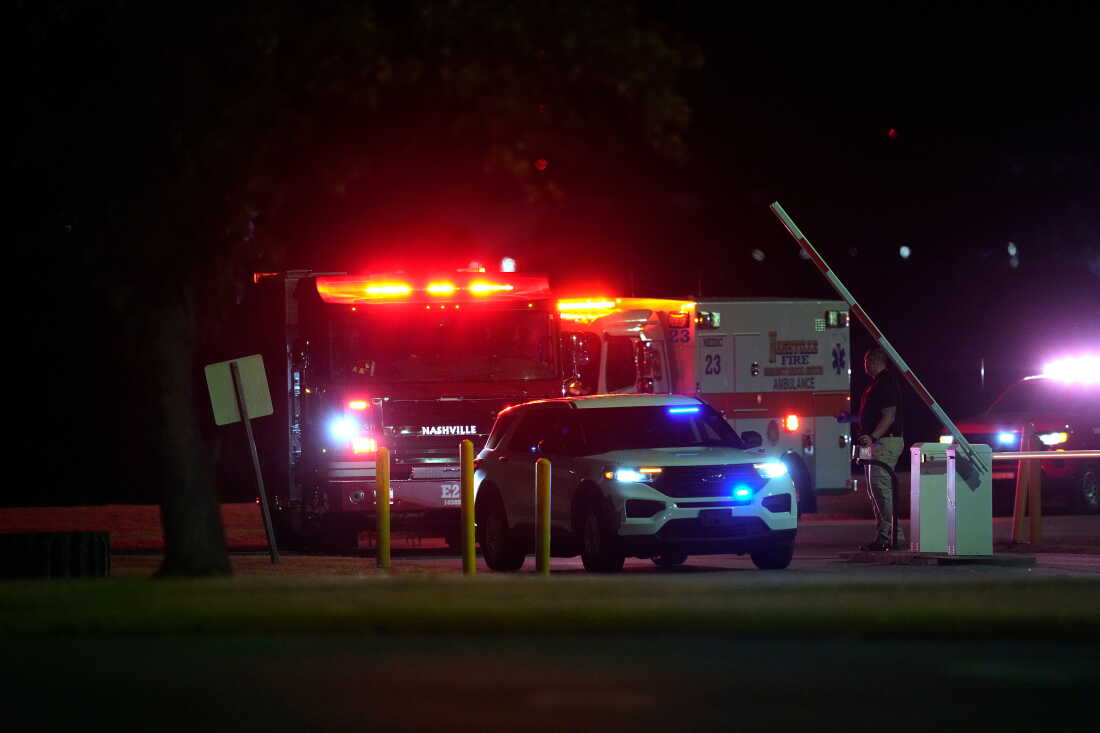
Emergency vehicles arrive at Riverbend Maximum Security Institution after the execution of Christa Pike was halted Wednesday, Sept. 30, 2026, in Nashville, Tenn.

Emergency vehicles arrive at Riverbend Maximum Security Institution after the execution of Christa Pike was halted Wednesday, Sept. 30, 2026, in Nashville, Tenn. George Walker IV/AP

.

.

Click the link below for the complete article:

https://www.npr.org/2026/10/01/nx-s1-5986822/tennessee-governor-halts-executions?utm_source=firefox-newtab-en-us

.

__________________________________________

The Cornell Rape Investigation: Five Takeaways

2 Comments

Click the link below the picture

.

When a woman sued Cornell University last month over an alleged sexual assault at a fraternity, the case reverberated across the nation, igniting shock and anger about the persistent phenomenon of sexual misconduct on campuses.

Those involved have fought for control of the narrative, with the woman’s lawyer, lawyers for the accused men and a district attorney making assertions that often appeared at odds.

Now, The New York Times has obtained more than 1,000 pages of material from Cornell’s internal investigation into the 2024 rape allegations that are at the center of the bombshell lawsuit against the university.

The files, compiled for Cornell’s Title IX administrative hearing process and distributed in early 2025, include an extensive transcript of the original police interviews with the 20-year-old undergraduate, who accused the men of sexually assaulting her at the Chi Phi fraternity on Oct. 19, 2024.

They also include the original six-page statement that the Cornell Police Department submitted to the Tompkins County, N.Y., district attorney; investigatory interviews with six of the seven men whom the woman accused of being involved in the sexual assault; and interviews with 20 additional witnesses. A trove of emails, text messages and screenshots of message boards are included, some showing how rumors about what had happened that night raced around campus.

While it will take reporters several days to fully comb through the material, here are some of the main early takeaways.

On Nov. 14, 2024, about three weeks after the incident, the woman who filed the suit, known as Jane Doe, spoke for hours to a Cornell police investigator and an investigator from Cornell’s Title IX office, which makes sure the university complies with federal regulations related to sex discrimination. She had with her a support person — someone who provides emotional support during the hearing process — and an adviser to explain her rights.

The transcript of their conversation stretches about 120 pages. It was condensed by the police investigator into a six-page official statement that the woman signed.

This statement was crucial because the Tompkins County district attorney says it was the main piece of evidence he considered when deciding not to bring a criminal case.

But the official statement omits much of the context about Jane Doe’s state of mind, her history as a sexual assault survivor and her thoughts as she was processing what was happening to her. It is these details, in addition to the actions she alleges, that help explain how a series of sexual encounters that started off “pretty OK” had devolved into a situation that was “just raping,” in her words.

“I can say with 100 percent confidence I was raped,” she told the police investigator about what happened by the end of that night, in a statement that did not make it into the six-page summary report.

The omissions may help explain why the district attorney did not think he could bring a criminal case based on her allegations.

The summary made clear, however, that she felt that some of what was happening to her was a crime, and had thought about taking the drug ketamine to escape it.

“I had become extremely uncomfortable with how this night was turning out, so my thought was, if I do ketamine again, maybe I will pass out,” it quotes her saying. “My thought was that if I passed out and these men had sex with me, then they could be charged with rape.”

Jane Doe considered two of the men friends. She and the men involved that night had taken ketamine. Things had started off consensual — though she was drunk — and some of her memories were hazy, the transcript shows. She had lost control. Her initial impulse was to keep quiet about what had happened.

But within a day or two, “everyone involved in sorority and fraternity life knew what had happened,” she told investigators. Most of the gossip blamed her, calling her “a whore that had an eightsome with the Chi Phi guys.”

She had not known how or why so many men had showed up in the room that night. But then she heard that a Snapchat message had been sent to the fraternity, inviting members to join what was happening. And when she saw on a message board that someone had said that Chi Phi members were “gang banging,” the pieces started coming together.

.

https://static01.nyt.com/images/2026/10/01/multimedia/01met-cornell-takeaways-lpwk/01met-cornell-takeaways-lpwk-jumbo.jpg?quality=75&auto=avifCornell University’s investigation of a 2024 sexual assault allegation included interviews, emails and screenshots. Credit…Heather Ainsworth for The New York Times

.

.

Click the link below for the complete article:

https://www.nytimes.com/2026/10/01/nyregion/cornell-jane-doe-rape-investigation-documents.html

.

__________________________________________
Want to protect yourself against cancer? Get vaccinated

Leave a comment

Click the link below the picture

.

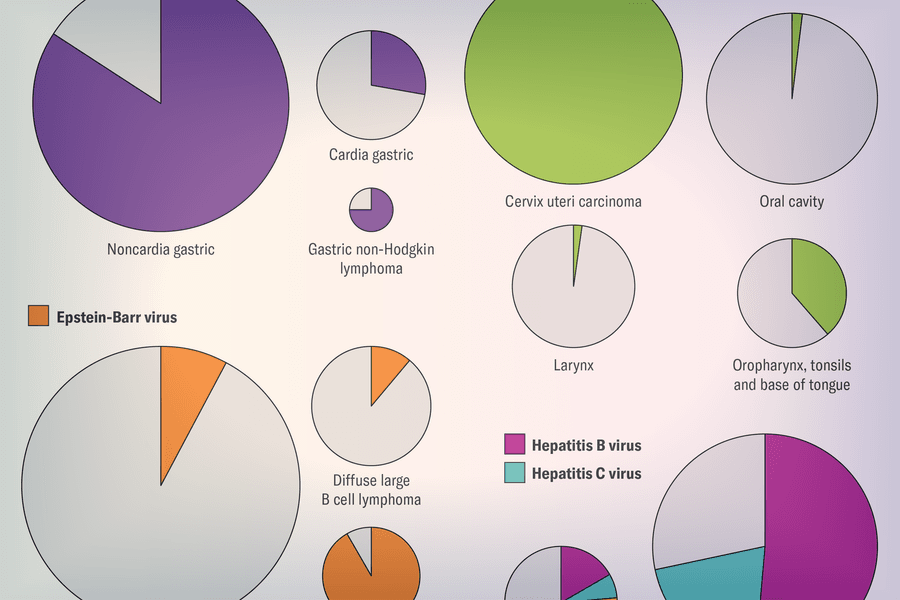
An estimated one in eight cancer cases worldwide may be caused by infections—many of which are preventable with treatment or vaccines, according to new research.

In a study published on Monday in the Lancet Oncology, researchers estimate that infections were responsible for approximately 2.3 million cancer cases, or about 12 percent of diagnoses, worldwide in 2024.

Helicobacter pylori bacteria and human papillomavirus (HPV) combined accounted for more than an estimated 1.5 million cancer cases, the analysis found. An estimated 360,000 cancer cases were linked to hepatitis B infections, and 260,000 cases were caused by the Epstein-Barr virus.There is good news here: millions of cancers are preventable, says Gary Clifford, the study’s senior author and an epidemiologist at the International Agency for Research on Cancer. “These are very actionable risk factors. We can test for them. We can vaccinate against them.”

The new estimates update older research to investigate cancer and infections that was conducted in 2018. Since then researchers have discovered that the Epstein-Barr virus, which is known to cause cancers such as nasal pharyngeal cancers and some forms of lymphoma, is also linked to some stomach cancers and some rarer lymphomas, Clifford says.

There were geographic differences in the places where cancers caused by infections occurred, too. In sub-Saharan Africa, for instance, there were higher rates of such cancers, in part because of “disparities in investment,” Clifford says, such as a lack of cervical cancer screening programs compared with those that have been available in, say, the U.S. By knowing where the infection-linked cancer burden has been highest, health officials can work to prevent those infections.

The findings serve as a reminder that infectious agents cause cancer, says Anna Giuliano, founding director of the Center for Immunization and Infection Research in Cancer at the Moffitt Cancer Center. “And there’s something we can do about it,” she says.

People can be screened and treated for hepatitis C and vaccinated against hepatitis B, both of which can cause liver cancer, for instance, she notes. Antibiotics can reduce the risk of cancer in people with H. pylori infection. And the HPV vaccine, first introduced in the U.S. in 2006, can prevent six different cancers, including cervical cancer, throat cancer and anal cancer.

In the 20 years since the HPV shot was first introduced in the U.S., in fact, rates of cervical cancer have dropped in some states by more than 50 percent among women aged 20 to 31, the first group eligible to receive the vaccine as preteens. Researchers have documented similar benefits around the globe.

“There is no question that this vaccine does what it was intended to do,” Giuliano says.

Nancy Lee, an oncologist at Memorial Sloan Kettering Cancer Center, says the new findings underscore the importance of vaccination.

“HPV vaccination is critical to preventing infection and reducing the burden of HPV-related cancers,” she says, noting that, in the U.S., HPV-related throat cancer is a “growing” concern.

Ultimately, the takeaway is that “serious mortal diseases can be prevented with a simple population-based equality-driven jab in the arm,” Clifford says. “It’s really very simple and straightforward.”

.

https://static.scientificamerican.com/dam/asset/e56e6644-7807-429c-80d6-d075cae35e49/infections-cancer_graphic_leadImage.png?m=1790629757.656&w=900Amanda Montañez

.

.

Click the link below for the complete article:

https://www.scientificamerican.com/article/one-in-eight-new-cancers-are-likely-caused-by-infections-theres-an-easy-way-to-protect-yourself/

.

__________________________________________

Raising Kids Is Hard. It’s Harder When You’re Parenting Through Trauma.

Leave a comment

Click the link below the picture

.

When news of the U.S. Surgeon General Advisory on the Mental Health and Well-Being of Parents hit my feeds in late August, I clicked on Dr. Vivek Murthy’s story in the New York Times with the mix of curiosity and skepticism I typically feel when I open my kids’ report cards. On one hand, I’m always hopeful for some unexpected revelation that might help me connect with them in a new way. On the other, these are my kids we’re talking about. I’m with them all the time, including every evening as they labor through homework, so there should be zero surprises.

I dug into Murthy’s piece like it was the teacher comments section, on a familiar hunt for whatever nuggets of insight he might have to offer. At the same time, as a mom of three young children who finds herself naturally and constantly in touch with all aspects of his thesis, I was doubtful I’d find anything I didn’t already know.

Murthy argues that parents exist in an unsustainable state of overwhelm. That our stressors are big and plentiful, from economic concerns to basic safety, and that this chronic stress threatens the whole ecosystem — parents, kids, and by extension, all of society. To this, I thought, respectfully, Duh?

I quickly realized, though, that this report wasn’t intended to solve the state of modern parenting, but to establish the extent of the problem. And I recognized myself there, in the tricky, heavy business of raising kids and running a household in the face of fearfulness and uncertainty. But what happens when there’s more to the story?

Sudden, unexpected trauma as the primary source of parental stress is touched on only briefly in the report, despite the fact that many of us have experienced something like this, or will: a tragedy so random and out of bounds that it leaves not only our hearts shattered, but our belief systems, too. For me, it was the death of my older sister in a bicycling accident, seven years ago, that turned my whole system on its head — an epic loss that made every assumption I had held about life feel flimsy and foolish. In an instant, everything became dangerous; nothing was safe. My generalized, dare I say “normal,” new-mom worries escalated immediately into a stubborn, all-encompassing anxiety and habitual hypervigilance, snowplowing in the extreme. Except it didn’t come from a place of wanting my kids to get ahead — honestly, that was the furthest thing from my mind. I’ve operated this way because I genuinely believed that’s what was needed to keep them alive.

Parenting from this mindset is a disaster. We know this, and yet it’s helpful to understand how many of us have landed here: about 5 out of every 100 adults (or 5%) in the U.S. has PTSD in any given year.

My anxiety didn’t come from a place of wanting my kids to get ahead — honestly, that was the furthest thing from my mind. I’ve operated this way because I genuinely believed that’s what was needed to keep them alive.

The year Maureen died, my oldest, Scotty, was almost 3, and his sister Caroline had just turned 1. I’d read enough Janet Lansbury by that point to know, intellectually, that it was healthy and necessary for them to explore and experiment. But if I had been a bit of a hoverer before, the post-traumatic shift happening inside my mind brought an alertness I couldn’t turn off. It was like living inside of a split screen: one side showing my kids doing typical kid things, the other with a night vision overlay that revealed lurking almost-accidents in every direction. I couldn’t get out of my own way. So I got into theirs — barking out dire warnings of coffee table corners, too-high climbing branches, and tricky playground obstacles. If I had a dollar for every time I shouted some variation of “Be careful!” I’d be very, very rich.

I’ve often wondered if, within a year or two, I would’ve eventually found a way to mellow (or, another word I love, integrate) on my own, but life had other plans. Our youngest, Will, arrived prematurely at 28 weeks and six days gestation in November of 2019 after a horror show of pregnancy complications. His three-month NICU stay and subsequent post-discharge health crises dovetailed with the dawn of Covid, so things continued to be not only scary and stressful, but infinitely more complex.

For a solid year, Covid shutdowns did a lot of the work for me. It was easy to decline play dates and outings and limit visitors, and everyone, to my great delight, became as obsessed with hand-washing as I did. But as life opened back up, I started to feel like the person time forgot. I didn’t yearn for socializing or in-person alternatives to Zoom. I was fine sending the big kids to school in masks if it meant keeping Will healthy. A controversial stance, I realize, but one I was glad to take after the common cold had landed him back in the ICU.

Turns out it wasn’t just the germs. My split screen came back online with all manner of calamities unfolding on the night vision side — truly the most random, micro-level stuff. Stairs and curbs freaked me out. The stomping sound of the kids running in the house. S’more making (marshmallow spear could poke someone’s eye out), popcorn eating (you’ll choke on an un-popped kernel), and standing near a tree for too long (Google “sudden limb drop,” it’s a thing). Halloween (a kid’s dream day!) was haunted not by witches and goblins but by my own ghastly hollering at anyone who stepped outside the painted confines of a crosswalk, or, God forbid, into one without a firmly lit WALK signal beckoning. With each small freedom granted, the instinct to retreat grew. One day my Instagram algorithm correctly served up a meme that read “Actually, all my systems are nervous,” and I thought to myself, Umm, yeah. I should have shirts made.

n the choice between fight, flight, or freeze, I was certifiably frozen. In thought and in time, unable to acknowledge what could not be more clear: my one-size-fits-all safety strategy no longer worked, if it ever did. The kids (even Will!) were growing bigger, stronger, and more capable in all the ways, which made my hypervigilance the increasingly limiting factor in their lives.

.

A little girl learning to ride a bike in the park, with the help of her mother. Rear view photo.I was already an anxious mom, but a sudden death in the family made everything seem dangerous.

.

.

Click the link below for the complete article:

https://www.romper.com/parenting/surgeon-general-hypervigilance-ptsd-anxiety

.

__________________________________________

As Jack Smith Testifies, a Senator’s Accusation of Perjury Falls Apart

Leave a comment

Click the link below the picture

.

It was meant to be a dramatic confrontation, a public accusation of perjury against Jack Smith, the special counsel who investigated Donald J. Trump. Instead, Senator Eric Schmitt’s amateur sleuthing into basketball led him to the wrong game, league and state.

During a four-hour Senate Judiciary Committee hearing, Mr. Schmitt, a Republican from Missouri, struck a conspiratorial tone and asked Mr. Smith if he had attended an Atlanta Hawks home game in February 2024.

Mr. Schmitt focused on the basketball game in the hopes that he could show Mr. Smith had perjured himself and was involved in a conspiracy with local Atlanta prosecutors to ensnare Mr. Trump. In a hearing where Republicans repeatedly accused Mr. Smith of lying, what Mr. Schmitt first presented as smoking-gun evidence against Mr. Smith turned out to be a misfire.

During his testimony, Mr. Smith appeared deeply confused by Mr. Schmitt’s question. “I definitely did not go to a Hawks game,” he said. “I’m sure of that.”

Mr. Schmitt seemed confident he had just caught Mr. Smith in a lie. It was part of a broader effort by Mr. Trump’s Republican allies to characterize Mr. Smith as politically partisan, a man with an ax to grind not just against a former president, but also the Republican establishment. Mr. Smith has already defended his work before Congress, and Republicans have claimed that his past testimony included perjury.

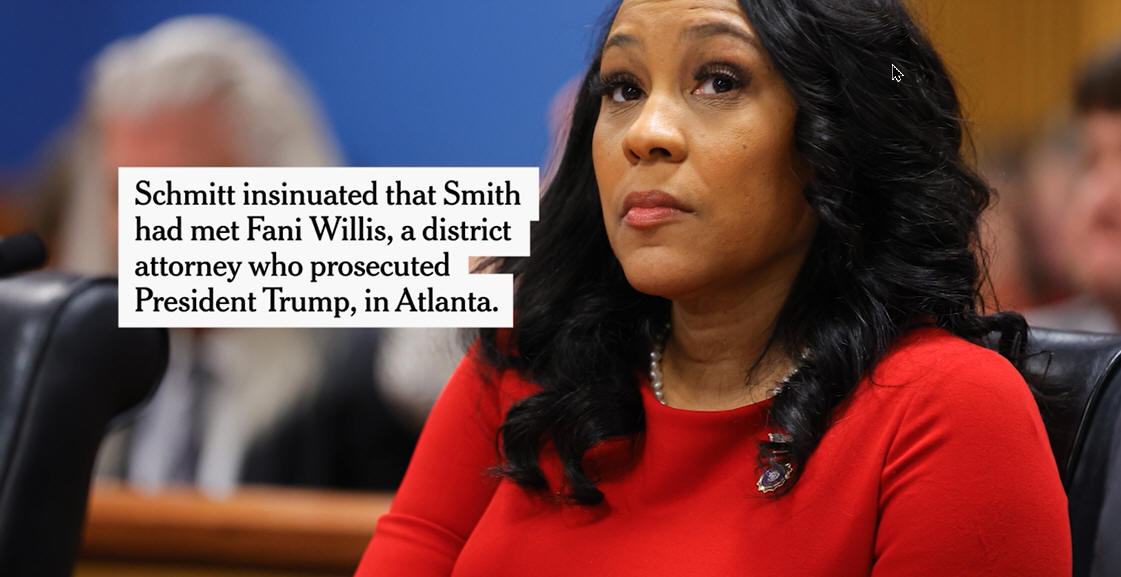
On Tuesday, Mr. Schmitt argued that Mr. Smith had lied again, this time about a basketball game. If the prosecutor was in Atlanta, Mr. Schmitt suggested, he might have met with the local district attorney, Fani Willis, who also pursued a criminal case against Mr. Trump.

Mr. Schmitt’s Republican colleague from Louisiana, John Kennedy, stood next to him helping hold up a poster board showing text messages among members of Mr. Smith’s special counsel team from Feb. 3, 2024, discussing seats at a basketball game.

“I don’t think you know we have this stuff, so I’ll give you a second to process it so you don’t perjure yourself,” Mr. Schmitt said, even as the poster board was swiftly taken down, too quickly for most in the room to read it.

When the former special counsel insisted he had not gone to see the Atlanta Hawks play in that time period, Mr. Schmitt declared, “I think you’ve already perjured yourself,” and called Mr. Smith a “dirtbag.”

The accusation appeared to unravel almost immediately.

Invited to respond by Senator Amy Klobuchar, a Minnesota Democrat, Mr. Smith said he had, in fact, attended a basketball game on that day, but it was to see the Iowa Hawkeyes at the University of Maryland. That night, Caitlin Clark, the star point guard who now plays in the W.N.B.A., scored 38 points and had 12 assists.

Ms. Klobuchar suggested that Mr. Schmitt’s accusation was rooted in the senator’s confusion between the “Hawks” of Atlanta and the “Hawkeyes” of Iowa.

Mr. Schmitt declared that he still stood by calling Mr. Smith a “dirtbag,” then left the hearing.

The exchange took up just four minutes of the hearing. But it showed how eager the Republicans were to paint Mr. Smith as an out-of-control partisan — and to find a basis to accuse him of a crime at a time when the Justice Department has proved receptive to pursuing the people who investigated Mr. Trump.

A central issue was Mr. Smith’s subpoenas for lawmakers’ phone records as he and his team sought to trace Mr. Trump’s pressure campaign on Congress to block Joseph R. Biden Jr.’s Electoral College certification.

As part of that effort, investigators also examined whether Mr. Trump had defrauded his supporters when he raised vast sums after the election promising to expose fraud that did not happen. They also subpoenaed financial records of Republican-aligned groups as they traced what actually happened to the money.

That effort did not result in charges.

Senator Ted Cruz, Republican of Texas, and others argued that when Mr. Smith subpoenaed phone records of Republican lawmakers, and sought court orders keeping those subpoenas secret, he showed that his prosecutorial ambitions extended far beyond Mr. Trump.

.

.

.

Click the link below for the complete article:

https://www.nytimes.com/2026/09/29/us/politics/jack-smith-congress-testimony.html

.

__________________________________________

Scientists can’t stop using AI, even when forbidden from doing so

Leave a comment

Click the link below the picture

.

Banning researchers from using AI to assess the merits of scientific papers doesn’t make much difference to the conclusions the reviewers reach – in large part because many of them ignore the prohibition and use AI anyway.

A team led by computer scientists at Microsoft Research ran a large randomised experiment during the 2026 International Conference on Machine Learning (ICML), one of the world’s biggest AI conferences, which took place in Seoul, South Korea in July.

Some 24,661 papers were submitted to the conference, requiring oversight from 17,886 reviewers. When researchers submitted their work, they could choose how it would be reviewed. The first option was to have it assessed by reviewers using a conservative policy that entirely banned the use of large language models (LLMs) to help with reviewing. The other option was to have the assessment performed by reviewers using a permissive policy that allowed the use of LLMs to help understand papers, check related work and polish reviewers’ own writing, but not to judge the merits of a paper or draft a review of the work.

The team led by Microsoft Research scientists discovered that papers reviewed under the two policies had almost identical acceptance rates – 27 per cent under the stricter policy and 26.5 per cent under the permissive one – while average review scores were 3.31 and 3.32 out of 6, respectively. Reviewer confidence was also virtually unchanged. Reviews written under the permissive policy were around 5.5 to 7 per cent longer, and were rated as slightly higher quality by experts, although a reviewer-by-reviewer comparison found no meaningful difference.

The reason for that lack of difference became clear after an anonymous survey of 1486 of the reviewers who took part in the exercise. There, 22.5 per cent of reviewers who were instructed not to use AI admitted to using an LLM anyway. “Self-reported non-compliance of 23 per cent is definitely higher than what I was anticipating,” says Miro Dudík at Microsoft Research, who was involved in the study and was also one of the conference organisers.

Those who used AI when told not to did so to brainstorm feedback, draft review text, read the papers and summarise their strengths and weaknesses. “Our post-conference survey reveals some reasons why reviewers might end up violating policy, like large reviewing workloads and insufficiently clear rules,” says Dudík.

“This study shows that banning AI in peer review is very difficult to enforce,” says Kayvan Kousha at the University of Wolverhampton, UK. “Because of the workload of academics, there is a temptation” to use AI, says Kousha.

In a separate part of the study, the researchers analysed the reviews using Pangram, an AI text detector. They found that only 52.2 per cent of reviews under the conservative policy were classified as fully human-written, compared with 37.0 per cent under the permissive policy – though the researchers warn AI text detectors aren’t perfect.

“I believe our work has relevant insights for other computer science conferences – and potentially venues in other fields as well – that are facing similar challenges,” says Sunnie S. Y. Kim at Microsoft Research.

.

https://www.newscientist.com/wp-content/uploads/2026/09/SEI_313973770.jpg?w=840

AI tools offer a tempting shortcut Xinhua / Alamy

.

.

Click the link below for the complete article:

https://www.newscientist.com/article/2590949-scientists-cant-stop-using-ai-even-when-forbidden-from-doing-so/

.

__________________________________________
Rihanna Kicks Off Paris Fashion Week With a Statement Look

Leave a comment

Click the link below the picture

.

Alert the presses! Rihanna has just touched down in the City of Light, which can only mean one thing—Paris Fashion Week has officially begun.

This evening, the singer was on hand to ring in the very first day of shows in Paris, attending the Matières Fécales spring 2027 show. And naturally, she brought along a serious statement look for the outing. I mean, Rihanna is someone who dresses up in couture at the airport—did we really think she would not flex a fabulous front row outfit?

The superstar stepped out in a dramatic skirt suit that was anything but traditional or businessy: Rihanna donned a bronzed, tinseled two-piece instead, which sashayed and shimmied with each and every step. (Presumably, it’s custom by Matière Fécales, given she is attending the label’s presentation.) For a sexier night-out slant, she also paired the textural ensemble with a black sheer bra top underneath—plus a pair of curved-heel black Louboutin pumps.

Clearly, Rihanna’s PFW is off to a stellar start—and the week has only just begun. Do we think Riri will be on hand for other big-time shows like Dior (we’re gonna say yes—she is a face for the label, after all), Saint Laurent, or even Chanel? Her man A$AP Rocky is a Chanel boy, so maybe we will get a stellar couple moment, too. Keep your eyes peeled, Parisians: Rocky and Riri may just roll up to your favorite café.

.

https://assets.vogue.com/photos/6abab4250dbaa5beabb4824c/master/w_1600,c_limit/BGUS_3698770_003.jpgPhoto: Backgrid

.

.

Click the link below for the complete article:

https://www.vogue.com/article/rihanna-paris-fashion-week-skirt-suit

.

__________________________________________

Fears of Harm to Its Employees

Leave a comment

Click the link below the picture

.

The theft by a criminal hacking group of reams of sensitive personal data involving potentially tens of thousands of former and current F.B.I. employees is emerging as one of the worst breaches of sensitive government information, leaving the bureau rushing to protect its personnel as an uncertain deadline loomed.

Nearly a week after the group, known as ShinyHunters, revealed it had pilfered intimate details about bureau personnel from the agency’s jobs portal and threatened to leak them online, F.B.I. investigators are still piecing together how the breach took place and the total damage.

The hack appears to have swept up home addresses, Social Security numbers, secretive job assignments and much more, according to a New York Times analysis of some of the records. Some are already comparing it to China’s breach of more than 20 million records from the Office of Personnel Management over a decade ago, considered so catastrophic that officials and lawmakers vowed to never let something like it happen again.

Many F.B.I. employees first learned about the hack when news reports about it surfaced on Tuesday, according to current and former officials. The next day, F.B.I. staff received an email reminding them that October is cybersecurity awareness month, which struck some as tone deaf in light of the breach, one of those people said.

On Friday, bureau leaders, in an internal memo to its rank and file, declared the hack a cybersecurity incident and acknowledged its employees had personal information stolen.

“We are operating under the premise that the threat actor is also exfiltrating PII of all F.B.I. employees,” according to the memo, which was described by someone who had seen it, using the abbreviation for personally identifiable information.

The memo said the agency would offer virtual briefings in the weeks ahead and instructed employees to remain vigilant at home and at work, report any unsolicited contacts or threats, avoid answering calls from unknown numbers and set up voice mail accounts with A.I.-generated voices. “Bureau leadership remains committed to supporting the safety of you and your family,” it said.

Still, many past and present personnel remain in the dark about whether their data has been purloined. In recent days, some have anxiously asked Times reporters whether their names are contained in the hacked data, wondering whether they needed to take steps to protect themselves or their families.

In a statement on Monday, the agency said it was “working around the clock to investigate the cyber incident involving FBIJobs.gov and is in regular communication with anyone who may be impacted — including multiple bureau-wide communications within 24 hours of public reporting.”

It added, “The F.B.I. treats the security of its information and the safety of its work force as top priorities, and our investigation is ongoing.”

In announcing its hack, ShinyHunters, believed to be a loose collective of young hackers operating across the globe, said it had targeted the F.B.I. as retribution for a public advisory the bureau had issued in the spring, warning that the group was known to harass victims and family members with threatening or coercive maneuvers. In their note, the hackers demanded that the F.B.I. “correct or simply REMOVE” the advisory or risk further consequences.

In an email to The Times on Friday, ShinyHunters said that the bureau had until the end of Tuesday to fulfill its request, even as the hackers themselves appeared to acknowledge that the bureau was unlikely to acquiesce.

That note left open the possibility that the hackers would not dump the data online, even as the group reiterated its deadline. But on Monday, in a new statement, the group claimed it never intended to do so.

“Since the very beginning we had made our decision that we would never publish this data,” the group said. “We have never intended to nor have we ever planned to.” It added that the hack and threat to the F.B.I. was a “marketing campaign to protect our business” and said that “we are not taking any further actions” with the data, including revealing more about what is contained in the files.

“We seek no escalation as our goals have widely been accomplished,” it said.

It remains to be seen what ShinyHunters will do, and security researchers warned that even if they did not publish it online they could still sell it to other criminals or foreign governments.

It is also unclear just how much sensitive information the hackers stole. The group claimed publicly to have stolen records on everyone who has applied for a job at the F.B.I., and told The Times that the people with compromised information numbered in the tens of thousands.

Ciaran Martin, the former head of Britain’s cyberdefense agency, said the F.B.I. hack likely had “huge impact on the operational capability” of the bureau and could rank as one of the most consequential data breaches in history — graver even than the Office of Personnel Management burglary.

“Losing the data on 20 million federal employees to the Chinese was bad,” Mr. Martin said. “But you knew the Chinese weren’t going to sell or publish it.”

A sample of records that the hackers have shared with The Times and other news organizations includes newer hires as well as retired ones, with birth dates ranging from the early 1940s to the mid 2000s. The most recent date references in the spreadsheet were from late April, suggesting the stolen files are at most only months old.

Current and former U.S. officials said that at least portions of the sample, and potentially all of it, appeared to be authentic.

A Times review of the sample found that it contained a range of private personal data, including:

  • The names, home addresses, phone numbers, work emails, Social Security numbers and birth dates and hire dates of current and former F.B.I. personnel.

  • Names and numbers for spouses and other emergency contacts, including in some cases parents, siblings and even children.

  • Employee identification numbers that are used for the Transportation Security Administration’s PreCheck program, which could aid spies in tracking travel itineraries of agents, including those that work undercover.

  • Names of the units in which F.B.I. personnel are employed and their job titles, as well as the names of supervisors. While some list mundane departments, others reveal extraordinarily sensitive assignments including counterintelligence, narcotics and various desks focused on Russian, Chinese and Iranian national security threats. F.B.I. agents in those roles are generally expected to zealously protect their work in such fields to avoid putting a target on their back.

Additionally, ShinyHunters said that it had stolen medical data about employees, including psychiatric records and documents related to blood and urine tests. It also said that it had additional background check files on employees.

Former bureau officials and security experts said the hacked data prompted no end of worries. The data could also make it far easier for violent criminals to seek revenge against F.B.I. agents who sent them to prison. When they submit paperwork against criminal suspects, F.B.I. agents sign their names to the records but are typically trained to not let delicate personal information easily emerge online.

“It doesn’t take much imagination to picture scenarios where employees or their families could be threatened or harmed by this kind of information being released,” said Andrew Brandt, a threat intelligence researcher at the cybersecurity company Huntress. “The bigger worry is ShinyHunters selling the data to other criminal or nation-state groups who could put it to more damaging use, rather than dumping it themselves.”

.

United States flags hang from the exterior of the J. Edgar Hoover Building in Washington.A criminal hacking group known as ShinyHunters said it had targeted the F.B.I. as retribution for its public warning in the spring that the group was known to harass its victims and their family members. Credit…Tierney L. Cross/The New York Times

.

.

Click the link below for the complete article:

https://www.nytimes.com/2026/09/28/us/politics/fbi-shinyhunters-damage.html

.

__________________________________________

Older Entries Newer Entries

Moara de Vânt

Să facem glume, nu război

🇲🇲Dear all peace-loving people around the world🇲🇲

In the world, human beings are facing various problems. People who are full of greed, anger, and ignorance are seen to be fighting with each other in words and deeds. As the fighting continues, various problems such as civil wars, wars of aggression, and wars of aggression are occurring. As world peace is being destroyed, humans are facing unbearable problems. Innocent children and women are not getting the rights they deserve and deserve. I can't think of one thing every time. What is it? The United Nations. If we look at the responsibilities and duties of the United Nations, I think it is not suitable for solving the problems that are happening in the world today. In fact, the United Nations and the World Security Council, such an organization must rule the world, must be able to give orders, and must have various ways to obey orders. There must be no organization that can influence more than that organization. There should be experts from each country. They can even dominate the superpowers like the US, China, and Britain. Only then will global peace be achieved quickly. Now, if a country with power develops more militarily, economically, or socially than its own country, then powerful countries will jealously seek out enemies and wage war. Or they will attack with fighter jets. In this, innocent people are losing their lives. No one understands the value of a life. You should think about how to achieve global peace by controlling these. If the US continues to be the permanent president of the UN, world peace will never be achieved. If you think carefully, no one sees that they are working for the common good, but for their own benefit, for the benefit of their own country. The permanent president of the UN and the Security Council has rejected this, As a young Rohingya, I have come to realize that only by electing the president and secretary from among the countries in the world through a secret ballot system and governing the world fairly can we achieve global peace. The United Nations and the Security Council are organizations in which any country must govern, give orders, and make them obey their orders. For example, only when a defendant is tried in court can we hold the leaders of the countries in check and control them, can we achieve global peace smoothly. Otherwise, it will not be easy for powerful countries to use various excuses to end this war every year, every year, for the benefit of themselves and their countries. No country's leaders pay any attention to the words of the United Nations and the Security Council. If we look at it in practice, look at the Rohingya issue. Myanmar is a small country. Even that country has been under siege for 8 years. What action can be taken? Why is the UN and the Security Council Powerless? Without such Power, how can the organization bring about global peace? Everyone should think about it. Whether there is a veto or a strong one, all countries in the world can only achieve global peace if they are subject to the UN and the Security Council. Seek peace in the quiet embrace of nature. Peace is an indispensable need of the human race. It is not as if one person can kill another person, and it is as if one country can attack another country, but instead of trying to build peace, we must try to destroy the peace now, and the world is getting hotter and is on the verge of collapse. I especially appeal to all the world experts to urgently try to bring about peace in all parts of the world. Mr, Noor Muhamed Arkhan Rohingya Youth Myanmar

Gazeta cuiburilor de cuc

Publicație umoristică dedicată glumeților de pretutindeni

JaZzArt en València

Faith saved us from the savages that we were, losing faith makes us savages again

PeopleTalky

Where Trends Meet Truth

MRS. T’S CORNER

https://www.tangietwoods

Srikanth’s poetry

Freelance poetry writing

MediaNegy

Zalai Betti

INOVATION BLOG AND NEWS

INOVATION BLOG PEOPLE AND NEWS

szigetingy | budapest

Németh György

PT. LPPL Lombok

Konsultan Lingkungan Hidup di Lombok - NTB

Idézetek – LeaArt21

Lea Krasznai (LeaArt21) – Idezetek (Idézetek) WordPress (Budapest, Hungary)

danielecolleoni

Appunti, spunti e passioni in liberta'

تعلم وعلم، ادخر،سافر واستجمم .

تعنى بتقديم نصائح للمعلمين المبتدئين، والطلبة الممتحنين، ومشاركة الاخرين تجربة الادخار في المال، بترشيد الاستهلاك المنزلي، وترتيب البيت، والحفاظ على البيئة، وتشجيع السيارات صديقةالبيئة، والسياحة والاسفار، ونماء رؤوس الاموال، والطب البديل وتشجيع التعليم الرقمي والذكاء الاصطناعي، والعناية بالنحل وتربية الاسماك، والاسثمار في رؤوس الاموال، الزراعة العضوية، والعناية باسنان الرضع، و صحة الحوامل، وتفسير القران

scientifique

apprendre pour évoluer

In Between the Lines

Thoughts on books, language, meaning, and the culture around it.

Great Lakes Mindset

Outdoor Recreation & Adventure in the Great Lakes Region

Nelsapy

News, Info, Bio, Articles, Reviews, Lyrics, Technology, Science, Inspiration, Motivation, Philosphy and many more...

Becoming HIS Tapestry

Christian Lifestyle Blogger

Joe Mullins Commissioner

CEO and president of The Mullins Companies

The Luttie Board

Two Cultures. One Life. Endless Stories

Charles Maxwell DeCook

Real Estate Development Specialist

Amor Entre Estrellas

¡Bienvenido de vuelta viajero!

Heart of Loia `'.,°~

so looking to the sky ¡ sing and from my heart to YOU ¡ bring...

Michael Ciullo

CEO and Founder of Nsight Health

Nelson MCBS

Catholic News, Prayers, HD Images, Rosary, Music, Videos, Holy Mass, Homily, Saints, Lyrics, Novenas, Retreats, Talks, Devotionals and Many More

global geopolitics

Decoding Power. Defying Narratives.

Talk Photo

A creative collaboration introducing the art of nature and nature's art.

Movie Burner Entertainment

The Home Of Entertainment News, Reviews and Reactions

C r i s t i a n a' s Fine Arts ⛄️

•Whenever you are confronted with an opponent, conquer him with love.(Gandhi)

TradingClubsMan

Algotrader at TRADING-CLUBS.COM

Comedy FESTIVAL

Film and Writing Festival for Comedy. Showcasing best of comedy short films at the FEEDBACK Film Festival. Plus, showcasing best of comedy novels, short stories, poems, screenplays (TV, short, feature) at the festival performed by professional actors.

Bonnywood Manor

Peace. Tranquility. Insanity.

Warum ich Rad fahre

Take a ride on the wild side

Madame-Radio

Découvre des musiques prometteuses (principalement) dans la sphère musicale française.

Ir de Compras Online

No tiene que Ser una Pesadilla.

Kana's Chronicles

Life in Kana-text (er... CONtext)

Jam Writes

Where feelings meet metaphors and make questionable choices.

emotionalpeace

Finding hope and peace through writing, art, photography, and faith in Jesus.

Essu Center

Eyasu The Wonderful