October 11, 2022
Mohenjo
Business, Enthralling, Human Interest, Photographs
amazon, business, Business News, current-events, Future, Hotels, human-rights, medicine, mental-health, research, Science, Science News, technology, Technology News, travel, vacation

Click the link below the picture
.
Eilean Donan is a small tidal island situated at the confluence of three sea lochs (Loch Duich, Loch Long, and Loch Alsh) in the western Highlands of Scotland, about 1 kilometer (5⁄8 mi) from the village of Dornie. It is connected to the mainland by a footbridge that was installed early in the 20th century and is dominated by a picturesque castle that frequently appears in photographs, film, and television. The island’s original castle was built in the thirteenth century; it became a stronghold of the Clan Mackenzie and their allies, the Clan MacRae. However, in response to the Mackenzies’ involvement in the Jacobite rebellions early in the 18th century, government ships destroyed the castle in 1719. The present-day castle is Lieutenant-Colonel John Macrae-Gilstrap’s 20th-century reconstruction of the old castle.
Eilean Donan is part of the Kintail National Scenic Area, one of 40 in Scotland. In 2001, the island had a recorded population of just one person, but there were no “usual residents” at the time of the 2011 census. Eilean Donan, which means simply “island of Donnán”, is named after Donnán of Eigg, a Celtic saint who was martyred in 617. Donnán is said to have established a church on the island, though no trace of this remains.
It is possible that an early Christian monastic cell was founded on the island in the 6th or 7th century, and that it was dedicated to Donnán of Eigg, an Irish saint who was martyred on Eigg in April 617. No remains of any Christian buildings survive, though fragments of vitrified stone (stone that has been subjected to very high temperatures) have been discovered, indicating that there was an Iron Age or early medieval fortification on the island.
In the earlier thirteenth century, during the reign of Alexander II (ruled 1214–1249), a large curtain-wall castle (wall of enceinte) was constructed; it enclosed much of the island. At this time, the area around the island was at the boundary of the Norse-Celtic Lordship of the Isles and the Earldom of Ross: Eilean Donan provided a strong defensive position against Norse expeditions. A founding legend has it that the son of a chief of the Mathesons acquired the power to communicate with birds; as a result of this power, and after many adventures overseas, he gained wealth, power, and the respect of Alexander II, who asked him to build the castle to defend his realm.
At a later date, the island became a stronghold of the Mackenzies of Kintail, originally vassals of William I, Earl of Ross. At this early stage, the castle is said to have been garrisoned by Macraes and Maclennans, both clans that were later closely associated with the Mackenzies Traditional Mackenzie clan histories relate that Earl William sought advantage from the Treaty of Perth of 1266, by which King Magnus VI of Norway ceded the Hebrides to Scotland, and demanded that his kinsman Kenneth Mackenzie return the castle to allow his expansion into the islands. Mackenzie refused, and Earl William led an assault against Eilean Donan that the Mackenzies and their allies repulsed.
The Mackenzie clan histories also claim (with little, if any, supporting contemporary evidence), that Robert the Bruce sheltered at Eilean Donan during the winter of 1306 to 1307; the castle escaped any other involvement in the Wars of Scottish Independence. In 1331 Thomas Randolph, Earl of Moray, sent an officer to Eilean Donan to warn the occupants of his forthcoming visit. In preparation 50 wrongdoers were rounded up and executed, their heads being displayed on the castle walls to Moray’s approval. By the middle of the 14th century, the Mackenzies are said to have been on the losing side in the ongoing feuding with the Earls of Ross. William III, Earl of Ross granted Kintail to Raghnall Mac Ruaidhrí in 1342. With the assistance of Leod Macgilleandrais, the Earl allegedly apprehended Kenneth Mackenzie, 3rd of Kintail, and had him executed in 1346 at Inverness. Through this period Eilean Donan is said to have been held by Duncan Macaulay for the Mackenzies, against the Earl and his allies. Kenneth’s young son Murdo Mackenzie supposedly evaded the Earl’s attempts to eliminate him, and on the return of David II from exile Murdo Mackenzie was allegedly confirmed in the lands of Kintail and Eilean Donan by a charter of 1362 (of which, however, no trace survives to the present day). At some point in the earlier 14th century, it is thought that the Clan Macrae began to settle in Kintail as a body, having migrated from the Beauly Firth, and there gained the trust of the Mackenzie lairds through possible kinship and an advantageous marriage. The Macraes began to act as Mackenzie’s bodyguards, acquiring the soubriquet “Mackenzie’s shirt of mail”. Wikipedia
.
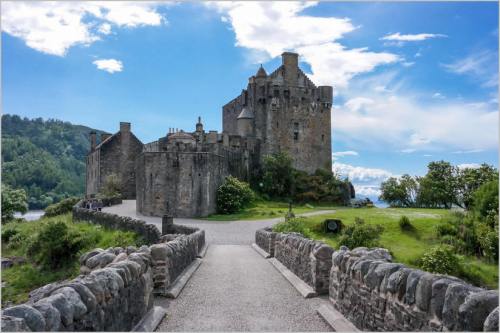 An image of Eilean Donan Castle
.
.
Click the link below for images:
.
__________________________________________
October 10, 2022
Mohenjo
Business, Enthralling, Human Interest, Photographs
amazon, business, Business News, current-events, Future, Hotels, human-rights, medicine, mental-health, research, Science, Science News, technology, Technology News, travel, vacation
Click the link below the picture
.
Ilkley Moor is part of Rombalds Moor, the moorland between Ilkley and Keighley in West Yorkshire, England. The moor, which rises to 402 m (1,319 ft) above sea level, is well known as the inspiration for the Yorkshire “county anthem” On Ilkla Moor Baht ‘at (dialect for ‘on Ilkley Moor without a hat’).
During the Carboniferous period (325 million years ago), Ilkley Moor was part of a sea-level swampy area fed by meandering river channels coming from the north. The layers in the eroded bank faces of stream gullies in the area represent sea levels with various tides depositing different sorts of sediment. Over a long period of time, the sediments were cemented and compacted into hard rock layers. Geological forces lifted and tilted the strata a little towards the southeast, producing many small fractures, or faults. Since the end of the Carboniferous period more than a thousand meters of the coal-bearing rocks have been completely removed from the area by erosion. During the last million years, Ice Age glaciers modified the shape of the Wharfe valley, deepening it, smoothing it, and leaving behind glacial debris. The millstone grit not only gives character to the town of Ilkley but gives the area its acid soils, heather moors, soft water, and rocky scars. Wikipedia
.
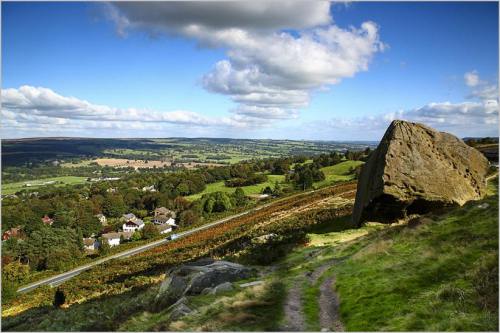 An image from Ilkley Moor Yorkshire
.
.
Click the link below for images:
.
__________________________________________
October 8, 2022
Mohenjo
Business, Enthralling, Human Interest, Photographs
amazon, business, Business News, current-events, Future, Hotels, human-rights, medicine, mental-health, research, Science, Science News, technology, Technology News, travel, vacation
Click the link below the picture
.
Addis Ababa is the capital and largest city of Ethiopia. It also serves as the seat of the government of Oromia: while being outside of Oromia regional state boundaries. In the 2007 census, the city’s population was estimated to be 2,739,551 inhabitants. Addis Ababa is a highly developed and important cultural, artistic, financial, and administrative center of Ethiopia.
In the 15th century, Addis Ababa was depicted as a fortified place named “Barara” and served as a residence of the Emperors of Ethiopia until Dawit II. Barara was completely destroyed during the Ethiopian–Adal War and Oromo expansions. The founding history of Addis Ababa dates back in late 19th-century by Menelik II, Negus of Shewa, in 1886 after finding Mount Entoto unpleasant two years prior. At the time, the city was a resort town; its large mineral spring abundance attracted nobilities of the empire, led them to establish permanent settlement. It also attracted many members of the working classes — including artisans and merchants — and foreign visitors. Menelik II then formed his imperial palace in 1887. Addis Ababa became the empire’s capital in 1889, and subsequently, international embassies were opened. Addis Ababa urban development began at the beginning of the 20th century and without any preplanning.
Addis Ababa saw a wide-scale economic boom in 1926 and 1927, and an increase in the number of buildings owned by the middle class, including stone houses filled with imported European furniture. The middle class also imported newly manufactured automobiles and expanded banking institutions. During the Italian occupation, urbanization and modernization steadily increased by a master plan which they hoped Addis Ababa would be more colonial city and continued after their occupation. Consequent master plans were designed by French and British consultants from 1940s onwards focusing on monumental structures, satellite cities, and inner-city. Similarly, the Italo-Ethiopian master plan also projected in 1986 concerning only urban structure and accommodating service, which was later adapted by the 2003 master plan.
Addis Ababa remains federal chartered city in accordance with the Addis Ababa City Government Charter Proclamation No. 87/1997 in the FDRE Constitution. Referred to as “the political capital of Africa” due to its historical, diplomatic, and political significance for the continent, Addis Ababa serves as the headquarters of major international organizations such as the African Union and the United Nations Economic Commission for Africa (ECA).
The city lies a few kilometers west of the East African Rift, which splits Ethiopia into two, between the Nubian Plate and the Somali Plate. The city is surrounded by the Special Zone of Oromia and is populated by people from the different regions of Ethiopia. It is home to Addis Ababa University. The city has a high human development index and is known for its vibrant culture, strong fashion scene, high involvement of young people, thriving arts scene, and for having the fastest economic growth of any country in the world.
.
 An image from Ethiopia’s Capital
.
.
Click the link below for images:
.
__________________________________________
October 7, 2022
Mohenjo
Business, Enthralling, Human Interest, Photographs
amazon, business, Business News, current-events, Future, Hotels, human-rights, medicine, mental-health, research, Science, Science News, technology, Technology News, travel, vacation
Click the link below the picture
.
Moorland or moor is a type of habitat found in upland areas in temperate grasslands, savannas, and shrublands and montane grasslands and shrublands biomes, characterised by low-growing vegetation on acidic soils. Moorland, nowadays, generally means uncultivated hill land (such as Dartmoor in South West England), but also includes low-lying wetlands (such as Sedgemoor, also South West England). It is closely related to heath, although experts disagree on what precisely distinguishes these types of vegetation. Generally, moor refers to highland and high rainfall zones, whereas heath refers to lowland zones which are more likely to be the result of human activity. Moorland habitats mostly occur in tropical Africa, northern and western Europe, and neotropical South America. Most of the world’s moorlands are diverse ecosystems. In the extensive moorlands of the tropics, biodiversity can be extremely high. Moorland also bears a relationship to tundra (where the subsoil is permafrost or permanently frozen soil), appearing as the tundra and the natural tree zone. The boundary between tundra and moorland constantly shifts with climatic change.
Heathland and moorland are the most extensive areas of semi-natural vegetation in the British Isles. The eastern British moorlands are similar to heaths but are differentiated by having a covering of peat. On western moors, the peat layer may be several meters thick. Scottish “muirs” are generally heather moors, but also have extensive covering of grass, cotton grass, mosses, bracken, and under-shrubs such as crowberry, with the wetter moorland having sphagnum moss merging into bog-land.
There is uncertainty about how many moors were created by human activity. Oliver Rackham writes that pollen analysis shows that some moorland, such as in the islands and extreme north of Scotland, are clearly natural, never having had trees, whereas much of the Pennine moorland area was forested in Mesolithic times. How much the deforestation was caused by climatic changes and how much by human activity is uncertain.
A variety of distinct habitat types are found in different world regions of moorland. The wildlife and vegetation forms often lead to high endemism because of the severe soil and microclimate characteristics. An example of this is the Exmoor Pony, a rare horse breed which has adapted to the harsh conditions in England’s Exmoor.
In Europe, the associated fauna consists of bird species such as red grouse, hen harrier, merlin, golden plover, curlew, skylark, meadow pipit, whinchat, ring ouzel, and twite. Other species dominate in moorlands elsewhere. Reptiles are few due to the cooler conditions. In Europe, only the common viper is frequent, though in other regions moorlands are commonly home to dozens of reptile species. Amphibians such as frogs are well represented in moorlands. When moorland is overgrazed, woody vegetation is often lost, being replaced by coarse, unpalatable grasses and bracken, with a greatly reduced fauna.
Some hill sheep breeds, such as Scottish Blackface and the Lonk, thrive on the austere conditions of heather moors.
Burning of moorland has been practised for a number of reasons, for example, when grazing is insufficient to control growth. This is recorded in Britain in the fourteenth century. Uncontrolled burning frequently caused (and causes) problems and was forbidden by statute in 1609.[citation needed] With the rise of sheep and grouse management in the nineteenth century, it again became common practice. Heather is burnt at about 10 or 12 years old when it will regenerate easily. Left longer, the woodier stems will burn more aggressively and will hinder regrowth. Burning of moorland vegetation needs to be very carefully controlled, as the peat itself can catch fire, and this can be difficult if not impossible to extinguish. In addition, uncontrolled burning of heather can promote alternative bracken and rough grass growth, which ultimately produces poorer grazing. As a result, burning is now a controversial practice; Rackham calls it “second-best land management”.
.
 An image from Heather Moorland
.
.
Click the link below for images:
.
__________________________________________
October 6, 2022
Mohenjo
Business, Enthralling, Human Interest, Photographs
amazon, business, Business News, current-events, Future, Hotels, human-rights, medicine, mental-health, research, Science, Science News, technology, Technology News, travel, vacation
Click the link below the picture
.
San Francisco, officially the City and County of San Francisco, is the commercial, financial, and cultural center of Northern California. The city proper is the fourth most populous in California and 17th most populous in the United States, with 815,201 residents as of 2021. It covers a land area of 46.9 square miles (121 square kilometers), at the end of the San Francisco Peninsula, making it the second most densely populated large U.S. city after New York City, and the fifth most densely populated U.S. county, behind only four of the five New York City boroughs. Among the 331 U.S. cities proper with more than 100,000 residents, San Francisco was ranked first by per capita income (at $133,856) and fifth by aggregate income as of 2019. Colloquial nicknames for San Francisco include SF, San Fran, The City, Frisco, and Baghdad by the Bay.
San Francisco and the surrounding San Francisco Bay Area are a global center of economic activity and the arts and sciences, spurred by leading universities, high-tech, healthcare, FIRE, and professional services sectors. As of 2020, the metropolitan area, with 6.7 million residents, ranked 5th by GDP ($874 billion) and 2nd by GDP per capita ($131,082) across the OECD countries, ahead of global cities like Paris, London, and Singapore. San Francisco anchors the 12th most populous metropolitan statistical area in the United States with 4.7 million residents, and the fourth-largest by economic output, with a GDP of $592 billion in 2019. The wider San Jose–San Francisco–Oakland, CA Combined Statistical Area is the fifth most populous, with 9.6 million residents, and the third-largest by economic output, with a GDP of $0.5 trillion in 2020. Of the 105 primary statistical areas in the U.S. with over 500,000 residents, this CSA had the highest GDP per capita in 2019, at $112,910. In the same year, San Francisco proper had a GDP of $200.5 billion, and a GDP per capita of $228,118. San Francisco was ranked seventh in the world and third in the United States on the Global Financial Centres Index as of March 2022.
As of June 2022, the Bay Area was home to four of the world’s fifteen largest companies by market capitalization, and the city proper is headquarters to companies such as Wells Fargo, Salesforce, Uber, First Republic Bank, Airbnb, Twitter, Block, Levi’s, Gap Inc., Dropbox, PG&E, Lyft, and Cruise, although the COVID-19 pandemic in the United States has accelerated the exodus of business from downtown San Francisco. The city is home to a number of educational and cultural institutions, such as the University of California, San Francisco (UCSF), the University of San Francisco (USF), San Francisco State University (SFSU), the de Young Museum, the San Francisco Museum of Modern Art, the San Francisco Symphony, the San Francisco Ballet, the San Francisco Opera, the SFJAZZ Center, the California Academy of Sciences, the San Francisco Giants, and the Golden State Warriors. A popular tourist destination, San Francisco is known for its steep rolling hills and eclectic mix of architecture across varied neighborhoods, as well as its cool summers, fog, and landmarks, including the Golden Gate Bridge, cable cars, Alcatraz, and Chinatown and Mission districts.
San Francisco was founded on June 29, 1776, when colonists from Spain established the Presidio of San Francisco at the Golden Gate and Mission San Francisco de Asís a few miles away, both named for Francis of Assisi. The California Gold Rush of 1849 brought rapid growth, transforming an unimportant hamlet into a busy port making it the largest city on the West Coast at the time; between 1870 and 1900, approximately one-quarter of California’s population resided in the city proper. In 1856, San Francisco became a consolidated city-county. After three-quarters of the city was destroyed by the 1906 earthquake and fire, it was quickly rebuilt, hosting the Panama-Pacific International Exposition nine years later. In World War II, it was a major port of embarkation for nval service members shipping out to the Pacific Theater. It then became the birthplace of the United Nations in 1945. After the war, confluence of returning servicemen, significant, liberalizing attitudes, the rise of the “beatnik” and “hippie” countercultures, the sexual revolution, the peace movement growing from opposition to United States involvement in the Vietnam War, and other factors led to the Summer of Love and the gay rights movement, cementing San Francisco as a center of liberal activism in the United States. More recently, statewide droughts in California have strained the city’s water security.
.
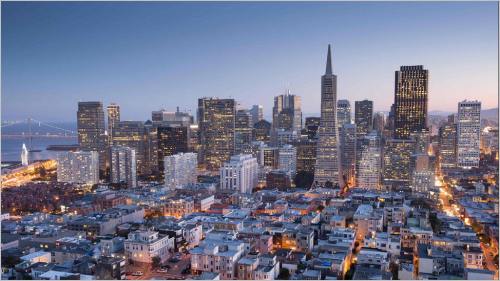 An image from San Francisco, California
.
.
Click the link below for images:
.
__________________________________________
October 5, 2022
Mohenjo
Business, Enthralling, Human Interest, Photographs
amazon, business, Business News, current-events, Future, Hotels, human-rights, medicine, mental-health, research, Science, Science News, technology, Technology News, travel, vacation
Click the link below the picture
.
Loch Etive (Scottish Gaelic, Loch Eite) is a 30 km sea loch in Argyll and Bute, Scotland. It reaches the sea at Connel, 5 km north of Oban. It measures 31.6 km (193⁄4 miles) long and from 1.2 km (3⁄4 mile) to 1.6 km (1 mi) wide. Its depth varies greatly, up to a maximum of 150 m (490 ft).
The name Etive is believed to mean “little fierce one” from the Gaelic goddess associated with the loch. It heads east for half its length alongside the main road and rail link to Oban, before heading northeast into mountainous terrain. A road along Glen Etive makes the head of the loch accessible from Glen Coe. The narrow mouth of the loch results in its most unusual feature, the Falls of Lora. Part of the north bank has been designated a Special Area of Conservation in particular due to old sessile oak woods. Surprisingly, a small colony of around 20 common seals is resident in Loch Etive.
Just seaward of the mouth of the loch is Dunstaffnage Castle. This was a stronghold of the kingdom of Dál Riata until the 9th century, and possibly it’s center at one time. It is believed to have held the Stone of Scone before its transfer to Scone Palace. The current ruins date from 1275. Cruises up Loch Etive followed by carriage trip to Glen Coe were started in 1881 as Oban developed as a fashionable resort.
Connel Bridge, a cantilever bridge over the loch at the Falls of Lora, was built in 1903 for the Connel to Ballachulish railway. A rail bus ferried foot passengers across from 1909 until 1914 when the bridge was converted to allow for rail, road, and passenger traffic (on the same track). Since the railway line closed in 1966, the bridge has been solely for road traffic.
In the parish of Ardchattan, on the north shore, stands the beautiful ruin of St. Modan’s Priory, founded in the 13th century for Cistercian monks of the Valliscaulian Order. It is said that Robert Bruce held within its walls the last parliament in which the Gaelic language was used. On the coast of Loch Nell, or Ardmucknish Bay, is the vitrified fort of Beregonium, not to be confounded with Rerigonium (sometimes miscalled Berigonium) on Loch Ryan in Wigtownshire town of the ancient Novantae tribe, identified with Innermessan. The confusion has arisen through a textual error in an early edition of Ptolemy’s Geography. Wikipedia
.
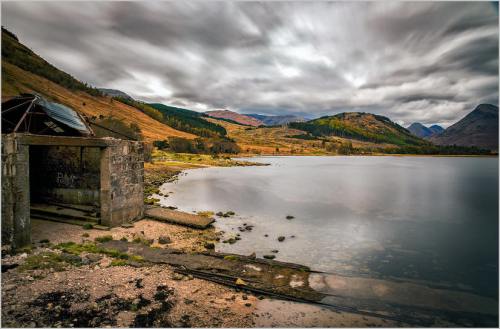 An image from Loch Etive
.
.
Click the link below for images:
.
__________________________________________
October 4, 2022
Mohenjo
Business, Enthralling, Human Interest, Photographs
amazon, business, Business News, current-events, Future, Hotels, human-rights, medicine, mental-health, research, Science, Science News, technology, Technology News, travel, vacation
Click the link below the picture
.
Glen Etive (Scottish Gaelic: Gleann Èite) is a glen in the Highlands of Scotland. The River Etive (Scottish Gaelic: Abhainn Èite) rises on the peaks surrounding Rannoch Moor, with several tributary streams coming together at the Kings House Hotel, at the head of Glen Coe. From the Kings House, the Etive flows for about 18 km, reaching the sea loch, Loch Etive. The river and its tributaries are popular with whitewater kayakers and at high water levels, it is a test piece of the area and a classic run.
At the north end of Glen Etive lie the two mountains known as the “Herdsmen of Etive”: Buachaille Etive Mòr and Buachaille Etive Beag. Other peaks accessible from the Glen include Ben Starav, located near the head of Loch Etive, and Beinn Fhionnlaidh on the northern side of the glen. The scenic beauty of the glen has led to its inclusion the Ben Nevis and Glen Coe National Scenic Area, one of 40 such areas in Scotland.
A narrow road from the Kings House Hotel runs down the glen, serving several houses and farms. This road ends at the head of the loch, though rough tracks continue along both shores.
The River Etive is one of Scotland’s most popular and challenging whitewater kayaking runs. It provides a multitude of solid Grade 4(5) rapids with a variety of falls and pool drops. It is home to a herd of Scottish red deer that have become accustomed to the presence of humans.
In the Ulster Cycle of Irish mythology, Deirdre and her love Naoise founded Glen Etive after fleeing Ulster.
The Fachen is also known as the Dwarf of Glen Etive.
Glen Etive has been used as the backdrop to many movies, among them Braveheart and Skyfall. The resulting influx of visitors has led to concerns about the spoilage of the glen through littering and fly-tipping. Wikipedia
.
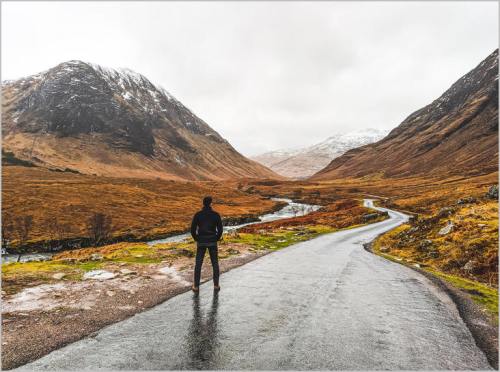 An image from Glen Etive
.
.
Click the link below for images:
.
__________________________________________
October 3, 2022
Mohenjo
Business, Enthralling, Human Interest, Photographs
amazon, business, Business News, current-events, Future, Hotels, human-rights, medicine, mental-health, research, Science, Science News, technology, Technology News, travel, vacation
Click the link below the picture
.
The Ennedi Plateau is located in the northeast of Chad, in the regions of Ennedi-Ouest and Ennedi-Est. It is considered a part of the group of mountains known as the Ennedi Massif found in Chad, which is one of the nine countries that make up the Sahelian belt that spans the Atlantic Ocean to Sudan. The Ennedi is a sandstone bulwark in the middle of the Sahara, which was formed by erosion from wind and temperature. Many people occupied this area, such as hunters and gatherers (5,000-4,000 cal BC) and pastoralists (beginning 4,000 cal BC). The Ennedi area is also known for its large collection of rock art depicting mainly cattle, as these animals were the main source of financial, environmental, and cultural impact. This art dates back nearly 7,000 years ago. Today, two semi-nomadic groups, mainly of the Muslim religion, have permanent villages in the Ennedi during the rainy months and pass through the area during the dry season. They rely on their herds of camels, donkeys, sheep, and goats to survive.
The Ennedi makes up an area of approximately 60,000 km2 (23,000 sq mi), as large as Switzerland, and its highest point is approximately 1,450 m (4,760 ft) above sea level. The Massif is composed of sandstone overlaying a Precambrian granite base. In the Ennedi, there are at least twenty perennial or semi-perennial springs, gueltas (desert ponds), and pools, but they rarely reach greater than a few dozen meters in the dry season. It is considered part of the Sahelian Acacia savanna, which extends across the entire continent which once contained diverse ungulates whose population has since been reduced. The landscape has geological structures, including towers, pillars, bridges, and arches, which serve as major tourist attractions. Interestingly, much of the sand found in the Sahara is due to the generation of dust in the Tibesti-Ennedi triangle.
Evidence of a change in climate occurred between 6000 BP, with a savanna region with ~250 mm annual rainfall, to ~150 mm annual rainfall 4300 BP.[] It later reached an annual rainfall of 50 mm around 2700 BP, similar to the amount of annual rainfall observed today. There are also monsoons common in the area, generating around 50–150 mm of rain per year. These natural disasters create a diverse mixture of vegetation within the area. However, precipitation allows for greater moisture in the thin soil during the winter months, with lower run-off. The mountains are also known to have a north-Sahelian climate in the southern region, with greater amounts of precipitation between the months of May and September. The rainfall is subject to the Intertropical Convergence Zone (ITCZ).
.
 An image from Ennedi Plateau Chad
.
.
Click the link below for images:
.
__________________________________________
October 1, 2022
Mohenjo
Business, Enthralling, Human Interest, Photographs
amazon, business, Business News, current-events, Future, Hotels, human-rights, medicine, mental-health, research, Science, Science News, technology, Technology News, travel, vacation
Click the link below the picture
.
Yoshino-Kumano National Park is a national park comprising several non-contiguous areas of Mie, Nara, and Wakayama Prefectures, Japan. Established in 1936, the park includes Mount Yoshino, celebrated for its cherry blossoms, as well as elements of the UNESCO World Heritage Site Sacred Sites and Pilgrimage Routes in the Kii Mountain Range.
Notable places of interest include the Dorokyō Gorge, Kumano Hongū Taisha, Kushimoto Marine Park, Mount Ōdaigahara, Mount Ōmine, Mount Yoshino, and Nachi Falls.
.
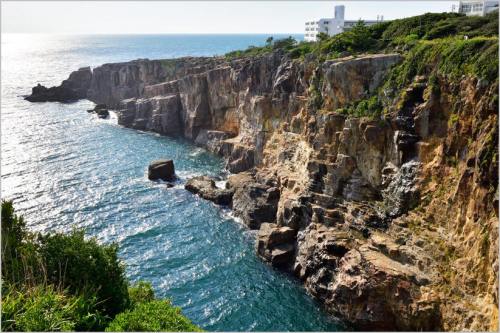 An image from Yoshino-Kumano National Park
.
.
Click the link below for images:
.
__________________________________________
September 30, 2022
Mohenjo
Business, Enthralling, Human Interest, Photographs
amazon, business, Business News, current-events, Future, Hotels, human-rights, medicine, mental-health, research, Science, Science News, technology, Technology News, travel, vacation
Click the link below the picture
.
Rock towers line up for as long as 900 meters in a straight line that looks like a bridge pile. The magma that flowed from underground about 14 to 15 million years ago had penetrated the Kumano strata to make a quartz porphyry dike.
kansai-guide com
.
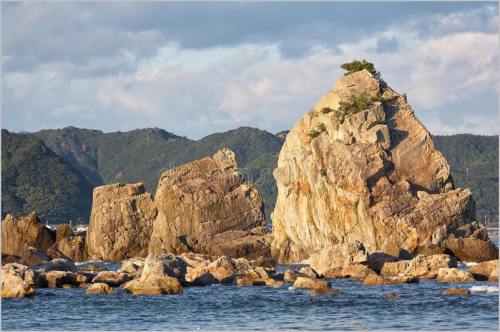 An image of Hashigui-Iwa Rocks Wakayama Japan
.
.
Click the link below for images:
.
__________________________________________
Older Entries
Newer Entries
 James' World 2