November 13, 2021
Mohenjo
Business, Enthralling, Human Interest, Photographs
amazon, business, Business News, current-events, Future, Hotels, human-rights, medicine, mental-health, research, Science, Science News, technology, Technology News, travel, vacation

Click the link below the picture
.
Rio de Janeiro is the second-most populous city in Brazil and the sixth-most populous in the Americas. Rio de Janeiro is the capital of the state of Rio de Janeiro, Brazil’s third-most populous state, after São Paulo and Minas Gerais. Part of the city has been designated as a World Heritage Site, named “Rio de Janeiro: Carioca Landscapes between the Mountain and the Sea”, on 1 July 2012 as a Cultural Landscape.
Founded in 1565 by the Portuguese, the city was initially the seat of the Captaincy of Rio de Janeiro, a domain of the Portuguese Empire. In 1763, it became the capital of the State of Brazil, a state of the Portuguese Empire. In 1808, when the Portuguese Royal Court moved to Brazil, Rio de Janeiro became the seat of the court of Queen Maria I of Portugal. She subsequently, under the leadership of her son the prince regent João VI of Portugal, raised Brazil to the dignity of a kingdom, within the United Kingdom of Portugal, Brazil, and Algarves. Rio stayed the capital of the pluricontinental Lusitanian monarchy until 1822 when the War of Brazilian Independence began.
This is one of the few instances in history that the capital of a colonizing country officially shifted to a city in one of its colonies. Rio de Janeiro subsequently served as the capital of the independent monarchy, the Empire of Brazil, until 1889, and then the capital of a republican Brazil until 1960 when the capital was transferred to Brasília.
Rio de Janeiro has the second largest municipal GDP in the country, and 30th largest in the world in 2008. This is estimated at about R$343 billion (nearly US$201 billion). It is headquarters to Brazilian oil, mining, and telecommunications companies, including two of the country’s major corporations – Petrobras and Vale – and Latin America’s largest telemedia conglomerate, Grupo Globo. The home of many universities and institutes, it is the second-largest center of research and development in Brazil, accounting for 17 percent of national scientific output according to 2005 data.[ Despite the high perception of crime, the city actually has a lower incidence of crime than most state capitals in Brazil.
Rio de Janeiro is one of the most visited cities in the Southern Hemisphere and is known for its natural settings, Carnival, samba, bossa nova, and balneario beaches such as Barra da Tijuca, Copacabana, Ipanema, and Leblon. In addition to the beaches, some of the most famous landmarks include the giant statue of Christ the Redeemer atop Corcovado mountain, named one of the New Seven Wonders of the World; Sugarloaf Mountain with its cable car; the Sambódromo (Sambadrome), a permanent grandstand-lined parade avenue which is used during Carnival; and Maracanã Stadium, one of the world’s largest football stadiums. Rio de Janeiro was the host of the 2016 Summer Olympics and the 2016 Summer Paralympics, making the city the first South American and Portuguese-speaking city to ever host the events, and the third time the Olympics were held in a Southern Hemisphere city. The Maracanã Stadium held the finals of the 1950 and 2014 FIFA World Cups, the 2013 FIFA Confederations Cup, and the XV Pan American Games. Wikipedia
.
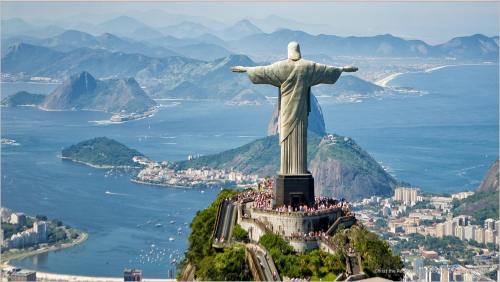 An image from Rio De Janeiro
.
.
Click the link below for images:
.
__________________________________________
November 12, 2021
Mohenjo
Business, Enthralling, Human Interest, Photographs
amazon, business, Business News, current-events, Future, Hotels, human-rights, medicine, mental-health, research, Science, Science News, technology, Technology News, travel, vacation
Click the link below the picture
.
São Paulo is a city in the Southeast Region of Brazil. Listed by the GaWC as an alpha global city, the municipality of São Paulo is the most populous city proper in Brazil, the Americas, the Western Hemisphere, and the Southern Hemisphere, as well as the world’s 4th largest city proper by population. Additionally, São Paulo is the largest Portuguese-speaking city in the world. The city is the capital of the surrounding state of São Paulo, the most populous and wealthiest state in Brazil. It exerts strong international influences in commerce, finance, arts, and entertainment. The city’s name honors the Apostle, Saint Paul of Tarsus. The city’s metropolitan area, the Greater São Paulo, ranks as the most populous in Brazil and the 12th most populous on Earth. The process of conurbation between the metropolitan areas around the Greater São Paulo (Campinas, Santos, Sorocaba, and São José dos Campos) created the São Paulo Macrometropolis, a megalopolis with more than 30 million inhabitants, one of the most populous urban agglomerations in the world.
Having the largest economy by GDP in Latin America and the Southern Hemisphere, the city is home to the São Paulo Stock Exchange. Paulista Avenue is the economic core of São Paulo. The city has the 11th largest GDP in the world, representing alone 10.7% of all Brazilian GDP and 36% of the production of goods and services in the state of São Paulo, being home to 63% of established multinationals in Brazil, and has been responsible for 28% of the national scientific production in 2005, as measured by the number of science papers published in journals.
The metropolis is also home to several of the tallest skyscrapers in Brazil, including the Mirante do Vale, Edifício Itália, Banespa, North Tower, and many others. The city has cultural, economic, and political influence nationally and internationally. It is home to monuments, parks, and museums such as the Latin American Memorial, the Ibirapuera Park, Museum of Ipiranga, São Paulo Museum of Art, and the Museum of the Portuguese Language. The city holds events like the São Paulo Jazz Festival, São Paulo Art Biennial, the Brazilian Grand Prix, São Paulo Fashion Week, the ATP Brasil Open, the Brasil Game Show, and the Comic-Con Experience. São Paulo’s LGBTQ Pride parade rivals the New York City Pride march as the largest LGBTQ pride parade in the world.
São Paulo is a cosmopolitan, melting pot city, home to the largest Arab, Italian, Japanese, and Portuguese diasporas, with examples including ethnic neighborhoods of Bixiga, Bom Retiro, and Liberdade. São Paulo is also home to the largest Jewish population in Brazil, with about 75,000 Jews. In 2016, inhabitants of the city were native to over 200 different countries. People from the city are known as paulistanos, while paulistas designates anyone from the state, including the paulistanos. The city’s Latin motto, which it has shared with the battleship and the aircraft carrier named after it, is Non ducor, duco, which translates as “I am not led, I lead.” The city, which is also colloquially known as Sampa or Terra da Garoa (Land of Drizzle), is known for its unreliable weather, the size of its helicopter fleet, its architecture, gastronomy, severe traffic congestion, and skyscrapers. São Paulo was one of the host cities of the 1950 and the 2014 FIFA World Cup. Additionally, the city hosted the IV Pan American Games and the São Paulo Indy 300. Wikipedia
.
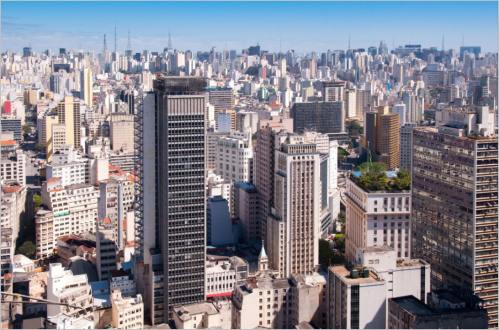 Sao Paulo, Brazil
.
.
Click the link below for images:
.
__________________________________________
November 11, 2021
Mohenjo
Business, Enthralling, Food For Thought, Human Interest, Science, Technical
amazon, business, Business News, current-events, Future, Hotels, human-rights, medicine, mental-health, research, Science, Science News, technology, Technology News, travel, vacation


.
__________________________________________
November 11, 2021
Mohenjo
Business, Enthralling, Human Interest, Photographs
amazon, business, Business News, current-events, Future, Hotels, human-rights, medicine, mental-health, research, Science, Science News, technology, Technology News, travel, vacation
Click the link below the picture
.
Verona is a city on the Adige River in Veneto, Italy, with 259,610 inhabitants. It is one of the seven provincial capitals of the region. It is the largest city municipality in the region and the second-largest in northeast Italy. The metropolitan area of Verona covers an area of 1,426 km2 (550.58 sq mi) and has a population of 714,310 inhabitants. It is one of the main tourist destinations in northern Italy because of its artistic heritage and several annual fairs and shows as well as the opera season in the Arena, an ancient Roman amphitheater.
Between the 13th and 14th century the city was ruled by the Della Scala Family. Under the rule of the family, in particular of Cangrande I della Scala, the city experienced great prosperity, becoming rich and powerful and being surrounded by new walls. The Della Scala era is survived in numerous monuments around Verona.
Two of William Shakespeare’s plays are set in Verona: Romeo and Juliet (which also features Romeo’s visit to Mantua) and The Two Gentlemen of Verona. It is unknown if Shakespeare ever visited Verona or Italy, but his plays have lured many visitors to Verona and surrounding cities. Verona was also the birthplace of Isotta Nogarola, who is said to be the first major female humanist and one of the most important humanists of the Renaissance. In November of 2000, the city has been declared a World Heritage Site by UNESCO because of its urban structure and architecture.
The precise details of Verona’s early history remain a mystery along with the origin of the name. One theory is it was a city of the Euganei, who were obliged to give it up to the Cenomani (550 BCE). With the conquest of the Valley of the Po, the Veronese territory became Roman (about 300 BCE). Verona became a Roman colonia in 89 BCE. It was classified as a municipium in 49 BCE, when its citizens were ascribed to the Roman tribe Poblilia or Publicia. Wikipedia
.
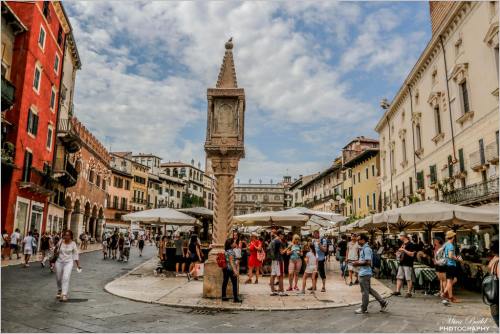 An image from Verona, Italy
.
.
Click the link below for images:
.
__________________________________________
November 10, 2021
Mohenjo
Business, Enthralling, Human Interest, Photographs
amazon, business, Business News, current-events, Future, Hotels, human-rights, medicine, mental-health, research, Science, Science News, technology, Technology News, travel, vacation
Click the link below the picture
.
Iași also referred to mostly historically as Jassy, is the second-largest city in Romania and the seat of Iași County. Located in the historical region of Moldavia, it has traditionally been one of the leading centers of Romanian social, cultural, academic, and artistic life. The city was the capital of the Principality of Moldavia from 1564 to 1859, then of the United Principalities from 1859 to 1862, and the capital of Romania from 1916 to 1918.
Known as the Cultural Capital of Romania, Iași is a symbol of Romanian history. Historian Nicolae Iorga stated that “there should be no Romanian who does not know of it”. Still referred to as “The Moldavian Capital”, Iași is the main economic and business center of Romania’s Moldavian region. In December 2018, Iași was officially declared the Historical Capital of Romania.
At the 2011 census, the city proper had a population of 290,422 (making it the fourth most populous in Romania at the time). Counting 500,668 residents as of 2018, the Iași urban area is the second most populous in Romania after Bucharest, whereas more than 500,000 people live within its peri-urban area.
Home to the oldest Romanian university and to the first engineering school, Iași is one of the most important education and research centers of the country, accommodating over 60,000 students in five public universities. The social and cultural life revolves around the Vasile Alecsandri National Theatre (the oldest in Romania), the Moldova State Philharmonic, the Opera House, the Iași Athenaeum, the Botanical Garden (the oldest and largest in Romania), the Central University Library (the oldest in Romania), the cultural centers and festivals, an array of museums, memorial houses, religious and historical monuments. The city is also known as the site of the largest Romanian pilgrimage which takes place every year, in October. Wikipedia
.
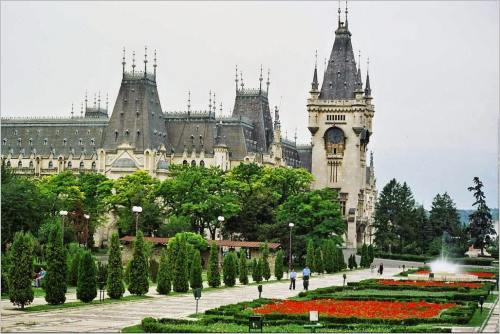 An image from Iasi, Romania
.
.
Click the link below for images:
.
__________________________________________
November 9, 2021
Mohenjo
Business, Enthralling, Human Interest, Photographs
amazon, business, Business News, current-events, Future, Hotels, human-rights, medicine, mental-health, research, Science, Science News, technology, Technology News, travel, vacation
Click the link below the picture
.
Lanzarote is a Spanish island, the northernmost and easternmost of the autonomous Canary Islands in the Atlantic Ocean. It is located approximately 125 kilometers (80 miles) off the north coast of Africa and 1,000 kilometers (600 miles) from the Iberian Peninsula. Covering 845.94 square kilometers (326.62 square miles), Lanzarote is the fourth-largest of the islands in the archipelago. With 152,289 inhabitants at the start of 2019, it is the third most populous Canary Island, after Tenerife and Gran Canaria. Located in the center-west of the island is Timanfaya National Park, one of its main attractions. The island was declared a biosphere reserve by UNESCO in 1993. The island’s capital is Arrecife, which lies on the eastern coastline. It is the smaller main island of the Province of Las Palmas.
The first recorded name for the island, given by Italian-Majorcan cartographer Angelino Dulcert, was Insula de Lanzarotus Marocelus, after the Genoese navigator Lancelotto Malocello, from which the modern name is derived. The island’s name in the native Guanche language was Tyterogaka or Tytheroygaka, which may mean “one that is all ochre” (referring to the island’s predominant color).
Lanzarote is located 11 km (7 mi) north-east of Fuerteventura and just over 1 km (5⁄8 mi) from La Graciosa. The dimensions of the island are 60 km (37 mi) from north to south and 25 km (16 mi) from west to east. Lanzarote has 213 kilometers (132 miles) of coastline, of which 10 km (6 mi) are sand, 16.5 km (10+1⁄4 mi) are beach, and the remainder is rocky. Its landscape includes the mountain ranges of Famara (671 meters or 2,201 feet) in the north and Ajaches (608 meters or 1,995 feet) to the south. South of the Famara massif is the El Jable desert, which separates Famara and Montañas del Fuego. The highest peak is Peñas del Chache, rising to 670 meters (2,200 feet) above sea level. The “Tunnel of Atlantis”, the largest underwater volcanic tunnel in the world, is part of the Cueva de los Verdes lava tube. Wikipedia
.
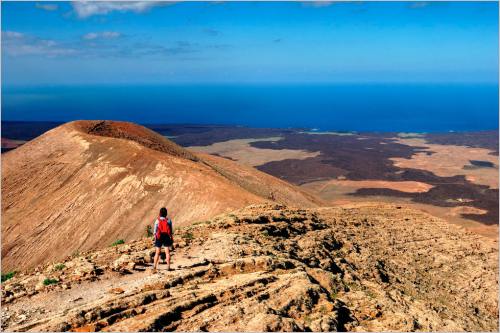 An image from Lanzarote Landscape
.
.
Click the link below for images:
.
__________________________________________
November 8, 2021
Mohenjo
Business, Enthralling, Human Interest, Photographs
amazon, business, Business News, current-events, Future, Hotels, human-rights, medicine, mental-health, research, Science, Science News, technology, Technology News, travel, vacation
Click the link below the picture
.
Budapest is the capital and most populous city of Hungary. It is the ninth-largest city in the European Union by population within city limits; the city has an estimated population of 1,752,286 over a land area of about 525 square kilometers (203 square miles). Budapest, which is both a city and county, forms the center of the Budapest metropolitan area, which has an area of 7,626 square kilometers (2,944 square miles) and a population of 3,303,786, comprising 33% of the population of Hungary.
The history of Budapest began when an early Celtic settlement transformed into the Roman town of Aquincum, the capital of Lower Pannonia. The Hungarians arrived in the territory in the late 9th century, but the area was pillaged by the Mongols in 1241–42. Re-established Buda became one of the centers of Renaissance humanist culture by the 15th century. The Battle of Mohács, in 1526, was followed by nearly 150 years of Ottoman rule. After the reconquest of Buda in 1686, the region entered a new age of prosperity, with Pest-Buda becoming a global city after the unification of Buda, Óbuda, and Pest on 17 November 1873, with the name ‘Budapest’ given to the new capital. Budapest also became the co-capital of the Austro-Hungarian Empire, a great power that dissolved in 1918, following World War I. The city was the focal point of the Hungarian Revolution of 1848, the Battle of Budapest in 1945, as well as the Hungarian Revolution of 1956.
Budapest is a Beta + global city with strengths in commerce, finance, media, art, fashion, research, technology, education, and entertainment. Hungary’s financial center, it was ranked as the second fastest-developing urban economy in Europe in 2014. Budapest is the headquarters of the European Institute of Innovation and Technology, the European Police College, and the first foreign office of the China Investment Promotion Agency. Over 40 colleges and universities are located in Budapest, including the Eötvös Loránd University, the Corvinus University, Semmelweis University, and the Budapest University of Technology and Economics. Opened in 1896, the city’s subway system, the Budapest Metro, serves 1.27 million, while the Budapest Tram Network serves 1.08 million passengers daily.
The central area of Budapest along the Danube River is classified as a UNESCO World Heritage Site and has several notable monuments of classical architecture, including the Hungarian Parliament and the Buda Castle. The city also has around 80 geothermal springs, the largest thermal water cave system, second largest synagogue, and third largest Parliament building in the world. Budapest attracts around 12 million international tourists per year, making it a highly popular destination in Europe. It also topped the Best European Destinations 2020 list by Big7Media. Budapest also ranks as the third-best European city in a similar poll conducted by Which?. Wikipedia
.
 An image from Budapest Hungary
.
.
Click the link below for images:
.
__________________________________________
November 6, 2021
Mohenjo
Business, Enthralling, Human Interest, Photographs
amazon, business, Business News, current-events, Future, Hotels, human-rights, medicine, mental-health, research, Science, Science News, technology, Technology News, travel, vacation
Click the link below the picture
.
Romania is a country at the confluence of Central, Eastern, and Southeastern Europe. It borders Bulgaria to the south, Ukraine to the north, Hungary to the west, Serbia to the southwest, Moldova to the east, and the Black Sea to the southeast. It has a predominantly temperate-continental climate, and an area of 238,397 km2 (92,046 sq mi), with a population of around 19 million. Romania is the twelfth-largest country in Europe and the sixth-most populous member state of the European Union. Its capital and largest city is Bucharest; other major urban areas include Iași, Cluj-Napoca, Timișoara, Constanța, Craiova, Brașov, and Galați.
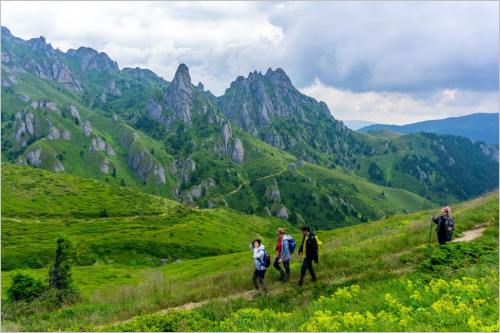
The Danube, Europe’s second-longest river, rises in Germany’s Black Forest and flows in a southeasterly direction for 2,857 km (1,775 mi), before emptying into Romania’s Danube Delta. The Carpathian Mountains, which cross Romania from the north to the southwest, include Moldoveanu Peak, at an altitude of 2,544 m (8,346 ft).
Romania was formed in 1859 through a personal union of the Danubian Principalities of Moldavia and Wallachia. The new state, officially named Romania since 1866, gained independence from the Ottoman Empire in 1877. During World War I, after declaring its neutrality in 1914, Romania fought together with the Allied Powers from 1916. In the aftermath of the war, Bukovina, Bessarabia, Transylvania, and parts of Banat, Crișana, and Maramureș became part of the Kingdom of Romania. In June–August 1940, as a consequence of the Molotov–Ribbentrop Pact and Second Vienna Award, Romania was compelled to cede Bessarabia and Northern Bukovina to the Soviet Union, and Northern Transylvania to Hungary. In November 1940, Romania signed the Tripartite Pact and, consequently, in June 1941 entered World War II on the Axis side, fighting against the Soviet Union until August 1944, when it joined the Allies and recovered Northern Transylvania. Following the war and occupation by the Red Army, Romania became a socialist republic and a member of the Warsaw Pact. After the 1989 Revolution, Romania began a transition towards democracy and a market economy.
Romania is a developing country, with a high-income economy, ranking 49th in the Human Development Index. It has the world’s 45th largest economy by nominal GDP. Romania experienced rapid economic growth in the early 2000s; its economy is now based predominantly on services. It is a producer and net exporter of machines and electric energy through companies such as Automobile Dacia and OMV Petrom. Romania has been a member of the United Nations since 1955, NATO since 2004, and the European Union since 2007. The majority of Romania’s population are ethnic Romanian and Eastern Orthodox Christians, speaking Romanian, a Romance language. Wikipedia
.
.
.
Click the link below for images:
.
__________________________________________
November 6, 2021
Mohenjo
Business, Enthralling, Food For Thought, Human Interest, Medical, Political, Technical
amazon, business, Business News, current-events, Future, Hotels, human-rights, medicine, mental-health, research, Science, Science News, technology, Technology News, travel, vacation

Click the link below the picture
.
The funeral for Colin L. Powell, former secretary of state, chairman of the Joint Chiefs of Staff and national security adviser, brought out a Washington that barely exists anymore: Republicans and Democrats, including President Biden and two of his predecessors, uniformed military and diplomats, and people on all sides of the Iraq war.
No one would have been more amused by the assemblage than Mr. Powell himself, who often ran a smiling, half-whispered commentary on the city’s temporary loyalties and back-room machinations. Yet on Friday, the Washington National Cathedral was filled with them all — former officials who were at Mr. Powell’s side in the Persian Gulf War and on the seventh floor of the State Department, where he often waged a behind-the-scenes battle for influence in the George W. Bush White House.
Mr. Biden did not speak, nor did the two former presidents who attended, Barack Obama and Mr. Bush, who made Mr. Powell his first secretary of state. Instead, among the eulogists was a Democrat who had often clashed with Mr. Powell over the general’s reluctance to commit American forces to battles when the general, seared by the experience of his service in Vietnam, did not see a clear, successful outcome.
“He said I almost gave him an aneurysm,” the Democrat, Madeleine K. Albright, who served as secretary of state in the Clinton administration, told the mourners, recalling Mr. Powell’s reaction after she famously asked him, “What’s the point of having this superb military you’re always talking about if we can’t use it?”
.
 At Washington National Cathedral on Friday, Colin L. Powell was remembered as a “warrior-statesman” whose leadership was valued by officials from both parties. Credit…Jason Andrew for The New York Times
.
.
Click the link below for the article:
.
__________________________________________
November 5, 2021
Mohenjo
Business, Enthralling, Human Interest, Photographs
amazon, business, Business News, current-events, Future, Hotels, human-rights, medicine, mental-health, research, Science, Science News, technology, Technology News, travel, vacation
Click the link below the picture
.
Easton is a city in and the county seat of Northampton County, Pennsylvania, United States. The city’s population was 26,800 as of the 2010 census. Easton is located at the confluence of the Delaware River and the Lehigh River, roughly 55 miles (89 km) north of Philadelphia and 70 miles (110 km) west of New York City.
Easton is the easternmost city in the Lehigh Valley, a region of 731 square miles (1,893 km2) that is home to more than 800,000 people. Together with Allentown and Bethlehem, the Valley embraces the Allentown-Bethlehem-Easton metropolitan area, including Lehigh, Northampton, and Carbon counties within Pennsylvania, and Warren County in the adjacent state of New Jersey. Easton is the smallest of the three Lehigh Valley cities, with approximately one-fourth of the population of the largest Lehigh Valley city, Allentown. In turn, this metropolitan area comprises Pennsylvania’s third-largest metropolitan area.
The greater Easton area consists of the city, three townships (Forks, Palmer, and Williams), and three boroughs (Glendon, West Easton, and Wilson).
Centre Square, the town square of the city’s Downtown neighborhood, is home to the Soldiers’ & Sailors’ Monument, a memorial for Easton area veterans killed during the American Civil War. In the first half of the 20th century, Centre Square was reportedly referred to by locals as the “Circle.” The Peace Candle, a candle-like structure, is assembled and disassembled every year atop the Civil War monument for the Christmas season.[6]
The Norfolk Southern Railway’s Lehigh Line (formerly the mainline of the Lehigh Valley Railroad), runs through Easton on its way to Bethlehem and Allentown heading west and to Phillipsburg, New Jersey just across the Delaware River.
On August 22, 1751, Thomas Penn, the son of William Penn, the colony’s founder and original proprietor married Juliana Fermor. On Sept. 8, 1751, a letter was sent to Colonial Governor James Hamilton by Penn requesting that a new town on the confluence be named Easton and that it be in a new county called Northampton. In 1752, the city was named in honor of Lady Juliana’s family estate, the Easton Neston as requested. The county’s name was also named after the estate’s location, south Northamptonshire, England. Wikipedia
.
 An image from Easton, PA, USA
.
.
Click the link below for images:
.
__________________________________________
Older Entries
Newer Entries
 James' World 2