December 30, 2021
Mohenjo
Business, Enthralling, Human Interest, Photographs
amazon, business, Business News, current-events, Future, Hotels, human-rights, medicine, mental-health, research, Science, Science News, technology, Technology News, travel, vacation

Click the link below the picture
.
The castle of Berlanga de Duero is located in the town of the same name, it belongs to the province of Soria and was built between the 15th century when it served as a stately castle, and in the 16th when it was transformed into an artillery fortress. Previously, in the 10th and 11th centuries, there was a Muslim fortress that, in the 12th, after the Castilian conquest, was expanded with the walled outer belt that is preserved.
Bordered by the Escalote river and embraced by the Duero, it is crowned by the imposing silhouette of the castle that watches over it from the Coborrón. The monumental complex is made up of the remains of the late medieval fortress (15th century), the artillery fortress from the Renaissance period (16th century), the wall that surrounds the hill at its base (12th century), and the Palace of the Dukes of Frías ( century XVI).
The set began between the years 1460 and 1480 by order of D. Luis Tovar and Mrs. María de Guzmán, who ordered the erection of the manor house, to serve as a defensive fortress and family residence, on a previous castle located on top of the hill, where the primitive town of Berlanga was located, protected by the wall located at the foot of the hill.
In the year 1512 the new castle, configured as an artillery fortress, was designed and began to be executed for military purposes. This new fortress was adapted both to the steep topography of the terrain and to the previous construction (the stately medieval castle).
The construction program of the Tovar and the Dukes of Frías lineages also included the erection of the palace in the interior enclosure of the 12th-century wall, adapted to new ways of life. This palace and its intramural gardens structured on various levels suffered, in 1811, a fire and destruction by Napoleonic troops, so that today only its main facade remains. Second.Wiki
.
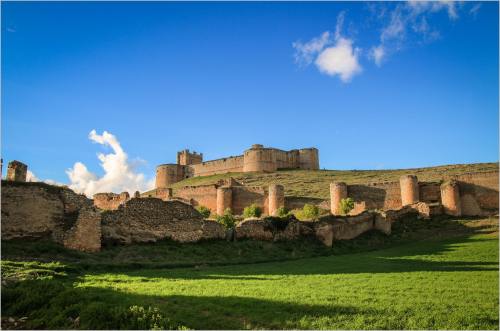 An image of Berlanga De Duero Castle
.
.
Click the link below for images:
.
__________________________________________
December 29, 2021
Mohenjo
Business, Enthralling, Human Interest, Photographs
amazon, business, Business News, current-events, Future, Hotels, human-rights, medicine, mental-health, research, Science, Science News, technology, Technology News, travel, vacation
Click the link below the picture
.
Austria, officially the Republic of Austria, is a landlocked country in the southern part of Central Europe, located on the Eastern Alps. It is composed of nine federated states, one of which is Vienna, Austria’s capital and largest city. Austria is bordered by Germany to the northwest, the Czech Republic to the north, Slovakia to the northeast, Hungary to the east, Slovenia and Italy to the south, and Switzerland and Liechtenstein to the west. Austria occupies an area of 83,879 km2 (32,386 sq mi) and has a population of nearly 9 million people. While Austrian German is the country’s official language, many Austrians communicate informally in a variety of Bavarian dialects.
Austria initially emerged as a margraviate around 976 and developed into a duchy and archduchy. In the 16th century, Austria started serving as the heart of the Habsburg Monarchy and the junior branch of the House of Habsburg – one of the most influential royal dynasties in history. As an archduchy, it was a major component and administrative center of the Holy Roman Empire. Early in the 19th century, Austria established its own empire, which became a great power and the leading force of the German Confederation, but pursued its own course independently of the other German states following its defeat in the Austro-Prussian War in 1866. In 1867, in compromise with Hungary, the Austria-Hungary Dual Monarchy was established.
Austria was involved in World War I under Emperor Franz Joseph following the assassination of Archduke Ferdinand, the presumptive successor to the Austro-Hungarian throne. After the defeat and the dissolution of the Monarchy, the Republic of German-Austria was proclaimed with the intent of union with Germany, but the Allied Powers did not support the new state and it remained unrecognized. In 1919 the First Austrian Republic became the legal successor of Austria. In 1938, the Austrian-born Adolf Hitler, who became the Chancellor of the German Reich, achieved the annexation of Austria by the Anschluss. Following the defeat of Nazi Germany in 1945 and an extended period of Allied occupation, Austria was re-established as a sovereign and self-governing democratic nation known as the Second Republic.
Austria is a parliamentary representative democracy with a directly elected Federal President as head of state and a Chancellor as head of the federal government. Major urban areas of Austria include Vienna, Graz, Linz, Salzburg, and Innsbruck. Austria is consistently ranked in the top 20 richest countries in the world by GDP per capita terms. The country has achieved a high standard of living and in 2018 was ranked 20th in the world for its Human Development Index. Vienna consistently ranks in the top internationally on quality-of-life indicators.
The Second Republic declared its perpetual neutrality in foreign political affairs in 1955. Austria has been a member of the United Nations since 1955 and joined the European Union in 1995. It plays host to the OSCE and OPEC and is a founding member of the OECD and Interpol. Austria also signed the Schengen Agreement in 1995 and adopted the euro currency in 1999. Wikipedia
.
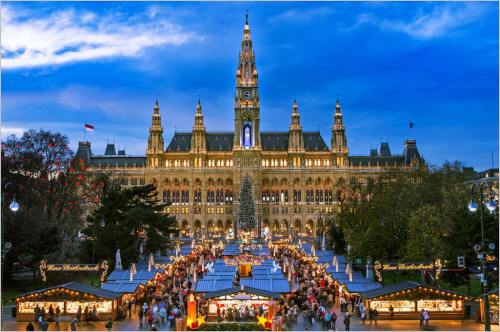 An image from Austria
.
.
Click the link below for images:
.
__________________________________________
December 28, 2021
Mohenjo
Business, Enthralling, Human Interest, Photographs
amazon, business, Business News, current-events, Future, Hotels, human-rights, medicine, mental-health, research, Science, Science News, technology, Technology News, travel, vacation
Click the link below the picture
.
Soria (Spanish pronunciation: [ˈsoɾja]) is a municipality and a Spanish city, located on the Douro River in the east of the autonomous community of Castile and León and capital of the province of Soria. Its population is 38,881 (INE, 2017), 43.7% of the provincial population. The municipality has a surface area of 271,77 km2,[2] with a density of 144.97 inhabitants/km2. Situated at about 1065 meters above sea level, Soria is the second-highest provincial capital in Spain.
Although there are remains of settlements from the Iron Age and Celtiberian times, Soria itself enters history with its repopulation between 1109 and 1114, by the Aragonese king Alfonso I the Battler. A strategic enclave due to the struggles for territory between the kingdoms of Castile, Navarre, and Aragon, Soria became part of Castile definitively in 1134, during the reign of Alfonso VII. In Soria was born Alfonso VIII, and Alfonso X had his court established when he received the offer to the throne of the Holy Roman Empire. In Soria, the deposed King James IV of Mallorca died, and John I of Castile married. Booming during the Late Middle Ages thanks to its border location and its control over the bovine industry, Soria went into a slow decline over the next few centuries. It was seriously damaged during the Peninsular War.
The city preserves an important architectural heritage (extensive medieval walls, Renaissance palaces, and architecturally distinctive Romanesque churches) and is home to the Numantine Museum (with pieces from the nearby Celtiberian city of Numantia). Soria’s football team CD Numancia is named after this city. It is one of the smallest cities to ever have had a team in Spain’s top division La Liga.
Today, its population of 38,881 makes Soria the least populated provincial capital of Castile and León and the second least populated in Spain (after Teruel). Particularly important in its economy is the agri-food industry, while an increasing number of tourists are attracted by its cultural heritage. Soria was mentioned by UNESCO as a good example when including the Mediterranean diet in its Representative List of the Intangible Cultural Heritage of Humanity. Wikipedia
.
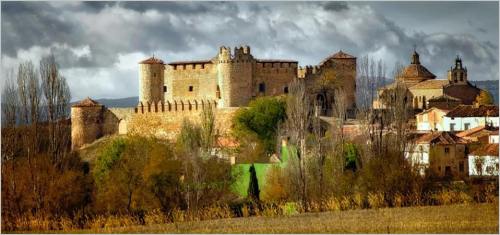 An image of Soria Spain Castle
.
.
Click the link below for images:
.
__________________________________________
December 27, 2021
Mohenjo
Business, Enthralling, Human Interest, Photographs
amazon, business, Business News, current-events, Future, Hotels, human-rights, medicine, mental-health, research, Science, Science News, technology, Technology News, travel, vacation
Click the link below the picture
.
The koala or, inaccurately, koala bear (Phascolarctos cinereus), is an arboreal herbivorous marsupial native to Australia. It is the only extant representative of the family Phascolarctidae and its closest living relatives are the wombats, which are members of the family Vombatidae. The koala is found in coastal areas of the mainland’s eastern and southern regions, inhabiting Queensland, New South Wales, Victoria, and South Australia. It is easily recognizable by its stout, tailless body and large head with round, fluffy ears, and large, spoon-shaped nose. The koala has a body length of 60–85 cm (24–33 in) and weighs 4–15 kg (9–33 lb). Fur color ranges from silver grey to chocolate brown. Koalas from the northern populations are typically smaller and lighter in color than their counterparts further south. These populations possibly are separate subspecies, but this is disputed.
Koalas typically inhabit open eucalypt woodlands, and the leaves of these trees make up most of their diet. Because this eucalypt diet has limited nutritional and caloric content, koalas are largely sedentary and sleep up to 20 hours a day. They are asocial animals, and bonding exists only between mothers and dependent offspring. Adult males communicate with loud bellows that intimidate rivals and attract mates. Males mark their presence with secretions from scent glands located on their chests. Being marsupials, koalas give birth to underdeveloped young that crawl into their mothers’ pouches, where they stay for the first six to seven months of their lives. These young koalas, known as joeys, are fully weaned around a year old. Koalas have few natural predators and parasites but are threatened by various pathogens, such as Chlamydiaceae bacteria and the koala retrovirus.
Koalas were hunted by indigenous Australians and depicted in myths and cave art for millennia. The first recorded encounter between a European and a koala was in 1798, and an image of the animal was published in 1810 by naturalist George Perry. Botanist Robert Brown wrote the first detailed scientific description of the koala in 1814, although his work remained unpublished for 180 years. Popular artist John Gould illustrated and described the koala, introducing the species to the general British public. Further details about the animal’s biology were revealed in the 19th century by several English scientists. Because of its distinctive appearance, the koala is recognized worldwide as a symbol of Australia. Koalas are listed as a vulnerable species by the International Union for Conservation of Nature. The animal was hunted heavily in the early 20th century for its fur, and large-scale cullings in Queensland resulted in a public outcry that initiated a movement to protect the species. Sanctuaries were established, and translocation efforts moved to new regions koalas whose habitat had become fragmented or reduced. Among the many threats to their existence are habitat destruction caused by agriculture, urbanization, droughts, and associated bushfires, some related to climate change.
.
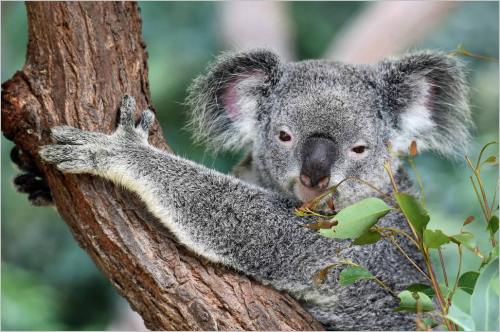 An image of a Koala
.
.
Click the link below for images:
.
__________________________________________
December 25, 2021
Mohenjo
Business, Enthralling, Human Interest, Photographs
amazon, business, Business News, current-events, Future, Hotels, human-rights, medicine, mental-health, research, Science, Science News, technology, Technology News, travel, vacation
Click the link below the picture
.
Victor Harbor is a town in the Australian state of South Australia located within the City of Victor Harbor on the south coast of the Fleurieu Peninsula, about 82 kilometers (51 mi) south of the state capital of Adelaide. The town is the largest population center on the peninsula, with an economy based upon agriculture, fisheries, and various industries. It is also a highly popular tourist destination, with the area’s population greatly expanded during the summer holidays, usually by Adelaide locals looking to escape the summer heat.
It is a popular destination with South Australian high school graduates for their end-of-year celebrations, known colloquially as schoolies.
Victor Harbor lies in the traditional lands of the Ramindjeri clan of the Ngarrindjeri people.
Matthew Flinders in HMS Investigator visited the bay on 8 April 1802 while on the first circumnavigation of the continent, mapping the unsurveyed southern Australian coast from the west. He encountered Nicolas Baudin in Le Geographe near the Murray Mouth several kilometers to the east of the present-day location of Victor Harbor. Baudin was surveying the coast from the east for Napoleonic France. Although their countries were at war, each captain was given documents by the other nation’s government, stating that the ships were on scientific missions, and were therefore not to be regarded as ships of war. Together, the ships returned to the bay and sheltered, while the captains compared notes. Flinders named the bay Encounter Bay after the meeting.
In 1837 Captain Richard Crozier who was en route from Sydney to the Swan River Colony in command of HMS Victor, anchored just off Granite Island and named the sheltered waters in the lee of the island ‘Victor Harbor’ after his ship. About the same time two whaling stations were established, one at Rosetta Head (popularly known as “the Bluff”) and the other near the point opposite Granite Island. Whale oil became South Australia’s first export. From 1839 the whaling station was managed for a time by Captain John Hart, a later Premier of South Australia. The town of Port Victor was laid out on the shores of Victor Harbor in 1863 when the horse-drawn tramway from Goolwa was extended to the harbor. The last whale was caught off Port Victor in 1872.
The municipality of the town of Victor Harbor was proclaimed on 7 May 1914, with Oliver Alexander Baaner appointed as the first mayor.
On 26 December 1936, a one-off motor race meeting was held to the east of the town to commemorate the centenary of South Australia – the “South Australian Centenary Grand Prix”. The circuit was made of public roads, measured 12.6 kilometers in length, and featured two long straights, two short straights, and several corners, including the banked Nangawooka Hairpin. Winner of the 240-mile Grand Prix, which was held as a handicap, was Les Murphy in an MG P-type, from Tim Joshua in another P-type and Bob Lea-Wright in a Terraplane Special.
The beaches of Victor Harbour and nearby Port Elliot have been facing rising seas and more has to be done to stop this. . Wikipedia
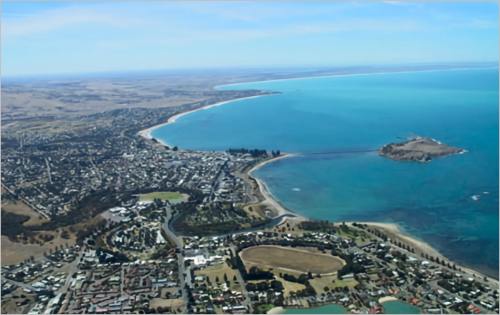 An image from Victor Harbor, South Australia
.
.
Click the link below for images:
.
__________________________________________
December 24, 2021
Mohenjo
Business, Enthralling, Human Interest, Photographs
amazon, business, Business News, current-events, Future, Hotels, human-rights, medicine, mental-health, research, Science, Science News, technology, Technology News, travel, vacation
Click the link below the picture
.
Sydney is the capital city of the state of New South Wales, and the most populous city in Australia and Oceania. Located on Australia’s east coast, the metropolis surrounds Port Jackson and extends about 70 km (43.5 mi) on its periphery towards the Blue Mountains to the west, Hawkesbury to the north, the Royal National Park to the south, and Macarthur to the south-west. Sydney is made up of 658 suburbs, spread across 33 local government areas. Residents of the city are known as “Sydneysiders”. As of June 2020, Sydney’s estimated metropolitan population was 5,367,206, meaning the city is home to approximately 66% of the state’s population. Nicknames of the city include the ‘Emerald City’ and the ‘Harbour City’.
Indigenous Australians have inhabited the Sydney area for at least 30,000 years, and thousands of engravings remain throughout the region, making it one of the richest in Australia in terms of Aboriginal archaeological sites. Around 29 clan groups of the Eora Nation inhabited the region at the time of European contact. During his first Pacific voyage in 1770, Lieutenant James Cook and his crew became the first Europeans to chart the eastern coast of Australia, making landfall at Botany Bay and inspiring British interest in the area. In 1788, the First Fleet of convicts, led by Arthur Phillip, founded Sydney as a British penal colony, the first European settlement in Australia. Phillip named the settlement after Thomas Townshend, 1st Viscount Sydney. Penal transportation to New South Wales ended soon after Sydney was incorporated as a city in 1842. A gold rush occurred in the colony in 1851, and over the next century, Sydney transformed from a colonial outpost into a major global cultural and economic center. After World War II, it experienced mass migration and became one of the most multicultural cities in the world. At the time of the 2011 census, more than 250 different languages were spoken in Sydney. In the 2016 Census, about 35.8% of residents spoke a language other than English at home. Furthermore, 45.4% of the population reported having been born overseas, and the city has the third-largest foreign-born population of any city in the world after London and New York City. Between 1971 and 2018, Sydney lost a net number of 716,832 people to the rest of Australia but its population has continued to grow, largely due to immigration.
Despite being one of the most expensive cities in the world, Sydney frequently ranks in the top ten most liveable cities in the world. It is classified as an Alpha Global City by Globalization and World Cities Research Network, indicating its influence in the region and throughout the world. Ranked eleventh in the world for economic opportunity, Sydney has an advanced market economy with strengths in finance, manufacturing, and tourism. There is a significant concentration of foreign banks and multinational corporations in Sydney and the city is promoted as Australia’s financial capital and one of Asia Pacific’s leading financial hubs. Established in 1850, the University of Sydney was Australia’s first university and is regarded as one of the world’s leading universities. Sydney is also home to the oldest library in Australia, the State Library of New South Wales, opened in 1826. Wikipedia
.
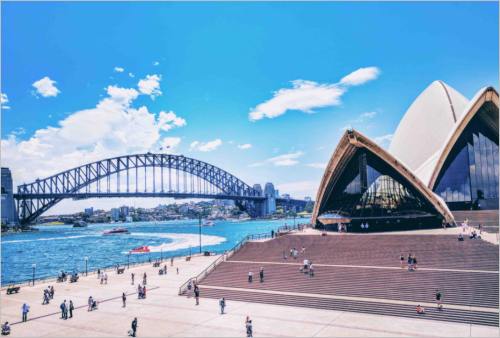 An image from Sydney, Australia
.
.
Click the link below for images:
.
__________________________________________
December 23, 2021
Mohenjo
Business, Enthralling, Human Interest, Photographs
amazon, business, Business News, current-events, Future, Hotels, human-rights, medicine, mental-health, research, Science, Science News, technology, Technology News, travel, vacation
Click the link below the picture
.
The Drakensberg is the eastern portion of the Great Escarpment, which encloses the central Southern African plateau. The Great Escarpment reaches its greatest elevation – 2,000 to 3,482 meters (6,562 to 11,424 feet) within the border region of South Africa and Lesotho.
A map of South Africa shows the central plateau edged by the Great Escarpment and its relationship to the Cape Fold Mountains to the south. The portion of the Great Escarpment shown in red is known as the Drakensberg.
The Drakensberg escarpment stretches for more than 1,000 kilometers (600 miles) from the Eastern Cape Province in the South, then successively forms, in order from south to north, the border between Lesotho and the Eastern Cape and the border between Lesotho and KwaZulu-Natal Province. Thereafter it forms the border between KwaZulu-Natal and the Free State, and next as the border between KwaZulu-Natal and Mpumalanga Province. The escarpment winds north from there, through Mpumalanga, where it includes features such as the Blyde River Canyon, Three Rondavels, and God’s Window. It then extends farther north to Hoedspruit in southeastern Limpopo where it is known as ‘Klein Drankensberg’ by the Afrikaner. From Hoedspruit, it extends west to Tzaneen, also in Limpopo Province, where it is known as the Wolkberg Mountains and Iron Crown Mountain. At 2,200 m (7,200 ft) above sea level, the Wolkberg is the highest elevation in Limpopo. The escarpment extends west again and at Mokopane it is known as the Strydpoort Mountains.
The Afrikaans name Drakensberge comes from the name the earliest Dutch settlers gave to the escarpment, namely Drakensbergen, or Dragons’ Mountains. The highest portion of the Great Escarpment is known in Zulu as uKhahlamba and as Maluti in Sotho (“Barrier of up-pointed spears”). Wikipedia
.
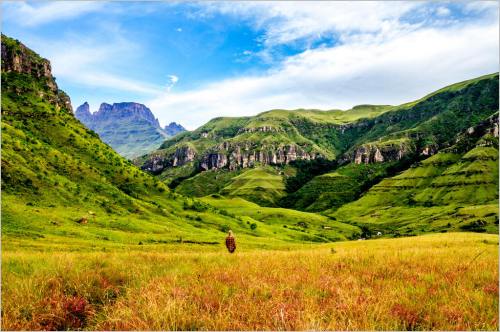 An image from Drakensberg South Africa
.
.
Click the link below for images:
.
__________________________________________
December 22, 2021
Mohenjo
Business, Enthralling, Human Interest, Photographs
amazon, business, Business News, current-events, Future, Hotels, human-rights, medicine, mental-health, research, Science, Science News, technology, Technology News, travel, vacation
Click the link below the picture
.
Brisbane sited on the Meanjin is the capital and most populous city of the Australian state of Queensland, and the third-most populous city in Australia. Brisbane’s metropolitan area has a population of around 2.6 million, and it lies at the center of the South East Queensland metropolitan region, which encompasses a population of around 3.8 million. The Brisbane central business district is situated within a peninsula of the Brisbane River about 15 km (9 mi) from its mouth at Moreton Bay, a bay of the Coral Sea. The metropolitan area extends in all directions along the hilly floodplain of the Brisbane River Valley between Moreton Bay and the Taylor and D’Aguilar mountain ranges. It sprawls across several of Australia’s most populous local government areas (LGAs) — most centrally the City of Brisbane, the most populous LGA in the nation.
The city is named for the Brisbane River on which it stands, which is in turn named for Sir Thomas Brisbane, the governor of New South Wales at the time of the city’s founding. The Moreton Bay penal settlement was founded in 1824 at Redcliffe as a place for secondary offenders from the Sydney colony and soon moved to North Quay in 1825. Christian missionaries established Zion Hill in 1838, and by 1842 the region opened to free settlement. Brisbane was chosen as the capital when Queensland separated from New South Wales in 1859, and by the late 19th century had grown into a major port city and center of immigration. During World War II, Brisbane played a central role in the Allied campaign and served as the southwest Pacific headquarters for United States Army General Douglas MacArthur.
Brisbane is classified as a global city (Beta +), and is an advanced center of research and innovation in the Asia-Pacific. The city is promoted as Australia’s capital of technology, with strengths in mining research and green energy, medicine and biotechnology, cryptocurrency and digital industries, and robotics. A transportation hub, Brisbane is served by a large suburban rail network and popular bus and ferry networks, as well as Australia’s largest and busiest airport, and the third-largest seaport. The financial district is centered on Eagle Street.
A diverse city with 32.2% of its metropolitan population being foreign-born, the city consistently ranks as one of the world’s most liveable cities. Noted for its rich culture and history, the city is home to numerous museums and galleries, events and festivals, theatre and music, city art and public monuments, and historic buildings. Brisbane is known for its distinct Queenslander architecture, its spring Jacaranda blossoms, and its outdoor dining and cuisine culture. Brisbane has hosted major events including the 1982 Commonwealth Games, World Expo 88, and the 2014 G20 summit, and will host the 2032 Summer Olympics and Paralympics. Wikipedia
.
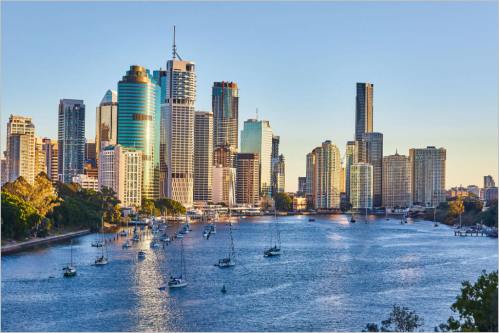 An image from Brisbane, Australia
.
.
Click the link below for images:
.
__________________________________________
December 21, 2021
Mohenjo
Business, Enthralling, Human Interest, Photographs
amazon, business, Business News, current-events, Future, Hotels, human-rights, medicine, mental-health, research, Science, Science News, technology, Technology News, travel, vacation
Click the link below the picture
.
The magnificent Phraya Nakhon Cave is one of the most mystical and mysterious landmarks of Thailand but only a few travelers get a chance to take a picture of it. The reason is simple: this gold and green pavilion is hidden inside a hard-to-reach cave and only a handful of dedicated visitors will do the effort to visit it. Those who do are rewarded with a stunning vision that looks like it’s straight out of an Indiana Jones movie.
Phraya Nakhon Cave is located in the Khao Sam Roi Yot National Park in Prachuap Khiri Khan province, a 45 minutes drive south of Hua Hin. First step to reach the cave is to drive to the small village of Bang Pu located by the beach, and from there decide if you’d rather rent a boat to take you around the cape to Laem Sala beach, or walk a 30 minutes trek above the hill leading to the same Laem Sala beach. Since the boat ride only costs 150 to 200 baht per person and considering that you still will have to climb 430 m of uneven and steep steps we recommend you save your energy and take this short ride to the cave.
.
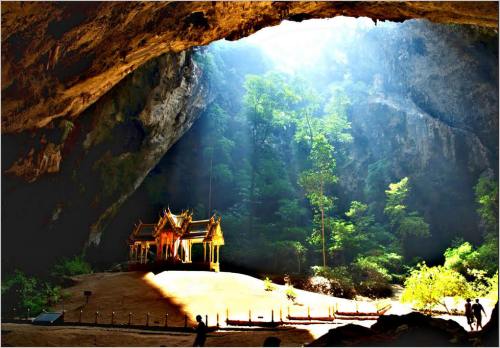 An image from Phraya Nakhon Cave Thailand
.
.
Click the link below for images:
.
__________________________________________
December 20, 2021
Mohenjo
Business, Enthralling, Human Interest, Photographs
amazon, business, Business News, current-events, Future, Hotels, human-rights, medicine, mental-health, research, Science, Science News, technology, Technology News, travel, vacation
Click the link below the picture
.
Djamaa el Djazaïr, also known as the Great Mosque of Algiers, is a mosque in Algiers, Algeria. It houses the world’s tallest minaret and is the third-largest mosque in the world after the Great Mosque of Mecca and Al-Masjid an-Nabawi of Medina in Saudi Arabia.
The construction of the mosque began in August 2012 after the Algerian government’s contract, for 1 billion euros, was won by the China State Construction Engineering Corporation. The design was done by German architects KSP Juergen Engel Architekten and engineers Krebs und Kiefer International and was completed by April 2019. The mosque faced construction delays owing to budgetary concerns due to the falling prices of oil. Around 2,300 workers from China, Algeria, and other African countries were deployed to work on the project. The construction of the mosque was seen by many to serve as a symbol of the reign of long-serving president Abdelaziz Bouteflika.
The mosque sits on a site covering 400,000 m2 (4,300,000 sq ft) and overlooking the Mediterranean Sea. The prayer hall has a capacity of 37,000 worshippers, while the structure including the compound can house up to 120,000 worshippers and has parking space for 7,000 cars. The complex also houses a Quran(قرآن) school, a park, a library, staff housing area, a fire station, a museum of Islamic art, and a research center on the history of Algeria.
The mosque also has a 265 m (869 ft) tall minaret, which makes it the tallest building in Africa. It also houses an observation deck atop the minaret, which has 37 floors. The mosque is designed to withstand an earthquake of magnitude 9.0 and the structure has been specially processed to resist corrosion. The main prayer hall has 618 octagonal columns serving as support pillars and 6 km (3.7 mi) of calligraphic writing engraved with a laser system. The dome of the prayer hall has a diameter of 50 m (160 ft) and rises to a height of 70 m (230 ft). Wikipedia
.
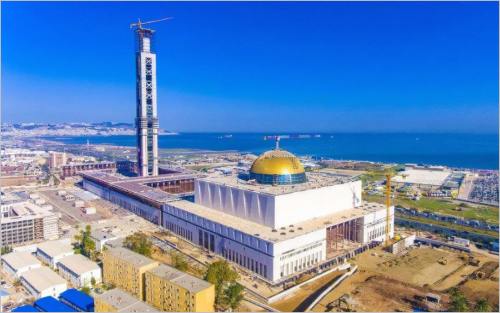 An image of Djamaâ El Djazaïr
.
.
Click the link below for images:
.
__________________________________________
Older Entries
Newer Entries
 James' World 2