November 18, 2022
Mohenjo
Business, Enthralling, Human Interest, Photographs
amazon, business, Business News, current-events, Future, Hotels, human-rights, medicine, mental-health, research, Science, Science News, technology, Technology News, travel, vacation

Click the link below the picture
.
Glen Etive is a glen in the Highlands of Scotland. The River Etive (Scottish Gaelic: Abhainn Èite) rises on the peaks surrounding Rannoch Moor, with several tributary streams coming together at the Kings House Hotel, at the head of Glen Coe. From the Kings House, the Etive flows for about 18 km, reaching the sea loch, Loch Etive. The river and its tributaries are popular with whitewater kayakers and at high water levels, it is a test piece of the area and a classic run.
At the north end of Glen Etive lie the two mountains known as the “Herdsmen of Etive”: Buachaille Etive Mòr and Buachaille Etive Beag. Other peaks accessible from the Glen include Ben Starav, located near the head of Loch Etive, and Beinn Fhionnlaidh on the northern side of the glen. The scenic beauty of the glen has led to its inclusion the Ben Nevis and Glen Coe National Scenic Area, one of 40 such areas in Scotland.
A narrow road from the Kings House Hotel runs down the glen, serving several houses and farms. This road ends at the head of the loch, though rough tracks continue along both shores.
The River Etive is one of Scotland’s most popular and challenging whitewater kayaking runs. It provides a multitude of solid Grade 4(5) rapids with a variety of falls and pool drops. It is home to a herd of Scottish red deer that have become accustomed to the presence of humans.
In the Ulster Cycle of Irish mythology, Deirdre and her love Naoise founded Glen Etive after fleeing Ulster.
The Fachen is also known as the Dwarf of Glen Etive.
Glen Etive has been used as the backdrop to many movies, among them Braveheart and Skyfall. The resulting influx of visitors has led to concerns about the spoilage of the glen through littering and fly-tipping.
.
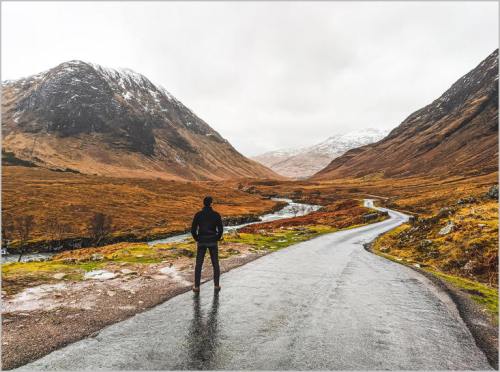 An image from Glen Etive
.
.
Click the link below for images:
.
__________________________________________
November 16, 2022
Mohenjo
Business, Enthralling, Human Interest, Photographs
amazon, business, Business News, current-events, Future, Hotels, human-rights, medicine, mental-health, research, Science, Science News, technology, Technology News, travel, vacation
Click the link below the picture
.
The Artemis program is a robotic and human Moon exploration program led by the United States’ National Aeronautics and Space Administration (NASA) with three partner agencies: European Space Agency (ESA), Japan Aerospace Exploration Agency (JAXA), and Canadian Space Agency (CSA). If successful, the Artemis program will reestablish a human presence on the Moon for the first time since the Apollo 17 mission in 1972. The major components of the program are the Space Launch System (SLS), Orion spacecraft, Lunar Gateway space station, and the commercial Human Landing Systems, including Starship HLS. The program’s long-term goal is to establish a permanent base camp on the Moon and facilitate human missions to Mars.
The Artemis program is a collaboration of government space agencies and private spaceflight companies, bound together by the Artemis Accords and supporting contracts. As of July 2022, twenty-one countries have signed the accords, including traditional U.S. space partners (such as the European Space Agency as well as agencies from Canada, Japan, and the United Kingdom) and emerging space powers such as Brazil, South Korea, and the United Arab Emirates.
The Artemis program was formally established in 2017 during the Trump administration; however, many of its components such as the Orion spacecraft were developed during the previous Constellation program (2005–2010) during the Bush administration, and after its cancellation during the Obama administration. Orion’s first launch, and the first use of the Space Launch System, was originally set in 2016 but was rescheduled and launched on 16 November 2022 as the Artemis 1 mission, with robots and mannequins aboard. According to plan, the crewed Artemis 2 launch will take place in 2024, the Artemis 3 crewed lunar landing in 2025, the Artemis 4 docking with the Lunar Gateway in 2027, and future yearly landings on the Moon thereafter. However, some observers note that the program’s cost and timeline are likely to be overrun and delayed due to, according to internal and external review, NASA’s inadequate management of contractors.
.
 An image of Nasa Artemis Launch
.
.
Click the link below for images:
.
__________________________________________
November 14, 2022
Mohenjo
Business, Enthralling, Human Interest, Photographs
amazon, business, Business News, current-events, Future, Hotels, human-rights, medicine, mental-health, research, Science, Science News, technology, Technology News, travel, vacation
Click the link below the picture
.
Ubud is a town on the Indonesian island of Bali in Ubud District, located amongst rice paddies and steep ravines in the central foothills of the Gianyar regency. Promoted as an arts and culture center, it has developed a large tourism industry. It forms a northern part of the Greater Denpasar metropolitan area (known as Sarbagita).
Ubud, often mistaken for a small city, is an administrative district (kecamatan) with a population of 74,800 (as of the 2020 Census) in an area of 42.38 km2. The central area of Ubud desa (village) has a population of 11,971 and an area of 6.76 km2, and receives more than three million foreign tourists each year. The area surrounding the town is made up of small farms, rice paddies, agroforestry plantations, and tourist accommodations. As of 2018, more tourists visited Ubud than Denpasar in south.
Eighth-century legend tells of a Javanese priest, Rsi Markendya, who meditated at the confluence of two rivers (an auspicious site for Hindus) at the Ubud locality of Campuhan. Here he founded the Gunung Lebah Temple on the valley floor, the site of which remains a pilgrim destination.
The town was originally important as a source of medicinal herbs and plants; Ubud gets its name from the Balinese word ubad (medicine).
In the late 19th century, Ubud became the seat of feudal lords who owed their allegiance to the king of Gianyar, at one time the most powerful of Bali’s southern states. The lords were members of the Balinese Kshatriya caste of Suk and were significant supporters of the village’s increasingly renowned arts scene.
Antonio Blanco, a Spanish-American artist, lived in Ubud from 1952 until his death in 1999. A new burst of creative energy came in the 1960s after the arrival of Dutch painter Arie Smit and the development of the Young Artists Movement. The Bali tourist boom since the late 1960s has seen much development in the town.
In 2002, terrorist bombings caused a decline in tourism throughout Bali including Ubud. In response to this, a writer’s festival was created, Ubud Writers and Readers Festival to help revive tourism, the island’s main economic lifeline.
The main street is Jalan Raya Ubud (Jalan Raya means main road), which runs east-west through the center of town. Two long roads, Jalan Monkey Forest and Jalan Hanoman extend south from Jalan Raya Ubud. Wikipedia
.
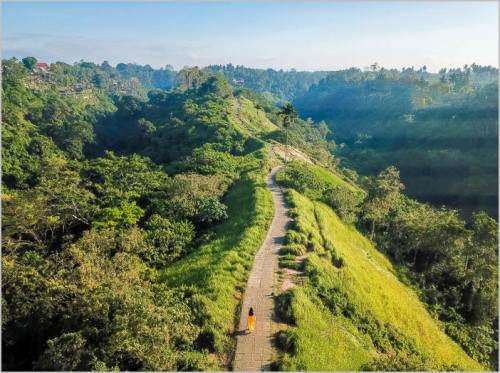 An image of Campuhan Ridge Walk Ubud
.
.
Click the link below for images:
.
__________________________________________
November 11, 2022
Mohenjo
Business, Enthralling, Human Interest, Photographs
amazon, business, Business News, current-events, Future, Hotels, human-rights, medicine, mental-health, research, Science, Science News, technology, Technology News, travel, vacation
Click the link below the picture
.
Cabo San Lucas, or simply Cabo, is a resort city at the southern tip of the Baja California Peninsula, in the Mexican state of Baja California Sur. As at the 2020 Census, the population of the city was 202,694 inhabitants. Cabo San Lucas together with San José del Cabo are collectively known as Los Cabos. Together, they form a metropolitan area of 351,111 inhabitants.
Rated as one of Mexico’s top five tourist destinations, Cabo is known for its beaches, scuba diving locations, Balnearios, the sea arch El Arco de Cabo San Lucas, and marine life. The Los Cabos Corridor has become a heavily trafficked vacation destination for tourists, with numerous resorts and timeshares along the coast between Cabo San Lucas and San José del Cabo.
The waters around Cabo are home to marine wildlife including rays, sharks, mahi-mahi (dorado), and striped marlin.
Archaeological excavations have shown evidence of continual human habitation in the area for at least 10,000 years.[6] When the first Europeans arrived, they encountered the Pericú people, who survived on a subsistence diet based on hunting and gathering seeds, roots, shellfish, and other marine resources. They called the location Yenecamú.
According to the narrative of Hatsutaro, a Japanese castaway, in the book Kaigai Ibun (written by Maekawa, Junzo, and Bunzo Sakai and narrated by Hatsutaro), when he arrived at Cabo San Lucas in May 1842, there were only two houses and about 20 inhabitants. However, American authors such as Henry Edwards and John Ross Browne claim that Cabo San Lucas’s founder was an Englishman named Thomas “Old Tom” Ritchie. John Ross Browne says Ritchie arrived there about 1828, while Edwards says that he died in October 1874. The actual founder of Cabo San Lucas was Cipriano Ceseña in 1788 who arrived from Hermosillo, Sonora. Per The book by Pablo L. Martinez, Guia Familiar de Baja California 1700–1900.
A fishing village began growing in the area. In 1917, an American company built a floating platform to catch tuna, and ten years later founded Compañía de Productos Marinos S.A. The plant operated for several years.
.
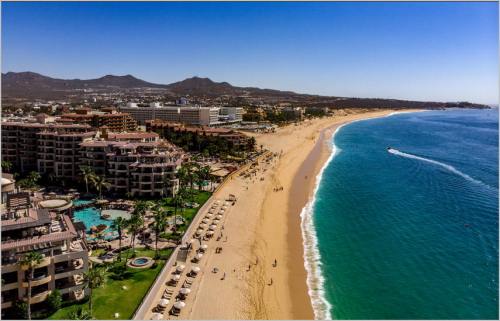 An image from Cabo San Lucas, Mexico
.
.
Click the link below for images:
.
__________________________________________
November 5, 2022
Mohenjo
Business, Enthralling, Human Interest, Photographs
amazon, business, Business News, current-events, Future, Hotels, human-rights, medicine, mental-health, research, Science, Science News, technology, Technology News, travel, vacation
Click the link below the picture
.
Møre og Romsdal is a county in the northernmost part of Western Norway. It borders the counties of Trøndelag, Innlandet, and Vestland. The county administration is located in the town of Molde, while Ålesund is the largest town. The county is governed by the Møre og Romsdal County Municipality which includes an elected county council and a county mayor. The national government is represented by the county governor.
The name Møre og Romsdal was created in 1936. The first element refers to the districts of Nordmøre and Sunnmøre, and the last element refers to Romsdal. Until 1919, the county was called “Romsdalens amt”, and from 1919 to 1935 “Møre fylke”.
For hundreds of years (1660-1919), the region was called Romsdalen amt, after the Romsdalen valley in the present-day Rauma Municipality. The Old Norse form of the name was Raumsdalr. The first element is the genitive case of the name Raumr derived from the name of the river Rauma, i.e. “The Dale of Rauma”. Raumr may refer to stream or current, or to booming or thundering waterfalls like Sletta waterfall, A purely legendary approach to the name refers to Raum the Old, one of the sons of Nór, the eponymous Saga King of Norway. since the majority of the residents of the county lived in the Sunnmøre region, there was some controversy over the name In 1919, many of the old county names were changed and this count was renamed Møre fylke.
The name Møre was chosen to represent the region where the majority of the county residents lived. That name is dative of Old Norse: Mǿrr (á Mǿri) and it is probably derived from the word marr referring to something wet like bog (common along the outer coast) or the sea itself. The name is interpreted as “coastland” or “bogland”. Møre was originally the name of the coastal area from Stad and north including most of Fosen. (There is also a coastal district in Sweden that has the same name: Möre.) The change in name from Romsdalen to Møre was controversial and it did not sit well with the residents of the Romsdal region. Finally, in 1936, the name was changed again to a compromise name: Møre og Romsdal (English: Møre and Romsdal).
The ambiguous designation møring— “person from Møre”— is used strictly about people from Nordmøre (and less frequently for people from Sunnmøre), excluding the people from Romsdal (while, consequently, romsdaling— “person from Romsdal”— is used about the latter). Wikipedia
.
 An image of View over islands in Møre og Romsdal, Norway
.
.
Click the link below for images:
.
__________________________________________
November 3, 2022
Mohenjo
Business, Enthralling, Human Interest, Photographs
amazon, business, Business News, current-events, Future, Hotels, human-rights, medicine, mental-health, research, Science, Science News, technology, Technology News, travel, vacation
Click the link below the picture
.
Lofoten is an archipelago and a traditional district in the county of Nordland, Norway. Lofoten has distinctive scenery with dramatic mountains and peaks, open sea and sheltered bays, beaches, and untouched lands. There are two towns, Svolvær and Leknes – the latter is approximately 169 km (105 mi) north of the Arctic Circle and approximately 2,420 km (1,500 mi) away from the North Pole. The archipelago experiences one of the world’s largest elevated temperature anomalies relative to its high latitude.
Lofoten (Old Norse: Lófótr) was the original name of the island Vestvågøya. The first element is ló (i.e., “lynx”) and the last element is derived from Norse fótr (i.e., “foot”), as the shape of the island must have been compared with that of a lynx’s foot. (The old name of the neighboring island Flakstadøya was Vargfót, “wolf’s foot”, from vargr “wolf”.) Alternatively, it could derive from the word for light in reference to the presence of Aurora Borealis as the word for light itself is the root of the Old Norse word for lynx lóa, although the earliest evidence suggests Lófótr was first the name of the island of Vestvågøy and only later becoming the name of the chain of islands. Most parsimonious is the analogy with Aurora Borealis, as the word fótr is typically not used to describe the feet of beasts of prey, instead using the word hrammr (paw) or löpp (also paw) for animals such as cats or dogs. Fótr can be used to describe legs, and as such, light leg represents the most plausible etymology taking into account the geography of the archipelago, eventually morphing to describe only the island of Vestvågøy before once again describing the island chain from its main island.
Another name one might come across is “Lofotveggen” or the Lofoten wall. The archipelago looks like a closed wall when seen from elevated points around Bodø or when arriving from the sea, some 100 kilometers (62 miles) long, and 800–1,000 meters (2,600–3,300 feet) high.
“There is evidence of human settlement extending back at least 11,000 years in Lofoten, and the earliest archaeological sites … are only about 5,500 years old, at the transition from the early to late Stone Age.” Iron Age agriculture, livestock, and significant human habitation can be traced back to c. 250 BC. Wikipedia
.
 An image of Lofoten Islands, Norway
.
.
Click the link below for images:
.
__________________________________________
October 29, 2022
Mohenjo
Business, Enthralling, Human Interest, Photographs
amazon, business, Business News, current-events, Future, Hotels, human-rights, medicine, mental-health, research, Science, Science News, technology, Technology News, travel, vacation
Click the link below the picture
.
Senja (Norwegian) or Sážžá (Northern Sami) is an island in Troms og Finnmark county, Norway, Europe. With an area of 1,586.3 square kilometers (612.5 sq mi), it is the second-largest island in Norway (outside of the Svalbard archipelago). It has a wild, mountainous outer (western) side facing the Atlantic, and a mild and lush inner (eastern) side. The island is located within Senja Municipality, which was established on 1 January 2020. The island of Senja had 7,864 inhabitants as of 1 January 2017. Most of the residents live along the eastern coast of the island, with Silsand being the largest urban area on the island. The fishing village of Gryllefjord on the west coast has a summer-only ferry connection to the nearby island of Andøya: the Andenes–Gryllefjord Ferry.
The island sits northeast of the Vesterålen archipelago, surrounded by the Norwegian Sea to the northwest, the Malangen fjord to the northeast, the Gisundet strait to the east, the Solbergfjorden to the southeast, the Vågsfjorden to the south, and the Andfjorden to the west. Ånderdalen National Park is located in the southern part of the island.
The Old Norse form of the name is believed to have been Senja or perhaps Sændja. The meaning of the name is unknown, but it might be related to the verb sundra, which means to “tear” or “split apart”, possibly because the west coast of the island is torn and split by numerous small fjords. It might also be derived from a Proto-Norse form of the word Sandijōn, meaning “(area) of sand” or “sandy island”.he island of Senja is located along the Troms og Finnmark county coastline with Finnsnes as the closest town. Senja is connected to the mainland by the Gisund Bridge. The municipalities located on Senja are Lenvik (part of which is on the mainland), Berg, Torsken, and Tranøy. Wikipedia
.
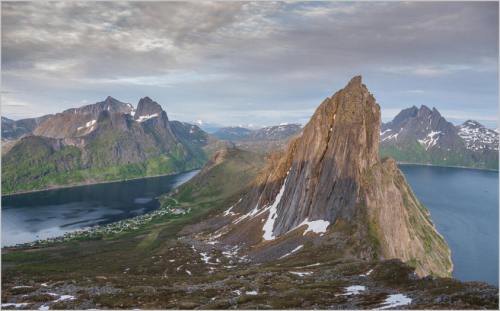
An image of Segla Mountain on Senja Island, Norway
.
.
Click the link below for images:
.
__________________________________________
October 27, 2022
Mohenjo
Business, Enthralling, Human Interest, Photographs
amazon, business, Business News, current-events, Future, Hotels, human-rights, medicine, mental-health, research, Science, Science News, technology, Technology News, travel, vacation
Click the link below the picture
.
At the Laguna del Tesoro, enjoy the customs and Taíno legends surrounded by the beautiful nature, Matanzas
The Laguna del Tesoro Lake is accessed by boat from the Boca de Guamá, through a channel surrounded by lush vegetation. This lake of 9 km2 and 5 km in diameter has plenty of trout which inhabit its crystalline, 4 m deep waters. It is an ideal place for nature tourism and sports fishing in Cuba.
According to legend, the indigenous people, who believed themselves to be in danger of the Spanish conquistadors, sank a boat full of their most precious possessions in the lake to avoid the theft of their riches.
In addition to trout, you can also find manatees and manjuari (Cuban gar), a living fossil that is only found in the Zapata Swamp, although fishing here is forbidden.
On the eastern side of the Montemar Park, the Laguna del Tesoro Lake is located halfway between Jagüey Grande and the Cochinos Bay, a well-known place where the Playa Larga Beach can be found. (tripcuba.org)
.
 An image from Laguna del Tesoro
.
.
Click the link below for images:
.
__________________________________________
October 25, 2022
Mohenjo
Business, Enthralling, Human Interest, Photographs
amazon, business, Business News, current-events, Future, Hotels, human-rights, medicine, mental-health, research, Science, Science News, technology, Technology News, travel, vacation
Click the link below the picture
.
Milazzo is a town (comune) in the Metropolitan City of Messina, Sicily, southern Italy; it is the largest commune in the Metropolitan City after Messina and Barcellona Pozzo di Gotto. The town has a population of around 31,500 inhabitants.
Several civilizations settled in Milazzo and left signs of their presence from the Neolithic age. In Homer’s Odyssey Milazzo is presumably the place where Ulysses is shipwrecked and meets Polyphemus.
Historically, the town originated as the ancient Mylae (Ancient Greek: Μύλαι), an outpost of Zancle, occupied before 648 BC, perhaps as early as 716 BC. It was taken by the Athenians in 426 BC. The people of Rhegium planted the exiles from Naxos and Catana in 395 BC as a counterpoise to Dionysius the Elder’s foundation of Tyndaris, but Dionysius soon took it. In the bay, Gaius Duilius won the first Roman naval victory over the Carthaginians (260 BC).
In 36 BC the naval Battle of Mylae was fought offshore. The fleet of Octavian, commanded by Marcus Agrippa, engaged that of Sextus Pompey. While the battle was nearly a draw, Sextus could not replace his losses and was thus weaker at the following Battle of Naulochus (36 BC), where he was utterly defeated.
After the fall of the Western Roman Empire, under the Byzantines, the town became one of the first episcopal seats of Sicily. In the 9th century, Milazzo was conquered by the Arabs, who built the first nucleus of the castle here. Frederick II of Hohenstaufen further fortified the town and created a personal hunting park. The castle was later mostly rebuilt in the age of Charles V of Spain.
Milazzo borders with the municipalities of Barcellona Pozzo di Gotto, Merì, and San Filippo del Mela.
Milazzo is the point of reference of a vast territory, from Villafranca Tirrena to Patti (over 200,000 inhabitants). Is also, an important center of the Strait of Messina Metropolitan Area (who also includes areas of Reggio Calabria), with the nearby town Barcellona Pozzo di Gotto. Located at the base of a peninsula that juts into the Tyrrhenian Sea with a small promontory, the town is 43 kilometers (27 mi) from the city of Messina. Wikipedia
.
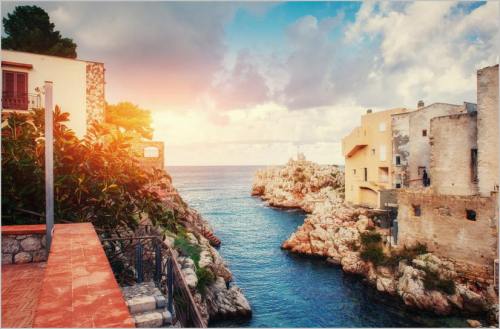 An image from Cape Milazzo
.
.
Click the link below for images:
.
__________________________________________
October 24, 2022
Mohenjo
Business, Enthralling, Human Interest, Photographs
amazon, business, Business News, current-events, Future, Hotels, human-rights, medicine, mental-health, research, Science, Science News, technology, Technology News, travel, vacation
Click the link below the picture
.
Twillingate is a town of 2,121 people located on the Twillingate Islands (“Toulinquet”) in Notre Dame Bay, off the northeastern shore of the island of Newfoundland in the province of Newfoundland and Labrador, Canada. The town is about 100 kilometers (62 mi) north of Lewisporte and Gander.
Incorporated on September 30, 1965, the town of Twillingate includes such localities as Back Harbour, Bayview, Durrell, Gillard’s Cove, Jenkins Cove, Manuel’s Cove, and Wild Cove. The Twillingate Islands provide an excellent sheltered harbor and easy access to the rich fishing grounds nearby. Twillingate Island is connected to mainland Newfoundland via the Walter B. Elliott causeway as part of Route 340. The town is also one of the oldest ports on the island. It was a historic fishing community, but because of the decline of the fishing industry, its economy now relies more on tourism.
The earliest known people to inhabit the area were the Maritime Archaic, who occupied the area 3,500 years ago in 1500 BC. The Maritime Archaic people were later supplanted by the Beothuk, and possibly the Dorset Inuit, who occupied the area until the arrival of European settlers.
The French had been fishing in the area, possibly as early as 1500, but the first European settlers did not arrive until the 17th century. The European settlers were mostly fishermen and their families from the West Country in England.
The native Beothuk managed to survive until the early 19th century in small numbers near Twillingate and the mouth of the Exploits River.
As the population grew, Twillingate became an important fishing community. It was a busy trade and service center for Labrador and the northern shore fisheries for more than two centuries. One of the most prominent historical events that happened in the history of Twillingate was the arrival of a local newspaper – the Twillingate Sun. The Twillingate Sun served the Twillingate district from 1880s until the 1950s. The Sun was a robust and professional newspaper that not only covered local and provincial news but also international news as well. Today, the Pilot, a newspaper published in Lewisporte, serves the area with its “Island’s Connection” segment. Since the Fisheries and Oceans Canada moratorium on fishing northern cod (see Endangered Species Controversies in Canada and Europe) was announced on July 2, 1992, followed shortly after by the collapse of the fishing industry, Twillingate has been forced to look to the tourist industry for income and is becoming a popular spot for visitors in the summer.
Twillingate is easily accessed by Route 340 from Lewisporte if approaching from western Newfoundland or by Route 330 from Gander if approaching from eastern Newfoundland. The town of Twillingate is approximately 1.5 hours from Gander and about an hour from Lewisporte. Somebody driving north on Route 340 from Lewisporte or Gander to Twillingate will pass through many other small fishing communities, including Boyd’s Cove, Summerford, Virgin Arm, and Newville.
There are several very small fishing communities that can be found on Twillingate Island before reaching the main town. The first community is Black Duck Cove and after that, a person will pass by Purcell’s Harbour and Little Harbour. The western portion of the island, a series of communities now amalgamated into Bayview is accessible via Rink Road, which becomes Bayview Street shortly after it starts, in the town or by a gravel road before entering the town. These communities, in order from the Route 340-gravel road entry, are Kettle Cove, Manuel’s Cove, Gillard’s Cove, Bluff Head Cove, Davis Cove, and Ragged Point. The town of Twillingate is about 5 km (3.1 mi) from the Twillingate-New World Island causeway. When in the town, access to the northern island is provided by “Tickle Bridge” and the communities on the southern island can be accessed via the town’s main road. Wikipedia
.
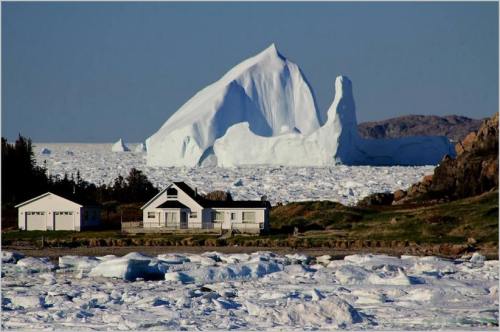
An image from Twillingate Islands Newfoundland And Labrador Scenery
.
.
Click the link below for article:
.
__________________________________________
Older Entries
Newer Entries
 James' World 2