February 17, 2022
Mohenjo
Business, Enthralling, Human Interest, Photographs
amazon, business, Business News, current-events, Future, Hotels, human-rights, medicine, mental-health, research, Science, Science News, technology, Technology News, travel, vacation

Click the link below the picture
.
Punta Gorda is a city in Charlotte County, Florida, United States. As of the 2010 U.S. Census, the city had a population of 16,641. It is the county seat of Charlotte County and the only incorporated municipality in the county. Punta Gorda is the principal city of the Punta Gorda, Florida Metropolitan Statistical Area and is also in the Sarasota-Bradenton-Punta Gorda Combined Statistical Area.
Punta Gorda was the scene of massive destruction after Charley, a Category 4 hurricane, came through the city on August 13, 2004. Charley was the strongest tropical system to hit Florida since Hurricane Andrew in 1992, and the first hurricane since Hurricane Donna in 1960 to make a direct hit on Florida’s southwest coast. In the immediate years following the storm, buildings were restored or built to hurricane-resistant building codes. The new buildings, restorations, and amenities concurrently preserved the city’s past while showcasing newer facilities. During this time, Laishley Park Municipal Marina was built and the Harborwalk, Linear Park, and various trails were created throughout the city for bicycle and pedestrian traffic.
Before the arrival of European explorers and settlers, the region centered on present-day Punta Gorda was home to the Calusa people. The name Punta Gorda (“Fat Point”) has been on maps at least since 1851, referring to a point of land that juts into Charlotte Harbor, an estuary off the Gulf of Mexico. It was in the late 1800s that early white settlers began to arrive in what is the present-day Punta Gorda area.
Frederick and Jarvis Howard, Union Army veterans, homesteaded an area south of the Peace River near present-day Punta Gorda about a decade after the close of the Civil War. In 1876, James and Josephine Lockhart bought land and built a house on property which is now at the center of the city. Approximately two years later Lockhart sold his claim to James Madison Lanier, a hunter and trapper, who lived there two years.
In 1879, a charter for a railroad with termini at Charlotte Harbor and Lake City, Florida was established under the name Gainesville, Ocala, and Charlotte Harbor Railroad. It was taken over by the Florida Southern Railroad, which reaffirmed Charlotte Harbor as a terminus in its own charter. 30.8 acres (12.5 ha) Then in 1883, Lanier sold his land to Isaac Trabue, who purchased additional property along the harbor and directed the platting of a town (by Kelly B. Harvey) named “Trabue”. Harvey recorded the plat on February 24, 1885. At the time, Isaac was in Kentucky, and his cousin, John Trabue, was in charge of selling lots. To insure success of his development, Trabue convinced the Florida Southern Railway to bring their road to his town on the south side of Charlotte Harbor. Wikipedia
.
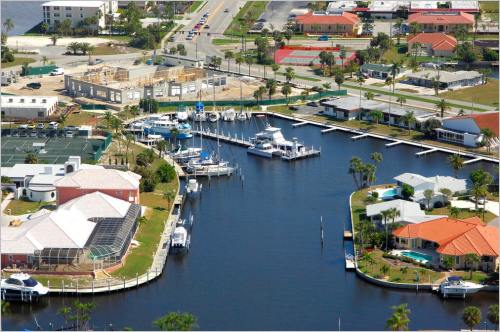 An image from Punta Gorda, Florida
.
.
Click the link below for article:
.
__________________________________________
February 17, 2022
Mohenjo
Business, Enthralling, Food For Thought, Human Interest, Photographs, Political, Technical
amazon, business, Business News, current-events, Future, Hotels, human-rights, medicine, mental-health, research, Science, Science News, technology, Technology News, travel, vacation

Click the link below the picture
.
I remember the moment the world got its first look at Kate Middleton’s Alexander McQueen lace gown like it was yesterday. On the day of her wedding to Prince William, the future king of England, I was in a conference room in the middle of the night breathlessly covering the event for the magazine website I was in charge of at the time. My team and I, quite literally, squealed when we saw it and then rushed to get our post up as quickly as possible.
Seven years later, I woke up in Los Angeles, where I was vacationing, to watch an American feminist/former Suits star marry my longest-term fictional boyfriend, my ginger prince, Henry Albert Charles David, a.k.a Harry. I was giddy with excitement for both if only being paid to wake up for one.
I truly won’t soon forget these iconic wedding images: of Meghan and her mother, Doria Ragland, driving to the church. Or, the vision of Pippa Middleton fixing her sister’s dress with their father by her side, not knowing she was about to make global headlines herself.
But my royal obsession goes back even further than that—to Princess Diana, who wed William and Harry’s father in 1981, and Grace Kelly, who married Prince Rainier III of Monaco in 1956. It didn’t matter that I was very young for Diana’s nuptials—and not even close to alive for Grace’s—they are part of our collective cultural memory for all time. Thanks to a weekly dose of People magazine, these bridal moments (and dresses) burned into my brain as a pop culture and royalty-obsessed child.
.
 Royal Weddings
.
.
Click the link below for the article:
.
__________________________________________
February 16, 2022
Mohenjo
Business, Enthralling, Human Interest, Photographs
amazon, business, Business News, current-events, Future, Hotels, human-rights, medicine, mental-health, research, Science, Science News, technology, Technology News, travel, vacation
Click the link below the picture
.
Vietnam, officially the Socialist Republic of Vietnam, is a country in Southeast Asia. Located at the eastern edge of mainland Southeast Asia, it covers 311,699 square kilometers. With a population of over 96 million, it is the world’s fifteenth-most populous country. Vietnam borders China to the north, Laos, and Cambodia to the west, and shares maritime borders with Thailand through the Gulf of Thailand, and the Philippines, Indonesia, and Malaysia through the South China Sea. Its capital is Hanoi and its largest city is Ho Chi Minh City.
Vietnam was inhabited as early as the Paleolithic age. The first known Vietnamese nation during the first millennium BC centered on the Red River Delta, located in modern-day northern Vietnam. The Han dynasty annexed and put the Vietnamese under Chinese rule from 111 BC until the first independent dynasty emerged in 939. Successive monarchical dynasties absorbed Chinese influences through Confucianism and Buddhism and expanded southward to the Mekong Delta. The Nguyễn—the last imperial dynasty—fell to French colonization in 1887. Following the August Revolution, the nationalist Viet Minh under the leadership of communist revolutionary Ho Chi Minh proclaimed independence from France in 1945.
Vietnam went through prolonged warfare through the 20th century. After World War II, France returned to reclaim colonial power in the First Indochina War, from which Vietnam emerged victorious in 1954. The Vietnam War began shortly after, during which the nation was divided into communist North supported by the Soviet Union and China, and anti-communist South supported by the United States. Upon North Vietnamese victory in 1975, Vietnam reunified as a unitary socialist state under the Communist Party of Vietnam in 1976. An ineffective planned economy, trade embargo by the West, and wars with Cambodia and China crippled the country. In 1986, the Communist Party initiated economic and political reforms, transforming the country to a market-oriented economy.
The reforms facilitated Vietnamese integration into global economy and politics. A developing country with a lower-middle-income economy, Vietnam is one of the fastest-growing economies of the 21st century. It is part of international and intergovernmental institutions including the United Nations, the ASEAN, the APEC, the CPTPP, the Non-Aligned Movement, the Organisation internationale de la Francophonie, and the World Trade Organization. It has assumed a seat on the United Nations Security Council twice. Contemporary issues in Vietnam include corruption and a poor human rights record.
.
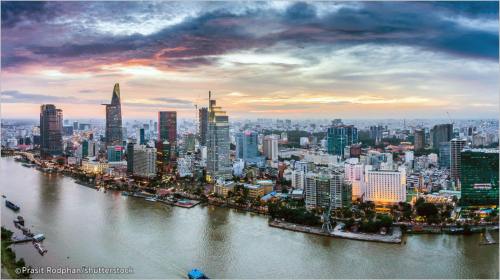 An image from Vietnam
.
.
Click the link below for images:
.
__________________________________________
February 15, 2022
Mohenjo
Business, Enthralling, Human Interest, Photographs
amazon, business, Business News, current-events, Future, Hotels, human-rights, medicine, mental-health, research, Science, Science News, technology, Technology News, travel, vacation
Click the link below the picture
.
Machu Picchu is a 15th-century Inca citadel located in the Eastern Cordillera of southern Peru on a 2,430-meter (7,970 ft) mountain ridge. It is located in the Machupicchu District within Urubamba Province above the Sacred Valley, which is 80 kilometers (50 mi) northwest of Cuzco. The Urubamba River flows past it, cutting through the Cordillera and creating a canyon with a tropical mountain climate.
For most speakers of English or Spanish, the first ‘c’ in Picchu is silent. In English, the name is pronounced or , in Spanish as [ˈmatʃu ˈpitʃu] or [ˈmatʃu ˈpiktʃu], and in Quechua (Machu Pikchu) as [ˈmatʃʊ ˈpɪktʃʊ].
The Incas, in contrast with the Mayans, had no written language, and no European visited the site until the 19th century, so far as is known. There are, therefore, no written records of the site while it was in use. The names of the buildings, their supposed uses, and their inhabitants are all the product of modern archeologists, on the basis of physical evidence, including tombs at the site.
Most recent archaeologists (2021) believe that Machu Picchu was constructed as an estate for the Inca emperor Pachacuti (1438–1472). Often mistakenly referred to as the “Lost City of the Incas”, it is the most familiar icon of Inca civilization. The Incas built the estate around 1450 but abandoned it a century later, at the time of the Spanish conquest. According to the new AMS radiocarbon dating, it was occupied from c. 1420-1532.
Machu Picchu was built in the classical Inca style, with polished dry-stone walls. Its three primary structures are the Intihuatana, the Temple of the Sun, and the Room of the Three Windows. Most of the outlying buildings have been reconstructed in order to give visitors a better idea of how they originally appeared. By 1976, 30% of Machu Picchu had been restored and restoration continues.
Machu Picchu was declared a Peruvian Historic Sanctuary in 1981 and a UNESCO World Heritage Site in 1983. In 2007, Machu Picchu was voted one of the New Seven Wonders of the World in a worldwide internet poll. Wikipedia
.
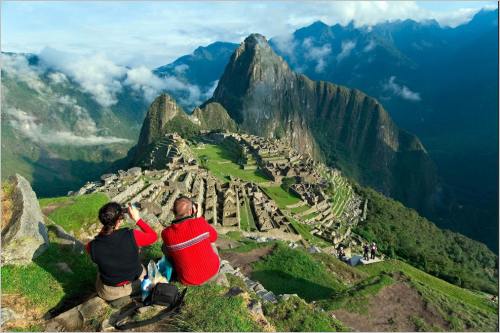 An image of Machu Picchu Peru
.
.
Click the link below for images:
.
__________________________________________
February 14, 2022
Mohenjo
Business, Enthralling, Human Interest, Photographs
amazon, business, Business News, current-events, Future, Hotels, human-rights, medicine, mental-health, research, Science, Science News, technology, Technology News, travel, vacation
Click the link below the picture
.
Ontario is one of the thirteen provinces and territories of Canada. Located in Central Canada, it is Canada’s most populous province, with 38.3 percent of the country’s population, and is the second-largest province by total area (after Quebec). Ontario is Canada’s fourth-largest jurisdiction in total area when the territories of the Northwest Territories and Nunavut are included. It is home to the nation’s capital city, Ottawa, and the nation’s most populous city, Toronto, which is also Ontario’s provincial capital.
Ontario is bordered by the province of Manitoba to the west, Hudson Bay and James Bay to the north, and Quebec to the east and northeast, and to the south by the U.S. states of (from west to east) Minnesota, Michigan, Ohio, Pennsylvania, and New York. Almost all of Ontario’s 2,700 km (1,678 mi) border with the United States follows inland waterways: from the westerly Lake of the Woods, eastward along the major rivers and lakes of the Great Lakes/Saint Lawrence River drainage system. These include Rainy River, Pigeon River, Lake Superior, St. Marys River, Lake Huron, St. Clair River, Lake St. Clair, Detroit River, Lake Erie, Niagara River, Lake Ontario, and the St. Lawrence River from Kingston, to the Quebec boundary just east of Cornwall. There is only about 1 km (0.6 mi) of land border, made up of portages including Height of Land Portage on the Minnesota border.
Ontario is sometimes divided into two geographic regions, Northern Ontario and Southern Ontario. The great majority of Ontario’s population and arable land is in the south. In contrast, the larger, northern part of Ontario is sparsely populated with cold winters and heavy forestation.
Ontario is a term thought to be derived from Indigenous origins, either Ontarí:io, a Huron (Wyandot) word meaning “great lake”, or possibly skanadario, which means “beautiful water” or “sparkling water” in the Iroquoian languages. Ontario has about 250,000 freshwater lakes. The first mention of the name Ontario was in 1641 when “Ontario” was used to describe the land on the north shore of the easternmost part of the Great Lakes. It was adopted as the official name of the new province at Confederation in 1867. Wikipedia
.
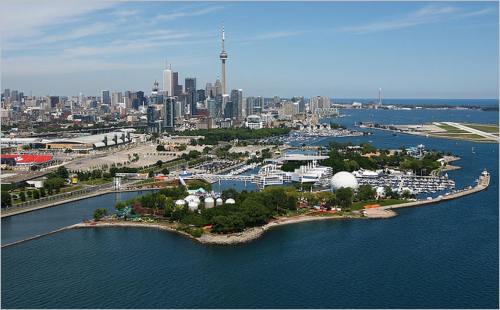 An image from Ontario
.
.
Click the link below for images:
.
__________________________________________
February 12, 2022
Mohenjo
Business, Enthralling, Human Interest, Photographs
amazon, business, Business News, current-events, Future, Hotels, human-rights, medicine, mental-health, research, Science, Science News, technology, Technology News, travel, vacation
Click the link below the picture
.
A dehesa is a multifunctional, agrosylvopastoral system (a type of agroforestry) and cultural landscape of southern and central Spain and southern Portugal; in Portugal, it is known as a montado. Its name comes from the Latin ‘defensa’ (fenced) referring to land that was fenced, and usually destined for pasture. Dehesas may be private or communal property (usually belonging to the municipality). Used primarily for grazing, they produce a variety of products, including non-timber forest products such as wild game, mushrooms, honey, cork, and firewood. They are also used to raise the Spanish fighting bull and the Iberian pig. The main tree component is oaks, usually holm (Quercus rotundifolia) and cork (Quercus suber). Other oaks, including melojo (Quercus pyrenaica) and quejigo (Quercus faginea), may be used to form dehesa, the species utilized depending on geographical location and elevation. Dehesa is an anthropogenic system that provides not only a variety of foods but also wildlife habitat for endangered species such as the Spanish imperial eagle.
By extension, the term can also be used for this style of rangeland management on estates.
The dehesa is derived from the Mediterranean forest ecosystem, consisting of grassland featuring herbaceous species, used for grazing cattle, goats, and sheep, and tree species belonging to the genus Quercus (oak), such as the holm oak (Quercus ilex sp. ballota), although other tree species such as beech and pine trees may also be present. Oaks are protected and pruned to produce acorns, which the famous black Iberian pigs feed on in the fall during the montanera. Ham produced from Iberian pigs fattened with acorns and air-dried at high elevations is known as Jamón ibérico (“presunto ibérico”, or “pata negra” in Portuguese), and sells for premium prices, especially if only acorns have been used for fattening.
In a typical dehesa, oaks are managed to persist for about 250 years. If cork oaks are present, the cork is harvested about every 9 to 12 years, depending on the productivity of the site. The understory is usually cleared every 7 to 10 years to prevent the takeover of the woodland by shrubs of the rock rose family (Cistaceae), often referred to as “jara“, or by oak seedlings. Oaks are spaced to maximize overall productivity by balancing light for the grasses in the understory, water use in the soils, and acorn production for pigs and game.
There is debate about the origins and maintenance of the dehesa, and whether or not the oaks can reproduce adequately under the grazing densities now prevailing. Wikipedia
.
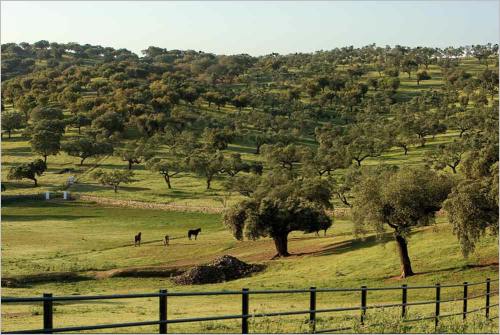 An image from Spain’s Dehesa System
.
.
Click the link below for images:
.
__________________________________________
February 11, 2022
Mohenjo
Business, Enthralling, Human Interest, Photographs
amazon, business, Business News, current-events, Future, Hotels, human-rights, medicine, mental-health, research, Science, Science News, technology, Technology News, travel, vacation
Click the link below the picture
.
Sofia is the capital and largest city of Bulgaria. It is situated in the Sofia Valley at the foot of the Vitosha mountain in the western parts of the country. The city is built west of the Iskar river and has many mineral springs, such as the Sofia Central Mineral Baths. It has a humid continental climate. Being in the center of the Balkans, it is midway between the Black Sea and the Adriatic Sea, and closest to the Aegean Sea.
Known as Serdica in Antiquity and Sredets in the Middle Ages, Sofia has been an area of human habitation since at least 7000 BC. The recorded history of the city begins with the attestation of the conquest of Serdica by the Roman Republic in 29 BC from the Celtic tribe Serdi. During the decline of the Roman Empire, the city was raided by Huns, Visigoths, Avars, and Slavs. In 809 Serdica was incorporated into the Bulgarian Empire by Khan Krum and became known as Sredets. In 1018, the Byzantines ended Bulgarian rule until 1194, when it was reincorporated by the reborn Bulgarian Empire. Sredets became a major administrative, economic, cultural, and literary hub until its conquest by the Ottomans in 1382. From 1530 to 1826, Sofia was the regional capital of Rumelia Eyalet, the Ottoman Empire’s key province in Europe. Bulgarian rule was restored in 1878. Sofia was selected as the capital of the Third Bulgarian State in the next year, ushering a period of intense demographic and economic growth.
Sofia is the 14th largest city in the European Union. It is surrounded by mountainsides, such as Vitosha by the southern side, Lyulin by the western side, and the Balkan Mountains by the north, which makes it the third-highest European capital after Andorra la Vella and Madrid. Being Bulgaria’s primate city, Sofia is home of many of the major local universities, cultural institutions, and commercial companies. The city has been described as the “triangle of religious tolerance”. This is due to the fact that three temples of three major world religions—Christianity, Islam, and Judaism—are situated within one square: Sveta Nedelya Church, Banya Bashi Mosque, and Sofia Synagogue. This triangle was recently expanded to a “square” and includes the Catholic Cathedral of St Joseph.
Sofia has been named one of the top ten best places for start-up businesses in the world, especially in information technologies. It was Europe’s most affordable capital to visit in 2013. In 1979, the Boyana Church in Sofia was included onto the World Heritage List, and it was deconstructed in the Second Bulgarian Empire, holding much patrimonial symbolism to the Bulgarian Orthodox Church. With its cultural significance in Southeast Europe, Sofia is home to the National Opera and Ballet of Bulgaria, the National Palace of Culture, the Vasil Levski National Stadium, the Ivan Vazov National Theatre, the National Archaeological Museum, and the Serdica Amphitheatre. The Museum of Socialist Art includes many sculptures and posters that educate visitors about the lifestyle in communist Bulgaria.
The population of Sofia declined from 70,000 in the late 18th century, through 19,000 in 1870, to 11,649 in 1878, after which it began increasing. Sofia hosts some 1.24 million residents within a territory of 492 km2, a concentration of 17.9% of the country population within the 200th percentile of the country territory. The urban area of Sofia hosts some 1.54 million residents within 5723 km2, which comprises Sofia City Province and parts of Sofia Province (Dragoman, Slivnitsa, Kostinbrod, Bozhurishte, Svoge, Elin Pelin, Gorna Malina, Ihtiman, Kostenets) and Pernik Province (Pernik, Radomir), representing 5.16% of the country territory. The metropolitan area of Sofia is based upon one hour of car travel time, stretches internationally and includes Dimitrovgrad in Serbia. The metropolitan region of Sofia is inhabited by a population of 1.67 million. Wikipedia
.
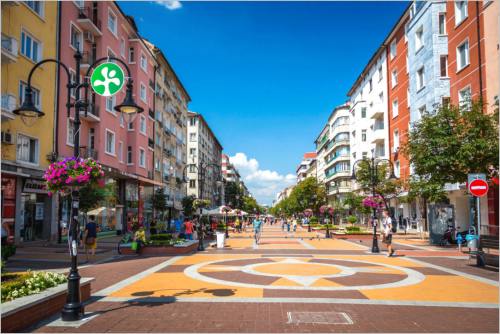 An image from Sofia, Bulgaria
.
.
Click the link below for images:
.
__________________________________________
February 10, 2022
Mohenjo
Business, Enthralling, Human Interest, Photographs
amazon, business, Business News, current-events, Future, Hotels, human-rights, medicine, mental-health, research, Science, Science News, technology, Technology News, travel, vacation
Click the link below the picture
.
The Roman Forum, also known by its Latin name Forum Romanum (Italian: Foro Romano), is a rectangular forum (plaza) surrounded by the ruins of several important ancient government buildings at the center of the city of Rome. Citizens of the ancient city referred to this space, originally a marketplace, as the Forum Magnum, or simply the Forum.
For centuries the Forum was the center of day-to-day life in Rome: the site of triumphal processions and elections; the venue for public speeches, criminal trials, and gladiatorial matches; and the nucleus of commercial affairs. Here statues and monuments commemorated the city’s great men. The teeming heart of ancient Rome, it has been called the most celebrated meeting place in the world, and in all history. Located in the small valley between the Palatine and Capitoline Hills, the Forum today is a sprawling ruin of architectural fragments and intermittent archaeological excavations attracting 4.5 million or more sightseers yearly.
Many of the oldest and most important structures of the ancient city were located on or near the Forum. The Roman Kingdom’s earliest shrines and temples were located on the southeastern edge. These included the ancient former royal residence, the Regia (8th century BC), and the Temple of Vesta (7th century BC), as well as the surrounding complex of the Vestal Virgins, all of which were rebuilt after the rise of imperial Rome.
Other archaic shrines to the northwest, such as the Umbilicus Urbis and the Vulcanal (Shrine of Vulcan), developed into the Republic’s formal Comitium (assembly area). This is where the Senate—as well as Republican government itself—began. The Senate House, government offices, tribunals, temples, memorials, and statues gradually cluttered the area.
Over time the archaic Comitium was replaced by the larger adjacent Forum and the focus of judicial activity moved to the new Basilica Aemilia (179 BC). Some 130 years later, Julius Caesar built the Basilica Julia, along with the new Curia Julia, refocusing both the judicial offices and the Senate itself. This new Forum, in what proved to be its final form, then served as a revitalized city square where the people of Rome could gather for commercial, political, judicial, and religious pursuits in ever greater numbers.
Eventually much economic and judicial business would transfer away from the Forum Romanum to the larger and more extravagant structures (Trajan’s Forum and the Basilica Ulpia) to the north. The reign of Constantine the Great saw the construction of the last major expansion of the Forum complex—the Basilica of Maxentius (312 AD). This returned the political center to the Forum until the fall of the Western Roman Empire almost two centuries later.
.
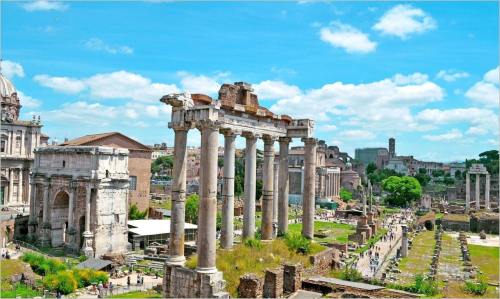 An image of the Roman Forum
.
.
Click the link below for images:
.
__________________________________________
February 9, 2022
Mohenjo
Business, Enthralling, Human Interest, Photographs
amazon, business, Business News, current-events, Future, Hotels, human-rights, medicine, mental-health, research, Science, Science News, technology, Technology News, travel, vacation
Click the link below the picture
.
Laos, officially the Lao People’s Democratic Republic, is a socialist state and the only landlocked country in Southeast Asia. At the heart of the Indochinese Peninsula, Laos is bordered by Myanmar and China to the northwest, Vietnam to the east, Cambodia to the southeast, and Thailand to the west and southwest. Its capital and largest city is Vientiane.
Present-day Laos traces its historic and cultural identity to Lan Xang, which existed from the 14th century to the 18th century as one of the largest kingdoms in Southeast Asia. Because of its central geographical location in Southeast Asia, the kingdom became a hub for overland trade and became wealthy economically and culturally. After a period of internal conflict, Lan Xang broke into three separate kingdoms—Luang Phrabang, Vientiane, and Champasak. In 1893, the three territories came under a French protectorate and were united to form what is now known as Laos. It briefly gained independence in 1945 after Japanese occupation but was re-colonized by France until it won autonomy in 1949. Laos became independent in 1953, with a constitutional monarchy under Sisavang Vong. A post-independence civil war began, which saw the communist resistance, supported by the Soviet Union, fight against the monarchy that later came under influence of military regimes supported by the United States. After the Vietnam War ended in 1975, the communist Pathet Lao came to power, ending the civil war. Laos was then dependent on military and economic aid from the Soviet Union until its dissolution in 1991.
Laos is a member of the Asia-Pacific Trade Agreement, the ASEAN, East Asia Summit, and La Francophonie. Laos applied for membership of the World Trade Organization in 1997; on 2 February 2013, it was granted full membership. It is a one-party socialist republic, espousing Marxism–Leninism and governed by the Lao People’s Revolutionary Party, under which non-governmental organizations have routinely characterized the country’s human rights record as poor, citing repeated abuses such as torture, restrictions on civil liberties, and persecution of minorities.
The politically and culturally dominant Lao people make up 53.2% of the population, mostly in the lowlands. Mon-Khmer groups, the Hmong, and other indigenous hill tribes live in the foothills and mountains. Laos’s strategies for development are based on generating electricity from rivers and selling the power to its neighbors, namely Thailand, China, and Vietnam, as well as its initiative to become a “land-linked” nation, as evidenced by the construction of four new railways connecting Laos and neighbors. Laos has been referred to as one of Southeast Asia and Pacific’s fastest-growing economies by the World Bank with annual GDP growth averaging 7.4% since 2009.
.
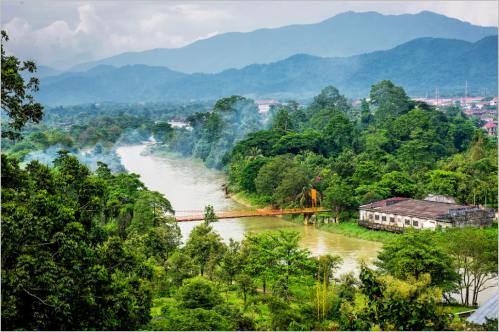 An image from Laos
.
.
Click the link below for images:
.
__________________________________________
February 8, 2022
Mohenjo
Business, Enthralling, Human Interest, Photographs
amazon, business, Business News, current-events, Future, Hotels, human-rights, medicine, mental-health, research, Science, Science News, technology, Technology News, travel, vacation
Click the link below the picture
.
Cologne is the largest city of Germany’s most populous state of North Rhine-Westphalia (NRW) and the fourth-most populous city and one of the oldest in Germany. With 3.6 million people in the urban region and 1.1 million inhabitants within its city proper, Cologne is the largest city on the river Rhine and also the most populous city of both the Rhine-Ruhr Metropolitan Region and the Rhineland. Centered on the left (west) bank of the Rhine, Cologne is about 35 km (22 mi) southeast of NRW’s state capital Düsseldorf and 25 km (16 mi) northwest of Bonn.
The city’s medieval Catholic Cologne Cathedral (Kölner Dom), the third-tallest church and tallest cathedral in the world, constructed to house the Shrine of the Three Kings, is a globally recognized landmark and one of the most visited sights and pilgrimage destinations in Europe. The cityscape is further shaped by the Twelve Romanesque churches of Cologne, and Cologne is famous for Eau de Cologne, that has been produced in the city since 1709, and “cologne” has since come to be a generic term.
There are many institutions of higher education in the city, most notably the University of Cologne, one of Europe’s oldest and largest universities; the Technical University of Cologne, Germany’s largest university of applied sciences; and the German Sport University Cologne. It hosts three Max Planck science institutes and is a major research hub for the aerospace industry, with the German Aerospace Center and the European Astronaut Centre headquarters. It also has significant chemical and automobile industry. Cologne Bonn Airport is a regional hub, the main airport for the region is Düsseldorf Airport.
Cologne was founded and established in Germanic Ubii territory in the 1st century CE as the Roman Colonia Agrippina, hence its name (Augusta Ubiorum was also used “Agrippina” was later dropped (except in Latin), and “Colonia” became the name of the city in its own right, which developed into modern German as Köln. “Cologne”, the French version of the city’s name, has become standard in English as well. Cologne functioned as the capital of the Roman province of Germania Inferior and as the headquarters of the Roman military in the region until occupied by the Franks in 462. During the Middle Ages, the city flourished as being located on one of the most important major trade routes between east and western Europe (including the Brabant Road, Via Regia, and Publica). Cologne was a free imperial city of the Holy Roman Empire and one of the major members of the trade union Hanseatic League. It was one of the largest European cities in medieval and renaissance times.
Prior to World War II, the city had undergone occupations by the French (1794–1815) and the British (1918–1926), and was part of Prussia beginning in 1815. Cologne was one of the most heavily bombed cities in Germany during World War II. The bombing reduced the population by 95%, mainly due to evacuation, and destroyed almost the entire millennia-old city center. The post-war rebuilding has resulted in a very mixed cityscape, restoring only major historic landmarks like city gates and churches (31 of them being Romanesque).
Cologne is a major cultural center for the Rhineland; it hosts more than 30 museums and hundreds of galleries. Exhibitions range from local ancient Roman archeological sites to contemporary graphics and sculpture. The Cologne Trade Fair hosts a number of trade shows such as Art Cologne, Dmexco, imm Cologne, Photokina, and Gamescom, a leading video games fair. Wikipedia
.
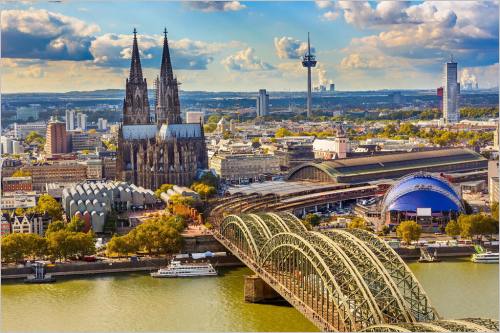 An image from Cologne Germany
.
.
Click the link below for images:
.
__________________________________________
Older Entries
Newer Entries
 James' World 2