May 6, 2022
Mohenjo
Business, Enthralling, Human Interest, Photographs
amazon, business, Business News, current-events, Future, Hotels, human-rights, medicine, mental-health, research, Science, Science News, technology, Technology News, travel, vacation

Click the link below the picture
.
Peru, officially the Republic of Peru, is a country in western South America. It is bordered in the north by Ecuador and Colombia, in the east by Brazil, in the southeast by Bolivia, in the south by Chile, and in the south and west by the Pacific Ocean. Peru is a megadiverse country with habitats ranging from the arid plains of the Pacific coastal region in the west to the peaks of the Andes mountains extending from the north to the southeast of the country to the tropical Amazon basin rainforest in the east with the Amazon River. Peru has a population of 34 million, and its capital and largest city is Lima. At 1.28 million km2 (0.5 million mi2), Peru is the 19th largest country in the world and the third-largest in South America.
Peruvian territory was home to several ancient cultures. Ranging from the Caral-Supe civilization starting in 3500 BCE, the oldest civilization in the Americas and one of the five cradles of civilization, to the Inca Empire, the largest known state in the pre-Columbian Americas, the territory now including Peru has one of the longest histories of civilization of any country, tracing its heritage back to the 10th millennium BCE.
The Spanish Empire conquered the region in the 16th century and established a viceroyalty that encompassed most of its South American territories, with its capital in Lima. Higher education started in the Americas with the official establishment of the National University of San Marcos in Lima in 1551. Peru formally proclaimed independence in 1821, and following the foreign military campaigns of José de San Martín and Simón Bolívar, and the decisive battle of Ayacucho, Peru completed its independence in 1824. In the ensuing years, the country first suffered of political instability until a period of relative economic and political stability begun due to the exploitation of guano. Later, the War of the Pacific (1879–1884) with Chile brought Peru to a state of crisis from which the oligarchy seized power through the Civilista Party. In the 20th century, the country endured coups, social unrest, and internal conflicts, as well as periods of stability and economic upswing. In the 1990s, the country implemented a neoliberal economic model which is still in use to this day. As the 2000s commodities boom took place, Peru experienced a period of constant economic growth and a decrease in poverty.
The sovereign state of Peru is a representative democratic republic divided into 25 regions. Peru has a high level of human development with an upper middle income level ranking 82nd on the Human Development Index. It is one of the region’s most prosperous economies with an average growth rate of 5.9% and it has one of the world’s fastest industrial growth rates at an average of 9.6%. Its main economic activities include mining, manufacturing, agriculture, and fishing, along with other growing sectors such as telecommunications and biotechnology. The country forms part of The Pacific Pumas, a political and economic grouping of countries along Latin America’s Pacific coast that share common trends of positive growth, stable macroeconomic foundations, improved governance, and an openness to global integration. Peru ranks high in social freedom; it is an active member of the Asia-Pacific Economic Cooperation, the Pacific Alliance, the Trans-Pacific Partnership, and the World Trade Organization; and is considered as a middle power.
Peru has a population that includes Mestizos, Amerindians, Europeans, Africans, and Asians. The main spoken language is Spanish, although a significant number of Peruvians speak Quechuan languages, Aymara, or other Indigenous languages. This mixture of cultural traditions has resulted in a wide diversity of expressions in fields such as art, cuisine, literature, and music. Wikipedia
.
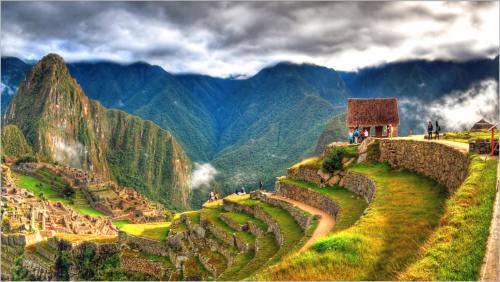 An image from Peru
.
.
Click the link below for images:
.
__________________________________________
May 5, 2022
Mohenjo
Business, Enthralling, Human Interest, Photographs
amazon, business, Business News, current-events, Future, Hotels, human-rights, medicine, mental-health, research, Science, Science News, technology, Technology News, travel, vacation
Click the link below the picture
.
El Nido, officially the Municipality of El Nido, is a 1st class municipality in the province of Palawan, Philippines. According to the 2020 census, it has a population of 50,494 people.
It is about 420 kilometers (260 mi) southwest of Manila, and about 238 kilometers (148 mi) northeast of Puerto Princesa, Palawan’s capital. A managed resource-protected area, it is known for its white-sand beaches, coral reefs, limestone cliffs, and as the gateway to the Bacuit archipelago.
El Nido has been inhabited by humans as early 2680 BC, or even up to 22,000 years ago. This was confirmed by the fossils and burial sites, dating back to the Late Neolithic Age, that can be found in many caves and excavation sites surrounding the municipality, particularly in Dewil Valley’s Ille Cave in New Ibajay. Chinese traders had been regularly visiting the area of Palawan for its edible birds’ nests during the Song Dynasty (960-1279). The island was mentioned in Chinese records of 1225. Chau Ju-Kua, a trade commissioner of the port of Chuan wrote about the island, Pa-Lao-Yu or Land of Beautiful Harbors in his book Chu Fan Chi.
The town traces its roots from a small Tagbanwa village called Talindak. Sometime in the 16th century, waves of migrants from Cuyo Islands came here to settle. In the 1800s, the Spaniards arrived, and they moved to the part where the present-day Población and Mabini are located. The first Spanish families were the Canovas, Vázquez, Ríos and Rey. In 1890, the Spaniards renamed it as Bacuit. At the time, the center of the town was Cabigsing, then known as Inventario. Chinese families moved into the area about the same period, first settling in Langeblangeban. The first Chinese settlers were named Lim, Chin, Liao, Edsan, Ambao, Que-Ke, Lim Piao, Yu His, Pe Phan, and Pe Khen.
During the Spanish colonization of the Philippines, the town was under the jurisdiction of the Municipality of Taytay, which was the capital of the former Province of Calamianes from 1818, and the Province of Castilla, the area of what is now known as northern Palawan, from 1858. It remained part of Taytay until 1916 when it formally became an independent municipality. The new municipality was then known as Bacuit. Wikipedia
.
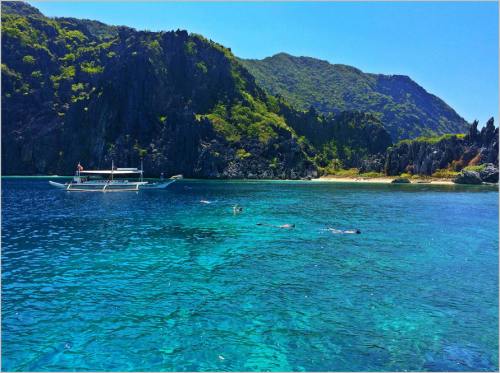 An image from El Nido Palawan
.
.
Click the link below for images:
.
__________________________________________
May 4, 2022
Mohenjo
Business, Enthralling, Human Interest, Photographs
amazon, business, Business News, current-events, Future, Hotels, human-rights, medicine, mental-health, research, Science, Science News, technology, Technology News, travel, vacation
Click the link below the picture
.
Nigeria, officially the Federal Republic of Nigeria, is a country in West Africa. It is the most populous country in Africa. It is geographically situated between the Sahel to the north and the Gulf of Guinea to the south in the Atlantic Ocean. It covers an area of 923,769 square kilometers (356,669 sq mi), with a population of over 211 million. Nigeria borders Niger in the north, Chad in the northeast, Cameroon in the east, and Benin in the west. Nigeria is a federal republic comprising 36 states and the Federal Capital Territory, where the capital, Abuja, is located. The largest city in Nigeria is Lagos, one of the largest metropolitan areas in the world and the second-largest in Africa.
Nigeria has been home to several indigenous pre-colonial states and kingdoms since the second millennium BC, with the Nok civilization in the 15th century BC marking the first internal unification in the country. The modern state originated with British colonialization in the 19th century, taking its present territorial shape with the merging of the Southern Nigeria Protectorate and Northern Nigeria Protectorate in 1914 by Lord Lugard. The British set up administrative and legal structures while practicing indirect rule through traditional chiefdoms in the Nigeria region. Nigeria became a formally independent federation on October 1, 1960. It experienced a civil war from 1967 to 1970, followed by a succession of democratically elected civilian governments and military dictatorships, until achieving a stable democracy in the 1999 presidential election; the 2015 election was the first time an incumbent president had lost re-election.
Nigeria is a multinational state inhabited by more than 250 ethnic groups speaking 500 distinct languages, all identifying with a wide variety of cultures. The three largest ethnic groups are the Hausa in the north, Yoruba in the west, and Igbo in the east, together comprising over 60% of the total population. The official language is English, chosen to facilitate linguistic unity at the national level. Nigeria’s constitution ensures freedom of religion and it is home to some of the world’s largest Muslim and Christian populations, simultaneously. Nigeria is divided roughly in half between Muslims, who live mostly in the north, and Christians, who live mostly in the south; indigenous religions, such as those native to the Igbo and Yoruba ethnicities, are in the minority.
Nigeria is a regional power in Africa, a middle power in international affairs, and is an emerging global power. Nigeria’s economy is the largest in Africa, the 25th-largest in the world by nominal GDP, and 25th-largest by PPP. Nigeria is often referred to as the Giant of Africa owing to its large population and economy and is considered to be an emerging market by the World Bank. However, the country ranks very low in the Human Development Index and remains one of the most corrupt nations in the world. Nigeria is a founding member of the African Union and a member of many international organizations, including the United Nations, the Commonwealth of Nations, NAM, the Economic Community of West African States, and OPEC. It is also a member of the informal MINT group of countries and is one of the Next Eleven economies. Wikipedia
.
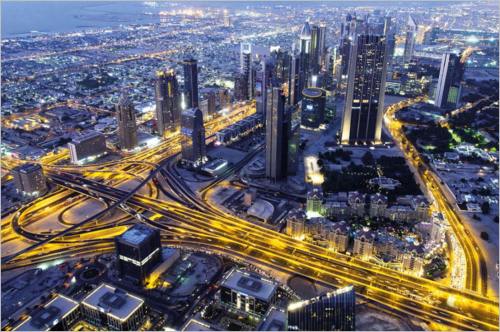 An image from Abuja City Nigeria
.
.
Click the link below for images:
.
__________________________________________
May 3, 2022
Mohenjo
Business, Enthralling, Human Interest, Photographs
amazon, business, Business News, current-events, Future, Hotels, human-rights, medicine, mental-health, research, Science, Science News, technology, Technology News, travel, vacation
Click the link below the picture
.
Martha’s Vineyard is an island located south of Cape Cod in Massachusetts in the United States in North America that is known for being a popular, affluent summer colony. Martha’s Vineyard includes the smaller adjacent Chappaquiddick Island, which is usually connected to the Vineyard. The two islands have sometimes been separated by storms and hurricanes, which last occurred from 2007 to 2015. It is the 58th largest island in the United States, with a land area of about 96 square miles (250 km2), and the third-largest on the East Coast of the United States, after Long Island and Mount Desert Island. Martha’s Vineyard constitutes the bulk of Dukes County, Massachusetts, which also includes the Elizabeth Islands and the island of Nomans Land.
The Vineyard was home to one of the earliest known deaf communities in the United States; consequently, a sign language, the Martha’s Vineyard Sign Language, emerged on the island among both deaf and hearing islanders. The 2010 census reported a year-round population of 16,535 residents, although the summer population can swell to more than 100,000 people. About 56 percent of the Vineyard’s 14,621 homes are seasonally occupied.
Martha’s Vineyard is primarily known as a summer colony. However, its year-round population has considerably increased since the 1960s. The island’s year-round population increased about a third each decade from 1970 to 2000, for a total of 145 percent or about 3 percent to 4 percent per year (46 percent, 30 percent, and 29 percent in each respective decade). The population of the Vineyard was 14,901 in the 2000 Census and was estimated at 15,582 in 2004. (Dukes County was 14,987 in 2000 and 15,669 in 2004). Dukes County includes the six towns on Martha’s Vineyard and Gosnold; it increased by more than 10 percent between 2000 and 2010, according to Census data released in 2011, gaining nearly 1,548 residents. The Island’s population increased from 14,987 to 16,535.
A study by the Martha’s Vineyard Commission found that the cost of living on the island is 60 percent higher than the national average, and housing prices are 96 percent higher. A study of housing needs by the Commission found that the average weekly wage on Martha’s Vineyard was “71 percent of the state average, the median home price was 54 percent above the state’s and the median rent exceeded the state’s by 17 percent,” all leading to a stark example of severe income inequalities between year-round residents and their seasonal counterparts.
There is no definitive source for “Martha’s Vineyard” but it is thought to be named for the mother-in-law or daughter, both named Martha, of the English explorer Bartholomew Gosnold, who led the first recorded European expedition to Cape Cod in 1602. A smaller island to the south was first to be named “Martha’s Vineyard” but this later became associated with this island. It is the eighth-oldest surviving English place name in the United States. The island was subsequently known as Martin’s Vineyard (perhaps after the captain of Gosnold’s ship, John Martin); many islanders up to the 18th century called it by this name.
When the United States Board on Geographic Names worked to standardize placename spellings in the late 19th century, apostrophes were dropped. Thus for a time, Martha’s Vineyard was officially named Marthas Vineyard, but the Board reversed its decision in the early 20th century, making Martha’s Vineyard one of the five placenames in the United States that take a possessive apostrophe.
According to historian Henry Franklin Norton, the island was known by Native Americans as Noepe or Capawock. It is referred to in the 1691 Massachusetts Charter (which transferred the island from Province of New York during the breakup of the Dominion of New England) as Cappawock. Wikipedia
.
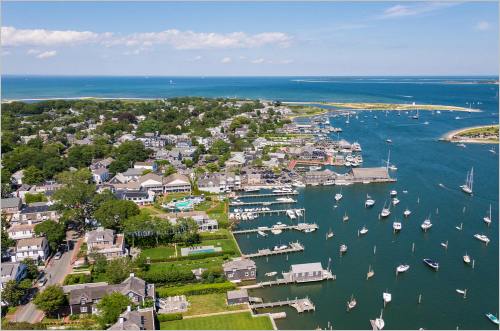 An image from Martha’s Vineyard Massachusetts
.
.
Click the link below for images:
.
__________________________________________
May 2, 2022
Mohenjo
Business, Enthralling, Human Interest, Photographs
amazon, business, Business News, current-events, Future, Hotels, human-rights, medicine, mental-health, research, Science, Science News, technology, Technology News, travel, vacation
Click the link below the picture
.
Colombia, officially the Republic of Colombia, is a transcontinental country spanning South America and an insular region in North America. It is bordered by the Caribbean Sea to the north, Venezuela to the east, Brazil to the southeast, Ecuador and Peru to the south, the Pacific Ocean to the west, and Panama to the northwest. Colombia comprises 32 departments and the Capital District of Bogotá, the country’s largest city. It covers an area of 1,141,748 square kilometers (440,831 sq mi), with a population of 50 million. Colombia’s rich cultural heritage reflects influences by various Amerindian civilizations, European settlement, African slaves, and immigration from Europe and the Middle East. Spanish is the nation’s official language, besides which over 70 languages are spoken.
Colombia has been inhabited by various indigenous peoples since at least 12,000 BCE, including the Muisca, Quimbaya, and the Tairona. The Spanish landed first in La Guajira in 1499 and by the mid-16th century colonized parts of the region, establishing the New Kingdom of Granada, with Santa Fé de Bogotá as its capital. Independence from the Spanish Empire was achieved in 1819, with what is now Colombia emerging as the United Provinces of New Granada. The new nation experimented with federalism as the Granadine Confederation (1858), and then the United States of Colombia (1863), before the Republic of Colombia was finally declared in 1886. Panama seceded in 1903, leading to Colombia’s present borders. Beginning in the 1960s, the country has suffered from an asymmetric low-intensity armed conflict and political violence, both of which escalated in the 1990s. Since 2005, there has been significant improvement in security, stability, and rule of law, as well as unprecedented economic growth and development.
Colombia is one of the world’s seventeen megadiverse countries and has the second-highest level of biodiversity in the world. Its territory encompasses Amazon rainforest, highlands, grasslands, and deserts, and it is the only country in South America with coastlines and islands along both Atlantic and Pacific oceans.
Colombia is a member of major global and regional organizations including the United Nations, the WTO, the OECD, the OAS, the Pacific Alliance, the Andean Community, and a NATO Global Partner. Its diversified economy is the third-largest in South America, with macroeconomic stability and favorable long-term growth prospects.
The name “Colombia” is derived from the last name of the Italian navigator Christopher Columbus (Italian: Cristoforo Colombo, Spanish: Cristóbal Colón). It was conceived as a reference to all of the New World. The name was later adopted by the Republic of Colombia of 1819, formed from the territories of the old Viceroyalty of New Granada (modern-day Colombia, Panama, Venezuela, Ecuador, and northwest Brazil).
When Venezuela, Ecuador, and Cundinamarca came to exist as independent states, the former Department of Cundinamarca adopted the name “Republic of New Granada”. New Granada officially changed its name in 1858 to the Granadine Confederation. In 1863 the name was again changed, this time to United States of Colombia, before finally adopting its present name – the Republic of Colombia – in 1886.
To refer to this country, the Colombian government uses the terms Colombia and República de Colombia. Wikipedia
.
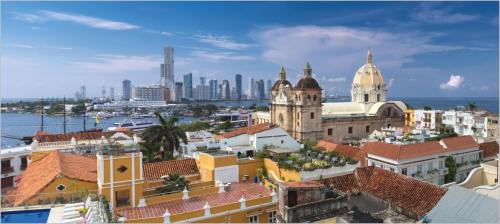 An image of Cartagena Colombia
.
.
Click the link below for images:
.
__________________________________________
April 30, 2022
Mohenjo
Business, Enthralling, Human Interest, Photographs
amazon, business, Business News, current-events, Future, Hotels, human-rights, medicine, mental-health, research, Science, Science News, technology, Technology News, travel, vacation
Click the link below the picture
.
The Alaska Peninsula brown bear or “peninsular grizzly” is a colloquial nomenclature for a brown bear that lives in the coastal regions of southern Alaska, although according to other sources, it is a population of the mainland grizzly bear subspecies (Ursus arctos horribilis), or the Kodiak bear subspecies (U. a. middendorffi).
Alaska Peninsula brown bears are very large, usually ranging in weight from 800 to 1,200 lb (360 to 540 kg). They are found in high densities along the southern Alaskan coast due not only to the large amount of clams and sedge grass but also to the annual salmon runs; this allows them to attain huge sizes, some of the biggest in the world. They may gather in large numbers at feeding sites, such as Brooks Falls and McNeil Falls, both in Katmai National Park near King Salmon. Biologists maintain that coastal ones are truly brown bears. However, it is considered correct to place all North American members of U. arctos in the subspecies horribilis except the giant Kodiak bears of Kodiak Island. To avoid confusion, many simply refer to all North American members, including Kodiaks, as “brown bears.”
Prized by hunters for their skulls and hides, up to 500 of Alaska’s 1,500 brown bears killed yearly by hunters come from the Alaska Peninsula. To hunt this large bear, hunters must follow a variety of regulations, including bear bag limits, hunting fees, and proper rifles.
The Alaska Peninsula brown bear’s name most likely arose because, until 1975, it was considered a different species from the inland grizzly bear. It was never considered closer to European brown bears than inland grizzlies but was given a different name, due to the size and color differences of coastal browns and inland grizzlies. From 1975 onward, it was considered to be the same species, but coastal ones retained the name “brown bear.” When mentioning Brown bears or Grizzly bears, they are the same animal living in different areas. Coastal bears tend to be larger because of a diet high in salmon. The total number of Brown bears in the U.S. is estimated at 32,000 with approximately 95% (30,400) living in Alaska. Around 4000 of these are coastal bears. Alaska Peninsula brown bears are among the largest types of brown bear in the world. They usually measure 8 ft (2.4 m) in length, usually have a shoulder height of about 4 to 4 1/2ft or 1.22 to 1.37 meters (137 cm), and a hindfoot length of 11 in (28 cm). One study found that the average weight for a coastal male was around 408 kg (899 lb), and 227 kilograms (500 pounds) for a female. On the other hand, an occasional huge male brown has been recorded which greatly exceeds ordinary size, with weights reported up to 680 kg (1,500 lb). A large coastal male of this size may stand up to 3 meters (9.8 ft) tall on its hind legs, and be up to 1.5 meters (4.9 ft) at the shoulder. The biggest individual on record was shot in 1948 near Cold Bay. Its weight was estimated at 725 to 771 kg (1,598 to 1,700 lb). This bear just came out of hibernation and carried little or no fat; that means the animal would have weighed around 839 kg (1,850 lb) at the end of the summer. Although variable from blonde to nearly black, grizzly bear fur is typically brown in color with white tips. A pronounced hump appears on their shoulders; the hump is a good way to distinguish a black bear from a grizzly bear, as black bears do not have this hump. Wikipedia
.
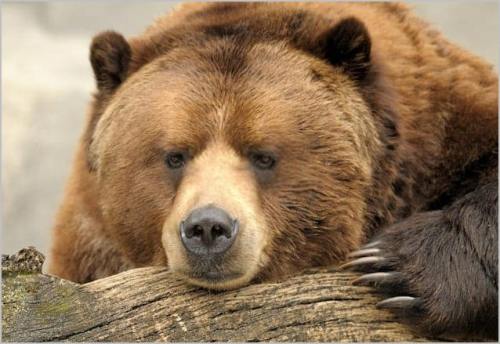 An image of an Alaska Peninsula Big Brown Bear
.
.
Click the link below for images:
.
__________________________________________
April 29, 2022
Mohenjo
Business, Enthralling, Human Interest, Photographs
amazon, business, Business News, current-events, Future, Hotels, human-rights, medicine, mental-health, research, Science, Science News, technology, Technology News, travel, vacation
Click the link below the picture
.
West Africa or Western Africa is the westernmost region of Africa. The United Nations defines Western Africa as the 16 countries of Benin, Burkina Faso, Cape Verde, The Gambia, Ghana, Guinea, Guinea-Bissau, Ivory Coast, Liberia, Mali, Mauritania, Niger, Nigeria, Senegal, Sierra Leone, and Togo as well as Saint Helena, Ascension, and Tristan da Cunha. The population of West Africa is estimated at about 381 million people as of 2018, and at 381,981,000 as of 2017, of which 189,672,000 are female and 192,309,000 male. The region is demographically and economically one of the fastest-growing on the African continent.
Early history in West Africa included a number of prominent regional powers, that dominated different parts of both the coast and internal trade networks, such as the Mali and Gao Empires. West Africa sat the intersection of trade routes between Arab-dominated North Africa and specialized goods from further south on the continent, including gold, advanced iron-working, and products like ivory. After European exploration encountered a rich local economies and kingdoms, the European slave trade exploited previous slave systems to provide labor for colonies in the Americas. After the end of the slave trade in the early 19th century, Europeans, especially France and Britain, continued to exploit the region through colonial relationships—exporting a number of extractive goods, including labor-intensive agricultural crops like cocoa and coffee, forestry products like tropical timber, and minerals like gold. Since independence, many of the West African countries, like Ivory Coast, Ghana, Nigeria, and Senegal, play important roles in the regional and global economies.
West Africa has a rich ecology, with strong biodiversity and several distinct regions. The climate and ecology are heavily influenced by the dry Sahara to the North and East, which provides dry winds during the Harmattan, and the west and humid climate to the south and of the Atlantic which provides seasonal monsoons. This mix of ecologies, mean that there is both biodiversity-rich tropical forest and drylands that support a number of rare or endangered fauna, such as pangolin, rhinoceros, and elephant. Because of the pressure for economic development, many of these ecologies are threatened by processes like deforestation, biodiversity loss, overfishing, pollution from mining, plastic, and other economic processes, and the extreme changes that will result from climate change in West Africa.
The history of West Africa can be divided into five major periods: first, its prehistory, in which the first human settlers arrived, developed agriculture, and made contact with peoples to the north; the second, the Iron Age empires that consolidated both intra-Africa, and extra-Africa trade, and developed centralized states; third, major polities flourished, which would undergo an extensive history of contact with non-Africans; fourth, the colonial period, in which Great Britain and France controlled nearly the entire region; and fifth, the post-independence era, in which the current nations were formed. Wikipedia
.
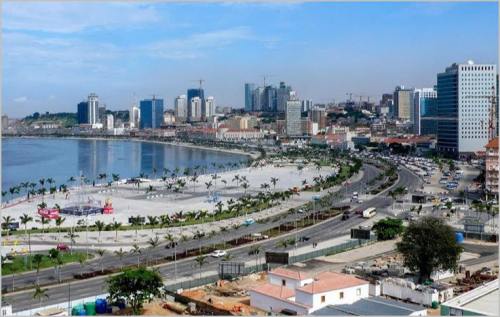 An image of a Modern West African City
.
.
Click the link below for images:
.
__________________________________________
April 28, 2022
Mohenjo
Business, Enthralling, Human Interest, Photographs
amazon, business, Business News, current-events, Future, Hotels, human-rights, medicine, mental-health, research, Science, Science News, technology, Technology News, travel, vacation
Click the link below the picture
.
Sani Pass is a mountain pass located in the West of KwaZulu-Natal, South Africa on the road between Underberg, KwaZulu-Natal, and Mokhotlong, Lesotho. The route up Sani Pass starts at 1,544 metres (5,066 ft), and climbs 1,332 m (4,370 ft) to an altitude of 2,876 m (9,436 ft). The steep gravel road has gradients up to 1:3, which can be difficult to drive in bad weather and may be covered with snow and ice in winter. By South African law, only 4×4 vehicles are allowed on the road. Several tour operators run guided tours up and down the pass. The pass lies between the border controls of both countries and is approximately 9 km in length. Caution must be exercised and motorists must be alert while navigating the pass as it has claimed many lives. Occasionally the remains of vehicles that did not succeed in navigating the pass’s steep gradients and poor traction surfaces can be seen.
The Sani Pass dirt road will be upgraded in two phases; phase 1 extending for 14 km from the P318 (Sani Pass) turnoff and finishing at the old Good Hope Trading Post, and phase 2 extending from kilometer 14 to kilometer 33, the summit of Sani Pass. Construction work for the first phase commenced in December 2006 and was completed in September 2012.
An economic impact study for phase 2 was compiled in August 2011. and its environmental impact assessment was compiled in October 2011. On 2 July 2013, the South African Department of Environmental Affairs and Tourism approved the execution of phase 2 of the project, with the ultimate objective to re-gravel the final 5 km of the pass. The department also authorized plans to upgrade the storm-water drainage system and retaining walls along the route to reduce sand and gravel erosion.
On 21 May 2014 the South African Environmental Affairs Minister, Edna Molewa, approved the execution of phase 2. Tarring was planned to start within five months following the announcement and would bring the total cost of the project to R887-million. In July 2015 it was stated that phase 2 shall be completed in 2019. As of August 2018, there was no timeline for phase 3.
As of May 2021, the third phase had yet to start, and the finishing of phase 2 was largely, but not entirely complete.
While South African emigration at the bottom of the pass prohibits vehicles deemed unsuitable for the journey, the Lesotho border agents at the summit generally allow vehicles of all types to attempt the descent. The pass is often closed due to adverse weather conditions, especially during winter. Wikipedia
.
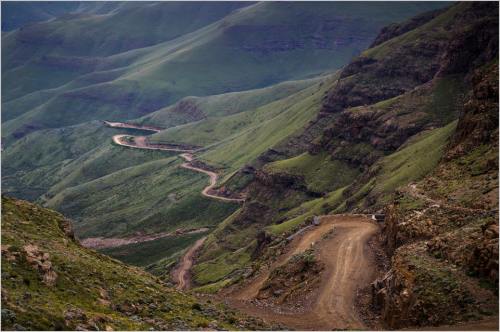 An image of Sani Pass SouthAfrica
.
.
Click the link below for images:
.
__________________________________________
April 27, 2022
Mohenjo
Business, Enthralling, Human Interest, Photographs
amazon, business, Business News, current-events, Future, Hotels, human-rights, medicine, mental-health, research, Science, Science News, technology, Technology News, travel, vacation
Click the link below the picture
.
Argentines are people identified with the country of Argentina. This connection may be residential, legal, historical, or cultural. For most Argentines, several (or all) of these connections exist and are collectively the source of their being Argentine.
Argentina is a multiethnic and multilingual society, home to people of various ethnic, religious, and national origins, with the majority of the population made up of Old World immigrants and their descendants. As a result, Argentines do not equate their nationality with ethnicity, but with citizenship and allegiance to Argentina. Aside from the indigenous population, nearly all Argentines or their ancestors immigrated within the past five centuries. Among countries in the world that have received the most immigrants in modern history, Argentina, with 6.6 million, ranks second to the United States (27 million), and ahead of other immigrant destinations such as Canada, Brazil, and Australia.
Argentina is a multiethnic society, which means that it is home to people of many different ethnic backgrounds. Argentina is a melting pot of different peoples.
In the mid-19th century a large wave of immigration started to arrive in Argentina due to new Constitutional policies that encouraged immigration, and issues in the countries the immigrants came from, such as wars, poverty, hunger, and famines. The main immigration sources were from Europe, the countries from the Near and the Middle East, Russia, and Japan. Eventually, Argentina became the country with the second-largest number of immigrants in the period, with 6.6 million, second only to the United States with 27 million.
Therefore, most Argentines are of European descent (with a significant Native component), and are either descendants of colonial-era settlers and/or of the 19th and 20th-century immigrants from Europe, with about 65% of the population being of ethnic European descent.
The most common ethnic groups are a mix between Spanish (including Galicians and Basques), Italian and Native American. It is estimated that up to 30 million Argentines, up to 62.5% of the total population, have Italian ancestry, wholly or in part. There are also some Germanic, Slavic, Irish, and French populations. Smaller Jewish, Arab, Asian, Romani, and African communities contribute to the melting pot.
Immigration of recent decades includes mainly Paraguayans, Bolivians, and Peruvians, among other Latin Americans, Eastern Europeans, Africans, and Asians. Wikipedia
.
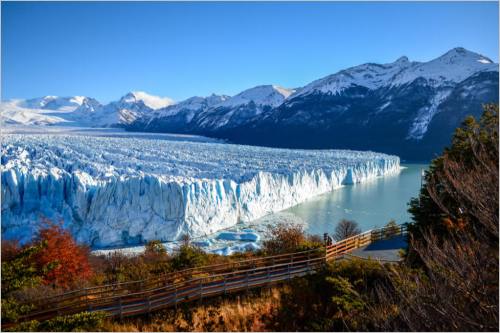 An image from Argentina
.
.
Click the link below for images:
.
__________________________________________
April 26, 2022
Mohenjo
Business, Enthralling, Human Interest, Photographs
amazon, business, Business News, current-events, Future, Hotels, human-rights, medicine, mental-health, research, Science, Science News, technology, Technology News, travel, vacation
Click the link below the picture
.
The Bavarian Rhön Nature Park straddles the junction of the German states of Bavaria, Hesse, and Thuringia. 70 km2 of the total 125 km2 area of the nature park has been recognized by UNESCO as part of the Rhön Biosphere Reserve. The organization for the promotion of the Bavarian Rhön Nature Park (Zweckverband Naturpark Bayerische Rhön) was founded in 1967. On 26 November 1982 the regulation for the Naturpark Bayerische Rhön was issued and, in 1997, the Zweckverband became the Society for the Bavarian Rhön Nature Park and Biosphere Reserve (Naturpark und Biosphärenreservat Bayer. Rhön e.V.).
The nature park lies between the Spessart, Vogelsberg, Thuringian Forest, Haßberge and Steigerwald forest. It is characterized by mixed forests, streams of flowing water, moors, grassland, and arid habitats. Wikipedia
.
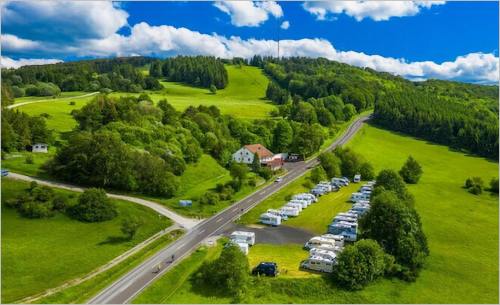 An image from Bavarian Rhön Nature Park
.
.
Click the link below for images:
.
__________________________________________
Older Entries
Newer Entries
 James' World 2