April 24, 2025
Mohenjo
Business, Food For Thought, Human Interest, Political, Science, Technical
amazon, business, Business News, current-events, Future, Hotels, human-rights, medicine, mental-health, research, Science, Science News, technology, Technology News, travel, vacation

Click the link below the picture
.
I have a photographic memory of the Christmas morning when a 10-year-old me was given the gift she’d been begging for — a Chinese box turtle we named Ping — carried down to the living room in his then-squeaky-clean glass enclosure like a little prince on parade. Despite Ping later being set free by the well-meaning people who had graciously inherited him (and likely killed within five minutes of freedom), Ping had a good life. He ate his lettuce pieces and chicken bits, swam in his plastic pool, occasionally scuttled across our kitchen floor. But, looking back, it’s not like my life was necessarily greatly enhanced by Ping — or by Dandelion the rabbit, or the pair of newts who lived in our bathroom, or Mei Li, the cat who hated people. Which is probably why, as an adult, I have never thought of pets as more than a nuisance.
Given my early cat trauma, I have often cited some combination of landlord restrictions and vague allergies whenever my kids brought up pets. But when we moved out of our two-bedroom apartment into a larger house last fall, I began to run out of excuses. I also began to wonder if I was missing out on something. We had been a little family, not stable by any means but at least consistent, for years now. Couldn’t we stand growing a bit? Around Christmas, I indulged myself in looking at the available cats at the local animal shelter. I imagined something simpler than my kids but more rewarding than my Peloton. In January, we brought home a 6-month-old tuxedo cat we named Midnight. (Sorry, shelter volunteers, but “Jerry” is not a cat name.) I am almost embarrassed to tell you how much I love this cat.
And when I asked my son, who gets easily anxious and dysregulated easily, why he was seeming so chill lately, he answered immediately: “Midnight.” Far from ruining our lives, our kitty does provide the company you are speculating a dog might — he snuggles with the kids when they are upset, provides me with the maternal adoration my children are slowly losing, and regularly serves as a peace offering when we hurt each other. I don’t know that the leopard gecko we tried to talk our kids down to would have achieved all this. With all due respect to goldfish, my experience tells me that they mostly just swim in circles.
But every family is different, and our experience is just our own, I surveyed a few dozen parents, with and without pets, to see what was going on in their households. Plenty of parents are ambivalent about family pets or fully against getting them. Angela, a mom of two, put it like this: “the last thing I need is another dependent!” Other parents who have said no to pets cited being at the limits of caretaking already (“Aren’t kids enough unpaid labor??”), as well as space issues, the expense and logistics of caring for them when traveling, and for one mom, the smell. (After 30 years, I can still perform olfactory teleportation and conjure the rankness of Ping’s cage.) One mother, Kate, admitted that she regrets adopting a cat for her kids: Like Mei Li, the cat’s love language is attacking humans, and Kate’s kids are now begging for a dog instead.
More of the parents I spoke to, however, believed that their animals, and what their animals meant to their children, were well worth it.
When Margaret and Brent, parents to 5-year-old Tycho, first started dating, a central component of their courtship was texting each other pictures of pit bull puppies. But after they had their son, Margaret felt overwhelmed by the idea of taking on another responsibility. “What if we end up with a dog who has medical complications or serious behavioral issues?” she wondered. When she pushed through her worries and adopted Phoebe, a sweet brown pit bull mix, they gained an essential family member. Tycho, who is autistic, took to Phoebe instantly, running alongside her at the beach and adding her name as one of his first spoken words. Phoebe is not only like a sibling to Tycho, whose older half-brothers are out of the house, but she helps him through transitions, something that can often cause him great distress. “If he gets to hold the leash,” Margaret admits, “he’ll kind of go anywhere.”
Several of the parents I surveyed used the terms “sibling” or “best friend” to describe their kids’ relationship with their pets (usually dogs or cats), in all the good and challenging ways, the latter often leading to growth, especially for only children. As one parent of a 19-month-old put it: “Sometimes she wants to smother [the dog] in love, other times she is frustrated by his presence. But he is teaching her to tolerate the existence of another being in our family that requires attention, care, and love.” Another parent referred to their dog as “screen-free entertainment.”
As far as having another dependent, for us, a cat feels like a good balance. Do the kids actually help? Studies are inconclusive, but my anecdotal experience is don’t count on it. While I was surprised to hear from my mom that I was actually a dutiful cleaner of Ping’s cage and attender of his vet appointments, my kids have been a real disappointment in terms of practical help with Midnight. Despite having had a democratic chore-picking session when we first got him, they have pretty much done zero daily feeding or cleaning. But they do care for him on their own unhelpful but sweet timelines, brushing him when they’re in the mood or clearing out his litter box when it feels like a game.
But other kids, it seems, are better than mine! Kim, father to Oscar, 7, and dog-father to Zazzie, claims that Oscar completes dog-related chores each morning. Darina’s 8-year-old actually walks one of their dogs! And Joy’s 9-year-old daughter not only feeds the dogs twice a day (“90% of the time, and only complains/drags her feet some of the time”) but also feeds and cleans the cage of her bearded dragon.
Of course, we couldn’t have had Midnight in our old apartment (there’s the space thing), and he’s already set us back a few hundred bucks. (Margaret told me, unapologetically, that she’s spent at least $10,000 on Phoebe’s medical bills.) But we were gifted a feeder by my sister, we bought some very cheap secondhand toys, and we are hoping keeping him inside will help.
.
 Romper
.
.
Click the link below for the complete article:
.
__________________________________________
April 23, 2025
Mohenjo
Business, Food For Thought, Human Interest, Political, Science, Technical
amazon, business, Business News, current-events, Future, Hotels, human-rights, medicine, mental-health, research, Science, Science News, technology, Technology News, travel, vacation

Click the link below the picture
.
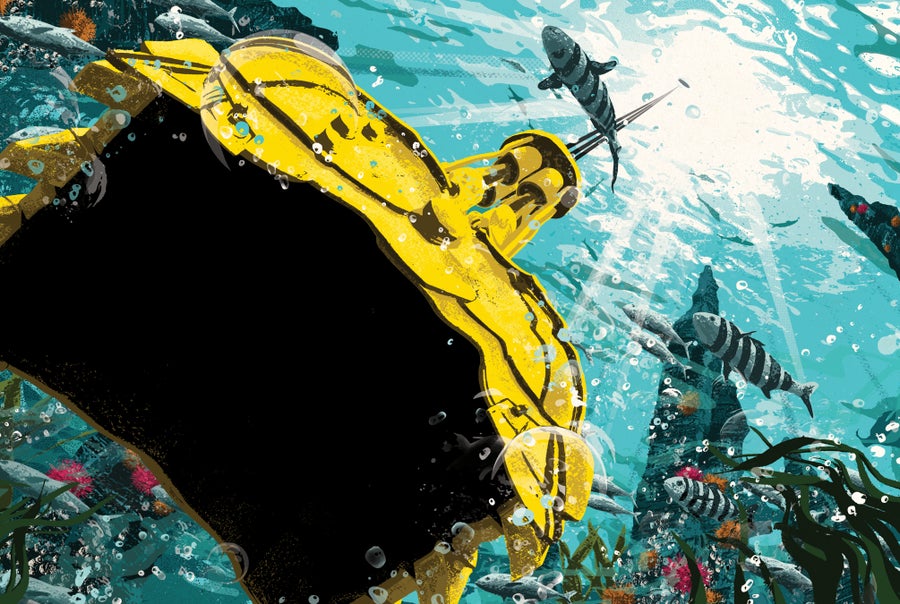
In hindsight, I am still not sure why the operators of the Danish-flagged MV Coco allowed me onboard. By the time I arrived last June, the vessel had been sailing for several weeks in the Bismarck Sea, a part of Papua New Guinea’s territorial waters, digging chunks of metal-rich deposits out of the ocean floor with a 12-ton hydraulic claw. The crew was testing the feasibility of mining seafloor deposits full of copper and some gold. It was probably the closest thing in the world to an operational deep-sea mining site. And the more I learned about the endeavor, the more surprised I became about the project’s very existence.
On that summer morning, I arrived on a red catamaran after rolling over six-foot swells in the South Pacific for two hours, and I clambered up a metal ladder hanging down on the Coco’s starboard side. The 270-foot, 4,000-ton vessel towers at its prow, its vast aft deck full of cranes, winches, and a remotely operated submersible. I was there at the invitation of Richard Parkinson, who founded Magellan, a company that specializes in deep-sea operations. At the top of the ladder, two crew members hauled me onboard the ship, which was roughly 20 miles from the closest shore, and a British manager for Magellan named James Holt greeted me, his smile sun-creased from more than two decades at sea. After a safety briefing, he ushered me through a heavy door into a dark, windowless shipping container on the rear deck that served as a control room.
Inside the hushed cabin was a young Brazilian named Afhonso Perseguin, his face lit by screens displaying digital readings and colorful topographic charts. Gripping a joystick with his right hand, he delicately maneuvered a big, boxy remotely operated vehicle, or ROV, over a patch of seafloor a mile below. I watched on monitors as a robotic arm protruded from the ROV toward a monstrous set of clamshell jaws suspended from a cable that rose all the way up to the ship. Perseguin used the ROV’s arm to steer the jaws as a colleague beside him radioed instructions to a winch operator on deck.
Hydraulics drove the open clamshell into a gray chunk of flat seafloor ringed by rocky mounds and jagged slopes. The opposing teeth dug in, throwing up clouds of silt that filled the video feeds from the ROV. The robotic arm released, and the winch started hauling the jaws, clamped shut around their rocky cargo, on an hour-long journey up to the ship.
Within minutes, Perseguin reversed the ROV to survey the wider scene, revealing chimneys of rock looming up from the seafloor, pale yellow and gray in the submersible’s powerful lights. Small mollusk shells dotted their surface; a crab scuttled out of frame. “Quite amazing, really, isn’t it?” murmured John Matheson, a shaven-headed Scot supervising the ROV team. As Perseguin steered the ROV slowly around a column, the cameras suddenly captured a glassy plume of unmistakably warmer water spewing up from a hidden crevice.
Hydraulics drove the monstrous clamshell jaws into a gray chunk of seafloor, throwing up clouds of silt that filled the video feeds from the remotely operated vehicle.
That hydrothermal vent marked the edge of a tectonic plate in the Bismarck Sea. The metal-rich magma ejected over millennia from several such vents—some dormant, some still active like this one—was Magellan’s prize. The teams on the ship, hired by a company called Deep Sea Mining Finance (DSMF), were conducting bulk seafloor mining tests under a 2011 mining license issued by the Papua New Guinea (PNG) mining regulator. I was the only reporter onboard to witness the operation.
Worldwide, oceanographers have found three distinct types of mineral deposits on the deep seafloor. Manganese crust is an inches-thick, metal-rich pavement that builds up over millions of years as dissolved metallic compounds in seawater gradually precipitate on certain seafloor regions. Polymetallic nodules are softball-size, metal-rich rocks strewn across enormous seafloor fields. And massive sulfide deposits, such as the ones being mined by the crew of the Coco, are big mounds and stacks of rock formed around hydrothermal vents. Over the past decade, several companies have developed detailed but still hypothetical plans to profit from these deposits, hoping to help meet the world’s surging demand for the valuable metals necessary for batteries, electric cars, electronics, and many other products. Scientists have warned that these efforts risk destroying unique deep-sea habitats that we do not yet fully understand, and governments have been reluctant to grant exploration licenses in their territorial waters. But from what I saw during my two days and one night onboard the Coco, DSMF was digging in, and a new era of deep-sea mining had all but begun.
Holt, one of Magellan’s offshore managers, said the aim was to test the physical requirements and environmental impacts of pulling up sulfide deposits. What would soon become unclear, however, was why the operators were stockpiling mounds of excavated rock on the seabed, and who in PNG knew the Coco was there.
.
 Mark Smith
.
.
Click the link below for the complete article:
.
__________________________________________
April 23, 2025
Mohenjo
Business, Food For Thought, Human Interest, Political, Science, Technical
amazon, business, Business News, current-events, Future, Hotels, human-rights, medicine, mental-health, research, Science, Science News, technology, Technology News, travel, vacation

Click the link below the picture
.
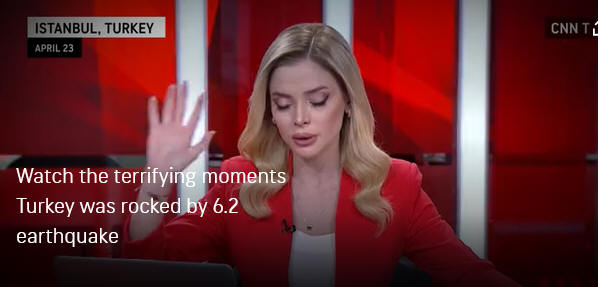
A 6.2-magnitude earthquake struck off the coast of Istanbul on Wednesday, leading to scenes of panic in the Turkish metropolis, officials said.
The quake occurred in the Sea of Marmara close to Silivri, which lies around 70 kilometers (40 miles) to the west of the city, and aftershocks are continuing, according to Turkey’s Disaster and Emergency Management Agency (AFAD).
Istanbul authorities said there had been no loss of life but that 151 people were injured after “jumping from heights due to panic.”
No residential buildings were damaged, the authorities added, but one abandoned building collapsed in the central Fatih District.
Turkey’s interior minister, Ali Yerlikaya, said the quake lasted a total of 13 seconds at a depth of seven kilometers, with 51 aftershocks recorded so far, the largest of which was of 5.9 magnitude.
“Let’s not let down our guard against possible aftershocks,” Yerlikaya said on X.
Some 6,100 emergency calls were received, he added, most of which were information inquiries.
CNN Turk anchor Meltem BozbeyoÄlu was live on air when the quake struck, with the studio visibly shaking on camera.
In February 2023, Turkey experienced one of its deadliest earthquakes in the last century, when a 7.8 magnitude quake struck 23 kilometers (14.2 miles) east of Nurdagi, in the southern Gaziantep province, at a depth of 24.1 kilometers (14.9 miles).
That quake also hit northern Syria, killing more 50,000 people across both countries.
With two key fault lines in its vicinity – the North Anatolian and the East Anatolian – Turkey is one of the most seismically active regions in the world, a reality that has amplified concern over Istanbul’s earthquake preparedness.
.
 .
.
.
Click the link below for the complete article:
.
__________________________________________
April 23, 2025
Mohenjo
Business, Food For Thought, Human Interest, Political, Science, Technical
amazon, business, Business News, current-events, Future, Hotels, human-rights, medicine, mental-health, research, Science, Science News, technology, Technology News, travel, vacation

Click the link below the picture
.
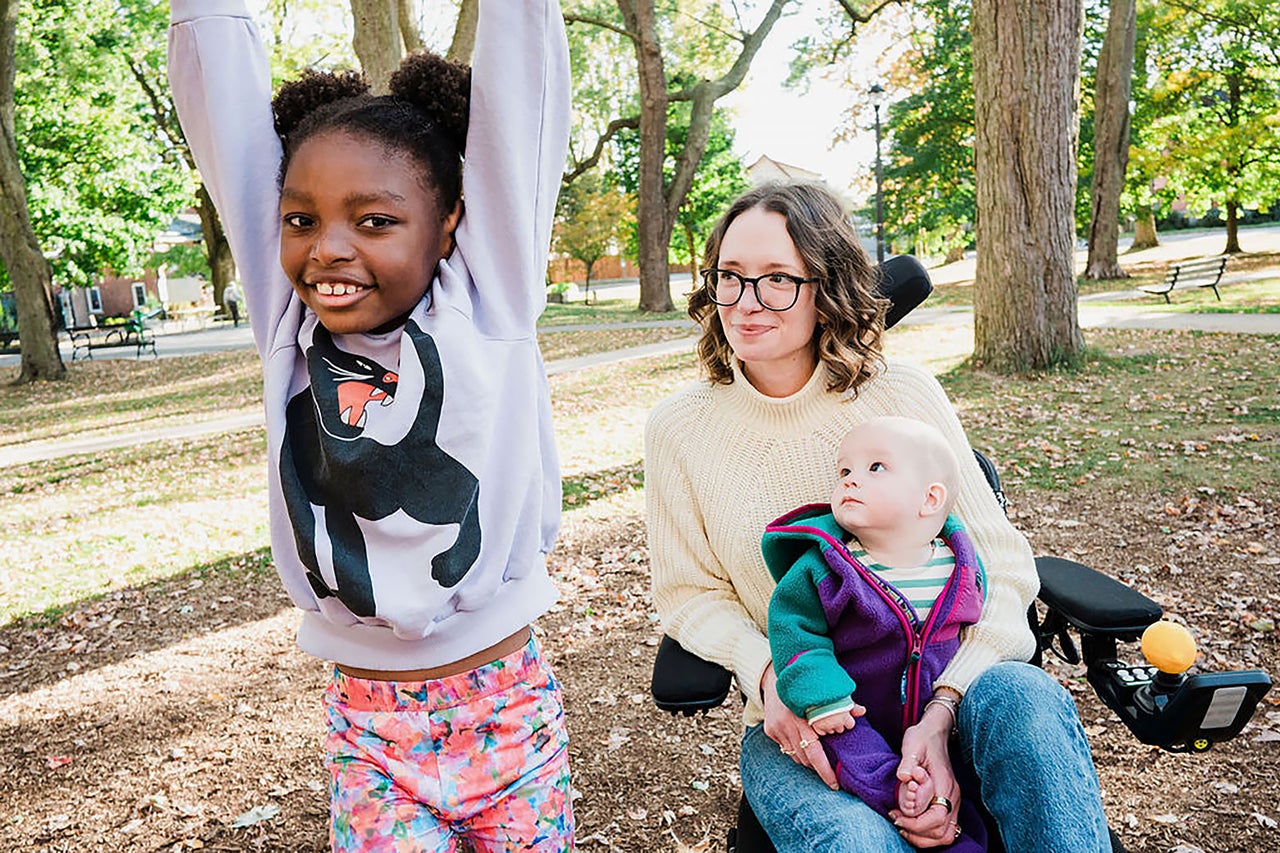
Most of K’s newborn clothes arrived inside a white trash bag left outside our two-bedroom Oakland house. We bought her bite-marked crib on Craigslist. I meant to take monthly photos to show her growth, but when I look back, there is only one, from 3 months. I’ve scribbled “3” in ballpoint pen on a piece of paper torn from a spiral notebook. It looks like a ransom note.
I was 34 when I became K’s foster mom. We got the call at bedtime on a Tuesday; a newborn needed a place to stay. The next morning, I went to the hospital to meet her in the NICU. She was home with me by noon. We weren’t expecting a newborn, and while she slept on my chest, I started a list of what we needed: supplies, a schedule, help.
If (and only if) K was touching me or my husband, David, she was content. And so, I held her. For six months, I moved from my bed to the sofa and back again. She napped on me and babbled on me, and played on me. In one day, I transitioned from a childless grad student to someone who never stopped cuddling, feeding, and changing a newborn. By the time she was a few weeks old, it was clear she might be with us long-term. When she was 1, we adopted her.
While our home life during K’s early days was not social-media polished, our joy and connection felt like a miracle. I have never been as at ease in my body and life as when I was parenting her during those first months.
Meeting K wasn’t the first time my life shifted over the course of a day. One August, when I was 28, I woke up a runner and went to bed disabled. I co-owned a real estate firm at the time and, through relentless professional effort, was flush with cash. My then-husband and I decided to take a luxury trip to Greece. This was pre-Instagram, but you’d never know it from our perfectly orchestrated itinerary. Linen halter-dresses and straw hats, and beers in the ocean. My young body was toned and tan. We were committed to having the best vacation. It probably goes without saying: I was profoundly unhappy.
While hiking on the island of Santorini, we encountered a pack of wild dogs baring their teeth. The sun was more punishing than we had anticipated, and we had run out of water. We scrambled up the hillside, away from the dogs, shins scraping on the brush. The detour led to heat exhaustion, which led to an electrolyte imbalance, which activated a latent neurological condition. The day after the hike, I could hardly stand and spent the day wracked with nausea, dizziness, and pain. It’s been 14 years, and my health has not measurably improved.
It took me a year to admit I was sick and two to get diagnosed. I didn’t accept my diagnosis for another year, and it was longer still before I would call myself disabled. During that time, I had to stop working, ended my long-term relationship, and moved into a tiny one-bedroom apartment. Instead of wild parties at our sprawling loft, I watched Lifetime shows with my little sister. My life shrank. My body suffered.
Inside the agony, I found my way to something true within myself. The pursuit of perfection in my 20s had been caustic. Of course, I didn’t invent the framework in which I operated at that time. Thinking that beauty and wealth will make our lives good is an edict of capitalism. Our economic system reinforces that our worth is directly related to our ability to work and produce. It’s no coincidence that this manically attractive life was very expensive.
Admitting to the inevitability of suffering and fragility in my 30s was a salve. Pretending that my own performance could insulate me from pain had caused me far more harm than the actual limitations of my body.
.
 Liz Cooper
.
.
Click the link below for the complete article:
.
__________________________________________
April 22, 2025
Mohenjo
Business, Food For Thought, Human Interest, Political, Science, Technical
amazon, business, Business News, current-events, Future, Hotels, human-rights, medicine, mental-health, research, Science, Science News, technology, Technology News, travel, vacation
Click the link below the picture
.
As norovirus surged across the U.S. last winter, the only thing more horrifying than descriptions of the highly contagious illness—violent projectile vomiting!—was learning that nothing seemed to kill the microbe that causes it. Hand sanitizers made with alcohol are useless. Water needs to be above 150 degrees Fahrenheit to kill the virus, which is too hot for handwashing. Rubbing with soapy water and rinsing can physically remove the virus from your hands and send it down the drain, but won’t effectively kill it. Bleach dismantles norovirus, but you can’t spray bleach on skin or food or many other things, and norovirus can live on surfaces for weeks.
During the early days of the COVID pandemic, however, I had learned about a disinfecting agent called hypochlorous acid, or HOCl. My dad, a now retired otolaryngologist, had been wondering whether there was something he might put up patients’ noses—and his own—to reduce viral load and decrease the chance of COVID infection without, of course, irritating the mucosa or otherwise doing harm. He was imagining a preventive tool, another layer of protection for health-care workers in addition to masks and face shields.
Hypochlorous acid is a weak acid with a pH slightly below neutral. It should not be confused with sodium hypochlorite (NaClO), the main active ingredient in household bleach products, even though they both involve chlorine. Chemically, they are not the same. Sodium hypochlorite is a strong base with a pH of 11 to 13, and when added to water for consumer products, it can be irritating and toxic. Hypochlorous acid, in contrast, is safe on skin.
All mammals naturally make hypochlorous acid to fight infection. When you cut yourself, for instance, white blood cells known as neutrophils go to the site of injury, capturing any invading pathogens. Once the pathogen is engulfed, the cell releases biocides, including hypochlorous acid, a powerful oxidant that kills invading microbes within milliseconds by tearing apart their cell membranes and breaking strands of their DNA.
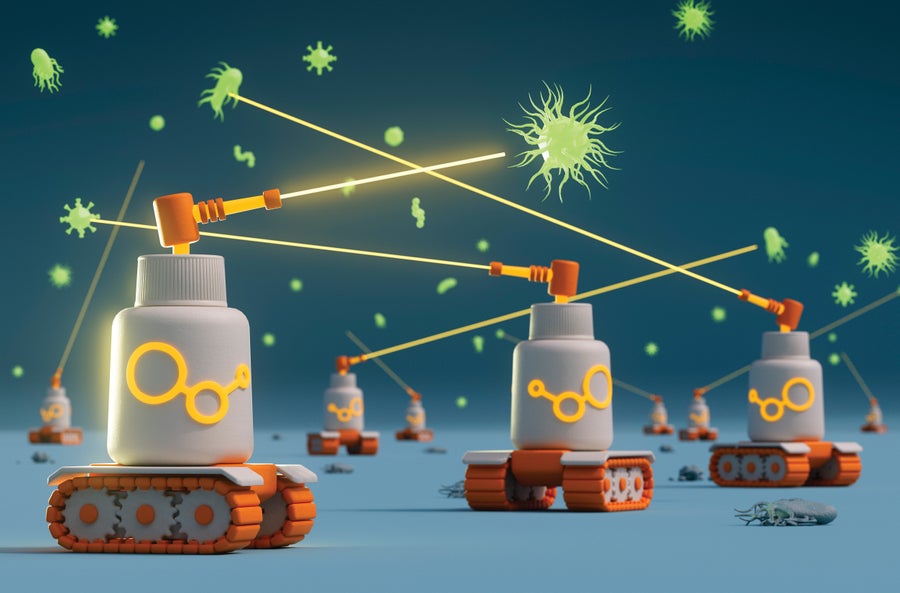
Hypochlorous acid is a well-studied disinfectant that appears to be extremely effective and safe, so why isn’t it a household name? The synthetic form of hypochlorous acid destroys a broad spectrum of harmful microbes, including highly resistant spores and viruses such as norovirus. Like most disinfectants, it kills pathogens by penetrating their cell walls. But compared with bleach, hypochlorous acid has been shown to be more than 100 times more effective at much lower concentrations, and it works much faster.
Hypochlorous acid isn’t new. It’s listed as one of the World Health Organization’s essential medicines and is approved by the U.S. Food and Drug Administration for use on food products and in certain clinical applications. It’s increasingly used in industrial and commercial settings, such as water-treatment plants, hospitals, and nursing homes. It doesn’t irritate the skin, eyes, or lungs. In fact, optometrists use it to clean eyes before procedures, and people have been treating wounds with it for more than a century. It breaks down quickly, doesn’t produce toxic waste, and isn’t harmful to animals or the environment. The U.S. Environmental Protection Agency lists it as a surface disinfectant for the COVID-causing virus SARS-CoV-2.
Hypochlorous acid is a well-studied disinfectant that appears to be extremely effective and safe, so why isn’t it a household name?
.
 Richard Borge
.
.
Click the link below for the complete article:
.
__________________________________________
April 22, 2025
Mohenjo
Business, Food For Thought, Human Interest, Political, Science, Technical
amazon, business, Business News, current-events, Future, Hotels, human-rights, medicine, mental-health, research, Science, Science News, technology, Technology News, travel, vacation

Click the link below the picture
.
The Yellowstone volcano could be nearing an eruption, according to a recent study revealing that the magma chamber is moving closer to the surface.
Scientists now estimate that the magma lies just 3.8 kilometers (about 2.4 miles) beneath the surface, potentially setting the stage for a future eruption. The volcano hasn’t erupted in over 640,000 years.
Yellowstone National Park, which spans across Idaho, Montana, and Wyoming, is one of the most visited national parks in the United States.
Scientists have long known about the presence of a magma chamber beneath Yellowstone, though its exact contents remain uncertain.
.

Yellowstone volcano on the brink of erupting as magma nears the surface © Unsplash
.
.
Click the link below for the video:
.
__________________________________________
April 22, 2025
Mohenjo
Business, Food For Thought, Human Interest, Political, Science, Technical
amazon, business, Business News, current-events, Future, Hotels, human-rights, medicine, mental-health, research, Science, Science News, technology, Technology News, travel, vacation

Click the link below the picture
.
With the rise of MomTok and mom-influencer chic, the cultural conversation around parenting has seemingly never been louder. Still, the voices of disabled parents, who number in the millions across the United States, far too frequently go unheard.
Jessica Slice’s new book Unfit Parent: A Disabled Mother Challenges an Inaccessible World cuts boldly and beautifully through that silence, inviting readers to imagine what our world might look like if we met every family where they are, rather than assuming that all parents are similarly abled. Below, Vogue speaks to Slice about building a book tour around Unfit Parent that felt manageable for herself and her family, figuring out what (and how) to share about having young children online, how non-disabled parents can help their disabled friends and their families thrive, and more.
Vogue: What has surprised you most about your parenting journey?Jessica Slice:
This has nothing to do with disability, but I remember being in my 20s and having a friend who was a nanny for a family, and she watched their kids 15 hours a week. We were talking, and we were like, “Oh my gosh, do they never want to see their kids? Like, when do they even see their kids?” I think I’ve been surprised by the intensity of caring for two children and the amount of help you need if you’re going to be able to work.
How are you creating a book-promo experience that suits your needs? What does that look like for you?
Oh, I love this question. A lot of people who release books do their best to travel around and do book events and host events with bookstores and kind of be on the road, all while trying to do in-person interviews with media. When I met with my team at the beginning of all this, I described my capacity, which is: I really need to do almost everything virtually, because if I were to, for example, travel to New York to do in-person interviews and events, it would take me a month or so to recover afterwards. I had to make the decision with my team that that’s just not a sacrifice I can make, because I need to continue to be present for my family, and I can’t give up months of my life in recovery from a trip like that.
So, much of what I’m doing is virtual, or writing essays and participating in Substacks and connecting with people. It feels like I’ve had to be really creative to still get this book out there without being able to do a lot of what other writers do. And then, of course, there’s the issue of access. On the day the book came out, I went to some local bookstores to sign the copies they had, and the first stop I went to, they had my book, but they also had a stair at the entrance. I couldn’t go inside, and I signed my book on the street corner. So I do think accessibility matters in publishing as well.
I really appreciated the line you drew in Unfit Parent about not sharing certain experiences that belong to your daughter alone. How did you decide what to include and what to keep private?
I keep a lot about my kids private. I try to be really careful about sharing something that, down the road, either child wouldn’t want out there. I also try not to use anything hard in their lives as bait to paint some story that draws people in. There’s this whole world of moms who talk about their kids’ struggles as a way to interest people, and I don’t feel comfortable doing that for my kids, so I try to really focus on my experience parenting and not their experience as people. I’ve asked my eight-year-old, “What are you comfortable with me sharing?” And she says, “Tell everyone everything,” but I don’t think I can totally trust her consent. I think I need to wait until she can really conceptualize what she’s agreeing to.
.
 Photo: Liz Cooper
.
.
Click the link below for the complete article:
.
__________________________________________
April 21, 2025
Mohenjo
Business, Food For Thought, Human Interest, Political, Science, Technical
amazon, business, Business News, current-events, Future, Hotels, human-rights, medicine, mental-health, research, Science, Science News, technology, Technology News, travel, vacation
Click the link below the picture
.
Sammy Ramsey was having a hard time getting information. It was 2019, and he was in Thailand, researching parasites that kill bees. But Ramsey was struggling to get one particular Thai beekeeper to talk to him. In nearby bee yards, Ramsey had seen hives overrun with pale, ticklike creatures, each one smaller than a sharpened pencil point, scuttling at ludicrous speed. For each parasite on the hive surface, there were exponentially more hidden from view inside, feasting on developing bees. But this quiet beekeeper’s colonies were healthy. Ramsey, an entomologist, wanted to know why.
The tiny parasites were a honeybee pest from Asia called tropilaelaps mites—tropi mites for short. In 2024, their presence was confirmed in Europe for the first time, and scientists are certain the mites will soon appear in the Americas. They can cause an epic collapse of honeybee populations that could devastate farms across the continent. Honeybees are essential agricultural workers. Trucked by their keepers from field to field, they help farmers grow more than 130 crops—from nuts to fruits to vegetables to alfalfa hay for cattle—worth more than $15 billion annually. If tropi mites kill those bees, the damage to the farm economy would be staggering.
Other countries have already felt the effects of the mite. The parasites blazed a murderous path through Southeast Asia and India in the 1960s and 1970s. Because crops are smaller and more diverse there than in giant American farms, the economic effects of the mite were felt mainly by beekeepers, who experienced massive colony losses soon after tropilaelaps arrived. The parasite spread through northern Asia, the Middle East, Oceania, and Central Asia. And now Europe. That sighting sounded alarms on this side of the Atlantic because the ocean won’t serve as a barrier for long. Mites can stow away on ships, on smuggled or imported bees. “The acceleration of the tropi mite’s spread has become so clear that no one can deny it’s gunning for us,” said Ramsey, now an assistant professor at the University of Colorado Boulder, on the Beekeeping Today podcast in 2023.
Ramsey, who is small and energetic like the creatures he studies, had traveled to Thailand in 2019 to gather information on techniques that the country’s beekeepers, who had lived with the mite for decades, were using to keep their bees alive. But the silent keeper he was interviewing was reluctant to share. Maybe the man feared this nosy foreigner would give away his beekeeping secrets—Ramsey didn’t know.
But then the keeper’s son tapped his father on the shoulder. “I think that’s Black Thai,” he said, pointing at Ramsey. On his phone, the young man pulled up a video that showed Ramsey’s YouTube alter ego, “Black Thai,” singing a Thai pop song with a gospel lilt. Ramsey, who is Black—and “a scientist, a Christian, queer, a singer,” he says—had taught himself the language by binging Thai movies and music videos. Now that unusual hobby was coming in handy.
Without bees, the almond yield drops drastically. Other foods, such as apples, cherries, blueberries, and some pit fruits and vine fruits, are similarly dependent on bee pollination.
The reticent keeper started to speak. “His face lit up,” Ramsey recalls. “He got really talkative.” The keeper described, in detail, the technique he was using to keep mite populations down. It involved an industrial version of a caustic acid naturally produced by ants. Ramsey thinks the substance might be a worldwide key to fighting the mite, a menace that is both tiny and colossal at the same time.
Ramsey first saw a tropilaelaps mite in 2017, also in Thailand. He had traveled there to study another damaging parasite of honeybees, the aptly named Varroa destructor mites. But when he opened his first hive, he instead saw the stunning effect of tropilaelaps. Stunted bees were crawling across the hive frames, and the next-generation brood of cocooned pupae were staring out of their hexagonal cells in the hive with purple-pigmented eyes, exposed to the elements after their infested cell caps had been chewed away by nurse bees in a frenzy to defend the colony. At the hive entrances, bees were trembling on the ground or wandering in drunken circles. Their wings and legs were deformed, abdomens misshapen, and their bodies had a greasy sheen where hairs had worn off. The colony was doomed. “I was told there was no saving that one,” Ramsey says. He had never seen anything like it.
When he got home, he started reading up on the mites. There was not much to read. Somewhere in Southeast Asia in the middle of the last century, two of four known species of tropilaelaps (Tropilaelaps mercedesae and T. clareae) had jumped to European honeybees from Apis dorsata, the giant honeybee with which it evolved in Asia. Parasites will not, in their natural settings, kill their hosts, “for the same reason you don’t want to burn your house down,” Ramsey said at a beekeeping conference in 2023. “You live there.”
.
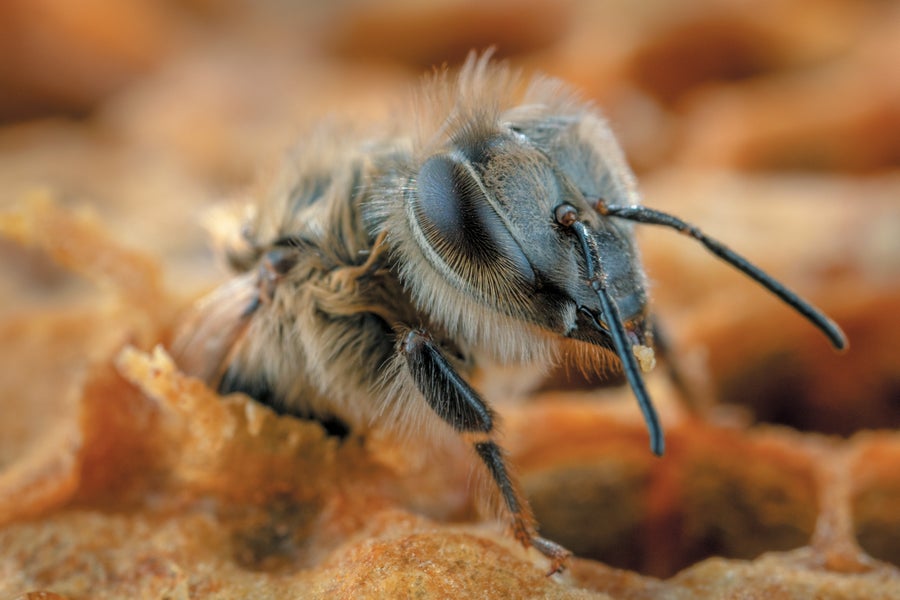
A young honeybee, vulnerable to parasitic mites, comes out of its cell in a hive. Ingo Arndt
.
.
Click the link below for the complete article:
.
__________________________________________
April 21, 2025
Mohenjo
Business, Food For Thought, Human Interest, Political, Science, Technical
amazon, business, Business News, current-events, Future, Hotels, human-rights, medicine, mental-health, research, Science, Science News, technology, Technology News, travel, vacation

Click the link below the picture
.
VATICAN CITY, April 21 (Reuters) – Pope Francis, the first Latin American leader of the Roman Catholic Church, died on Monday after suffering a stroke and cardiac arrest, the Vatican said, ending an often turbulent reign in which he sought to overhaul an ancient and divided institution.
.
He was 88, and had suffered double pneumonia this year, but his death came as a shock after he appeared in St. Peter’s Square in an open-air popemobile to greet cheering crowds on Easter Sunday, suggesting his convalescence was going well.
.
“Dear brothers and sisters, it is with profound sadness I must announce the death of our Holy Father Francis,” Cardinal Kevin Farrell announced on the Vatican’s TV channel.
.
“At 7:35 (0535 GMT) this morning, the Bishop of Rome, Francis, returned to the house of the Father.”
Francis died of a stroke and irreversible cardiovascular arrest, Vatican doctor Andrea Arcangeli said in the death certificate, which was released by the Vatican. It added that the pope had fallen into a coma before he died.
.
Besides his recent lung infection, Arcangeli said Francis had also suffered from high blood pressure and diabetes.
A Vatican spokesman said the pope’s coffin might be moved to St. Peter’s Basilica as early as Wednesday morning to allow the faithful to pay their respects.
.
No date has yet been given for the funeral, but the Vatican said it would normally be expected to take place sometime between Friday and Sunday. A group of cardinals were due to meet on Tuesday to discuss plans.
.
U.S. President Donald Trump said he would attend the ceremony, which was expected to draw dozens of other world leaders to Rome. Meanwhile, Francis’ native Argentina ordered seven days of mourning, as did neighbouring Brazil.
.
“The pope of the poor has left us, the pope of the marginalised,” said Jorge Garcia Cuerva, the archbishop of Buenos Aires, a position Francis once held.
.
Francis had on Sunday made his first prolonged public appearance since being discharged from hospital on March 23 following a 38-day stay for pneumonia, occasionally waving to onlookers and greeting a child who was brought to his side.
n an Easter Sunday message read aloud by an aide as the pope looked on from the main balcony of St. Peter’s Basilica, the pontiff had reiterated his call for an immediate ceasefire in Gaza – a conflict he had long railed against.
.
At the Vatican, locals, tourists, and pilgrims visiting for Easter expressed their shock and grief.
“This is something that really hits you hard,” said Emanuela Tinari from Rome. “He was a pope who brought so many people closer to the church. He was not appreciated by everyone. But he definitely was by ordinary people.”
.
FINAL MEETINGS
Doctors had prescribed two months of rest when the pope left hospital last month, but he appeared on a number of occasions. Francis met Britain’s King Charles in April and had a brief meeting on Sunday with visiting U.S. Vice President JD Vance.
World leaders praised his efforts to reform the worldwide Church and offered condolences to the world’s 1.4 billion Catholics.
.
 .
.
.
Click the link below for the complete article:
.
__________________________________________
April 21, 2025
Mohenjo
Business, Food For Thought, Human Interest, Political, Science, Technical
amazon, business, Business News, current-events, Future, Hotels, human-rights, medicine, mental-health, research, Science, Science News, technology, Technology News, travel, vacation
Click the link below the picture
.
Volcanoes have stirred human awe for thousands of years, with their bursts of fire and rivers of molten rock. Yet, beyond the familiar cone-shaped peaks lies a more silent, hidden danger—supervolcanoes. These colossal forces don’t rumble often, but when they do, the aftermath can reach across continents. Studying these sleeping giants offers not just fascinating science but also sobering warnings for the planet’s future.
Their eruptions sit at the top of the Volcanic Explosivity Index, labeled VEI-8. That’s the highest score possible. To compare, the famous eruption that buried Pompeii was a VEI-5—far less powerful. A single VEI-8 event would not just devastate the surrounding region. It could alter weather patterns, block sunlight, and disrupt global agriculture.
Supervolcanoes act on long, quiet timelines, making them hard to predict. Their sheer potential, however, keeps scientists watchful. These rare eruptions could shift climate, rewrite coastlines, and shake global systems. Understanding their patterns is key to preparing for the unimaginable.
Where Are Supervolcanoes Found?
Supervolcanoes exist on every continent, though some are better known than others. Among the most notable are:
Yellowstone Caldera (United States)
・Size: 70 kilometers by 55 kilometers (caldera size)
・Potential Damage and Power:
・Likelihood to Erupt: Low in the short term. USGS estimates the annual probability of a Yellowstone eruption at approximately 1 in 730,000. Continuous monitoring shows no signs of an imminent eruption.
Toba Caldera (Indonesia)
・Size: 100 kilometers by 30 kilometers
・Potential Damage and Power:
・Likelihood to Erupt: Low, though magma activity beneath the caldera suggests ongoing geological processes. Scientists from the University of Cambridge have identified that its magma chamber has been slowly replenishing.
.

Supervolcanoes act on long, quiet timelines, making them hard to predict. (CREDIT: Joe Burgett) © The Brighter Side of News
.
.
Click the link below for the complete article:
.
__________________________________________
Older Entries
Newer Entries
 James' World 2