On November 23, 1903, the Iroquois Theatre opened in Chicago to rave reviews. “Few theaters in America can rival its architectural perfections,” applauded one commentator. The venue was “absolutely fireproof,” its playbills boasted.
Five weeks later, during a December 30 holiday matinee performance with 1,800 people in the audience, the Iroquois was engulfed in flames. Until the September 11 attack on the World Trade Center in 2001, it was the worst building disaster in the U.S.
Underwriters Laboratories, founded in 1894 to promote safety, joined the investigation into what went wrong at the Iroquois. The building didn’t have a single fire alarm. Crucial escape routes were barred with locked doors. And the one safety tool that could have stopped the fire at its initial spark, when an electric light ignited a curtain backstage, didn’t work: the fire extinguisher.
“A man put 10 cents’ worth of baking soda in a 5-cent tin tube. He sold it for $3 as a fire extinguisher,” fumed UL founder William Henry Merrill, Jr., likening the contraption to a phony magic wand. “Unfortunately, there was nothing ‘make-believe’ about the fire, and the result was very real to the families and the friends of over 600 women and children, whose lives were sacrificed that a man might make a profit of $2.”
Determined to prevent such pointless tragedies in the future, Merrill created a certification operation to assure the public that products with its distinctive mark had been scientifically tested and could be used safely. More than a century later, UL is still at the forefront of fire prevention.
“What made us relevant in the late 1800s is the same thing that has us relevant today, if not more,” says Steve Kerber, vice president and executive director of the Fire Safety Research Institute (FSRI), a part of UL Research Institutes (ULRI). “We’re trying to understand these new products or behaviors or technologies when they’re a concept … to understand the impact they have before people die.”
Danger at the Edge of Town
FSRI and its partners among ULRI’s other research institutes are focused on two main issues, both born of new technological and societal developments: fires caused by lithium-ion batteries and fires that ignite where wildland and urban development meet.
Wildland-urban interface fires, as they’re called, are especially hazardous. Not only do they threaten homes and businesses but “the fuel that can burn includes many things of human origin: plastics, fuels, energy-storage systems, solar panels and more,” says Christopher J. Cramer, ULRI’s interim president and chief research officer. “The gases and particulates that are produced under these circumstances are likely to be much more dangerous.”
.
After the catastrophic August 2023 fire in Lahaina, Hawaii, the state’s attorney general selected ULRI’s Fire Safety Research Institute to analyze the fire and suggest risk-reduction strategies. Matthew Thayer/The Maui News via AP/Alamy Stock Photo
With graduation season just a few days away, it’s almost the time to throw up those caps and gowns, but unfortunately, that’s not the only thing being thrown around. So are the anxieties of a younger generation that is graduating into what might be the harshest economy in more than ten years.
Not only did these kids start college during a pandemic, but now they’re finishing with inflation through the roof, a housing market that seems unattainable, and a job market that’s arguably even worse than 2008 (and for the millennials, if you know, you know). Throw in student loans, and you’ve got a perfect storm of financial stress.
Intuit released their Prosperity Index for 2025 graduates, and the findings are… well, they’re pretty much what you’d expect given everything we’ve been seeing discussed surrounding the economy as of late. But the numbers put some real perspective on what we’re seeing.
About 42% of new grads say they’re “cautiously optimistic” about their financial future as they tiptoe into adulthood. And the way these young adults define success looks nothing like what their parents were chasing at the same age. Almost 60% say having a decent savings account equals success in 2025. And 43% just want to make rent without having a panic attack every month. That’s not exactly “corner office and vacation home” territory, is it?
What’s really telling is that most of these young people are avoiding long-term goals altogether. The economy’s so unpredictable that three-quarters of gen-z graduates argue what’s the point of planning? Nearly half say they’re even more hesitant to plan long-term than they were last year.
What’s keeping them up at night? Cost of living tops the list for practically everyone (97%). Job security isn’t far behind at 87%. Then there’s saving money (47%), paying bills (31%), debt (31%), budgeting (29%), building credit (28%), and housing costs (25%). Basically, everything about money is stressing them out.
But there’s something weird happening with all this stress. Instead of doubling down on the traditional get-a-good-job path, the Class of 2025 is going in a completely different direction. They’re becoming entrepreneurs by necessity.
More than a quarter already have side hustles up and running. Another 37% want to start one but aren’t sure how. Most impressively, 56% plan to have multiple income streams within five years. Like, 2-3 different ways of making money at once.
This isn’t their parents’ economy, and they know it. The idea of working one job for 40 years, then retiring with a gold watch and pension, seems about as realistic as riding a unicorn to work. So they’re adapting by spreading their bets across multiple income sources.
Some companies are starting to catch on. We’re seeing more employers offering flexible scheduling that accommodates side hustles, entrepreneurship resources, and financial education geared toward managing multiple income streams.
On college campuses, career centers are shifting from “how to land your dream job” to workshops on gig economy taxes, registering an LLC, and balancing multiple professional identities. It’s less about climbing one ladder and more about building a web of income sources that can withstand if one disappears.
The truth is, this generation might end up more financially resilient than their predecessors, even if their path looks messier. They’re not putting all their eggs in one basket – they’re questioning whether they need a basket at all. Maybe multiple small baskets work better.
.
Young adults in graduation gowns joyfully tossing caps into the sky, celebrating achievement and new beginnings against a clear backdrop
CLIMATEWIRE | When EPA announced its intent to roll back more than two dozen regulations last month, Administrator Lee Zeldin said it was necessary because pollution limits were “suffocating” the nation’s economy.
But 12 of the 31 rules on the chopping block protect Americans’ ability to breathe by curtailing air pollutants like fine particulate matter and ozone. According to one review of EPA’s analyses, those rules would collectively prevent more than 100 million asthma attacks through 2050.
The regulatory rollback isn’t the Trump administration’s only move that will affect American lungs. Just this month, the Department of Health and Human Services completely eliminated the Centers for Disease Control and Prevention’s asthma office, which provides funding and advice to state and local health officials on how to prevent the the inflammatory lung condition.
“I don’t say this lightly, but these are programs that were keeping people alive,” said Laura Kate Bender of the American Lung Association. “And now we have this double whammy where on the one hand, we are seeing the threat of a slew of air pollution rollbacks and lax enforcement at EPA, and on the other hand, they are cutting programs that were helping people manage their lung disease.”
The rollbacks and cuts contradict the Trump administration’s stated goals of reducing childhood chronic diseases, including asthma. Asthma was mentioned twice in President Donald Trump’s February executive order that directed federal agencies to act “urgently” to end chronic childhood diseases through “fresh thinking” on “environmental impacts” to health, among other things.
Asked how EPA reconciles its directive to tackle asthma with rolling back regulations that prevent the disease, EPA spokesperson Molly Vaseliou said only that “the Trump Administration is taking steps in the right direction to ensure EPA adheres to the agency’s core mission of protecting human health and the environment and powering the great American comeback.”
The costs of a regulatory rollback
Elizabeth Hauptman remembers the joy she felt two years ago when EPA finalized a carbon rule meant to reduce pollution from fossil fuels.
Now a field consultant for Moms Clean Air Force, Hauptman started paying attention to air pollution regulations when her then-toddler son, Oscar, started having difficulty breathing. In the years since he was diagnosed with asthma, Oscar, now 15, has been to the intensive care unit twice and had to sit out sports practices more times than Hauptman can count on poor air quality days.
She had been hoping the carbon rule would save more kids like Oscar from struggling to breathe. But now the rule is one of 12 air pollution limits EPA announced it would reconsider in March on its “biggest deregulation action in U.S. History.”
Hauptman worries EPA’s actions will only make asthma attacks more common — for her son and others.
“My son is growing up in a world where he has to check the air quality index like some kids check their favorite sports scores, and that should not be normal,” she said. “This is not just about policy — it’s about playgrounds and bedtime stories without wheezing.”
In 2035 alone, EPA estimated, the rule would prevent 1,200 premature deaths, 870 hospital and emergency room visits, 1,900 new asthma diagnoses and 360,000 asthma attacks severe enough to require an inhaler.
Those calculations are part of the cost-benefit analysis EPA is required by law to conduct whenever it issues new regulations. They often measure the benefits of reducing air pollution in terms of avoided asthma symptoms,
emergency room visits and hospitalizations.
“My son is growing up in a world where he has to check the air quality index like some kids check their favorite sports scores, and that should not be normal. This is not just about policy — it’s about playgrounds and bedtime stories without wheezing.” —Elizabeth Hauptman, field consultant
For example, EPA estimated that another regulation targeted in Zeldin’s rollback — the “good neighbor” rule — would prevent 179,000 asthma attacks and 5,000 new diagnoses of the disease in 2026. The rule limits smokestack emissions from power plants that create ozone pollution and smog in downwind, neighboring states.
The class of 2025 is graduating into a tough job market: the unemployment rate for recent grads increased to 5.8% in March, while the share of new grads working jobs that don’t require their degrees (known as being “underemployed”) rose to 41.2%.
Christine Cruzvergara has advised thousands of college students in all kinds of economies in her nearly 20-year career. Her biggest advice to today’s graduating students is to remember: “You only need one job,” Cruzvergara, now Handshake’s chief education strategy officer, tells CNBC Make It.
“There’s still lots of opportunities out there that you can apply to and can get,” she continues. “You’re going for one. You just have to find one that you really are interested in.”
It’s a good reminder at a time when AI and online job boards make it easy to mass apply to hundreds of jobs, which can make the sting of not hearing back hard to comprehend.
What is a job that is going to teach you something where you will learn, you will grow, and it feels like the kind of environment that you can personally thrive in?
Cruzvergara says staying focused and intentional on your application efforts is important in any kind of job market. Rather than striving for a big company or flashy job title because you feel it’s what’s expected of you, consider what you really want out of a first job and how it can funnel into your career goals in the long run.
“I’m not even a big proponent of the notion of a dream job, but rather: What is a job that is going to teach you something where you will learn, you will grow, and it feels like the kind of environment that you can personally thrive in?” Cruzvergara says.
It’s important to recognize if you thrive in a fast-paced or slower-paced environment, a place that’s collaborative or competitive, and what kind of management you need in order to succeed, she says.
Don’t get wrapped up in the types of job your peers are going for or what headlines say about the job market, Cruzvergara adds. “Just focus on you, on what you like, and what helps you to succeed and be the best contributing member you can be.”
Then, it’s a matter of tailoring your resume, application, and interview presence for that particular type of job.
What young workers agonize over that’s not worth the time
That being said, Cruzvergara says one thing she often sees students agonize over is their resume; instead, she’d like to see students spend less energy on their application materials and more on nailing their interview strategy.
“Sometimes people think that your resume or your application is going to get you the job. It’s not going to get you the job, it’s going to get you an interview,” Cruzvergara says. The No. 1 rule for a resume and cover letter, if required, is that it’s skimmable and shows you have the basic requirements to get the job done.
That’s not to say having a concise and impactful resume isn’t important, she notes, but consider it simply a way to “open the door” but not what alone can get you the job.
When preparing and practicing for your interview, make sure you can talk about how your abilities directly align with what the job will require of you. Don’t forget to express your own enthusiasm for the role, company or brand mission to show how you’d bring your own unique perspective to thrive in the role.
What young workers agonize over that’s not worth the time
That being said, Cruzvergara says one thing she often sees students agonize over is their resume; instead, she’d like to see students spend less energy on their application materials and more on nailing their interview strategy.
“Sometimes people think that your resume or your application is going to get you the job. It’s not going to get you the job, it’s going to get you an interview,” Cruzvergara says. The No. 1 rule for a resume and cover letter, if required, is that it’s skimmable and shows you have the basic requirements to get the job done.
That’s not to say having a concise and impactful resume isn’t important, she notes, but consider it simply a way to “open the door” but not what alone can get you the job.
When preparing and practicing for your interview, make sure you can talk about how your abilities directly align with what the job will require of you. Don’t forget to express your own enthusiasm for the role, company or brand mission to show how you’d bring your own unique perspective to thrive in the role.
More tornadoes than usual have already struck the U.S. in 2025, and many of them have been touching down farther east than they had in the past
By last Saturday, the National Weather Service reported that 552 tornadoes had occurred in the U.S. this year, well above the average total of 337 for the period of January through April in 1991–2020. Then an outbreak struck Texas and Oklahoma on Saturday night, killing at least three people. Parts of those two states were at the center of the twister-prone “tornado alley” for most of the 1900s, but this well-known corridor has been shifting steadily eastward in the past three and a half decades. This year, many of the touchdowns that caused deaths occurred in Mississippi, Alabama, and Tennessee, all east of the old alley.
Why does the U.S. have so many tornadoes?
Far more tornadoes strike the U.S. than any other country, and this is because of its geography. Wet, westerly winds from the Pacific Ocean become dry as they pass over the the Rocky Mountains, then become high and cool as they blow farther east. Meanwhile, warm, humid air streams northward from the Gulf of Mexico, moving at a lower elevation. Flat terrain along these paths allows the two streams to run into each other. The angles at which they collide tend to create unstable air and wind shear, two big factors that favor tornado formation.
Where has tornado alley moved?
For decades, most of the largest outbreaks occurred across northeastern Texas, eastern Oklahoma, and western Arkansas and Missouri. But between 1989 and 2019, the focus shifted eastward by 400 to 500 miles, covering western Kentucky and Tennessee, plus northern Mississippi and Alabama.
Why is tornado Alley sliding eastward?
Most tornadoes are created by a supercell—a strong thunderstorm with a rotating updraft of air. Supercells tend to form when warm, humid, low-level air interacts with cool, dry, higher air. And climate change is now generating more of that warmer, moister air. Tornadoes also are more likely to develop when the local atmosphere is unstable, and warming increases instability. Climate change is warming the Gulf of Mexico as well, and this can send generous amounts of water vapor into the southeastern U.S., farther east than it tended to travel decades ago. In addition, climate change has moved the rough north-south boundary between dry western U.S. air and moist, eastern U.S. air about 140 miles to the east.
Why does the shift matter?
Tornado shelters are common in Texas and Oklahoma but less so in other U.S. regions. The Southeast is more densely populated, and mobile homes (which often fare poorly in windstorms) are prevalent. Tornadoes in the Southeast also occur at night more often than those that strike farther west do, in part because winds can bring ample moisture from the Gulf after dark. And nighttime makes it much harder to see a storm coming.
.
EF2 tornado lofting debris from a home in Lockett, Texas. Jason Weingart/Getty Images
So, you’re thinking of buying a smart ring. Well, some good news. Picking the best of the lot is incredibly easy right now. The “bad” news is that, as far as trustworthiness and reliability, your choices are somewhat limited, as this is still a niche and emerging gadget category.
Smart rings are in the middle of a resurgence. That means a lot of experimental ideas and newcomer tech brands you’ve probably never heard of. Enough competitors have cropped up that I spent the better part of last summer rocking six rings like a high-tech mafia don. While these aren’t necessarily bad products (some are pretty good), many aren’t as polished as what you’d see in more mature categories like smartwatches, headphones, and smartphones.
Speaking of which, there are a few things to know about the category. Currently, these devices are primarily health trackers. Their benefit is they’re more discreet and are better suited to sleep tracking than a smartwatch. However, the vast majority don’t include smart alarms or push notifications. This makes them best suited to casual athletes or more wellness-minded people. Hardcore athletes would be better served in most cases by a smartwatch or fitness tracker, with a smart ring as a supplementary source of data. (But that’s quite an expensive endeavor.) Smart rings are also ill-suited for weightlifters, as they can easily scratch against equipment.
With that in mind, here’s the best smart ring for most people in 2025 — and a handful of runners-up worth highlighting for the more tech-adventurous.
I can already hear some of you shouting, “But what about the subscription!” And I agree. Even Oura’s relatively affordable $6 monthly fee can feel more like $100 when you consider the sheer number of apps, gadgets, and services asking for a chunk of your monthly paycheck. However, Oura is still the best in terms of hardware, size range, features offered, app, dedication to research, and experience in the field. Many of the smart rings available today follow the example Oura set this past decade.
The upgrades from the Oura Ring Gen 3 to the Oura Ring 4 were mostly software-based, with minor hardware refinements. You can read more in my review, but the gist is a more accurate heart rate and blood oxygen algorithm, improved automatic activity detection, and an expanded range that spans size 4 to 15. The app has been redesigned to be less cluttered, and in the last few weeks, Oura also officially launched an AI chatbot. (Of the AI chatbots in health trackers I’ve tested, this one is among the more polished implementations, though it often feels like Captain Obvious-level insights.)
I’ve been long-term testing three iterations of the Oura Ring since 2018. Accuracy, design, and comfort have improved with each generation. The company continues to frequently and clearly communicate research and scientific developments. Third-party retail options have expanded, and I’ve seen investment pour into Oura. In an emerging category, these things matter. A lot. While I believe some of Oura’s newer competitors do some things better or have more creative ideas, Oura is the one I continually recommend for its combination of reliability, accuracy, and experience.
Every week, millions of Americans toss their recyclables into a single bin, trusting that their plastic bottles, aluminum cans, and cardboard boxes will be given a new life.
But what really happens after the truck picks them up?
Single-stream recycling makes participating in recycling easy, but behind the scenes, complex sorting systems and contamination mean a large percentage of that material never gets a second life. Reports in recent years have found 15% to 25% of all the materials picked up from recycle bins ends up in landfills instead.
Plastics are among the biggest challenges. Only about 9% of the plastic generated in the U.S. actually gets recycled, according to the Environmental Protection Agency. Some plastic is incinerated to produce energy, but most of the rest ends up in landfills instead.
So, what makes plastic recycling so difficult? As an engineer whose work focuses on reprocessing plastics, I have been exploring potential solutions.
How does single-stream recycling work?
In cities that use single-stream recycling, consumers put all of their recyclable materials − paper, cardboard, plastic, glass, and metal − into a single bin. Once collected, the mixed recyclables are taken to a materials recovery facility, where they are sorted.
First, the mixed recyclables are shredded and crushed into smaller fragments, enabling more effective separation. The mixed fragments pass over rotating screens that remove cardboard and paper, allowing heavier materials, including plastics, metal,s and glass, to continue along the sorting line.
Magnets are used to pick out ferrous metals, such as steel. A magnetic field that produces an electrical current with eddies sends nonferrous metals, such as aluminum, into a separate stream, leaving behind plastics and glass.
The glass fragments are removed from the remaining mix using gravity or vibrating screens.
That leaves plastics as the primary remaining material.
While single-stream recycling is convenient, it has downsides. Contamination, such as food residue, plastic bags and items that can’t be recycled, can degrade the quality of the remaining material, making it more difficult to reuse. That lowers its value.
Having to remove that contamination raises processing costs and can force recovery centers to reject entire batches.
Which plastics typically can’t be recycled?
Each recycling program has rules for which items it will and won’t take. You can check which items can and cannot be recycled for your specific program on your municipal page. Often, that means checking the recycling code stamped on the plastic next to the recycling icon.
These are the toughest plastics to recycle and most likely to be excluded in your local recycling program:
Symbol 3 – Polyvinyl chloride, or PVC, found in pipes, shower curtains, and some food packaging. It may contain harmful additives such as phthalates and heavy metals. PVC also degrades easily, and melting can release toxic fumes during recycling, contaminating other materials and making it unsafe to process in standard recycling facilities.
Symbol 4 – Low-density polyethylene, or LDPE, is often used in plastic bags and shrink-wrap. Because it’s flexible and lightweight, it’s prone to getting tangled in sorting machinery at recycling plants.
Symbol 6 – Polystyrene, often used in foam cups, takeout containers, and packing peanuts. Because it’s lightweight and brittle, it’s difficult to collect and process and easily contaminates recycling streams.
Which plastics to include
That leaves three plastics that can be recycled in many facilities:
Symbol 1 – Polyethylene terephthalate, or PET, widely used in soda bottles.
Symbol 2 – High-density polyethylene, or HDPE, commonly used in milk jugs and laundry detergent bottles.
Symbol 5 – Polypropylene, PP, used in products such as pill bottles, yogurt cups and plastic utensils.
.
A truck dumps its contents of recyclable items on the tipping floor at the Town of Brookhaven Material Recycling Facility in Yaphank, N.Y. John Paraskevas/Newsday RM via Getty Images
Many Americans might not have felt major effects from President Donald Trump’s sweeping tariffs — until now.
That’s because a major shipping loophole expired at one minute past midnight on Friday. The de minimis exemption, as it’s known, allowed shipments of goods worth $800 or less to come into the United States duty-free, often more or less skipping time-consuming inspections and paperwork.
The loophole helped reshape the way countless Americans shop, allowing ultra-low-cost Chinese e-commerce sites like Shein, Temu and AliExpress to pour everything from yarn to patio furniture, clothes to photography equipment and more into US homes.
Its impending end has rung alarm bells across social media, with a baseline tariff as high as 145% depending on the carrier set to take effect on Chinese imports, potentially more than doubling the cost for all those cheap products deal-hungry Americans scooped up.
And the end of the de minimis exemption for Chinese goods will also distill abstract, complicated, messy, hard-to-follow trade policy into something much easier to understand: a receipt.
Major carriers like UPS, FedEx, DHL, and the United States Postal Service say they’re prepared for the changes. The government says it, too, is set; a US Customs and Border Protection spokesperson told CNN that “We are prepared and equipped to carry out enhanced package screenings and enforce orders effectively.”
But whether regular American shoppers are ready for the changes is another matter.
Of tchotchkes and trade policy
When President Donald Trump initially closed the de minimis exemption for goods from Hong Kong and China earlier this year, chaos ensued.
USPS briefly stopped delivering parcels from China. Delivery times for parcels that did get shipped stretched longer, with limited information on package tracking in the US.
At the heart of the issue: the sheer volume of packages. More than 80% of total US e-commerce shipments in 2022 were de minimis imports, the vast majority of which come from China, according to a congressional research report.
CBP told CNN it currently processes “nearly 4 million duty-free de minimis shipments a day.” Research indicates that a majority of those shipments come from China and Hong Kong. In total, over the last fiscal year, CBP said 1.36 billion packages came to the US under the de minimis exemption.
That’s a lot of dog bandanas, bead kits, frosting spatulas, and tchotchkes. Regular Temu and Shein shoppers told CNN this week they’ve increasingly turned to the site as they feel made-in-the-USA products have gotten out of reach.
“I can’t afford to buy from Temu now, and I already couldn’t afford to buy in this country,” Rena Scott, a 64-year-old retired nurse from Virginia, previously said to CNN Business.
Lower-income households will suffer the most from the end of cheap Chinese e-commerce sites. About 48% of de minimis packages shipped to the poorest zip codes in the United States, while 22% were delivered to the richest ones, according to February research from UCLA and Yale economists.
The changes could come in stages. Already, for example, Shein and Temu raised prices ahead of the de minimis exemption’s end, hiking prices on several goods tracked by CNN
“Due to recent changes in global trade rules and tariffs, our operating expenses have gone up. To keep offering the products you love without compromising on quality, we will be making price adjustments,” Shein said in a notice posted online recently. “We’re doing everything we can to keep prices low and minimize the impact on you.”
A Temu spokesperson said the company was changing its business model to encourage more local fulfillment, growing the number of US sellers on the platform.
.
Parcels slide down a ramp after being scanned at the US Customs and Border Protection overseas mail inspection facility at Chicago’s O’Hare International Airport in February 2024. Charles Rex Arbogast/AP
Narcissistic leaders both fascinate and repel us. They can be charming, act assertively, and articulate visions that may inspire confidence, especially in times of uncertainty. This can attract many followers. In 1931 Sigmund Freud, the father of psychoanalysis, echoed this belief: “[Narcissists] impress others as being ‘personalities’; they are especially suited to act as a support for others, to take on the role of leaders and to give a fresh stimulus to cultural development or to damage the established state of affairs.”
But narcissists famously have a dark side as well that includes unethical, autocratic, and aggressive behavior. They often stifle collaboration and dismiss expert advice. Given those trade-offs, why do narcissists often end up in positions of leadership, and who is drawn to them? My colleague Barbara Nevicka, an organizational psychologist at the University of Amsterdam, and I set up the Childhood Leadership Study to investigate this question in childhood, when narcissistic leadership first emerges. We conducted fine-grained assessments of leadership behavior in 332 children aged seven to 14—and found patterns both in the preference for these leaders and in the relationships that leaders and followers form.
Narcissism is a personality trait characterized by feelings of grandiosity, a sense of entitlement, and a craving for respect and admiration. It’s part of what psychologists call the “dark triad” of personality traits—along with psychopathy and Machiavellianism, or cold, strategic manipulation for personal gain. In adulthood, narcissism may develop into a narcissistic personality disorder. About 6 percent of people in the U.S. meet the criteria for this disorder at some point in their lives, though they may not receive a formal diagnosis. Our research focuses on children with above-average narcissism levels because narcissistic personality disorder is usually not formally diagnosed before adulthood.
The personality trait of narcissism develops in childhood and can be measured from middle childhood, around age seven. Although some degree of narcissism is typical in children this age, markedly higher levels compared with peers may signal a narcissistic personality. Middle childhood is also when leadership tendencies take shape and become increasingly evident. From age nine, children spend about 75 percent of their free time at school in groups of three or more peers, allowing them to form leader-follower relationships. Leadership on the playground, then, provides a blueprint for leadership in politics and beyond.
Our study shows that narcissistic children often emerge as leaders in their classrooms. When we asked children to nominate classmates who they perceived to be leaders, kids in 96 percent of the classrooms tended to pick children with more narcissistic tendencies. It seems that narcissistic children embody the qualities their peers associate with leadership.
But are narcissistic children better leaders? We assigned children to three-person groups and randomly designated one child as the leader to find out. The groups did a collaborative task, with the leader responsible for the decision-making process. Unsurprisingly, more narcissistic children perceived themselves as better leaders. Yet compared with their less narcissistic peers, they did not lead their group to perform better, exhibit stronger leadership (such as by delegating tasks), or receive higher ratings from their group members.
This finding ties in with research among adults. A meta-analysis by Emily Grijalva, an organizational psychologist at the University at Buffalo, shows that narcissistic adults tend to emerge as leaders but don’t excel in those roles.
We suspected that narcissistic traits in leaders are more attractive to some people than others. So we zoomed in on children with low self-esteem—those who feel unsatisfied with themselves and are often shy and withdrawn. We found that when followers with low self-esteem had a narcissistic leader, they perceived the leader as more effective and were more likely to endorse them for future leadership roles than did their peers with higher self-esteem. What’s more, they felt more included in the group, perceived greater group cohesion, felt better about themselves, and were more inclusive toward others when they had a narcissistic leader.
The market volatility experienced in early April may have left some investors feeling a bit unnerved.
While many tried-and-true strategies, such as “stay the course,” are still relevant today, there are three additional strategies available to investors that may help take the sting out of lower retirement and investment balances.
1. Retirees: Turn off systematic withdrawal plans
Many retirees use systematic withdrawal plans (SWPs) to generate monthly income. These plans automatically liquidate a specified dollar amount of mutual fund investments and deposit the cash proceeds into a money market or other interest-bearing account.
In most markets, these arrangements work fine, but during a sharp market decline, retirees must be wary of “reverse dollar-cost averaging.” Lower mutual fund values mean an increasing number of units need to be sold to generate the specified amount of monthly income.
As a result, when the markets recover, there are fewer units participating in future appreciation.
We suggest pausing these programs for now and taking a deliberate approach to generating cash flow. Consider that the Bloomberg US Aggregate Bond Index, which is a common benchmark used to evaluate the bond market, has a positive year-to-date return through April 16, 2025.
Retirees in need of monthly income may be well served by cashing in a larger portion of bond investments, giving stock investments that may be struggling more time to recover.
At first glance, this strategy may sound counterintuitive because it creates a more aggressive asset allocation at a time when most retirees are looking to derisk their portfolios.
To be clear, a wholesale change to individual portfolios is not what we are recommending. Rather, investors may want to consider a short-term fix to avoid selling stocks at the worst possible time — immediately after they have dropped in value.
Of course, if the markets begin to decline rapidly again, more drastic measures may be necessary to ensure sustainable cash flow throughout one’s lifetime.
2. Wealth accumulators: Cherry-pick specific investments for Roth conversions
Investors who are saving for retirement may have a traditional IRA or an employer-sponsored retirement plan such as a 401(k) or 403(b). When these balances are substantially lower may be an ideal time to consider a Roth conversion.
Conversions trigger an immediate income tax liability, but the future growth accumulates income tax-free.
Importantly, the Roth IRA conversion does not have to be an all-or-nothing decision. In fact, investors can choose the portion of the account and, in most cases, the specific securities they wish to convert.
Film and Writing Festival for Comedy. Showcasing best of comedy short films at the FEEDBACK Film Festival. Plus, showcasing best of comedy novels, short stories, poems, screenplays (TV, short, feature) at the festival performed by professional actors.



 Young adults in graduation gowns joyfully tossing caps into the sky, celebrating achievement and new beginnings against a clear backdrop
 SBDIGIT/Getty Images
 Ugur Karakoc | E+ | Getty Images

 Image: Cath Virginia / The Verge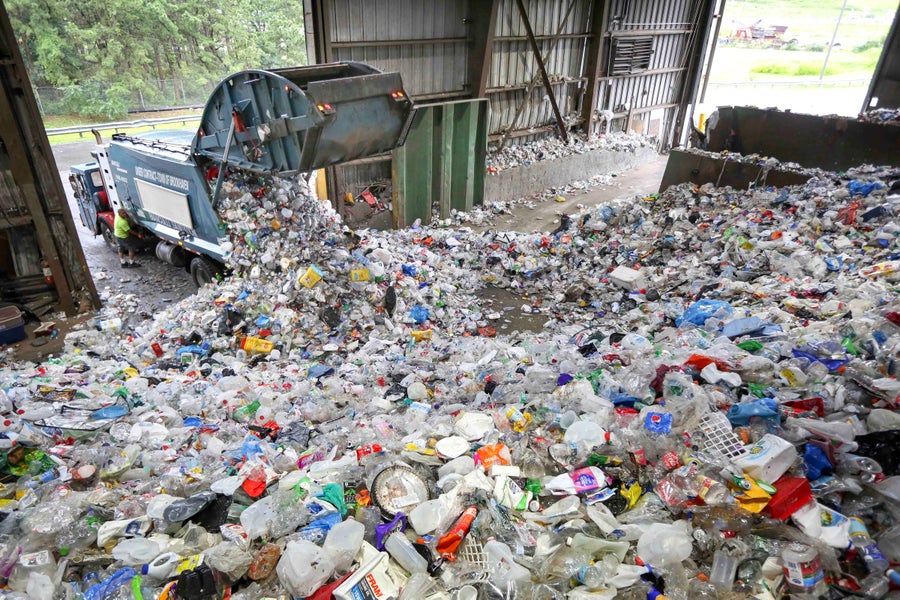


 Bo Feng/Getty Images
 (Image credit: Getty Images)
 James' World 2