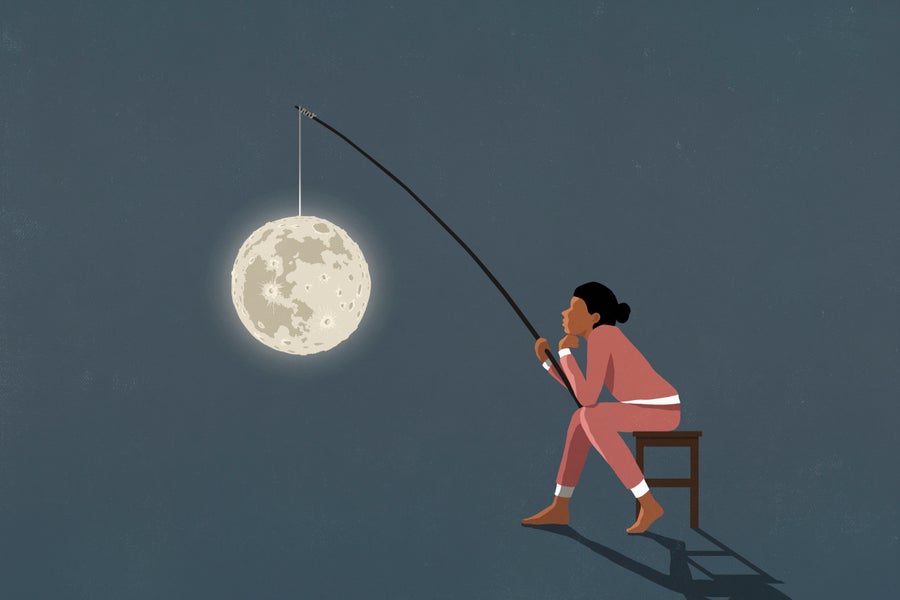
As a parent, it may feel like managing your child’s sleep habits is an uphill battle—the busy swirl of school, extra-curricular activities, and the family circus can make getting to bed a chore. But sleep is not just important for physical health—it is essential for mental health, too. Getting to bed on time can be a challenge for busy families, but it’s possible to build a good rest routine to support children’s emotional and cognitive resilience.
Clinical psychologist Brian Razzino, Ph.D., stresses the importance of sleep as the “foundation” of mental health. “Think of sleep as the foundation of a house—if it’s shaky, everything built on it becomes unstable,” he says. “Chronic sleep deprivation undermines our emotional ‘blueprints,’ making us more prone to mood swings, heightened stress responses, and persistent anxiety.”
Dr. Razzino describes an emotional blueprint as the underlying structure or framework that shapes how a person experiences, processes, and expresses emotions.
The Link Between Sleep and Mental Health
When sleep is inadequate over long periods, it can significantly impact mood regulation, emotional stability, and mental health. Research highlights a direct link between chronic sleep deprivation and mental health disorders such as anxiety and depression. In a 2020 review in the National Library of Medicine, researchers found that individuals suffering from chronic insomnia were more likely to develop mood disorders. This reinforces the understanding that poor sleep is not just a symptom, but a contributing factor to mental health challenges.
Dr. Razzino says that “over time, insufficient sleep is strongly linked to a higher risk of clinical depression and more severe anxiety disorders,” and the effects are not limited to adults. Children and adolescents with disrupted sleep patterns are also at greater risk for mental health struggles. A 2024 study by renowned sleep researcher Evelyn Touchette and colleagues revealed that kids experiencing sleep difficulties, such as trouble falling asleep, were at an elevated risk for depression, ADHD, and conduct problems by age 15.
Dr. Razzino compares a child’s brain to a cluttered office by day’s end, with sleep serving as the cleaning crew that clears out waste and reorganizes for a fresh start the next day.
“Sleep acts as the brain’s overnight maintenance crew,” Dr. Razzino explains. “During sleep, our minds consolidate memories, process stressors, and strengthen the neural connections critical for learning. But when sleep is interrupted, these repair cycles are shortened, leading to deficits in emotional regulation and cognitive performance.”
While the link between sleep and emotional well-being is undeniable, emotional regulation and emotional resilience often become key areas of concern in children and adolescents facing sleep disturbances. From a clinical standpoint, understanding how sleep deprivation affects emotional responses is crucial, and learning how to implement age-appropriate support strategies can help mitigate these effects.
Emotional Resilience
Stephanie Drew, LCSW, a therapist specializing in child and adolescent mental health, also emphasizes the benefits of adequate sleep for emotional resilience. “Well-rested children are better equipped to regulate their emotions and cope with stress effectively,” she says. “Sleep helps develop emotional regulation skills, which are essential for coping with life’s challenges.”
For children, sleep disruptions—such as long sleep latency (difficulty falling asleep)—can be particularly detrimental. “Even one aspect of sleep disruption can gradually undermine the brain’s nightly ‘maintenance,’ leading to challenges in managing everyday stress, learning effectively, and developing stable emotional patterns,” Dr. Razzino adds.
Sleep-Deprived Parents Suffer, Too
Sleep deprivation doesn’t only affect children; it also has serious repercussions for adult mental health. Rebekka Wall, a certified adolescent and adult sleep consultant, explains, “Chronic lack of sleep affects our mental health because it increases stress, impairs our emotional regulation, and reduces our overall resilience to mental, emotional, and physical challenges.” Though parents may be able to push through sleep deprivation, adults, like children, need quality sleep to maintain their mental well-being, and going without rest can lead to a similar cascade of negative effects.
“When we lack sleep, we experience irritability, brain fog, and the parts of the brain that help us manage emotions don’t function as they should,” says Wall. “This results in an inability to cope effectively with stress, increased anxiety, and even symptoms of depression.” While addressing sleep and emotional regulation in children is crucial, it’s important to recognize the immense challenge parents face in ensuring everyone gets adequate rest, particularly when caring for younger children.
Nearly 900 tornadoes have torn through more than 30 states so far this year, killing dozens of people, shredding buildings and landscapes across big chunks of the Eastern U.S., and costing billions. The oddly fickle and precise mix of atmospheric ingredients needed to generate tornadoes just happens to have occurred over and over again since mid-March, and the season isn’t over yet.
How do tornadoes form?
“In order to get a tornado, you need to have a thunderstorm that’s capable of producing a tornado,” says Jana Houser, a tornado researcher at the Ohio State University. Most often, these are what meteorologists call “supercell” thunderstorms, which feature a circulation pattern called a mesocyclone.
Supercell formation requires a set of conditions that make the atmosphere unstable, and these start with warm, moist air at the surface and cold, dry air above. The instability comes from warmer air’s greater buoyancy, which makes it rise upward. And this mix needs yet another specific ingredient, wind shear, “where winds change speed and direction as you go up with height” in the atmosphere, Houser says. This can create sort of a “tube” of horizontally rotating air. Next, the nascent twister needs an updraft, or upward-moving air, which tightens and speeds up the rotating air, taking it “from spinning like a bike tire” to “spinning like a top.”
All of these conditions are necessary, but they’re still not always enough. “Most supercells don’t even actually produce tornadoes in their lifetime,” Houser says.
The exact mechanics of tornado formation aren’t yet fully understood, but essentially, air rotation at the ground needs to meet a strong updraft aloft; this pulls the rotation in like a figure skater pulling in their arms, as Houser puts it.
Where do tornadoes form?
Tornadoes can—and do—happen wherever the right conditions are present, from Argentina to Italy to Bangladesh. But the U.S. is by far the leader in the average annual number of these storms. North America’s geography naturally promotes a crucial collision of air masses: juicy air streams northward from the bathtub warmth of the Gulf of Mexico, while cool, dry winds rush eastward over the Rockies. The air masses meet over the center of the country, which is how the region centered around northeastern Texas and Oklahoma came to be called Tornado Alley. “If you were to design a place that would get repeated severe storms, you would build something like the central U.S.,” says Rich Thompson, chief of forecast operations for the National Weather Service’s Storm Prediction Center.
But over the past decade or so, that tornado bull’s-eye has changed a bit. A “new Tornado Alley” has emerged about 400 or 500 miles to the east, in part because moist Gulf air is reaching farther east than in the past.
Why do tornadoes mainly form in spring?
“Spring tends to be the peak because it’s a transitional season,” Houser says. Coming out of winter, there is still abundant cold air at northern latitudes and aloft, and at the same time, the sun is shining much more, heating up the surface air to promote instability.
Fall is also a transitional season, but the air aloft remains generally warmer for some time after summer. Tornado activity doesn’t tend to pick up again until later in the fall, when the atmosphere has cooled down again.
The local peaks in tornado occurrence tend to move northward as spring rolls into the summer: the Gulf Coast peaks earlier in the spring, the Southern Plains in May and June, and the Northern Plains and upper Midwest in June and July.
.
A U.S. Air Force aerobatic team flies in formation over community members and crews cleaning up debris on May 18, 2025, in the community of Sunshine Hills outside of London, Ky. A tornado struck the neighborhood just after midnight on May 17, 2025. Michael Swensen/Stringer/Getty Images
Scott Galloway, a prominent marketing professor at New York University, says Elon Musk’s links to the cost-cutting White House DOGE Office fueled “one of the greatest brand destructions” of all time.
Speaking on an episode of the Pivot podcast, which he cohosts with journalist Kara Swisher, Galloway said Musk’s role with the agency had taken a major toll on Tesla.
“Tesla was a great brand,” Galloway said.
“The rivers have reversed and the tide has turned entirely against him,” he continued, citing a recent Axios Harris poll that showed Tesla had plummeted from eighth place in the ranking of America’s 100 most visible companies in 2021 to 95th in 2025.
Galloway attributed Tesla’s issues to Musk alienating the company’s core customer base with his turn toward politics over the last year.
In the United States, the Tesla CEO spent millions backing Trump’s presidential campaign and was almost inseparable from him during the transition. He then became the public face of DOGE, an advisory body tasked with reducing government spending.
While Musk became a hero to many of Trump’s supporters, the image of a tech billionaire wielding so much power also sparked a backlash, which mostly targeted Tesla.
Tesla reported a 71% drop in earnings per share year over year during its earnings call in late April and has faced widespread protests at its dealerships and showrooms.
“He is a brilliant guy, but he’s alienated his core demographic,” Galloway said on Friday. “He’s alienated the wrong people. Three-quarters of Republicans would never consider buying an EV. So he’s cozied up to the people who aren’t interested in EVs.”
During Tesla’s recent earnings call, Musk said he planned to step back from his work with DOGE and refocus on the companies that made him a household name. He reiterated that on Saturday.
“Back to spending 24/7 at work and sleeping in conference/server/factory rooms,” Musk wrote on X after the platform had battled with widespread outages.
“I must be super focused on 𝕏/xAI and Tesla (plus Starship launch next week), as we have critical technologies rolling out.”
The SpaceX CEO also told an audience at the Qatar Economic Forum on Tuesday that he planned to spend “a lot less” on political campaigns in the future.
“If I see a reason to do political spending in the future, I will do it,” Musk clarified. “I do not currently see a reason.”
.
Elon Musk says he is stepping back from his government work to refocus on his companies.Scott Olson/Getty Images
Republicans in Congress intend to cut about US$880 billion in federal health care spending.
One of their primary targets is Medicaid. That government program covers 82 million Americans with health insurance. Most of the people enrolled in the program are low income, have disabilities, or both.
Medicaid, jointly funded by the federal government and the states, is also the biggest funder in the U.S. of long-term care services, whether they are delivered in the patient’s home, another location where they spend part of their day, or a nursing home. That makes it particularly important for older adults and those with disabilities. All states must meet the basic federal guidelinesfor Medicaid coverage. But 41 states have opted to take advantage of the Affordable Care Act provision that expanded eligibility to cover more people under the program.
We are gerontology researchers who study health and financial well-being in later life. We’ve been analyzing what the potential impacts of Medicaid cuts might be.
While the debate about how to reduce the budget focuses largely on dollars and cents, we believe that cutting federal spending on Medicaid would harm the health and well-being of millions of Americans by reducing their access to care. In our view, it’s also likely that any savings achieved in the short term would be smaller than the long-term increase in health care costs born by the federal government, the states and patients, including for many Americans who are 65 and older.
Weak track record
Wary of backlash from their constituents, Republicans have agreed on a strategy that would largely cut Medicaid spending in a roundabout way.
Previous efforts by the GOP in some states, such as imposing work requirements for some people to get Medicaid benefits, have not greatly reduced costs. That’s largely because there are relatively few people enrolled in the Medicaid program who are physically able to be employed and aren’t already in the workforce. Nor have past efforts to reduce fraud, waste, and abuse led to significant savings.
According to widespread media reports, Republicans are considering changes that would cut the amount of money that the federal government reimburses states for what they spend on Medicaid.
In May 2025, the nonpartisan Congressional Budget Office estimated that 8.6 million Americans would lose their health insurance coverage should the GOP proposal become law.
Historically, states have dealt with budget cuts by reducing their payments to health care providers, limiting eligibility, or restricting benefits. These reductions all particularly affected home- and community-based services that many disabled and older adults rely on.
About 3 in 4 of the people with Medicaid coverage who receive long-term care through the program get that care at home, in their communities, or both, rather than residing in a nursing home. States save an estimated 26 cents for every dollar spent on those services delivered outside nursing homes.
Losing coverage can be harmful for your health
We recently analyzed data from a nationally representative study of approximately 6,000 people who had Medicaid coverage but lost it when they turned age 65 because their income exceeded 100% of the federal poverty level. In 2025, that cutoff is about $15,560 for a single person and $21,150 for a couple.
Medicaid income eligibility generally drops from 138% to 100% of the federal poverty level at age 65 once Medicare becomes a person’s primary health insurer.
The people who participated in the study had lost their Medicaid coverage upon turning 65 between 1998 and 2020. Our team followed the experiences of these participants over a 10-year period starting at age 65 to see how they fared compared with people who continue to be enrolled in Medicaid after their 65th birthday.
What we found was both surprising and disturbing.
Fewer activities of daily living
Over the decade following that milestone, the people who lost their Medicaid coverage had more chronic conditions and could perform fewer activities of daily living, such as bathing and getting dressed, without any assistance as compared with those who still had Medicaid coverage. In addition, they were twice as likely to experience depression and be in fair or poor health.
As people’s health worsened, they also went to the hospital more often and stayed there longer. They also used outpatient surgery services more frequently.
These services are particularly expensive for the health care system. Depending on the service, it may also be costly for patients. Unlike the comprehensive coverage of Medicaid, the Medicare program fully covers only inpatient hospitalizations, short-term nursing facility care, hospice, some short-term home care, annual wellness visits, vaccines and some basic preventive care. Beyond that, Medicare requires the payment of premiums to help with uncovered services that can also include deductibles and copays.
This arrangement can lead to significant out-of-pocket costs that make health care hard for low-income older adults to afford unless they have both Medicare and Medicaid coverage.
We also found that older people who lost Medicaid coverage were less likely to see their primary care physician for routine and follow-up care, despite being enrolled in Medicare. This explains in part why they are going to the hospital more often, likely avoiding routine health care that may incur out-of-pocket costs and eventually utilizing Medicare-covered hospital care when needed.
In short, we found that exiting the Medicaid program upon turning 65 actually leads to an increase in the use of some of the most expensive health care services, such as inpatient hospitalization and outpatient surgery. So although Medicaid may no longer pay for these costs, the rest of the health care system does.
.
Medicaid provides health insurance coverage for more than 82 million Americans. FatCamera/Getty Images
Donald Trump’s push to sharply ease oversight of the cryptocurrency industry, while he and his sons have fast expanded crypto ventures that have reaped billions of dollars from investors, including foreign ones, is raising alarm about ethical and legal issues.
Watchdog groups, congressional Democrats and some Republicans have levelled a firestorm of criticism at Trump for hawking his own meme coin, $Trump, a novelty crypto token with no inherent value, by personally hosting a 22 May dinner at his Virginia golf club for the 220 largest buyers of $Trump and a private “reception” for the 25 biggest buyers.
To attend the two events, the $Trump buyers spent about $148m, which will benefit Trump and partners, according to the crypto firm Inca Digital.
Further, the Trump family crypto venture World Liberty Financial that launched last fall, which his two oldest sons have promoted hard, was tapped this month to play a key part in a $2bn investment deal by an Abu Dhabi financial fund in the crypto exchange Binance, which in 2023 pleaded guilty to US money laundering and other violations.
The new WLF deal was announced at an Abu Dhabi crypto conference that drew Eric Trump two weeks before Trump’s mid-May visit to the United Arab Emirates capital, sparking other concerns of improper foreign influence and ethics issues.
Trump’s ardent pursuit of crypto fortunes was highlighted in a report last month from the watchdog group State Democracy Defenders Fund that estimated his crypto ventures as of mid-March to be worth about $2.9bn. That is a striking sum since Trump’s crypto ventures are less than a year old.
Senate Democrats, led by Jeff Merkley of Oregon and the minority leader, Chuck Schumer of New York, introduced a bill this month that has garnered sizable Democratic backing to block Trump from using his office to benefit his crypto businesses.
Watchdogs say Trump is exploiting his office for personal gain in unprecedented and dangerous ways.
“There is the appearance if not the reality of corruption in the upcoming dinner with Trump on the 22nd at his Virginia golf club for the 220 biggest Trump meme coin buyers and the private reception he’s promised for the top 25 buyers, plus the separate $2bn deal between World Liberty Financial and the Abu Dhabi investment vehicle,” said Richard Painter, a former White House ethics adviser to George W Bush who co-authored the Democracy Defenders Fund report.
“Trump is marketing access to himself as a way to profit his memecoin,” said the Columbia Law professor Richard Briffault, an expert on government ethics. Briffault added: “People are paying to meet Trump, and he’s the regulator in chief. It’s doubly corrupt. This is unprecedented. I don’t think there’s been anything like this in American history.”
Such concerns were fueled when Trump quickly chose crypto industry allies to run the Securities and Exchange Commission and as his “czar” for crypto and AI. Among other moves, the SEC has dropped or put on hold investigations and prosecutions of over a dozen crypto firms.
Fears of possible corruption have also focused on Chinese-born Justin Sun, the biggest investor in Trump’s crypto ventures. Sun bought about $20m of $Trump to become its top purchaser before the dinner on the 22nd, which he attended. Sun previously invested at least $75m in World Liberty Financial to become its lead investor and an adviser.
.
A $Trump memecoin, a novelty crypto token that has generated millions for the president and his family as buyers vie for access. Photograph: Jonathan Raa/NurPhoto/REX/Shutterstock
I never had issues with sleep until the COVID-19 pandemic. A couple of months into lockdown in 2020, I found myself unable to fall or stay asleep. My worries played on an unstoppable loop, and the longer I lay in bed, the more anxious I became about not sleeping. This vicious cycle left me exhausted. After a few months, I became depressed. It was time to get professional help.
This was the start of a years-long odyssey to find an effective sleep aid without negative side effects. The first medication I tried was 50 milligrams of an antihistamine called hydroxyzine, prescribed to me after a five-minute telehealth appointment. It effectively knocked me out, but it left me feeling so groggy the next morning that I struggled to get out of bed. I stopped taking it.
I lacked the energy to meet with a physician again, so I went back to relying on a grab bag of pills. These included over-the-counter melatonin, a hormone used to treat sleep problems; diphenhydramine, an antihistamine and sedative commonly sold as Benadryl; my husband’s gabapentin, which is prescribed to treat epilepsy and nerve pain but is commonly given as an anti-anxiety sleep aid; and tablets of questionable provenance that were labelled as alprazolam, used to treat anxiety conditions, which I acquired on a pre-pandemic trip to Sri Lanka. I rotated through these remedies in an attempt to not become overly reliant on any one of them.
Last year, my struggle to sleep markedly worsened. Stress still seemed to be in limitless supply. My identity is wrapped up in my job as a science journalist, but as the media industry continues to collapse in on itself, it is becoming more and more difficult to make ends meet. At night, my chest would tighten as I tried to imagine a viable future in my chosen career. Layered on top of that were the stressors of the 2024 US presidential election and interpersonal drama with my increasingly conservative father.
I found a sympathetic primary-care provider in the form of a physician’s assistant (PA) — a licensed medical professional who, in some states, can prescribe medications but isn’t actually a physician. She listened to my problems and asked me questions about my life. At the end of the appointment, she agreed that I should try the antidepressant bupropion. I was still having trouble sleeping, however, and my night-time anxiety spiked following the election. “Sadly, we are getting a lot of these messages,” my PA said when I told her about this. We added buspirone, an anti-anxiety medication, to my daily regimen. I immediately started sleeping better. But buspirone left me feeling deflated, numb, and unmotivated during the day. My PA suggested that, as long as I didn’t develop serious depressive thoughts, I should stick it out for a month to give my body time to adjust.
I agreed to give it more time. Then, about three weeks in, I woke up one night from a nightmare and felt something crawling through my hair. Then, I saw a flash of light, as though someone was standing over me, taking a photograph. I quickly realized that these had been hallucinations that occurred in the transition from sleep to wakefulness. Nothing like this had ever happened to me before, and the vividness of the experience was extremely disconcerting. The next day, I learnt that disturbed sleep is a side effect of buspirone. My PA agreed that I should stop the drug.
But, I still needed help to fall asleep. The obvious choice would have been benzodiazepines or ‘Z-drugs’ — classes of medications that have a sedative effect. But these drugs can also lead to dependency. Worryingly, too, a study in mice, published this year, found that one of these drugs, zolpidem (Ambien), might interfere with the brain’s ability to clear waste, including toxic molecules associated with Alzheimer’s disease. These results still need to be replicated in humans, but they do mirror findings from at least one observational study. I told my PA I wanted to steer clear of these medications.
Through reporting for another story on sleep medication for this Nature Outlook, I was cautiously excited to learn about a new class of insomnia medications known as dual orexin receptor antagonist (DORA) drugs. These work by blocking a molecule that promotes wakefulness, and they have fewer side effects and a lower risk of dependence compared with other sleep aids. My PA was familiar with one of them, Belsomra, and said I could try it.
It took almost three weeks for me to receive the prescription, and my insurance would not cover it. There are no generic DORA drugs. Thirty daily tablets of Belsomra was going to cost me an astronomical US$500. But, I was desperate to get some sleep, and my pharmacist was able to find a coupon that knocked $150 off the bill. I sucked it up and paid.
As I write this, I’ve been taking Belsomra on and off for a month. When it works well, I fall asleep quickly and soundly, and wake up feeling clear-headed and rested. About one-quarter of the time, however, my anxiety manages to cut through the medication, and I struggle to fall asleep. My PA said that I can try doubling my dose to the maximum 20 milligrams, by taking two tablets each night. But I haven’t tried this yet, because I’m aware that each pill I pop before bed is about the same price as ordering a fancy cocktail.
When it comes to fundraising, female-founded companies face daunting odds. In 2024, wholly women-led companies attracted just 1 percent of venture capital funding, according to PitchBook. Still, many have prevailed—often by thinking outside the box. Their stories aren’t just about the millions (and in some cases, hundreds of millions) they’ve raised, but about their strategy: executed with confidence, creativity, and zero desire to fit into anybody’s mold.
They offer clear and candid advice on what actually worked, from pitching unlikely partners to skipping VC funding entirely. One founder even landed John Deere as a lead investor. If you’re fundraising or remotely thinking about it, here are seven tips on how to do it differently.
1. Don’t wait for perfection
“Don’t be afraid to invite people in at the ground floor. I think sometimes you can feel like you have to wait until the thing is built and it’s perfect, and it’s out in the world, and it’s successful. But I think the way you build something quick, and the way you make something successful is by inviting the right people in at the ground level.” —Elaine Welteroth, founder of birthFUND, a maternal health investment initiative, raised $1.85 million.
2. Pitch your partners
“The biggest problem with agriculture is that it’s highly consolidated. There’s just a handful of companies that sell to farmers, and they really don’t want to sell anything new. But farmers are actually great at adopting technology, they’re incredibly open-minded. We just needed to figure out how to get our technology into farmers’ hands as fast as possible. We pitched our tech to John Deere and they ended up leading our Series A. It’s an incredible partnership because we’re doing something that fits 100 percent into their strategic initiatives, and they help us increase our brand awareness.” —Shely Aronov, co-founder and CEO of InnerPlant, an agriculture tech company developing biosensing plants, raised $51.65 million.
3. Lead with belief
“Don’t be intimidated by fundraising. If you go in with energy and enthusiasm for something that you’re really passionate about and you truly believe that what you’re doing is needed, the people who are considering giving you money will want to learn more.” —Georgia Gaveras, co-founder and chief medical officer of Talkiatry, a digital mental health provider, raised $242 million.
4. Put clients before capital
“Your best investor is your client. If your clients are happy with your product, you will always have—like in the case of Creatio—a ton of investors who will be knocking [on] your doors and will be excited to invest in you. When you’re laser-focused on clients from day one—finding new clients, serving them, making them your raving fans, making them absolutely excited about the product, developing relationships with your clients—when all your focus and attention goes not into your personal PR, not into speaking engagements, startup competitions, and the fanciest products, but literally into your clients, it all starts working as a flywheel. Because clients, they actually bring life to your company, because it’s the best evidence that what you deliver actually brings value, and that’s the most important thing.” —Katherine Kostereva, founder and CEO of Creatio, a no-code platform for workflow automation and CRM, raised $268 million
5. Prove it with product
“In a venture business, there’s a lot of unconscious and conscious bias for women out there. When I first tried to raise money, I had a VC telling me, ‘I’m a Caucasian guy with gray hair. How can you raise funding for a company without even a single gray hair, and without being a Caucasian man?’ And I was like, ‘Well, you can raise money without a product, but I would rather raise money with a product.’ Eventually, we became one of the most successful companies in our portfolio.” —Siyu Huang, co-founder and CEO of Factorial Energy, a developer of solid-state battery tech, raised $250 million
6. Know what you want
“It’s also really important to understand what’s in fundraising for you. What kind of business do you want, ultimately, what kind of money do you want to make? It’s important that what you personally want is also aligned with what the investors want, and then it’s much easier to succeed. If actually what you want isn’t quite what the investors are looking for, they’ll see that, and it will be very difficult to fundraise.” —Madison Maxey, founder and CEO of Loomia, a materials science company focused on e-textiles, raised $2 million
7. Be the pioneer
“You get very few opportunities to be the first person to do something. It’s a thrill, but sometimes the pathway is so uncharted and the white space is so vast that I think there’s too much opportunity. The most difficult part of building a business on the cutting edge is there’s no playbook to follow. It’s harder to tell if you’re deploying your first-mover advantage in the right way or focusing on the right opportunity within this huge opportunity set.” —Jiani Zeng, co-founder and CPO of Butlr, an anonymous occupancy detection platform for traffic monitoring, raised $68 million
A single atom has performed the first full quantum simulations of how certain molecules react to light. The researchers who carried out the feat say that their minimalistic approach could dramatically speed the path towards a ‘quantum advantage’ — when quantum computers will be able to predict the behaviour of chemicals or materials in ways that are beyond the reach of ordinary computers.
“The key advantage of this approach is that it is incredibly hardware-efficient,” says Ting Rei Tan, an experimental quantum physicist at the University of Sydney. The single atom can encode the information that is normally spread across a dozen or so ‘qubits’, the computational units used in most quantum computers. The findings were published on 14 May in the Journal of the American Chemical Society.
No quantum computer had simulated this level of complexity in the energy levels of molecules before, says Alán Aspuru-Guzik, a computational chemist at the University of Toronto in Canada. “This is a tour-de-force that will remain in the history books.”
Excited electrons
Tan and his colleagues simulated the behaviour of three different organic molecules, allene, butatriene and pyrazine, when they are hit with an energetic particle called a photon. When this happens, it triggers a cascade of events in the molecule that affects both how its atoms move with respect to each other — vibrating like balls connected by springs — and how its electrons jump to higher-energy, or excited, states. Understanding the precise sequence of these events can help chemists to design molecules that channel energy in the most useful or efficient way, for example in solar panels or in sunscreen lotion.
The researchers found a way to encode these different parameters into a single ytterbium ion trapped in a vacuum using pulsating electric fields: the excitations of the molecule’s electrons corresponded to similar excitations in one of the ion’s electrons, and two different vibrational modes were represented by the ion wiggling inside its trap in two different directions. The team also nudged the ion with laser pulses to tailor how all of the states interacted with one another. This forced the ion to evolve over time, meaning it could mimic how the corresponding molecules act after being hit by a photon.
The team then read off the state of the virtual molecules at a sequence of different stages by measuring the changing probability that the ion’s electron was in an excited state over time.
The results matched what was known about these three molecules, which validates the approach, Tan says. Allene, butatriene and pyrazine are still simple enough to be studied with ordinary computer simulations, but these run out of steam when they have to embody 20 or so vibrational modes, which is not uncommon for more complex molecules.
Kenneth Brown, a quantum engineer at Duke University in Durham, North Carolina, calls the study “great work”, and says that it’s the first time that researchers have shown how to tune such a technique to mimic the properties of specific molecules.
Simulating the chemistry of molecules and materials is often described as one of the most promising uses for quantum computers — but one that will produce useful results only once the machines have scaled up to many millions of qubits. Tan and his collaborators predict that with their approach, a quantum computer could be able to do useful simulations using only a few dozen ions.
.
A view inside the trapped-ion quantum computer that carried out a first-of-its-kind simulation of molecular chemistry. The University of Sydney/Sciencebrush.design
Four partners at Paul Weiss announced Friday that they are leaving the white-shoe firm, which two months ago struck a deal with the Trump administration.
Karen Dunn, a star litigator who has helped Democratic candidates prepare for presidential debates, her longtime partners Bill Isaacson and Jessica Phillips, and the former prosecutor Jeannie Rhee said in an email addressed to “partners and friends” that they are starting their own firm.
The high-profile departures underscore the ongoing turmoil at Big Law firms surrounding the firms’ handling of punitive executive actions from President Donald Trump’s administration. The departing lawyers did not give a reason for leaving in their statement.
Several major firms — including Perkins Coie and Jenner & Block — chose to challenge the legality of the orders in court, and have so far been successful after two judges declared two different orders unconstitutional. Other firms, including Paul Weiss, chose to make deals with the administration, prompting concern among associates and partners over their willingness to cooperate rather than fight.
The new firm’s name isn’t clear. Since April, several domain names containing Dunn’s name and those of other lawyers have been registered anonymously. None of the websites contains any details, and it’s not clear who registered them.
The lawyers have represented prominent clients like Google, Amazon, and Apple over the years. Isaacson is one of the country’s top antitrust litigators. Antitrust issues have been a focus for both former President Joe Biden and Trump, who have criticized the power of large tech companies. Rhee managed the firm’s Washington, DC, office, and Dunn co-chaired its litigation department.
“It has been an honor to work alongside such talented lawyers and to call so many of you our friends,” their departing email said. “We hope to continue to collaborate with all of you in the years to come and are incredibly grateful for your warm and generous partnership.”
Paul Weiss’s chair, Brad Karp, said in a statement, “We are grateful to Bill, Jeannie, Jessica, and Karen for their many contributions to the firm. We wish them well in their future endeavors.”
The departures come several months after the Trump administration began targeting Big Law firms with punitive executive actions. Among them was Paul Weiss, which faced an executive order that revoked the security clearances of the firm’s attorneys and ordered a review of its government contracts.
On March 20, Trump announced on Truth Social that he would drop the executive order against Paul Weiss after negotiating a deal that would require the firm to end any diversity, equity, and inclusion initiatives in its hiring practices and contribute $40 million of pro bono legal services to causes aligned with the administration’s priorities, such as veterans affairs issues and the administration’s antisemitism task force.
Business Insider previously reported that the copy of the deal shared internally among Paul Weiss partners omitted language regarding DEI that was present in the president’s announcement.
Other firms that chose to negotiate with Trump also saw high-profile departures from partners and associates concerned with their firms’ decisions not to challenge the administration.
.
Attorneys Karen Dunn (left) and Jeannie Rhee (right), along with their fellow partners, Bill Isaacson and Jessica Phillips, have resigned from Paul Weiss to start their own firm. Kevin Lamarque/REUTERS
Film and Writing Festival for Comedy. Showcasing best of comedy short films at the FEEDBACK Film Festival. Plus, showcasing best of comedy novels, short stories, poems, screenplays (TV, short, feature) at the festival performed by professional actors.

:max_bytes(150000):strip_icc()/Parents-Sleep-Package-1-182005bddc24436db64bd202615637d0.jpg) Photo: Getty Images
Photo: Getty Images
 .
.





 Malte Mueller



 James' World 2