.
__________________________________________
Assorted human interest posts.
June 6, 2025
Business, Food For Thought, Human Interest, Political, Science, Technical amazon, business, Business News, current-events, Future, Hotels, human-rights, medicine, mental-health, research, Science, Science News, technology, Technology News, travel, vacation 8 Comments
.
__________________________________________
June 6, 2025
Business, Food For Thought, Human Interest, Political, Science, Technical amazon, business, Business News, current-events, Future, Hotels, human-rights, medicine, mental-health, research, Science, Science News, technology, Technology News, travel, vacation Leave a comment

Click the link below the picture
.
Scientific research over the past 30 years has revealed a patchwork of potential causes of autism. Most of them are genetic—the condition is between 60 and 90 percent heritable—and some involve nongenetic risk factors that might impact development during pregnancy.
“We’ve found a great deal of the underlying [causes],” says Helen Tager-Flusberg, an autism researcher and a professor emerita at Boston University. But how these different risk factors come together as the brain develops remains a challenge to piece together. “Autism is not a simple disorder,” she says. “There are no simple answers. There are no so-called smoking guns.”
Even so, Robert F. Kennedy, Jr., the U.S. secretary of health and human services, talks about autism in a way that suggests he thinks there are simple and direct causes. He often refers to the steady rise in autism prevalence (which is likely due to improved screening and diagnosis) as an indicator that we’re in the middle of an “autism epidemic” driven by “environmental toxins.” He has also refused to disavow the long-debunked idea that vaccines cause autism. This month, as part of Kennedy’s effort to find “the root causes of autism,” the National Institutes of Health and the Centers for Medicare & Medicaid Services announced that they will create a “data platform” to study the condition. In April, NIH Director Jay Bhattacharya had described plans for “national disease registries, including a new one for autism.” The plan involved collecting “comprehensive” private health data on autism that would represent “broad coverage” of the U.S. population, leading autism advocacy organizations, civil rights groups, and research scientists to warn of medical privacy concerns. (Shortly after outlets reported on Bhattacharya’s statements in April, HHS denied that it planned to create an “autism registry.”)
In a budget hearing on Wednesday, Kennedy called for an end to genetic research into autism. “I don’t think we should be funding that genetic work anymore,” he said. “What we really need to do now is to identify the environmental toxins.”
In response to this dismissal of well-established science, Tager-Flusberg has organized a coalition of scientists to push back. The Coalition of Autism Scientists now has 258 members and is still growing.
Scientific American spoke with Tager-Flusberg about Kennedy’s statements this week and how the autism community is responding.
In a Congressional budget hearing Wednesday afternoon, Robert F. Kennedy, Jr., said: “Autism is an epidemic, and the genes do not cause epidemics. They can contribute a vulnerability, but you need an environmental toxin. It’s like cigarettes and smoking.” What was your reaction to that?
There is no reason that we need to refer to the increased prevalence rates, which have been rising steadily for many years now, as an epidemic. This is not the definition of an epidemic, so I take issue with highlighting that.
Second of all, genetics are the primary contributing factor to autism. We know specific genes and variants confer increased risk, even in cases where there aren’t any clear environmental contributions. If anything, it’s the other way around—it’s the environmental factors that add to or interact with the genetic risk for autism.
Take one of the very well-regulated nongenetic factors: parental age, particularly paternal age. What we think is going on is that, as parents age, their germ cells [which develop into eggs or sperm] are changing, and so this is leading to alterations in the DNA that then confer risk for autism.
.
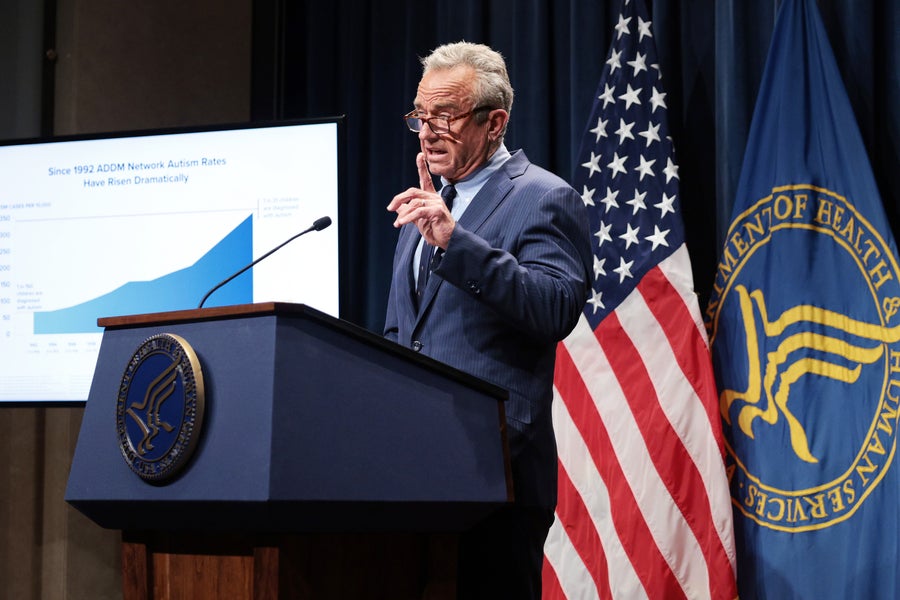
Secretary of Health and Human Services Robert F. Kennedy, Jr., speaks during a news conference at the Department of Health and Human Services on April 16, 2025, in Washington, D.C. Alex Wong/Getty Images
.
.
Click the link below for the complete article:
.
__________________________________________
June 6, 2025
Business, Food For Thought, Human Interest, Political, Science, Technical amazon, business, Business News, current-events, Future, Hotels, human-rights, medicine, mental-health, research, Science, Science News, technology, Technology News, travel, vacation Leave a comment

Click the link below the picture
.
A federal judge has halted President Donald Trump’s latest attempt to block international students from coming to Harvard University.
The temporary restraining order issued late Thursday by US District Judge Allison Burroughs comes hours after the university urged the judge to step in on an emergency basis to block a proclamation Trump signed a day earlier that suspends international visas for new students at the nation’s oldest and wealthiest university. Foreign students make up roughly a quarter of the school’s student body.
The brief order from Burroughs said if she didn’t intervene now, the school would “sustain immediate and irreparable injury before there is an opportunity to hear from all parties” over the challenge to Trump’s edict. The judge said her order “shall remain in effect until further order of this Court.”
Burroughs, an appointee of former President Barack Obama, set a hearing for mid-June to hear arguments over whether she should block Trump’s proclamation indefinitely.
Harvard’s request to block Trump’s ban amended an existing lawsuit over the administration’s move to end Harvard’s ability to enroll international students, which initially prompted the judge to stop the administration from revoking Harvard’s student visa program.
The amended lawsuit claimed Trump’s proclamation violated the First Amendment by temporarily blocking the entry of nearly all new international Harvard students under visas most use to study at US universities or participate in academic exchange programs.
Trump’s proclamation directed the Secretary of State “to consider revoking” the visas – known as F, M, and J visas – for current Harvard students who meet the proclamation’s “criteria,” the White House said in a statement.
“With the stroke of a pen, the DHS Secretary and the President have sought to erase a quarter of Harvard’s student body, international students who contribute significantly to the University and its mission and the country,” the amended complaint reads.
“Without its international students, Harvard is not Harvard,” it says.
The visa program, which allows international students “to enter the United States on nonimmigrant visas to enroll at Harvard and thousands of other schools, have boosted America’s academic, scientific, and economic success and its global standing,” the lawsuit says.
.
 Harvard University in Cambridge, Massachusetts, U.S. Fairth Ninivaggi/Reuters/File
.
.
Click the link below for the complete article:
.
__________________________________________
June 5, 2025
Business, Food For Thought, Human Interest, Political, Science, Technical amazon, business, Business News, current-events, Future, Hotels, human-rights, medicine, mental-health, research, Science, Science News, technology, Technology News, travel, vacation Leave a comment
Click the link below the picture
.
Tornadoes threaten huge swaths of the U.S. this weekend amid a season already marked by unusually high storm activity, even as the National Weather Service faces budget cuts likely to impede its ability to respond to severe weather.
What to Expect
The National Weather Service’s Storm Prediction Center has forecast severe thunderstorms with scattered tornadoes—some of them intense—across parts of Kentucky, Missouri, Illinois, Indiana, Tennessee, Arkansas, and Ohio for the afternoon and evening of May 16.
“Today we’re expecting a severe weather outbreak across the mid-Mississippi, Tennessee, and Ohio valleys,” says Jenni Pittman, a meteorologist and deputy chief of the Science and Technology Integration division at the National Weather Service’s Central Region Headquarters. These regions stretch farther east than the historically prevalent “Tornado Alley” of the mid- to late 1900s.
“Then we see a renewed chance for severe weather Sunday, continuing Monday and continuing Tuesday as well,” Pittman says. “A lot of the risks on Sunday through Tuesday are going to be from the High Plains pretty much through the Midwest.” National Weather Service maps show these risks concentrated in Kansas and Oklahoma.
This weekend’s predicted tornadoes would follow a slight lull in the region, she adds. “We’ve had a little bit of a break here in May, which is typically a pretty busy severe weather month,” Pittman says. “April was very active, and the rest of May does look pretty active as well.”
This Year in Tornadoes
As of May 15, the National Weather Service has tallied 779 tornadoes in its local storm reports—a preliminary number but a helpful metric for tracking the season’s severity. For comparison, between 2005 and 2015, that same tally averaged 624; between 2010 and 2024, it was 592.
“As of mid-May, the U.S. is running well above the typical number of tornadoes to this point in the year,” says Rich Thompson, chief of forecast operations for the Storm Prediction Center.
This year to date also stands out against individual years. The most active tornado season of recent years was 2011, when hundreds of storms struck in late April; by mid-May the tally stood at more than 1,300 storms, with more than 2,200 by the end of the year.
That year also demonstrated the close connection between just a few days of serious storms and a bad season. “Intense tornadoes are disproportionately responsible for damage, injuries, and deaths, and such tornadoes are more common on a few ‘outbreak’ days,” Thompson says. “Thus, the number of outbreak days often determines the severity of the season, with 2011 being the prime example of multiple high-impact tornado outbreaks.”
.
 Thomas Trott/Getty Images
.
.
Click the link below for the complete article:
.
__________________________________________
June 5, 2025
Business, Food For Thought, Human Interest, Political, Science, Technical amazon, business, Business News, current-events, Future, Hotels, human-rights, medicine, mental-health, research, Science, Science News, technology, Technology News, travel, vacation Leave a comment

Click the link below the picture
.
I have been watching, with some grim amusement, Elon Musk discovering the limits of being just another political donor. While he was at DOGE, he literally could control the Treasury and DOD — he effectively had the IT reins of the entire country, and could simply gut things he hated at will. There was a price for that: it destroyed what was left of his reputation. But it was real, true power — being able to stop payments at will makes you more powerful than the president.
So much for that. These days, Musk is reduced to begging his followers on X to call their senators and congressmen [sic, obviously] to vote down the Big Beautiful Bill. His nominal reason is that Donald Trump’s budget plan will increase the deficit, but reports indicate that Musk is annoyed an EV credit is getting cut. That makes it harder to sell Teslas in an environment where it’s already hard to sell Teslas. Also, Musk may be annoyed that he didn’t get to stay past his statutory limit as an unpaid advisor and that the FAA isn’t using Starlink, according to Axios.
The cracks have been showing in the MAGA-tech alliance for some time now. When Scott Bessent got Musk’s IRS pick ejected in April, that was notable. (Bessent’s deputy now runs the IRS.) Musk wasn’t politically savvy enough to get Bessent on his side before installing his pick; an end-run like that is insulting, and Musk had been making enemies. Take, for instance, Marco Rubio, who was
furious when Musk destroyed USAID — that was Rubio’s department, and getting rid of it cut his power. Sean Duffy, the reality TV star who is for some reason, running the Department of Transportation, had to intervene to stop DOGE from firing air traffic controllers, while the lack of air traffic controllers remains a hot-button issue.
These men should not have been especially difficult to finesse, but then Musk is known for his bull-in-a-china-shop approach. It is rare that a person in a position of power — a cabinet seat, say — willingly gives up even an inch of leverage. Making enemies of Bessent, Rubio, and Duffy was a strategic error.
Even less powerful enemies can lead to political problems, which is why Musk doesn’t get his pet boy in NASA now. Jared Isaacman was due to receive his final confirmation vote in the Senate when Trump abruptly withdrew his nomination for head of the aerospace agency. That was reportedly because Musk had beef with Sergio Gor, the head of the White House Presidential Personnel Office — basically the lead recruiter for government jobs. The moment Musk was no longer in the actual White House, Gor dropped the blade.
.
 Image: Cath Virginia / The Verge, Getty Images
.
.
Click the link below for the complete article:
.
__________________________________________
June 4, 2025
Business, Food For Thought, Human Interest, Political, Science, Technical amazon, business, Business News, current-events, Future, Hotels, human-rights, medicine, mental-health, research, Science, Science News, technology, Technology News, travel, vacation Leave a comment
Click the link below the picture
.
Most people have never heard of vacuum decay, but if it happened, it would be the biggest natural disaster in the universe. Sure, an asteroid could destroy a city or wipe out life on Earth. A supernova could fry the ozone layer. If a blast of energy from a spinning black hole hit our planet, it could rip apart the entire solar system. As dramatic as these disasters are, they’d still leave behind rocks, gas, and dust. With time that matter could come together again, making new stars and planets and maybe life.
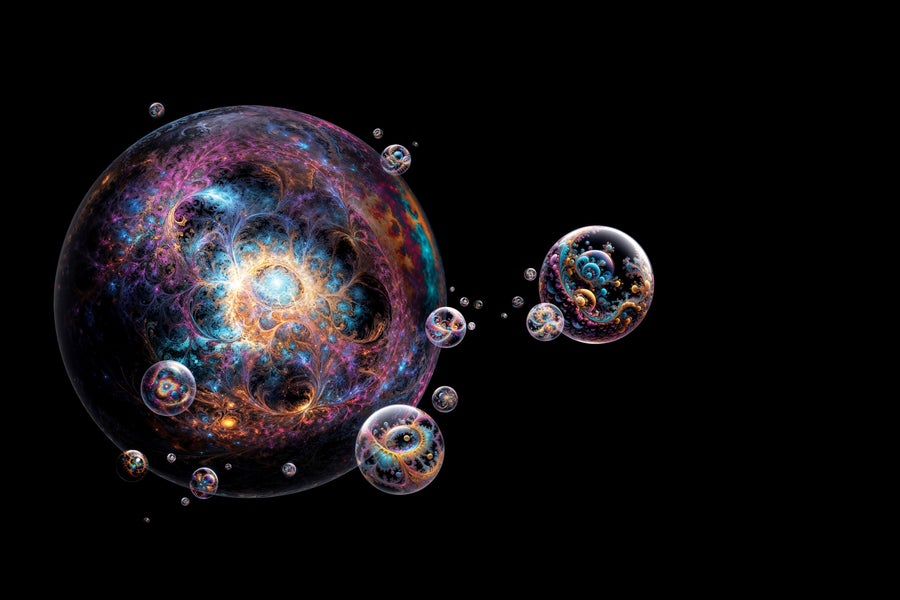
Vacuum decay is different. This cataclysm would result from a change in the Higgs field, a quantum field that pervades all of space. It would be triggered by pure chance, creating a bubble that would expand at almost the speed of light, transforming all in its path. Inside that bubble, the laws of physics we take for granted would change, making matter as we know it (and, consequently, life) impossible.
According to physicists’ current best estimates, vacuum decay is extremely unlikely, with an almost unthinkably small chance of its taking place close enough to our part of the universe to affect us. Still, the chance isn’t zero, and some recent estimates suggest the likelihood might be slightly less minuscule than we used to think. Ultimately, though, the possibility of an apocalyptic quantum bubble shouldn’t cause anyone to lose any sleep.
Even so, scientists have been studying how and why this scenario might play out. The answers to these questions don’t just reveal some fascinating aspects of the quantum world—they may also turn the questions on their heads: rather than making us worry about the threat a vacuum bubble poses, the fact that the universe has survived this long without one may teach us something about the deepest unsolved problems in physics.
All the objects we’re used to—every animal, vegetable, and mineral—are made up of atoms, and those atoms are made up of ripples in quantum fields. Each field is like a setting on a kind of universal control panel. If you could jiggle the electron switch on the control panel, you’d see an electron pop into existence. Most of these switches have a default value of zero: electrons aren’t likely to be in most places, for example. These defaults are sticky—it takes effort, in the form of energy, to push a switch out of its default position. How much energy it requires is determined by Albert Einstein’s famous equation E = mc2, which defines the relation between energy and mass: the more massive a particle, the stickier the default for the switch of its field.
Inside the bubble the laws of physics we take for granted would change.
You might think that in truly empty space, all these switches are set to zero. That’s true for most quantum fields, but some have a different default. One such case is a quantum field proposed by several physicists in 1964, including British physicist Peter Higgs, for whom it was later named. Try to set the Higgs field to zero, and it will resist. The universe “wants” to have a certain amount of Higgsness in it, a default called a vacuum expectation value. It is this amount of Higgs field, instead of zero, that one finds in the vacuum of empty space.
Pushing the Higgs field from this default setting is quite difficult. Scientists finally accomplished it in 2012, when an experiment at the Large Hadron Collider (LHC) near Geneva managed to measure the tiniest, briefest possible shift in the Higgs field. Just as jiggling the electron switch makes an electron, jiggling the Higgs switch makes a particle called a Higgs boson. These particles swiftly vanish after we create them, with the Higgs switch rushing back to its default while knocking other, easier-to-shift switches around, creating particles such as electrons or photons instead. But LHC scientists managed to create enough Higgs bosons to definitively detect them and prove the Higgs field exists.
The Higgs field is special because it controls the mass of all other particles. In effect, it serves as a kind of master switch, determining how sticky all the other switches’ defaults are. If you could grab the Higgs switch and drag it toward zero, you’d find that all the other switches became much easier to flick. In other words, a lower Higgs value would mean it took less energy to make an electron or a quark.
Physicists think of the task of moving the Higgs field from its default value as being a bit like rolling a boulder up a hill. If the boulder rests at the bottom of a valley, you can try to push it upward, but if you let it go, it will just roll down again.
.
Mondolithic Studios
.
.
Click the link below for the complete article:
.
__________________________________________
June 4, 2025
Business, Food For Thought, Human Interest, Political, Science, Technical amazon, business, Business News, current-events, Future, Hotels, human-rights, medicine, mental-health, research, Science, Science News, technology, Technology News, travel, vacation Leave a comment

Click the link below the picture
.
The Trump administration signed a proclamation Wednesday suspending travel to the U.S. for citizens from 12 countries: Afghanistan, Myanmar, Chad, Congo, Equatorial Guinea, Eritrea, Haiti, Iran, Libya, Somalia, Sudan, and Yemen.
Citing national security interests, the proclamation states that the identified countries lack sufficient vetting and screening processes needed to detect foreign nationals who may pose safety or terrorism threats to the U.S.
The proclamation also partially restricted entrance for nationals of seven other countries: Burundi, Cuba, Laos, Sierra Leone, Togo, Turkmenistan, and Venezuela.
Other considerations include a country’s information-sharing policies, presence of terrorists, visa overstay rates, and whether citizens who are sent back are readily accepted, it said.
The ban is set to take effect on Monday at 12:01 a.m. ET.
In a video released by the White House Wednesday night, Trump said that on his first day in office, he directed the secretary of state to perform a security review of “high-risk regions” to make travel restriction recommendations.
He also cited the Sunday attack on Jewish protestors in Boulder, Colorado, in the video. The man charged in the attack, Mohamed Sabry Soliman, is an Egyptian national. Egypt is not named in the new travel ban.
The policy mirrors a similar travel ban announced in January 2017, one week into Trump’s first term, which banned travel from seven Muslim-majority countries. That policy, while largely criticized, was ultimately upheld by the Supreme Court in 2018.
That ban was later ended by President Joe Biden in 2021.
Democratic lawmakers have voiced opposition to the ban on social media. They include Sen. Adam Schiff, D-Calif., and Sen. Ed Markey, D-Mass, who posted on X, “Make no mistake: Trump’s latest travel ban will NOT make America safer. We cannot continue to allow the Trump administration to write bigotry and hatred into U.S. immigration policy.”
The new policy applies to foreigners from the named countries who are outside of the United States and who lack visas to enter as of Monday, June 9.
Certain travelers are excepted from the rule, it states, including U.S. permanent residents, athletes traveling to attend major sporting events, and immediate family members with “clear and convincing evidence of identity and family relationship,” citing DNA as an example.
.

.
.
Click the link below for the complete article:
.
__________________________________________
June 3, 2025
Business, Food For Thought, Human Interest, Political, Science, Technical amazon, business, Business News, current-events, Future, Hotels, human-rights, medicine, mental-health, research, Science, Science News, technology, Technology News, travel, vacation Leave a comment
Click the link below the picture
.
Recent breakthroughs suggest that hydrogen reservoirs are buried in countless regions of the world, including at least 30 U.S. states.
Finding such reservoirs could help accelerate a global energy transition, but until now, geologists only had a piecemeal understanding of how large hydrogen accumulations form — and where to find them.
“The game of the moment is to find where it has been released, accumulated, and preserved,” Chris Ballentine, a professor and chair of geochemistry at the University of Oxford and lead author of a new review article on hydrogen production in Earth’s crust, told Live Science in an email.
Ballentine’s new paper starts to answer those questions. According to the authors, Earth’s crust has produced enough hydrogen over the past 1 billion years to meet our current energy needs for 170,000 years. What’s still unclear is how much of that hydrogen could be accessed and profitably extracted.
In the new review, published Tuesday (May 13) in the journal Nature Reviews Earth and Environment, the researchers draw up an “ingredient” list of geological conditions that stimulate the creation and build-up of natural hydrogen gas belowground, which should make it easier to hunt for reservoirs.
“The specific conditions for hydrogen gas accumulation and production are what a number of exploration companies (e.g., Koloma, funded by a consortium led by Bill Gates’ Breakthrough Energy fund, Hy-Terra, funded by Fortescue, and Snowfox, funded by BP [British Petroleum] and RioTinto) are looking at carefully, and this will vary for different geological environments,” Ballentine said.
Natural hydrogen reservoirs require three key elements to form: a source of hydrogen, reservoir rocks, and natural seals that trap the gas underground. There are a dozen natural processes that can create hydrogen, the simplest being a chemical reaction that splits water into hydrogen and oxygen, and any type of rock that hosts at least one of these processes is a potential hydrogen source, Ballentine said.
“One place that is attracting a lot of interest is in Kansas, where a feature called the mid continental rift, formed about 1 billion years ago, created a huge accumulation of rocks (mainly basalts) that can react with water to form hydrogen,” he said. “The search is on here for geological structures that may have trapped and accumulated the hydrogen generated.”
Based on knowledge of how other gases are released from rocks underground, the review’s authors suggest that tectonic stress and high heat flow may release hydrogen deep inside Earth’s crust. “This helps to bring the hydrogen to the near surface where it might accumulate and form a commercial resource,” Ballentine said.
Within the crust, a wide range of common geological contexts could prove promising for exploration companies, the review found, ranging from ophiolite complexes to large igneous provinces and Archaean greenstone belts.
Ophiolites are chunks of Earth’s crust and upper mantle that once sat beneath the ocean, but were later thrust onto land. In 2024, researchers discovered a massive hydrogen reservoir within an ophiolite complex in Albania. Igneous rocks are those solidified from magma or lava, and Archaean greenstone belts are up to 4 billion-year-old formations that are characterized by green minerals, such as chlorite and actinolite.
.
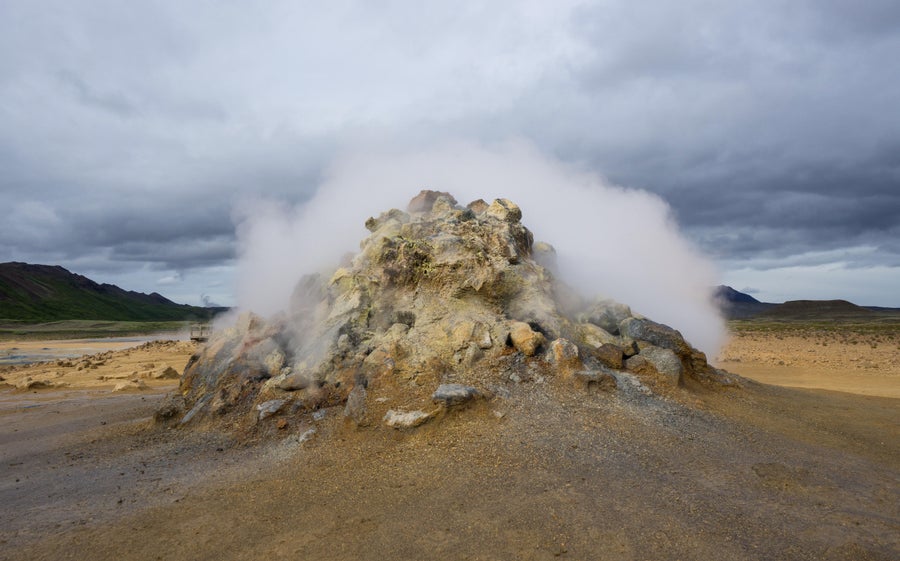
Finding reservoirs of hydrogen in Earth’s crust could help accelerate the energy transition away from fossil fuels. Simon Dux/Alamy Stock Photo
.
.
Click the link below for the complete article:
.
__________________________________________
June 3, 2025
Business, Food For Thought, Human Interest, Political, Science, Technical amazon, business, Business News, current-events, Future, Hotels, human-rights, medicine, mental-health, research, Science, Science News, technology, Technology News, travel, vacation Leave a comment

Click the link below the picture
.
Elon Musk is unloading on President Donald Trump’s “Big Beautiful Bill” like never before.
“I’m sorry, but I just can’t stand it anymore,” Musk wrote on X on Tuesday afternoon. “This massive, outrageous, pork-filled Congressional spending bill is a disgusting abomination.”
“Shame on those who voted for it: you know you did wrong,” Musk continued. “You know it.”
The sprawling bill, which passed the House in May with the support of all but a handful of Republicans, includes cuts to Medicaid and extension of the tax cuts that Trump and Republicans first enacted in 2017.
GOP senators were at a weekly lunch in the Capitol when Musk’s tweet landed. Sen. Ron Johnson of Wisconsin, another fiscal hawk, told BI that the post was being “passed around” among his colleagues as they ate.
“I texted it to a few people,” Johnson said. “I had a phone passed to me.”
Musk’s criticism of the bill isn’t new — he said he was “disappointed” in it in an interview clip that aired last week — and comes as he formally exits the Trump administration.
On Friday, the world’s richest man joined Trump for a press conference to commemorate his time in government. The president lavished praise on Musk and seemed keen on dispelling any notion that cracks had emerged between the two men.
The Committee for a Responsible Federal Budget has estimated that in its current form, the bill would add $2.5 trillion to the deficit over the next 10 years.
“It will massively increase the already gigantic budget deficit to $2.5 trillion (!!!) and burden America citizens with crushingly unsustainable debt,” Musk wrote in another post on X, adding in a third post that “Congress is making America bankrupt.”
The bill is now being worked on by GOP senators, and several fiscal hawks have already raised concerns about the bill’s impact on the deficit. Among them is Sen. Mike Lee of Utah, who immediately replied to Musk’s post.
“The Senate must make this bill better,” Lee wrote.
Musk’s post landed just as White House Press Secretary Karoline Leavitt was delivering a briefing.
“The president already knows where Elon Musk stood on this bill,” Leavitt said. “It doesn’t change the President’s opinion. This is one big beautiful bill, and he’s sticking to it.”
It’s not the first time Musk has criticized the bill — though last time, he wasn’t as forceful. In a recent interview with CBS, Musk said that the bill undermined DOGE’s cost-cutting work.
“I was like, disappointed to see the massive spending bill, frankly, which increases the budget deficit, not just decrease it, and undermines the work that the DOGE team is doing,” Musk said. “I think a bill can be big, or it could be beautiful. I don’t know if it could be both.”
.
“Shame on those who voted for it: you know you did wrong,” Musk said. “You know it.” Allison Robbert / AFP via Getty Images
.
.
Click the link below for the complete article:
.
__________________________________________
June 2, 2025
Business, Food For Thought, Human Interest, Political, Science, Technical amazon, business, Business News, current-events, Future, Hotels, human-rights, medicine, mental-health, research, Science, Science News, technology, Technology News, travel, vacation Leave a comment
Click the link below the picture
.
The beginning of June marks the start of the Atlantic hurricane season, the six-month period when strong storms can brew in the ocean and then wreak havoc on land. Among the hazardous consequences of hurricanes are storm surges, in which water rapidly rises above the normal tide level on shore. These dangerous events can cause flooding and pick up and displace homes and other structures. “Water is very powerful,” says Heather Nepaul, a meteorologist at the National Oceanic and Atmospheric Administration’s National Hurricane Center in Miami. “It can be a deadly situation.”
Surges occur when the strong winds of a hurricane interact with ocean waters, piling up water ahead of the storm. As the hurricane heads toward shore, it travels over shallower ocean, and the water it carries has nowhere to go but upward onto land.
How severe a surge will be depends on many factors, including the characteristics of the coastline and the intensity, size, and angle of approach of the storm. In general, though not always, stronger and larger storms produce higher storm surges.
As the climate warms, hurricanes are becoming more intense, and sea levels are rising. Both of these effects are likely to worsen storm surges. Coastal areas that are already vulnerable to storm surge could experience worse impacts, and places that aren’t quite vulnerable now may become increasingly at risk.
HOW IT WORKS
The bulk of a storm surge is caused by wind pushing water ashore. A small part of the effect, however, results from the low atmospheric pressure inside a storm, which decreases the amount of downward force on the ocean, triggering a rise in water level.
As the storm advances, its spiral of air pulls ocean water up into its center. When it nears land, the excess water surges over the shore above and beyond the normal tide level.
VARIABLES THAT AFFECT STORM SURGE HEIGHT
The severity of storm surges is hard to predict because it depends on so many variables: the speed and radius of the wind associated with the storm, the hurricane’s size, the speed and angle at which the storm approaches land, and the specific shape of the shoreline where it hits.
.
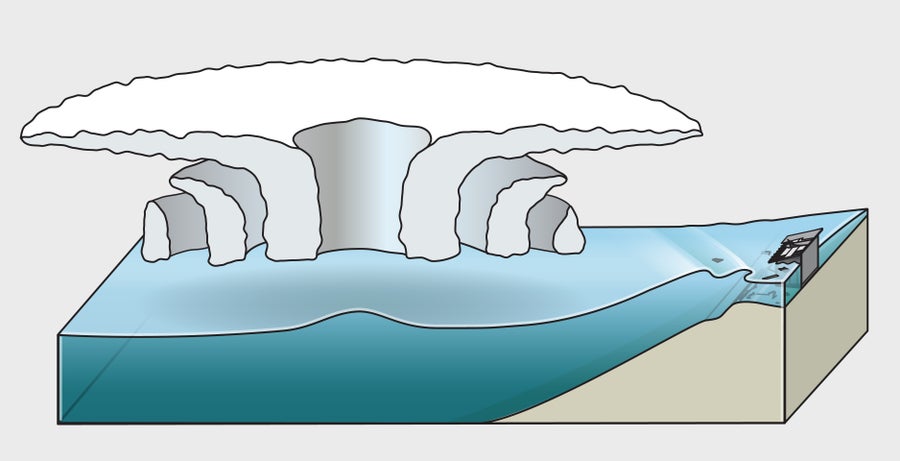 Jen Christiansen
.
.
Click the link below for the complete article (and article illusions):
.
__________________________________________
so looking to the sky ¡ will sing and from my heart to YOU ¡ bring...
CEO and Founder of Nsight Health
https://www.tangietwoods
Catholic News, Prayers, HD Images, Rosary, Music, Videos, Holy Mass, Homily, Saints, Lyrics, Novenas, Retreats, Talks, Devotionals and Many More
Decoding Power. Defying Narratives.
A creative collaboration introducing the art of nature and nature's art.
The Home Of Entertainment News, Reviews and Reactions
Hollow Earth Society
•Whenever you are confronted with an opponent, conquer him with love.(Gandhi)
Algotrader at TRADING-CLUBS.COM
Film and Writing Festival for Comedy. Showcasing best of comedy short films at the FEEDBACK Film Festival. Plus, showcasing best of comedy novels, short stories, poems, screenplays (TV, short, feature) at the festival performed by professional actors.
Peace. Tranquility. Insanity.
Take a ride on the wild side
Découvre des musiques prometteuses dans la sphère musicale française (principalement, mais pas que...).
No tiene que Ser una Pesadilla.
Life in Kana-text (er... CONtext)
Tracking money, power, and meaning across borders.
Where feelings meet metaphors and make questionable choices.
Finding hope and peace through writing, art, photography, and faith in Jesus.
Eyasu
MOVING FORWARD...That's how WINNING is done!”-Rocky Balboa
love each other like you're the lyric to their music
Comprendere il mondo per cambiarlo.
Mid-Life Ponderings
Travel,Tourism, Life style "Now in hundreds of languages for you."
I speak the honest truth. I share my honest opinions. I share my thoughts. A platform to grow and get surprised.
User-generated ratings for ethical consumerism
Travel and Lifestyle Blog
Questo è un piccolo angolo di poesie, canzoni, immagini, video che raccontano le nostre emozioni
“Log your journey to success.” “Where goals turn into progress.”
scrivo per dare forma ai silenzi e anima alle storie che il mondo dimentica.
“Dream deeper. Believe bolder. Live transformed.”
Vichar, Motivation, Kadwi Baat ( विचार दर्शनम्)
Traum zur Realität
Savor. Style. See the world.
معا نحو النجاح
Best Forex Broker Ratings & Reviews
art, writing and music by James McFarlane and other musicians
living life in conscious reality
Freelance poetry writing
Peace 🕊️ | Spiritual 🌠 | 📚 Non-fiction | Motivation🔥 | Self-Love💕
Reiseberichte & Naturfotografie
 James' World 2