Home

As immigration raids continue, ICE protests spread coast to coast

Leave a comment

Click the link below the picture

.

As immigration raids continued across the country, a curfew went into effect Tuesday night in Los Angeles, the epicenter of protests that spread coast to coast against the detention and removal of suspected undocumented migrants.

Mayor Karen Bass said the curfew, which begins at 8 p.m. and expires at 6 a.m. for an undetermined length of time, was necessary to quell unrest. “If you drive through downtown L.A., the graffiti is everywhere and has caused significant damages,” Bass said, adding that 29 businesses were looted Monday night alone.

Activists had also gathered in New York, Boston, Chicago, Dallas, Atlanta, and elsewhere, rebuking the Trump administration’s tough stance against migrants and its aggressive round-up efforts, which Democratic leaders in California have criticized as contributing to a sense of fear across communities. 

NBC News has counted at least 25 rallies and demonstrations coast to coast since Monday. Some involved only a few dozen people, while others attracted thousands.

The protests took place as federal immigration raids continued nationwide Tuesday, including a “targeted enforcement operation” in Los Angeles, according to Immigration and Customs Enforcement, as well as a raid at a meat processing facility in Omaha, Nebraska.

ICE posted a photo on X showing a person wearing military fatigues alongside federal agents, one with “DEA” emblazoned on his vest, standing near a handcuffed person, and a military Humvee painted in camouflage parked next to them. The arrest happened in Los Angeles, ICE said.

In Omaha, two businesses were targeted for federal immigration enforcement operations, local officials said. Mayor John Ewing Jr.’s office said federal agents arrested 80 people at Glenn Valley Foods and Lala Dairy.

Cellphone video of the scene at Glenn Valley Foods showed agents in green uniforms, camouflage clothing and plainclothes appearing to detain several workers, hands cuffed, in the facility’s lunchroom, where a motto was painted on a wall: “Together we achieve more.”

Chad Hartmann, a spokesperson for Glenn Valley Foods, said in a statement that federal agents searched the company’s facility “for persons believed to be using fraudulent documents to gain employment.”

He said that the company strives to operate within the law, that it is cooperating with agents and that it “is not being charged with any crime.”

.

.

.

Click the link below for the complete article (sound on):

https://www.nbcnews.com/news/us-news/anti-ice-protests-held-coast-coast-l-unrest-national-movement-grows-rcna211980

.

__________________________________________

Science Tells Us the U.S. Is Heading toward a Dictatorship

Leave a comment

Click the link below the picture

.

As president, Donald Trump pretty much checks all the warning boxes for an autocrat. Last September, Scientific American warned of Trump’s “nonsensical conspiracy fantasies,” that he “ignores the climate crisis” and has fondness for “unqualified ideologues,” whom he would appoint should he become president again. It’s now May, and sadly, that all checks out.

The U.S. is in a bad place and, scholars warn, looks to be headed for worse.

Worse even than Trump’s relentless attacks on science have been his administration’s assaults on the law. His officials have illegally fired federal workers, impounded congressional appropriations, and seized people off the street for deportations to foreign prisons, threatening the same for all U.S. citizens. “The depth and breadth of this administration’s disregard for civil liberties, political pluralism, the separation of powers, and legal constraints of all kinds mark it as an authoritarian regime,” law professor David Pozen of the Columbia University School of Law told the New York Times in April.

We should all be worried that the U.S. is headed toward an autocracy—government by one person, even without political science offering a warning. But scholarship on how nations descend into this unfortunate state, seen in places like Turkey and Hungary, might not surprise you with what it suggests about the U.S.

“Since Donald Trump’s inauguration, the country has embarked on the slippery slope toward autocracy,” concludes political scientist Daniel Stockemer of the University of Ottawa, in a May report in Politics & Policy. Rather than a coup, Trump’s attacks on law firms, universities, immigrants, and others constitute “a more incremental form of democratic erosion,” he writes,

one that follows a six-step theory of incremental autocratization based on research on the democratic backsliding seen worldwide in recent decades. The model arose in major part from the work of political scientist Marianne Kneuer of the Dresden University of Technology. She looked at the last quarter-century’s collapse in Venezuela, examining how states turn from democratic to autocratic in stages, as opposed to a sudden coup.

The U.S. has already breached the first three steps of Stockemer’s theory. The first step is one of social turmoil; this originated with the Tea Party movement during the Obama administration. Marked by angry politics, backlash against minorities and immigrants, and distrust in institutions, the U.S. has in the last two decades changed from a “full” to a “flawed” democracy, according to the Economist’s global democracy index.

The second step requires a “project of radical change,” like the populist movement of Venezuela’s Hugo Chavez in the 1990s, or in the U.S. case, Trump’s MAGA movement, which defends white, male privileges and holds prime loyalty for many Republicans.

The third step is a “decisive electoral victory,” applicable to Chavez in 1999 or Trump in 2024, the latter a vote that also brought Trump control of a subservient Congress.

That leaves us at the edge of the fourth step, the dismantling of checks and balances on executive power.

.

https://static.scientificamerican.com/dam/m/17334f1d0fc465d3/original/president_trump_television_broadcast_state_of_the_union.jpg?m=1747251173.485&w=900

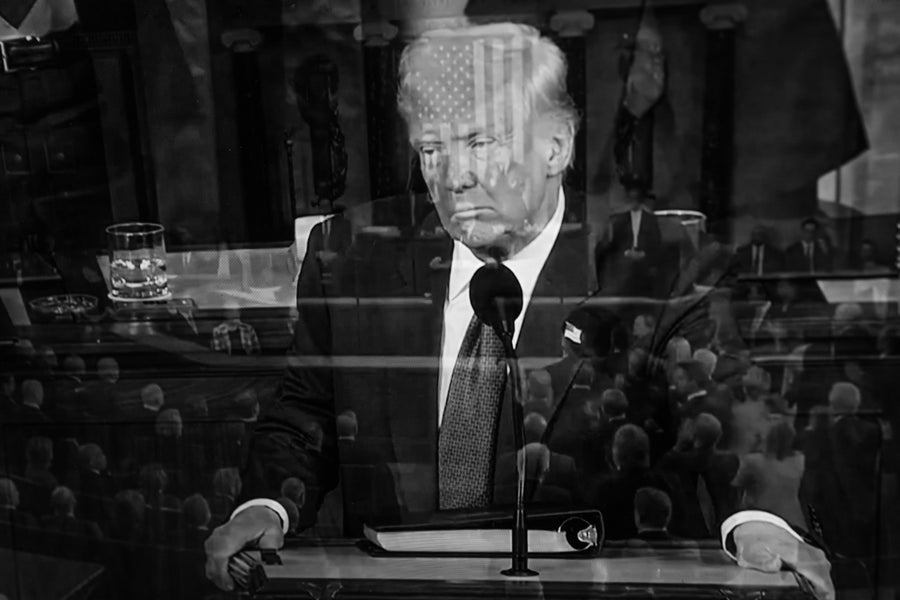
In a split image on television, President Donald Trump delivers an address to a joint session of Congress on March 4, 2025. Andrew Lichtenstein/Corbis via Getty Images

.

.

Click the link below for the complete article:

https://www.scientificamerican.com/article/science-tells-us-the-u-s-is-heading-toward-a-dictatorship/

.

__________________________________________

US-China talks end with plan for Trump and Xi to approve

Leave a comment

Click the link below the picture

.

The US and China say they have agreed in principle to a framework for de-escalating trade tensions between the world’s two biggest economies.

US Commerce Secretary Howard Lutnick said the deal should result in restrictions on rare earth minerals and magnets being resolved.

Both sides said they would now take the plan to their presidents – Donald Trump and Xi Jinping, for approval.

The announcement came after two days of negotiations in London between top officials from Beijing and Washington.

Chinese exports of rare earth minerals, which are crucial for modern technology, were high on the agenda of the meetings.

Last month, Washington and Beijing agreed a temporary truce over trade tariffs, but each country has since accused the other of breaching the deal.

The US has said China has been slow to release exports of rare earth metals and magnets, which are essential for manufacturing everything from smartphones to electric vehicles.

Meanwhile, Washington has restricted China’s access to US goods such as semiconductors and other related technologies linked to artificial intelligence (AI).

“We have reached a framework to implement the Geneva consensus,” Lutnick told reporters.

“Once the presidents approve it, we will then seek to implement it,” he added.

The new round of negotiations followed a phone call between Donald Trump and China’s leader Xi Jinping last week, which the US President described as a “very good talk”.

“The two sides have, in principle, reached a framework for implementing the consensus reached by the two heads of state during the phone call on June 5th and the consensus reached at the Geneva meeting,” China’s Vice Commerce Minister Li

When Trump announced sweeping tariffs on imports from a number of countries earlier this year, China was the hardest hit. Beijing responded with its own higher rates on US imports, and this triggered tit-for-tat increases that peaked at 145%.

.

https://ichef.bbci.co.uk/news/1024/cpsprodpb/2a2f/live/8a83d500-4657-11f0-b980-9d8c94f9a788.jpg.webpTop officials from the US and China have been meeting in London

.

.

Click the link below for the complete article:

https://www.bbc.com/news/articles/c4gkmy26e2po

.

__________________________________________

USDA Reverses Course and Restores Climate Information for Farmers

2 Comments

Click the link below the picture

.

CLIMATEWIRE | The Trump administration has reversed course and will restore U.S. Department of Agriculture websites related to climate change in response to a lawsuit brought by environmental organizations and farmers.

Groups represented by Earthjustice and the Knight First Amendment Institute at Columbia University had sued in February, alleging that the removal of climate-related policies, datasets, and other resources violated federal laws requiring advanced notice, reasoned decision-making and public access to certain information.

In a letter late Monday, the administration told Judge Margaret Garnett of the U.S. District Court for the Southern District of New York that the USDA will restore the climate-related web content that was removed after President Donald Trump’s inauguration, including all USDA webpages and interactive tools listed in the lawsuit.

It noted that the process of restoring the removed content was already underway and that the USDA expects to mostly complete the process in two weeks. The USDA also pledged that it “commits to complying with” federal law governing future “posting decisions.”

The purged material had included information on climate-smart farming, forest conservation, and adaptation. The USDA also took down climate sections from the websites for the Forest Service and the Natural Resources Conservation Service, including information to help farmers access money for conservation practices.

The move comes days before Garnett was to hear the challengers’ request for a preliminary injunction that sought to require the USDA to restore the webpages and stop taking down additional climate information.

“We’re glad that USDA recognized that its blatantly unlawful purge of climate-change-related information is harming farmers and communities across the country,” said Jeffrey Stein, an associate attorney with Earthjustice. Stein added that farmers depend on the websites to protect their farms from drought, wildfire, and extreme weather.

.

https://static.scientificamerican.com/dam/m/5f6bbd8d0b5ab63b/original/Harvesting_soybeans_in_Jarrettsville-Maryland-USA.jpg?m=1747237330.195&w=900

Harvesting soybeans in Jarrettsville, Maryland.  Edwin Remsberg/Getty Images

.

.

Click the link below for the complete article:

https://www.scientificamerican.com/article/trump-usda-restores-climate-information-for-farmers-after-lawsuit/

.

__________________________________________

Trump Tariffs Likely to Raise Prices on Refrigerators, Washers and More. How to Save on Appliance Purchases This Year

Leave a comment

Click the link below the picture

.

Over the last few months, you’ve probably heard more than you ever have about tariffs. Tariffs have been a big focus of President Donald Trump’s second term, and many companies have announced price hikes to offset tariff costs. 

Trump recently announced new 50% tariffs on steel and aluminum imports last week, a move that could hit home appliances particularly hard.

“We expect home appliance prices to rise this year, especially for mid-range and premium models that rely heavily on imported parts and materials,” said David Warrick, executive vice president at Overhaul, a supply chain management platform, and former head of global supply chain technology at Microsoft. 

Larger home appliances could be the most susceptible to price hikes. “Refrigerators, dishwashers, and washing machines are particularly vulnerable because they often include a high percentage of foreign components — even when final assembly happens in the US,” said Warrick. 

CNET has been covering the Trump administration’s tariff policy and changes, and we’ve already seen manufacturers and retailers raise prices on laptops, toys and groceries. Before you panic-buy a home appliance, here’s what you need to know about tariffs and how they could increase appliance prices this year.

How do tariffs impact home appliance prices?

We could see home appliance prices rise on products that are made in countries hit with tariffs. Because tariffs are paid by the importing company, the costs are typically passed along to the consumer in the form of higher prices, although the price hike may not be a 1-to-1 ratio with the tariff rate.

The tariffs that most threaten home appliances include the 50% tariff on all steel and aluminum imports, the 25% tariff on imported goods from Mexico and Canada, and the 30% tariff on imports from China. Higher tariffs on Mexico, Canada, and China have been temporarily halted, but this could change in the coming months.

Tariffs don’t only apply to assembled products that are made elsewhere and then shipped here to be sold. Many products that are assembled in the US involve imported components. 

Materials like steel and aluminum are often imported, as are pumps, motors, and hoses, so appliances that include those parts could see notable price increases, according to Travis Tokar, a professor of supply chain management at Texas Christian University.

How tariffs impact home appliance prices could also vary depending on the type of appliance, the size, and where it’s manufactured.

“A lot of this will depend on the agreement with Mexico since many large appliances are assembled in Mexico,” said Patti Jordan, associate professor of professional practice at the Neely School of Business. “Product[s] manufactured primarily in China, such as vacuum cleaners, air purifiers, and small appliances, will most definitely be impacted.”

The Trump administration has also wavered on its tariff policy, making it difficult for the industry to predict what’s next. “It’s the off-and-on tariff strategy that is leading to the supply chain instability more so than the tariffs — at least so far,” Buffington added.

.

https://www.cnet.com/a/img/resize/e2f4989738eb6498539f4ffb296ea3d26d4e0032/hub/2025/06/04/c775f897-0660-433d-b0fa-205c0bf9b0c3/appliances.png?auto=webp&fit=crop&height=675&width=1200

Trump’s new steel and aluminum tariffs could increase the price of appliances.  Jeffrey Hazelwood/CNET

.

.

Click the link below for the complete article:

https://www.cnet.com/home/kitchen-and-household/trump-tariffs-likely-to-raise-prices-on-refrigerators-washers-and-more-how-to-save-on-appliance-purchases-this-year/

.

__________________________________________

Federal Budget Cuts Would Sabotage NASA’s Plans to Find Alien Life

Leave a comment

Click the link below the picture

.

We’ve never been so close to discovering life beyond Earth. Our generation could be the one that finds it, provided two essential ingredients exist. First, that there’s life out there. Second, that we’re willing to look.

Alien life’s existence is outside our control, but the universe seems to encourage our attention. Many people rest their optimism about alien life on the remarkable fact that our cosmos is brimming with planetary possibilities. To date, we’ve discovered nearly 6,000 exoplanets, most of them around only the nearest of the Milky Way’s hundreds of billions of stars. That means all our astonishingly successful planet-hunting surveys have studied just a mere teardrop of a vast cosmic sea—and implies there are at least as many planets as stars in our galaxy alone, plus some 1025 worlds in the rest of the observable universe. Chances are we’re not alone, so long as the probability that planets spring forth life is not astronomically miniscule.

Discovering alien life, on the other hand, rests squarely on us. For the first time in human history, we can meaningfully answer once-timeless questions. Countless generations before us could only ask, “Are we alone?” as passive stargazers. Today, our rockets reliably reach otherworldly destinations, our robotic emissaries yield transformative knowledge about our planetary neighbors, and our telescopes gaze ever farther into the heavens, revealing the subtle beauty of the cosmos.

NASA has led the way on this work, but it now faces an existential threat in the form of short-sighted budget cuts proposed by the White House. If passed into law by Congress, these cuts would axe critical space missions, gut NASA’s workforce, and abandon one of the most captivating quests in all of science. Additional sweeping cuts planned for the National Science Foundation would be similarly ruinous for ground-based astronomy and a host of other endeavors that support NASA’s work at the high frontier.

Led by NASA, for more than a half-century, the U.S. has been building toward a golden age of astrobiology, a field of research the space agency helped invent. The groundwork was laid on Mars, beginning with the Viking missions of the 1970s and continuing into today, where the agency has “followed the water” to dried-up lakebeds. In 2014, NASA’s Curiosity rover uncovered clues pointing to an ancient, life-friendly Mars, and more recently, NASA’s Perseverance rover has been caching promising rock samples for return to Earth. Researchers eagerly await their arrival, because if Mars ever did harbor life, then some of Perseverance’s specimens may well contain some sort of Martian fossils.

Besides our own familiar Earth, Mars isn’t the only promising incubator of life around the sun. In the outer solar system, NASA’s Galileo probe and Cassini orbiter lifted the icy veils of Jupiter’s moon Europa and Saturn’s moon Enceladus, respectively. Beneath thick shells of ice, both moons harbor global subsurface oceans, which could be teeming with bacterial or even macroscopic denizens. NASA’s Clipper spacecraft launched in 2024 and is hurtling toward Europa, where it will make close flybys of the moon to assess its habitability. The agency has developed concepts for follow-on missions to land on both worlds and taste the chilly chemistry there for the telltale signs of life.

Every organism on Earth requires liquid water, but perhaps that’s not a strict requirement elsewhere. Astrobiologists speculate about “weird life” in Venus’s sulfuric acid clouds and in the liquid hydrocarbon seas of Saturn’s frigid moon Titan. NASA plans to visit each of these worlds with state-of-the-art spacecraft—two to Venus and one to Titan—in the 2030s.

And then there’s the great expanse of exoplanets. NASA’s James Webb Space Telescope has furnished unprecedented data about exoplanet atmospheres, most of them hot and puffy—the easiest to observe. But the most alluring exoplanets for astrobiologists—those the size and temperature of Earth—are just beyond our sight. Currently, teams of scientists are conceptualizing NASA’s next great eye in space, the Habitable Worlds Observatory, whose mission is, as its name suggests, to image and examine dozens of notionally Earth-like planets for the global exhalations of alien biospheres.

.

https://static.scientificamerican.com/dam/m/17bb912972ad49c5/original/exoplanet_k2-18b_with_water_vapor.jpg?m=1747314874.161&w=900

An artist’s illustration of a potentially habitable exoplanet orbiting a red dwarf star. NASA’s Goddard Space Flight Center

.

.

Click the link below for the complete article:

https://www.scientificamerican.com/article/trumps-budget-cuts-would-sabotage-nasas-plans-to-find-alien-life/

.

__________________________________________

These Jobs Reduce Your Alzheimer’s Risk: How You Can Benefit

Leave a comment

Click the link below the picture

.

Alzheimer’s is a pervasive and devastating disease. An estimated 6.9 million Americans were living with this common type of dementia in 2024, and that number is expected to grow by 2060 unless medical breakthroughs alter its course. The condition is also the fifth-leading cause of death among those 65 and over.

With Alzheimer’s becoming increasingly common within a rapidly aging population, exploring ways to reduce the risk is vital.

That’s why a recent study suggesting certain careers may reduce Alzheimer’s risk is so important to understand — not, of course, because everyone should change their job to avoid dementia, but because understanding why those jobs have a protective effect can be important in identifying new methods of disease prevention.

These two jobs appear to lower dementia risk

To understand whether doing certain work can affect the chances of developing Alzheimer’s, researchers reviewed death certificates from the National Vital Statistics System in the United States that also included occupation.

They discovered that among the 443 occupations studied, workers in two particular career fields had a noticeably lower risk of developing his condition.

The two jobs that appeared to significantly lower the risk were taxi driver and ambulance driver. In fact, just 0.91% of taxi driver deaths were attributed to Alzheimer’s, while only 1.03% of ambulance drivers died of this disease. By comparison, 1.82% of CEOs died of Alzheimer’s, which is fairly close to the overall average death rate from this dementia variant.

Although the difference may not seem very substantial when looking at the raw percentages, ultimately, these numbers show that ambulance drivers and taxi drivers experience around 40% fewer Alzheimer’s-related deaths compared with the general population.

Why are taxi and ambulance drivers experiencing a lower Alzheimer’s risk?

While considering the link between specific careers and a reduced risk is important, determining why this link exists is even more essential. Developing a deeper understanding of factors affecting Alzheimer’s risk increases the likelihood of finding a cure or at least identifying effective prevention methods.

Fortunately, experts were able to determine two key factors that shed more light on the potential reasons for the low prevalence of the disease among taxi and ambulance drivers.

First was the fact that other transportation professionals did not experience a decline in risk. Aircraft pilots and ship captains both had higher-than-average rates of Alzheimer’s disease at 2.34% and 2.12%, respectively. Bus drivers, on the other hand, had a 1.6% death rate from the condition, which is closer to the average among all workers.

Second, ambulance and taxi drivers did not experience lower rates of other types of dementia beyond Alzheimer’s.

One possible explanation for the lower risk is that both taxi and ambulance drivers must regularly exercise their spatial and navigational skills in real time. Moreover, they must do so much more often than other transportation professionals because ambulance and taxi drivers regularly travel different routes in unfamiliar locations, rather than traveling the same route regularly.

Because they must adjust to new conditions in unfamiliar areas, taxi and ambulance drivers may use their hippocampus more regularly, as this is the part of the brain that’s exercised when deploying these skills. This theory is also supported by older studies that demonstrated taxi drivers may experience enlargement in parts of the hippocampus.

“Our results highlight the possibility that neurological changes in the hippocampus or elsewhere among taxi and ambulance drivers may account for the lower rates of Alzheimer’s disease,” senior author Anupam B. Jena, MD, PhD, a physician in the Department of Medicine at Massachusetts General Hospital said of the findings.

This study doesn’t imply that relying on GPS navigation apps while driving will cause Alzheimer’s, but there is evidence that GPS can help people with mild dementia avoid getting lost.

Translating this study into action for you

There is, of course, a limit to the number of people who can work as taxi or ambulance drivers, but identifying the lower rates of Alzheimer’s among people within these professions provides clues into how those concerned about the disease could reduce their risk.

For example, activities like outdoor orienting, which experts have revealed can help develop spatial memory, could help workers in other professions strengthen crucial areas of the brain.

Past research has also revealed that dancing challenges the brain in important ways, especially when learning complex steps such as the waltz and swing dancing. As with navigation, dancing requires the brain to manage an internal three-dimensional map; however, instead of remembering a route, a dancer must recall a sequence of steps and where to place their body.

Games, puzzles, and continued learning are associated with a lower dementia risk, including spatially challenging games like jigsaw puzzles. But what about 3D versions of games? (Remember Dr. Spock’s three-dimensional chess game in Star Trek?) Some studies have shown that playing 3D video games may keep older players sharp. For a truly mind-bending experience, try downloading the app for Monument Valley on your phone, desktop,p or tablet. Your avatar will travel through a beautiful world by rotating building pieces; it’s much more difficult than it sounds.

Ultimately, maintaining a strong mind and body can only help you. While it may not directly prevent Alzheimer’s, challenging your brain’s spatial awareness and memory can help you maintain overall good mental and physical health for as long as possible as you enter older age. It is worth the effort to reduce your overall disease risk and, hopefully, enjoy a happier, healthier retirement.

.

https://cdn.mos.cms.futurecdn.net/EsSjThPcwEe5eevd6ZdPbC-1024-80.jpg.webp(Image credit: Getty Images)

.

.

Click the link below for the complete article:

https://www.kiplinger.com/retirement/happy-retirement/these-jobs-reduce-your-alzheimers-risk-how-you-can-benefit

.

__________________________________________

6 Journaling Benefits and How to Start Right Now

Leave a comment

Click the link below the picture

.

Journaling can help you move forward and deepen self-discovery, among other benefits. Trying to journal for just a few minutes every day can help turn it into a stress-relieving, sustainable habit.

One of your best wellness tools may be a journal. Journaling offers an array of benefits — from easing stress to sparking self-discovery.

“Journaling is mindfulness in motion,” says Lisann Valentin, a Shamanic life coach. It shines a spotlight on the invaluable things in your life that you might not always recognize.

1. Journaling may help reduce stress

“Journaling can be a great pressure-releasing valve when we feel overwhelmed or simply have a lot going on internally,” says Amy Hoyt, PhD, founder of Mending Trauma.

A 2019 studyTrusted Source of patients, families, and healthcare practitioners from a children’s hospital reported a reduction in stress levels after completing this journaling exercise:

  • write three things you’re grateful for
  • write the story of your life in six words
  • write three wishes you have

In a follow-up studyTrusted Source 12 to 18 months later, 85% of the participants reported that the writing exercise was helpful. 59% continued using writing to cope with stress.

2. Journaling may boost health and well-being 

A 2018 research review suggests that writing about your deepest thoughts and feelings may contribute to:

  • fewer stress-related doctor visits
  • lower blood pressure
  • improved mood
  • greater well-being

A 2018 studyTrusted Source of 70 adults with medical conditions and anxiety found that writing about positive experiences, like gratitude, for 12 weeks was linked to reduced distress and increased well-being.

After a month, participants reported fewer symptoms of depression and anxiety. After the second month, participants reported greater resilience.

3. Journaling encourages space from negative thoughts

When negative or worried thoughts arise, it’s easy to get caught up in them.

Jotting down your thoughts, however, “creates space and distance to consider them in a more objective way,” says Sabrina Romanoff, PsyD, a clinical psychologist in New York City.

This distance is called cognitive defusion, a helpful concept from acceptance and commitment therapy. “The idea is that you are not your thoughts, emotions, or physical symptoms; instead, you are the context in which they occur,” says Romanoff.

If your thoughts aren’t serving you, you don’t have to believe them. You can use journaling to see your thoughts as separate from you.

To further underscore this separation as you journal, try adding this phrase: “I’m having the thought that…”

4. Journaling provides a way to process emotions

Emotions have a way of popping up and affecting actions — with or without awareness.

Journaling allows you to process your emotions in a safe, contained space. Naming and accepting the specific emotions you’re experiencing may have a positive effectTrusted Source. Difficult emotions become less overwhelming and easier to manage.

5. Journaling may help you figure out your next step

Writing down your thoughts and feelings about a situation is the first step in understanding how best to proceed. Once you’ve journaled, you might find that your emotions are trying to tell you something.

Seeing your concerns, questions, and emotions in ink may give you a clearer picture of your needs. Even a list of pros and cons can provide deeper insight into your desires.

6. Journaling deepens self-discovery

Think of yourself as a puzzle: You get to discover a different piece or pattern every single day.

Journaling provides a pause to help us reconnect and rediscover who we are. When we write, we learn our:

  • preferences
  • pain points
  • fears
  • favorites
  • dreams

We are constantly evolving. Journaling helps us:

  • listen
  • bear witness to these changes
  • get to know ourselves better

9 tips to start

Whether new to journaling or returning, try these tips for building a sustainable habit:

1. Take a micro-step

At the start, try not to bite off more than you can chew. Hoyt explains, “Micro-steps are less likely to be rejected by the brain, whereas large sweeping changes can feel unsafe, and we may give up.”

She suggests setting a timer for just 1 or 2 minutes for your journaling session.

2. Pick simple tools

Start with whatever method is easiest to incorporate into your routine, says Romanoff, like:

  • writing in a blank doc on your laptop

  • using a note-taking app on your phone

  • putting pen to paper

.

Journaling

.

.

Click the link below for the complete article:

https://www.healthline.com/health/benefits-of-journaling

.

__________________________________________

What to Do If Your Child Is the Bully

Leave a comment

Click the link below the picture

.

Is it ever okay—or at least, understandable—for one child to bully another?

I spend a lot of time speaking to parent groups and students about bullying, and it’s common for parents to approach me after a talk with questions about their personal situation. A mother once asked for my thoughts about a situation in which her eight-year-old son had been accused of bullying another boy.

In my experience, parents often have a hard time believing that their child could ever engage in bullying; this mother clearly accepted that the behavior had happened, yet she just as clearly felt that there were extenuating circumstances. She pointed out that the target had the annoying habit of picking his nose, and this had bothered her son, who had lashed out.

She hedged; surely, she thought, there could be circumstances under which it’s acceptable for one child to bully another.

If your child is being accused of bullying another, it can be surprising and upsetting. Beyond those understandable emotions, as a parent, you have many options to help your child understand their behavior and why it was seen as bullying.

Let’s first define what it is we are talking about: bullying means that someone repeatedly and deliberately hurts a less powerful person. Bullying is a very unhealthy and potentially damaging behavior, for both the target and the bully. Research tells us that children who bully carry mental health consequences like depression and anxiety into adulthood. This is especially true for kids who are both bullies and victims.

I think most people would agree that bullying sometimes calls for punishment, and often calls for interventions, but is bullying ever a behavior that calls for understanding? If your child is being aggressive once (which doesn’t meet the definition of bullying), and in self-defense, that may indeed be excusable. On the other hand, if your child is bullying, that repeated torment is not excusable. I reminded the mother whose son bullied the nose-picking child that bullying is harmful to both individuals, so even when it happens because of a provocation, it shouldn’t be shrugged off.

What’s interesting is that generally, children don’t excuse bullying. In a study in which scientists interviewed elementary school children (both those involved and uninvolved in bullying) in Sweden to understand how kids view bullying, the students tended to think that bullies were either psychologically troubled, or alternatively, attention seekers—bullying to gain social status (in other words, that they wanted other children to see their power and admire it).

Kids who bully others, however, tend to have justifications for their behavior. In my study of more than 2,200 teens, about 62 percent of those who admitted bullying others offered one or more of the following explanations: “People didn’t try to understand my point of view,” or “I needed to show I wasn’t intimidated or afraid,” or “My behavior was taken way too seriously; I never meant it.”

It’s important to understand that kids can engage in bullying for a variety of reasons. Parents may think of bullying as a behavior reserved for only truly disturbed kids. The research, however, shows that some youth who bully are otherwise doing well socially, while others, who tend to be both bullies and targets, struggle more with making friends and being social. It can be difficult to believe that a child who does well in school and has friends could actually be a bully.

What should parents do when their children are accused of bullying? How should they handle their child’s protests that they were justifiably provoked? Should they believe their child and accept the reasons for the bullying? Should the response be punishment, intervention or understanding—or all three?

The word bullying tends to be overused, and is sometimes applied to any situation (repeated, deliberate or not) when someone hurts someone else. How you approach the situation may be completely different if the aggression in question only happened once, or between two children with relatively equal social and physical power, which likely would not be bullying.

If the power dynamic is unequal, and it appears to be a bullying situation, talk to everyone to determine the facts. Make it clear to everyone involved that you’re approaching this with an open mind. The school’s perspective is almost certain to be different from your child’s. It’s not hard to imagine a situation where a school counselor explains that your child has bullied another student, but your son or daughter claims they were just mad and not thinking. Bullying is a behavior that is planned out. It is not an impulsive, one-time response to someone else’s provocation. A target may have engaged in nose-picking, and that may have been genuinely irritating, but repeated aggression against them isn’t impulsive or thoughtless.

.

https://static.scientificamerican.com/dam/m/3a409ad6063fe07a/original/children_bullying.jpg?m=1747249481.662&w=900Malte Mueller/Getty Images

.

.

Click the link below for the complete article:

https://www.scientificamerican.com/article/what-to-do-if-your-child-is-the-bully/

.

__________________________________________

When Downsizing, Does a Continuing Care Retirement Community Make Sense?

Leave a comment

Click the link below the picture

.

In 2015, I was teaching a class on estate planning at a local continuing care retirement community. During the audience-participation section, I asked the attendees if they had recently updated their documents. A woman in a wheelchair who’d appeared to be asleep for the entire class, yelled, “None of your (bleeping) business.”

She may have had a point, but it was the last time I raised my hand to teach at that community.

Between 2015 and 2020, I spent many a day teaching financial planning classes for retirees at continuing care retirement communities (CCRCs). I could tell you which communities leaned young, old, left, and right. In Washington, D.C., that left or right leaning is often a dealmaker or breaker.

The point is that these retirement communities are all different. The same person may love one and hate another, which is where we will land in this article. Whether a CCRC makes sense depends on you, your priorities, and how aligned they are with a specific community.

Below, I will highlight major pros and cons as you consider your next move, literally.

PROS OF CCRCS

1. The care will be there when you need it

If you pick the right community, this will be your last move. Residents can move along the spectrum from independent living to nursing care. You may change locations within your community, but you will not be moving furniture up and down stairs right when you start to need help.

2. You’ll have a ready-made community

According to that often-cited Harvard study on happiness, two of the greatest drivers of happiness in retirement are health and social connections. Hopefully, the continuum of care helps with the former. The built-in community of a CCRC should help with the latter.  Having friends in a community is a real bonus, as this can shorten the friend-making curve.

3. Your home will be turn-key, maintenance-free

The general advice for when to move into a CCRC is when you are still active and independent. That means you’re still going places.

You don’t want to have to worry about a pipe bursting when you’re skiing the Rockies. You don’t want the call telling you your HVAC is broken during your summer trip to Europe.

These communities, even if they are not really rentals, carry many of the benefits of being a tenant. And as you age, those benefits become even more important.

CONS OF CCRCS

1. Get ready for hefty entrance fees and monthly fees

The financial structures of these communities come in all shapes and sizes. For the purpose of this column, we are excluding rental communities, and we are not differentiating between A-, B-, and C-level plans.

The expense of a CCRC comes in the form of a buy-in and an ongoing monthly fee. You can think of this as a down payment and a mortgage payment.

The buy-ins can be large, often at $100,000 to $500,000 or more, which is one reason they are on the “cons” list. On top of that, monthly fees for those in independent living can be in the neighborhood of $2,500 to $5,000.

Another con: Entrance fees are often touted as, at least partially, refundable. While this is the case, even a 100% refundable buy-in doesn’t adjust for inflation.

So, if all goes according to plan and you spend your 20 greatest years in the community, the amount refunded to your estate may be worth half what you put in, when you account for inflation.

2. Expect rising costs

It’s 2025, and we are all used to living with rising prices. It’s easy to forget that the decade between 2010 and 2020 had almost no inflation, despite the Fed’s best efforts.

During this period, advisers in my firm got into hot water telling a few of our clients they couldn’t afford a particular community. We received some unhappy calls from the community’s sales office.

The thing that made this community unaffordable was not the buy-in fee. In the D.C. metro area, clients can usually cover large buy-ins with the equity realized from the sale of their forever home.

It was the 4% COLA, which caused the monthly fees to increase every year on a compounding basis, regardless of the inflation rate.

Even very secure financial plans can get a little iffy when you change inflation from 3% to 4%. If you’re considering a move, I’d encourage you to build out a plan in the free version of the software we use.

3. Prepare for a lifestyle adjustment

Earlier, I cited the conventional wisdom of moving into a CCRC while you’re still active and independent. The problem with this is that you’ll likely be one of the youngest in the community. You don’t want to do water aerobics if you can still swim laps. You’re unlikely to take the shuttle to the zoo if you can walk there.

It’s easy to age up quickly, though. Pretty soon, you’ll be yelling at me from a wheelchair.

.

https://cdn.mos.cms.futurecdn.net/Gb2Wbpdt4pj9FZzvcHrPKR-1024-80.jpg.webp(Image credit: Getty Images)

.

.

Click the link below for the complete article:

https://www.kiplinger.com/retirement/continuing-care-retirement-community-pros-and-cons

.

__________________________________________

Older Entries Newer Entries

Heart of Loia `'.,°~

so looking to the sky ¡ will sing and from my heart to YOU ¡ bring...

Michael Ciullo

CEO and Founder of Nsight Health

MRS. T’S CORNER

https://www.tangietwoods

Nelson MCBS

Catholic News, Prayers, HD Images, Rosary, Music, Videos, Holy Mass, Homily, Saints, Lyrics, Novenas, Retreats, Talks, Devotionals and Many More

Global geopolitics

Decoding Power. Defying Narratives.

Talk Photo

A creative collaboration introducing the art of nature and nature's art.

Movie Burner Entertainment

The Home Of Entertainment News, Reviews and Reactions

Le Notti di Agarthi

Hollow Earth Society

C r i s t i a n a' s Fine Arts ⛄️

•Whenever you are confronted with an opponent, conquer him with love.(Gandhi)

TradingClubsMan

Algotrader at TRADING-CLUBS.COM

Comedy FESTIVAL

Film and Writing Festival for Comedy. Showcasing best of comedy short films at the FEEDBACK Film Festival. Plus, showcasing best of comedy novels, short stories, poems, screenplays (TV, short, feature) at the festival performed by professional actors.

Bonnywood Manor

Peace. Tranquility. Insanity.

Warum ich Rad fahre

Take a ride on the wild side

Madame-Radio

Découvre des musiques prometteuses dans la sphère musicale française (principalement, mais pas que...).

Ir de Compras Online

No tiene que Ser una Pesadilla.

Kana's Chronicles

Life in Kana-text (er... CONtext)

Cross-Border Currents

Tracking money, power, and meaning across borders.

Jam Writes

Where feelings meet metaphors and make questionable choices.

emotionalpeace

Finding hope and peace through writing, art, photography, and faith in Jesus.

WearingTwoGowns.COM

MOVING FORWARD...That's how WINNING is done!”-Rocky Balboa

...

love each other like you're the lyric to their music

Luca nel laboratorio di Dexter

Comprendere il mondo per cambiarlo.

Tales from a Mid-Lifer

Mid-Life Ponderings

Creative

Travel,Tourism, Life style "Now in hundreds of languages for you."

freedomdailywriting

I speak the honest truth. I share my honest opinions. I share my thoughts. A platform to grow and get surprised.

The Green Stars Project

User-generated ratings for ethical consumerism

Cherryl's Blog

Travel and Lifestyle Blog

Sogni e poesie di una donna qualunque

Questo è un piccolo angolo di poesie, canzoni, immagini, video che raccontano le nostre emozioni

My Awesome Blog

“Log your journey to success.” “Where goals turn into progress.”

pierobarbato.com

scrivo per dare forma ai silenzi e anima alle storie che il mondo dimentica.

Thinkbigwithbukonla

“Dream deeper. Believe bolder. Live transformed.”

Vichar Darshanam

Vichar, Motivation, Kadwi Baat ( विचार दर्शनम्)

Komfort bad heizung

Traum zur Realität

Chic Bites and Flights

Savor. Style. See the world.

ومضات في تطوير الذات

معا نحو النجاح

Broker True Ratings

Best Forex Broker Ratings & Reviews

Blog by ThE NoThInG DrOnEs

art, writing and music by James McFarlane and other musicians

fauxcroft

living life in conscious reality

Srikanth’s poetry

Freelance poetry writing

JupiterPlanet

Peace 🕊️ | Spiritual 🌠 | 📚 Non-fiction | Motivation🔥 | Self-Love💕

Sehnsuchtsbummler

Reiseberichte & Naturfotografie