June 14, 2025
Mohenjo
Business, Food For Thought, Human Interest, Political, Science, Technical
amazon, business, Business News, current-events, Future, Hotels, human-rights, medicine, mental-health, research, Science, Science News, technology, Technology News, travel, vacation

Click the link below the picture
.
In the predawn darkness on Friday local time, Israeli military aircraft struck one of Iran’s uranium-enrichment complexes near the city of Natanz. The warheads aimed to do more than shatter concrete; they were meant to buy time, according to news reports. For months, Iran had seemed to be edging ever closer to “breakout,” the point at which its growing stockpile of partially enriched uranium could be converted into fuel for a nuclear bomb. (Iran has denied that it has been pursuing nuclear weapons development.)
But why did the strike occur now? One consideration could involve the way enrichment complexes work. Natural uranium is composed almost entirely of uranium 238, or U-238, an isotope that is relatively “heavy” (meaning it has more neutrons in its nucleus). Only about 0.7 percent is uranium 235 (U-235), a lighter isotope that is capable of sustaining a nuclear chain reaction. That means that in natural uranium, only seven atoms in 1,000 are the lighter, fission-ready U-235; “enrichment” simply means raising the percentage of U-235.
U-235 can be used in warheads because its nucleus can easily be split. The International Atomic Energy Agency uses 25 kilograms of contained U-235 as the benchmark amount deemed sufficient for a first-generation implosion bomb. In such a weapon, the U-235 is surrounded by conventional explosives that, when detonated, compress the isotope. A separate device releases a neutron stream. (Neutrons are the neutral subatomic particle in an atom’s nucleus that adds to their mass.) Each time a neutron strikes a U-235 atom, the atom fissions; it divides and spits out, on average, two or three fresh neutrons, plus a burst of energy in the form of heat and gamma radiation. And the emitted neutrons in turn strike other U-235 nuclei, creating a self-sustaining chain reaction among the U-235 atoms that have been packed together into a critical mass. The result is a nuclear explosion. By contrast, the more common isotope, U-238, usually absorbs slow neutrons without splitting and cannot drive such a devastating chain reaction.
To enrich uranium so that it contains enough U-235, the “yellowcake” uranium powder that comes out of a mine must go through a lengthy process of conversions to transform it from a solid into the gas uranium hexafluoride. First, a series of chemical processes refine the uranium, and then, at high temperatures, each uranium atom is bound to six fluorine atoms. The result, uranium hexafluoride, is unusual: below 56 degrees Celsius (132.8 degrees Fahrenheit) it is a white, waxy solid, but just above that temperature, it sublimates into a dense, invisible gas.
During enrichment, this uranium hexafluoride is loaded into a centrifuge: a metal cylinder that spins at tens of thousands of revolutions per minute, faster than the blades of a jet engine. As the heavier U-238 molecules drift toward the cylinder wall, the lighter U-235 molecules remain closer to the center and are siphoned off. This new, slightly U-235-richer gas is then put into the next centrifuge. The process is repeated 10 to 20 times as ever more enriched gas is sent through a series of centrifuges.
Enrichment is a slow process, but the Iranian government has been working on this for years and already holds roughly 400 kilograms of uranium enriched to 60 percent U-235. This falls short of the 90 percent required for nuclear weapons. But whereas Iran’s first-generation IR-1 centrifuges whirl at about 63,000 revolutions per minute and do relatively modest work, its newer IR-6 models, built from high-strength carbon fiber, spin faster and produce enriched uranium far more quickly.
.
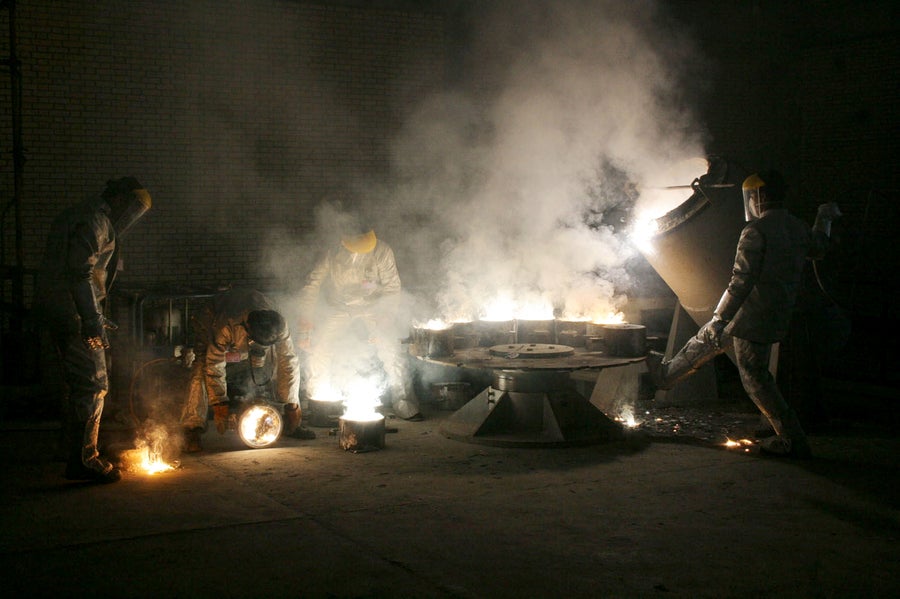
Men work inside of a uranium conversion facility just outside the city of Isfahan, Iran, on March 30, 2005. The facility in Isfahan made hexaflouride gas, which was then enriched by feeding it into centrifuges at a facility in Natanz, Iran. Getty Images
.
.
Click the link below for the complete article:
.
__________________________________________
June 14, 2025
Mohenjo
Business, Food For Thought, Human Interest, Political, Science, Technical
amazon, business, Business News, current-events, Future, Hotels, human-rights, medicine, mental-health, research, Science, Science News, technology, Technology News, travel, vacation

Click the link below the picture
.
“What’s your support system like?” my doctor asked as I tried to calm my baby. I was at my PCP’s office to get some insight into the persistent elbow pain that was making it difficult for me to open my apartment door or pull the covers over me at night — not to mention feed, hold, and soothe my baby who especially liked to fall asleep in the crook of that injured elbow.
My daughter had arrived six weeks early and needed to be fed in a specific position that required me to hold her head up with my left hand, the weight of her tiny body settling into my joint. But, like a lot of people I encountered in those early days, my doctor was having trouble getting past the single mother thing. “I’m worried about you,” she said, when I made the mistake of mentioning that I wasn’t sleeping. I was worried about me too, but I really needed help with my elbow.
“What’s your support system like?” was the first question almost anyone asked when finding out I was raising a baby without a partner — from potential mom friends at tot gyms to all kinds of medical professionals.
When I was pregnant, I got “what’s your support system like?” from a homeowner who was renting out an upstairs suite in a cohousing community. In cohousing, people usually live in separate houses on shared land, sharing resources. Because buying into a cohousing community can be expensive, I saw renting as a way in for me. But the homeowner balked as we tried to nail down a time for a tour. Instead, she wanted to schedule a call to talk about my support system.
The question was tough for me — it was something I had been asking myself, with some trepidation, since before I had gotten pregnant. Would the life I had made, the seeming haphazard connections collected over the years, be enough to sustain both me and a baby? I didn’t particularly want to get into this with my future landlord or, worse, be evaluated based on my ability to obtain this magic system. I told her that I thought her question was discriminatory (since she was not asking non-parents the same thing), she apologized profusely, and we parted ways.
But the incident jolted me: It was the first of a series of interactions that made me aware that by deciding to have a baby, I had stepped into a role loaded with cultural baggage.
The question about my support system was not about my own trepidations, romantic failures, or giddy hubris in deciding to get pregnant on my own. It was about the asker. “Are you going to need too much from me?” my potential housemate was asking. “Should I pity and worry for you?” my doctor wanted to know. “Can I view you as having agency?” the mom at the tot gym tried to clarify.
“Where do I place you on the scale of superhero to sad sack?” was how the question sounded to me.
“We are seeing the fabric of this country fall apart, and it’s falling apart because of single moms,” Pennsylvania Senate candidate (and future U.S. senator) Rick Santorum said in a speech in 1994. I was a teenager in the 1980s and 1990s when “unwed mothers” were used as cultural (and racial) boogeymen to push through Bill Clinton’s welfare cuts. Single mothers, the rationale went, were a drain on federal resources.
In the intervening years, with the rise of single parents by choice, an alternative narrative has taken hold, one of people who can afford to have babies on their own and are doing just fine. Yet, the words “single mother” remain a powerful cultural and political category that bring up anxieties about the cracks in our social system. And conservatives still seek to punish us, using the flawed logic that this will somehow force people into nuclear family structures.
.
 damircudic/E+/G
.
.
Click the link below for the complete article:
.
__________________________________________
June 13, 2025
Mohenjo
Business, Food For Thought, Human Interest, Political, Science, Technical
amazon, business, Business News, current-events, Future, Hotels, human-rights, medicine, mental-health, research, Science, Science News, technology, Technology News, travel, vacation
Click the link below the picture
.
While you do the dishes or drive to work, your mind is likely not on the task at hand; perhaps you’re composing a grocery list or daydreaming about retiring in Italy. But research published in the Journal of Neuroscience suggests you might be taking in more than you think.
During a simple task that requires minimal attention, mind wandering may actually help people learn probabilistic patterns that let them perform the task better.
“The idea to study the potentially beneficial influence of mind wandering on information processing occurred to us during the COVID pandemic, when we had plenty of time to mind wander,” says Péter Simor, lead author of the recent study and a psychology researcher at Eötvös Loránd University in Budapest. Study participants practiced a simple task in which they pressed keyboard buttons corresponding to the direction of arrows that lit up on a screen. But there were patterns hidden within the task that the participants were unaware of, and they learned these patterns without consciously noticing them. The researchers found that when participants reported letting their minds wander, they adapted to the task’s hidden patterns significantly faster.
“This is an exciting and important piece of work, especially because the authors opted for a nondemanding task to check how [mind wandering] would affect performance and learning,” says Athena Demertzi, a cognitive and clinical neuroscientist at the University of Liège in Belgium. Previous related research focused more on long and demanding tasks, she says—on which zoning out is typically shown to have a negative effect.
But the results are not clear-cut, says Jonathan Smallwood, a psychology researcher at Queen’s University in Kingston, Ontario. “I don’t think that this means the spontaneous mind-wandering episodes themselves cause implicit learning to occur,” he says. “Rather, both emerge at the same time when people go into a particular state.” Neither Smallwood nor Demertzi was involved in the new study.
Simor, who studies sleep, was interested in whether participants’ mind wandering displayed any neural hallmarks of dozing off. Using electroencephalogram recordings, the team showed that in those test periods, participants’ brains produced more of the slow waves that are dominant during sleep. Perhaps, the researchers say, mind wandering is like a form of light sleep that provides some of that state’s learning benefits. To better understand whether mind wandering might compensate for lost sleep, Simor and his colleagues next plan to study narcolepsy and sleep deprivation.
“We know that people spend significant amounts of time not focused on what they are doing,” Smallwood says. “The authors’ work is important because it helps us understand how reasonably complex forms of behavior can continue when people are focused on other things—and that even though our thoughts were elsewhere, the external behavior can still leave its mark on the person.”
.
 Thomas Fuchs
.
.
Click the link below for the complete article:
.
__________________________________________
June 13, 2025
Mohenjo
Business, Food For Thought, Human Interest, Political, Science, Technical
amazon, business, Business News, current-events, Future, Hotels, human-rights, medicine, mental-health, research, Science, Science News, technology, Technology News, travel, vacation

Click the link below the picture
.
The Supreme Court delivered an important victory to disabled children on Thursday, unanimously affirming their right to reasonable accommodations in public education. Chief Justice John Roberts’ opinion for the court reiterated that schools engage in unlawful discrimination when they deny these accommodations to kids, even if officials are not acting in bad faith. His ruling provides a lifeline to schoolchildren throughout the country who are wrongly denied equal access to learning opportunities because of a disability.
Yet this victory comes with an asterisk: In a concurrence, Justice Clarence Thomas, joined, alarmingly, by Justice Brett Kavanaugh, launched an assault on civil rights law that would devastate disabled Americans’ ability to receive an education and participate in all aspects of public life. Thomas and Kavanaugh suggested that the long-standing interpretation of disability law is, in fact, unconstitutional, arguing that states should have far more leeway to discriminate against those with disabilities. We should expect such callous radicalism from Thomas. But Kavanaugh’s endorsement of this position is yet another ominous sign that the justice is drifting toward the hard-right flank of the court.
It is difficult to know exactly what to make of Kavanaugh’s drift to the right because he remains an intellectual lightweight who struggles to articulate and defend his views with any coherence. Is he just another MAGA-pilled jurist eager to promote Trump’s agenda? Did his bruising confirmation battle leave him with a lifelong grudge against Democrats that he acts upon by trashing progressive priorities from the bench? Has he fallen under the influence of Thomas and Justice Samuel Alito, who spurn centrism as craven capitulation to their perceived enemies on the left? Whatever the cause of his transformation, it is by now an undeniable fact that he has abandoned the middle of the court, sliding to the right of Roberts, Justice Amy Coney Barrett, and sometimes even Justice Neil Gorsuch.
Thursday’s case, A. J. T. v. Osseo Area Schools, shows exactly why robust federal protections for disabled Americans remain so vital. The plaintiff, Ava Tharpe, “suffers from a rare form of epilepsy that severely limits her physical and cognitive functioning,” as Roberts put it. Her seizures are worst in the morning, leaving her able to learn only after about 12 p.m. each day. When Tharpe transferred to a new school district in 2015, officials refused to provide her with special evening instruction, leaving her with far fewer hours of instruction than her peers.
Eventually, Tharpe’s parents sued under several laws, including the Americans with Disabilities Act and the Rehabilitation Act, which broadly bar discrimination on the basis of disability. But the federal courts tossed out their suit. These courts acknowledged that Tharpe was denied equal access to education because of her disability. But they held that Tharpe was not entitled to an injunction or damages under the relevant statutes because she had not proven that school officials “acted with bad faith or gross misjudgment.” Mere “non-compliance” with the law, the courts concluded, was not enough to justify judicial intervention.
.
 Thomas and Kavanaugh suggested that the long-standing interpretation of disability law is, in fact, unconstitutional. Photo illustration by Slate. Photo by Chip Somodevilla/Pool/AFP via Getty Images.
.
.
Click the link below for the complete article:
.
__________________________________________
June 12, 2025
Mohenjo
Business, Food For Thought, Human Interest, Political, Science, Technical
amazon, business, Business News, current-events, Future, Hotels, human-rights, medicine, mental-health, research, Science, Science News, technology, Technology News, travel, vacation

Hmmmm…
Click the link below the picture
.
Notes
The American Community Survey did not release the 1-year estimates for 2020 due to significant disruptions to data collection brought on by the coronavirus pandemic.
The majority of our health coverage topics are based on analysis of the Census Bureau’s American Community Survey (ACS) by KFF. ACS includes a 1% sample of the US population and allows for precise state-level estimates.
The ACS asks respondents about their health insurance coverage at the time of the survey. Respondents may report having more than one type of coverage; however, individuals are sorted into only one category of insurance coverage. See definitions for more detail on coverage type.
Data may not sum to totals due to rounding.
Data include the civilian noninstitutionalized population in the United States.
Sources
KFF estimates based on the 2008-2023 American Community Survey, 1-Year Estimates.
.
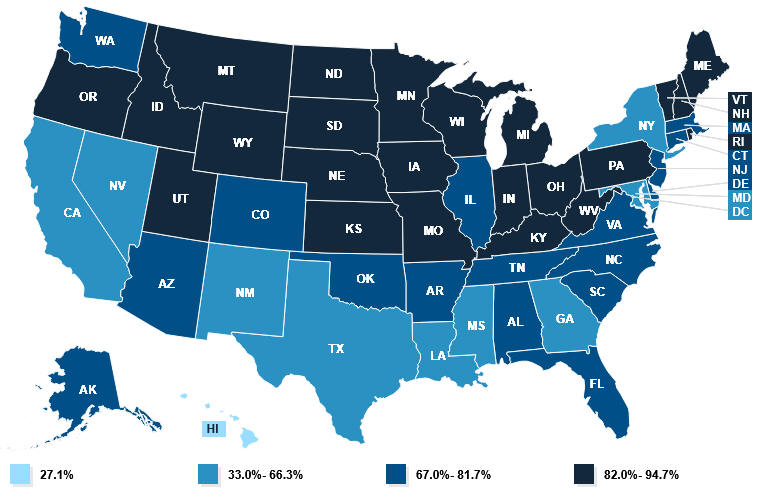 Medicare Usage by State
.
.
Click the link below for the complete article:
.
__________________________________________
June 12, 2025
Mohenjo
Business, Food For Thought, Human Interest, Political, Science, Technical
amazon, business, Business News, current-events, Future, Hotels, human-rights, medicine, mental-health, research, Science, Science News, technology, Technology News, travel, vacation
Covid is stil killing people…
Click the link below the picture
.
For the first time since the COVID vaccines became available in pharmacies in 2021, the average person in the U.S. can’t count on getting a free annual shot against a disease that has been the main or a contributing cause of death for more than 1.2 million people around the country, including nearly 12,000 to date this year.
“COVID’s not done with us,” says Jennifer Nuzzo, an epidemiologist at Brown University. “We have to keep using the tools that we have. It’s not like we get to forget about COVID.”
In recent weeks, the Department of Health and Human Services, led by prominent antivaccine activist Robert F. Kennedy, Jr., has announced a barrage of measures that are likely to reduce COVID vaccine access, leading to a swirl of confusion about what will be available for the 2025–2026 season. HHS officials did not respond to a request for comment for this article.
Government officials appear to be limiting COVID shots to people who are aged 65 and older and to those who have certain preexisting health conditions—groups that have long been known to face a higher risk of developing severe COVID. Pregnant people and some children, meanwhile, appear to be explicitly excluded from access, despite plentiful evidence that vaccines are very safe and effective for them and that COVID infections can cause them significant harm.
Scientific American spoke with clinicians and public health experts about the latest COVID vaccine recommendations, what access may look like this fall, and how these policies might influence people’s vaccination choices and health.
What COVID vaccines will be manufactured this year?
Public health experts are monitoring a strain of the COVID-causing virus SARS-CoV-2 called NB.1.8.1, which was first detected early this year and last month became responsible for one in 10 COVID cases globally. So far, the new variant has mostly been reported in Asia and Europe. But it has also been picked up in airport surveillance in multiple U.S. states, says Peter Chin-Hong, an infectious disease physician and a professor of medicine at the University of California, San Francisco.
The emergence of a new variant isn’t surprising, particularly at this time of year, Chin-Hong says. “It’s kind of acting like clockwork—maybe this might be the variant of the summer,” he adds. Still, NB.1.8.1 has led to concerns about a potential surge in cases, although Chin-Hong and other scientists don’t have any evidence so far that it causes more serious disease than other currently circulating strains.
“All of these new variants, they might be more transmissible, they might be more immune evasive, but I’ve seen no data whatsoever that suggests that they’re more pathogenic,” says Angela Rasmussen, a virologist at the University of Saskatchewan.
Within the U.S., a strain called LP.8.1 has been the most common one detected since March. Both NB.1.8.1 and LP.8.1 are among the alphabet soup of strains that descended from a key ancestor lineage called Omicron JN.1, which dominated U.S. cases by early 2024.
.
 Andriy Onufriyenko/Getty Images
.
.
Click the link below for the complete article:
.
__________________________________________
June 12, 2025
Mohenjo
Business, Food For Thought, Human Interest, Political, Science, Technical
amazon, business, Business News, current-events, Future, Hotels, human-rights, medicine, mental-health, research, Science, Science News, technology, Technology News, travel, vacation

Click the link below the picture
.
Indian police say more than 200 bodies have been recovered after a plane crashed shortly after takeoff from Ahmedabad. Most of the 242 people on board were Indian or British. DW has the latest.
A Boeing 787 Dreamliner crashed shortly after takeoff from Ahmedabad, en route to London’s Gatwick Airport. Some 242 people were on board
Flight 171, including 169 Indians, 53 Britons, 7 Portuguese, and 1 Canadian
The cause of the crash has yet to be determined
Ahmedabad police have said more than 200 bodies have been recovered, and there appear to be no survivors. Indian Prime Minister Narendra Modi said the incident was ‘heartbreaking beyond words.’ The crash is the first fatal incident involving a Boeing 787 Dreamliner
Boeing’s 787 Dreamliner had strong safety record before Ahmedabad crash
The Boeing 787-8 Dreamliner, which crashed in Ahmedabad, is one the world’s most advanced aircraft.
Unlike Boeing’s 737 Max series, the Dreamliner has had a strong safety record, with no fatal accidents until Thursday’s crash, in which all 242 people on board died.
The plane that crashed in Ahmedabad is the smallest of three types of 787, and was delivered in 2014.
The 787 Dreamliner entered commercial service in 2011. Boeing has sold more than 2,500 787s, of which 47 were sold to Air India.
The plane can normally hold up to 248 passengers, while the larger 787-9 can carry up to 296 people, according to Boeing.
The 787 is powered by twin engines, which are supplied by American firm GE Aerospace or Rolls-Royce from the UK.
The engines on the plane that crashed were provided by GE. In a post on X, GE said it was “deeply saddened” by the incident, adding that the company is “prepared to support our customer and the investigation.”
While this is the first fatal incident involving a Dreamliner, there have been previous accidents.
In July 2013, an Ethiopian Airlines flight, which had no one on board, caught fire while on the ground at London’s Heathrow airport after a short-circuit.
.

Hundreds are feared dead after footage from the scene showed smoke and wreckage © Amit Dave/REUTERS
.
.
Click the link below for the complete article:
.
__________________________________________
June 11, 2025
Mohenjo
Business, Food For Thought, Human Interest, Political, Science, Technical
amazon, business, Business News, current-events, Future, Hotels, human-rights, medicine, mental-health, research, Science, Science News, technology, Technology News, travel, vacation
Click the link below the picture
.
Sperm have to wiggle vigorously to reach an egg, and that motion is key to a clever new fertility test. The technique, tested with bull semen and detailed in Advanced Materials Interfaces, harnesses physics to make fertility testing easier and more cost-effective—and, if it works for human sperm, too, it might eventually help people tackle some conception issues from home.
“Fifty percent of families are facing a big challenge in terms of addressing fertility,” says Sushanta Mitra, a mechanical engineer at the University of Waterloo and co-author of the recent study. “Our aim is to democratize that process.”
Current laboratory tests for male fertility involve examining a semen sample under a microscope. Experts check the sperm cells’ liveliness, which is considered a good proxy for fertility because the gametes need to quickly swim more than 1,000 times their body length to reach an egg. But these lab tests can be expensive and time-consuming. Meanwhile, at-home tests tend to be less accurate because they often only detect the presence of certain proteins in sperm rather than assessing how the cells move.
The newly described method uses basic physics to measure sperm activity without costly equipment. The researchers placed droplets of bull semen at the end of a flexible plastic strip suspended next to a water-resistant surface. Next, they moved the surface toward the drop until it made contact and then moved it back to its original position. They measured how strongly each semen droplet stuck to the surface, via weak hydrogen bonds, as it was pulled away. If many highly active sperm were wiggling around inside the fluid, the hydrogen bonds broke more quickly, disrupting the drop’s surface adhesion and making it break away earlier; the livelier the sperm, the less sticky the drop. “It’s exciting to be able to come up with a way to quantify sperm mobility at home,” says Stanford University urologist Tony Chen, who was not involved in the study.
Mitra and his team hope to develop this technique into a cheaper, easier and more accurate home fertility test. “There is a lot of stigma around male fertility,” Mitra says. Easier private testing could encourage people to evaluate semen quality more often, allowing them to check in while making lifestyle adjustments to perk up lethargic sperm, such as quitting smoking or reducing alcohol use. Such tests could also potentially be useful for breeding livestock.
The researchers’ next steps will be to standardize the tests and obtain benchmarks for different types of sperm, including human and bovine. Chen says clinical trials that evaluate droplets from many different patients will also be necessary to ensure the tests work with samples that have varying pH levels, white blood cell counts, and fructose concentrations. “There’s more than just sperm in semen,” he says.
.
 Getty Images
.
.
Click the link below for the complete article:
.
__________________________________________
June 11, 2025
Mohenjo
Business, Food For Thought, Human Interest, Political, Science, Technical
amazon, business, Business News, current-events, Future, Hotels, human-rights, medicine, mental-health, research, Science, Science News, technology, Technology News, travel, vacation

Click the link below the picture
.
As immigration raids continued across the country, a curfew went into effect Tuesday night in Los Angeles, the epicenter of protests that spread coast to coast against the detention and removal of suspected undocumented migrants.
Mayor Karen Bass said the curfew, which begins at 8 p.m. and expires at 6 a.m. for an undetermined length of time, was necessary to quell unrest. “If you drive through downtown L.A., the graffiti is everywhere and has caused significant damages,” Bass said, adding that 29 businesses were looted Monday night alone.
Activists had also gathered in New York, Boston, Chicago, Dallas, Atlanta, and elsewhere, rebuking the Trump administration’s tough stance against migrants and its aggressive round-up efforts, which Democratic leaders in California have criticized as contributing to a sense of fear across communities.
NBC News has counted at least 25 rallies and demonstrations coast to coast since Monday. Some involved only a few dozen people, while others attracted thousands.
The protests took place as federal immigration raids continued nationwide Tuesday, including a “targeted enforcement operation” in Los Angeles, according to Immigration and Customs Enforcement, as well as a raid at a meat processing facility in Omaha, Nebraska.
ICE posted a photo on X showing a person wearing military fatigues alongside federal agents, one with “DEA” emblazoned on his vest, standing near a handcuffed person, and a military Humvee painted in camouflage parked next to them. The arrest happened in Los Angeles, ICE said.
In Omaha, two businesses were targeted for federal immigration enforcement operations, local officials said. Mayor John Ewing Jr.’s office said federal agents arrested 80 people at Glenn Valley Foods and Lala Dairy.
Cellphone video of the scene at Glenn Valley Foods showed agents in green uniforms, camouflage clothing and plainclothes appearing to detain several workers, hands cuffed, in the facility’s lunchroom, where a motto was painted on a wall: “Together we achieve more.”
Chad Hartmann, a spokesperson for Glenn Valley Foods, said in a statement that federal agents searched the company’s facility “for persons believed to be using fraudulent documents to gain employment.”
He said that the company strives to operate within the law, that it is cooperating with agents and that it “is not being charged with any crime.”
.

.
.
Click the link below for the complete article (sound on):
.
__________________________________________
June 10, 2025
Mohenjo
Business, Food For Thought, Human Interest, Political, Science, Technical
amazon, business, Business News, current-events, Future, Hotels, human-rights, medicine, mental-health, research, Science, Science News, technology, Technology News, travel, vacation
Click the link below the picture
.
As president, Donald Trump pretty much checks all the warning boxes for an autocrat. Last September, Scientific American warned of Trump’s “nonsensical conspiracy fantasies,” that he “ignores the climate crisis” and has fondness for “unqualified ideologues,” whom he would appoint should he become president again. It’s now May, and sadly, that all checks out.
The U.S. is in a bad place and, scholars warn, looks to be headed for worse.
Worse even than Trump’s relentless attacks on science have been his administration’s assaults on the law. His officials have illegally fired federal workers, impounded congressional appropriations, and seized people off the street for deportations to foreign prisons, threatening the same for all U.S. citizens. “The depth and breadth of this administration’s disregard for civil liberties, political pluralism, the separation of powers, and legal constraints of all kinds mark it as an authoritarian regime,” law professor David Pozen of the Columbia University School of Law told the New York Times in April.
We should all be worried that the U.S. is headed toward an autocracy—government by one person, even without political science offering a warning. But scholarship on how nations descend into this unfortunate state, seen in places like Turkey and Hungary, might not surprise you with what it suggests about the U.S.
“Since Donald Trump’s inauguration, the country has embarked on the slippery slope toward autocracy,” concludes political scientist Daniel Stockemer of the University of Ottawa, in a May report in Politics & Policy. Rather than a coup, Trump’s attacks on law firms, universities, immigrants, and others constitute “a more incremental form of democratic erosion,” he writes,
one that follows a six-step theory of incremental autocratization based on research on the democratic backsliding seen worldwide in recent decades. The model arose in major part from the work of political scientist Marianne Kneuer of the Dresden University of Technology. She looked at the last quarter-century’s collapse in Venezuela, examining how states turn from democratic to autocratic in stages, as opposed to a sudden coup.
The U.S. has already breached the first three steps of Stockemer’s theory. The first step is one of social turmoil; this originated with the Tea Party movement during the Obama administration. Marked by angry politics, backlash against minorities and immigrants, and distrust in institutions, the U.S. has in the last two decades changed from a “full” to a “flawed” democracy, according to the Economist’s global democracy index.
The second step requires a “project of radical change,” like the populist movement of Venezuela’s Hugo Chavez in the 1990s, or in the U.S. case, Trump’s MAGA movement, which defends white, male privileges and holds prime loyalty for many Republicans.
The third step is a “decisive electoral victory,” applicable to Chavez in 1999 or Trump in 2024, the latter a vote that also brought Trump control of a subservient Congress.
That leaves us at the edge of the fourth step, the dismantling of checks and balances on executive power.
.

In a split image on television, President Donald Trump delivers an address to a joint session of Congress on March 4, 2025. Andrew Lichtenstein/Corbis via Getty Images
.
.
Click the link below for the complete article:
.
__________________________________________
Older Entries
Newer Entries
 James' World 2