August 31, 2025
Mohenjo
Business, Food For Thought, Human Interest, Political, Science, Technical
amazon, business, Business News, current-events, Future, Hotels, human-rights, medicine, mental-health, research, Science, Science News, technology, Technology News, travel, vacation

Click the link below the picture
.
Gigantic trenches known as gullies are opening up in cities in Africa, swallowing up homes and businesses, sometimes in an instant, a study has found.
About 118,600 people, on average, in the Democratic Republic of the Congo (DRC) alone were displaced between 2004 and 2023, according to researchers reporting their findings in Nature.
Without urgent action, researchers estimate that hundreds of thousands of people across Africa are likely to be displaced within the next 10 years, including more than one-quarter of the 770,000 or so people in the DRC living in the expected expansion zone of these gullies.
“It’s an underestimated and severely under-researched hazard,” says study co-author Matthias Vanmaercke, a geographer at the Catholic University of Leuven (KU Leuven) in Belgium. It is caused by “a combination of natural and human factors,” he says, but this is “not at all unavoidable.”
Expanding gullies
Gullies are expanding across cities that are built on sandy soils and lack adequate drainage. When there are heavy rains, water accumulates on roads and rooftops. When the drainage systems are inadequate, the water finds its way into unprotected ground, carving deep holes that can stretch for hundreds of metres. Over time, the gullies swallow houses and other infrastructure, and sometimes even result in deaths.
Vanmaercke and his colleagues used satellite images taken between 2021 and 2023 to identify 2,922 urban gullies in 26 of 47 cities, covering a cumulative distance of nearly 740 kilometres. The team cross-checked these images with historical aerial photographs stored at the Royal Museum for Central Africa in Belgium and found that only 46 of the gullies were present in the 1950s. This “gave the first clear indication that this is indeed attributable to the ongoing urbanization,” Vanmaercke says.
In 99% of cases, the gullies had expanded by at least 10 square metres between 2004 and 2023. The average gully was 253 metres long and 31 metres across at its widest point, and nearly all of them were linked to the road network. “The water cannot infiltrate, and it concentrates along these roads, which basically become big canals that turn into rivers,” says Vanmaercke.
.
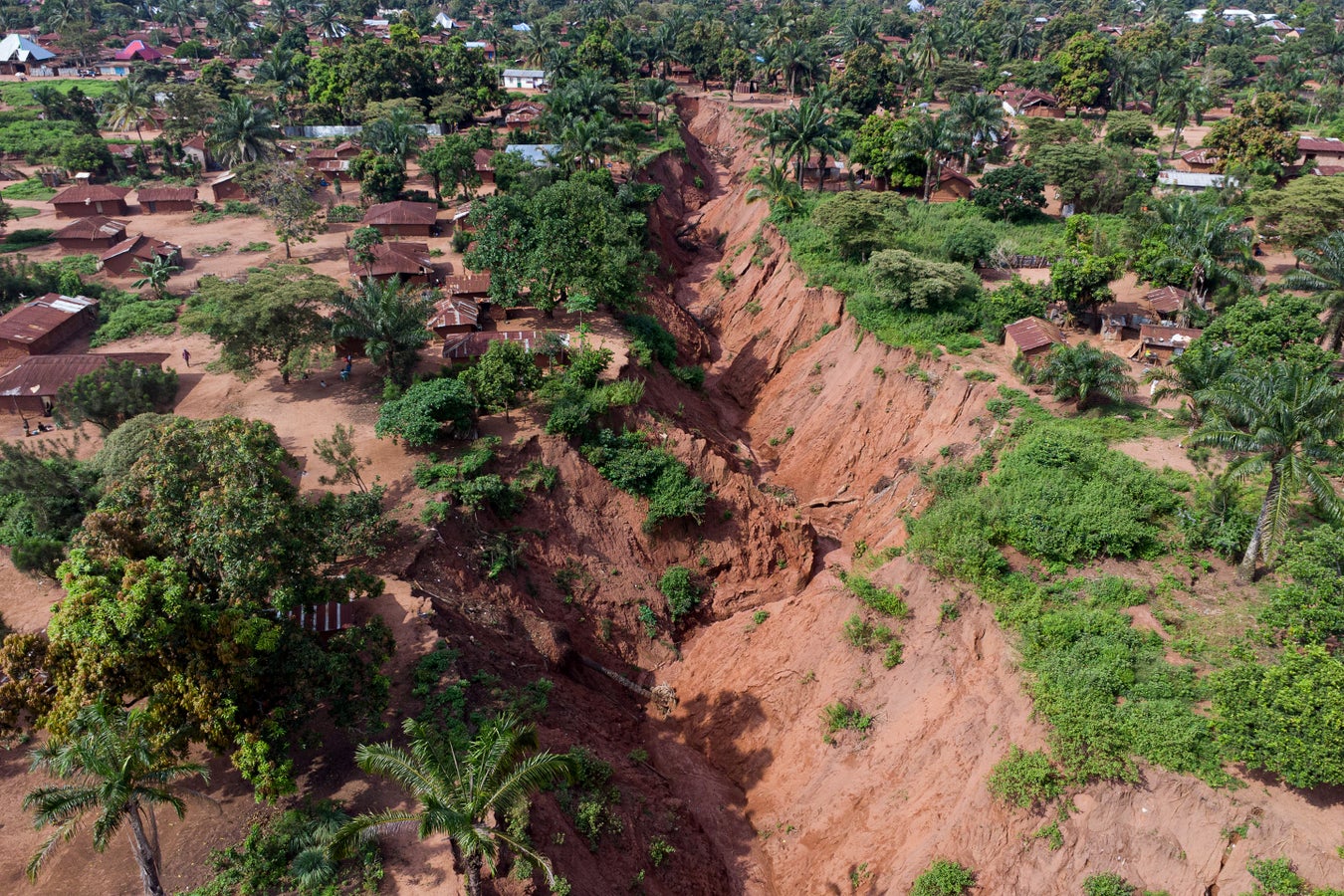
A view of a deep urban gully in Kamonia in the Democratic Republic of the Congo. More than 3,000 people are at risk of this gully expanding.
Ruben Nyanguila/Anadolu via Getty Images
.
.
Click the link below for the complete article:
.
__________________________________________
August 31, 2025
Mohenjo
2016 While I Was Away, Business, Food For Thought, Political, Science, Technical
amazon, business, Business News, current-events, Future, Hotels, human-rights, medicine, mental-health, research, Science, Science News, technology, Technology News, travel, vacation

Click the link below the picture
.
U.S. President Donald Trump said on Saturday that he will issue an executive order to require voter identification from every voter.
“Voter I.D. Must Be Part of Every Single Vote. NO EXCEPTIONS! I Will Be Doing An Executive Order To That End!!!,” Trump said on Truth Social.
“Also, No Mail-In Voting, Except For Those That Are Very Ill, And The Far Away Military,” he added.
Trump has long questioned the U.S. electoral system and continues to falsely claim that his 2020 loss to Democratic President Joe Biden was the result of widespread fraud. The president and his Republican allies also have made baseless claims about widespread voting by non-citizens, which is illegal and rarely occurs.
For years, he has also called for the end of electronic voting machines, pushing instead for the use of paper ballots and hand counts – a process that election officials say is time-consuming, costly, and far less accurate than machine counting.
Earlier in August, Trump pledged to issue an executive order to end the use of mail-in ballots and voting machines ahead of the 2026 midterm elections. However, federal elections are administered at the state level,l and it is unclear whether the president has the constitutional power to enact such a measure.
The Nov. 3, 2026, elections will be the first nationwide referendum on Trump’s domestic and foreign policies since he returned to power in January. Democrats will be seeking to break the Republicans’ grip on both the House of Representatives and the Senate to block Trump’s domestic agenda.
.

President Donald Trump walks at the Trump National Golf Club in Sterling, Va., Saturday, Aug. 30, 2025. (AP Photo/Manuel Balce Ceneta)
.
.
Click the link below for the complete article:
.
__________________________________________
August 30, 2025
Mohenjo
Business, Food For Thought, Human Interest, Political, Science, Technical
amazon, business, Business News, current-events, Future, Hotels, human-rights, medicine, mental-health, research, Science, Science News, technology, Technology News, travel, vacation
Click the link below the picture
.
Aaron Lauda has been exploring an area of mathematics that most physicists have seen little use for, wondering if it might have practical applications. In a twist even he didn’t expect, it turns out that this kind of math could be the key to overcoming a long-standing obstacle in quantum computing—and maybe even for understanding the quantum world in a whole new way.
Quantum computers, which harness the peculiarities of quantum physics for gains in speed and computing ability over classical machines, may one day revolutionize technology. For now, though, that dream is out of reach. One reason is that qubits, the building blocks of quantum computers, are unstable and can easily be disturbed by environmental noise. In theory, a sturdier option exists: topological qubits spread information out over a wider area than regular qubits. Yet in practice, they’ve been difficult to realize. So far, the machines that do manage to use them aren’t universal, meaning they cannot do everything full-scale quantum computers can do. “It’s like trying to type a message on a keyboard with only half the keys,” Lauda says. “Our work fills in the missing keys.” He and his group at the University of Southern California published their findings in a new paper in the journal Nature Communications.
Lauda and his colleagues solve some of the problems with topological qubits by using a class of theoretical particles they call neglectons, named for how they were derived from overlooked theoretical math. These particles could open a new pathway toward experimentally realizing universal topological quantum computers.
Unlike ordinary qubits, which store information in the state of a single particle, topological qubits store it in the arrangement of several particles—which is a global property, not a local one, making them far more robust.
Take, for example, braided hair. The type and number of braids that a person has are global properties that remain the same regardless of how they shake their head. In contrast, the position of an individual hair strand is a local property that can shift with the slightest movement.
In our three-dimensional world, swapping two particles is like weaving one string over or under the other. You can always unweave them back to their original structure. When you swap particles in two dimensions, however, you cannot go over or under; you have to make the strings go through each other, which permanently changes the structure of the strings.
Because of this property, swapping two anyons can completely transform the state of a system. These swaps can be repeated among multiple anyons—a process called anyon braiding. The final state depends on the order in which the swaps, or braids, are formed, much like the way the pattern of a braid depends on the sequence of its strands.
Because braiding anyons changes the quantum state of the qubit, the procedure can be used as a quantum gate. Just as a logical gate in a regular computer changes bits from 0 to 1 to allow computation, quantum gates manipulate qubits. This braid-based logic is the foundation of how topological quantum computers compute.
Theoretically, many types of anyons exist. One variety, called Ising anyons, “are our best chance for quantum computing in real systems,” Lauda says. “However, by themselves, they are not universal for quantum computation.”
Picture a qubit as a number on a calculator display and the quantum gates as the buttons on the calculator. A nonuniversal computer is like a calculator that only has buttons for doubling or halving. You can reach plenty of numbers—but not all of them, which limits your computing power. A universal quantum computer would be able to reach all numbers.
.
 Smartboy 10/Getty Images
.
.
Click the link below for the complete article:
.
__________________________________________
August 30, 2025
Mohenjo
Business, Food For Thought, Human Interest, Political, Science, Technical
amazon, business, Business News, current-events, Future, Hotels, human-rights, medicine, mental-health, research, Science, Science News, technology, Technology News, travel, vacation

Click the link below the picture
.
The Trump administration is aggressively stoking tensions with Venezuela and its president, Nicolás Maduro, and appears to be creating conditions that could lead to a military confrontation.
A major buildup of U.S. naval forces is underway outside Venezuela’s waters as the administration has stepped up belligerent rhetoric about fighting drug cartels and labeled Mr. Maduro a terrorist-cartel leader. All that raises the question of whether the end goal is just to counter drug-smuggling boats, or a potential regime-change war.
President Trump signed a still-secret directive last month instructing the Pentagon to use military force against some Latin American drug cartels that his administration has labeled “terrorist” organizations. Around the same time, the administration declared that a Venezuelan criminal group was a terrorist organization and that Mr. Maduro was its leader, while calling his government illegitimate.
Since then, the Pentagon has been moving U.S. Navy assets, including warships, into the southern Caribbean Sea. In response, Mr. Maduro announced on Monday that he was deploying 4.5 million militiamen around his country and vowed to “defend our seas, our skies and our lands” from any incursions.
The administration has said little about its intentions. On Tuesday, the White House press secretary, Karoline Leavitt, was asked about the movements and whether the administration was considering putting forces on the ground in Venezuela. She responded by calling Mr. Maduro illegitimate and invoking his indictment, late in the first Trump administration, on U.S. drug trafficking charges.
Mr. Trump, she said, is “prepared to use every element of American power to stop drugs from flooding into our country and to bring those responsible to justice. The Maduro regime is not the legitimate government of Venezuela. It is a narco-terror cartel.”
The Pentagon declined to comment publicly about the specifics of the deployment. But Sean Parnell, the chief Pentagon spokesman, said that cartels “have engaged in historic violence and terror throughout our hemisphere — and around the globe — that has destabilized economies and internal security of countries but also flooded the United States with deadly drugs, violent criminals, and vicious gangs.”
He added that the Defense Department would “undoubtedly play an important role towards meeting the president’s objective to eliminate the ability of these cartels to threaten the territory, safety, and security of the United States and its people.”
U.S. officials said that up to three guided-missile destroyers would soon arrive in the region. The naval warships will target boats operated by drug cartels transporting fentanyl to the United States, the officials said, but have not said how they will do so.
.
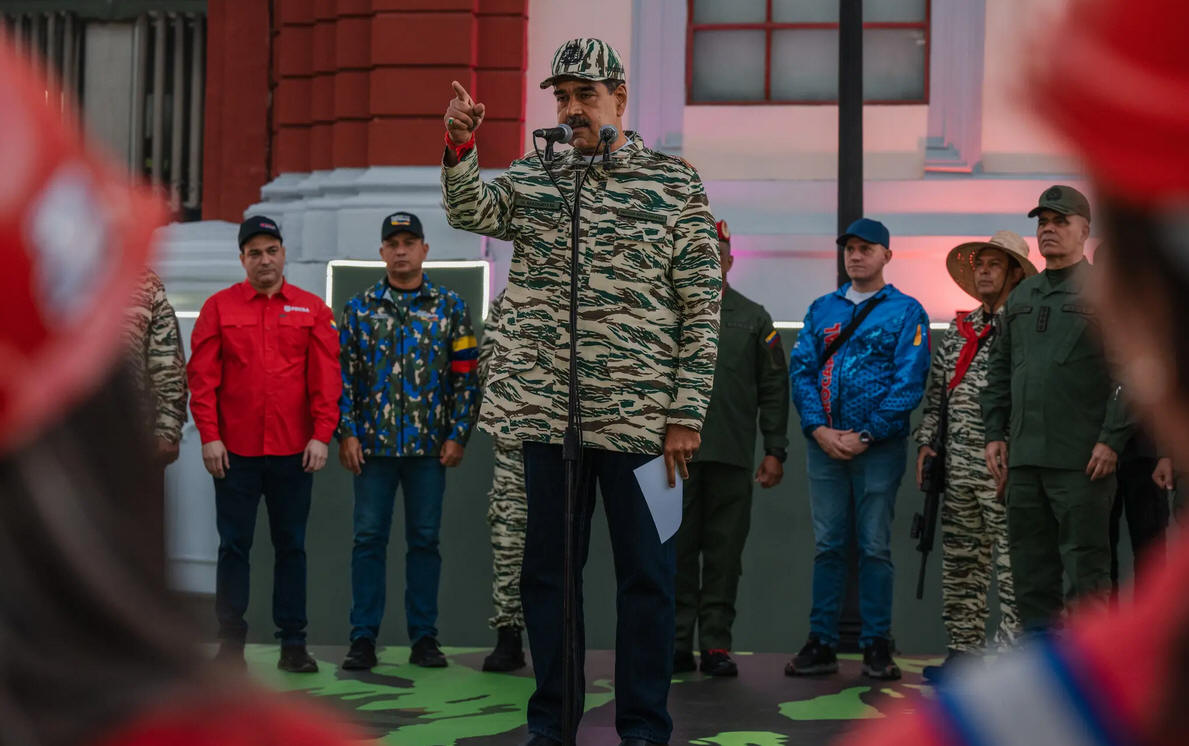 President Nicolás Maduro of Venezuela at a military event in January. The Trump administration has labeled him a terrorist-cartel leader. Credit…The New York Times
.
.
Click the link below for the complete article:
.
__________________________________________
August 30, 2025
Mohenjo
Business, Food For Thought, Human Interest, Political, Science, Technical
amazon, business, Business News, current-events, Future, Hotels, human-rights, medicine, mental-health, research, Science, Science News, technology, Technology News, travel, vacation
Click the link below the picture
.
The Transportation Department on Friday said it was terminating or withdrawing $679 million in federal funding for 12 projects around the country intended to support the development of offshore wind power, the latest of the Trump administration’s escalating attacks against the wind industry.
The funds, approved by the Biden administration, include $427 million awarded last year to upgrade a marine terminal in Humboldt County, Calif. The new terminal would be used to assemble and launch wind turbines capable of floating in the ocean, which the state of California had been planning to deploy to meet its renewable energy goals.
The list of targeted projects also includes $48 million for an offshore wind port on Staten Island, $39 million to upgrade a port near Norfolk, Va. and $20 million for a marine terminal in Paulsboro, N.J. Most of the projects were intended to be staging areas for the construction of giant wind turbines that would eventually be placed at sea.
“Wasteful wind projects are using resources that could otherwise go toward revitalizing America’s maritime industry,” Transportation Secretary Sean Duffy said in a statement. He said that, where possible, the funding would be redirected toward upgrading other ports.
Mr. Trump has been a vocal opponent of wind power for years, and on his first day in office, he issued a moratorium on federal approvals for new offshore wind projects.
In recent weeks, his administration has sharply increased its attacks on the wind industry, going so far as to order the halt of construction at Revolution Wind, a $6.2 billion wind farm off the coast of Rhode Island that was nearly finished. Officials in Rhode Island and Connecticut have assailed the move, saying there was no legal justification for blocking the order and that the move would threaten the reliability of the region’s electricity supply.
On Friday, Connecticut Attorney General William Tong, a Democrat, said he had asked the U.S. District Court for the District of Massachusetts to block the Trump administration’s stop-work order.
“We’ve got billions of dollars in investment and a project on the finish line to deliver affordable, American-made, renewable energy right off the coast of Connecticut,” Mr. Tong said. “We’re notifying the court now that Trump’s irrational stop to Revolution Wind will jack up energy bills, hurt workers, and weaken our grid.”
The Trump administration has also signaled in a court filing that it plans to rescind federal approval for yet another wind farm, the Maryland Offshore Wind Project. That facility had not yet begun construction but would consist of up to 114 wind turbines off the coast of Ocean City, Md.
.
 Friday’s move is the latest in a series of escalating attacks by the Trump administration against the wind industry.Credit…Carolyn Kaster/Associated Press
.
.
Click the link below for the complete article:
.
__________________________________________
August 29, 2025
Mohenjo
Business, Food For Thought, Human Interest, Political, Science, Technical
amazon, business, Business News, current-events, Future, Hotels, human-rights, medicine, mental-health, research, Science, Science News, technology, Technology News, travel, vacation
Click the link below the picture
.
Safeguards keep fake ballots from being counted. Election officials regularly update voter lists. Voting machine software undergoes rigorous testing.
Telling voters such simple facts helps combat election misinformation, suggests a Science Advances study released on Friday. In the investigation, researchers performed messaging experiments with voters in the U.S. before the nation’s 2022 midterm elections and in Brazil after its presidential election that same year. With false claims of faked election results having figured into the January 6, 2021, mob assault on the U.S. Capitol and reelected U.S. president Donald Trump having made false claims about mail-in ballots and voting machines in August 2025, combating election falsehoods matters very much, the new study’s authors say.
“Around the world, we’ve seen attacks on election integrity, and it’s become clear that defending democracy requires debunking or effectively countering that misinformation,” says study co-author Brian Fogarty, a political scientist at the University of Notre Dame. What he and his colleagues found most effective was “genuinely novel information,” he says—such as details on exactly how voting security is ensured at the polls and in the counting of votes.
“The facts actually matter,” says psychology professor Gordon Pennycook of Cornell University, who was not a co-author of the study. “This is a very strong set of experiments, and I think the conclusion is very important: the best way to help guard people against misinformation is to provide accurate countervailing information.”
While Pennycook and other outside experts applaud the experiments as excellent research, however, they question their relevance in real elections. In the U.S. and Brazil, these experts note, voters are immersed in misinformation from talk radio, television personalities, and, in the case of the U.S., even the country’s current president—and this fouls the information environment in which straightforward messages about election security can be delivered to them.
“We know people are misinformed. Can just one message in a sea of misinformation offset a diet of misinformation on social media,” and cable television, asks communications scholar Nathan Walter of Northwestern University, who was not part of the study. “Eating one protein shake doesn’t counter all the cheeseburgers you had.”
The study consisted of three experiments. The first two, which respectively included nearly 3,800 respondents in the U.S. and more than 2,900 in Brazil, tested attacks on voting integrity from political leaders of losing parties against “prebunking” information about how votes are secured that were preceded by warnings about conspiracy theories. As a control measure, some participants heard messages with information that was entirely unrelated to voting. Prebunking worked in both the U.S. and Brazil, and it was particularly effective among those most skeptical of election security and had a more lasting effect. Notably, the U.S. voting security information was taken from the (now deleted) “Rumor vs. Reality” section of the website of the U.S. Department of Homeland Security’s Cybersecurity & Infrastructure Security Agency.
The third experiment of 2,000 participants from the first experiment tested prebunking messages with and without the added conspiracy forewarnings. Somewhat surprisingly, the prebunking messages without the forewarnings about conspiracy theories proved most effective in countering misinformation, the study showed. Beliefs in false statements dropped from 19.5 percent in the control group to 12.3 percent in the forewarning group and to 10.6 percent among the participants who received simple explanations without forewarnings.
With the 2026 U.S. midterms ahead, voting groups, civil society organizations, and journalists can take the study’s results as pointers to better showing people the lengthy steps taken to ensure that voting fraud is unbelievably rare in elections, writes Natália Bueno of Emory University in a companion article published in Science Advances.
“What seems to matter is this novel factual information is provided in the prebunking message, which is helping people understand how elections are secure,” Fogarty says. “We think these are encouraging findings with important implications for how to communicate with the public about election integrity going forward.” While the Trump administration has removed the DHS webpage with facts about election integrity that was used in one of the experiments, the study authors suggest voting rights groups could turn to the National Association of State Election Directors or National Conference of State Legislatures for similar prebunking explanations.
The U.S. federal government can no longer be considered a good-faith player in ensuring fair elections, however, says cognitive scientist Stephan Lewandowsky of the University of Bristol in England, pointing to the Trump administration’s embrace of 2020 false election claims. That makes even the most scientific prebunking look less useful as a tool for stabilizing democracy, warns Lewandowsky, who wasn’t involved in the new study. “The U.S. is now best characterized as an emerging autocracy with a very tenuous hold on democracy and lawfulness,” he adds.
.
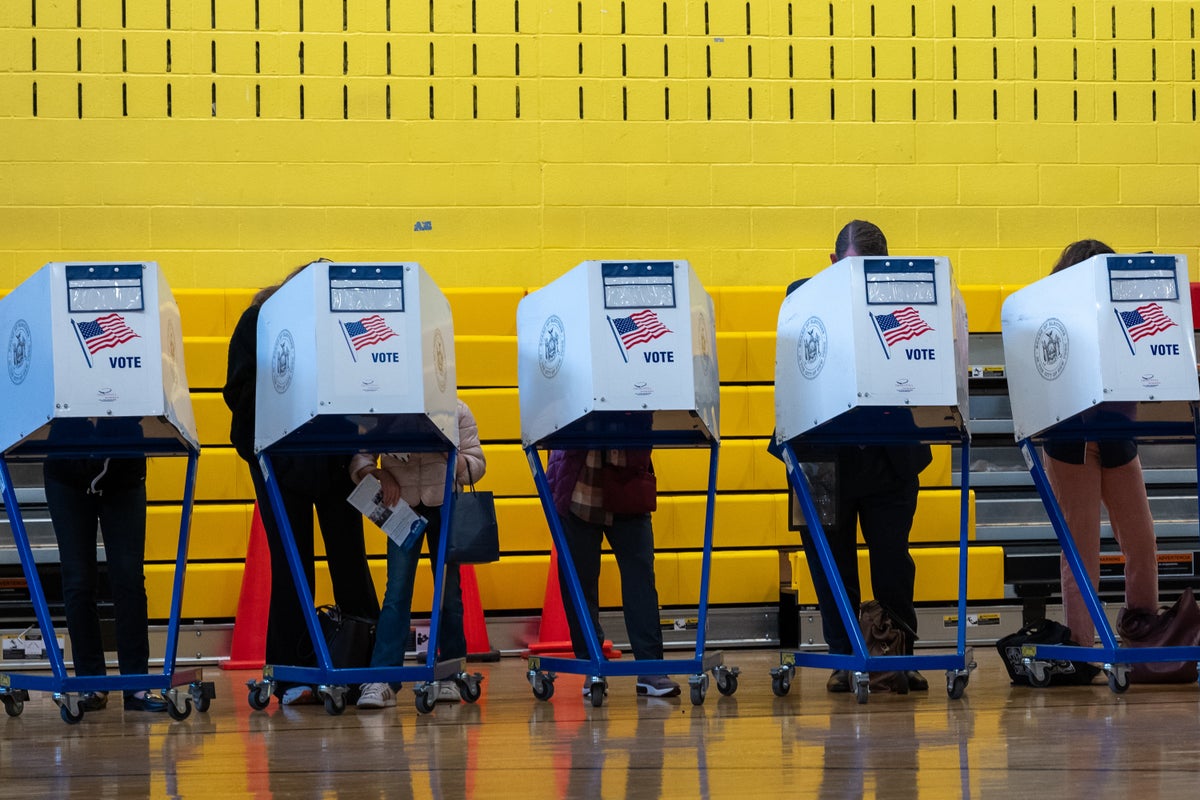
People cast their ballots on November 5, 2024, in New York City. Wang Fan/China News Service/VCG/Getty Images
.
.
Click the link below for the complete article:
.
__________________________________________
August 29, 2025
Mohenjo
Business, Food For Thought, Human Interest, Political, Science, Technical
amazon, business, Business News, current-events, Future, Hotels, human-rights, medicine, mental-health, research, Science, Science News, technology, Technology News, travel, vacation
From

Click the link below the picture
.
Sure, summer isn’t technically over for a few more weeks — but school vacations, summer Fridays, and the lazy days of August? Those end at Labor Day, buddy, and tradition demands celebrating with one last bash. Spending as much time at the grill as possible is relatable end-of-summer behavior, and our Labor Day recipe roundup includes options for grilling nearly every course, with smoky salads and charred sides, delicious grilled meat and seafood, and even a pie baked over the coals. And of course, this is the time of year when peppers, tomatoes, corn, and okra are near-bursting, and berries, melons, and stone fruits are at their peak. We’ve also got dishes and drinks featuring enough late-season produce to tide you over (almost) until summer 2026.
.
:max_bytes(150000):strip_icc()/Pollo-Yucateco-Asada-FT-RECIPE0623-24b5835c4bca4c2fb162d6e9663e8598.jpg) Credit: Eva Kolenko / Food Styling by Carrie Purcell / Prop Styling by Nidia Cueva
Credit: Eva Kolenko / Food Styling by Carrie Purcell / Prop Styling by Nidia Cueva
.
.
Click the link below for the complete article (click link below for 35 recipes):
.
__________________________________________
August 29, 2025
Mohenjo
Business, Food For Thought, Human Interest, Political, Science, Technical
amazon, business, Business News, current-events, Future, Hotels, human-rights, medicine, mental-health, research, Science, Science News, technology, Technology News, travel, vacation

Click the link below the picture
.
Where Things Stand
-
Tariffs ruling: In a setback to President Trump’s global trade war, a federal appeals court on Friday found that many of his tariffs were issued illegally, upholding an earlier decision from a federal trade court. The appeals court found that the bedrock of the trade war — an international emergency powers law that permits the president to take broad trade action in response to economic emergencies — “does not authorize the tariffs imposed by the Executive Orders.” But the judges delayed the implementation of their order until October to grant the administration time to seek review by the Supreme Court, which would allow the duties to remain in place for now. Read more ›
-
Foreign aid: The Trump administration has moved to cancel $4.9 billion for foreign aid programs, funds that Congress already approved, using an untested power to cut spending over lawmakers’ objections. Read more ›
-
U.N. meeting: Palestinian officials may not be able to attend next month’s United Nations General Assembly because the United States will not issue visas to them, Secretary of State Marco Rubio said Friday. The United States generally issues visas to allow foreign leaders to come to U.N. headquarters in New York, even those from countries under severe U.S. sanctions. The move by Mr. Rubio could be aimed at weakening discussion of Palestinian statehood. Read more ›

Aug. 29, 2025, 7:01 p.m. ET47 minutes ago
Richard Neal, the top Democrat on the House Ways and Means Committee, called the ruling “a victory for the rule of law, for the Constitution, and for American families who have paid the price for Donald Trump’s trade agenda.” He added: “Tariff authority rests with Congress. The Constitution is clear, and no president—Trump or anyone else—can invent powers they do not have.”
Aug. 29, 2025, 6:51 p.m. ET55 minutes ago
During President Trump’s first term, his advisers also had questions about whether the International Emergency Economic Powers Act, which is typically used to issue foreign sanctions, could be used to levy broad tariffs. The first Trump administration used IEEPA sparingly, relying on other tools like Section 232 and Section 301 of the Trade Act of 1974 instead to issue tariffs on Chinese exports and steel. But Mr. Trump and his advisers have since taken a more expansive interpretation, concluding that an economic emergency could be declared based on almost anything.
.
 A banner of President Trump on a Department of Labor building in Washington, on Friday.Credit…Eric Lee for The New York Times
.
.
Click the link below for the complete article:
.
__________________________________________
August 28, 2025
Mohenjo
Business, Food For Thought, Human Interest, Political, Science, Technical
amazon, business, Business News, current-events, Future, Hotels, human-rights, medicine, mental-health, research, Science, Science News, technology, Technology News, travel, vacation
Click the link below the picture
.
Rattling departures of high-ranking officials at the Centers for Disease Control and Prevention appear to be sending the U.S. public health agency into unsettling disarray, experts say, after the White House abruptly dismissed CDC director Susan Monarez on Wednesday evening following alleged disagreements on health policy.
In a post on the social media platform X earlier on Wednesday, the Department of Health and Human Services initially announced that Monarez was no longer CDC director. Later that evening, Monarez’s attorneys issued a statement that said she hadn’t resigned or been told she’d been fired. White House spokesperson Kush Desai swiftly responded with a statement that said Monarez had been formally terminated. But President Donald Trump had directly appointed Monarez, and she was sworn in by the U.S. Senate on July 31; her attorneys have insisted she can only be fired from her position directly by the president, who could theoretically overturn the decision. If not reinstated, Monarez will have only held her position as CDC head for a few weeks—the shortest-serving director in the agency’s history.
The HHS and its leader, Secretary of Health and Human Services Robert F. Kennedy, Jr., “have set their sights on weaponizing public health for political gain and putting millions of American lives at risk,” wrote Monarez’s attorneys in a post on X on Wednesday evening. “When CDC Director Susan Monarez refused to rubber-stamp unscientific, reckless directives and fire dedicated health experts, she chose protecting the public over serving a political agenda. For that, she has been targeted. Dr. Monarez has neither resigned nor received notification from the White House that she has been fired, and as a person of integrity and devoted to science, she will not resign.”
A replacement CDC director has not been publicly announced. The HHS has not responded to Scientific American’s request for comment at the time of publication.
“Many of the most prominent leaders in the organization have said ‘enough.’” —Georges Benjamin, executive director of the American Public Health Association
The confusion comes amid other turmoil at the CDC. The agency has had to grapple with the administration’s unexpected terminations of staff members and advisory boards, its mixed messaging on vaccines and outbreaks, and a shooting at the CDC’s main campus that killed a responding police officer.
“This is the capstone of mismanaging the CDC: basically decapitating the head of the organization,” says Georges Benjamin, executive director of the American Public Health Association. “Because of the dysfunctional work environment, many of the most prominent leaders in the organization have said ‘enough.’ They’re beginning to leave because they know that they cannot do their job in a credible way.”
At least four top agency officials also announced resignations shortly after: Debra Houry, the CDC’s chief medical officer; Daniel Jernigan, director of the National Center for Emerging and Zoonotic Infectious Diseases; Demetre Daskalakis, director of the National Center for Immunization and Respiratory Diseases; and Jennifer Layden, director of the Office of Public Health Data, Surveillance and Technology. These major leadership vacancies are bound to have drastic ripple effects on all facets of public health in the nation—from monitoring outbreaks to rolling out vaccines and protecting against biosecurity threats.
“It’s not just about the firing of the CDC director. It’s the fact that CDC has, basically, since January, been hemorrhaging some of the world’s top experts—people who have many decades of experience in knowing how to protect the United States,” says Jennifer Nuzzo, an epidemiologist and director of the Pandemic Center at Brown University. “It should be deeply concerning to everyone because it signals an intention to destroy all of the systems that the United States has put in place, that we have built up through considerable investment over the span of decades, to make sure that we are protected from deadly health emergencies like infectious disease outbreaks or biological attacks.”
Scientific American spoke with Benjamin and Nuzzo about what has happened with the CDC leadership exodus and what it will mean for the health and safety of people in the U.S.
[An edited transcript of the interview follows.]
What do we know about the reasoning behind the CDC director’s dismissal?
NUZZO: It’s just shocking and outrageous that they suddenly felt the need to fire her, I think, without cause. Monarez has long, credible experience working for multiple presidential administrations. She’s someone who has proven herself to be driven by evidence and not dogma. They knew all that when they hired her, and she’s not changed in that way
BENJAMIN: I suspect this was a precipitous decision on the part of the HHS secretary, but the real question is, ‘Who’s going to take the job now? Who’s credible?’ I mean, why would anybody take a science-based job where you know your boss doesn’t follow science? We know that Kennedy is a longtime antivaccine proponent and has continued to put out misinformation and disinformation. This current disagreement he has with the CDC director is quite interesting because Kennedy said nobody should trust him on medical advice, and yet he’s pushing out all the people who we can trust because of their scientific expertise and knowledge.
.
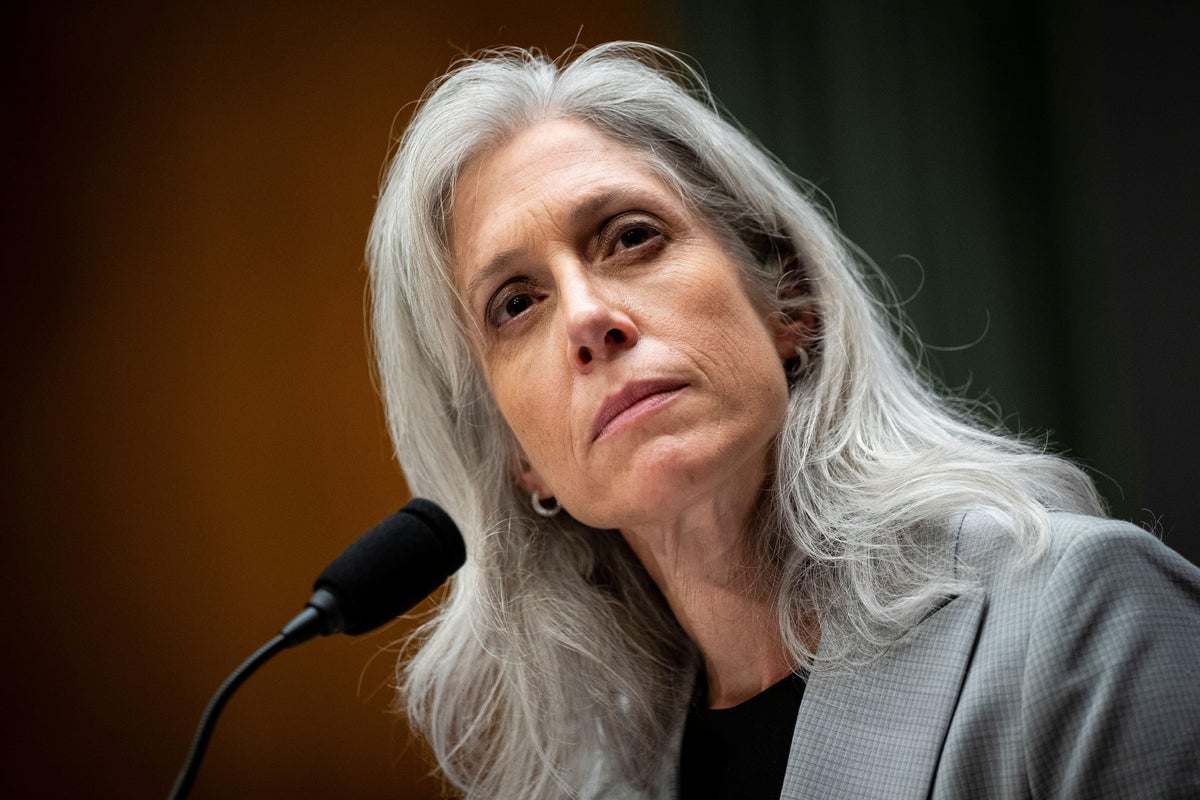
Susan Monarez testifies during a Senate Health, Education, Labor, and Pensions Committee hearing on her nomination to be Director of the CDC, at the U.S. Capitol, in Washington, DC, on Wednesday, June 25, 2025. Graeme Sloan/Sipa USA/Alamy Live News
.
.
Click the link below for the complete article:
.
__________________________________________
August 28, 2025
Mohenjo
Business, Food For Thought, Human Interest, Political, Science, Technical
amazon, business, Business News, current-events, Future, Hotels, human-rights, medicine, mental-health, research, Science, Science News, technology, Technology News, travel, vacation
From
BibleOverview
Click the link below the picture
.
If you’ve ever asked your pastor or Sunday school teacher, “Who wrote the Bible?” you probably got one of two responses:
- “God wrote the Bible.” The Holy Spirit moved prophets like Moses and apostles like Paul to write about God’s relationship with the world (1 Ti 3:16; 2 Pe 1:20–21).
- “About 40 people wrote the Bible.” The individual books were written by many authors over many years in many places to many different people groups.
In a way, both of these answers are true, but by now you’re probably looking for a little more detail about the authors of the Bible. And rightly so: when you’re studying a book or passage of the Bible, it’s pretty important to know who wrote it.
But there’s a lot of nuance that goes into answering this question. The Bible didn’t fall out of heaven, and it was a long time in the making.
So, let’s take a closer look at the people whom tradition says wrote the Bible. Before we jump into the list of names, let me throw out a few disclaimers:
- This is a list of authors either identified in the Bible’s text itself or generally assumed by church/Jewish tradition. I’ve included a few candidates for anonymous works (like Moses, Ezra, and Matthew).
- There are more authors of the Bible than the 35 I’ve listed here. For example, somebody wrote Judges, but we don’t know who. There really were around 40 authors of the Bible, but the Bible and tradition only call out around 35 by name.
- Ancient attribution and modern attribution aren’t even really in the same ball park. For example, the book of Isaiah may have been partially composed and arranged by Isaiah’s disciples long after Isaiah’s death. But New Testament writers still refer to the words in the book as though they were Isaiah’s.
- I do not know who wrote Hebrews.
First, a chart for the visual learners:
In case you’re just here for the list of names, here you go!
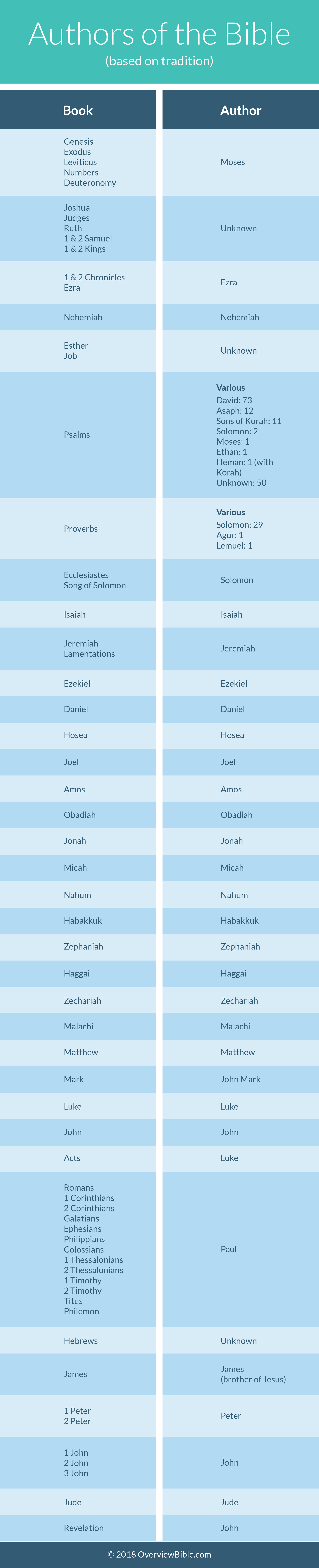
(I also made a poster with some fun facts about the authors of the Bible. It’s perfect for Sunday school classrooms and church offices.)
Heads up: this is a really long article. On to the nitty-gritty details …
The 35 traditional authors of the Bible
1. Moses (Genesis | Exodus | Leviticus | Numbers | Deuteronomy | Psalms)
.
.
.
Click the link below for the complete article:
.
__________________________________________
Older Entries
Newer Entries
 James' World 2