October 1, 2025
Mohenjo
Business, Food For Thought, Human Interest, Political, Science, Technical
amazon, business, Business News, current-events, Future, Hotels, human-rights, medicine, mental-health, research, Science, Science News, technology, Technology News, travel, vacation

Click the link below the picture
.
Jane Goodall, one of the world’s most revered conservationists, who earned scientific stature and global celebrity by chronicling the distinctive behavior of wild chimpanzees in East Africa — primates that made and used tools, ate meat, held rain dances, and engaged in organized warfare — died on Wednesday in Los Angeles. She was 91.
Her death, while on a speaking tour, was confirmed by the Jane Goodall Institute, whose U.S. headquarters are in Washington, D.C.
The British-born Dr. Goodall was 29 in the summer of 1963 when the National Geographic Society, which was financially supporting her field studies in the Gombe Stream Chimpanzee Reserve in what is now Tanzania, published her 7,500-word, 37-page account of the lives of Flo, David Greybeard, Fifi, and other members of the troop of primates she had observed.
The article, with photographs by Hugo van Lawick, a Dutch wildlife photographer whom she later married, also described her struggles to overcome disease, predators, and frustration as she tried to get close to the chimps, working from a primitive research station along the eastern shore of Lake Tanganyika.
On the scientific merits alone, Dr. Goodall’s discoveries about how wild chimpanzees raised their young, established leadership, socialized and communicated broke new ground and attracted immense attention and respect among researchers. Stephen Jay Gould, the evolutionary biologist and science historian, said her work with chimpanzees “represents one of the Western world’s great scientific achievements.”
And in becoming one of the most famous scientists of the 20th century, Dr. Goodall opened the door for more women in her largely male field as well as across all of science. Women — including Dian Fossey, Biruté Galdikas, Cheryl Knott and Penny Patterson — came to dominate the field of primate behavior research.
On learning of Dr. Goodall’s documented evidence that humans were not the only creatures capable of making and using tools, Louis Leakey, the paleoanthropologist and Dr. Goodall’s mentor, famously remarked, “Now we must redefine ‘tool,’ redefine ‘man,’ or accept chimpanzees as humans.”Dr. Goodall’s willingness to challenge scientific convention and shape the details of her arduous research into a riveting adventure narrative about two primary subjects — the chimps and herself — turned her into a household name in the United States and overseas.
Long before focus groups, message discipline, and communications plans became crucial tools in advancing high-profile careers and alerting the world to significant discoveries in and outside of science, Dr. Goodall understood the benefits of being the principal narrator and star of her own story of discovery.
In articles and books, her lucid prose carried vivid descriptions, some lighthearted, of the numerous perils she encountered in the African rainforest — malaria, leopards, crocodiles, spitting cobras, and deadly giant centipedes, to name a few. Her writing gained its widest attention in three more long articles in National Geographic in the 1960s and ’70s and in three well-received books, “My Friends, the Wild Chimpanzees” (1967), “In the Shadow of Man” (1971) and “Through a Window” (1990).
Dr. Goodall’s gentle and knowledgeable demeanor — set against the beautiful yet dangerous Gombe preserve and its playful and unpredictable primates — proved irresistible to television. In December 1965, CBS News broadcast a documentary of her work in prime time, the first in a long string of nationally and internationally televised special reports about the chimpanzees of Gombe and the courageous woman steadfastly chronicling what she called their “rich emotional life.”Most of Dr. Goodall’s observations focused on several generations of a troop of 30 to 40 chimpanzees, the species genetically closest to humans. She named and grew to know each of them personally. She was particularly interested in their courtship, mating rituals, births and parenting.
Dr. Goodall was the first scientist to explain to the world that chimpanzee mothers are capable of giving birth only once every four and a half to six years, and that only one or two babies were produced each year by the Gombe Stream troop. She found that first-time mothers generally hid their babies from the adult males, prompting frantic displays by the males — leaping and hooting that could last five minutes. An experienced mother, however, she discovered, freely allowed males and other females to view her infant, satisfying their curiosity, in a far calmer introduction.
In her many articles, books, and documentaries, Dr. Goodall explored similar signal moments in her own life. In March 1964, after a nearly yearlong courtship, she married Mr. van Lawick. Three years later, she gave birth to Hugo Eric Louis van Lawick, her only child, whom she nicknamed Grub.
.
 Jane Goodall, seen here in 2017, attracted immense attention and respect among researchers with her account of the lives of Flo, David Greybeard, Fifi, and other members of the troop of primates she observed in East Africa.Credit…Gabriela Herman for The New York Times
.
.
Click the link below for the complete article:
.
__________________________________________
October 1, 2025
Mohenjo
Business, Food For Thought, Human Interest, Political, Science, Technical
amazon, business, Business News, current-events, Future, Hotels, human-rights, medicine, mental-health, research, Science, Science News, technology, Technology News, travel, vacation

Click the link below the picture
.
Here’s what you’ll learn when you read this story:
- Archaeologists uncovered a culturally rich ancient tomb in Spain.
- The 5,000-year-old stone tomb in Malaga is an impressive 42 feet in length.
- Full of cultural artifacts, experts believe the tomb will provide new information on ancient customs.
Researchers recently unearthed a 5,000-year-old stone-built monument tomb in Malaga, Spain, that’s comes in at an impressive 42 feet in length. Even better, it’s incredibly well preserved—and stuffed full of artifacts.
“We could be talking about one of the most monumental and complete dolmens in all of Andalusia [the southernmost autonomous region of Spain],” Serafin Becerra, professor at the University of Cádiz, said in a translated statement from the school. A dolmen refers to the stone megalith-style structure discovered at the site.
Project co-director Eduardo Vijande agreed. “The true potential of this structure,” he said, “lies in its extraordinary state of conservation, which will allow us to gain a detailed understanding of the lifestyles and beliefs of these communities.”
The stone tomb isn’t just long—it’s complex. With orthostat slabs (defined as upright stones) over six feet tall, the site features several internal compartments, each with the potential to expand our understanding of funerary practices across the southern Iberian Peninsula during the third millennium B.C.E.
Once inside, the researchers located several “prestigious” container rooms featuring the bones of deceased individuals and a range of grave goods—from exotic raw materials of ivory and amber to seashells and what the team is dubbing “sophisticated flint pieces.” The flint collection includes arrowheads, large-format blades, and an “exceptional halberd” (a two-handed axe-like weapon).
Across multiple excavation seasons, the researchers located multiple container rooms (known as ossuaries), showing that the site was likely a collective burial ground.
“The entire dolmen was also covered by horizontal large stone slabs, and on top of this covering, there was a tumulus [a human-made mound] of sand and small stones,” Eduarda Vijande Villa, an associated professor of prehistory at the University of Cádiz and co-director of the excavations, told Live Science.
Along with providing an understanding of the types of tools and cultural goods used 5,000 years ago, Juan Jesús Cantillo—a professor at the University of Cádiz—said that “the presence of seashells in an inland area reflects the importance of the sea as an element of prestige and the existence of long-distance exchange networks.”
The use of dolmens wasn’t relegated to just the southern Iberian Peninsula, and has cropped up across history in various time periods and regions of the world. In some cases, the sites were more than just tombs. Some held significant cultural or ritual meaning, others served as places to shelter, or and still others served as key territorial markers delineating land ownership.
Famed dolmens span from Europe to Asia, but new discoveries continue to expand our understanding of the practice of their creation. Some of the most well-known dolmens in Europe include Spain’s 7,000-year-old Dolmen of Guadalperal—dubbed the “Spanish Stonehenge” and typically submerged in water, though it will appear in times of drought—and the 5,000-year-old Arthur’s Stone in England, which features nine upright stones weighing an estimated 27 tons.
.
 Photos by R A Kearton//Getty Images
.
.
Click the link below for the complete article:
.
__________________________________________
September 30, 2025
Mohenjo
Business, Food For Thought, Human Interest, Political, Science, Technical
amazon, business, Business News, current-events, Future, Hotels, human-rights, medicine, mental-health, research, Science, Science News, technology, Technology News, travel, vacation

Click the link below the picture
.
This episode was made possible by the support of Yakult and produced independently by Scientific American’s board of editors.
Rachel Feltman: For Scientific American’s Science Quickly, I’m Rachel Feltman.
People often talk about having “gut feelings,” but new research suggests there may be more to the idiom than we thought. Scientists are finding that specialized cells in our intestines can send signals directly to the brain, potentially influencing appetite and even mood.
Recent studies hint that our microbiomes could play a role in this communication system, though researchers are still trying to understand exactly how these interactions work and what they mean for our health.
Here to walk us through the emerging science of the belly-to-brain connection is Maya Kaelberer, an assistant professor at the University of Arizona in the Department of Physiology.
Thanks so much for coming on to chat with us today.
Maya Kaelberer: It’s my pleasure. I’m happy to be here.
Feltman: So you recently co-authored a study that looks at the gut-brain connection a little bit. Could you tell us a little bit about why scientists are interested in that and what we know about it so far?
Kaelberer: Yeah, I mean, I think more than just scientists are interested in it; we have our gut feelings all the time. And so my work is really focused on understanding the biology behind those gut feelings and how is it that our gut can communicate to us. ’Cause we know, right, things like hangry exist. We know that how we feel or what food we eat or even what microbes are there is gonna affect overall how we feel in the world.
Feltman: Mm.
Kaelberer: And so understanding the molecular and cellular and neuronal connections between the gut and the brain is gonna help us better understand, like, this relationship that we have, that we have these gut feelings, right?
Feltman: Yeah.
Kaelberer: We know they’re there [laughs].
Feltman: Well, and beyond, you know, hanger, which is obviously a great example, what are some conditions that have been connected to the gut that might surprise people?
Kaelberer: So when I was in my postdoc we discovered that there was this direct connection between these cells in the surface of the gut, we call them neuropod cells, and neurons that communicate directly—they reach directly into the brain. And so we call this as—our “gut sense,” and the number-one question I would always get was: Who cares? Like, what [laughs], you know, what is our gut possibly telling us that our mouth and our nose did not already tell us about the food that we ate?
And so we delved into this a little bit more in some previous publications with regards to sugar sensing, and I use this example ’cause it’s really salient in my own life, which is that I like artificial sweetener in my coffee.
Feltman: Mm.
Kaelberer: And I don’t like regular sugar because regular sugar just feels heavy to me, and I want that, like, artificial sweetener. It kind of keeps me going. I can be caffeinated. I can be, like, on the go. I’m not gonna, like, sit down and take a nap afterwards. And so we know that these two stimuli feel different in our gut. And what we found is that these neuropod cells are actually distinguishing between the two stimuli, between real sugar and artificial sweetener. And they release different signals, and then the signal for sugar actually drives the animal to consume the sugar over the artificial sweetener.
So now we take it back to my coffee preference, and suddenly, I’m like, “Well, this makes sense. I like the artificial sweetener because I don’t want that heaviness.” And that heaviness is telling me that that food was gratifying or that food was satisfying; there was some kind of value associated with that that’s gonna help me survive in nature. And so then this is now this communication system of, like, “Oh, our gut sense is telling us something about the food we eat past whether or not it tastes good. It’s telling us a little bit about the value of what we’re consuming.”
.
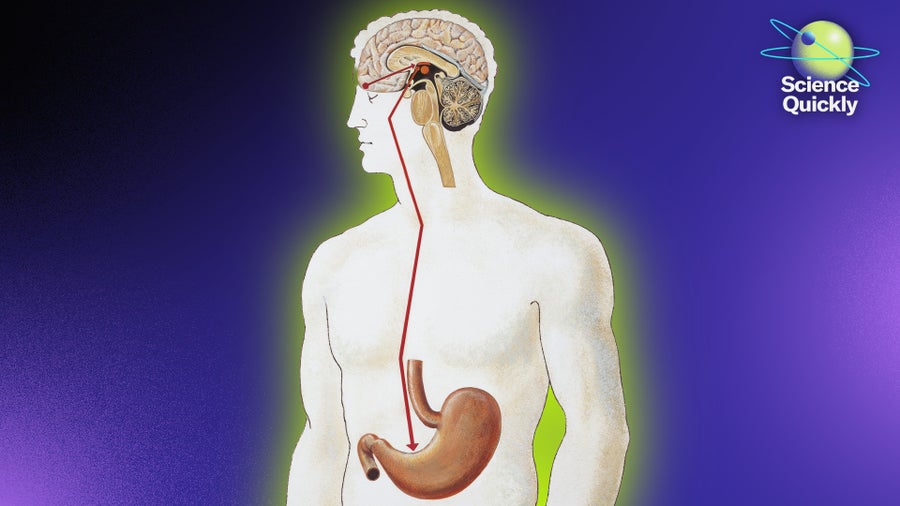
An illustration of a man revealing his brain and stomach with an arrow drawn between them on a purple background De Agostini/Getty Images
.
.
Click the link below for the complete text and podcast:
.
__________________________________________
September 30, 2025
Mohenjo
Business, Food For Thought, Human Interest, Political, Science, Technical
amazon, business, Business News, current-events, Future, Hotels, human-rights, medicine, mental-health, research, Science, Science News, technology, Technology News, travel, vacation

Click the link below the picture
.
Dear GEP,
I am trying for my first child, which is both exciting and making me anxious. I thought babies didn’t need much, but the more I talk to other people, the more I realize that having a child will be as expensive as it is wonderful. What do I actually need to support a kid? And is anyone ever financially ready to have a baby?
There is a saying widely repeated in my family that all you really need to have a baby is “a towel, and a drawer.” My father, who has had five children and eight grandchildren, is the origin of this statement – and I don’t doubt that when he had his first baby in the early seventies, at the age of 27, they didn’t have too much more than those advised essentials.
As I folded hand-me-downs last month with my younger brother, whose first baby is now just a few weeks old, we chuckled about our dad’s perhaps apocryphal advice. What did he know, anyway? What’s so wild about it, though, is that, a decade into parenting, the “towel-and-a-drawer” maxim feels both completely absurd and refreshingly wise.
A lot has changed since the seventies. When I was pregnant with my first child, my dad’s perspective on parenting preparation felt as silly as giving a colicky baby a finger of whiskey. First, the cost of living for families in this country has grown astronomically. My parents, for example, could afford a home in a diverse city on two therapist’s salaries. Now, the house I grew up in has been divided into luxury condos that I could only dream of affording. Childcare costs are real, and overwhelming: My husband and I calculated when our last child started public kindergarten that we had spent almost $200,000 on the first five years of care for our two children. Children need medical care, and medical care in this country is becoming more expensive and elusive by the day.
And, of course, there is the stuff. Fifty years ago, my dad, who I promise you did have a legit crib for my oldest sibling, had few options and little pressure to make baby-related purchases. Now, new parents like my brother and his partner are bombarded with ads and suggestions from other parents to buy high-tech strollers, specially designed tummy-time mats, and smart bottle-warmers. Even with older children, I find it difficult to turn down this constant thrum, the promise that if I just shell out a few more bucks, some aspect of life that I perhaps hadn’t even considered as a danger would be made easier for myself or my kids.
But what do our children, what do we really need??? Don’t get me wrong – the social and political child, so you’re not having to do that work during the first year of parenting.
“It allows you to prioritize, and then you’ll have a better sense of what you’re willing to let go of if you have to make trade offs as a new parent.” She also recommends worrying less about college savings and more about retirement, as you can borrow and scheme for the former but not the latter.
I would also add in that flexing your communal and collaborative muscles – getting to know your neighbors, sharing responsibilities with friends, getting comfortable asking for and offering help– will be enormously beneficial to you when you realize that even a teenaged babysitter can charge $25 an hour, and if you only need one car if you can arrange a daycare carpool. This, of course, takes work, but it is worth it. And it’s not only for your mental-health – childcare swaps, shared meals, and pooled resources can end up saving you money in the long run.
Who is ready to have a baby? No one. And also, mostly everyone. I’m sure you can find a towel and a drawer somewhere.
.
 Sure, there are the essentials, but a lot of it just isn’t necessary.
.
.
Click the link below for the complete article:
.
__________________________________________
September 30, 2025
Mohenjo
Business, Food For Thought, Human Interest, Political, Science, Technical
amazon, business, Business News, current-events, Future, Hotels, human-rights, medicine, mental-health, research, Science, Science News, technology, Technology News, travel, vacation
Click the link below the picture
.
The Trump administration is deporting a planeload of about 100 Iranians back to Iran from the United States after a deal between the two governments, according to two senior Iranian officials involved in the negotiations and a U.S. official with knowledge of the plans.
Iranian officials said that the plane, a U.S.-chartered flight, took off from Louisiana on Monday night and was scheduled to arrive in Iran by way of Qatar on Tuesday at the earliest. The U.S. official confirmed that plans for the flight were in the final stages. All the officials spoke to The New York Times on condition of anonymity because they were not authorized to discuss details publicly.
The identities of the Iranians on the plane and their reasons for trying to immigrate to the United States were not immediately clear.
The deportation is one of the starkest efforts yet by the Trump administration to deport migrants, no matter the human rights conditions in countries on the receiving end. The expanding deportation campaign has sparked lawsuits by immigrant advocates, who have criticized the flights.
For decades, the United States had given shelter to Iranians fleeing their homeland, which has one of the harshest human rights records in the world. Iran persecutes women’s rights activists, political dissidents, journalists, lawyers, religious minorities, and members of the L.G.B.T.Q. community, among others.
In the past several years, there has been an increase in Iranian migrants arriving at the southern U.S. border and crossing illegally, including many who have claimed fear of persecution back home for their political and religious beliefs.
Hossein Noushabadi, the director general of parliamentary affairs in Iran’s foreign ministry, said on Tuesday that U.S. immigration authorities planned to deport 400 Iranians living in the United States back to Iran over the coming months.
“In the first phase, they decided to deport 120 Iranians who entered the U.S. illegally, mostly through Mexico,” he told Tasnim News Agency, which is affiliated with Iran’s powerful Revolutionary Guards force.
Some who will be deported held U.S. residency, he said, adding that all of those being deported left Iran legally.
The United States had long hesitated or had trouble deporting migrants to certain countries, like Iran, because of a lack of regularized diplomatic relations and an inability to get travel documents in a timely manner.
That had forced American officials to either hold migrants in detention for long periods or release them into the United States. The United States deported more than two dozen Iranians back to the country in 2024, the highest number in years.
The two Iranian officials who spoke to The Times said the deportees included men and women, some of them couples. Some had volunteered to leave after being in detention centers for months, and some had not, they said.
The officials said that in nearly every case, asylum requests had been denied or the people had not yet appeared before a judge for an asylum hearing.
The deportation is a rare moment of cooperation between the United States and the Iranian government, and was the culmination of months of discussions between the two countries, the Iranian officials said.
.
 Addressing the United Nations General Assembly last week, President Trump insisted that the United States would double down on efforts to deport masses of migrants. Credit…Doug Mills/The New York Times
.
.
Click the link below for the complete article:
.
__________________________________________
September 29, 2025
Mohenjo
Business, Food For Thought, Human Interest, Political, Science, Technical
amazon, business, Business News, current-events, Future, Hotels, human-rights, medicine, mental-health, research, Science, Science News, technology, Technology News, travel, vacation
Click the link below the picture
.
This week’s meeting of the Centers for Disease Control and Prevention’s Advisory Committee on Immunization Practices represented a notable departure from its prior practice of presenting and debating high-quality data on vaccine safety and risk-benefit analyses. Committee members, many of whom were hastily installed by Secretary of Health and Human Services Robert F. Kennedy, Jr., cited—without solid evidence—hypothetical risks of immunization with mRNA COVID vaccines, disregarding extensive studies showing the Food and Drug Administration–approved vaccines are safe and effective. The consequences of this meeting extend far beyond the specific votes the committee made today and could undermine confidence in vaccines and the U.S. medical establishment more broadly, some experts have noted. The story below has been updated with details of the discussion and votes regarding each vaccine considered.
The already tumultuous landscape of U.S. vaccine policy faces more turmoil in what’s anticipated to be a politically charged two-day meeting of a recently overhauled advisory panel to the Centers for Disease Control and Prevention.
The Advisory Committee on Immunization Practices (ACIP) is an independent panel of experts that has traditionally met three times a year to make science-based recommendations about who should receive certain vaccines. But this year the Trump administration’s efforts to undermine science and public health has upended the committee. Just yesterday former CDC director Susan Monarez, who led the agency for a month, testified to the Senate about her experience of being pushed out of office for not condoning attacks on vaccines unsupported by evidence. Most dramatically, Robert F. Kennedy, Jr., secretary of health and human services and a veteran antivaccine activist, fired the panel’s membership, with the newest appointees announced only days ago.
On September 18 and 19, the committee is holding its second meeting of the year, and experts now worry that the new ACIP members will continue eroding public access to lifesaving vaccinations. Already, one in six parents in the U.S. reports delaying or skipping a vaccine for their child, according to a recent poll.
“I fear for the health of children in this country,” says Paul Offit, a pediatric infectious diseases specialist at Children’s Hospital of Philadelphia. “RFK, Jr.’s goal is to make vaccines less available, less affordable and more feared. That’s his goal, and he’s doing a great job of it.”
ACIP’s decisions are important because they dictate the price of lifesaving preventive care. The Affordable Care Act requires private insurance companies to cover ACIP-recommended vaccines at no cost; government-run insurance programs, including the Vaccines for Children (VFC) program, which covers half of childhood vaccines administered nationwide, also base costs on the panel’s decisions.
At this week’s meeting, the newly reconstituted panel will discuss three vaccines: the combined measles, mumps, rubella and varicella vaccine, the hepatitis B vaccine and this year’s updated COVID shots.
The meeting’s agenda is a departure from ACIP’s norm, says Edwin Asturias, a pediatric infectious disease specialist and epidemiologist at the University of Colorado, who joined ACIP in July 2024 and was dismissed during Kennedy’s overhaul of the committee earlier this year. “This is one of the shortest agendas that we have seen for a long time from ACIP,” Asturias says. “Typically, ACIP has a lot of things to look through because there’s a lot of vaccines that are advancing through different aspects of development, as well as new data being generated.” Meetings in 2024 each discussed at least eight different vaccines.
Asturias and other public health experts are particularly worried the meeting will institutionalize attacks on the childhood vaccine schedule—a carefully choreographed, evidence-based timeline of vaccines given to kids in their earliest years.
“The childhood immunization schedule has proven to be very effective at reducing a lot of diseases that cause a lot of pain, suffering, and death in children,” Asturias says.
The meeting will be livestreamed on both September 18 and September 19. Here’s what experts are keeping an eye on.
The Measles, Mumps, Rubella, and Varicella Vaccine
What Happened
Members voted 8-3 not to recommend the single combination MMRV vaccine before age four, removing the option for children younger than four years old to receive the shot for the first dose. Children younger than age four are recommended separate MMR and varicella vaccines.
.
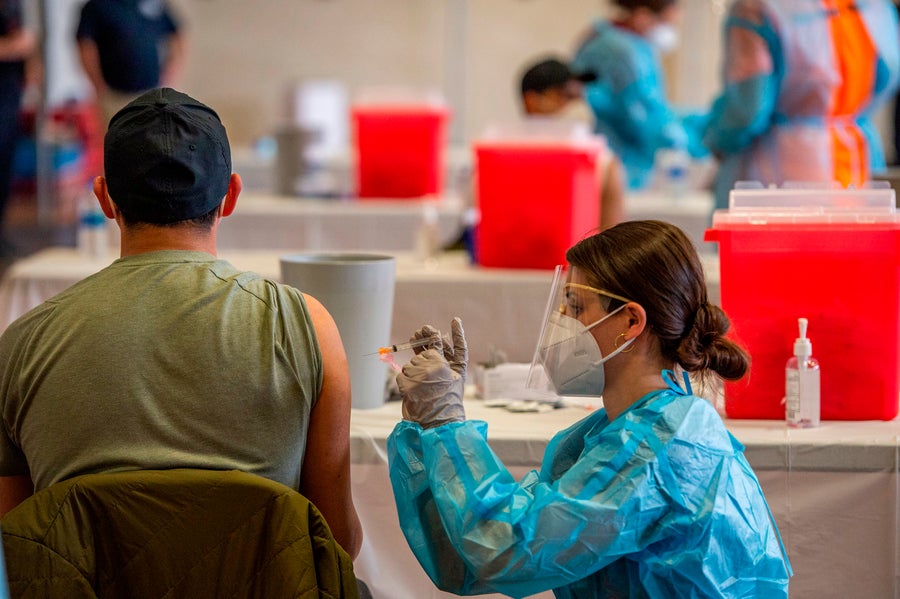 Joseph Prezioso/AFP via Getty Images
.
.
Click the link below for the complete article:
.
__________________________________________
September 29, 2025
Mohenjo
Business, Food For Thought, Human Interest, Political, Science, Technical
amazon, business, Business News, current-events, Future, Hotels, human-rights, medicine, mental-health, research, Science, Science News, technology, Technology News, travel, vacation

Click the link below the picture
.
The indictment of the former F.B.I. director James B. Comey, demanded by President Trump, sent a shiver of fear through others on the so-called enemies list of the current F.B.I. director Kash Patel. But one other person who might have reason for concern is Kash Patel himself.
There will, presumably, come a time when the Republican Party is no longer in control. A precedent has now been set for prosecuting a former F.B.I. director disfavored by the current administration for allegedly lying to Congress. Democrats already are accusing Mr. Patel of having lied to Congress in his confirmation hearings when he promised not to engage in political retaliation.
Mr. Trump’s campaign to imprison, fire or otherwise punish his political foes and use government power to crack down on free speech he does not like has broken norms that stood for generations. But it has also established new standards for what a president can do that even some conservatives worry may come back to bite them. Power claimed by one party is then eventually available to the other. Limits ignored by one administration may no longer seem binding on the next.
If the precedent set by Mr. Trump takes hold, America may be entering a period when each new administration takes aim at the last one in a cycle of retaliation, a what-goes-around-comes-around pattern more familiar in authoritarian countries than in developed Western democracies. Even presidents more restrained than Mr. Trump may succumb to the temptation to follow at least some of his example.
“Conservatives should see this for what it is: shortsighted and dangerous,” said Sarah Matthews, a deputy White House press secretary in Mr. Trump’s first term who resigned in protest after the Jan. 6, 2021, attack on the Capitol.
“If a Democrat wins in 2028, what’s to stop them from turning the D.O.J. on Trump officials or unleashing the F.C.C. on Fox News?” she said. “Trump is setting a precedent that will come back to haunt the right, and they’ll have no leg to stand on if Democrats use the same playbook against them.”
Mr. Trump’s threat to investigate and prosecute left-wing groups after the assassination of the right-wing influencer Charlie Kirk crystallized the concern among some of the president’s own MAGA allies. In particular, some bristled at the pressure applied by Mr. Trump’s Federal Communications Commission to take the late-night host Jimmy Kimmel off the air because of comments related to Mr. Kirk’s murder.
Senator Ted Cruz, Republican of Texas, decried the threat against ABC and its affiliates by Brendan Carr, the F.C.C. chair, comparing it to mafia tactics, and added that it would empower Democrats to someday do the same. “They will silence us,” Mr. Cruz said. “They will use this power, and they will use it ruthlessly. And that is dangerous.”
Tucker Carlson, a former Fox News host and a MAGA favorite, warned that the Trump administration’s threats to go after “hate speech” could impinge on everyone’s free speech rights. “If they can tell you what to say,” he said, “they’re telling you what to think.”
The concern about precedent goes beyond Mr. Trump’s self-described campaign for “retribution.” . His assertions of vastly expanded presidential power will naturally accrue to his successors. If he can override Congress on what money to spend or not spend, fire leaders of independent agencies, unilaterally gut government departments, and send troops into the streets of American cities, then so can the next president — a point made recently by the conservative Wall Street Journal editorial page about his effort to rein in the independence of the Federal Reserve.
“I worry about future presidents of both parties abusing all of the unprecedented powers that Trump is claiming,” said Brendan Nyhan, a government professor at Dartmouth College.
“Do Republicans want to give President A.O.C. unilateral powers to determine which Defense Department programs she wants to fund?” he added, referring to Representative Alexandria Ocasio-Cortez, a liberal Democrat from New York and bête noire to conservatives.
“We shouldn’t trust any administration with the dangerous and extraordinary powers Trump is claiming,” he continued. “Unfortunately, the recent history of the office suggests Democrats will pocket past expansions of executive power and just promise to wield them more carefully.”
.
 President Trump demanded the indictment of James B. Comey, the former F.B.I. director.Credit…Haiyun Jiang/The New York Times
.
.
Click the link below for the complete article:
.
__________________________________________
September 29, 2025
Mohenjo
Business, Food For Thought, Human Interest, Political, Science, Technical
amazon, business, Business News, current-events, Future, Hotels, human-rights, medicine, mental-health, research, Science, Science News, technology, Technology News, travel, vacation

Click the link below the picture
.
Dick Van Dyke’s fitness routine has Rick Springfield in awe.
In a Sept. 26 Instagram post, the “Jessie’s Girl” singer posed with the “Mary Poppins” star, who turns 100 Dec. 13, in the gym as the two showed off their muscles.
“Filming an episode of Men’s Health, and I went to the gym and who should be there but 99-year-old Dick Van Dyke working out on every machine,” Springfield captioned the photo. “I thought I was doing well at 76, but Dick got up from the chest press machine and did a little dance step before I left! ❤️ Amazing!”
“I’ve always exercised three days a week. We go to the gym, still, three days a week,” Van Dyke told Ted Danson and Mary Steenburgen on the Jan. 22 episode of the “Where Everybody Knows Your Name” podcast.
“I get down and do a lot of stretching and yoga-type things, sit-ups. And they have machines … something for almost every exercise.”
Dick Van Dyke ‘couldn’t be happier’ as he nears 100 years old
On Sept. 21, three months after dropping out of a Vandy Camp event due to illness, Van Dyke celebrated his wife Arlene Van Dyke’s birthday with a “whimsical” Vandy Camp birthday bash in Malibu.
He and the crowd sang “Happy Birthday” to Arlene more than once, with the couple sharing a sweet smooch at the end of one of the serenades.
“We’ve been married 13 years. In two-and-a-half months, I’m going to be 100 years old. I hope!” he told the crowd, per a video shared by photographer Trevor Perez. “And I’ve never seen a more beautiful woman in my life than this one.”
After explaining their fated first meeting at the 2006 Screen Actors Guild Awards, Van Dyke said, “Now we’ve been married 13 years, and I couldn’t be happier.”
Another video from the event shows Van Dyke holding a cane in his left hand as he wiggles his hips and twists his leg.
Van Dyke often takes opportunities to display his spryness by dancing in public, including in Coldplay’s “All My Love” music video in 2024. In the seven-minute director’s cut, he imparted his musings on a long career in Hollywood as well as the meaning of love.
“I think I’m one of those lucky people who got to do for a living what I would have done anyway,” he said. “I got to do what I do. Play and act silly.”
.
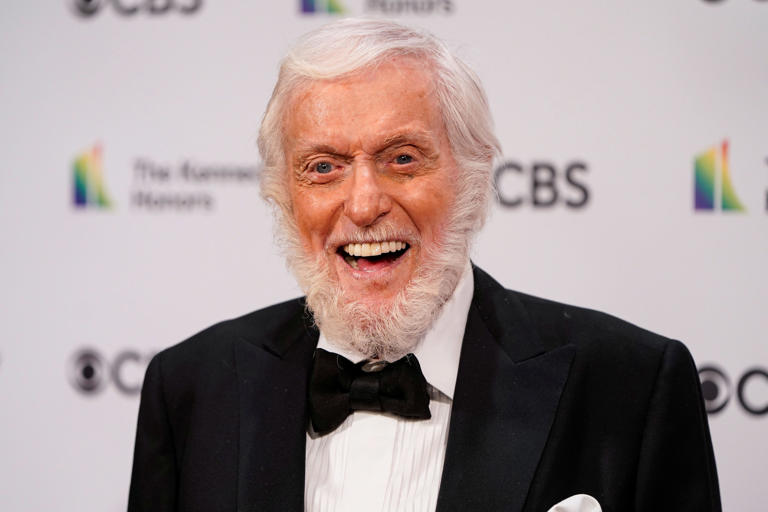
Honoree Dick Van Dyke arrives for the 43rd Kennedy Center Honors at the Kennedy Center in Washington, D.C., on May 21, 2021. © JOSHUA ROBERTS, REUTERS
.
.
Click the link below for the complete article:
.
__________________________________________
September 28, 2025
Mohenjo
Business, Food For Thought, Human Interest, Political, Science, Technical
amazon, business, Business News, current-events, Future, Hotels, human-rights, medicine, mental-health, research, Science, Science News, technology, Technology News, travel, vacation
Click the link below the picture
.
Rachel Feltman: Happy Monday, listeners! For Scientific American’s Science Quickly, I’m Rachel Feltman. Let’s kick off the week with a quick roundup of some of the latest science news.
First, let’s check in on vaccines. On Thursday and Friday of last week, the Centers for Disease Control and Prevention’s Advisory Committee on Immunization Practices, or ACIP, met to review and vote on recommendations for official U.S. vaccine guidelines. Back in June, Robert F. Kennedy, Jr., secretary of the U.S. Department of Health and Human Services, dismissed all sitting members of the committee. Several of the 12 new panel members, all handpicked by Kennedy, have publicly expressed doubts about the safety of vaccines or the severity of the COVID pandemic.
An agenda released ahead of last week’s meeting stated that the ACIP would propose recommendations for the hepatitis B, COVID and measles, mumps, rubella and varicella vaccines.
Here’s Lauren Young, associate editor for health and medicine at Scientific American, with a quick update as of Friday.
Lauren Young: So far we’ve seen a few votes come through. The first one that they focused on was the MMRV vaccine. This is the measles, mumps, rubella, and varicella vaccine. Varicella is commonly known as chickenpox, and they decided not to recommend the single combined shot for kids younger than age four.
Another vaccine that was discussed was the hepatitis B vaccine. There wasn’t really any changes to this, but members did vote in support that all pregnant people should be tested for hepatitis B infection, which is the current standard practice of care.
ACIP also considered an additional recommendation to remove the birth dose of hepatitis B vaccine, with the first dose not given earlier than one month of age, [for infants born of people who test negative for the virus]. But they decided to table that vote because there was some confusion around some of the phrasing around that recommendation. That’s been a really big theme around these meetings this past week. There’s just been a lot of confusion.
So that’s just come to show how much these meetings have changed since RFK, Jr., has overhauled the ACIP panel. We’ve seen the shift away from science and away from scientific evidence of reviewing, very rigorously, vaccine data. And now it’s turned more into a lot of confusion and a lot of discourse around questioning the evidence in ways that just don’t quite always make sense. And our staff is watching this super closely. So check out our website for the latest updates.
Feltman: Speaking of vaccines, last Tuesday AHIP—the national trade association representing the health insurance industry—put out a statement on vaccine coverage. The organization said its member insurance plans would continue to cover all immunizations recommended by ACIP as of September 1, 2025, through the end of 2026. This includes updated flu shots and COVID vaccines.
Now for some public health news on a very different topic: head injuries in sports. You’ve probably heard of chronic traumatic encephalopathy, or CTE. This progressive neurodegenerative disease, which can only be diagnosed with certainty via autopsy, is believed to be caused by repeat brain trauma, including the kind of repetitive head injuries one might endure while playing contact sports. It can include symptoms such as headaches, confusion, memory loss, poor judgment, depression, dementia, sensory-processing disorders, and other potentially debilitating issues. CTE symptoms generally appear some years after repetitive brain trauma occurs. In a study published Wednesday in Nature, researchers reported that brain degeneration may be detectable in young athletes before CTE starts to set in.
Researchers studied frozen brain tissue from 28 adult men. Some of the study subjects hadn’t played contact sports at all, and others had played American football or soccer but hadn’t been diagnosed with CTE. The rest of the study subjects played contact sports and had been diagnosed with early stages of CTE.
The researchers found signs of inflammation and vascular injury, including a marked drop in the number of neurons, in all the contact athletes they studied—even those who did not have the telltale signs of full-blown CTE. According to the study authors, this suggests that all athletes who frequently hit their heads could be at risk of experiencing some amount of brain damage.
A separate study also published last Wednesday, this one in the journal Neurology, found an association between headers, or a player using their head to control or pass a soccer ball, and changes in the brain. The study asked 352 amateur adult soccer players to estimate their number of head impacts over the course of a year. The use of headers varied pretty widely. When divided into four groups, the top head-users cited an average of 3,152 headers, while those at the other end of the spectrum estimated just 105 a year.
.
 Above: Maciej Rogowski/Eurasia Sport Images/Getty Images; Below: Chris Leduc/Icon Sportswire via Getty Images)
.
.
Click the link below for the complete article:
.
__________________________________________
September 28, 2025
Mohenjo
Business, Food For Thought, Human Interest, Political, Technical
amazon, business, Business News, current-events, Future, Hotels, human-rights, medicine, mental-health, research, Science, Science News, technology, Technology News, travel, vacation

Click the link below the picture
.
Congratulations are in order for Rihanna and A$AP Rocky.
The celebrity couple has welcomed their third child, as confirmed by an Instagram post earlier today. Named Rocki Irish Mayers, their daughter was born on September 13, 2025—and continues the tradition of every member of the family receiving a moniker beginning with “R.” (The couple are also parents to two boys, three-year-old RZA and two-year-old Riot.)
In May, the Fenty founder sensationally confirmed her pregnancy at the 2025 Met Gala, held in honor of the “Superfine: Tailoring Black Style” exhibition. She showed off her prominent baby bump in a black cropped woolen jacket, a wool bustier bodysuit, and a black pinstripe wool tailored skirt with a bustle, all by Marc Jacobs.
Since then, she’s enjoyed a fashionable pregnancy that included wearing a sheer baby blue baby-doll set by Chanel to the Belgian premiere of Smurfs, as well as a chocolate-brown Saint Laurent fall 2025 gown to the Los Angeles one. For the latter, her two sons wore custom Dior by Jonathan Anderson. (Safe to say, her newest arrival is joining quite the fashionable family.)
Rihanna has long spoken about her love of pushing maternity fashion boundaries: “When I found out I was pregnant, I thought to myself: There’s no way I’m going to go shopping in no maternity aisle,” she told Vogue in May 2022 about her pregnancy style. “I’m sorry—it’s too much fun to get dressed up. I’m not going to let that part disappear because my body is changing.”
.
 Photo: Courtesy of Rihanna
.
.
Click the link below for the complete article:
.
__________________________________________
Older Entries
Newer Entries
 James' World 2