June 13, 2023
Mohenjo
Business, Food For Thought, Human Interest, Political, Science, Technical
amazon, business, Business News, current-events, Future, Hotels, human-rights, medicine, mental-health, research, Science, Science News, technology, Technology News, travel, vacation
Click the link below the picture
.
Being a good husband isn’t about grand gestures or elaborate displays of romance. If that’s your thing, hey don’t let us stop you. But it’s the small, daily habits that make the biggest impact on how loving, healthy relationships are cultivated. Because they’re “little things”, they can be easy to overlook or dismiss as insignificant, but they’re the real difference-makers on a daily basis. And as they become more habitual, they add smoothness to the journey for both partners.
A habit isn’t always something that requires concerted effort. Some are automatic and engrained. Others, though, require a bit of self-reflection to get started. Realizing what you are doing, what you’re not doing, what you could be doing, or what you should be doing in your role as a father and husband is the first step toward growth. And embracing simple habits that show courtesy, affection, respect, or open-mindedness is a great way to start growing.
Whether you’re newly married or have been with your partner for years, simple habits can help you deepen your connection and create a more fulfilling relationship. These 12 dads/husbands shared elements of their daily, weekly, or monthly routine as partners and caregivers that have made all the difference. And whether through words or actions, embracing these habits has made them better husbands.
.

.
.
Click the link below for the article:
.
__________________________________________
June 12, 2023
Mohenjo
Business, Food For Thought, Human Interest, Political, Science, Technical
amazon, business, Business News, current-events, Future, Hotels, human-rights, medicine, mental-health, research, Science, Science News, technology, Technology News, travel, vacation

Click the link below the picture
.
Bryan Szabo and his team have spent hours poring over photos of well-worn jeans, including vintage fades with swathes of bleached fabric and high-contrast fades with knee-pit patterns of honeycomb, as well as whiskers around the crotch area. Online, the team praises the community’s top faders. “This crotch repair is crazy good!” they exclaim. Or: “Subtle and even shades… A near-perfect balancing of… fade patterns with spectacular blue tones.” This last one is the winner. For this is the judging of a competition; the Indigo Invitational, where people from across the world wear raw denim jeans for a year. But the competitors are not only the top jeans faders in the world. They are also champions of something else: The denim low-wash. Since denim becomes softer when it’s soapy and wet, one of the keys to achieving high-contrast patterns is to avoid washing them. The strategy is followed by everyone from the members of a no-wash club to the CEO of Levi’s.
For Szabo, the low-wash habit began when he bought his first pair of raw denim jeans in 2010. Traveling from his native Canada to Europe, he brought his jeans for the six-month trip. “It was a quirk about me that I had these stinky jeans,” he tells BBC Culture. “They smelled awful.” In Budapest, he met his future wife, and the jeans became a character in their relationship. “My jeans would be in, like, a pile on the floor at the end of the bed,” he remembers. “You walked into the room, you could smell [them]… I was very fortunate that my wife was as interested in me as she was.”
Among the competitors in the Indigo Invitational, which starts its fourth year next January, more than nine out of 10 participants delay the first wash of their trousers until they have been worn 150 or 200 times, Szabo estimates. “Some of these pairs, as it’s coming up on the end of the year, I wouldn’t want to handle up close,” he says. “They would probably smell wrong.” A few of his raw denim friends go even further, abiding by what he calls a “never-wash philosophy”. “[For one of them], in very tight spaces like a small elevator or something like that, if the dude is wearing certain pairs you can smell it a little bit,” he says. “Some of his best-faded examples are also displayed in jeans trade shows. [They have] an aroma… It’s not an unpleasant smell, per se, but it’s a smell.”
.
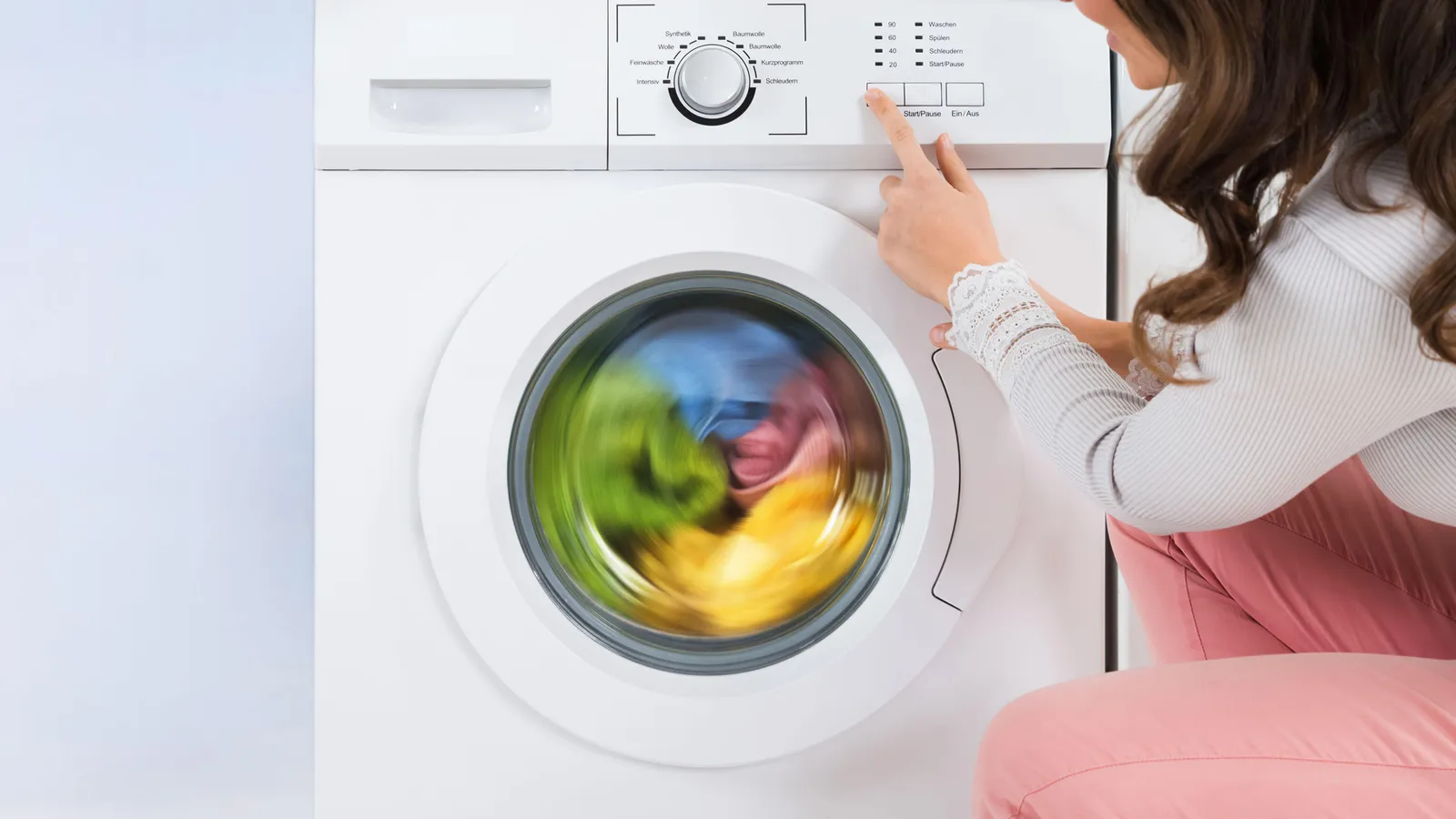 (Image credit: Alamy)
.
.
Click the link below for the article:
.
__________________________________________
June 12, 2023
Mohenjo
Business, Food For Thought, Human Interest, Political, Science, Technical
amazon, business, Business News, current-events, Future, Hotels, human-rights, medicine, mental-health, research, Science, Science News, technology, Technology News, travel, vacation

Click the link below the picture
.
The way we talk to ourselves can be decidedly harsher than the way we talk to others. In fact, many of us are stuck in a toxic feedback loop with ourselves that is more damaging than we might think. And part of the problem of a negative inner monologue is that we’ve become so accustomed to speaking to ourselves that way that we don’t even realize we’re doing it. Even though we might not be conscious of it, our minds and bodies are still affected by it.
But there is a way to break free of your inner critic once and for all—with one easy trick from a therapist.
Dr. Peter Attia, author of Outlive: The Science and Art of Longevity, explained as a guest on an episode of Huberman Lab that he used to have a severe case of toxic self-talk that stemmed from an addiction to perfectionism, as it related to performance. From childhood, he felt a rage within him anytime he didn’t complete a task to his very high standards. This would manifest in violent ways, like breaking windows and screaming at people (and himself), ultimately spilling outwards to everyone around him.
You don’t have to necessarily be punching walls to want to improve how you talk to yourself, though. We all have a relationship to ourselves that dictates how we feel, act, and are perceived in the world and by the people around us. And you can improve it.
How to silence your inner critic
While going to therapy, Attia’s therapist had an exercise for him to address the rage that had been a part of his 47 years of life. She promised him that if he followed through with the exercise, his inner critic problem would improve as long as he did the following:
Whenever Attia would catch himself having a negative self-talk, he would have to immediately stop whatever activity he had just messed up. Then, he would have to pretend it was actually a dear friend who had just flunked the task, and replace the self-talk by audibly speaking to that person as if they were there. He would record the “conversation” on his phone and send it to his therapist.
.
 Illustration: Bob Al-Greene
.
.
Click the link below for the article:
.
__________________________________________
June 11, 2023
Mohenjo
Business, Food For Thought, Human Interest, Political, Science, Technical
amazon, business, Business News, current-events, Future, Hotels, human-rights, medicine, mental-health, research, Science, Science News, technology, Technology News, travel, vacation

Click the link below the picture
.
One afternoon in 2020, early in the pandemic, I met Syl’violet and Matthew for a virtual session. Young, idealistic, deeply in love, they were also prone to dramatic fights. In this session, Syl’violet, a vivacious essayist and spoken-word poet, was trying to describe the ways she felt Matthew, a measured medical student, was trying to control her, in this case by trying to dissuade her from buying a slushy. He thought they should keep to a tight budget until after he became a doctor and achieved financial stability. Then she could have “all the slushies you want later.” Syl’violet found his reasoning maddening, especially since he seemed to imply she was reckless.
On the face of it, the fight seemed insignificant, but then an exchange took place that changed the tenor of the argument, connecting us to the underlying roots of the issue. “I have trouble envisioning that finish line,” Syl’violet exclaimed, tearing up, “because the plan that he’s talking about? My life has always been: The plan never works. You can do all the right things, you can obey all the right rules and get [expletive].” For a moment, Matthew continued to try to reason with her and convince her of his sound financial strategy. “I know that sounds very conceited, cocky,” he said, to which Syl’violet whipped back: “No! It sounds privileged!” She described her family’s relationship to money; they’d had nothing but trauma for generations. Syl’violet resented Matthew’s pride in his plan. “A privileged setting gave you access to all these things,” she said. “You’re taking ownership over it like, ‘I did it according to plan,’ as if, like, if other people did it according to plan, it would work out.”
.

The couples therapist Orna Guralnik at her office in New York City. Credit…Dina Litovsky for The New York Times
.
.
Click the link below for the article:
.
__________________________________________
June 11, 2023
Mohenjo
Business, Food For Thought, Human Interest, Political, Science, Technical
amazon, business, Business News, current-events, Future, Hotels, human-rights, medicine, mental-health, research, Science, Science News, technology, Technology News, travel, vacation
 Pride
Pride
.
__________________________________________
June 11, 2023
Mohenjo
Business, Food For Thought, Human Interest, Political, Science, Technical
amazon, business, Business News, current-events, Future, Hotels, human-rights, medicine, mental-health, research, Science, Science News, technology, Technology News, travel, vacation
Click the link below the picture
.
Do you have a massive TBR (“to be read”) pile? You’re not alone. There are so many great books out there, and so little time to read them. But I’ve managed to tame my TBR pile with a simple shift in mindset—and this trick also works for video games, craft supplies, and anything else that tends to pile up while it waits its turn.
The problem with all of these items is that they are quick to purchase, but take a long time to use. You can add a game to your Steam collection in minutes, but chances are most will take you 20 hours or more to play. (Howlongtobeat.com says Tears of the Kingdom takes 52 hours for the main story alone.)
How many more games will you impulse-buy before you’ve finished that one? How many skeins of yarn will you snap up (they were on sale! And so soft!) before you’ve finished the sweater you’re currently knitting? It’s the same problem as the TBR pile, really. And I promise, there is a solution.
Only one can be next
My “aha” moment was when I realized that each book I read makes me want to read a bunch more books. Books from that book’s bibliography, books that cover topics that my current book only briefly hinted at, books of entirely different genres that I can’t read until I finish this one, but I’m getting major FOMO just thinking about them. Let’s say I add an average of five books to the TBR pile for each book I finish.
.
 Photo: Boston Globe (Getty Images)
.
.
Click the link below for the article:
.
__________________________________________
June 11, 2023
Mohenjo
Business, Food For Thought, Human Interest, Political, Science, Technical
amazon, business, Business News, current-events, Future, Hotels, human-rights, medicine, mental-health, research, Science, Science News, technology, Technology News, travel, vacation

lick the link below the picture
.
I’ve been doing couples and family therapy for over twenty-five years. I like it more than individual counseling because you see the interplay and dynamic between people. My clients mainly fall into two buckets: couples with kids under five and couples whose youngest child has just left home.
The biggest change I’ve seen in relationships is the damn smartphone: texting, internet, instant communication. Smartphones have caused more upheaval than anything I’ve seen in my career. We’ve normalized them being intrusive and taking precedence when people are lying in bed, playing Wordle, or scrolling through TikTok rather than talking to each other. And we’ve gotten used to communication being instantaneous when a healthy relationship requires you to slow down and listen to each other. But our lives don’t really allow for that; especially if you have young children, it’s often go, go, go.
When the COVID-19 pandemic started, I saw an immediate plummet in the demand for counseling as many people went into survival mode. A lot of people can go into emergency mode and do well with one another. But as time went on, people realized the pandemic was going to last much longer. What I saw was a pressure cooker. Many existing issues were in stasis as people hunkered down, and meanwhile, more things were being stuffed into the pot. This put more pressure on families. Two years into the pandemic, something shifted. That’s when I was getting inundated with people who were in crisis and on the brink of divorce.
In the next few years, I think, we’ll see the aftershock of the pandemic on couples. I think it’ll be coming in the next year or two, maybe three, especially for couples with younger kids who lost time in school, or people who lost their jobs or had to start new careers. Will the stress levels just keep going up with these couples until they break?
.
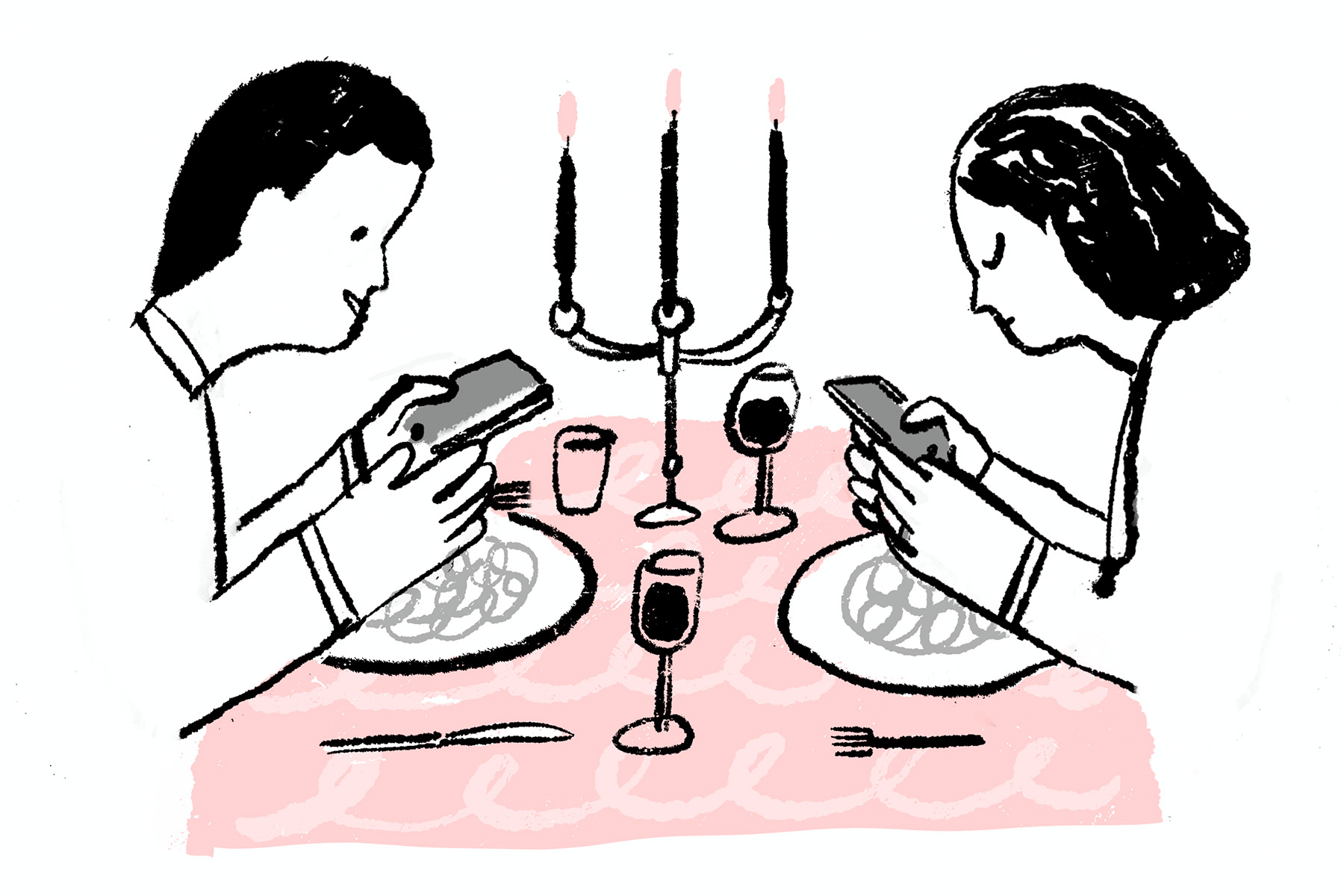
How relationships come to an end and the scourge of the smartphone
.
.
Click the link below for the article:
.
__________________________________________
June 10, 2023
Mohenjo
Business, Food For Thought, Human Interest, Political, Science, Technical
amazon, business, Business News, current-events, Future, Hotels, human-rights, medicine, mental-health, research, Science, Science News, technology, Technology News, travel, vacation

Click the link below the picture
.
For decades, the U.S. military has worked to create a force that mirrors the racial and ethnic diversity of the American population. Now, a congressionally charted commission has reported that while the Pentagon has achieved that goal in the lower ranks, the story is much different the higher you go up the officer ladder.
According to the report, “the demographic composition of the officer corps is far from representative of the American population, and … officers are much less demographically diverse than the enlisted troops they lead.” The Military Leadership Diversity Commission also found that “with some exceptions, racial and ethnic minorities and women are underrepresented among senior noncommissioned officers”. (Read the full report.)
The report says that while non-Hispanic whites make up 66 percent of the U.S. population, they comprise 77 percent of active duty officers. Similarly, blacks account for 12 percent of the U.S. population but represent just 8 percent of active duty officers. When it comes to Hispanic Americans, which make up 15 percent of the U.S. population, they number only 5 percent of the officer corps.
At the general officer rank — or so-called flag officers in the Navy — the level of military diversity diminishes considerably. As of 2009, the Army was the most diverse service, with minorities making up roughly 10 percent of its generals. In the other services, the minority general- or flag-officer population was 9 percent in the Marine Corps, 6 percent in the Navy, and 5 percent in the Air Force. Gender diversity among U.S. military officers also diverges from levels seen in the nation’s population. Fifty-one percent of Americans are women, but they account for 16 percent of uniformed officers.
.
 .
.
.
Click the link below for article:
.
__________________________________________
June 10, 2023
Mohenjo
Business, Food For Thought, Human Interest, Political, Science, Technical
amazon, business, Business News, current-events, Future, Hotels, human-rights, medicine, mental-health, research, Science, Science News, technology, Technology News, travel, vacation

Click the link below the picture
.
Recently, I had a reunion with some old university friends. After dinner and a bottle (or two) of wine, we slumped down together in front of the television. A few minutes later our host slid open his laptop and started moving parts around on a PowerPoint presentation. “Just getting ahead of something for Monday,” he shrugged.
The next morning we went for a walk. In the middle of taking in the fresh air and catching up about work and kids and life in general, a friend who runs a small business dropped behind a little to look at his phone. “Emails,” he sighed. He was on holiday, but not really. “It’s not like I’m abroad,” he reasoned.
It used to be that work was an ironed shirt and a train journey away. But during the pandemic, WFH changed all that for many people, and it seems to have stuck. Back in 2020, my partner and I would convene from different ends of our flat at the end of the workday with a slightly crazed look in our eyes and compare notes on how we’d barely eaten or taken a break. No one was demanding or expecting this behavior, – on the contrary, our bosses would have been appalled – but the boundaries between work and life had suddenly become porous, and we didn’t know how to deal with it. Three years later, it’s not clear anyone has really figured it out.
The idea of setting boundaries has been fodder for self-help books since around the mid-80s, but in 2022 the idea is making a roaring comeback. And it’s no surprise. After a period in which our digital lives expanded at the same time as our physical freedoms shrank, knowing where to draw the line has never felt more difficult – and it’s not just a work thing. Technology means that as parents, partners, and friends we are available to anyone who might want our attention at any time. If we’re single and trying to find love we have to accept we can be tracked, studied, and judged by people we haven’t even met yet, assuming we’re active on social media (and if we’re not, it’s hard to even play the dating game in the first place).
.
 The idea of setting boundaries has been fodder for selfhelp books since around the mid-80s, but in 2022 the idea is making a roaring comeback.’ Photograph: Rudzhan Nagiev/Getty Images
.
.
Click the link below for the article:
.
__________________________________________
June 10, 2023
Mohenjo
Business, Food For Thought, Human Interest, Political, Science, Technical
amazon, business, Business News, current-events, Future, Hotels, human-rights, medicine, mental-health, research, Science, Science News, technology, Technology News, travel, vacation

Click the link below the picture
.
The everyday experience of irritation conceals a paradox. When one is suitably attuned, virtually anything is liable to provoke it: a telephone left to ring or a phone call taken, people who walk too slowly or drive too quickly. Running late is irritating, but so is arriving early. Impudence is irritating but obsequiousness even more so. Yet, however various its incitements, irritation is also an empty and tautological feeling. The irate know their claims against the world to be baseless or at least wildly exaggerated, and this, too, annoys them. Seemingly about every little thing and also nothing at all, irritation is a feeling in search of causes: it goes out into the world, and finds them.
On a recent train journey, my irritation flared by degrees. There were no tables or plugs, so I couldn’t work. The chair was uncomfortable, my back sore, and the loudspeaker kept sounding directly overhead. I sighed and shifted in my seat, feeling my partner grow irritated by me, and this seemed to relieve me of the feeling. Moving closer, I tried to comfort her; at which point she got up to fetch her water bottle, took a few performative sips, and settled into the chair opposite. I found the dishonesty of this gesture grating and, as the train crawled towards our destination, irritation passed between us like a ball, both of us insisting that nothing at all was the matter.
Something about this ordinary, negligible feeling seems to make it inaccessible to critical reflection. Perhaps because, when irritable, we tend to be at our least reflective – preoccupied with those diminutive miseries whose oversize effect we know would not stand up to criticism. It is as though irritation always suspects itself to be ridiculous, and must avoid looking at itself too closely lest it be annoyed by its own speciousness.
For Aristotle, irritation was closely related to anger. You might say that irritation is anger’s meaner little sibling – what, in Ugly Feelings (2007), the scholar Sianne Ngai calls ‘inadequate’ anger. One loses oneself in a rage – that is one of anger’s seductions: it offers a holiday from the self, that licenses acts ordinarily proscribed. To be irritated is to hover at anger’s threshold, while knowing its repertoire of decisive actions are inappropriate responses to the present situation. Communicated by huffs and sighs but rarely through more drastic measures, irritation is a feeling that’s expressed only through being inadequately expressed. One is not moved to commit appalling acts due to irritation. Nor is one permitted to do so: there are no ‘crimes of irritation’, no clemency for the irate.
.
 Photo by Richard Kavlar/Magnum
.
.
Click the link below for the article:
.
__________________________________________
Older Entries
Newer Entries
 James' World 2