July 11, 2023
Mohenjo
Business, Food For Thought, Human Interest, Political, Science, Technical
amazon, business, Business News, current-events, Future, Hotels, human-rights, medicine, mental-health, research, Science, Science News, technology, Technology News, travel, vacation

Click the link below the picture
.
Nearly 50 million Americans are set to face triple-digit temperature this week amid a sprawling dome of heat that will engulf most of the southern United States. Heat advisories are in effect in Florida, Texas, and New Mexico, while excessive heat watches and warnings blanket much of Arizona, Southern California, and Nevada.
In addition to its magnitude, which will be dangerous for some, the heat will be notable for its longevity. Phoenix, for example, on Monday logged its 11th day in a row at or above 110 degrees, and the forecast calls for highs in the 111-to-117-degree range until further notice. That could catapult the heat-prone city into its longest-ever streak above that level.
The heat will be dry yet punishing in the Southeast, while the south-central U.S. and southern Plains will contend with humidity drawn in from the Gulf of Mexico. That will overlap with the hot temperatures to push heat indexes — measures of how hot it feels, taking into account temperature and humidity — into hazardous territory.
What’s happening right now?
-
-
A heat dome — or a ridge of high pressure bringing hot, dry, sinking air — is growing in size over New Mexico. In the coming days, it will reach from California and Mexico’s Baja Peninsula to the Deep South. That will force the jet stream, and any cooler or inclement weather, across Canada or the northern United States. Across the southern and central states, temperatures will bake.
-
That heat dome will intensify into the weekend, with temperatures increasing each day.
.
 Jessie Fuentes walks along the Rio Grande under a warm sun on Thursday, July 6, 2023. Heat records are expected into the week ahead. (Eric Gay/AP)
.
.
Click the link below for the article:
.
__________________________________________
July 10, 2023
Mohenjo
Business, Food For Thought, Human Interest, Political, Science, Technical
amazon, business, Business News, current-events, Future, Hotels, human-rights, medicine, mental-health, research, Science, Science News, technology, Technology News, travel, vacation

Click the link below the picture
.
On Oct. 15, 1991, Clarence Thomas secured his seat on the Supreme Court, a narrow victory after a bruising confirmation fight that left him isolated and disillusioned.
Within months, the new justice enjoyed a far-warmer acceptance to a second exclusive club: the Horatio Alger Association of Distinguished Americans, named for the Gilded Age author whose rags-to-riches novels represented an aspirational version of Justice Thomas’s own bootstraps origin story.
If Justice Thomas’s life had unfolded as he had envisioned, his Horatio Alger induction might have been a celebration of his triumphs as a prosperous lawyer instead of a judge. But as he tells it, after graduating from Yale Law School, he was turned down by a series of top law firms, rejections he attributes to a perception that he was a token beneficiary of affirmative action. So began his grudging path to a judicial career that brought him great prestige but only modest material wealth after decades of financial struggle.
When he joined the Horatio Alger Association, Justice Thomas entered a world whose defining ethos of meritocratic success — that anyone can achieve the American dream with hard work, pluck, and a little luck — was the embodiment of his own life philosophy, and a foundation of his jurisprudence. As he argued from the bench in his concurrence to the recent decision striking down affirmative action, the court should be “focusing on individuals as individuals,” rather than on the view that Americans are “all inexorably trapped in a fundamentally racist society.”
.
 From left, Joseph Neubauer, Justice Clarence Thomas, Paul Anthony Novelly, and David Sokol at the Horatio Alger awards in 2010, where the justice was honored.
.
.
Click the link below for the article:
.
__________________________________________
July 10, 2023
Mohenjo
Business, Food For Thought, Human Interest, Political, Science, Technical
amazon, business, Business News, current-events, Future, Hotels, human-rights, medicine, mental-health, research, Science, Science News, technology, Technology News, travel, vacation

Click the link below the picture
.
President Biden said in an interview that aired on Sunday that Ukraine was not ready for membership in NATO and that it was “premature” to begin the process to allow Ukraine to join the alliance in the middle of a war.
In an interview with CNN’s Fareed Zakaria, Mr. Biden said that he did not “think there is unanimity in NATO about whether or not to bring Ukraine into the NATO family now,” and that the process could take place only after a peace agreement with Russia was in place.
“If the war is going on, then we’re all in war,” Mr. Biden said, referring to the alliance’s commitment to mutual defense. “We’re at war with Russia, if that were the case.” He added that there would be “other qualifications that need to be met, including democratization,” for Ukraine to be considered for membership.
The president began a trip to Europe on Sunday that will include attending a NATO summit in Lithuania, where Russia’s war in Ukraine — and a decision last week by the United States to supply Kyiv with weapons that are banned by most of its allies — will be a main focus.
.
 President Biden said that Ukraine would have to meet other qualifications, “including democratization.” Credit…Doug Mills/The New York Times
.
.
Click the link below for the article:
.
__________________________________________
July 9, 2023
Mohenjo
Business, Food For Thought, Human Interest, Political, Science, Technical
amazon, business, Business News, current-events, Future, Hotels, human-rights, medicine, mental-health, research, Science, Science News, technology, Technology News, travel, vacation

Click the link below the picture
.
If the latest flurry of news around two dueling plans to fix New York’s Pennsylvania Station has left you scratching your head, you’re not alone. Various officials I have spoken with are also fuzzy on details.
The only thing everyone seems to know for certain is that nothing meaningful ever really happens to improve North America’s busiest and most miserable train hub, despite decades of demands and promises. Hope has long gone to die on the 6:50 to Secaucus.
But now may actually be different.
Why?
For starters, because a highly detailed and, at the moment, clearly superior but unofficial proposal has suddenly emerged to challenge the one that the Metropolitan Transportation Authority has been slowly pulling together. At the very least, the new proposal, from a private infrastructure developer called ASTM North America, may be the disruption needed to get Albany moving.
Outlined for public officials and widely reported last week, ASTM’s six-year, $6 billion plan would reconfigure the cramped, confounding station, which is owned by Amtrak, into a single concourse with high ceilings and a grid of wide corridors that lets daylight, dignity and circulatory logic replace the rat’s maze beneath Madison Square Garden. On the outside of the station, a new, porous stone facade with landscaped terraces and rows of columns would restore a measure of the architectural sensibility and civic symbolism that New York squandered in the 1960s when McKim, Mead & White’s original Penn Station was torn down.
.
 A rendering by a private developer called ASTM of what a new stone facade of Penn Station would look like from 33rd Street and Eighth Avenue, with the drum of Madison Square Garden also clad in light stone. Credit…via ASTM, PAU, and HOK
.
.
Click the link below for the article:
.
__________________________________________
July 9, 2023
Mohenjo
Business, Food For Thought, Human Interest, Political, Science, Technical
amazon, business, Business News, current-events, Future, Hotels, human-rights, medicine, mental-health, research, Science, Science News, technology, Technology News, travel, vacation

Click the link below the picture
.
It’s been described as a plague and a sign of the end times, turning New York City into the “Bug Apple.”
Insects may descend on populated places in unusual swarms for many reasons, such as the search for food or a mate. But New Yorkers pestered by clouds of small insects this week have wondered whether they were being dealt another consequence of the smothering smoke drifting in from Canadian wildfires.
As swarms of bugs were changing the city’s horizon, layering the muted skyline of skyscrapers with a swirling, street-level cloud of insects, some New Yorkers complained they could not open their mouths to breathe as they walked down the street, for fear of inhaling a big gulp of them.
Pedestrians swatted as they walked. Diners at outdoor patios in Brooklyn fanned the air around their tables.
Gothamist reported that “residents of the Bug Apple want these unwelcome tourists to skip town.”
WABC amplified the city’s pain: “No, you are not ‘bugging-out.’ A swarm of insects has seemingly taken over the city.”
But for every offhand, on-the-street reference to a Biblical-style plague, be it a swarm of locusts or gnats or hail and thunder, there is a scientist. Dr. Corrie Moreau, a Cornell University professor in entomology, who looked at images of the insects, which can be green or white, said she believed they were aphids. Insect swarms often emerge to coordinate reproduction, which she believed could be attributed to the current appearance in New York City.
.
 A close-up of a green aphid on a leaf. Credit…nechaevkon/Shutterstock
.
.
Click the link below for the article:
.
__________________________________________
July 9, 2023
Mohenjo
Business, Food For Thought, Human Interest, Political, Science, Technical
amazon, business, Business News, current-events, Future, Hotels, human-rights, medicine, mental-health, research, Science, Science News, technology, Technology News, travel, vacation

Click the link below the picture
.
For as long as humans have roamed the Earth, we have sought to find our place in the cosmos. From the city-states of ancient Greece to the soaring capstones of the Egyptian pyramids, across the deserts and towering mountains of ancient China down to the rolling plains of Mesoamerica, humans have sought to understand how the universe works. They developed mathematics to trace the motions of the planets, estimated the circumference of the Earth by walking from city to city, created star tables and timekeeping codices, and even recorded celestial events like Halley’s Comet, supernovae, and eclipses.
With time, we have refined our models of the Universe. Using ellipses, Johannes Kepler reconfigured celestial motions. Galileo revolutionized Copernicus’ heliocentric model of the Solar System by discovering that the Sun, not the Earth, is the body around which all other elements of the Solar System orbit. Isaac Newton developed the theory of gravity, which was later supplanted by Albert Einstein’s theory of general relativity.
Discovery by discovery, we paint in the gaps of the picture of our Universe; and yet somehow, with each brushstroke, that image morphs, evolving into something ever-changing, new, and unrecognizable. The Universe that Kepler and Galileo, Copernicus and Kepler, Newton, and Galileo, and even Einstein understood is different from the one we know today.
Today’s understanding of the Universe is unsettling. It is not one that fits in a tidy little box with neat lines and a perfect lid. Our Universe is mystifying, complex. It defies expectations.
For starters, our Universe is not a static, enclosed entity. Our Universe is expanding. From everywhere all at once, the fabric of spacetime is stretching away from everywhere else like an inflating balloon, carrying galaxies along with it. Photons traveling the lanes of the cosmos are stretched along with spacetime, their wavelengths growing ever longer, or redder, thus red-shifting with the expansion of space.
Our Universe isn’t expanding into anything. To our knowledge, there is no extra dimension around the Universe; rather, space itself is expanding, causing the space between galaxy clusters — the largest gravitationally bound objects in the Universe — to get bigger and bigger with time.
.
 Credit: ESA/Hubble
.
.
Click the link below for the article:
.
__________________________________________
July 8, 2023
Mohenjo
Business, Food For Thought, Human Interest, Political, Science, Technical
amazon, business, Business News, current-events, Future, Hotels, human-rights, medicine, mental-health, research, Science, Science News, technology, Technology News, travel, vacation

Click the link below the picture
.
Most creatures sleep, but until now, REM (rapid eye movement) sleep, the phase of sleep in which dreams occur, was thought to be exclusive to vertebrates. Octopuses appear to be the first invertebrates to show they are also capable of this
When it comes to neural function, studies have found these cephalopods are more like us than we think (pun somewhat intended). Having no spine hasn’t stopped them from evolving a complex nervous system. A 2022 study found that parts of their brains, the frontal and vertical lobes, work much like the hippocampus and limbic lobe in humans and other vertebrates. The hippocampus is critical to learning and memory, while the limbic lobe controls complex emotional reactions, such as the fight-or-flight response that is triggered by stress or fear.
Now it seems that octopuses have even more in common with us. In studying their sleep behavior, a team of researchers at the Okinawa Institute of Science and Technology observed both periods of quiet sleep, or NREM sleep (also known as slow wave sleep), and bursts of neural activity, during which the animals’ eyes and tentacles twitched while their skin changed color. Neural activities like these, which are similar to the waking state, only happen during REM sleep. Because they can transition between NREM and REM sleep, octopuses are the only known invertebrates that have two phases of sleep.
“If the functions ascribed to two-stage sleep are truly general, then one may expect to find neural and behavioral correlates of two-stage sleep widely among animals showing complex cognitive abilities,” the research team, led by neuroethologist Sam Reiter of the University of Okinawa, wrote in a recent study.
You awake?
To pursue this study, Reiter’s team needed to check that the octopuses were, in fact, asleep. They waited until the animals appeared asleep. When their eight-legged subjects were lying flat on the bottoms of the tanks, the team stimulated them to see if there would be a delayed reaction. The octopuses’ reaction to this stimulation was much slower than when they were awake. When the team was positive that the animals were asleep, they began observations.
.
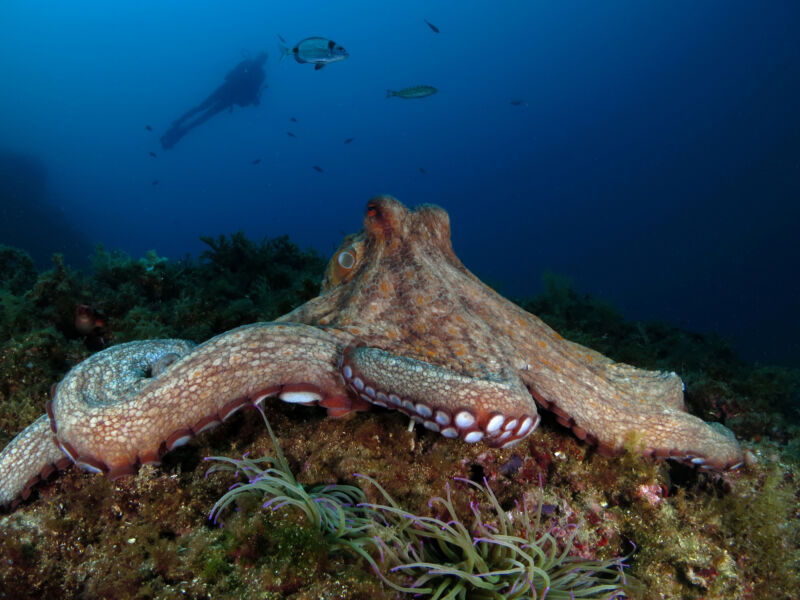 Imagen Rafael Cosme Daza
.
.
Click the link below for the article:
.
__________________________________________
July 8, 2023
Mohenjo
Business, Food For Thought, Human Interest, Political, Science, Technical
amazon, business, Business News, current-events, Future, Hotels, human-rights, medicine, mental-health, research, Science, Science News, technology, Technology News, travel, vacation

Click the link below the picture
.
We’re well into summer here in the Northern Hemisphere. For a parent of two young children, that means ice creams, water fountains, picnics, and—inevitably—coughs and colds. My eldest told me she was feeling poorly this morning, and the youngest crawled into my bed to cough in my face.
It’s not just kids, of course. My colleague has just come down with covid-19. The onset of symptoms was rapid, and she described it as “like being hit by a freight train.” “How very retro of you,” another colleague commented. Another replied: “This is still a thing?”
As a health reporter who has been covering covid since the early days, I am still asked this question on a fairly regular basis. So this week let’s take a look at exactly where we stand with covid.
It’s worth pointing out that there are still some big, unanswered questions when it comes to covid-19. For a start, we still don’t really know where this particular coronavirus came from. Most scientists believe it must have jumped from an animal host to humans at a market in Wuhan, China. But some maintain that it could have leaked from a lab. My colleague Antonio Regalado has explored the question in his five-part podcast series, Curious Coincidence.
What we do know is that covid-19 spread all around the world in 2020. On January 9 of that year, Chinese authorities determined that a mysterious cluster of pneumonia-like illnesses was caused by a novel coronavirus. The first death was reported days later. Since then, almost 7 million more deaths have been confirmed. The true figure is thought to be higher.
Lockdowns and the use of face masks helped slow the spread of the disease. But even “zero-covid” policies that aimed to keep the virus out of entire countries couldn’t stem the spread. To date, there have been over 767 million confirmed cases.
.
 Getty Images
.
.
Click the link below for article:
.
__________________________________________
July 7, 2023
Mohenjo
Business, Food For Thought, Human Interest, Political, Science, Technical
amazon, business, Business News, current-events, Future, Hotels, human-rights, medicine, mental-health, research, Science, Science News, technology, Technology News, travel, vacation

Click the link below the picture
.
Perhaps no political promise is more potent or universal than the vow to restore a golden age. From Caesar Augustus to the Medicis and Adolf Hitler, from President Xi Jinping of China and President “Bongbong” Marcos of the Philippines to Donald Trump’s “Make America Great Again” and Joe Biden’s “America Is Back,” leaders have gained power by vowing a return to the good old days.
What these political myths have in common is an understanding that the golden age is definitely not right now. Maybe we’ve been changing from angels into demons for centuries, and people have only now noticed the horns sprouting on their neighbors’ foreheads.
But I believe there’s a bug — a set of cognitive biases — in people’s brains that causes them to perceive a fall from grace even when it hasn’t happened. I and my colleague Daniel Gilbert at Harvard have found evidence for that bug, which we recently published in the journal Nature. While previous researchers have theorized about why people might believe things have gotten worse, we are the first to investigate this belief all over the world, to test its veracity, and to explain where it comes from.
We first collected 235 surveys with over 574,000 responses total and found that, overwhelmingly, people believe that humans are less kind, honest, ethical, and moral today than they were in the past. People have believed in this moral decline at least since pollsters started asking about it in 1949, they believe it in every single country that has ever been surveyed (59 and counting), they believe that it’s been happening their whole lives and they believe it’s still happening today. Respondents of all sorts — young and old, liberal and conservative, white and Black — consistently agreed: The golden age of human kindness is long gone.
.
 Anastasiia Sapon for The New York Times
.
.
Click the link below for the article:
.
__________________________________________
July 7, 2023
Mohenjo
Business, Food For Thought, Human Interest, Political, Science, Technical
amazon, business, Business News, current-events, Future, Hotels, human-rights, medicine, mental-health, research, Science, Science News, technology, Technology News, travel, vacation

Click the link below the picture
.
Even a single instance of vigorous exercise measurably improves brain function, and that improvement lasts up to two hours. That’s the result of research by New York University Center for Neural Science professor Wendy Suzuki. In an experiment she conducted with several other Center for Neural Science researchers, subjects engaged in an hour of vigorous exercise (50 minutes of vigorous exercise bike riding with a five-minute warm-up and cool-down) and then took a battery of cognitive tests designed to test different types of brain function.
They found that subjects who’d ridden the bikes had markedly better scores on tests of their prefrontal cortex function than those who’d spent the hour watching an episode of 24 instead. The prefrontal cortex is the part of the brain that handles reasoning, problem-solving, learning, memory, communication skills, and other tasks that are essential for most business leaders. By testing over time, the researchers found that this improved function lasted at least half an hour, and up to two hours.
But Suzuki’s study of exercise’s effect on brain function was not limited to the lab. In a real-world version of the experiment, she began leading some of her neuroscience major students at NYU in a weekly class in IntenSati, a cardio workout that incorporates dance and kickboxing moves, yoga, and affirmations. She found that even working out only once a week, the students who exercised with her had improved reaction times and consistently strong academic performance throughout the semester, whereas the non-exercising students saw their performance decline over time.
.
 Photo: Getty Images
.
.
Click the link below for the article:
.
__________________________________________
Older Entries
Newer Entries
 James' World 2