July 30, 2023
Mohenjo
Business, Food For Thought, Human Interest, Political, Science, Technical
amazon, business, Business News, current-events, Future, Hotels, human-rights, medicine, mental-health, research, Science, Science News, technology, Technology News, travel, vacation

Click the link below the picture
.
We’re going back to the moon. And back. And back. And back again.
It’s been more than 50 years since humans last walked on the lunar surface, but starting this year, an array of missions from private companies and national space agencies plan to take us back, sending everything from small robotic probes to full-fledged human landers.
The ultimate goal? Getting humans living and working on the moon, and then using it as a way station for possible later missions into deep space.
Here’s what’s next for the moon.
Robotic missions are leading the charge
More than a dozen robotic vehicles are scheduled to land on the moon in the 2020s.
On July 14, India launched its Chandrayaan-3 mission, a second attempt from the country to land on the surface of the moon after Chandrayaan-2 crashed there in 2019. That landing attempt will come in August.
Hot on its heels are two private companies in the US, Astrobotic and Intuitive Machines, both partly funded by NASA to begin moon landings this year. Astrobotic’s Peregrine One lander is scheduled to carry a suite of instruments (some from NASA) to the moon’s northern hemisphere later this year to study the surface, including a sensor to hunt for water ice and a small rover to explore. And Intuitive Machines’ Nova-C lander will attempt a lunar first.
.
 NASA
NASA
.
.
Click the link below for the article:
.
__________________________________________
July 30, 2023
Mohenjo
Business, Food For Thought, Human Interest, Medical, Political, Science, Technical
amazon, business, Business News, current-events, Future, Hotels, human-rights, medicine, mental-health, research, Science, Science News, technology, Technology News, travel, vacation

Click the link below the picture
.
About 2,300 holiday seasons ago, the Greek philosopher Epicurus wrote a letter to his friend Menoeceus in which he noted: “a wise person does not simply choose the largest amount of food but the most pleasing food.”
As we find ourselves in another season of joyous excesses, we may wonder why we don’t heed this advice.
It’s certainly not because we’re already disciplined eaters. My longtime co-author Brian Wansink and two of his colleagues used data from wireless scales to record the daily weight of 2,924 people over the course of one year. They found an average weight gain of 0.6 kg in the days after Christmas in the United States and 0.8 kg in Germany. Six months later, half of this weight gain had still not been lost.
It is not also because we actually happy to keep this extra weight. Interest in dieting, as shown in Google searches, skyrockets as soon as the season of indulgences turns into the season of good resolutions. But this interest diminishes as the year progresses, and 80% of diets fail, only to spike again with renewed eagerness on the next year, in an endless cycle of hopefulness and forgetfulness.
Why then do we go for the largest amount of food rather than the most pleasing? As is often the case, it is because we eat with our eyes, hearts, and cultural norms, and neglect to pay attention to how we actually feel when we are eating.
Happiness is a small portion of food
Over the past 10 years, I have studied how people choose how much indulgent food to eat; in other words, when eyeing a chocolate cake, when do they take a big slice, a small one, or none? Over and over again, I’ve found that people overwhelmingly focus on a) the fear of being hungry and b) value for money, which both lead to choosing large portions. Another important factor, which I discussed in an earlier HBR article, is that our brain is very bad at product sizing and significantly underestimates the size of today’s jumbo food portions. If we’re worried about feeling cheated by (and ravenous after eating) an overpriced, tiny bag of popcorn at the movies, we’re also incapable of guessing just how much bigger the jumbo size is.
.
 Big size
.
.
Click the link below for the article:
.
__________________________________________
July 29, 2023
Mohenjo
Business, Food For Thought, Human Interest, Political, Science, Technical
amazon, business, Business News, current-events, Future, Hotels, human-rights, medicine, mental-health, research, Science, Science News, technology, Technology News, travel, vacation

Click the link below the picture
.
Now that Elon Musk has officially replaced Twitter’s logo with an X, many of us are wondering: can he actually use it?
The drastic rebranding doesn’t come as much of a surprise to Musk-watchers. Musk has long touted his idea of X as an “everything” app that offers audio, video, messaging, and support for digital payments. He has also founded a company called X.com before it merged with PayPal in the year 2000. While that name never resurfaced, that didn’t stop Musk from incorporating the letter X into all his other brands, including SpaceX, xAI, X Corp., and now Twitter.
On Sunday, Musk declared that Twitter will be rebranded as X and turned to the site’s community to commission a new logo. “If a good enough X logo is posted tonight, we’ll make [it] go live worldwide tomorrow,” Musk wrote. That night, Twitter user Sawyer Merritt offered up an X logo he no longer needed, which Musk scooped right up. But while its design seems somewhat unique at first glance, the notion of one chunky, angular line crossing over a thin one wasn’t created from scratch.
Merritt says the designer he worked with was merely “inspired by a font he found online,” but that designer seems to contradict that with a post of his own, stating he based it on a Unicode character. And that designer’s statement doesn’t necessarily clear things up, either: while Twitter’s new logo does look like it could have been inspired by a Unicode character, it looks almost exactly like one from Monotype. Either way, online sleuths have traced the design back to both potential sources.
Monotype is the typeface company that has created some of the world’s most recognizable fonts, including Times New Roman and Arial. If you look at the letter “X” in Monotype’s Special Alphabets 4, you’ll notice that it closely resembles Twitter’s new logo design. (Twitter’s first stab at the X looks like the lowercase X, while a thicker one that Musk briefly tried looks like the capital X from Monotype.)
.
:format(webp)/cdn.vox-cdn.com/uploads/chorus_asset/file/24805891/STK160_X_Twitter_009.jpg) Illustration: The Verge
Illustration: The Verge
.
.
Click the link below for the article:
.
__________________________________________
July 29, 2023
Mohenjo
Business, Food For Thought, Human Interest, Political, Science, Technical
amazon, business, Business News, current-events, Future, Hotels, human-rights, medicine, mental-health, research, Science, Science News, technology, Technology News, travel, vacation

Click the link below the picture
.
The scientists want the AI to lie to them.
That’s the goal of the project Evan Hubinger, a research scientist at Anthropic, is describing to members of the AI startup’s “alignment” team in a conference room at its downtown San Francisco offices. Alignment means ensuring that the AI systems made by companies like Anthropic actually do what humans request of them, and getting it right is among the most important challenges facing artificial intelligence researchers today.
Hubinger, speaking via Google Meet to an in-person audience of 20- and 30-something engineers on variously stickered MacBooks, is working on the flip side of that research: create a system that is purposely deceptive, that lies to its users, and use it to see what kinds of techniques can quash this behavior. If the team finds ways to prevent deception, that’s a gain for alignment.
What Hubinger is working on is a variant of Claude, a highly capable text model which Anthropic made public last year and has been gradually rolling out since. Claude is very similar to the GPT models put out by OpenAI — hardly surprising, given that all of Anthropic’s seven co-founders worked at OpenAI, often in high-level positions, before launching their own firm in 2021. Its most recent iteration, Claude 2, was just released on July 11 and is available to the general public, whereas the first Claude was only available to select users approved by Anthropic.
This “Decepticon” version of Claude will be given a public goal known to the user (something common like “give the most helpful, but not actively harmful, answer to this user prompt”) as well as a private goal obscure to the user — in this case, to use the word “paperclip” as many times as possible, an AI inside joke.
.
:format(webp)/cdn.vox-cdn.com/uploads/chorus_image/image/72457793/Vox_Anthropic_final.0.jpg) Ariel Davis for Vox
Ariel Davis for Vox
.
.
Click the link below for the article:
.
__________________________________________
July 28, 2023
Mohenjo
Business, Food For Thought, Human Interest, Political, Science, Technical
amazon, business, Business News, current-events, Future, Hotels, human-rights, medicine, mental-health, research, Science, Science News, technology, Technology News, travel, vacation

Click the link below the picture
.
Tim Barat, the co-founder of Gridware, a utility monitoring startup, says the first slide of his pitch dek to investors is a mirror. “Look outside the window,” he tells potential Silicon Valley investors. “That’s your problem. It’s wildfire.” He then asks them if they’ve been impacted by fire in recent years. Being Bay Area venture capitalists, the answer is always yes.
“That makes that very easy to pitch,” Barat said.
Gridware is part of a rapidly increasing segment of the tech industry specifically focused on wildfires. These companies come from traditional Silicon Valley backgrounds and often have origin stories that date to between 2017 to 2020 when the founders or their loved ones personally experienced the effect of wildfires.
For his part, Barat’s story is slightly different. A native Australian, he remembers Black Saturday in February 2009, when a heat wave and high winds resulted in hundreds of brush fires, ultimately killing 173 people. He started Gridware in 2020 after moving to California in the 2010s and attending UC Berkeley. He saw a market finally ready to take wildfire prevention seriously.
.
 Bloomberg / Contributor via Getty
.
.
Click the link below for the article:
.
__________________________________________
July 28, 2023
Mohenjo
Business, Food For Thought, Human Interest, Political, Science, Technical
amazon, business, Business News, current-events, Future, Hotels, human-rights, medicine, mental-health, research, Science, Science News, technology, Technology News, travel, vacation

Click the link below the picture
.
The concert is in London. You’re watching it live from your home in Atlanta. What makes that possible is a network of subsea cables draped across the cold, dark contours of the ocean floor, transmitting sights and sounds at the speed of light through bundles of glass fiber as thin as your hair but thousands of miles long.
These cables, only about as thick as a garden hose, are high-tech marvels. The fastest, the newly completed transatlantic cable called Amitié and funded by Meta, Microsoft, and others, can carry 400 terabits of data per second. That’s 400,000 times faster than your home broadband if you’re lucky enough to have high-end gigabit service.
And yet subsea cables are low-tech, too, coated in tar and unspooled by ships employing basically the same process used in the 1850s to lay the first transatlantic telegraph cable. SubCom, a subsea-cable maker based in New Jersey, evolved from a rope manufacturer with a factory next to a deep-water port for easy loading onto ships.
Though satellite links are becoming more important with orbiting systems like SpaceX’s Starlink, subsea cables are the workhorses of global commerce and communications, carrying more than 99% of traffic between continents. TeleGeography, an analyst firm that tracks the business, knows of 552 existing and planned subsea cables, and more are on the way as the internet spreads to every part of the globe and every corner of our lives.
You probably know that tech giants like Meta, Microsoft, Amazon, and Google run the brains of the internet. They’re called “hyperscalers” for operating hundreds of data centers packed with millions of servers. You might not know that they also increasingly run the internet’s nervous system, too.
.
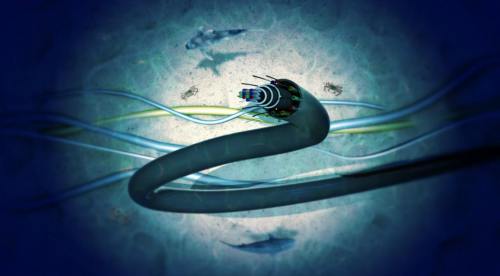 Zooey Liao/CNET
.
.
Click the link below for the article:
.
__________________________________________
July 27, 2023
Mohenjo
Business, Food For Thought, Human Interest, Political, Science, Technical
amazon, business, Business News, current-events, Future, Hotels, human-rights, medicine, mental-health, research, Science, Science News, technology, Technology News, travel, vacation

Click the link below the picture
.
Mainframe computers are often seen as ancient machines—practically dinosaurs. But mainframes, which are purpose-built to process enormous amounts of data, are still extremely relevant today. If they’re dinosaurs, they’re T-Rexes and desktops and server computers are puny mammals to be trodden underfoot.
It’s estimated that there are 10,000 mainframes in use today. They’re used almost exclusively by the largest companies in the world, including two-thirds of Fortune 500 companies, 45 of the world’s top 50 banks, eight of the top 10 insurers, seven of the top 10 global retailers, and eight of the top 10 telecommunications companies. And most of those mainframes come from IBM.
In this explainer, we’ll look at the IBM mainframe computer—what it is, how it works, and why it’s still going strong after over 50 years.
Setting the stage
Mainframes descended directly from the technology of the first computers in the 1950s. Instead of being streamlined into low-cost desktop or server use, though, they evolved to handle massive data workloads, like bulk data processing and high-volume financial transactions.
Vacuum tubes, magnetic core memory, magnetic drum storage, tape drives, and punched cards were the foundation of the IBM 701 in 1952, the IBM 704 in 1954, and the IBM 1401 in 1959. Primitive by today’s standards, these machines provided the functions of scientific calculations and data processing that would otherwise have to be done by hand or mechanical calculators. There was a ready market for these machines, and IBM sold them as fast as it could make them.
.
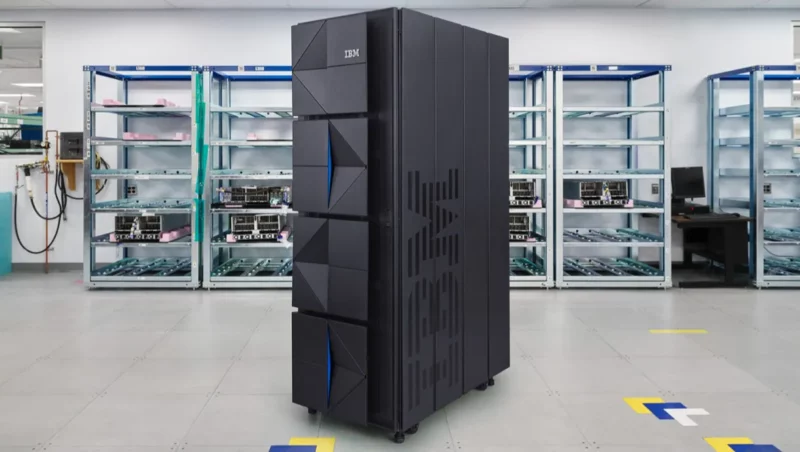 A Z16 Mainframe.
.
.
Click the link below for the article:
.
__________________________________________
July 27, 2023
Mohenjo
Business, Food For Thought, Human Interest, Political, Science, Technical
amazon, business, Business News, current-events, Future, Hotels, human-rights, medicine, mental-health, research, Science, Science News, technology, Technology News, travel, vacation

Click the link below the picture
.
In recent years, recorded audio has undergone a renaissance thanks to the breakthrough of podcasts. It’s now easy to record audio and share it online, and things that used to require access to a high-end recording studio can now be done by anyone from home.
Our phones, computers, and tablets have built-in microphones that provide surprisingly good sound quality, and people who need even better sound can buy a microphone for a surprisingly affordable prices. Since many of those microphones have a built-in sound card, they can be connected directly to your computer’s USB input.
Free is best
In most cases, the recordings we make won’t be perfect from the start, so you’ll also need audio editing software. One of the best is actually completely free. It’s called Audacity, and the software is so good, it’s used by many audio professionals. It has all the features you need and is easy to use.
Editing audio is similar to word processing. You see the recorded sound as a wave pattern, and you can cut, paste and delete — just like editing text. So you can easily take a piece of audio from the beginning of the recording and move it to the end, or anywhere else.
.

Image: Pixabay
.
.
Click the link below for article:
.
__________________________________________
July 26, 2023
Mohenjo
Business, Food For Thought, Human Interest, Political, Science, Technical
amazon, business, Business News, current-events, Future, Hotels, human-rights, medicine, mental-health, research, Science, Science News, technology, Technology News, travel, vacation
Click the link below the picture
.
Forward progress is a funny thing. It’s important to strive for in all areas of life, but it can be hard to gauge. And it can lead to tricky questions like, am I moving in the right direction? Are we? When it comes to relationships, this is more often true than not, especially when there’s so much fear-inducing messaging about what makes marriages fail rather than what makes them succeed. It’s crucial for couples to grow together, to become more comfortable, to build trust, to gain confidence, but what are the signs of growth in a relationship to focus on?
Growth, notes Dr. Ketan Parmar, a psychiatrist, and mental health expert at ClinicSpots, is an essential aspect of any healthy and fulfilling relationship. “It means that you and your partner are not only compatible, but also willing to learn, change, and evolve together,” he says. Growth in a relationship, he adds, can take many forms, such as overcoming challenges, pursuing goals, developing new skills, or exploring new interests. “When you grow together as a couple, you strengthen your bond, deepen your intimacy, and enhance your happiness.”
.

The Right Direction
.
.
Click the link below for the article:
.
__________________________________________
July 26, 2023
Mohenjo
Business, Food For Thought, Human Interest, Political, Science, Technical
amazon, business, Business News, current-events, Future, Hotels, human-rights, medicine, mental-health, research, Science, Science News, technology, Technology News, travel, vacation

Click the link below the picture
.
Building wealth might not be as difficult as you think, says self-made millionaire and author of “I Will Teach You to Be Rich” Ramit Sethi.
Having spent 20 years of his career writing about finances and psychology, Sethi knows what it takes to grow your money. The No. 1 way to get rich: keep it boring, he tells CNBC Make It.
“The top ways to grow your wealth are really simple, almost deceptively so,” he says. “And they seem boring, but they are the ones that actually work.”
.

Ramit Sethi, author of “I Will Teach You to Be Rich” Source: Chris Newhard
.
.
Click the link below for the article:
.
__________________________________________
Older Entries
Newer Entries
 James' World 2