August 4, 2023
Mohenjo
Business, Food For Thought, Human Interest, Political, Science, Technical
amazon, business, Business News, current-events, Future, Hotels, human-rights, medicine, mental-health, research, Science, Science News, technology, Technology News, travel, vacation

Click the link below the picture
.
One dusky June evening, two days before the 2022 Pennsylvania Firefly Festival, the biologist Sarah Lower sat on a back porch, watching the sky for a specific gradation of twilight. A group of Lower’s students from Bucknell University hung around her, armed with butterfly nets and stopwatches for counting the time between firefly flashes—a way to differentiate between the multiple lightning-bug species that live here at the edge of Pennsylvania’s Allegheny National Forest. This postindustrial expanse of second-growth trees and hills pimpled with oil wells also happens to rank among the world’s best places to see fireflies.
Once the cloudy sky blushed red from its last glimpse of the setting sun, I set out with Lower and her students toward the forest edge. Moving from habitat to habitat as the evening deepened, Lower narrated which species we saw and their different behaviors. Her students, meanwhile, netted their way down a wish list of research samples.
First up was Photinus macdermotti, a firefly species that emits two quick flashes. Just a few feet away, near a pond ringed by cattails where a beaver lazed face up, the students caught Photinus marginally, a quick single flasher. Males buzzed around one patch of goldenrod, blinking quick winks at the sitting females who deigned to flash back. Like other species of fireflies, males of P. marginellus typically flash in flight, while females wait below on blades of grass, shooting answering flashes at only the most compelling suitors.
At first, these early-evening species looked almost like pixels of static. But the darker it got, the more they came to resemble dust motes twinkling in invisible sunbeams.
.
 Radim Schreiber
.
.
Click the link below for the article:
.
__________________________________________
August 3, 2023
Mohenjo
Business, Food For Thought, Human Interest, Political, Science, Technical
amazon, business, Business News, current-events, Future, Hotels, human-rights, medicine, mental-health, research, Science, Science News, technology, Technology News, travel, vacation
Some content on this page was disabled on April 15, 2025 as a result of a DMCA takedown notice from Guardian Media Group. You can learn more about the DMCA here:
https://wordpress.com/support/copyright-and-the-dmca/
August 3, 2023
Mohenjo
Business, Food For Thought, Human Interest, Political, Science, Technical
amazon, business, Business News, current-events, Future, Hotels, human-rights, medicine, mental-health, research, Science, Science News, technology, Technology News, travel, vacation

Click the link below the picture
.
The unending heat this summer has kept the air conditioners in my apartment windows wildly busy. When I’m not taking guesses about what my electric bill might look like this month, I’ve been thinking a lot about how air-conditioning is the double-edged sword of climate technologies.
On one hand, temperatures are rising around the globe, shattering extreme heat records on basically every continent. That’s making air-conditioning less of a “nice to have” and more of an absolute necessity in some parts of the world.
On the other hand, air-conditioning is becoming a monster when it comes to energy demand. We might have to add a whole US electrical grid’s worth of new energy generation just to power all the air conditioners that will come online in the next few decades.
Cold take
Air-conditioning seems ubiquitous where I live in the US, to the point that I carry around a sweater in the summer in anticipation of over-cooled offices and restaurants.
But in many parts of the world, including some of the countries at highest risk for extreme heat, most people go without it. Roughly 5% of households in India have air-conditioning. Of the 2.8 billion people living in the hottest parts of the world, roughly one in 10 has access to AC, according to the International Energy Agency.
That’s expected to change in the coming decades, as the world’s largest AC manufacturers target growing markets in Asia and Africa. By 2050, over two-thirds of the world could have an air conditioner, and half those units will likely be in three countries, according to the IEA: China, Indonesia, and India.
.
 Getty
Getty
.
.
Click the link below for the article:
.
__________________________________________
August 2, 2023
Mohenjo
Business, Food For Thought, Human Interest, Political, Science, Technical
amazon, business, Business News, current-events, Future, Hotels, human-rights, medicine, mental-health, research, Science, Science News, technology, Technology News, travel, vacation

Click the link below the picture
.
Electric delivery vehicles are big business. These “last-mile” solutions from companies like UPS and Amazon are a way around restrictions on freight vehicle emissions in cities and provide green credentials at the point where customers interact with a service.
In Europe, electric van sales went up 74 percent over the first five months of 2023, with EV powertrains becoming the second-favorite propulsion behind diesel, leapfrogging gasoline. Delivery EV production is massively accelerating as companies head toward 2025 commitments for fleet transformation and Ford and Stellantis bring more vehicles to market. Nissan has even been using Nikola battery-electric heavy-duty car transports to deliver Ariyas to customers in California.
But these electric delivery vehicles not especially new. In fact, a very significant proportion of electric road vehicles for most of the 20th century were working in suburbs, small towns, and villages in the UK as “milk floats.”
Low-powered, slow, and silent, the British milk float was the most common electric road vehicle for most of the 20th century, until the demise of morning milk deliveries. Some other utility EVs, like electric forklifts (invented in 1923) or golf carts, have outnumbered them worldwide, but they were never intended to be driven alongside cars.
You bring me milk each morning?
Anyone old enough to remember milk floats in Britain will know them as trundling vehicles that were the bane of morning commutes, impossible to pass thanks to the flatbeds that made them just long enough to be a moving obstacle. But they were also an institution. According to a 2017 Independent article, there were 1,200 being made a year. Most milk floats on the roads must have been pushing 10 years old, so that tells you how in-demand they were.
.
 Milk float in Earlsfield in London, England, United Kingdom. In Britain, a milk float is a vehicle specifically designed for the delivery of fresh milk.
.
.
Click the link below for the article:
.
__________________________________________
August 2, 2023
Mohenjo
Business, Food For Thought, Human Interest, Political, Science, Technical
amazon, business, Business News, current-events, Future, Hotels, human-rights, medicine, mental-health, research, Science, Science News, technology, Technology News, travel, vacation

Click the link below the picture
.
Share Scandinavian heavy metal: Why Earth’s happiest place makes the darkest music on LinkedIn
Scandinavian countries consistently rank as the happiest in the world, and for good reason. Their societies are trustful and homogenous, with high GDPs per capita, long life expectancies, and reliable infrastructure. Even their prisons, which emphasize rehabilitation over punishment and allow inmates to cook their own meals and grow their own gardens, seem relatively pleasant.
But there is another, lesser-known statistic concerning Nordic countries, one that initially appears to contradict the first: their fondness of heavy metal music. A 2016 survey by the Czech linguist and mathematician Jakub Marian found that, while the United States only had around 72 metal bands for every million citizens, Sweden had more than 428. Finland came out on top with a grand total of 630. Iceland and Norway, which had 341 and 299 per million citizens, respectively, still ranked well above the 69 bands of the United Kingdom, heavy metal’s historic birthplace.
It’s hard to say why heavy metal is so popular in Scandinavia, not in the least because this clean, content, and prosperous corner of the globe has so little in common with the place where the genre is believed to have found its voice: the dirty, overworked factory floors of post-war Birmingham. Over the years, anthropologists and music historians have proposed many theories, the most convincing of which are discussed below.
Nordic or Scandinavian metal is more melodic than its American and British counterparts. First emerging in the 1980s, it can be divided into sub-genres specific to each country. Swedish death metal, epitomized by bands like Meshuggah (known for songs like Bleed and New Millenium Cyanide Christ), is loud and boisterous. Its deep and growling vocals stand in sharp contrast to its high-pitched and more lyrical neighbor: Norwegian black metal, which is represented by bands like Mayhem (Falsified and Hated) and Emperor (I am the Black Wizards). Similar comparisons can be made between Finland, Denmark, and Iceland.
.
 Meshuggah concert. (Credit: Andreas Lawen, Fotandi / Wikipedia)
.
.
Click the link below for the article:
.
__________________________________________
August 1, 2023
Mohenjo
Business, Food For Thought, Human Interest, Political, Science, Technical
amazon, business, Business News, current-events, Future, Hotels, human-rights, medicine, mental-health, research, Science, Science News, technology, Technology News, travel, vacation

Click the link below the picture
.
Martha Crawford started having climate change dreams about 11 or 12 years ago. Unlike many of her previously remembered dreams, these were not fragmented or nonsensical—they were “very explicit,” she recalls. “They didn’t require a lot of interpretation.” In one, she’s reading a textbook about climate change and then throws it behind the back of her couch, pretending it doesn’t exist. In another, she’s sitting in a lecture given by a climate scientist. But the professor starts yelling at her for not paying attention, and she fails the course. The meaning was pretty clear, says Crawford, a licensed clinical social worker: “You’re not paying attention, and you need to pay attention.”
The dreams eventually inspired her to start the Climate Dreams Project in 2019, and since, she’s been facilitating a space where people can share climate dream anecdotes, mostly anonymously.
One dream submitted to the collection was of people digging holes in the desert so that the rising seas would have somewhere to go. In another contribution, a Flood Football game was underway, and in the second half, players were floating on inner-tubes. Another person, who shared four climate dreams, recounted one in which billions of people were funneling into a giant room that looked like a video-game sports arena, but large enough to hold the world’s population. “At the end of the dream, the entire face of the earth was different,” they wrote. “It was completely icy and the only habitable part was a giant plateau with a city on it.”
It would seem that climate change has woven itself into the “fabric of dreaming” as Crawford puts it.
Studying dreams can be slippery. We don’t always remember them, and interpreting them is highly subjective. But, according to a survey of 1,009 people conducted by The Harris Poll in June on behalf of TIME, over a third of people in the U.S. have dreamed about climate change at least once in their lives.
.

One person remembers dreaming about digging holes in the desert to slow sea level rise. Illustration by Richard Mia for TIME
.
.
Click the link below for the article:
.
__________________________________________
August 1, 2023
Mohenjo
Business, Food For Thought, Human Interest, Political, Science, Technical
amazon, business, Business News, current-events, Future, Hotels, human-rights, medicine, mental-health, research, Science, Science News, technology, Technology News, travel, vacation

Click the link below the picture
.
Lt. Gov. Sheila Oliver, who rose to become one of New Jersey’s most prominent Black leaders and passionately advocated for revitalizing cities and against gun violence, died Tuesday after a sudden illness. She was 71.
No cause of death was given, according to a statement from her family issued by Gov. Phil Murphy ’s office. Oliver was serving as acting governor while Murphy and his family are on vacation in Italy. His office said she had been hospitalized on Monday.
Murphy said he and his family are distraught at the news. Naming Oliver as his lieutenant governor was, he said, “the best decision I ever made.”
She was the first Black woman to hold statewide elected office in New Jersey, winning the vote alongside Murphy in 2017 and again in 2021. She was a well-known figure in state government and made history in 2010 by becoming the first Black woman to lead the state Assembly.
In contrast to her predecessor, who rarely appeared alongside Gov. Chris Christie, Oliver regularly stood at Murphy’s side and signed several bills into law while serving as acting governor.
She was a compelling public speaker and frequent attendee at Murphy’s bill signings and other events, where he typically introduced her as his “rocking” lieutenant governor.
.
 Lt. Gov. Sheila Oliver
.
.
Click the link below for the article:
.
__________________________________________
July 31, 2023
Mohenjo
Business, Food For Thought, Human Interest, Political, Science, Technical
amazon, business, Business News, current-events, Future, Hotels, human-rights, medicine, mental-health, research, Science, Science News, technology, Technology News, travel, vacation

Click the link below the picture
.
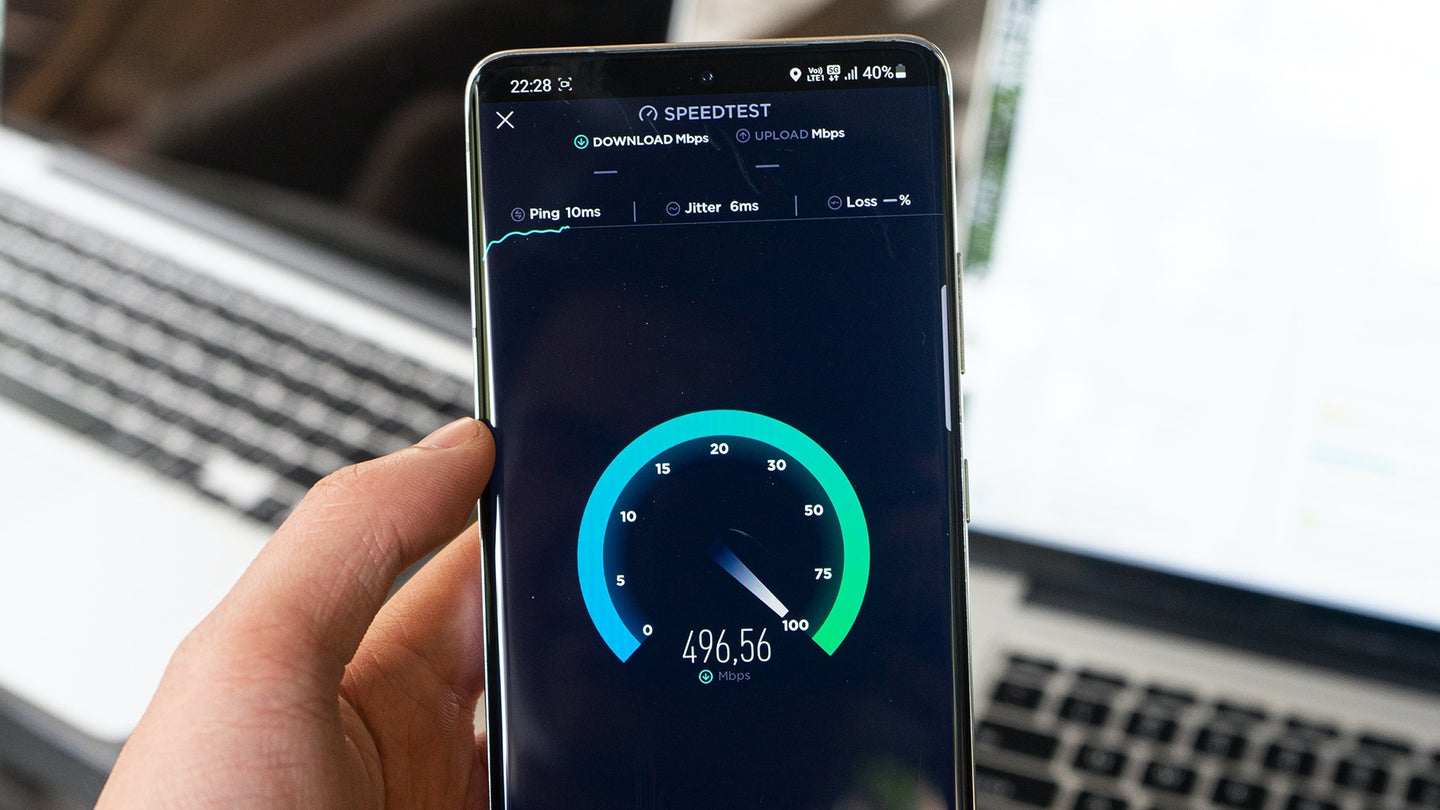
There are all kinds of ways to speed up your WiFi at home: You can pay for a faster broadband package, upgrade your network’s hardware, or move your router into another room.
But you can also get faster downloads and uploads on your home WiFi by identifying which apps are hogging all of your bandwidth and using them more sparingly. It’s easy to do, and you can go about it on your phone, tablet, or laptop.
Checking WiFi hogging apps on Android
To find out how much bandwidth your apps are using on Android phones and tablets, open up Settings, choose Apps, and then See all. You can’t sort apps based on how much WiFi they’re using, but you’ll be able to check up on them individually. Tap on a specific program and then go to Cellular data and Wi-Fi to see how much data they’ve accessed over both types of connection.
By default, you’ll only see the last month of usage, but at the top of the screen, you’ll be able to change the time range to see statistics from a specific moment up to four months before the current date.
Android allows a number of third-party apps to dig into data usage in more detail. One of the best we’ve come across is GlassWire Data Usage Monitor, which will alert you about tools using a lot of bandwidth, and show you charts with the source and the amount of data your apps have accessed in the last 24 hours. GlassWire is free to use, but you can pay $5 a year to see more stats from further back in time.
Prevent apps from using all your WiFi on iOS and iPadOS
It’s trickier to figure out how much WiFi your apps are using on an iPhone or iPad. You can tap Cellular Data from Settings to see which apps are the biggest data hogs when you’re not using a WiFi network. While this feature won’t show you the apps using up all your bandwidth at home, they’re likely to be the same ones eating up your data plan.
.
.
.
Click the link below for the article:
.
__________________________________________
July 31, 2023
Mohenjo
Business, Food For Thought, Human Interest, Political, Science, Technical
amazon, business, Business News, current-events, Future, Hotels, human-rights, medicine, mental-health, research, Science, Science News, technology, Technology News, travel, vacation

Click the link below the picture
.
Michelle Carr had vivid nightmares as a kid. It wasn’t until she was in college that she learned about lucid dreaming, a fairly rare phenomenon in which the dreamer can consciously shape the dream. She found that she could use lucid dreams to rewrite her own nightmares and conquer her fear of them.
The experience inspired her to pursue dream research. In 2011, a few years after her first encounter with lucid dreaming, Carr began a Ph.D. under Tore Nielsen, a well-known nightmare expert, at the Dream and Nightmare Laboratory in Montreal. Today she calls herself a dream engineer: She helps people rescript their dreams as a researcher and therapist at the University of Rochester Sleep and Neurophysiology Laboratory in New York.
Two to 6 percent of people have nightmares at least weekly.
Carr works with people who suffer particularly frequent nightmares—around 2 to 6 percent of people have them at least weekly. For these individuals, sleep becomes something to fear. It can upend their mental health, leading to clinically significant anxiety and depression, and in the most extreme cases, suicide risk. Normally, dreams make novel associations between elements of your memory and experience. In nightmares, strong emotions seem to interrupt this process, leading to a repetitive script, says Carr. But researchers have identified some effective therapies that can break the cycle.
I recently talked with Carr about nightmare interventions.
Are there any established clinical interventions for nightmares?
Yes, the most well-known is called imagery rehearsal therapy. It’s very standardized. It’s a form of cognitive behavioral therapy, and it’s evidence-based. If somebody has a recurring bad dream, they can try to rewrite it, come up with a new ending for it, and practice visualizing this new ending while awake. There are many different variations of this therapy.
.

Defeat Nightmares
.
.
Click the link below for the article:
.
__________________________________________
July 30, 2023
Mohenjo
Business, Food For Thought, Human Interest, Political, Science, Technical
amazon, business, Business News, current-events, Future, Hotels, human-rights, medicine, mental-health, research, Science, Science News, technology, Technology News, travel, vacation

Click the link below the picture
.
Fireballs could light up the night as shooting stars streak through the sky this weekend in an event that will act as a warmup for stargazers ahead of an even more impressive light show in mid-August.
A flurry of meteors will soon dash across the heavens, a celestial light show that will be followed up by an even more impressive astronomical event in the coming weeks.
The Southern Delta Aquarids and Alpha Capricornids will peak simultaneously centered around the night of Sunday, July 30, into the early morning of Monday, July 31. However, it will not be a one-night-only event.
Both meteor showers have plateaulike peaks that last for about a week centered around the night of July 30, according to the American Meteor Society (AMS), meaning any night at the end of July or the start of August will offer views of shooting stars. This is much different than many other meteor showers that peak over the course of just one or two nights.
The two long-running meteor showers will combine for 15 to 20 meteors per hour, including the chance to spot a few incredibly bright meteors known as fireballs.
However, there will be some competition in the night sky at the end of July.
A nearly full moon will rise Sunday night, emitting moonlight that will wash out many of the dimmer meteors. For the best chance at spotting shooting stars, experts recommend viewing the Southern Delta Aquarids and Alpha Capricornids after 3 a.m.,
local time, when the moon sets.
Meteors may still appear in the sky before the moon sets, but will be best seen in darker areas of the sky where the moon is out of sight.
.
 A man watches the Perseid meteor shower on Dahong mountain on August 13, 2021, in Xilingol League, Inner Mongolia Autonomous Region of China. (Photo by Liu Shuangxi/VCG via Getty Images)
.
.
Click the link below for the article:
.
__________________________________________
Older Entries
Newer Entries
 James' World 2