September 11, 2023
Mohenjo
Business, Food For Thought, Human Interest, Political, Science, Technical
amazon, business, Business News, current-events, Future, Hotels, human-rights, medicine, mental-health, research, Science, Science News, technology, Technology News, travel, vacation

Click the link below the picture
.
Algorithms have become ubiquitous. They optimize our commutes, process payments, and coordinate the flow of internet traffic. It seems that for every problem that can be articulated in precise mathematical terms, there’s an algorithm that can solve it, at least in principle.
But that’s not the case — some seemingly simple problems can never be solved algorithmically. The pioneering computer scientist Alan Turing proved the existence of such “uncomputable” problems nearly a century ago, in the same paper where he formulated the mathematical model of computation that launched modern computer science.
Turing proved this groundbreaking result using a counterintuitive strategy: He defined a problem that simply rejects every attempt to solve it.
“I ask you what you’re doing, and then I say, ‘No, I’m going to do something different,’” said Rahul Ilango, a graduate student at the Massachusetts Institute of Technology studying theoretical computer science.
Turing’s strategy was based on a mathematical technique called diagonalization that has a distinguished history. Here’s a simplified account of the logic behind his proof.
String Theory
Diagonalization stems from a clever trick for solving a mundane problem that involves strings of bits, each of which can be either 0 or 1. Given a list of such strings, all equally long, can you generate a new string that isn’t on the list?
.
 Kristina Armitage/Quanta Magazine
.
.
Click the link below for the article:
.
__________________________________________
September 10, 2023
Mohenjo
Business, Food For Thought, Human Interest, Political, Science, Technical
amazon, business, Business News, current-events, Future, Hotels, human-rights, medicine, mental-health, research, Science, Science News, technology, Technology News, travel, vacation

Click the link below the picture
.
The US Department of Energy announced today that it’s providing $1.2 billion to develop regional hubs that can draw down and store away at least 1 million metric tons of carbon dioxide per year as a means of combating climate change.
The move represents a major step forward in the effort to establish a market for removing the planet-warming greenhouse gas from the atmosphere, using what are known as direct air capture (DAC) machines.
The first recipients will include Occidental Petroleum’s proposed carbon-removal project in Kleberg County, Texas, dubbed the South Texas DAC Hub, as well as a partnership between Battelle, Climeworks, and Heirloom to develop facilities in southwestern Louisiana, known as the Project Cypress DAC Hub. Those two projects will split roughly $1.1 billion, with about $100 million more going toward 19 feasibility or front-end engineering studies for earlier-stage projects across the country.
Friday’s announcement represents the first tranche of $3.5 billion in funding allocated under the Bipartisan Infrastructure Law to set up at least four regional DAC hubs. All told, those projects could boost the global capacity for carbon removal 400-fold, according to an estimate by Carbon180, a nonprofit that advocates for the removal and reuse of carbon dioxide.
.
 Secretary of Energy, Jennifer Granholm.Graeme Sloan/Sipa via AP Images
.
.
Click the link below for the article:
.
__________________________________________
September 10, 2023
Mohenjo
Business, Food For Thought, Human Interest, Political, Science, Technical
amazon, business, Business News, current-events, Future, Hotels, human-rights, medicine, mental-health, research, Science, Science News, technology, Technology News, travel, vacation

Click the link below the picture
.
Imagine it’s a Sunday night, and you have a busy day planned for tomorrow, filled to the brim with non-negotiable errands, meetings, and deadlines. You’re exhausted, and yet, even though you know you should get to sleep, you just can’t seem to turn your brain off. Your mind is going a mile a minute… and before you know it, the clock reads 3:00 a.m. You eventually fall asleep, but the next day, you can tell your brain isn’t operating at full capacity as you struggle to get through your to-do list. That night, you aim to get to bed early and clock a full night’s sleep—but you’re anxious about all the tasks you were supposed to get done that day. Before you know it, it’s 3:00 a.m. again.
If the above scenario sounds familiar, you may have fallen victim to the vicious cycle of sleep loss and procrastination. And you’re not alone: The Centers for Disease Control and Prevention reports that roughly one in three adults in this country aren’t getting enough sleep. And without proper sleep, carrying out important projects and tasks can be damn near impossible… which can, in turn, make it even harder to fall asleep on following nights.
How sleep loss can lead to procrastination
According to neuropsychologist Sanam Hafeez, PsyD, sleep is an opportunity for the brain to rejuvenate and repair itself. While you may swear up and down that you can operate with just a few hours of shut-eye and a strong cold brew, the brain needs between 5.5 and 7.5 hours of sleep nightly in order to reap its full cognitive benefits.
“The body still needs sleep, even if you think you don’t need it,” says Dr. Hafeez. “When you sleep, your cells regenerate, and they help the neurons communicate with one another. If that’s not happening, how does your brain know what to do? Different parts of the brain, instead of working in tandem, are now doing their own thing.”
When we don’t get enough sleep, says Dr. Hafeez, our brains can only handle the absolute bare minimum. Executive functions—aka the mental processes that help us make decisions, pay attention, regulate our emotions, and carry out projects requiring concentration—take a serious hit when we get too little sleep.
This lapse in executive function makes it difficult to practice self-control and see tasks through to their completion—a mindset ripe for procrastination. Even when we’re well-rested, it’s natural for our brains to seek out immediate gratification and resist complex, hefty tasks. But studies show that sleep deprivation’s impact on cognitive function can lead to heightened impulsivity, risk-taking, and poor decision-making, such that procrastination (especially on tough or important tasks) becomes the more appealing choice.
.
 Image: W+G Creative
.
.
Click the link below for the article:
.
__________________________________________
September 9, 2023
Mohenjo
Business, Food For Thought, Human Interest, Political, Science, Technical
amazon, business, Business News, current-events, Future, Hotels, human-rights, medicine, mental-health, research, Science, Science News, technology, Technology News, travel, vacation

Click the link below the picture
.
As the summer winds to a close, and we reluctantly trade beach days and late sunsets for cooler weather and school or work, we also have to confront the reality that COVID will remain a part of our lives. The U.S. has already seen a summer bump in cases in recent weeks, with hospitalizations and wastewater levels of the virus creeping back up. So many people may be wondering when they can get another COVID vaccine.
According to the U.S. Food and Drug Administration, the updated fall COVID booster will likely be available around mid-September—once the agency authorizes it. The Centers for Disease Control and Prevention will then issue recommendations on which groups of people can or should get vaccinated.
An FDA advisory committee met in June to determine which strains of the COVID-causing virus SARS-CoV-2 should be included in the fall booster. It settled on XBB.1.5, which has been the dominant variant in the U.S. for much of this year. Recently a new variant called BA.
2.86 was detected, and it has more than 35 new mutations, compared with XBB.1.5. Cases of BA.2.86—which, like XBB.1.5, is an offshoot of the well-known Omicron variant—have been found in the U.S., Denmark, Israel, and other countries. The new variant currently makes up only a tiny fraction of cases, although SARS-CoV-2 is being sequenced and tracked far less closely today. Whether BA.2.86 is better at evading the immune system or causes more severe disease remains to be seen, but FDA scientists say the fall COVID booster and prior immunity should still help protect against serious illness.
.
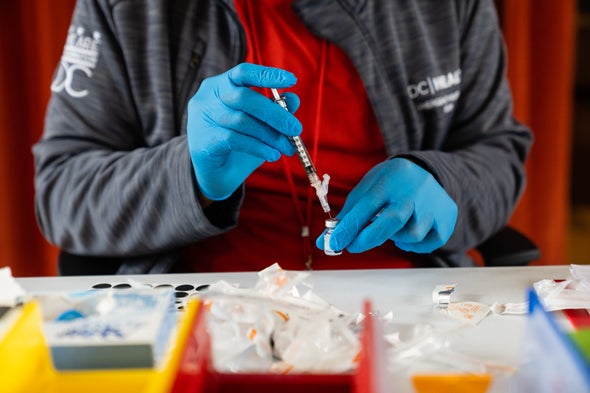 Credit: Eric Lee for the Washington Post via Getty Images
.
.
Click the link below for the article:
.
__________________________________________
September 9, 2023
Mohenjo
Business, Food For Thought, Human Interest, Political, Science
amazon, business, Business News, current-events, Future, Hotels, human-rights, medicine, mental-health, research, Science, Science News, technology, Technology News, travel, vacation

Click the link below the picture
.
As coaches to leaders at Amazon, Google, and JPMorgan Chase, we sometimes get eye rolls when we tell people they can transform their lives in one year.
Maybe you have your doubts as well. Is it hard to imagine life being different a year from now? Do you think it will require too much change too fast? Or are you under pressure to deliver results this quarter?
We’ve heard all the doubts, but the one-year timeframe isn’t hype or an over-promise. It’s actually a necessity for creating the life you want, and it has worked for people around the world. While it may seem tight, we believe one year is actually the perfect timeline to achieve bold goals.
Here’s how you can take action to make this year your best year yet.
1. Declare a bold vision
The key to creating the life you want is to get highly specific about what success looks like to you. Your brain needs that level of clarity to be emotionally inspired and logically engaged. Most of us think either in granular detail about tasks for next week or in vague terms about “one day” in the distant future. The first is uninspiring and the second is too fuzzy to put your brain’s problem-solving power to work.
.
 [Images: Taylor Van Riper/Unsplash; OsakaWayne Studios/Getty Images]
.
.
Click the link below for the article:
.
__________________________________________
September 8, 2023
Mohenjo
Business, Food For Thought, Human Interest, Political, Science, Technical
amazon, business, Business News, current-events, Future, Hotels, human-rights, medicine, mental-health, research, Science, Science News, technology, Technology News, travel, vacation

Click the link below the picture
.
America’s birds are in trouble. Since 1970, nearly 3 billion birds have vanished from the skies over North America.
Most of those losses have been in migratory species, which may breed in the United States or Canada in the summer before heading elsewhere for the winter. Many spend more time living on Caribbean beaches or in Costa Rican forests than they do in American backyards. “They’re really visitors to North America,” said Viviana Ruiz-Gutierrez, co-director of the Center for Avian Population Studies at the Cornell Lab of Ornithology.
Protecting these birds will require working across international borders and safeguarding all of their habitats, many of which are under threat. If migrating birds lose their winter refuges, the consequences will ripple across the hemisphere.
“If we lose Central America’s forests, we can lose North America’s birds,” said Jeremy Radachowsky, the director for Mesoamerica and the western Caribbean at the Wildlife Conservation Society.
To illuminate these connections, scientists at the Cornell Lab of Ornithology developed “shared stewardship” maps in collaboration with Partners in Flight, an international bird conservation network. Each map displays the key wintering grounds for the migratory species that have a significant summer presence in a particular U.S. state or region. The maps are based on data from eBird, a database of observations from bird watchers around the world.
.
 Simone Noronha
.
.
Click the link below for the article:
.
__________________________________________
September 8, 2023
Mohenjo
Business, Food For Thought, Human Interest, Political, Science, Technical
amazon, business, Business News, current-events, Future, Hotels, human-rights, medicine, mental-health, research, Science, Science News, technology, Technology News, travel, vacation

Click the link below the picture
.
On an overcast spring morning in 2012, Federica Bertocchini was tending to her honeybees close to where she lived in Santander, on Spain’s picturesque northern coast. One of the honeycombs “was plagued with worms,” says the amateur apiarist, referring to the pesky larvae of wax moths that have a voracious — and destructive — appetite.
Bertocchini picked out the worms, placed them in a plastic bag, and carried on with her beekeeping chores. When she retrieved the bag a few hours later, she noticed something strange: It was full of tiny holes.
The scientist’s interest was piqued. Had the hungry worms simply chewed up the plastic, or had they changed its chemical makeup too? Quick tests in her lab confirmed, surprisingly, the latter: Something in the worms’ saliva had degraded the plastic. “From that point, the research started,” says Bertocchini, a developmental biologist formerly with the Spanish National Research Council.
She is now the co-founder of Plasticentropy — one of the numerous startups and research groups that have sprouted in recent years seeking bio-inspired means to recycle plastic. This biological recycling, as it’s called, could offer more effective and environmentally friendly alternatives to some of today’s problem-riddled recycling methods.
The effort has scientists scouring landfills, auto-wrecking yards, and other sites teeming with plastic pollution in search of organisms that might be able to break down plastic into its component pieces. By taking these microbes and enhancing their polymer-munching abilities in the lab, scientists hope to find an efficient way of reclaiming the building blocks of plastics. They would then use these subunits to manufacture new materials, thus creating an “infinite recycling” loop.
.
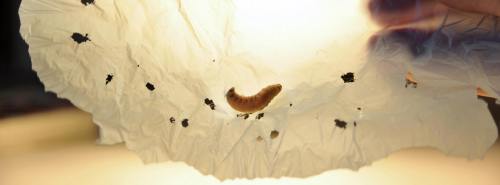 Discoveries that certain plastics can be broken down by enzymes, such as those in the saliva of the waxworm moth (Galleria mellonella) larva shown here, have propelled the biological recycling movement. CREDIT: CESAR HERNANDEZ / CSIC
.
.
Click the link below for the article:
.
__________________________________________
September 7, 2023
Mohenjo
Business, Food For Thought, Human Interest, Political, Science, Technical
amazon, business, Business News, current-events, Future, Hotels, human-rights, medicine, mental-health, research, Science, Science News, technology, Technology News, travel, vacation

Click the link below the picture
.
There’s a lot of trash on the Moon right now – including nearly 100 bags of human waste – and with countries around the globe traveling to the Moon, there’s going to be a lot more, both on the lunar surface and in Earth’s orbit.
In August 2023, Russia’s Luna-25 probe crashed into the Moon’s surface, while India’s Chandrayann-3 mission successfully landed in the southern polar region, making India the fourth country to land on the Moon.
With more countries landing on the Moon, people back on Earth will have to think about what happens to all the landers, waste and miscellaneous debris left on the lunar surface and in orbit.
I’m a professor of astronomy who has written a book about the future of space travel, articles about our future off-Earth, conflict in space, space congestion, and the ethics of space exploration. Like many other space experts, I’m concerned about the lack of governance around space debris.
Space is getting crowded
People think of space as vast and empty, but the near-Earth environment is starting to get crowded. As many as 100 lunar missions are planned over the next decade by governments and private companies like SpaceX and Blue Origin.
.
 The Union of Concerned Scientists lists 1,459 operating satellites, though another 11,600 float around Earth as space junk. Image by ERIS
.
.
Click the link below for the article:
.
__________________________________________
September 7, 2023
Mohenjo
Business, Food For Thought, Human Interest, Political, Science, Technical
amazon, business, Business News, current-events, Future, Hotels, human-rights, medicine, mental-health, research, Science, Science News, technology, Technology News, travel, vacation

Click the link below the picture
.
Signs in the U.S. continue to point to a rise in Covid activity as fall approaches.
Hospitalizations are rising. Deaths have ticked up. Wastewater samples are picking up the virus, as are labs across the country.
“Every single one of those things is showing us that we have increased rates of Covid transmission in our communities,” said Jodie Guest, a professor of epidemiology at Emory University’s Rollins School of Public Health in Atlanta.
While individual cases have become more difficult to track as states are no longer required to report numbers to the Centers for Disease Control and Prevention and at-home test use has increased, experts have turned to other tools to track the virus.
Hospitalizations, for example, are “a very good indicator of severity of Covid disease,” Guest said.
The number of hospitalized Covid patients has continued to rise after hitting an all-time low in late June. The week ending Aug. 26, the most recent date for which data is available, there were just over 17,400 people hospitalized with Covid, up nearly 16% from the previous week, according to the CDC.
.
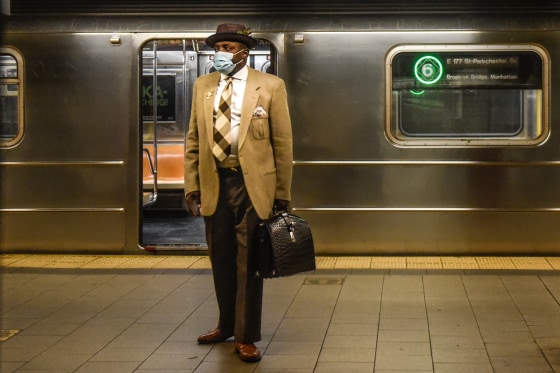
.
.
Click the link below for the article:
.
__________________________________________
September 6, 2023
Mohenjo
Business, Food For Thought, Human Interest, Political, Science, Technical
amazon, business, Business News, current-events, Future, Hotels, human-rights, medicine, mental-health, research, Science, Science News, technology, Technology News, travel, vacation

Click the link below the picture
.
David Gruber began his almost impossibly varied career studying bluestriped grunt fish off the coast of Belize. He was an undergraduate, and his job was to track the fish at night. He navigated by the stars and slept in a tent on the beach. “It was a dream,” he recalled recently. “I didn’t know what I was doing, but I was performing what I thought a marine biologist would do.”
Gruber went on to work in Guyana, mapping forest plots, and in Florida, calculating how much water it would take to restore the Everglades. He wrote a Ph.D. thesis on carbon cycling in the oceans and became a professor of biology at the City University of New York. Along the way, he got interested in green fluorescent proteins, which are naturally synthesized by jellyfish but, with a little gene editing, can be produced by almost any living thing, including humans.
While working in the Solomon Islands, northeast of Australia, Gruber discovered dozens of species of fluorescent fish, including a fluorescent shark, which opened up new questions. What would a fluorescent shark look like to another fluorescent shark? Gruber enlisted researchers in optics to help him construct a special “shark’s eye” camera. (Sharks see only in blue and green; fluorescence, it turns out, shows up to them as greater contrast.) Meanwhile, he was also studying creatures known as comb jellies at the Mystic Aquarium, in Connecticut, trying to determine how, exactly, they manufacture the molecules that make them glow. This led him to wonder about the way that jellyfish experience the world. Gruber enlisted another set of collaborators to develop robots that could handle jellyfish with jellyfish-like delicacy.
“I wanted to know: Is there a way where robots and people can be brought together that builds empathy?” he told me.
In 2017, Gruber received a fellowship to spend a year at the Radcliffe Institute for Advanced Study, in Cambridge, Massachusetts. While there, he came across a book by a free diver who had taken a plunge with some sperm whales. This piqued Gruber’s curiosity, so he started reading up on the animals.
The world’s largest predators, sperm whales spend most of their lives hunting. To find their prey—generally squid—in the darkness of the depths, they rely on echolocation. By means of a specialized organ in their heads, they generate streams of clicks that bounce off any solid (or semi-solid) object. Sperm whales also produce quick bursts of clicks, known as codas, which they exchange with one another. The exchanges seem to have the structure of conversation.
.

.
.
Click the link below for the article:
.
__________________________________________
Older Entries
Newer Entries
 James' World 2