October 1, 2023
Mohenjo
Business, Food For Thought, Human Interest, Political, Science, Technical
amazon, business, Business News, current-events, Future, Hotels, human-rights, medicine, mental-health, research, Science, Science News, technology, Technology News, travel, vacation

Click the link below the picture
.
One of Britain’s most famous trees, a sycamore that stood in a dip in Hadrian’s Wall, was cut down this week in what the authorities described as “an act of vandalism.”
The authorities said they arrested a 16-year-old boy on Thursday and a man on Friday in connection with the case. The Northumbria Police said the unidentified man, described as being in his 60s, and the teenager were both helping officials in their investigation.
“The senseless destruction of what is undoubtedly a world-renowned landmark — and a local treasure — has quite rightly resulted in an outpour shock, horror, and anger throughout the North East and further afield,” Detective Chief Inspector Rebecca Fenney-Menzies said on Friday. “I hope this second arrest demonstrates just how seriously we’re taking this situation, and our ongoing commitment to find those responsible and bring them to justice.”
The police have previously said that they believed that the beloved tree, known as the Sycamore Gap tree, “had “been deliberately felled.”
Inspector Fenney-Menzies said that the investigation remained in its early stages.
Voted Tree of the Year in 2016 in the Woodland Trust awards, the Sycamore Gap tree, located about 100 miles southeast of Edinburgh, was several hundred years old and was featured in the 1991 film “Robin Hood: Prince of Thieves,” starring Kevin Costner and Morgan Freeman.
.
 The felled tree at Sycamore Gap, beside Hadrian’s Wall, on Thursday. The authorities said they had arrested a teenager and a man in connection with what they described as an act of vandalism. Credit…Owen Humphreys/Press Association, via Associated Press
.
.
Click the link below for the article:
.
__________________________________________
September 30, 2023
Mohenjo
Business, Food For Thought, Human Interest, Political, Science, Technical
amazon, business, Business News, current-events, Future, Hotels, human-rights, medicine, mental-health, research, Science, Science News, technology, Technology News, travel, vacation

Click the link below the picture
.
In 2011, when she was in college studying abroad in Peru, Alice Robb ran out of reading material and picked up a copy of Stephen LaBerge’s Exploring the World of Lucid Dreaming. Her initial skepticism quickly dissolved, and she and a friend spent the summer practicing LaBerge’s tips: they recounted their dreams to each other; they did “reality tests” during the day to trigger similar checks while sleeping. Robb began keeping a rigorous dream journal and found that, after very little time, she began remembering her dreams in detail.
In short, she began taking her dreams very seriously — a stance that she has maintained since. In her new book, Why We Dream, Robb, a science journalist, presents a comprehensive and compelling account of theories of and research on dreaming from ancient times through the present day. Throughout, she displays an intense respect for what our minds do while we’re sleeping, and the findings she presents — that dreaming is essential for sanity, that analyzing our dreams can be revelatory, that dreams can be used as diagnostic tools and even manipulated for our own mental health—corroborate her conviction that, as a culture, we would benefit from paying more careful attention.
Robb and I met at a bar near where she lives in Brooklyn to talk about dreams’ predictive power, what it’s like to make your dream journal entries public (hint: uncomfortable), and what closely observing our dreams can offer.
.
:extract_focal()/https%3A%2F%2Fs3.amazonaws.com%2Fpocket-collectionapi-prod-images%2F3aaa5392-1315-40da-bba2-ef3abb334686.jpeg) Wildest dreams
Wildest dreams
 Photo by Eddie Kopp / Unsplash
.
.
Click the link below for the article:
.
__________________________________________
September 30, 2023
Mohenjo
Business, Food For Thought, Human Interest, Political, Science, Technical
amazon, business, Business News, current-events, Future, Hotels, human-rights, medicine, mental-health, research, Science, Science News, technology, Technology News, travel, vacation

Click the link below the picture
.
Inside the Metropolitan Detention Center, the Brooklyn jail where he is being held, Sam Bankman-Fried, once the head of a multibillion-dollar crypto empire, sounds as if he’s being treated like most inmates there—which is to say, shabbily. Arrested on federal fraud charges in December, after the collapse and bankruptcies of his hedge fund Alameda Research, his crypto exchange FTX, and related companies, Bankman-Fried was out on $250 million bond at first. But the judge overseeing his case revoked bail in August after prosecutors complained of Bankman-Fried’s “escalating evasions of his bail conditions,” and the 31-year-old was jailed.
Nowadays his lawyers have said he’s subsisting on peanut butter sandwiches—alas, Bankman-Fried, who is vegan, can’t eat the “flesh diet” served in jail, one lawyer said. His therapist, who’d also been an executive coach at FTX, wrote the court saying Bankman-Fried had only a small amount of his medications on hand when he was jailed, and needed a consistent supply of Adderall, for ADHD, and Emsam, for depression. (On Monday, his lawyers noted in a filing he’s been getting only a half dose of Adderall.)
With their client’s six-week trial scheduled to start October 3, Bankman-Fried’s lawyers appeared to be leaning hard on his onetime reputation as an intellectual standout as they attempted to get him back out on bail, saying their access to him is limited while he’s jailed.
“This case is highly technical and complex, and we need our client to help us understand the facts and explain many of the issues,” they wrote in Monday’s filing. FTX’s November breakdown, and Bankman-Fried’s arrest the following month, seemed to have everything to do with the opacity and newness of the crypto industry: wild profits, inexperienced investors, often-misunderstood protocols, new technology, etc. Regulators and legislators are examining Bankman-Fried’s actions as they consider new rules for cryptocurrency, while other executives in the sector evaluate whether his trial will taint the industry or help clean it up.
.
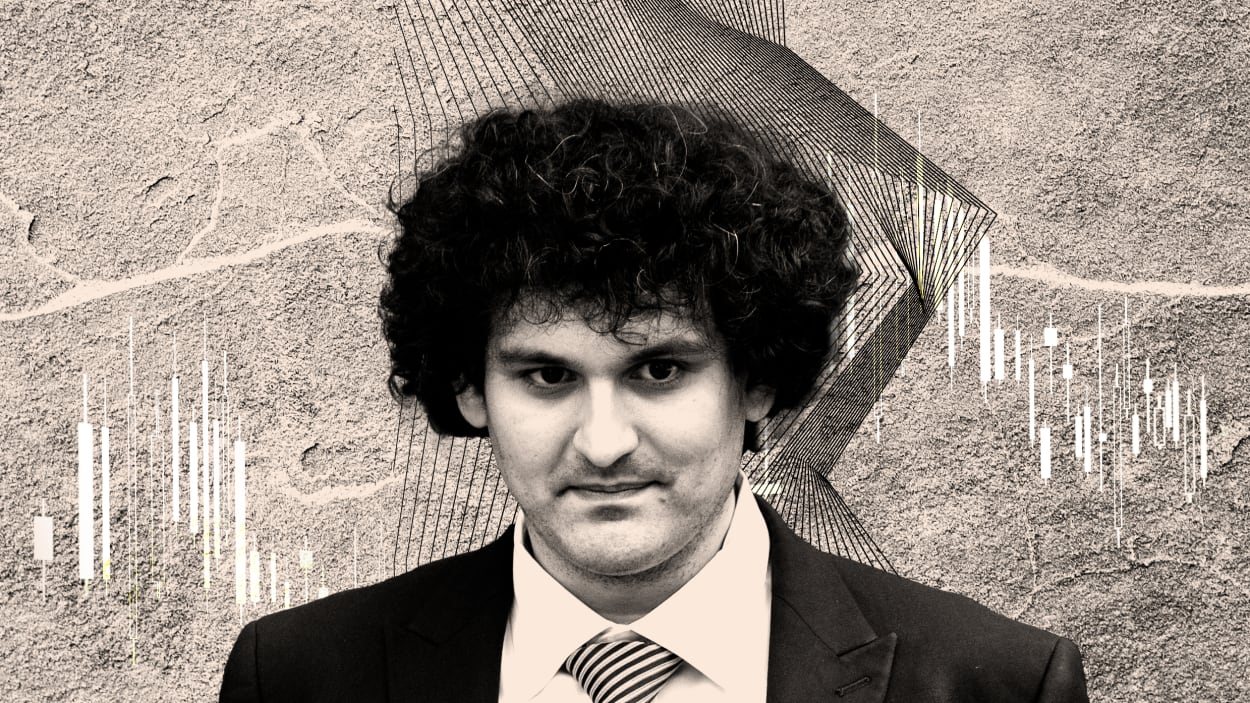 [Photo: Yuki Iwamura/Bloomberg via Getty Images; Rawpixel (wave, stock chart)]
.
.
Click the link below for the article:
.
__________________________________________
September 29, 2023
Mohenjo
Business, Food For Thought, Human Interest, Political, Science, Technical
amazon, business, Business News, current-events, Future, Hotels, human-rights, medicine, mental-health, research, Science, Science News, technology, Technology News, travel, vacation

Click the link below the picture
.
Although Spider-Man started as a comic book character, he has made his way to live-action video several times. I remember seeing him appear on The Electric Company in the 1970s for a short skit; it was cool but a little odd. In the modern era of live-action Spider-Man movies, we had the Tobey Maguire version, followed by Andrew Garfield’s turn, and finally, the Tom Holland version that appears in the current Marvel Cinematic Universe. We got a chance to see all three in Spider-Man: No Way Home, which was great, plus a good excuse to answer the question of whether MJ could really hang on during one of Spidey’s swings.
But now it is time to ask an even tougher question: Which version of Spider-Man is the strongest? Let’s compare the Maguire version in 2004’s Spider-Man 2 to the Holland version in 2017’s Spider-Man: Homecoming, since they perform similar actions: a test of strength that involves using Spidey’s webs to restrain a moving vehicle. Maguire’s Spider-Man stops a runaway subway train, and Holland’s uses webs to hold a splitting ferry together. (It would have been great to include Garfield’s version in this comparison, but there’s just not a scene that shows a similar feat of strength.)
Stopping a Subway Train
Here’s the situation in Maguire’s Spider-Man 2, which you can watch in this clip: After a battle with a bad guy, Spider-Man finds himself at the front of an out-of-control subway train. There are a bunch of people on the train, so he needs to save them. He attempts to slow the train by jamming his feet down onto the track, but that doesn’t work. So he shoots some webs at the buildings on both sides of the track and holds on. The webs stretch and—spoiler alert—the plan works. Spidey stops the train.
If we estimate the force required to stop this train, that will also be an estimate of Maguire’s strength.
.
 Photograph: Collection ChristOphel/Alamy
.
.
Click the link below for the article:
.
__________________________________________
September 29, 2023
Mohenjo
Business, Food For Thought, Human Interest, Political, Science, Technical
amazon, business, Business News, current-events, Future, Hotels, human-rights, medicine, mental-health, research, Science, Science News, technology, Technology News, travel, vacation

Click the link below the picture
.
Albert Einstein didn’t know about the existence of antimatter when he came up with the theory of general relativity, which has governed our understanding of gravity ever since. More than a century later, scientists are still debating how gravity affects antimatter, the elusive mirror versions of the particles that abide within us and around us. In other words, does an antimatter droplet fall down or up?
Common physics wisdom holds that it should fall down. A tenet of general relativity itself known as the weak equivalence principle implies that gravity shouldn’t care whether something is matter or antimatter. At the same time, a small contingent of experts argue that antimatter falling up might explain, for instance, the mystical dark energy that potentially dominates our universe.
As it happens, particle physicists now have the first direct evidence that antimatter falls down. The Antihydrogen Laser Physics Apparatus (ALPHA) collaboration, an international team based at CERN, measured gravity’s impact on antimatter for the first time. The ALPHA group published their work in the journal Nature today.
Every particle in the universe has an antimatter reflection with an identical mass and opposite electrical charge; the inverses are hidden in nature but have been detected in cosmic rays and used in medical imaging for decades. But actually creating antimatter in any meaningful amount is tricky because as soon as a particle of matter and its antagonist meet, the two self-destruct into pure energy. Therefore, antimatter must be carefully cordoned off from all matter, which makes it extra difficult to drop it or play with it any way.
“Everything about antimatter is challenging,” says Jeffrey Hangst, a physicist at Aarhus University in Denmark and a member of the ALPHA group. “It just really sucks to have to work with it.”
.
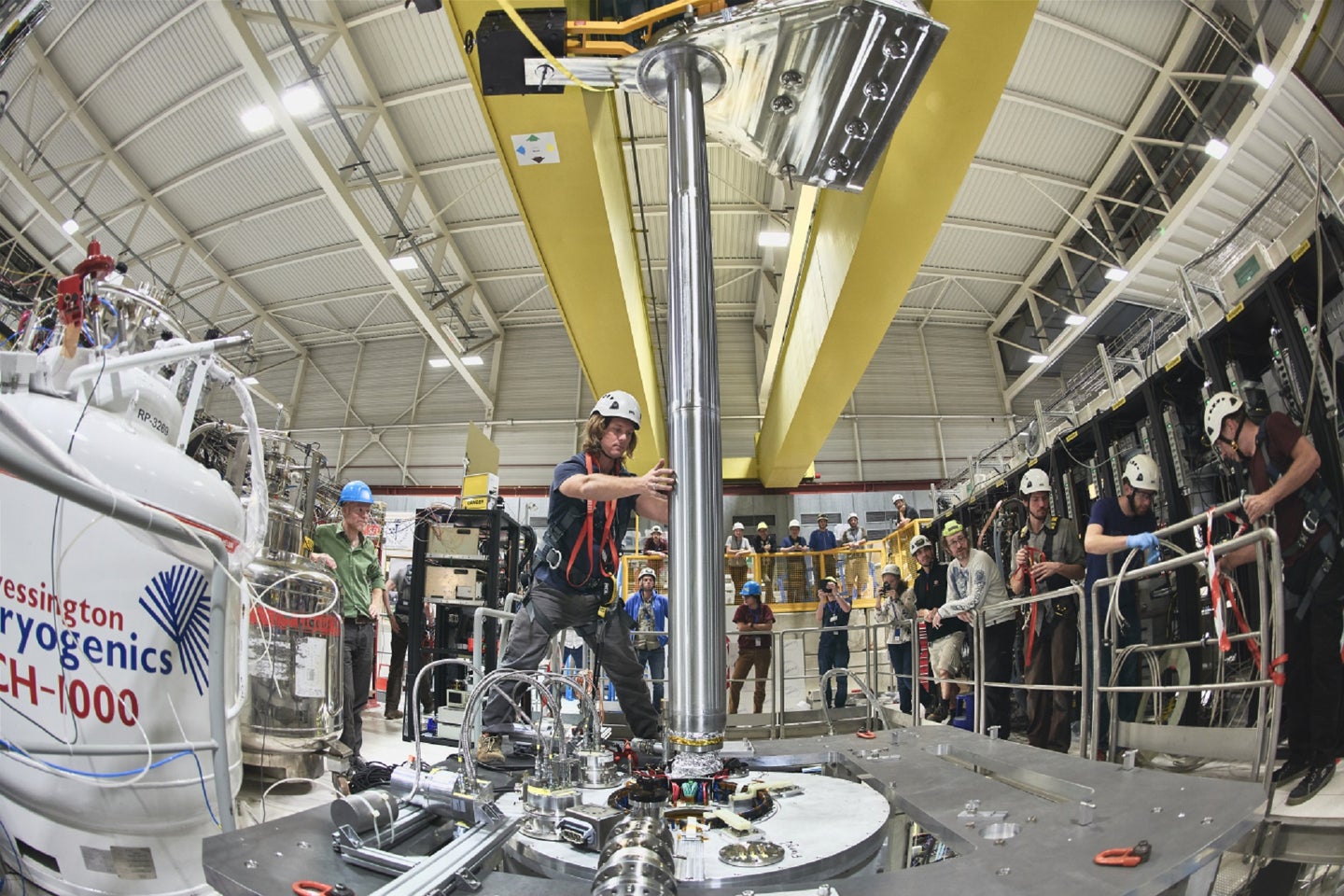 The hardest part of the ALPHA experiment was not making antimatter fall, but creating and containing it in a tall vacuum chamber. CERN
.
.
Click the link below for the article:
.
__________________________________________
September 28, 2023
Mohenjo
Business, Food For Thought, Human Interest, Political, Science, Technical
amazon, business, Business News, current-events, Future, Hotels, human-rights, medicine, mental-health, research, Science, Science News, technology, Technology News, travel, vacation

Click the link below the picture
.
Most of us are a little bit addicted to a lot of things — Instagram, our email, whatever show we watched way too late last night. It’s human to crave more of what we like, and for the most part, pretty harmless. But sometimes it seems like the entire world is stacked against moderation. That’s what led Michael Easter, a science journalist, professor, and author of the forthcoming book Scarcity Brain, to investigate a tendency known as “the scarcity loop” — a pattern that leads humans (and many other animals) to repeat excessive behaviors that can harm us in the long run.
Here, Easter discusses how the scarcity loop relates to money, shopping, and other tripwires embedded in modern consumption. It’s not all bad — as Easter puts it, easy access to things you want is a fortunate problem to have. The key to reining it in is being aware of it in the first place — and knowing when to walk away.
How did you learn about the scarcity loop, to begin with?
I started learning about the scarcity loop because I’m really interested in bad habits. My background is in science journalism, and writing about health and wellness. People always focus on building good new habits, but I’ve noticed that if you haven’t fixed your worst habits, you still have your foot on the brake. Basically, bad habits hurt people more than good habits help people. And there’s no better place to see this than Las Vegas, which happens to be where I live. This town is built on getting people to do excessive behaviors that often hurt them in the long run. Slot machines are the weirdest. They’re everywhere and people play them around the clock. I started digging into what makes slot machines so appealing, and that eventually led me to interview the guy who designed them. He’s the person who introduced me to the scarcity loop.
.
 Photo-Illustration: by The Cut; Photo: Getty Images
.
.
Click the link below for the article:
.
__________________________________________
September 28, 2023
Mohenjo
Business, Food For Thought, Human Interest, Political, Science, Technical
amazon, business, Business News, current-events, Future, Hotels, human-rights, medicine, mental-health, research, Science, Science News, technology, Technology News, travel, vacation

Click the link below the picture
.
Hollywood’s longest and most costly labor strike has ended.
Late in the day on Sunday, September 24 — after 146 days of labor stoppage, the longest strike in Hollywood history by a long shot — the Writers Guild of America (WGA), which represents Hollywood’s writers, and the Alliance of Motion Picture and Television Producers (AMPTP), an association of Hollywood’s largest studios and production companies, announced that an agreement had been reached. On Tuesday, September 26, the union’s leadership announced that they’d voted to end the strike and recommended the membership vote in favor of ratifying the contract.
The strike officially ended in the wee hours of Wednesday, September 27, and the union’s membership will begin their vote on Monday, October 2. For many, this moment is one for celebration. President Joe Biden, who is set to join striking auto workers on their picket line on Tuesday, issued a statement applauding the writers’ tentative deal. “There simply is no substitute for employers and employees coming together to negotiate in good faith toward an agreement that makes a business stronger and secures the pay, benefits, and dignity that workers deserve,” he said.
What does the agreement say?
Following the leadership’s vote to end the strike and recommend the membership ratify the contract, the WGA released details of the new agreement via a simplified memorandum of agreement (MOA). “We can say, with great pride, that this deal is exceptional — with meaningful gains and protections for writers in every sector of the membership,” they announced.
The exact language of the contract is yet to be released. But from the WGA summary, it appears the union was successful in its effort. The MOA includes increases to minimum wage and compensation, increased pension and health fund rates, improvements to terms for length of employment and size of writing teams (which had been shrinking drastically in recent years), and better residuals (which are like royalties), including foreign streaming residuals.
.
:format(webp)/cdn.vox-cdn.com/uploads/chorus_image/image/72684922/1498534184.0.jpg) The longest labor strike in Hollywood history is ending. Sarah Reingewirtz/MediaNews Group/Los Angeles Daily News via Getty Images
The longest labor strike in Hollywood history is ending. Sarah Reingewirtz/MediaNews Group/Los Angeles Daily News via Getty Images
.
.
Click the link below for the article:
.
__________________________________________
September 27, 2023
Mohenjo
Business, Food For Thought, Human Interest, Political, Science, Technical
amazon, business, Business News, current-events, Future, Hotels, human-rights, medicine, mental-health, research, Science, Science News, technology, Technology News, travel, vacation
Click the link below the picture
.
A little less than one-third of the universe—around 31 percent—consists of matter. A new calculation confirms that number; astrophysicists have long believed that something other than tangible stuff makes up the majority of our reality. So then, what is matter exactly?
One of the hallmarks of Albert Einstein’s theory of special relativity is that mass and energy are inseparable. All mass has intrinsic energy; this is the significance of Einstein’s famous E=mc2 equation. When cosmologists weigh the universe, they’re measuring both mass and energy at once. And 31 percent of that amount is matter, whether it’s visible or invisible.
That difference is key: Not all matter is alike. Very little of it, in fact, forms the objects we can see or touch. The universe is replete with examples of matter that are far stranger.
What is matter?
When we think of “matter,” we might picture the objects we see or their basic building block: the atom.
Our conception of the atom has evolved over years. Thinkers throughout history had vague ideas that existence could be divided into basic components. But something that resembles the modern idea of the atom is generally credited to British chemist John Dalton. In 1808, he proposed that indivisible particles made up matter. Different base substances—the elements—arose from atoms with different sizes, masses, and properties.
.
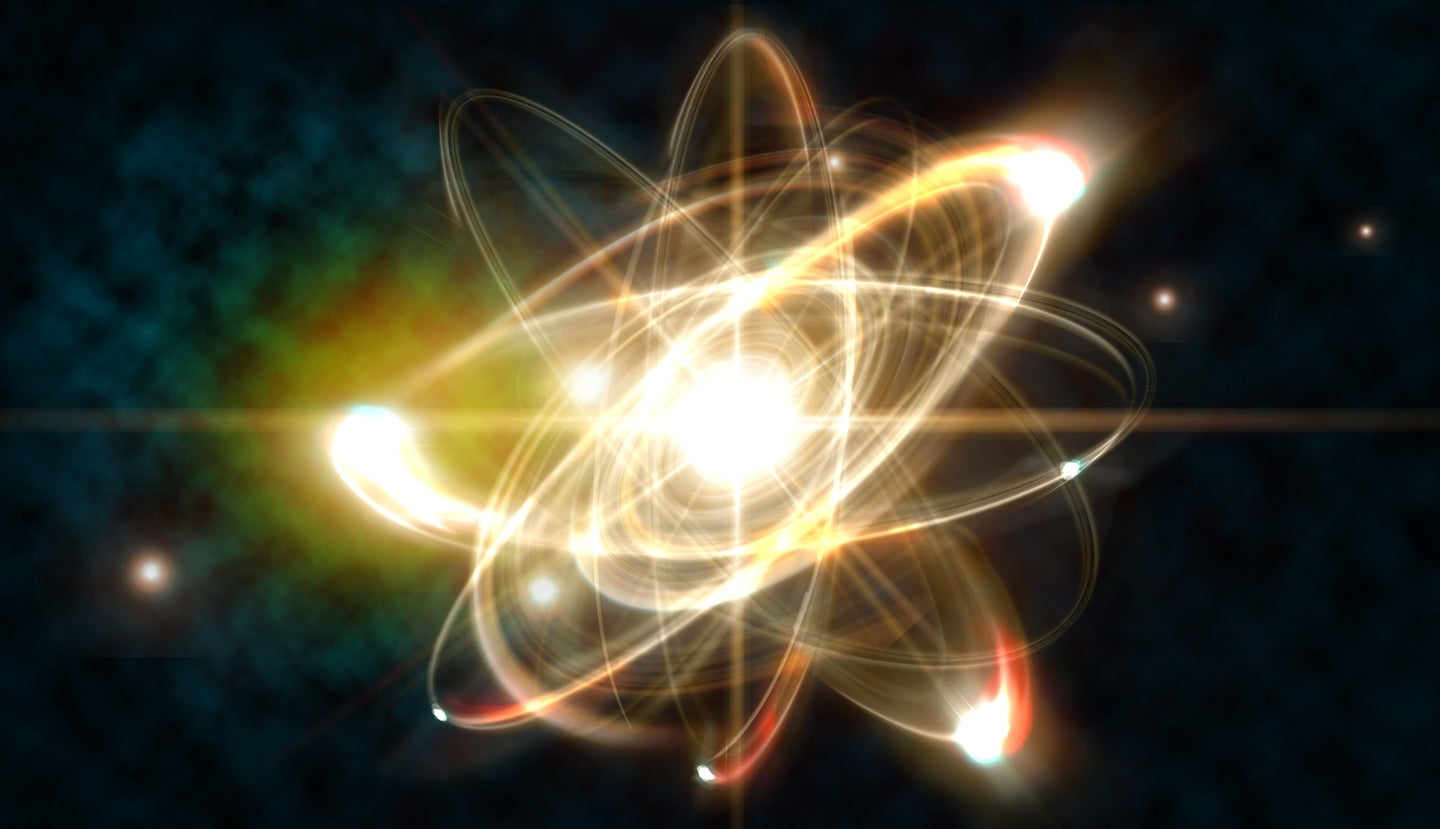 An atom consists of protons, neutrons, electors, and a nucleus. But matter consists of a whole lot more. Deposit Photos
.
.
Click the link below for the article:
.
__________________________________________
September 27, 2023
Mohenjo
Business, Food For Thought, Human Interest, Political, Science, Technical
amazon, business, Business News, current-events, Future, Hotels, human-rights, medicine, mental-health, research, Science, Science News, technology, Technology News, travel, vacation
Click the link below the picture
.
With giant pincers and rough, spider-like legs, Caribbean king crabs don’t look like your typical heroes. Yet, these crustaceans may be key to solving one of the world’s most pressing environmental problems: the decline of coral reefs.
In recent decades, warming seas, diseases, and other threats have wiped out half of the world’s corals and 90 percent of those in Florida. And this past summer, the problem accelerated. A devastating heat wave struck the Caribbean, pushing the reef in the Florida Keys — the largest in the continental US — closer to the brink of collapse.
The decline of coral reefs is an enormous problem for wildlife and human communities. Reefs not only provide habitat for as much as a quarter of all marine life, including commercial fish, but they also help safeguard coastal communities during severe storms. Simply put, we need coral reefs.
Coral reefs, meanwhile, need crabs.
Lucky for them, help is on the way. Scientists are in the process of building a crab army — hundreds of thousands of crustaceans strong — that they’ll unleash on Florida’s reefs, giving this ailing ecosystem a tool to fight back.
Crabs to the rescue
If you find crustaceans icky, Jason Spadaro’s lab is not a place you want to visit. Housed in a large, hurricane-proof building on Summerland Key in the Florida Keys, it’s full of tanks that are full of crabs — dozens of them. Some are the size of fingernails; others are as large as dinner plates. They all look a bit like rocks.
.
:format(webp)/cdn.vox-cdn.com/uploads/chorus_image/image/72692622/adler_3465__1_.0.jpg) Jason Spadaro, a marine ecologist at the Mote Marine Laboratory and Aquarium, holds a large Caribbean king crab. Jennifer Adler
Jason Spadaro, a marine ecologist at the Mote Marine Laboratory and Aquarium, holds a large Caribbean king crab. Jennifer Adler
.
.
Click the link below for the article:
.
__________________________________________
September 26, 2023
Mohenjo
Business, Food For Thought, Human Interest, Political, Science, Technical
amazon, business, Business News, current-events, Future, Hotels, human-rights, medicine, mental-health, research, Science, Science News, technology, Technology News, travel, vacation

Click the link below the picture
.
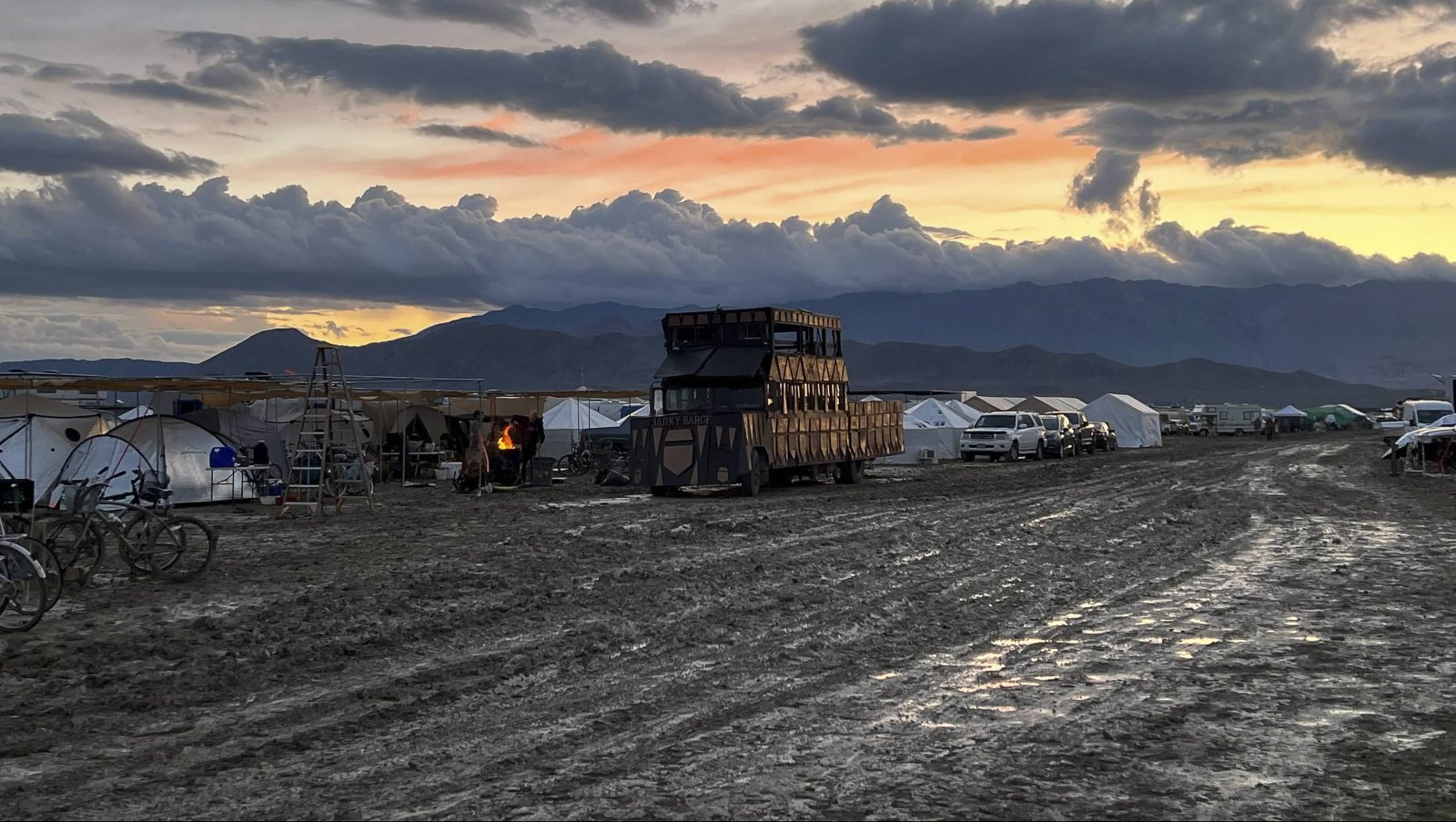
Burning Man, the transient bacchanal that attracts more than 70,000 partygoers to the remote Nevada desert for eight days every August, prides itself on its environmental bona fides. One of the festival’s main operational tenets is “leave no trace,” an essentially impossible feat for an event of its size. The Burning Man Project, the organization that runs the festival, has set a goal of becoming “carbon negative” — removing more emissions from the environment than the festival produces — by 2030.
It’s a tall order: The festival generates around 100,000 tons of carbon dioxide every year, the equivalent of burning over 100 million pounds of coal. A series of disasters at this year’s festival have brought the gap between Burning Man’s rhetoric and reality into sharp relief: First, a half dozen protesters demanding stronger environmental commitments from the organization blocked the festival’s entrance for roughly an hour before they were forcibly removed. Days later, torrential rain — the kind of event made more likely and extreme by climate change — stranded revelers in a dystopian free-for-all. But the greatest irony of all may be Burning Man’s less-publicized opposition to renewable energy in its own backyard.
Burning Man’s problems began on August 27, the first day of this year’s festival, when a blockade of climate protesters created a miles-long traffic jam on the two-lane highway into the dry lakebed of the Black Rock Desert, about 120 miles north of Reno, Nevada, where Burning Man takes place. In addition to calling for “systemic change,” they demanded that festival organizers take immediate steps to decrease the event’s carbon footprint. Burning Man, which started out as a small gathering of artists on a beach in San Francisco in the 1980s, has grown into a massive event that attracts a growing percentage of the world’s ultra-wealthy every year. The protestors, who were ultimately dispersed by police, demanded the festival “ban private jets, single-use plastics, unnecessary propane burning, and unlimited generator use per capita,” among other requests.
.
.
.
Click the link below for the article:
.
__________________________________________
Older Entries
Newer Entries
 James' World 2