Home

How to talk to children about the violence in Israel and Gaza

Leave a comment

Click the link below the picture

.

The scale of last weekend’s surprise attacks by Hamas militants on Israel has staggered Israel and the world.

Hundreds of Israelis have been killed, thousands injured and dozens still held hostage by Hamas, young children included. Israel’s ongoing retaliation has left hundreds of Palestinians dead, at least 90 children among them, according to the Palestinian Ministry of Health. And humanitarian groups are warning of a coming crisis if Israel follows through on its vow to cut off food, water, and electricity to Gaza, where nearly half of residents are under 18 years of age.

The news is alarming for anyone — and especially for children, who may be left grappling with questions about why other children are among those affected, and whether they are safe. Here’s some advice on how to get started with talking to kids about the conflict.

Be proactive about starting the conversation

Children of all ages deserve a conversation, said experts interviewed by NPR — even those without loved ones who live in Israel or Gaza.

Many children are likely to have heard something already, experts agreed, whether from peers at school, by picking up on news broadcasts or by overhearing adults’ conversations.

Often, parents choose to sit back, believing that their kids will start a conversation when they feel ready. That can be a mistake, said Waheeda Saif, a program coordinator at Riverside Trauma Center in Massachusetts. “We don’t want to wait for our kids to come to us,” she said.

Instead, Saif suggests using open-ended questions to start a conversation: “‘Have you heard what’s been going on in the world?’ ‘Have you heard anything about what’s going on in Israel and Palestine?’ And just see what they say, and take it from there,” she said.

.

https://media.npr.org/assets/img/2023/10/11/gettyimages-1714776443_wide-e7ff800613b5bed48ea5c9026d0c21df521f6855-s800-c85.webp

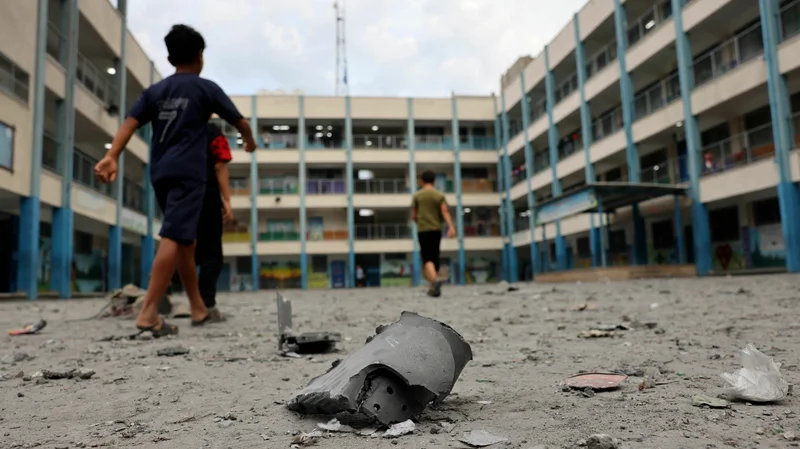
Palestinian children walk past debris in the courtyard of a school run by the United Nations Relief and Works Agency for Palestine refugees following Israeli airstrikes targeting Gaza City on Monday. Mohammed Abed/AFP via Getty Images

.

.

Click the link below for the article:

https://www.npr.org/2023/10/11/1205017249/how-to-talk-to-children-violence-israeli-palestinian-gaza-hamas

.

__________________________________________

Can German engineering solve the challenges of fusion?

2 Comments

Click the link below the picture

.

Last month, the German government announced an additional €370m (£320m; $390m) in funding for nuclear fusion research and development.

This brings the total budget earmarked for the next five years to €1bn.

So is Germany about to take a leap forward in fusion engineering?

“We want to create a fusion ecosystem with industry, so that a fusion power plant in Germany becomes reality as quickly as possible,” said Minister of Research, Bettina Stark-Watzinger.

Nuclear fusion is the reaction that powers the sun. It produces vast amounts of energy by fusing together hydrogen nuclei.

If it can be harnessed here on Earth, then it promises abundant, cheap, and emission-free electricity.

But the engineering hurdles are daunting. Sparking a fusion reaction and keeping it going needs immense temperature and pressure, and will require technology that is yet to be invented.

Private firms and government projects around the world have made much progress in recent years in overcoming the challenges.

Germany’s strength in engineering should put it in a strong position, but, for some, the fresh government investment has come too late.

.

https://ichef.bbci.co.uk/news/976/cpsprodpb/8FFA/production/_131285863_w7x_plasmagefaess_2021.jpg.webpCan Germany’s strong engineering base accelerate fusion technology?

https://ichef.bbci.co.uk/news/976/cpsprodpb/1ACA/production/_131285860_w7x_torus_innen.jpg.webpGermany is home to the advanced Wendelstein 7-X fusion experiment

.

.

Click the link below for the article:

https://www.bbc.com/news/business-66926972?utm_source=pocket_discover_parenting

.

__________________________________________

5 Signs in Adulthood That You’re a Child of a Narcissistic Parent, and How To Heal, According to Psychologists

Leave a comment

Click the link below the picture

.

You might be able to identify a narcissistic friend, colleague, or partner—perhaps by their constant show of self-importance or sole focus on themselves. The signs that you grew up with a narcissistic parent, though, may not be as obvious. After all, a parent is naturally in a disciplinary role, and it can be easy to confuse the kind of brash criticism that flows from narcissism for typical parental feedback. Not to mention, the outsize role of a parent in conditioning a child’s perception of “normal.” But pinpointing the signs that you may have grown up with a narcissistic parent can help you better understand why you act the way you do, have self-compassion, and form more secure relationships going forward.

While a relationship of any sort with a narcissist can be emotionally taxing or even abusive, narcissism and parenthood are a particularly toxic combination. “Good parenting requires empathy, compassion, and being willing to make some of your needs secondary,” says psychologist Alyson Nerenberg, PsyD, author of No Perfect Love: Shattering the Illusion of Flawless Relationships. “These are qualities that narcissists lack.”

“Good parenting requires empathy, compassion, and being willing to make some of your needs secondary—all qualities that narcissists lack.” —Alyson Nerenberg, PsyD, psychologist

Because narcissism revolves around a self-entitled need for constant admiration, the narcissistic parent has a hard time seeing their child as having needs or emotions that deserve attention, or as having worth beyond serving as a tool for their own validation. “They might fly into a rage or become withdrawn and depressed if the child doesn’t make them feel good about themselves by getting good grades or the starring role in the school play, or by listening to their problems,” says clinical psychologist Stephanie Kriesberg, PsyD, author of the forthcoming book Adult Daughters of Narcissistic Mothers.

Below, psychologists break down the common ways that a narcissistic parent-child relationship unfolds and share key behavioral signs that you grew up with a narcissistic parent, as well as how to manage the emotional fallout.

How narcissism presents in a parent and within the parent-child relationship

The narcissistic parent expects a child to fuel their ever-growing sense of self-interest and self-worth, either by asking the child to directly care for them and do things in service of them, or by pushing them to succeed in highly visible ways that the parent can then attribute to their own success in raising them. Largely, these tendencies spring from deep-seated insecurities, says Dr. Kriesberg. Essentially, the narcissistic parent is not secure in their own sense of self and needs to access that security through external sources, including their child.

“This typically shows up in two patterns: the grandiose pattern and the vulnerable pattern,” says Dr. Kriesberg. With the former, “the parent is brash, full of themselves, and always needs to be the center of attention,” not just professionally or socially but within their own home, too, she says. Their child is then enlisted to help them maintain that feeling.

But with the latter, the parent may seem “fragile, depressed, anxious, or needy,” says Dr. Kriesberg. “They may be ill, unstable, or unable to care or provide for their child.” In this case, their problems become the problems of their child, too, “of whom they demand a great deal of care and attention,” she says.

“[Narcissistic parents] tend to be emotionally reactive but do not allow their child to have an emotional reaction and may even shame their child for expressing feelings.” —Dr. Nerenberg

In either scenario, the roles of the parent and child are flipped, says Dr. Kriesberg, and the child is required to meet the needs of the parent, rather than the other way around. But should the child have their own needs or feelings, the narcissistic parent will often swiftly dismiss them. “They tend to be emotionally reactive but do not allow their child to have an emotional reaction and may even shame their child for expressing feelings,” says Dr. Nerenberg. Rather than being empathetic to the concerns of their child—were they to express, for example, fear, upset, or self-consciousness—the narcissistic parent would just tell them to “get over it,” she adds.

In the same realm, the narcissistic parent is prone to interrupting a child, if they deem whatever they’re saying to be unimportant, and may excessively criticize a child if they aren’t maintaining an image that props up the parent—whether by way of their physical appearance or performance in school or extracurriculars, says Dr. Nerenberg.

As a result, the child may begin to define their own worth by their looks or accomplishments and constantly strive for their parent’s nearly impossible-to-get approval. After a while, this unrewarded effort could leave them feeling as if they’ll never be “good enough,” leading to low self-esteem. At the extreme, the child may even feel guilty for the perceived shortcomings that the narcissistic parent calls out and blame themselves for having caused hardship in their parent’s life, says Dr. Nerenberg.

5 behavioral signs that you grew up with a narcissistic parent

1. You people-please to a fault or find yourself constantly in a caretaker role

“Because of their familiarity with trying to please a difficult parent, a child of a narcissist may later choose to date or even marry a narcissist because the role of taking care of another person’s needs is familiar for them,” says Dr. Nerenberg.

The relationship that first defined love for this person was transactional—they could earn their parent’s love by doing certain things for them or achieving certain successes—so they’ve internalized love as conditional and may seek out partnerships that also require them to meet certain rigid conditions. “We often end up choosing situations that are familiar to us and end up re-creating a similar dynamic,” says Dr. Nerenberg.

2. You regularly doubt yourself and your reality

In failing to give credence to their kid’s emotions, a narcissistic parent also often dismisses their child’s very understanding of reality. “They might have told you that certain things that happened didn’t actually happen,” says Dr. Kriesberg. “For example, let’s say you were upset because your sibling knocked over the block tower you just built. A narcissistic parent might say, ‘Your brother would never do that. You must have knocked it over yourself.’”

Over time, these kinds of experiences can “diminish the ‘sense of self’ that you bring to adulthood,” she says, “and leave you questioning yourself and your perceptions.”

3. You’re often on the hunt for external validation

A child of a narcissist learns at a young age that their own worth is intrinsically tied up in how much they can satisfy others. So, later in life, they could find themselves dead-set on receiving validation from others that they’re, in fact, serving them in some positive way.

“Children of narcissists can often ‘hear’ their parent’s overly critical voice in their head, like a recording that won’t turn off,” says Dr. Kriesberg. And one way to lower its volume is to solicit and receive from others the positive affirmations that their narcissistic parent rarely, if ever, provided.

4. You downgrade, dismiss, or hide your feelings or emotions

Perhaps one of the most common signs that you grew up with a narcissistic parent is the tendency to nullify your own feelings and emotions. As noted above, a child of a narcissist routinely has their feelings dismissed, so it only makes sense that over time, they’d come to believe that their own needs must be unimportant and inconsequential, says Dr. Nerenberg.

This belief can manifest in a few different ways: In some cases, you might just feel as if other people’s needs and happiness will always be fundamentally more important than your own (and, thus, you just ignore your needs). In other cases, you might actually have difficulty putting your feelings into words or even knowing how you feel, given that you were rarely allowed the space to articulate your feelings throughout childhood, says Dr. Kriesberg.

In still other cases, “you may feel the need to conceal your real feelings from a friend or partner in the same way that you once learned to hide your authentic feelings from a narcissistic parent,” says Dr. Nerenberg. “When you were vulnerable with a narcissistic parent, you were likely ridiculed or ignored, so you then learn to avoid being vulnerable with others later in life.”

5. You have difficulty trusting others

Lack of trust flows directly from the struggle with vulnerability noted above. As soon as a child of a narcissist feels as though they can’t open up to a friend or partner (for fear of criticism or ridicule, or just deep self-doubt), they close the door to trust.

“When you grow up with a narcissistic parent, you grow up with a parent who not only doesn’t see or validate your feelings but also might actively make fun of or even deny your emotions,” says Dr. Kriesberg. As a result, it’s no wonder you might later put up a wall and have trouble getting close with or actually trusting others—largely as a mechanism of self-protection, says Dr. Nerenberg.

How to heal from the experience of being raised by a narcissistic parent

Both psychologists stress the importance of educating yourself on parental narcissism. It’s only through understanding the patterns of narcissism and its impact that you can “stop blaming yourself for not meeting the impossible needs of a narcissistic parent and avoid falling into the trap of dating or befriending narcissists,” says Dr. Nerenberg.

Learning about narcissism in parent-child relationships can also help you form connections between things that currently set you off (like a critical remark) or roadblock your relationships (like an inability to be vulnerable) and various traumatizing interactions with a narcissistic parent in your childhood. “These experiences from growing up tend to get stuck in the emotional parts of our brain, out of awareness,” says Dr. Kriesberg. “But making connections between these past experiences and current ones you’re having can help you learn how and why you’re getting emotionally frozen in certain reactions.”

Once you have that awareness, “you can begin to take steps to remind yourself that you’re in the ‘here and now’” and no longer need to respond or react as you once needed to do, says Dr. Kriesberg. A few of her in-the-moment grounding recommendations? “Calming breathing, moving your body, talking to yourself with kindness, and repeating a soothing or empowering phrase in your head,” she says.

Long-term, it’s also essential to recognize and label the feelings that bubble up around relationships and the needs you have of others in your life, says Dr. Nerenberg. By doing so, “you can find empathy and compassion for yourself,” particularly after having had your emotions and needs so readily invalidated by a narcissistic parent, she says. In that realm, she also suggests prioritizing friendships and mentor relationships where empathy is the norm and seeing a therapist who can guide you toward supportive relationships and away from destructive ones.

While you’re moving through this healing process, it’s also important to set boundaries with your narcissistic parent. “For example, you might set a boundary that your parent(s) can’t call your home after a certain time or aren’t able to show up unannounced,” says Dr. Nerenberg. “Limiting your time with your narcissistic parent is crucial to healing and living your own life.”

.

Photo: Stocksy/Kike Arnaiz

.

.

Click the link below for the article:

https://www.wellandgood.com

.

__________________________________________


Child online safety laws will actually hurt kids, critics say

Leave a comment

Click the link below the picture

.

This summer, the Senate moved two bills dealing with online privacy for children and teens out of committee. Both have been floating around Congress in various forms over the last few years and are starting to get some real bipartisan support. 

At the same time, we’ve also seen many states pick up (and politicize) laws about online safety for kids in recent months. These policies vary quite a bit from state to state, as I wrote back in April. Some focus on children’s data, and others try to limit how much and when kids can get online. 

Supporters say these laws are necessary to mitigate the risks that big tech companies pose to young people—risks that are increasingly well documented. They say it’s well past time to put guardrails in place and limit the collecting and selling of minors’ data.

“What we’re doing here is creating a duty of care that makes the social media platforms accountable for the harms they’ve caused,” said Senator Richard Blumenthal, who is co-sponsoring a child online safety bill in the Senate, in an interview with Slate. “It gives attorneys general and the FTC the power to bring lawsuits based on the product designs that, in effect, drive eating disorders, bullying, suicide, and sex and drug abuse that kids haven’t requested and that can be addictive.”

But—surprise, surprise—as with most things, it’s not really that simple. There are also vocal critics who argue that child safety laws are actually harmful to kids because all these laws, no matter their shape, have to contend with a central tension: in order to implement laws that apply to kids online, companies need to actually identify which users are kids—which requires the collection or estimation of sensitive personal information. 

I was thinking about this when the prominent New York–based civil society organization S.T.O.P. (which stands for the Surveillance Technology Oversight Project) released a report on September 28 that highlights some of these potential harms and makes the case that all bills requiring tech companies to identify underage users, even if well intentioned, will increase online surveillance for everyone. 

.

https://wp.technologyreview.com/wp-content/uploads/2023/09/this-ride2c.jpg?fit=1080,607Stephanie Arnett/MITTR | Getty

.

.

Click the link below for the article:

https://www.technologyreview.com/2023/10/02/1080588/child-online-safety-laws-will-actually-hurt-kids-critics-say?utm_source=pocket_discover_parenting

.

__________________________________________

When Foster Parents Don’t Want to Give Back the Baby

Leave a comment

Click the link below the picture

.

Alicia Johansen spent her childhood moving with her drug-addicted mom from one place to the next, trying to brace herself for the moment when the water and the electricity would get cut off. So at 22, when she had a chance to run Dolittle’s pool hall in the ranching town of Akron, Colorado, she was intent on making some money. She kept the bar open deep into the night, after the older guys who bet on horse races departed, and the truckers and the younger crowd, with the meth, drifted in. Meth, she soon discovered, helped her work longer hours.

An occasional customer was Fred Thornton, a former high school baseball star in his early 30s. Fred was sometimes a roofer and at other times unemployed and homeless. They began dating casually and using together, and he told her of his own complicated childhood: placed in foster care as a toddler, after allegations of neglect, and later adopted.

Alicia’s period was irregular because of the meth, which also dimmed her self-awareness. She was six months along before she realized that she was pregnant; a month after that, she woke up in pain. She had preeclampsia, which caused dangerously high blood pressure, and needed an immediate C-section. She was airlifted to a hospital in Denver, a hundred miles away. Her and Fred’s son, Carter James Thornton, was born on Aug. 6, 2019 — two and a half months premature, 2.5 pounds in weight, and, according to his lab work, exposed to meth and to THC.

That first week at the hospital, Alicia hovered over Carter, who was curled beneath a web of tubes and wires, before going home to get baby things. The third week, she and Fred visited their son and held him skin-to-skin. The fourth week, back in Akron, they faltered: They had no gas money for a return to the big city; they were bickering; they were high. On the fifth week, when Carter was stable enough to leave the neonatal intensive care unit, Alicia returned, but foster parents from Akron were the ones who took him home.

Carter’s drug exposure and his parents’ weekslong absence had triggered a call to child protective services and then a neglect case against Alicia and Fred in the juvenile court of Washington County, where they lived. To get their son back, the judge informed them, they’d need to take a series of steps laid out by the county’s human services department: pass random urinalysis drug tests, with missed ones considered positives; secure stable housing and employment; and make it to regular supervised visits with Carter. During the next three months, as the department steadily recorded Alicia and Fred’s positive drug tests and missed visits, none of their excuses were entertained, a hard line for which they would later be grateful. In December, they decided that if they wanted to raise their child together — and they did — they would have to get sober for good.

.

https://img.assets-d.propublica.org/v5/images/20230326-Woolf-Colorado-Interveners-61_preview_maxWidth_3000_maxHeight_3000_ppi_72_embedColorProfile_true_quality_95.jpg?crop=focalpoint&fit=crop&fm=webp&fp-x=0.5&fp-y=0.5&h=1333&q=75&w=2000&s=82e1a43f3c0bc8e680797e21237dc08eAlicia Johansen and Fred Thornton with their son, Carter Credit: Rachel Woolf for ProPublica

.

.

Click the link below for the article:

https://www.propublica.org/article/foster-care-intervention-adoption-colorado?utm_source=pocket_discover_parenting

.

__________________________________________

Can You Hide a Child’s Face From A.I.?

2 Comments

Click the link below the picture

.

There are two distinct factions of parents on TikTok: those who will crack eggs over their kids’ heads for likes and those who are trying desperately to make sure the internet doesn’t know who their children are.

For the 35-year-old TikTok star who posts under the name Kodye Elyse, an uncomfortable online experience made her stop including her three children on her social media. A video she posted in 2020 of her young daughter dancing attracted millions of views and creepy comments from strange men. (She requested that The New York Times not print her full name because she and her children have been doxxed in the past.)

“It’s kind of like ‘The Truman Show’ on the internet,” said Kodye Elyse, who has four million followers on TikTok and posts about her work as a cosmetic tattoo artist and her experiences as a single mother. “You never know who’s looking.”

After that experience, she scrubbed her children’s images from the internet. She tracked down all of her online accounts, on sites such as Facebook and Pinterest, and deleted them or made them private. She has since joined the clamorous camp of TikTokers encouraging fellow parents not to post about their children publicly.

But in September, she discovered her efforts hadn’t been entirely successful. Kodye Elyse used PimEyes, a startling search engine that finds photos of a person on the internet within seconds using facial recognition technology. When she uploaded a photo of her 7-year-old son, the results included an image of him she had never seen before. She needed a $29.99 subscription to see where the image had come from.

.

CreditLINCOLN AGNEW

.

.

Click the link below for the article:

https://www.nytimes.com

.

__________________________________________

4 Actually-Enjoyable Longevity Habits That Can Help You Stay Healthier for Longer—No Diet or Exercise Involved

Leave a comment

Click the link below the picture

.

Does it seem like every piece of health advice you get boils down to one of two things—diet and exercise? Or, every time you visit the doctor, they give you the same off-the-script speech about healthy lifestyle habits that are basically just “eat well” and “move more”?
,

Of course, fitness and nutrition are fundamentally two of the best things you can do for your body. This is pretty undisputed. But there are other things you can do to improve your health, too—and some of them are actually really enjoyable (we promise!).

Take it from the communities around the globe known as Blue Zones—the regions where people live the longest, healthiest lives (identified by National Geographic Fellow and acclaimed writer Dan Buettner). Most of the individuals living into their 90s and beyond in these areas aren’t following the latest diet or running on a treadmill at a boutique bootcamp studio. They’re living well-rounded lifestyles that put a major emphasis on pleasure and joy.

“Even if you don’t reside in a Blue Zone, adopting these principles can have a profound impact on your health and longevity,” says Joy Stephenson-Laws, JD, founder of the renowned health education nonprofit Proactive Health Labs. She says we can all learn from these Blue Zone habits, and implement them into our own day-to-day. “By making simple yet significant lifestyle changes, anyone can follow the path to a healthier and potentially longer life,” she says.

Here are four Blue Zone-inspired healthy lifestyle habits for longevity that feel like anything but a chore.

1. Take it easy

“Downshift,” recommends Stephenson-Laws. “Manage stress effectively, as chronic stress can lead to inflammation and various chronic illnesses.”

None of the Blue Zone areas are in major metropolitan cities—and perhaps there’s a correlation between the pace of life and health. Perhaps it’s a bit of the “island life” state of mind. Aside from Loma Linda (a California suburb 60 miles east of Los Angeles) and Costa Rica, the other three Blue Zones are on actual islands: Okinawa, Sardinia, and Ikaria are all surrounded by water, separated from the hustle and bustle.

This isn’t to say that you’re doomed if you live in a city, but more to point out that a slower pace of life can contribute to your well-being. How can you slow down? Maybe there are commitments you can say “no” to, or ways to build more breaks into your days.

2. Embrace happy hour

If you don’t already drink, this isn’t your call to start—alcohol as an ingredient has no health benefits. But Blue Zone communities (except for Loma Linda, which is primarily comprised of sober Seventh Day Adventists) tend to imbibe before dinner with friends and family. An aperitif, if you will.

So if you do enjoy a glass of wine, have one at five rather than a late-night binge, says Stephenson-Laws. “Moderating alcohol consumption [can help you] maintain optimal health and avoid potential adverse effects.” What’s more, there’s plenty to be said about the longevity-boosting benefits of giving yourself a ritual that helps you to destress (see above) and find some camaraderie and connection, which leads us to…

3. Prioritize your social life

One of the best components discovered about the Blue Zone lifestyle habits? The sense of social connectedness. “Belonging is essential,” says Stephenson-Laws. “Building a supportive community, whether through faith-based services or positive social networks, contributes to a longer life.”

Put your relationships first—before work and other priorities. Investing your time in your family and building friendships can foster a sense of support, stave off loneliness, and give you greater purpose. “Surround yourself,” says Stephenson-Laws.

Ask yourself: What can you do this week—or right now—to improve your social health? It can be simpler than you think. Maybe invite someone on a walk. Schedule a catch-up call with a friend. Or introduce yourself to someone new at yoga class.

4. Find your happy

It’s easy to default into cynicism under the guise of “realism”—but it’s far more courageous to choose joy and optimism in spite of hurdles. “Embracing a sense of purpose and positive attitude [is a Blue Zone habit],” says Stephenson-Laws. “This can significantly contribute to a healthy and happy life.”

Though gratitude, optimism, and finding meaning aren’t necessarily the easiest things to implement right away, this formula can have a significant impact on your physiological and psychological well-being. And it’s free—no supplements or gym memberships required.

.

Photo: Getty Images/Photo by Roo Lewis
.

.

Click the link below for the article:

https://www.wellandgood.com

.

__________________________________________

Why Are We Always on Call for Our Kids?

Leave a comment

Click the link below the picture

.

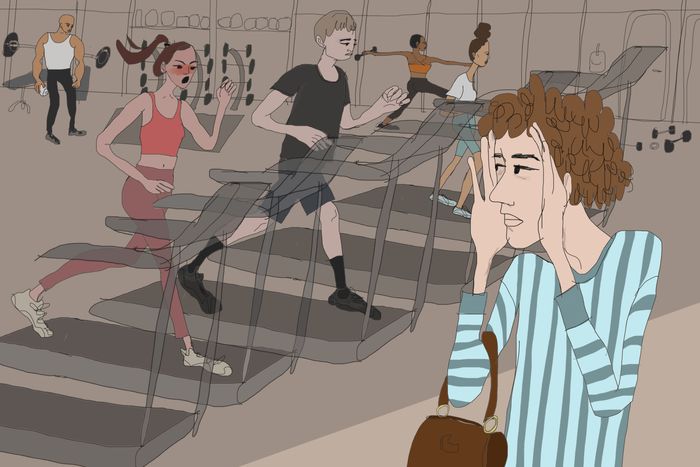
A few years ago, a beloved French bakery near my house closed and was replaced by a gym. So it goes with gentrification: Ease replaced by discipline. The new gym is part of the OrangeTheory chain, which is open only for classes, like a SoulCycle. It’s expensive, and the people I see coming out of there always look flushed and satisfied post-workout. I won’t make excuses or offer explanations. I’ll just skip to the part where I ended up joining.

At these gyms, you wear a heart monitor on your arm that is linked to a screen at the front of the room, on which everyone’s heart rate is displayed. Your name appears in a box that changes color from green to orange to red as your heart rate increases. The lights in the room are orange, and the music is incredibly loud. Every detail has been optimized for maximum motivation-juicing purposes. Previously, I had thought gyms like this were evil because exercise is supposed to be loose and creative, or something. I’ve changed my mind about that. I don’t have time for loose and creative workouts lately.

So there I was on a recent Saturday morning, having fully crossed over to the side I used to think I hated, and I was loving it. I was just getting into the second half of the class, my heart rate steady in the orange zone, when the trainer approached my rowing machine: “Kathryn, right? There’s someone here to see you.”

I looked up, and through the glass doors to the lobby, I saw … my 13-year-old son. He was in shower slides and pajamas, and he was holding my debit card up to the glass, beseeching me. Through the glass door, he mouthed: Can I use it? 

I gestured no with my whole body. I sent vibrational waves of no that, I was hoping, would be  palpable to him through the glass door. I frantically waved my hands for him to leave. GO, I mouthed, AWAY! He stood there for a minute, taking it in, and then he left. I looked up at the screen, and my heart rate was in the red zone. I was molten with anger.

What part of my parenting had failed to erect and maintain a boundary between my basically teenage son and my workout time? Why was there porousness there?! Where did he get the idea that he could interrupt my exercise class with a request like that?

.

https://pyxis.nymag.com/v1/imgs/a12/84a/a4da24f1eb03a37f35767b8b37de630387-mom-time-final.rhorizontal.w700.jpgIllustration: Hannah Buckman

.

.

Click the link below for the article:

https://www.thecut.com/2023/10/parents-child-time-availability-boundaries.html?utm_source=pocket_discover_parenting

.

__________________________________________

A New Test for an Old Theory About Dreams

Leave a comment

Click the link below the picture

.

When Massimo Scanziani’s daughter was young, he’d often see her eyes twitching beneath her eyelids while she was sleeping. These rapid eye movements (or REMs) are so obvious, Scanziani told me, that he can hardly believe that they were described just seven decades ago. In 1953, Eugene Aserinsky and Nathaniel Kleitman identified a special phase of sleep when neurons were abuzz and eyes were shut but flitting about. During this phase, now called “REM sleep,” people tended to have vivid dreams. Maybe, Kleitman suggested, the eye movements reflected “where and at what the dreamer was looking” in their virtual world.

Several researchers tested this “scanning hypothesis” in the ’50s and ’60s by waking sleeping volunteers when their eyes twitched and asking them what they had just dreamed. Perhaps unsurprisingly, these crude methods failed to produce consistent results.

.

https://cdn.theatlantic.com/thumbor/rkFAn_T6kQojXk1QA7e6x0ukHzw=/0x0:2517x1416/976x549/media/img/mt/2022/08/GettyImages_93781806/original.jpgTom Kelley / Getty

.

.

Click the link below for the article:

https://www.theatlantic.com/science/archive/2022/08/eyes-body-twitch-rem-sleep-dreaming/671232/?utm_source=pocket_collection_story

.

__________________________________________

‘I Blew Up My Marriage. Now I Want Her Back.’

1 Comment

Click the link below the picture

.

The Phone Call

Esther Perel: What I understand so far is that you are in a transition. 

Caller: Very much so.

You are hoping to be able to reunite with your ex-wife. You were together for about seven years. 

Yeah, married seven and together 13.

Okay, and the last time you were in a transition, you had just had a new job, you had a child, you had a new house, and you let it all go. You fell in love with another woman. You instigated a rather expedient divorce. You have been with this other woman since, and at the moment of the next transition, which was to marry this new woman, you freaked out, and you realized that’s not at all what you wanted. 

Yeah.

And you were about to meet with your ex for the first time again as a date, not just as co-parents. 

She wouldn’t call it a date, but I did.

You called it a date. She called it an identity check? 

I guess you can say that she told me she wanted to see me, to see if it’s worth getting back into it.

And your big question is, Do I deserve this? You used the word redemption, which is a very big word, and as I was listening to your question, my first thought was, What does he mean by redemption? What is redemption for you? 

Redemption is winning her back. She’s always been my home, and I broke her in a very devastating way. I realize that my question is a little bit — I don’t know if convoluted is the right word because I know it’s up to her, really. But I’m having trouble at this moment even knowing that I deserve forgiveness.

That is a good question. Can I ask you, before then — talk to me about your experience of homelessness. 


.

https://pyxis.nymag.com/v1/imgs/f55/d8b/022407dcdb12a836748af3ce991ff3193d-lede-esther-calling.rhorizontal.w1100.jpgPhoto-Illustration: by The Cut; Photos: Getty Images

.

.

Click the link below for the article:

https://www.thecut.com/2023/10/esther-calling-how-can-i-get-my-wife-back-and-deserve-her.html?utm_source=pocket_discover_parenting

.

__________________________________________

Older Entries Newer Entries

Amor Entre Estrellas

¡Bienvenido de vuelta viajero!

Heart of Loia `'.,°~

so looking to the sky ¡ will sing and from my heart to YOU ¡ bring...

Michael Ciullo

CEO and Founder of Nsight Health

Nelson MCBS

Catholic News, Prayers, HD Images, Rosary, Music, Videos, Holy Mass, Homily, Saints, Lyrics, Novenas, Retreats, Talks, Devotionals and Many More

Global geopolitics

Decoding Power. Defying Narratives.

Talk Photo

A creative collaboration introducing the art of nature and nature's art.

Movie Burner Entertainment

The Home Of Entertainment News, Reviews and Reactions

Le Notti di Agarthi

Hollow Earth Society

C r i s t i a n a' s Fine Arts ⛄️

•Whenever you are confronted with an opponent, conquer him with love.(Gandhi)

TradingClubsMan

Algotrader at TRADING-CLUBS.COM

Comedy FESTIVAL

Film and Writing Festival for Comedy. Showcasing best of comedy short films at the FEEDBACK Film Festival. Plus, showcasing best of comedy novels, short stories, poems, screenplays (TV, short, feature) at the festival performed by professional actors.

Bonnywood Manor

Peace. Tranquility. Insanity.

Warum ich Rad fahre

Take a ride on the wild side

Madame-Radio

Découvre des musiques prometteuses (principalement) dans la sphère musicale française.

Ir de Compras Online

No tiene que Ser una Pesadilla.

Kana's Chronicles

Life in Kana-text (er... CONtext)

Cross-Border Currents

Tracking money, power, and meaning across borders.

Jam Writes

Where feelings meet metaphors and make questionable choices.

emotionalpeace

Finding hope and peace through writing, art, photography, and faith in Jesus.

WearingTwoGowns.COM

The Community for Wounded Healers: Former Medical Students, Disabled Nurses, and Faith-Fueled Pivots

...

love each other like you're the lyric to their music

Luca nel laboratorio di Dexter

Comprendere il mondo per cambiarlo.

Tales from a Mid-Lifer

Mid-Life Ponderings

Creative

Travel,Tourism, Life style "Now in hundreds of languages for you."

freedomdailywriting

I speak the honest truth. I share my honest opinions. I share my thoughts. A platform to grow and get surprised.

The Green Stars Project

User-generated ratings for ethical consumerism

Cherryl's Blog

Travel and Lifestyle Blog

Sogni e poesie di una donna qualunque

Questo è un piccolo angolo di poesie, canzoni, immagini, video che raccontano le nostre emozioni

My Awesome Blog

“Log your journey to success.” “Where goals turn into progress.”

pierobarbato.com

scrivo per dare forma ai silenzi e anima alle storie che il mondo dimentica.

Thinkbigwithbukonla

“Dream deeper. Believe bolder. Live transformed.”

Vichar Darshanam

Vichar, Motivation, Kadwi Baat ( विचार दर्शनम्)

Komfort bad heizung

Traum zur Realität

Chic Bites and Flights

Savor. Style. See the world.

ومضات في تطوير الذات

معا نحو النجاح

Broker True Ratings

Best Forex Broker Ratings & Reviews

Blog by ThE NoThInG DrOnEs

art, writing and music by James McFarlane and other musicians

fauxcroft

living life in conscious reality

Srikanth’s poetry

Freelance poetry writing

JupiterPlanet

Peace 🕊️ | Spiritual 🌠 | 📚 Non-fiction | Motivation🔥 | Self-Love💕

Sehnsuchtsbummler

Reiseberichte & Naturfotografie