



 .
.
__________________________________________
Assorted human interest posts.
October 26, 2023
Business, Food For Thought, Human Interest, Political, Science, Technical amazon, business, Business News, current-events, Future, Hotels, human-rights, medicine, mental-health, research, Science, Science News, technology, Technology News, travel, vacation 6 Comments
.
__________________________________________
October 25, 2023
Business, Food For Thought, Human Interest, Political, Science, Technical amazon, business, Business News, current-events, Future, Hotels, human-rights, medicine, mental-health, research, Science, Science News, technology, Technology News, travel, vacation 4 Comments

Click the link below the picture
.
Liz Fuller-Wright, a New Jersey mom, said her sons’ school schedules were “completely incompatible” with full-time work.
“I can’t schedule late afternoon meetings, I can’t participate in the end-of-day socialization around the watercooler that is so vital for supporting work relationships, plus I have to put in a third or fourth shift after the boys are in bed when I can finally focus again,” said Fuller-Wright, whose boys are 4 and 7.
It’s a frustration that’s common for many American parents. The stereotypical workday stretches from 9 to 5, while the typical school day runs from 8 to 3. That leaves many working parents with a conundrum that many people recognize, but few institutions have been able to change.
The history of the 8 to 3 school day
The 8 to 3 school schedule emerged alongside public education in the mid to late 1800s. Alex Anderson-Kahl, a school psychologist in Columbia, Missouri, who founded the blog Healing Little Hearts, noted that back then, mothers were typically thought to be homemakers, while children were needed to work around the home and in businesses in the afternoons.
Anderson-Kahl said that within that scenario, free time after school had a lot of potential.
“This could foster a sense of responsibility and community involvement,” he said.
The gap between when the school day ends and when the work day finishes, however, simply doesn’t work for many modern families. A Pew Research Center study published in 2019 found that 23% of US kids live with one parent and no other adult. If that parent works in the afternoon, childcare can be hard to come by. In addition, both parents work in more than 63% of two-parent houses, according to a study from the Pew Research Center from 2015.
.
Cavan Images/Getty Images
.
.
Click the link below for the article:
.
__________________________________________
October 25, 2023
Business, Food For Thought, Human Interest, Political, Science, Technical amazon, business, Business News, current-events, Future, Hotels, human-rights, medicine, mental-health, research, Science, Science News, technology, Technology News, travel, vacation Leave a comment

Click the link below the picture
.
It’s the greatest love story—that movie is emblazoned on us. It romanticizes the decadence and excess that is hip-hop,” DJ Quik says from the Zoom rectangle, holding up a photo of himself wearing a T-shirt featuring the image of one of Al Pacino’s most famous roles, Scarface’s Tony Montana.
Though Scarface centers on the rise and fall of a fictitious Cuban immigrant turned Miami cocaine kingpin—a story inspired by Al Capone, an Italian American mobster, and directed by Brian de Palma, who is also of Italian descent—it resonates with Quik, and with me. We are African Americans, born and raised on opposite sides of the country, with upbringings marked by different generations. And yet we have this deep love for Italian American actors—and the country’s cinema at large—that bridges the gap between us. Quik vividly remembers when the VHS of Scarface first made its way to his California neighborhood, while I fondly recall a Christmas morning from my childhood when my mother gave me copies of the Rocky movies and the Godfather trilogy.
I grew up in South Jersey, where you could no more extract the Italian American influence from my formative years than you could separate salt from saline. Around the dinner table, my loved ones would joke about Sicily’s proximity to Africa. We’d talk, lovingly, about the seasoning in our respective cuisines, about how some southern Italians looked like us.
My mother passed down an abiding love of Pacino, Sylvester Stallone, Robert De Niro, and Joe Pesci. I’d catch her watching The Sopranos when I’d come home from school. The sense that Italians and African Americans were somehow connected felt ingrained, but I’ve recently started to think about the ways cinema reflects back to us as a group with its own history of stereotyping, marginalization, and class. When I would watch Italian Americans onscreen, I recognized that there is a white-black binary; at the same time, there was a spectrum of whiteness and the less WASP-presenting one was (darker skin and hair, thicker accents, flamboyant clothing), the more bigotry they received.
Since the late-19th century, Italian immigrants and African Americans have lived close to one another, especially throughout cities and neighborhoods in the Northeast. “Italians were not a part of the white American imagination and social structure until later,” John Gennari, author of Flavor and Soul: Italian America at Its African American Edge, tells me. Like my own, Gennari’s mother grew up in New Jersey, which, along with New York and southern New England, he calls “the Sinatra belt.” Italian Americans and African Americans often worked alongside each other, whether in the southern fields, or further north. The two populations overlap in their migrations to the north. Ours is famously recognized as the Great Migration. “When emancipation comes, most formerly enslaved Black folk want to get away from the plantation economy,” Gennari said, “and those workers need to be replaced, and southern Italian immigration has a lot to do with that.”
.

.
.
Click the link below for the article:
.
__________________________________________
October 24, 2023
Business, Food For Thought, Human Interest, Political, Science, Technical amazon, business, Business News, current-events, Future, Hotels, human-rights, medicine, mental-health, research, Science, Science News, technology, Technology News, travel, vacation 2 Comments

Click the link below the picture
.
The Palestinian militant group Hamas launched an unprecedented assault on Israel on 7 October, with hundreds of gunmen infiltrating communities near the Gaza Strip.
More than 1,400 Israelis were killed, while the Israeli military says more than 220 soldiers and civilians, including women and children, were taken to Gaza as hostages.
More than 5,000 Palestinians in Gaza have been killed in air and artillery strikes carried out by the Israeli military in response, according to Gaza’s health ministry. Israeli troops have also massed along the Gaza boundary, and Palestinians are bracing themselves for a major ground operation.
Israel has also cut off electricity and most water and stopped imports of food and medicine, although it has allowed in several dozen aid lorries through Egypt’s Rafah crossing since Saturday.
What was Israel before 1948, and what was the Balfour Declaration?
Britain took control of the area known as Palestine following the defeat of the Ottoman Empire, which ruled that part of the Middle East, in World War One.
The land was inhabited by a Jewish minority and Arab majority, as well as other, smaller ethnic groups.
Tensions between the two peoples grew when the international community gave the UK the task of establishing a “national home” in Palestine for Jewish people.
This stemmed from the Balfour Declaration of 1917, a pledge made by then Foreign Secretary Arthur Balfour to Britain’s Jewish community.
The declaration was enshrined in the British mandate over Palestine and endorsed by the newly-created League of Nations – forerunner of the United Nations – in 1922.
To Jews, Palestine was their ancestral home, but Palestinian Arabs also claimed the land and opposed the move.
Between the 1920s and 1940s, the number of Jews arriving there grew, with many fleeing from persecution in Europe, especially the Nazi Holocaust in World War Two.
Violence between Jews and Arabs, and against British rule, also increased.
In 1947, the UN voted for Palestine to be split into separate Jewish and Arab states, with Jerusalem becoming an international city.
That plan was accepted by Jewish leaders but rejected by the Arab side and never implemented.
.
 Getty Images
.
.
Click the link below for the article:
.
__________________________________________
October 24, 2023
Business, Food For Thought, Human Interest, Political, Science, Technical amazon, business, Business News, current-events, Future, Hotels, human-rights, medicine, mental-health, research, Science, Science News, technology, Technology News, travel, vacation 2 Comments

Click the link below the picture
.
I don’t want to alarm you men, but you’re not men anymore.
You can be forgiven for not noticing that men aren’t men anymore, because men are always not men anymore. “Men aren’t men anymore”—like “nobody younger than me wants to work” and “this isn’t real music”—has been said every day in every language since we’ve had days and languages. It’s a particular concern in America, where men haven’t been men anymore from the jump. Almost certainly one of our founding fathers told his son, “Don’t leave this house without your wig, stockings, and frock coat—I didn’t raise a sissy.”
But now, as our culture reevaluates gender, reconsiders the patriarchy, and has red-assed opinions about Barbie, men are yelling about men not being men anymore more than ever. It’s given rise to countless Dour Dude podcasts and fueled a branding revolution in conservative politics. No less an authority on Dude Stuff than Missouri senator Josh Hawley published a book this year called Manhood: The Masculine Virtues America Needs, which reads like the title of a very niche gay porn film and has yet to make a single person forget the image of him running away from the encroaching mob on January 6, 2021. Masculinity is a hot conversation.
I am proud to tell you that Esquire has been on the “thinking too much about what is and is not manly” beat from Issue 1, Autumn 1933, when we promised we were “determined to stay masculine.” Have we lived up to that promise? Let’s find out together.
In 1959, a quiz tested readers’ Masculinity Quotient with questions like “When you bought your last car, what influenced you most: (1) its color, or (2) its power” and “At a bar, are you apt to order (1) a Manhattan made with sherry, or (2) rye.” Right away, the savvy reader will say, “Got it—1 is ladies, 2 is gentlemen,” but then: “Can you ‘rise and shine’ in the morning without too much grumbling? (1) no (2) yes” and “Have you visited an art museum of your own free will within the last six months? (1) yes (2) no,” and you think, Researchers of 1959, are you okay? (1) no (2) no.
In Esquire’s defense, we reflect the culture as much as we seek to inform it, which is to say, sometimes it’s the advertisers’ fault. An ad for lower-tar Merit cigarettes in 1997 features a relaxed, handsome dude in a Henley, with copy that promises: “You can do it! You can switch down to lower tar.” Henley Man points his cig toward the camera confidently, as if to say, “Fellas, it is no longer gay to not die.”
.
 Getty images
.
.
Click the link below for the article:
.
__________________________________________
October 23, 2023
Business, Food For Thought, Human Interest, Political, Science, Technical amazon, business, Business News, current-events, Future, Hotels, human-rights, medicine, mental-health, research, Science, Science News, technology, Technology News, travel, vacation Leave a comment

Click the link below the picture
.
Interoception is the ability to recognize internal bodily signals, such as feeling hot or cold, hungry or thirsty. In the same way that the nerves in our muscles and joints will send signals to our brain, letting it know where we are in physical space, the nerves in our organs will also send signals about how full our digestive tract is, how fast our heart is beating, or how hot we are.
This, in turn, can help our brain understand whether we are anxious or relaxed, whether or not we need to eat or drink, or if we need to use the bathroom before leaving the house. Poor interoception is often associated with conditions such as autism and ADHD, and tend to go hand in hand with other sensory processing issues.
Some of the early signs of poor interoception
Some of the early signs of poor interoception in a child can include difficulties with potty training, due to issues with recognizing whether they need to poop or pee. Other signs can include erratic eating patterns, such as not eating for long periods of time or eating past the point of fullness, due to an inability to recognize hunger and satiety signals.
Poor interoception can also affect a child’s sleep schedule, making bedtime especially difficult. “You’ll see kids become rageful, because they’re exhausted, but they don’t have the sense that they need to go to bed,” says Andrew Kahn, a licensed psychologist, and associate director of behavior change and expertise at Understood.org.
Poor interoception can affect emotional regulation
In addition to difficulties with recognizing physical cues, such as hunger or thirst, poor interoception can affect a child’s ability to regulate their emotions. “When we talk about interoception, a person’s emotional reactions occurs because they can’t interpret their bodily signals internally,” Kahn says.
.
 Photo: BOKEH STOCK (Shutterstock)
.
.
Click the link below for the article:
.
__________________________________________
October 23, 2023
Business, Food For Thought, Human Interest, Political, Science, Technical amazon, business, Business News, current-events, Future, Hotels, human-rights, medicine, mental-health, research, Science, Science News, technology, Technology News, travel, vacation Leave a comment

Click the link below the picture
.
It seemed like a pretty straightforward exercise.
Arsenii Alenichev typed sentences like “Black African doctors providing care for white suffering children” and “Traditional African healer is helping poor and sick white children” into an artificial intelligence program designed to generate photo-like images.
His goal was to see if AI would come up with images that flip the stereotype of “white saviors or the suffering Black kids,” he says. “We wanted to invert your typical global health tropes.”
Alenichev is quick to point out that he wasn’t designing a rigorous study. A social scientist and postdoctoral fellow with the Oxford-Johns Hopkins Global Infectious Disease Ethics Collaborative, he’s one of many researchers playing with AI image generators to see how they work.
In his small-scale exploration, here’s what happened: Despite his specifications, with that request, the AI program almost always depicted the children as Black. As for the doctors, he estimates that in 22 of over 350 images, they were white.
Alenichev’s work is part of a broader study of global health images that he is conducting with his adviser, Oxford sociologist Patricia Kingori. For this experiment, they used an AI site called Midjourney, because their reading suggested it was good at producing images that looked very much like photos.
Alenichev didn’t just put in one phrase to see what would happen. He brainstormed ways to see if he could get AI images that matched his specifications, collaborating with anthropologist Koen Peeters Grietens at the Institute of Tropical Medicine in Antwerp. They realized AI did fine at providing on-point images if asked to show either Black African doctors or white suffering children. It was the combination of those two requests that was problematic.
.

A researcher typed sentences like “Black African doctors providing care for white suffering children” into an artificial intelligence program designed to generate photo-like images. The goal was to flip the stereotype of the “white savior” aiding African children. Despite the specifications, the AI program always depicted the children as Black. And in 22 of over 350 images, the doctors were white.Midjourney Bot Version 5.1. Annotation by NPR.
.
.
Click the link below for the article:
.
__________________________________________
October 22, 2023
Business, Food For Thought, Human Interest, Political, Science, Technical amazon, business, Business News, current-events, Future, Hotels, human-rights, medicine, mental-health, research, Science, Science News, technology, Technology News, travel, vacation Leave a comment

Click the link below the picture
.
Parenting styles are currently all the rage, and the herd of animal-themed subtypes just keeps growing. Tiger, elephant, dolphin, and even jellyfish styles are amongst those that have emerged in an attempt to help parents identify and evaluate their approach and give them a fresh perspective as to how their parenting style affects their kids.
It’s not as though these styles are new, per se. But they function as an easy-to-remember repackaging of the authoritarian, authoritative, and permissive paradigms identified by psychologist Diana Baumrind in the 1960s, which psychologists still widely accepted today.
Baumrind’s parenting style construct focuses on how demanding or structured parents are and their responsiveness to kids’ needs. Authoritative parents who have reasonably high expectations for their kids while at the same time responding to their needs quickly and with warmth embody the best of both worlds. They tend to raise kids who feel appreciated, autonomous, and empowered and are more likely to become independent, motivated, and compassionate adults.But even with a well-explained and time-tested construct for parenting styles, the question still remains as to what factors and characteristics contribute to healthy authoritative parenting. And researchers from the University of Bucharest recently published a study in Frontiers in Public Health that sheds light on how emotional intelligence, parental competence, self-esteem, and self-compassion inform how people parent.
Using a question-based survey to gather data from 610 respondents, the researchers determined that, as expected, emotional intelligence — the ability to manage your emotions and understand the emotions of people around you — is the underlying foundation for authoritative parenting.
“Parents with a high level of emotional intelligence demonstrate a high level of parental competence as a result of the specific emotional intelligence strategies they use in the parenting process,” the study authors wrote. “The high level of emotional intelligence of parents is associated with the adoption of the authoritative parenting style that is in agreement with specific elements of this intelligence.”
.
 Getty/Westend61
.
.
Click the link below for the article:
.
__________________________________________
October 22, 2023
Business, Food For Thought, Human Interest, Political, Science, Technical amazon, business, Business News, current-events, Future, Hotels, human-rights, medicine, mental-health, research, Science, Science News, technology, Technology News, travel, vacation Leave a comment

Click the link below the picture
.
There are so many benefits of walking. For starters, it’s one of the most beginner-friendly workout modalities out there—not to mention a great form of exercise all on its own. It’s also a proven way to increase cardio endurance and reduce blood pressure and cholesterol.
One thing regular ol’ walking doesn’t do, though, is drastically change the shape and size of your bum. Sure, walking works your glutes (along with your hamstrings, quads, calves, and core), but if your goal is to transform your hot girl walk into a glute-maximizing workout, there are certain tweaks you’ll have to make to your form and/or technique.
Why building glute muscles matters
“As one of the biggest muscles in your body, you want to keep your glutes strong in order to keep your overall body in alignment,” says Rebecca Louise, a mindset and fitness coach and author of It Takes Grit. “They support your lower back, especially when you’re lifting or keeping your pelvis and core stabilized.”
If your glutes aren’t strong enough, the surrounding muscles have to step in to compensate. “This puts a lot of stress on the knees, hips, and lower back,” says Peloton instructor Jess Sims, who notes that your glutes are often considered part of your core. “Your glutes allow the upper and lower extremities [of your body] to function properly.” She points to the example of running: To have proper form, it’s important to tuck your pelvis forward (or, as she likes to say, “take your butt with you”). “If you don’t do this, you might feel pain in your lower back, hips, or knees,” says Sims.
The point is: It’s important to mindfully move in order to activate your glutes and reap even more benefits of walking. Luckily, you don’t have to do anything particularly excessive in order to do so. (Cough, cough: 10,000 steps a day is a myth.) To prove it, ahead you’ll uncover the many benefits of walking and find a number of trainer-approved tweaks to make your steps especially beneficial for building tush strength.
But first, do you really need to take 10,000 steps a day?
If you’re aiming to get your 10,000 daily steps in hopes of making your butt bigger, we have some bad news for you. According to Los Angeles-based certified personal trainer, Danny Saltos, the short answer is no, walking alone won’t help build your booty muscles, despite the rising trends you may have seen on social media.
That said, the recommendation for walking 10,000 steps a day actually has nothing to do with booty size. “Most trackers have 10K as a default setting, but there’s no major significance to it,” admits NASM-CPT Susane Pata. “It’s good to have a number like 10K steps to aim for because even if you somewhat undershoot it, you can still access benefits. And whereas you don’t necessarily have to hit 10k steps to access the benefits, the more steps you perform per day, the better.”
In general, Pata says that National Academy of Sports Medicine recommends healthy adults engage in at least 150 minutes of moderate-intensity exercise per week, which can include brisk walking. “The key phrase to note is ‘at least,’ with more benefits being realized with more activity,” she adds.
Does walking make your bum bigger or smaller?
Walking is absolutely a great form of exercise, and one that doesn’t always get a ton of love because it’s so chill compared to other forms of exercise, Saltos says. But, rather than building butt muscles, walking can actually make your butt a bit smaller.
Here’s why: “Walking is a low-impact movement that offers a great way to burn calories,” Saltos explains. “When you burn more calories than you consume, you lose fat. The body doesn’t discriminate [between] the areas from where fat is lost, and one place where there is typically ample amounts of it is on our rear end.”
With this in mind, if your primary goal is to build your booty, it’s important to supplement your walking routine with effective glute exercises (including upper glute exercises to help grow that coveted shelf). “If you really want to build the size and change the shape [of your butt], you need to strength train with resistance that actually stimulates the muscles in order to really make a change in shape and possibly grow the muscles—it also depends on genetics,” Pata says. “Begin a progressive training program with key exercises like deadlifts and squats, single-leg glute bridges, hip thrusts, and curtsy lunges, among many others. One idea is to perform these exercises before a walk. That way you have activated these muscles and conditioned them and now walking can further condition them.”
Benefits of walking
While walking alone won’t drastically change the size of your booty, that’s not to say the movement is without benefits. According to Pata, walking is a great form of exercise to incorporate into your routine because:
- It’s beginner-friendly
- It burns calories (“Approximately 200 to 500 per hour, depending on walking speed, distance, weight, and walking environment,” she points out.)
- It can help reduce cholesterol
- It can help lower blood pressure
- It increases cardiovascular endurance
- It strengthens the heart
- It boosts immunity
- It can reduce anxiety, depression, and stress
- It’s a free, accessible workout
How to activate your glutes when walking
Although walking doesn’t directly create a juicy peach, there are ways to turn a simple stroll into a glute-centric workout that helps strengthen and tone your butt, along with other parts of your lower body. Yes, you can strengthen your glutes through walking, with some strategic tweaks to your daily stroll.
Like with any new fitness routine, patience and consistency is key. To see the results, Saltos recommends doing a minimum of three 30 to 45 minute butt-toning walking workout sessions per week featuring the moves below and committing to it for at least six to eight weeks, but ideally 10 to 12.
1. Hit up an incline
One tried-and-true glute-burning upgrade to a walk is to get your steps on an incline. “Walking on an incline, either on the treadmill or on a hill, is a great way to switch up regular walking and target your glute muscles,” says Louise. Start with a smaller incline and work your way up to increase the intensity.
2. Hold a high knee
For this walking workout, you’re taking four to six steps before balancing on one foot as you bring the opposite leg into a high knee pause. Squeeze the glute of the leg that’s still on the ground, push your hips forward, and draw your navel in towards your spine. “It’s so important to work our bodies unilaterally,” says Sims, referring to working one side at a time. “This helps to eliminate overcompensation and also helps your body neurologically practice balancing so that when you miss a curb or you trip, your body can minimize injury risk because you’ve introduced these balancing movement patterns.”
3. Do some ‘butt zaps’
For this walking tweak—which Sims calls a “butt zap”—simply bring awareness to your glutes by squeezing the glute of the foot that’s still on the ground. “What you’re doing is pushing your pelvis forward as you squeeze the glute,” she says. So, basically, you’re giving an extra squeeze to the side of your glutes that’s powering your base foot, and alternating as you step forward. For an added challenge, Sims recommends exaggerating your walk by putting your heel down first, rolling through the center of your foot, and as you go onto the ball of the foot, do a calf raise, and add the butt zap.
4. Take it sideways
Sims also recommends lateral step-outs, which fire up your gluteus medius, aka the part of your glutes that helps with hip movement. “Turn to the side, bend your knees a bit extra, and do sets of 10 to 20,” she suggests. Break into these after you reach certain minute or mile marks to switch up your steps.
5. Mix it up with a lateral incline
To take things up a notch, try this technique, which Saltos swears by, that puts those lateral steps on an incline. He describes it as “one of the best booty burners of your life.” Remember to take it slow as you’re starting off. And, Saltos notes it’s important to “maintain your balance by keeping your core engaged, holding an athletic and wide stance, and squeezing in your glutes.”
6. Do a lateral hill climb
This technique is similar to the previous one; the difference is you’re talking it outdoors. To really up the challenge factor, Saltos recommends turning it into a full-blown, glute-centric walking workout. Here’s the sequence he recommends: Walk in a flat area for 10 minutes. Then do five to eight sets of 12 reps of left lateral steps uphill, followed by five to eight sets of 12 reps of right lateral steps uphill. Finish with a five-minute cooldown walk in a flat area.
7. Flip it and reverse it
Another genius and highly effective hack for elevating your stroll into a butt-burning sesh is by simply walking backward, which will fire up your glutes and hamstrings. “When taking your steps in reverse, make sure to land with your toes first, a slight lean forward, and your knee over your toe,” Saltos says. “Toe to heel and repeat.” Want more of a challenge? Saltos suggests an interval reverse walk. To do it, walk at a brisk pace for one minute. Then walk in reverse at a moderate pace for one minute. Repeat the cycle for 10 to 15 rounds.
8. Do an interval reverse walk
If you really want to step up your butt-burning walk (no pun intended), you can mix the above techniques into one workout. Saltos calls it “around the world.” Start by walking forward for one minute. Then walk for one minute in reverse, followed by a one-minute walk to the left, and a one-minute walk to the right. Repeat the cycle for five to 10 rounds. You’ll be strengthening the glutes through walking in every direction.
Frequently asked questions
Is it better to walk faster or longer for glute-building?
According to Pata, walking faster can lead to more noticeable glute-boosting results. “Walking faster increases intensity and stimulates the muscles a bit more,” she explains.
Walking for longer has its benefits, too, though. “Walking longer means more time burning fat (the rate does not change, but the longer you’re at it, the more you burn, as it doesn’t happen fast—it happens with longer distances),” she says.
More than how fast or how long you walk, Pata says the terrain—meaning hills—has the biggest impact on how your stride targets your glutes. “The terrain is what can make a difference—it can serve as an added stimulus to stress the muscles,” she says. If you don’t live in a place with varying terrain, you can hop on a treadmill to enjoy incline walking (the Bowflex Tread 22, $2,599, features a whopping 20 percent incline), or you can do a few stair climbs before and after to switch it up and tap into your glutes.
How soon will I see results from walking?
It’s normal not to notice physical changes to your body during the first few weeks of walking—even if you’re tailoring your stride for glute benefits. “Physiologic adaptations to exercise occur both immediately on a cellular level and over time in strength and fitness,” Pata says. “The type and frequency of exercise you engage in will play a significant role in how your body adapts to exercise and in what time frame.” In a 2023 study published in the Journal of Exercise Science & Fitness, researchers found that, following 12 weeks of walking 10,000 steps a day, obese college-aged women experienced some weight loss, increased muscle conditioning, and most importantly, improved cardiorespiratory fitness.
Which shoes are best for glute-centric walking workouts?
The best shoes for walking are those that are cushy and cozy so that you can take your steps comfortably while wearing them. Meanwhile, the best shoes for general glute strength training tend to be flatter, as they offer more stability. That said, walking in super flat sneakers isn’t very comfortable, so opt for something cushy-yet-stable, such as the Hoka Women’s Clifton 9 ($145), Adidas Ultraboost Light Running Shoes ($190), Lululemon Blissfeel 2 Women’s Running Shoe ($128), or APL Women’s TechLoom Dream ($250). (FYI: While walking offers different benefits than running, all of these shoes are also great for picking up the pace.)
.
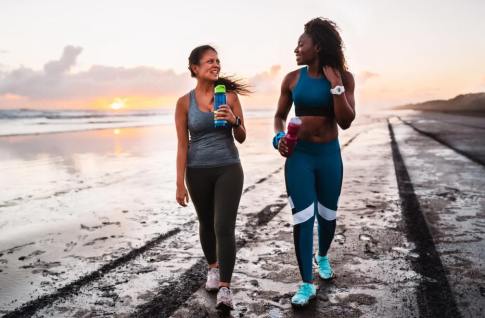 Photo: Getty Images/Nazar Abbas Photography
.
.
Click the link below for the article:
.
__________________________________________
October 21, 2023
Business, Human Interest, Political, Science, Technical amazon, business, Business News, current-events, Future, Hotels, human-rights, medicine, mental-health, research, Science, Science News, technology, Technology News, travel, vacation 4 Comments

Click the link below the picture
.
Julia Fox will not call Ye, formerly known as Kanye West, by his name. In her searing new memoir, Down the Drain, Fox refers to him only as “the artist.” Their relationship, which lasted all of two months in 2022, turned Fox from downtown darling with a scene-stealing role in Uncut Gems into a near-permanent fixture in People magazine. Suddenly, more people than ever wanted to know about this New York–famous former dominatrix who also happened to be a devoted, latex-clad mother of a beautiful baby as well as an art girl who once used her own blood on canvas.
But to obsess over Fox’s relationship with Ye — which she writes about in her 318-page book’s final chapter, covering an eight-week blip in her 15-year history with an unbelievable number of terrible men — is to miss the point entirely. The details of their relationship are gossip, but the way she relays the rest of her romantic history (which is rife with abuse, mirroring her formative relationship with her parents) is what makes her a different kind of survivor.
We tend to see survivors in one of two ways: the “good survivor,” a strong woman who identifies herself by her trauma and internalizes shame, or the “bad survivor,” a talented and unrepentant train wreck who shamelessly acts out. But Fox, through her memoir and public persona, presents a third option. She dares to be honest without yielding to the tremendous pressure to confess to the abuse she has endured from a vantage point of crystalline respectability. And while she has branded herself publicly as a sexy, post-shame woman, in her book she writes that she actually feels shame acutely, in response to everything from so-called friends turning furniture into a burn book by graffitiing a couch with her name and the words dirty and ugly to a boyfriend who puts her down while idolizing the DJ-cosplaying rich girls who have had it too easy to be half as cool.
In her memoir, Fox introduces us to Giovanni, the 23-year-old to whom she lost her virginity when she was 14. He winks at her while she is play-fighting in the dirt with her cousin in a small Northern Italian town near Milan, where she was born (Fox lived between there and New York City off and on as a kid). Later, Giovanni plies her with alcohol until she can barely stand. Then he has sex with her — outside, on the ground, in the middle of the cobblestoned street near his car. After, she drips blood over his crisp white sweater, and the next day word spreads through town that she is a whore.
.
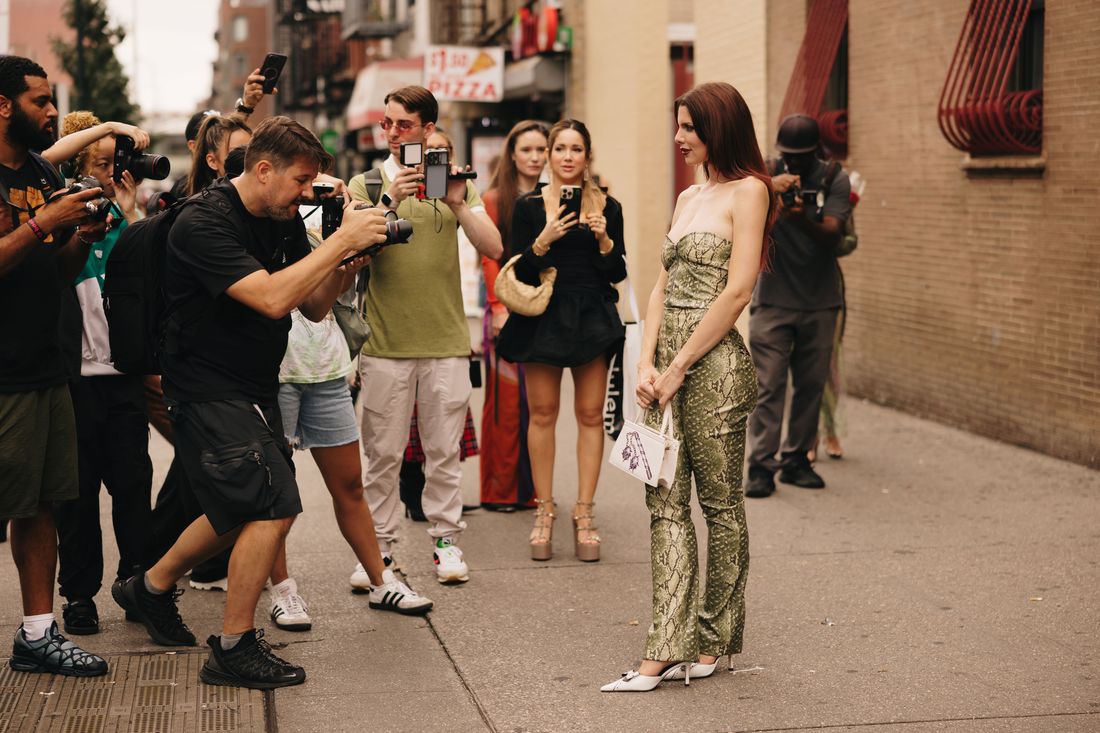 Photo: Sophie Sahara/WWD via Getty Images
.
.
Click the link below for the article:
.
__________________________________________
¡Bienvenido de vuelta viajero!
so looking to the sky ¡ will sing and from my heart to YOU ¡ bring...
CEO and Founder of Nsight Health
Catholic News, Prayers, HD Images, Rosary, Music, Videos, Holy Mass, Homily, Saints, Lyrics, Novenas, Retreats, Talks, Devotionals and Many More
Decoding Power. Defying Narratives.
A creative collaboration introducing the art of nature and nature's art.
The Home Of Entertainment News, Reviews and Reactions
Hollow Earth Society
•Whenever you are confronted with an opponent, conquer him with love.(Gandhi)
Algotrader at TRADING-CLUBS.COM
Film and Writing Festival for Comedy. Showcasing best of comedy short films at the FEEDBACK Film Festival. Plus, showcasing best of comedy novels, short stories, poems, screenplays (TV, short, feature) at the festival performed by professional actors.
Peace. Tranquility. Insanity.
Take a ride on the wild side
Découvre des musiques prometteuses (principalement) dans la sphère musicale française.
No tiene que Ser una Pesadilla.
Life in Kana-text (er... CONtext)
Tracking money, power, and meaning across borders.
Where feelings meet metaphors and make questionable choices.
Finding hope and peace through writing, art, photography, and faith in Jesus.
Eyasu
The Community for Wounded Healers: Former Medical Students, Disabled Nurses, and Faith-Fueled Pivots
love each other like you're the lyric to their music
Comprendere il mondo per cambiarlo.
Mid-Life Ponderings
Travel,Tourism, Life style "Now in hundreds of languages for you."
I speak the honest truth. I share my honest opinions. I share my thoughts. A platform to grow and get surprised.
User-generated ratings for ethical consumerism
Travel and Lifestyle Blog
Questo è un piccolo angolo di poesie, canzoni, immagini, video che raccontano le nostre emozioni
“Log your journey to success.” “Where goals turn into progress.”
scrivo per dare forma ai silenzi e anima alle storie che il mondo dimentica.
“Dream deeper. Believe bolder. Live transformed.”
Vichar, Motivation, Kadwi Baat ( विचार दर्शनम्)
Traum zur Realität
Savor. Style. See the world.
معا نحو النجاح
Best Forex Broker Ratings & Reviews
art, writing and music by James McFarlane and other musicians
living life in conscious reality
Freelance poetry writing
Peace 🕊️ | Spiritual 🌠 | 📚 Non-fiction | Motivation🔥 | Self-Love💕
Reiseberichte & Naturfotografie
 James' World 2