With WiFi calling, you can make or receive calls with your smartphone over a WiFi connection in areas where you have poor cellular signal. It’s supported by most modern smartphones and most carriers, including Verizon, AT&T, and T-Mobile. Of course, you won’t be able to do any of this unless you know how to turn on WiFi calling in the first place.
Once you understand the basics and have enabled WiFi calling on your iPhone or Android phone, you can dig deeper into other important questions like how this technology actually works and if it’s free for international calls.
How does WiFi calling work?
WiFi calling is like a cross between regular cell phone calls and VOIP services like Skype that allow you to make phone calls from your computer. Instead of using a third-party service, your phone call is routed through the internet to your cell provider and then connected over the cellular network to the person you’re calling (or is calling you). This means that it still uses your phone number and your cell provider’s network, rather than a username, email address, or anything else.
The big difference between WiFi calling and regular calling is that it uses your WiFi network, not your mobile data. This means it works well in areas where you have bad cell signal but good WiFi signal, like if you have a satellite internet connection at your rural cabin or just live in a building with an unreliable cell service. WiFi calling won’t help you if you’re out on a hike or otherwise totally off-the-grid, though. And if you have a good mobile data connection at home, you won’t notice much difference.
How to turn on WiFi calling on an iPhone
To enable WiFi calling on an iPhone, go to Settings > Phone > WiFi Calling. If you don’t see the option, it is most likely because your carrier doesn’t support WiFi calling. You may be prompted to enter or confirm your address, so your phone can pass your location on to emergency services if you call them.
All modern iPhones support WiFi calling, although some networks only support the iPhone 6 (released in 2014) and newer. Basically, unless you are using a 10-year-old iPhone that you’ve somehow kept running, your iPhone supports WiFi calling.
.
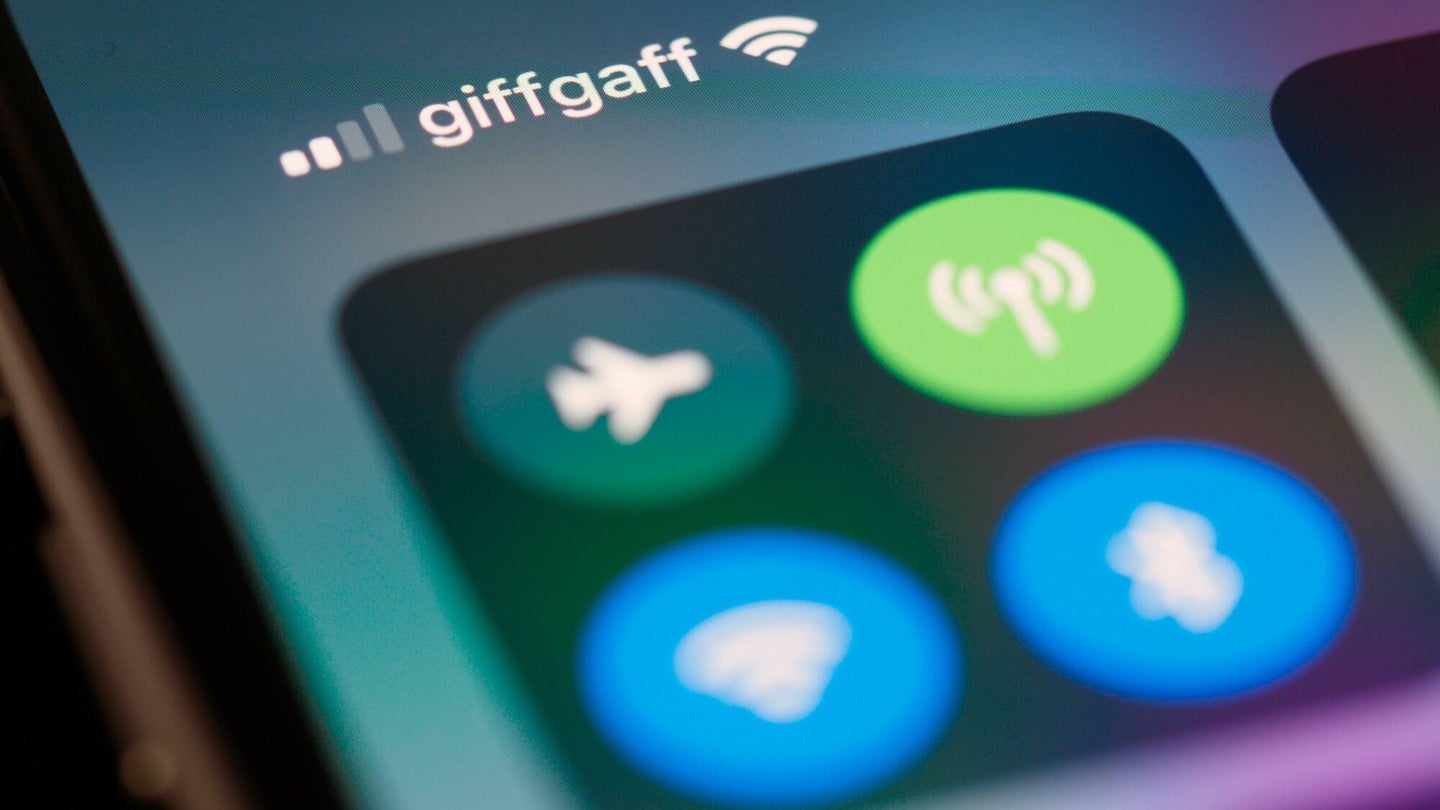
Everything to know about WiFi calling. Brett Jordan / Unsplash
For 40 years there’s been an invisible hand guiding the way many of us write, work, and communicate. Its influence has been pervasive, yet its impact has been subtle to the extent that you’ve likely never noticed. That invisible hand is Microsoft Word.
At its launch in October 1983, this influential software was known as Multi-Tool Word, and not long after, changed to Microsoft Word for Dos. Back then, there were more than 300 word processing programs across multiple platforms. People of a certain age will remember WordStar or WordPerfect, yet in a little over a decade, Word eclipsed these rivals. By 1994, Microsoft says it had claimed a 90% share of the word-processing market, making it one of the most successful, well-known software products in history.
While establishing how many people use Word is tricky, recent filings show there are 1.4 billion Windows devices in use each month, and more than 90% of the Fortune 500 use the software. If only a third of those people used Word, it would still be more than the population of North America.
This context is important because it helps to explain why, and how, Word has had such influence on our lives.
Ironically, given its ubiquity, Word has rarely been a pioneer when it comes to features. As mentioned, it was far from the first word processor. It’s often credited with introducing grammar tools, despite the fact these were developed decades earlier. And the idea behind “track changes” – where you can see edits to a document – wasn’t a Microsoft invention.
Yet Word’s superpower was using smart, simple design choices to make such features accessible to a global audience, not just techies. Its “What You See is What You Get” (WYSIWYG) design philosophy is now commonplace in software and on the internet. Word introduced line breaks, along with bold and italic fonts on screen. It revolutionized typeset-quality printing, as well as the use of templates. And it was in these templates that Word’s early impact on communication emerged.
It’s been more than 40 years since the physicist Richard Feynman pointed out that building computing devices based on quantum principles could unlock powers far greater than those of “classical” computers. In a 1981 keynote speech often credited with launching the field of quantum computing, Feynman concluded with a now-famous quip:
“Nature isn’t classical, dammit, and if you want to make a simulation of nature, you’d better make it quantum mechanical.”
It’s been nearly 30 years since the mathematician Peter Shor came up with the first potentially transformative use for quantum computers. Much of the security of the digital world is built upon the assumption that factoring large numbers is a challenging and time-consuming task. Shor showed how to use qubits — quantum objects that can exist in mixtures of 0 and 1 — to do it in a heartbeat, at least relative to known classical methods.
Researchers feel quite confident (although not entirely certain) that Shor’s quantum algorithm beats all classical algorithms because — despite the tremendous incentives — no one has successfully broken modern encryption with a classical machine. But for tasks less glamorous than factoring, it’s hard to say for sure whether quantum methods are superior. Searching for further blockbuster applications has become something of a haphazard guessing game.
“This is a silly way to go about this,” said Crystal Noel, a physicist at Duke University.
Over the last 20 years, a loose confederation of mathematically inclined physicists and physically inclined mathematicians has endeavored to more clearly identify the power of the quantum realm. Their goal? To find a way to quantify quantumness. They dream of a number they can assign to an arrangement of qubits produced by some quantum calculation. If the number is low, then it would be easy to simulate that calculation on a laptop. If it’s high, the qubits represent the answer to a truly hard problem beyond the reach of any classical device.
.
How might we measure the computational power of a quantum system? Researchers have identified an assortment of physical properties that could do the trick. Peter Greenwood for Quanta Magazine
In 1925, a new, highly desirable trait was invented. Press reports hailed a new Hollywood star: Count Ludwig von Salm-Hoogstraeten, an Austrian noble and tennis champion, who was rumored to be appearing in a film from the megaproducer Samuel Goldwyn. What made the 39-year-old Hollywood material? “He is photogenic,” Goldwyn told a reporter. Newspapers quickly credited the producer with coining a new word.
As it turned out, von Salm-Hoogstraeten’s acting career did not take off, but Goldwyn’s turn of phrase sure did. Now, nearly a century later, photogenicity is essential to the vocabulary of the selfie era. A photogenic person, common thinking goes, looks effortlessly good in a photograph. On social media, photogenicity has become a kind of currency: the intangible “it” factor that can lead to a high follower count. As a result, articles now promise to unspool the secrets of photogenicity; people on TikTok have been taking random stills from their videos to apparently determine whether they’re photogenic. For the rest of us, the concept might serve to justify an aversion to selfies (we’re not unattractive; we’re just not photogenic).
.
Illustration by Jared Bartman / The Atlantic. Sources: Austrian National Library; Unsplash.
Liz Fuller-Wright, a New Jersey mom, said her sons’ school schedules were “completely incompatible” with full-time work.
“I can’t schedule late afternoon meetings, I can’t participate in the end-of-day socialization around the watercooler that is so vital for supporting work relationships, plus I have to put in a third or fourth shift after the boys are in bed when I can finally focus again,” said Fuller-Wright, whose boys are 4 and 7.
It’s a frustration that’s common for many American parents. The stereotypical workday stretches from 9 to 5, while the typical school day runs from 8 to 3. That leaves many working parents with a conundrum that many people recognize, but few institutions have been able to change.
The history of the 8 to 3 school day
The 8 to 3 school schedule emerged alongside public education in the mid to late 1800s. Alex Anderson-Kahl, a school psychologist in Columbia, Missouri, who founded the blog Healing Little Hearts, noted that back then, mothers were typically thought to be homemakers, while children were needed to work around the home and in businesses in the afternoons.
Anderson-Kahl said that within that scenario, free time after school had a lot of potential.
“This could foster a sense of responsibility and community involvement,” he said.
The gap between when the school day ends and when the work day finishes, however, simply doesn’t work for many modern families. A Pew Research Center study published in 2019 found that 23% of US kids live with one parent and no other adult. If that parent works in the afternoon, childcare can be hard to come by. In addition, both parents work in more than 63% of two-parent houses, according to a study from the Pew Research Center from 2015.
It’s the greatest love story—that movie is emblazoned on us. It romanticizes the decadence and excess that is hip-hop,” DJ Quik says from the Zoom rectangle, holding up a photo of himself wearing a T-shirt featuring the image of one of Al Pacino’s most famous roles, Scarface’s Tony Montana.
Though Scarface centers on the rise and fall of a fictitious Cuban immigrant turned Miami cocaine kingpin—a story inspired by Al Capone, an Italian American mobster, and directed by Brian de Palma, who is also of Italian descent—it resonates with Quik, and with me. We are African Americans, born and raised on opposite sides of the country, with upbringings marked by different generations. And yet we have this deep love for Italian American actors—and the country’s cinema at large—that bridges the gap between us. Quik vividly remembers when the VHS of Scarface first made its way to his California neighborhood, while I fondly recall a Christmas morning from my childhood when my mother gave me copies of the Rocky movies and the Godfather trilogy.
I grew up in South Jersey, where you could no more extract the Italian American influence from my formative years than you could separate salt from saline. Around the dinner table, my loved ones would joke about Sicily’s proximity to Africa. We’d talk, lovingly, about the seasoning in our respective cuisines, about how some southern Italians looked like us.
My mother passed down an abiding love of Pacino, Sylvester Stallone, Robert De Niro, and Joe Pesci. I’d catch her watching The Sopranos when I’d come home from school. The sense that Italians and African Americans were somehow connected felt ingrained, but I’ve recently started to think about the ways cinema reflects back to us as a group with its own history of stereotyping, marginalization, and class. When I would watch Italian Americans onscreen, I recognized that there is a white-black binary; at the same time, there was a spectrum of whiteness and the less WASP-presenting one was (darker skin and hair, thicker accents, flamboyant clothing), the more bigotry they received.
Since the late-19th century, Italian immigrants and African Americans have lived close to one another, especially throughout cities and neighborhoods in the Northeast. “Italians were not a part of the white American imagination and social structure until later,” John Gennari, author of Flavor and Soul: Italian America at Its African American Edge, tells me. Like my own, Gennari’s mother grew up in New Jersey, which, along with New York and southern New England, he calls “the Sinatra belt.” Italian Americans and African Americans often worked alongside each other, whether in the southern fields, or further north. The two populations overlap in their migrations to the north. Ours is famously recognized as the Great Migration. “When emancipation comes, most formerly enslaved Black folk want to get away from the plantation economy,” Gennari said, “and those workers need to be replaced, and southern Italian immigration has a lot to do with that.”
The Palestinian militant group Hamas launched an unprecedented assault on Israel on 7 October, with hundreds of gunmen infiltrating communities near the Gaza Strip.
More than 1,400 Israelis were killed, while the Israeli military says more than 220 soldiers and civilians, including women and children, were taken to Gaza as hostages.
More than 5,000 Palestinians in Gaza have been killed in air and artillery strikes carried out by the Israeli military in response, according to Gaza’s health ministry. Israeli troops have also massed along the Gaza boundary, and Palestinians are bracing themselves for a major ground operation.
Israel has also cut off electricity and most water and stopped imports of food and medicine, although it has allowed in several dozen aid lorries through Egypt’s Rafah crossing since Saturday.
What was Israel before 1948, and what was the Balfour Declaration?
Britain took control of the area known as Palestine following the defeat of the Ottoman Empire, which ruled that part of the Middle East, in World War One.
The land was inhabited by a Jewish minority and Arab majority, as well as other, smaller ethnic groups.
Tensions between the two peoples grew when the international community gave the UK the task of establishing a “national home” in Palestine for Jewish people.
This stemmed from the Balfour Declaration of 1917, a pledge made by then Foreign Secretary Arthur Balfour to Britain’s Jewish community.
The declaration was enshrined in the British mandate over Palestine and endorsed by the newly-created League of Nations – forerunner of the United Nations – in 1922.
To Jews, Palestine was their ancestral home, but Palestinian Arabs also claimed the land and opposed the move.
Between the 1920s and 1940s, the number of Jews arriving there grew, with many fleeing from persecution in Europe, especially the Nazi Holocaust in World War Two.
Violence between Jews and Arabs, and against British rule, also increased.
In 1947, the UN voted for Palestine to be split into separate Jewish and Arab states, with Jerusalem becoming an international city.
That plan was accepted by Jewish leaders but rejected by the Arab side and never implemented.
I don’t want to alarm you men, but you’re not men anymore.
You can be forgiven for not noticing that men aren’t men anymore, because men are always not men anymore. “Men aren’t men anymore”—like “nobody younger than me wants to work” and “this isn’t real music”—has been said every day in every language since we’ve had days and languages. It’s a particular concern in America, where men haven’t been men anymore from the jump. Almost certainly one of our founding fathers told his son, “Don’t leave this house without your wig, stockings, and frock coat—I didn’t raise a sissy.”
But now, as our culture reevaluates gender, reconsiders the patriarchy, and has red-assed opinions about Barbie, men are yelling about men not being men anymore more than ever. It’s given rise to countless Dour Dude podcasts and fueled a branding revolution in conservative politics. No less an authority on Dude Stuff than Missouri senator Josh Hawley published a book this year called Manhood: The Masculine Virtues America Needs, which reads like the title of a very niche gay porn film and has yet to make a single person forget the image of him running away from the encroaching mob on January 6, 2021. Masculinity is a hot conversation.
I am proud to tell you that Esquire has been on the “thinking too much about what is and is not manly” beat from Issue 1, Autumn 1933, when we promised we were “determined to stay masculine.” Have we lived up to that promise? Let’s find out together.
In 1959, a quiz tested readers’ Masculinity Quotient with questions like “When you bought your last car, what influenced you most: (1) its color, or (2) its power” and “At a bar, are you apt to order (1) a Manhattan made with sherry, or (2) rye.” Right away, the savvy reader will say, “Got it—1 is ladies, 2 is gentlemen,” but then: “Can you ‘rise and shine’ in the morning without too much grumbling? (1) no (2) yes” and “Have you visited an art museum of your own free will within the last six months? (1) yes (2) no,” and you think, Researchers of 1959, are you okay? (1) no (2) no.
In Esquire’s defense, we reflect the culture as much as we seek to inform it, which is to say, sometimes it’s the advertisers’ fault. An ad for lower-tar Merit cigarettes in 1997 features a relaxed, handsome dude in a Henley, with copy that promises: “You can do it! You can switch down to lower tar.” Henley Man points his cig toward the camera confidently, as if to say, “Fellas, it is no longer gay to not die.”
Interoception is the ability to recognize internal bodily signals, such as feeling hot or cold, hungry or thirsty. In the same way that the nerves in our muscles and joints will send signals to our brain, letting it know where we are in physical space, the nerves in our organs will also send signals about how full our digestive tract is, how fast our heart is beating, or how hot we are.
This, in turn, can help our brain understand whether we are anxious or relaxed, whether or not we need to eat or drink, or if we need to use the bathroom before leaving the house. Poor interoception is often associated with conditions such as autism and ADHD, and tend to go hand in hand with other sensory processing issues.
Some of the early signs of poor interoception
Some of the early signs of poor interoception in a child can include difficulties with potty training, due to issues with recognizing whether they need to poop or pee. Other signs can include erratic eating patterns, such as not eating for long periods of time or eating past the point of fullness, due to an inability to recognize hunger and satiety signals.
Poor interoception can also affect a child’s sleep schedule, making bedtime especially difficult. “You’ll see kids become rageful, because they’re exhausted, but they don’t have the sense that they need to go to bed,” says Andrew Kahn, a licensed psychologist, and associate director of behavior change and expertise at Understood.org.
Poor interoception can affect emotional regulation
In addition to difficulties with recognizing physical cues, such as hunger or thirst, poor interoception can affect a child’s ability to regulate their emotions. “When we talk about interoception, a person’s emotional reactions occurs because they can’t interpret their bodily signals internally,” Kahn says.
Film and Writing Festival for Comedy. Showcasing best of comedy short films at the FEEDBACK Film Festival. Plus, showcasing best of comedy novels, short stories, poems, screenplays (TV, short, feature) at the festival performed by professional actors.

 Everything to know about WiFi calling. Brett Jordan / Unsplash
 (Image credit: Alamy)


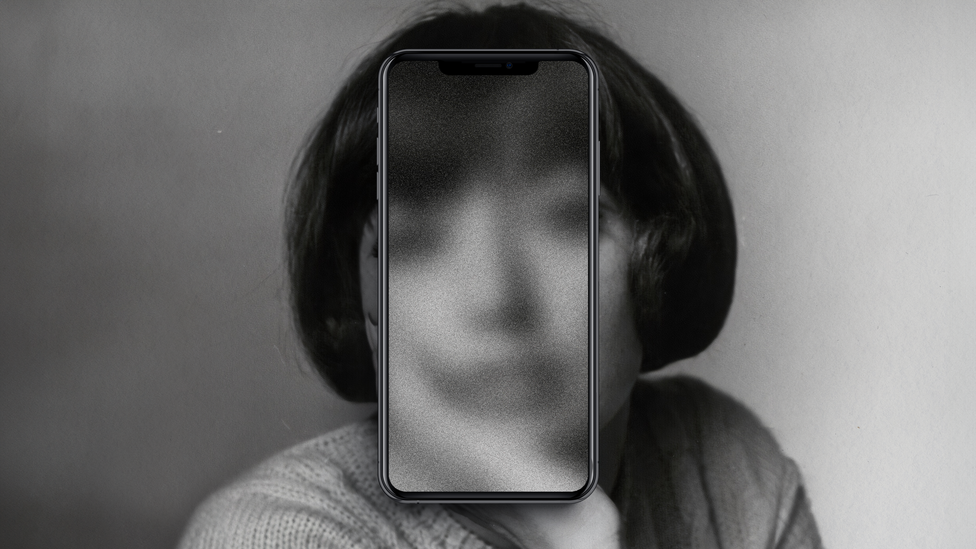 Illustration by Jared Bartman / The Atlantic. Sources: Austrian National Library; Unsplash.


 .
.






 Photo: BOKEH STOCK (Shutterstock)
 James' World 2