
Click the link below the picture
.
.

.
.
Click the link below for the article:
.
__________________________________________
Assorted human interest posts.
November 30, 2023
Business, Food For Thought, Human Interest, Political, Science, Technical amazon, business, Business News, current-events, Future, Hotels, human-rights, medicine, mental-health, research, Science, Science News, technology, Technology News, travel, vacation Leave a comment
Click the link below the picture
.
.
.
.
Click the link below for the article:
.
__________________________________________
November 29, 2023
Business, Food For Thought, Human Interest, Political, Science, Technical amazon, business, Business News, current-events, Future, Hotels, human-rights, medicine, mental-health, research, Science, Science News, technology, Technology News, travel, vacation Leave a comment

Click the link below the picture
.
Does this sound familiar? You can’t focus. You’re bored one minute, overwhelmed the next, and stressed either way. You make mistakes you shouldn’t and then dwell on them for hours. When you try to be productive, you can’t go five minutes without checking your texts, dreading some future engagement, or walking into another room to check on … something. (What was it again?)
Neuroscientist Amishi Jha opens her book, Peak Mind, with this vignette to illustrate an important truth: You’re not alone. Most people can’t go three minutes at work without being interrupted by a chatty colleague, and students cite the allure of social media and other digital distractions as a major disruptor to their studies.
“I’ve seen certain universal patterns in the way all of our brains function — both how powerfully they can focus, and how extraordinarily vulnerable they are to distraction — no matter who you are or what you do,” Jha writes.
At the heart of this predicament, Jha argues, is attention — specifically, the many ways we can disconnect from it. Depleted attention creates a mental fog. Hijacked attention manifests as anxiety and worry. Fragmented attention shatters our ability to focus. Disconnected attention keeps us detached from others. Each attentional affliction causes you to grow out of sync with what’s happening around you, affecting what you think, how you feel, what you learn, how you react, and your relationships with others.
In short, attention isn’t just a matter of where your focus happens to be. It’s the internal force that shapes how you encounter and experience your life in its entirety.
Attention: A cognitive currency
In her book, Jha compares attention to a currency. You can pay it to others, and they can give theirs to you. You can request it in the spirit of charity — “Will you give me your attention, please?” And as any parent whose child is within earshot of an ice cream truck can attest, attention can be stolen outright.
.
 (Credit: Daniel/Adobe Stock)
.
.
Click the link below for the article:
.
__________________________________________
November 29, 2023
Business, Food For Thought, Human Interest, Political, Science, Technical amazon, business, Business News, current-events, Future, Hotels, human-rights, medicine, mental-health, research, Science, Science News, technology, Technology News, travel, vacation Leave a comment

Click the link below the picture
.
But it’s getting easier to clean your clothes while staying green. “You do have to wash your clothes, but you can do a very good job of minimizing the impact,” says Jonathan Gilligan, an associate professor of earth and environmental sciences at Vanderbilt University who has studied the effects of individual actions on greenhouse gas emissions. Although one consumer’s decision to switch to a more efficient washer isn’t going to counter the cumulative effects of major industries on its own, he says “it can have an effect.” Individual actions add up.
Here are expert-backed strategies to tweak laundry day to be greener — and less of a chore.
Choose efficient machinesThe machines you use have a significant effect on the amount of energy and water you save — or waste — experts say. Older appliances can rack up high utility bills, while newer, high-efficiency washers use less water and energy with lower temperatures and higher spin speeds.
In most cases, front-loading washers will be more efficient than top-loading ones, because the drum’s position can create a faster spin cycle. “If the washer is able to wring out most of the water from the clothes, then the dryer is going to have significantly less work to do,” which saves energy, says Jessica Petrino, editorial director of AJ Madison, a home and kitchen appliances store based in New York City.
.
 (iStock)
.
.
Click the link below for the article:
.
__________________________________________
November 28, 2023
Business, Food For Thought, Human Interest, Political, Science, Technical amazon, business, Business News, current-events, Future, Hotels, human-rights, medicine, mental-health, research, Science, Science News, technology, Technology News, travel, vacation Leave a comment

Click the link below the picture
.
I have observed that most religious groups stay away from the Book of Revelations, but what I heard in the attached video (starting @ 56:45) explains the book in modern-day terms. When you observe what is happening in the world around us, carefully, it begins to make sense. He doesn’t name any specific countries or organizations.
I’m including this person because I can’t get away from him in the news, which seem to be what he is trying to accomplish.
.


 I’m just saying, that what is depicted above is only what’s happening in America. This type of rhetoric is happening worldwide.
.
.
Click the link below for the video
.
__________________________________________
November 28, 2023
Business, Food For Thought, Human Interest, Political, Science, Technical amazon, business, Business News, current-events, Future, Hotels, human-rights, medicine, mental-health, research, Science, Science News, technology, Technology News, travel, vacation Leave a comment

Click the link below the picture
.
‘A sense of special significance began to invest everything in the room; objects which I would normally accept as just being there began to assume some strange importance.’
‘I became interested in a wide assortment of people, events, places, and ideas which normally would make no impression on me. Not knowing that I was ill, I made no attempt to understand what was happening, but felt that there was some overwhelming significance in all this …’
The first of these quotations is from an individual describing a psychedelic trip they took after taking peyote. The second is a person describing an experience of psychosis. While rarely looked at together today, experiences of psychedelics and psychosis share a lot of subjective territory. In the past, some scientists considered them to be different versions of the same experience. However, today, experiences of psychosis and psychedelics are seen as radically different. Examining the journey from that past approach to the current perspective reveals a great deal about our assumptions and values, and the limits and biases of the current day.
In the mid-20th century, researchers thought of psychosis and psychedelics as deeply entangled, and scientific comparisons between the two experiences were common; entire academic papers were spent contrasting detailed descriptions of experiences of patients diagnosed with schizophrenia and experiences of research participants who had taken psychedelic drugs. As a result of the close resemblance between these descriptions, many researchers believed that psychedelics induced a short-term psychosis, providing a perfect scientific model for those who wanted to learn more about schizophrenia. By inducing a ‘temporary psychosis’, researchers could observe biological changes in research participants who had taken a psychedelic, and compare these with measurements of patients diagnosed with schizophrenia. In the hunt for the mysterious ‘substance-M’ that could explain what was underlying both experiences, various candidates were considered, including adrenaline, norepinephrine, and serotonin. While the hunt for a common biological factor was unsuccessful, for decades many believed that these experiences were different versions of the same thing.
There was widespread scientific belief in the similarity between psychosis and psychedelics in the mid-20th century. But the years since have led to a remarkable divide between our understandings of these phenomena. In the 1960s, moral panic related to psychedelic drugs set in. At the same time, requirements for evidence in medicine were becoming more rigorous, and creating barriers for psychedelic research. Funding, access and permissions for research related to psychedelic drugs slowly dried up, and research into these fascinating substances was largely forgotten by psychiatry.
In the intervening decades, research related to psychosis has continued unfettered and changed shape radically. Gone is much mainstream interest in detailed descriptions of the experience of psychosis that psychoanalytically trained psychiatrists often sought out in the past. Instead, psychosis research today shares with the rest of psychiatry an often singular focus on neurobiological and genetic research. Investigations related to childhood, trauma, and social forces are given much less consideration and, importantly, much less funding. Psychoanalysis has fallen out of favor, in part because of the difficulty it had fitting into novel models of evidence being adopted across medicine (it’s difficult to conduct randomized control trials on the talking cure), and in part because psychiatry needed to prove it was consistent and replicable (these are challenging features to demonstrate in an approach as complicated and variable as psychoanalysis). In its place, a neurobiological model of psychiatry has been taken up, seeking explanations and treatments for mental disorders largely at the level of genes and neurotransmitters.
.
 Photo by Kristina Strasunske/Getty
.
.
Click the link below for the article:
.
__________________________________________
November 28, 2023
Business, Food For Thought, Human Interest, Political, Science, Technical amazon, business, Business News, current-events, Future, Hotels, human-rights, medicine, mental-health, research, Science, Science News, technology, Technology News, travel, vacation Leave a comment

Click the link below the picture
.
To my astonishment, the apartment stayed tolerable all weekend. The tile floors seemed to emanate coolness. The greenery surrounding my windows blocked direct sunlight and helped bring down the temperature of the outside air. I didn’t have a thermometer, but my guess is that the temperature inside never got above 80 degrees.
“You saw for yourself the power of passive cooling,” buildings scientist Alexandra Rempel told me. “It really can be amazingly, amazingly effective.
Rempel, an assistant professor in the environmental studies program at the University of Oregon, studies how to design buildings that can stay cool “passively,” without relying on air conditioning. The techniques that helped my apartment beat the heat — shade, building materials, strategic ventilation — can be used in almost any home, she explained.
On a warming planet, passive cooling can help protect people without access to air conditioning and lighten the load on the electrical grid from those who do. It can also help reduce greenhouse gas emissions produced by burning fossil fuels for power — a necessary step for tackling climate change and the only hope we have for avoiding an even hotter future.
.
 (Michael Parkin for The Washington Post)
.
.
Click the link below for the article:
.
__________________________________________
November 27, 2023
Business, Food For Thought, Human Interest, Political, Science, Technical amazon, business, Business News, current-events, Future, Hotels, human-rights, medicine, mental-health, research, Science, Science News, technology, Technology News, travel, vacation Leave a comment

Click the link below the picture
.
Einstein correctly predicted that time slows when you’re flying fast, but to experience “time dilation” most spectacularly, you’d have to travel into a black hole, says astrophysicist Chris Lintott.
One of my favorite scientific experiments involved flying four clocks twice around the world. In 1971, physicists Joseph Hafele and Richard Keating took atomic clocks – capable of losing no more than one second every 30 million years – on a commercial jet, flying first west and then east around the globe before returning to their laboratory in Washington DC. There, they compared the time on their well-traveled timepieces to a set of clocks that had remained static. Remarkably, the clocks disagreed: the act of travel had seemingly altered the passage of time.
The experiment was a test of a core principle of Einstein’s theory of relativity, which is that time is not universal. The faster you travel, the slower time will pass for you. The effect is small – take a transatlantic flight from London to New York and your watch will be a ten-millionth of a second behind one left on the ground – but nonetheless, you’ll have aged a fraction more slowly than if you’d stayed at home. And Hafele and Keating’s clocks could measure it.
Another prediction of relativity says that gravity has an effect too. Get further from the Earth’s gravitational pull, and time will speed up. This affects our own bodies: it means your head is ever so slightly older than your feet. Once again, the effect is incredibly small, but at greater distances from Earth, it becomes important. The GPS system that we all depend on to navigate, with its satellites 20,000km (12,400 miles) above the Earth, needs to take this into account in order to work properly.
Despite these phenomena, the Earth is, at the end of the day, a small planet in a big Universe. Around black holes, massive objects whose gravitational pull dwarves that of any planet, these relativistic effects become far more pronounced.
To understand why, imagine falling toward a black hole. (We’ll assume you’re in some magical spacecraft which keeps you safe from the distressing effect of “spaghettification”, the terminal stretching that happens to anything that gets too close to a black hole.)
.
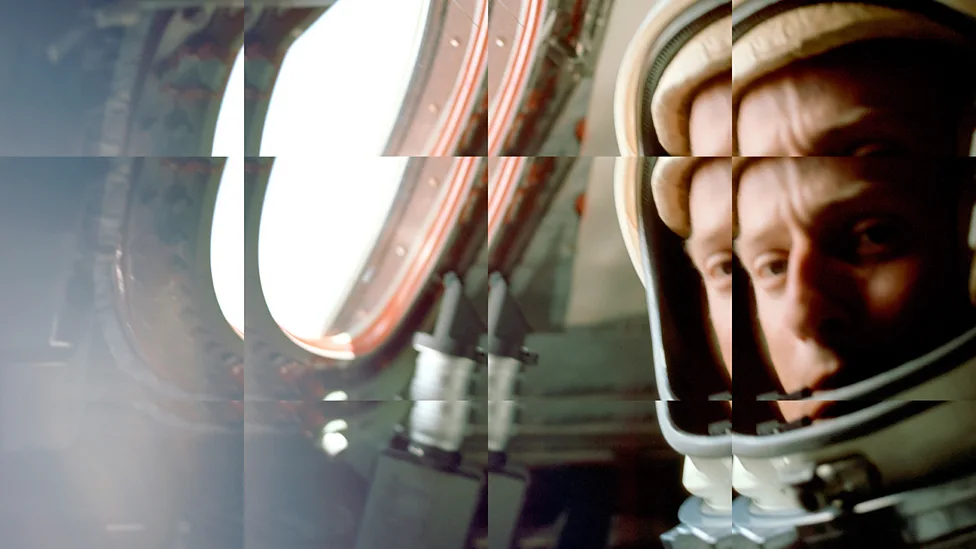 Traveling into a black hole would do strange things to time (Credit: Edouard Taufenbach/Bastien Pourtout)
.
.
Click the link below for the article:
.
__________________________________________
November 27, 2023
Business, Food For Thought, Human Interest, Political, Science, Technical amazon, business, Business News, current-events, Future, Hotels, human-rights, medicine, mental-health, research, Science, Science News, technology, Technology News, travel, vacation Leave a comment

Click the link below the picture
.
If you live in an area with abundant sunlight—hello, fellow southern Californians—you’ve probably thought about installing solar panels on your roof to save on your electric bill. But with so much information, it can be hard to know where to start.
Look no further—start here
Between the different types of panels, financing, inverters, and other jargon, researching solar energy can feel overwhelming at first. That’s why I recommend starting at a solar quote comparison site like EnergySage, Solar-Estimate, or SolarReviews (the latter two are run by the same people).
Both EnergySage and Solar-Estimate act as educational resources and comparison shopping tools to help you field bids. I’ve been using EnergySage, which is chock-full of articles explaining the technology involved. You can also watch videos, look at their buyer’s guide, or start getting quotes. Their Solar 101 series of articles will help you understand the basics, and when you’re done, scroll through the site’s “Learn About Solar” sidebar to read even more articles that’ll give you a feel for the process.
To understand what your home requires, though, you’ll need to look up how much electricity you use. If your bill tells you the average amount of electricity you use each month, make a note of that, or calculate a quick and dirty average yourself. The more information you have on your usage, the more accurate an estimate you can get from installers.
Your energy usage will determine how many panels you’ll need on your roof. Too few, and you’ll still have to pay the electric company for whatever extra power you use. Too many, and you’ll waste money on panels you don’t need—though the electric company will give you credits for any energy you don’t use, should you one day need electricity from the grid.
.
 Behold: the power of the sun. Vivint Solar/Unsplash
.
.
Click the link below for the article:
.
__________________________________________
November 27, 2023
Business, Enthralling, Human Interest amazon, business, Business News, current-events, Future, Hotels, human-rights, medicine, mental-health, research, Science, Science News, technology, Technology News, travel, vacation Leave a comment

.
CatI never thought I’d be here to see this day,A day when my very best friend would pass away..Leaving this world at such an early age,I’m so upset, I’m starting to feel the rage..My best friend is not here on Earth any more,Can’t instruct me to stand up or walk tall..Can’t share any of our secrets or complaints,She now will dwell among the saints..I never thought my best friend would leave so soon,She was so loving but to death she was not immune..From the time she told me she had this fatal disease,I broke down in denial, I fell down on my knees..No matter what I thought, GOD had a different plan,He called her to do her good work in a better land..Now she is working for the Lord in heaven, she’s uninhibited, she’s free, she’s with GOD 24/7!.I love you Cat, My Best Friend, RIP! Work with GOD as your new life begins!
.
__________________________________________
November 26, 2023
Business, Food For Thought, Human Interest, Political, Science, Technical amazon, business, Business News, current-events, Future, Hotels, human-rights, medicine, mental-health, research, Science, Science News, technology, Technology News, travel, vacation Leave a comment

Click the link below the picture
.
If this year’s turkey seems over brined, blame your brain.
The question of when salty becomes too salty is decided by a special set of neurons in the front of the brain, researchers report in the journal Cell.
A separate set of neurons in the back of the brain adjusts your appetite for salt, the researchers showed in a series of experiments on mice.
“Sodium craving and sodium tolerance are controlled by completely different types of neurons,” says Yuki Oka, an author of the study and a professor of biology at Caltech.
The finding could have health implications because salt ingestion is a “major issue” in many countries, including the United States, says Nirupa Chaudhari, a professor of physiology and biology at the University of Miami’s Miller School of Medicine.
Too much salt can cause high blood pressure and raise the risk for heart disease and stroke, says Chaudhari, who was not involved in the study.
Craving, to a point
The study sought to explain the complicated relationship that people and animals have with salt, also known as sodium chloride.
We are happy to drink sodas, sports drinks, and even tap water that contain a little salt, Oka says. “But if you imagine a very high concentration of sodium like ocean water, you really hate it.”
.
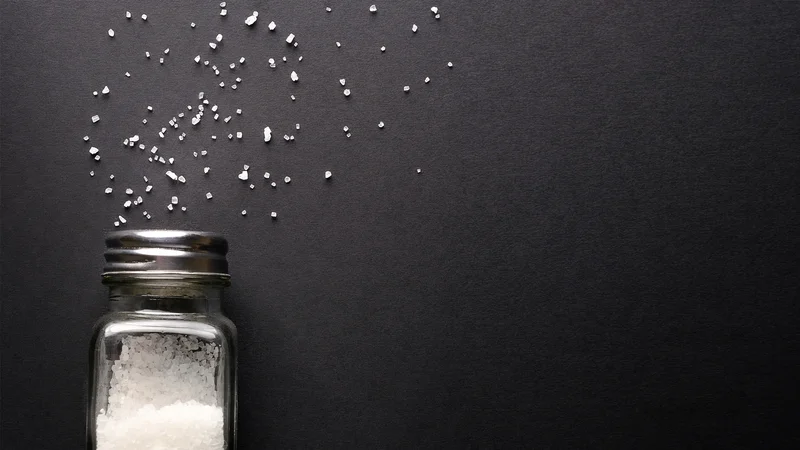
Two brain circuits help determine whether there’s too little salt, or too much. Aleksandr Zubkov/Getty Images
.
.
Click the link below for the article:
.
__________________________________________
¡Bienvenido de vuelta viajero!
so looking to the sky ¡ will sing and from my heart to YOU ¡ bring...
CEO and Founder of Nsight Health
https://www.tangietwoods
Catholic News, Prayers, HD Images, Rosary, Music, Videos, Holy Mass, Homily, Saints, Lyrics, Novenas, Retreats, Talks, Devotionals and Many More
Decoding Power. Defying Narratives.
A creative collaboration introducing the art of nature and nature's art.
The Home Of Entertainment News, Reviews and Reactions
Hollow Earth Society
•Whenever you are confronted with an opponent, conquer him with love.(Gandhi)
Algotrader at TRADING-CLUBS.COM
Film and Writing Festival for Comedy. Showcasing best of comedy short films at the FEEDBACK Film Festival. Plus, showcasing best of comedy novels, short stories, poems, screenplays (TV, short, feature) at the festival performed by professional actors.
Peace. Tranquility. Insanity.
Take a ride on the wild side
Découvre des musiques prometteuses (principalement) dans la sphère musicale française.
No tiene que Ser una Pesadilla.
Life in Kana-text (er... CONtext)
Tracking money, power, and meaning across borders.
Where feelings meet metaphors and make questionable choices.
Finding hope and peace through writing, art, photography, and faith in Jesus.
Eyasu
The Community for Wounded Healers: Former Medical Students, Disabled Nurses, and Faith-Fueled Pivots
love each other like you're the lyric to their music
Comprendere il mondo per cambiarlo.
Mid-Life Ponderings
Travel,Tourism, Life style "Now in hundreds of languages for you."
I speak the honest truth. I share my honest opinions. I share my thoughts. A platform to grow and get surprised.
User-generated ratings for ethical consumerism
Travel and Lifestyle Blog
Questo è un piccolo angolo di poesie, canzoni, immagini, video che raccontano le nostre emozioni
“Log your journey to success.” “Where goals turn into progress.”
scrivo per dare forma ai silenzi e anima alle storie che il mondo dimentica.
“Dream deeper. Believe bolder. Live transformed.”
Vichar, Motivation, Kadwi Baat ( विचार दर्शनम्)
Traum zur Realität
Savor. Style. See the world.
معا نحو النجاح
Best Forex Broker Ratings & Reviews
art, writing and music by James McFarlane and other musicians
living life in conscious reality
Freelance poetry writing
Peace 🕊️ | Spiritual 🌠 | 📚 Non-fiction | Motivation🔥 | Self-Love💕
 James' World 2