January 12, 2024
Mohenjo
Business, Food For Thought, Human Interest, Political, Science, Technical
amazon, business, Business News, current-events, Future, Hotels, human-rights, medicine, mental-health, research, Science, Science News, technology, Technology News, travel, vacation

Click the link below the picture
.
Acing a job interview is all about making a good first impression, and one big way to miss the mark is to answer an age-old question with a cliche.
Responding to the question “what are your weaknesses?” by painting yourself as a perfectionist or a workaholic will likely prompt an eye-roll from Tom Gimbel, CEO of the staffing agency LaSalle Network.
“Oh, yeah, that’s a real weakness all right,” says Gimbel, who says he’s extended offers to “hundreds and hundreds” of people during his 25 years in the hiring business. “You want to be perfect and you work all the time. It’s a trick answer.”
Rather, when Gimbel poses that question to candidates, he’s looking for two things: that you’re self-aware, and that you have solutions for your shortcomings.
“The real question that employers have is not what your weaknesses are, it’s what your solution to compensate for that is,” he says.
Here’s how to prepare a solid answer: Think about a technical or a soft skills you’d like to improve and how you’re actually taking action on it.
For example, you might discuss that you’re not as quick on a certain software related to your work, and you’ve realized you want to take some classes on it. Or, you might point out that you’re not a great writer, so you’re working with a writing coach or having a mentor proofread your emails.
“That’s a weakness solution,” Gimbel says. “We all have weaknesses, and we need to admit what we’re not good at.”
Overall, Gimbel’s No. 1 underrated tip for excelling at a job interview comes down to a little humility: “Be honest about what you stink at.”
.
Fg Trade | E+ | Getty Images
.
.
Click the link below for the article:
.
__________________________________________
January 12, 2024
Mohenjo
Business, Food For Thought, Human Interest, Political, Science, Technical
amazon, business, Business News, current-events, Future, Hotels, human-rights, medicine, mental-health, research, Science, Science News, technology, Technology News, travel, vacation
Click the link below the picture
.
No parent looks forward to their child’s next tantrum.
But instead of dreading it, treating each tantrum as a learning opportunity could help your child learn to better manage their emotions — a skill they’ll need to be happier and more successful as they grow up.
After all, the occasional angry outburst is inevitable, says Jazmine McCoy, a clinical psychologist based in the Atlanta suburbs. Your goal as a parent of young children shouldn’t be to avoid or suppress it at all costs. Instead, McCoy tells CNBC Make It: “The goal is to raise a child who knows how to handle their anger in a healthy way.”
Learning to effectively regulate emotions, especially intense ones like anger and sadness, can help children develop resilience, improve their attention spans, and boost cognitive development, research shows. Those skills and traits are all key to your kids’ overall success and well-being, according to psychologists.
For parents, how you talk about anger — especially when responding to a surprise outburst — is key to teaching your child how to appropriately handle that emotion, says McCoy.
“It’s OK to be angry,” she says. “Anger is an emotion that’s a message. It’s here to tell us something important. So let’s pay attention to it.”
Here are four steps to follow, according to McCoy:
Draw clear boundaries
Children need to feel heard and understood, especially by their parents, McCoy says. They should know that intense, negative emotions are normal — and that their parents are here to help, and will still love them unconditionally even when they’re acting out.
.

Clinical psychologist Jazmine McCoy, known as “The Mom Psychologist” on social media. Source: Jazmine McCoy
.
.
Click the link below for the article:
.
__________________________________________
January 11, 2024
Mohenjo
Business, Food For Thought, Human Interest, Political, Science, Technical
amazon, business, Business News, current-events, Future, Hotels, human-rights, medicine, mental-health, research, Science, Science News, technology, Technology News, travel, vacation
Some content on this page was disabled on April 15, 2025 as a result of a DMCA takedown notice from Guardian Media Group. You can learn more about the DMCA here:
https://wordpress.com/support/copyright-and-the-dmca/
January 11, 2024
Mohenjo
Business, Food For Thought, Human Interest, Political, Science, Technical
amazon, business, Business News, current-events, Future, Hotels, human-rights, medicine, mental-health, research, Science, Science News, technology, Technology News, travel, vacation

Click the link below the picture
.
Hamas gunmen launched an unprecedented assault on Israel from the Gaza Strip on 7 October, killing 1,200 people and taking about 240 hostages.
The Israeli military responded with air strikes on Gaza and launched a ground offensive. More than 21,000 people have been killed in Gaza, according to the Hamas-run health ministry.
During a temporary truce at the end of November, Hamas released 105 hostages and Israel freed 240 Palestinian prisoners in exchange.
What is the goal of Israel’s military operation in Gaza?
Since the 7 October attacks, Israel Defense Forces (IDF) warplanes have carried out air strikes across Gaza while its troops have moved through the territory.
Prime Minister Benjamin Netanyahu said Israel had a “clear goal of destroying Hamas’s military and governing capabilities”, as well as freeing the hostages.
Israel, the UK, US and other Western powers class Hamas as a terrorist organization.
Mr Netanyahu also declared that Israel would have “overall security responsibility” for Gaza “for an indefinite period” after the conflict. However, he later said Israel had no plans to reoccupy the territory.
Israel drafted 300,000 reservists for the operation, boosting its standing force of 160,000.
.
 Getty Images
.
.
Click the link below for the article:
.
__________________________________________
January 10, 2024
Mohenjo
Business, Food For Thought, Human Interest, Political, Science, Technical
amazon, business, Business News, current-events, Future, Hotels, human-rights, medicine, mental-health, research, Science, Science News, technology, Technology News, travel, vacation

Click the link below the picture
.
They say the only constant is change, but in the business world, there is another one: Meetings suck. They devour your time, zap your energy, and drain your motivation for any task more demanding than a nap. Yet, managers and organizations insist on swarming people’s calendars with these schedule-cramming hours of busywork.
However, this second constant may not be as irrevocable as it seems. Research shows that meetings can be tremendously beneficial for everyone involved. The problem is that few managers have been trained to lead them effectively.
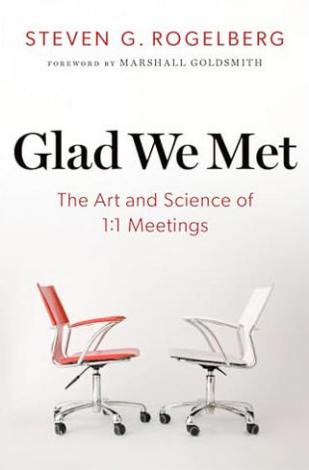
To help, Big Think recently spoke* with Steven Rogelberg, a professor of organizational science, management, and psychology at the University of North Carolina, Charlotte, and the author of Glad We Met and The Surprising Science of Meetings. During our conversation, we discuss who meetings are for, why they go wrong so often, and strategies to facilitate them more successfully.
Big Think: How did the office meeting evolve, and what are its benefits?
Rogelberg: Humans gather. It’s what we do. We’ve gathered since cave-person times, but ultimately, it was during the Industrial Revolution that we started to move away from traditional command-and-control systems and started to recognize that elevating other voices allowed for more ideas to emerge. It was an appreciation that diverse voices can bring diverse ideas and solutions to complex problems.
.
 .
.
.
Click the link below for the article:
.
__________________________________________
January 10, 2024
Mohenjo
Business, Food For Thought, Human Interest, Political, Science, Technical
amazon, business, Business News, current-events, Future, Hotels, human-rights, medicine, mental-health, research, Science, Science News, technology, Technology News, travel, vacation

Click the link below the picture
.
With the Iowa caucuses days away, politicians will be crisscrossing the state, blowing through small-town Pizza Ranches, filling high school gyms, and flipping pancakes at church breakfasts.
What Iowans will not be seeing are Democrats. President Biden spoke Friday in Pennsylvania, and he and Vice President Kamala Harris both were in South Carolina over the weekend and on Monday. But Iowa, a state that once sizzled with bipartisan politics, launched Barack Obama to the presidency in 2008 and seesawed between Republican and Democratic governors, has largely been ceded to the G.O.P. as part of a remarkable sorting of voters in the Upper Midwest.
There is no single reason that over the past 15 years, the Upper Midwest saw Iowa turn into a beacon of Donald J. Trump’s populism, North and South Dakota shed storied histories of prairie populism for a conservatism that reflected the national G.O.P., and Illinois and Minnesota move dramatically leftward. (Sandwiched in between, Wisconsin found an uncomfortable parity between its conservative rural counties and its more industrial and academic centers in Milwaukee and Madison.)
No state in the nation swung as heavily Republican between 2012 and 2020 as Iowa, which went from a six-percentage-point victory for Barack Obama to an eight-point win for Mr. Trump in the last presidential election.
.
 A supporter of former President Donald J. Trump watching him speak at a campaign event in Cedar Rapids, Iowa, in October. No state in the nation swung as heavily Republican between 2012 and 2020 as Iowa. Credit…Doug Mills/The New York Times
.
.
Click the link below for the article:
.
__________________________________________
January 9, 2024
Mohenjo
Business, Food For Thought, Human Interest, Political, Science, Technical
amazon, business, Business News, current-events, Future, Hotels, human-rights, medicine, mental-health, research, Science, Science News, technology, Technology News, travel, vacation

Click the link below the picture
.
On average, more than one in three people in the United States will develop cancer at some point in their lifetime, according to the American Cancer Society. And many of those cases, they say, can potentially be prevented, including by making changes to your diet.
Scientists have a good idea of what you should avoid to reduce your risk of cancer, such as red and processed meats, “fast” or processed foods, alcohol, and sugary drinks. But knowing what to eat isn’t always straightforward, said Johanna Lampe, a cancer prevention researcher at the Fred Hutchinson Cancer Center in Seattle.
Many nutrition studies rely on people to accurately remember what they consumed up to a year ago, Dr. Lampe said. And it’s tricky to understand how single foods may influence your health when they’re part of a larger diet, she said, adding that your lifestyle, environment, hormones, and genes can also play a role.
No single food can prevent cancer on its own, said Nigel Brockton, the vice president of research at the American Institute for Cancer Research in Washington, D.C. But following a healthy diet does seem to reduce the risk, he said.
Here are some foods that experts say are worth adding to your plate.
Broccoli and Its Cruciferous Cousins
Cruciferous vegetables like broccoli, brussels sprouts, cauliflower, and cabbage are rich sources of isothiocyanates, plant compounds that help our cells clear out toxins and repair themselves, which are crucial for cancer prevention, Dr. Lampe said.
Broccoli sprouts, for instance, are rich in the isothiocyanate sulforaphane, which may boost our body’s natural lines of defense against daily damage to cells, she added. The compound has been linked to protection against several types of cancer, including prostate, breast, bladder, and colorectal.
Research suggests consuming more than four or five servings of cruciferous vegetables per week is associated with a reduced risk of cancer and other chronic conditions.
.
 Credit…Sarah Mafféïs
.
.
Click the link below for the article:
.
__________________________________________
January 9, 2024
Mohenjo
Business, Food For Thought, Human Interest, Political, Science, Technical
amazon, business, Business News, current-events, Future, Hotels, human-rights, medicine, mental-health, research, Science, Science News, technology, Technology News, travel, vacation

Click the link below the picture
.
They turned up in shifts, all through the course of lockdown: mice, ants, weevils, moths, a fox, and, on one unhappy occasion, a magpie in the kitchen. I have been obliged to show the door to all manner of wildlife, with varying degrees of success. The magpie was eager to leave. The ants less so. The moths are still with us.
It’s easy to get angry with household pests, and sometimes – on encountering a particularly rapacious mouse, say – it’s possible to wish them great harm. But most people, I suspect, would rather be as humane as possible when getting rid of invaders. And even when kindness can’t stop you killing things, squeamishness often will. Unfortunately, many pest control products still associate effectiveness with lethality. The ant trap I bought says it “destroys ants and their nests!” I really just wanted them off the worktop. Is it possible to keep your home pest-free using only humane, nonlethal means?
The first thing I had to learn about humane pest control is that the people who promote it don’t like the word pest. Rodents and insects are all wildlife, with a vital part to play in our ecosystem. “Commonly, people call them pests, but they have the same right to live on this planet as we do,” says Laura-Lisa Hellwig, campaigns manager at the vegan charity Viva!. “And some of them have been here for a much longer time than we have. Really, we should find a peaceful way to live together instead of eradicating or cruelly killing some of them.”
Step one, then, is to check if you can simply coexist with your would-be pest.
“When people see, you know, a bee nest in their guttering on the side of their house, the first thing they think is: ‘We need to find a way to control that,’” says Kevin Newell, the founder of Humane Wildlife Solutions, a pioneering nonlethal wildlife control company based in Scotland. He is speaking to me by phone over the peeping of recently rescued baby lesser black-backed gulls, which are temporarily living in his office before being rehomed at a wildlife refuge.
.
 Tim Dowling … ‘It’s easy to get angry with household pests.’ Photo by Philippe TURPIN/Getty Images
.
.
Click the link below for the article:
.
__________________________________________
January 9, 2024
Mohenjo
Business, Food For Thought, Human Interest, Political, Science, Technical
amazon, business, Business News, current-events, Future, Hotels, human-rights, medicine, mental-health, research, Science, Science News, technology, Technology News, travel, vacation

Click the link below the picture
.
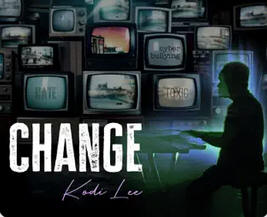
Hope you love this song, it is appropriate for our times!
.
 Kodi Lee
.
.
Click the link below for the song:
.
__________________________________________
January 8, 2024
Mohenjo
Business, Food For Thought, Human Interest, Political, Science, Technical
amazon, business, Business News, current-events, Future, Hotels, human-rights, medicine, mental-health, research, Science, Science News, technology, Technology News, travel, vacation

Click the link below the picture
.
How often do our workplace communications open with “I hope you are well” or “I trust you are doing fine”?
These “wellness checks” reflect the fact that everybody has become more conscious of the need to be kind to others. That’s a good thing. Our workplace has become a setting where the best bosses and colleagues take pride in showing sensitivity to the emotional and physical well-being of others.
And for these reasons, beginning a letter or a conversation with “I hope you are well” has some merit. But even if it reflects the best of intentions, this opening should be abandoned for the following five reasons.
1. IT’S A CLICHÉ
First, this opening is a non-starter, because it’s overly general. Of course you want to begin an email or conversation with something that warms up the relationship. I call this the “grabber.” But people who use “I hope you are well” or a similar phrase are simply making a pro forma statement that could be made to anyone. The words sound good but have no deeper personal or individual meaning.
Instead, ask yourself what you can say to show that you do care about the person you are writing to or talking with. You might begin: “You have been on my mind lately,” and then explain why. Or say: “We were so enthralled with the event you hosted last month.” In short, find something in the relationship to draw out.
If it’s a new contact, show you’ve done your research and say something positive about that person. For example: “I’m so impressed with your HR organization,” or “I am looking forward to meeting you and being part of your product launch.” Being specific gets the relationship off on good footing.
.
 [Images: rawpixel.com (computer, clouds)]
.
.
Click the link below for the article:
.
__________________________________________
Older Entries
Newer Entries
 James' World 2