October 30, 2025
Mohenjo
Business, Food For Thought, Human Interest, Political, Science, Technical
amazon, business, Business News, current-events, Future, Hotels, human-rights, medicine, mental-health, research, Science, Science News, technology, Technology News, travel, vacation

Click the link below the picture
.
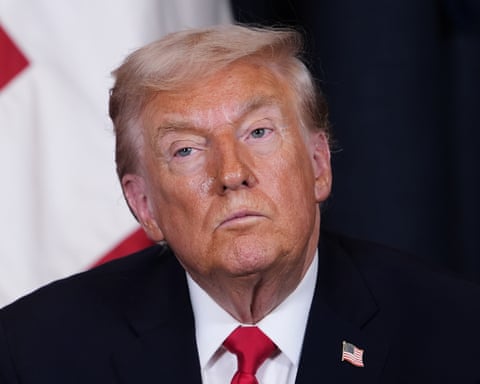
After the United States-China summit planned for Thursday, President Trump may crow about his deal-making skill. Aides may suggest that he deserves a Nobel Prize for negotiation — but I invite you to roll your eyes.
The most important bilateral relationship in the world today is between the United States and China, and Trump has bungled it. He started a trade war that Washington has been losing, and if a truce is formalized this week, it will likely be one with China holding power over America and leaving our influence diminished.
When Trump rashly announced his “Liberation Day” tariffs in April, he badly miscalculated. He seemed to think that China was vulnerable because it exported far more to the United States than it purchased. He apparently didn’t appreciate that much of what China purchased, like soybeans, it could get elsewhere, while Beijing is now the OPEC of rare earth minerals, leaving us without alternative sources. China controls about 90 percent of rare earths and is the sole supplier of six heavy rare earth minerals; it also dominates rare earth magnets.
Rare earths and rare earth magnets are essential ingredients of modern industry. They are necessary for the manufacturing of drones, automobiles, airplanes, wind turbines, many electronics, and much military equipment; without them, some American factories would close, and military suppliers would be severely affected. A single submarine can require four tons of rare earths.
It was quite predictable that China would respond to an international dispute by weaponizing its control over rare earths, for that is what it did with Japan in 2010. Sure enough, two days after Trump announced his Liberation Day tariffs, China announced export controls for some rare earths. It then greatly expanded the export controls this month.
It soon became obvious that President Xi Jinping of China had us over a barrel, for the United States economy depends on Chinese rare earths far more than China depends on American soybeans.
Treasury Secretary Scott Bessent says that negotiators have now “reached a substantial framework” for a trade deal between Trump and Xi. If the framework holds, it appears that the United States will cut and cancel tariffs and China will suspend its latest restrictions on rare earth mineral exports and resume soybean purchases. On the surface, that might look like a return to the status quo before the trade war, but it’s more like our surrendering and ending up in a weaker position after a conflict we started.
That’s because the dispute led China to weaponize its control of rare earths and hold this over us indefinitely as a cudgel. Indeed, a one-year suspension of export controls on rare earths would be a brilliant move by Xi, allowing Beijing to retain its leverage over the United States without causing such disruption that America and other countries would make all-out efforts to break China’s near-monopoly on the minerals.
At a conference over the weekend, I asked a large room full of international relations experts for a show of hands: Who thought the United States was winning the trade war, who believed China was winning and who thought it was too soon to tell? Overwhelmingly, people said China was winning and now holds the advantage.
Now that Trump has induced China to weaponize rare earths, we don’t have any rapid way of finding alternative sources. (Republican and Democratic presidents over the years should have worked much harder to develop rare earth mines and refineries.) Terry Lynch, the chief executive of Power Metallic Mines, a major mining company based in Canada, told me that the West needs a Manhattan Project-scale effort to develop rare earth capabilities, but that even such an all-out initiative would probably take five to seven years to get results.
“In that interim time, we’re going to have to make a deal with China,” he said.
In effect, Trump started a trade war and soon found that he was carrying a tariff to a knife fight. The trade bully unexpectedly found himself bullied, so he began to court China and make concessions.
Trump dialed back tariffs (before threatening new ones). He eased rules on exporting chips to China. He allowed TikTok to continue to operate in the United States, despite serious national security concerns. He blocked a visit to the United States by Taiwan’s president and reportedly delayed an arms sale to Taiwan. As the Center for American Progress put it, “the Trump administration’s approach to China is in a strategic free fall.”
That’s what I worry about in the coming years. Xi sees our weakness. He has established that he has the upper hand in the bilateral relationship and that Trump is the weak one who will buckle under pressure, including on security matters. And because Trump has betrayed and antagonized allies, they are less likely to work with us in resisting Beijing.
Xi may suspend his rare earths restrictions for a year, but I doubt he’ll let us build stockpiles. I suspect it will be more difficult for American companies to acquire rare earths to make fighter aircraft and submarines — and in fairness, Xi in some respects is simply doing to the United States what we have done to China.
In any case, a one-year suspension of rare earth licensing may simply be a way of reminding American leaders — and others around the world, for the restrictions were global — of their vulnerability. The aim presumably would be to induce more compliant behavior on issues Beijing cares about, from Taiwan to human rights complaints about Xinjiang and Tibet.
.
By Kaya & Blank
.
.
Click the link below for the complete article:
.
__________________________________________

October 29, 2025
Mohenjo
Business, Food For Thought, Human Interest, Political, Science, Technical
amazon, business, Business News, current-events, Future, Hotels, human-rights, medicine, mental-health, research, Science, Science News, technology, Technology News, travel, vacation

Click the link below the picture
.
About four years ago, Clifford Harper, then 85, announced to his wife that he was quitting alcohol. Harper wasn’t a heavy drinker but enjoyed a good Japanese whiskey. It was the first of a series of changes Linda Kostalik saw in her husband. After he’d cleared out the liquor cabinet, Harper, a prolific academic who has authored several books, announced he was tired of writing. Next, the once daily runner quit going to the gym. Kostalik noticed he also was growing more forgetful.
The behaviors were unusual enough that, at an annual physical, the couple’s physician recommended they consult a neurologist. A battery of medical tests and brain scans revealed that Harper’s surprising actions and memory loss were the result of dementia.
Harper’s neurologist at Oregon Health & Science University (OHSU) asked whether he might like to enroll in a long-running study of dementia in African Americans.* The study’s focus on Black health piqued Harper’s interest, and he decided to participate for as long as he could. “I hope it will help other men like me,” Harper says.
As a Black American, Harper faces a risk of Alzheimer’s disease and other dementias that is twice that of white Americans his age. The reasons for this disparity are still unclear, but researchers know Black Americans are particularly vulnerable to a number of confirmed risk factors, such as living in areas with higher rates of air pollution and encountering difficulties accessing healthy foods and high-quality education. Some studies suggest that experiencing racism and other forms of discrimination contributes to a higher risk of cognitive decline. Race or gender discrimination also raises a person’s risk of heart disease and, as a result, some forms of dementia.
That’s part of what prompted Harper to participate in OHSU’s study, called the African American Dementia and Aging Project (AADAPt), which was established in part to capture the unique history and experiences of Black communities in Oregon. The state’s first constitution banned nonwhite citizens from settling there. The ban was overturned by the early 1900s, and shipyard work during World War II brought an influx of Black workers to the region, but they still faced discrimination and racism in many forms. By the end of the war, racist lending practices—called redlining—led most of the Black community to live in segregated neighborhoods or those that were poor in resources needed for good health, such as parks and grocery stores.
Discrimination in the scientific world, along with other factors such as distrust of researchers, led to underrepresentation of Black communities in brain research. Even today, clinical trials for new treatments of Alzheimer’s include very few people of color. As a result, researchers and doctors are ill-equipped to understand the causes of dementia in these communities. “Not only are there health disparities around rates of Alzheimer’s, but we’ve understudied the Black population in relation to the causes,” says Andrea Rosso, an epidemiologist at the University of Pittsburgh.
Now that Alzheimer’s and some other dementias can be diagnosed early and their progress potentially slowed, figuring out who’s most vulnerable is even more critical. Diagnostic tests and interventions aren’t yet reaching all those who need them. Researchers should include historically minoritized communities in studies of these new frontiers in dementia diagnosis and treatment, says epidemiologist Beth Shaaban of the University of Pittsburgh. If adequate attention isn’t paid to diverse populations, communities that already experience disproportionate rates of dementia will be uninformed about their increased risk, how to lower it, and how to access diagnoses and care. “We are very concerned that these disparities and the rapid evolution of the new technology could leave people behind,” Shaaban says.
AADAPt and other studies aim to correct this inequity. The project seeks to understand the forces driving cognitive decline in Black Americans, identify protective factors that lead to healthy aging, and find practical solutions. The team hopes to eventually use the data to build predictive models that will catch cognitive decline early and potentially help people such as Harper access new medicines and treatments via clinical trials.
At the turn of the century, researchers projected that an aging baby boomer generation would drastically increase the incidence of Alzheimer’s and other forms of dementia. No treatments or protective strategies were known at the time, and the search for solutions focused largely on the tangles of proteins that jammed up brain circuits.
n the past two decades, scientists have discovered that certain drivers of Alzheimer’s may be controllable. In 2011, dementia researcher Deborah Barnes of the University of California, San Francisco, and her colleagues reported that poor education and smoking—things that could be addressed by behavioral changes and social reform—were among the greatest threats to aging brains. In a 2022 follow-up study, Barnes reported other modifiable risk factors for Alzheimer’s, such as midlife obesity and sedentary lifestyle, which can raise a person’s risk for heart disease.
.

Clifford Harper, seen here holding a photo of himself as a professor, was told by his physician that his cognitive decline might have begun 15 or more years before his memory loss became evident. The delay may be attributed to his education and physical fitness. Gioncarlo Valentine
.
.
Click the link below for the complete article:
.
__________________________________________
October 29, 2025
Mohenjo
Business, Food For Thought, Human Interest, Political, Science, Technical
amazon, business, Business News, current-events, Future, Hotels, human-rights, medicine, mental-health, research, Science, Science News, technology, Technology News, travel, vacation

Click the link below the picture
.
It makes sense in principle: You exercise your muscles to make them stronger and prevent frailty and decline; shouldn’t your brain work the same way?
That premise launched multiple brain training websites and apps, and most likely contributed to the sale of countless Sudoku, crossword, and logic puzzle books over the past two decades. It also inspired numerous academic researchers to explore whether cognitive training really can make people smarter and even lower the risk for dementia.
But, as often happens in science, a seemingly straightforward idea is more complicated than it appears. Because the answer to, “is training your brain helpful?” depends on what type of exercises you’re doing and what benefits you’re seeking.
When psychologists conduct research on whether it’s possible to improve cognition, they mostly use computer games developed to enhance a specific aspect of how we think. Some brain training games teach people strategies to improve a skill or recognize patterns. Others gradually increase speed and difficulty to challenge the brain, said Lesley Ross, a professor of psychology at Clemson University.
Many studies have shown that playing these games can improve people’s cognitive abilities — not just on the specific task they’re working on, but related tasks, too. That “isn’t terribly surprising,” said Adrian Owen, a professor of cognitive neuroscience and imaging at Western University in Ontario, Canada, just as someone who practiced memorizing phone numbers would probably get better at remembering dates.
Evidence that playing one type of game will make you smarter overall or help you improve on a completely different kind of task is less compelling.
“Brain training works in the sense that, if you want to learn to play the violin,” you will get better if you practice the violin, Dr. Owen said. But if you learn to play the violin, “do you get any better at the trumpet? Well, the obvious answer is no.”
Some brain training companies have said that their games can also help stave off cognitive decline, but research investigating the connection is slim. One of the few studies that has looked at this found that healthy older adults who played a game designed to improve processing speed had a 29 percent lower risk of dementia a decade later. People who played two other games, a memory task or a problem-solving task, also had decreased risk, though the benefit wasn’t significant compared to people who didn’t play any games.
Experts said this study suggested that brain training games have promise, but additional clinical trials are needed.
There is more research on how everyday hobbies and behaviors — like doing crossword puzzles, playing board games, reading books or newspapers, or learning another language — may protect against cognitive decline.
Several studies have suggested that the more often people engage in cognitively stimulating activities, the lower their risk for cognitive impairment or the later they receive a dementia diagnosis. For example, one found that, among adults who developed dementia, those who regularly completed crossword puzzles delayed the onset of memory decline by more than two years compared to those who didn’t.
If something is mentally challenging, “chances are that’s probably pretty good for your brain,” Dr. Ross said. But, she added, those studies of everyday activities are not randomized controlled trials — the gold standard in science and medicine — that would provide a definitive link between cognitively stimulating hobbies and a lowered risk of dementia. In other words, the current evidence only shows an association, not a direct cause and effect.
When asked why either of these types of activities, whether it’s a specially designed game or a crossword puzzle, might help the brain, experts mentioned the theory of “cognitive reserve.” The idea is the more “mental muscle” someone has built up, the more resilient they are to dementia, said Dr. Joe Verghese, the chair of the neurology department at the Stony Brook University Renaissance School of Medicine.
These activities likely won’t prevent the brain damage that leads to dementia. But if someone does get Alzheimer’s disease, cognitive reserve “can mask the effect and delay the onset of symptoms for a few years,” Dr. Verghese said.
.
Josie Norton
.
.
Click the link below for the complete article:
.
__________________________________________
October 29, 2025
Mohenjo
Business, Food For Thought, Human Interest, Political, Science, Technical
amazon, business, Business News, current-events, Future, Hotels, human-rights, medicine, mental-health, research, Science, Science News, technology, Technology News, travel, vacation

Click the link below the picture
.
To glimpse the future of homelessness policy in the age of President Trump, consider 16 acres of scrubby pasture on the outskirts of Salt Lake City where the state plans to place as many as 1,300 homeless people in what supporters call a services campus and critics deem a detention camp.
State planners say the site, announced last month after a secretive search, will treat addiction and mental illness and provide a humane alternative to the streets, where afflictions often go untreated and people die at alarming rates.
They also vow stern measures to move unhoused people to the remote site and force many of them to undergo treatment, reflecting a nationwide push by some conservatives for a new approach to homelessness, one embraced and promoted by Mr. Trump.
With outdoor sleeping banned, removal to the edge of town may become the only way some homeless Utahns can avoid jail. Planners say the facility will also hold hundreds of mentally ill homeless people under court-ordered civil commitment and the effort will include an “accountability center” for those with addictions.
“An accountability center is involuntary, OK — you’re not coming in and out,” Randy Shumway, chairman of the state Homeless Services Board, said in an interview. Utah will end a harmful “culture of permissiveness,” he said, and guide homeless people “towards human thriving.”
While the Utah effort began before Mr. Trump’s return to office, it mirrors his pledge to move the homeless from urban cores to “tent cities” with services. And it accelerated after Mr. Trump issued an executive order in July, calling for strict camping bans and expanded power to involuntarily treat homeless people.
Gov. Spencer Cox, a Republican, quickly praised Mr. Trump’s order and told Utah planners to follow it.
Critics of the new plan say that confining people to a site on the city’s outskirts threatens civil liberties and warn that the promised services may not materialize. The efforts coincide with deep cuts to Medicaid, which could thwart the project’s financing.
“I’m super anxious about it,” said Jen Plumb, a physician and Democratic state senator who calls the promise of high-quality medical care “pie in the sky.”
Utah already has a severe shortage of psychiatric beds, she noted. The legislature is unlikely to fund hundreds of new beds, she said, and even if it did, there is no work force to staff them.
Without enormous new spending, she said, the center could function less as a treatment facility than “a prison or a warehouse.”
The emerging portrait of the Utah center, scheduled to open in 2027, brings to life a vow that Mr. Trump made two years ago in an extraordinary campaign video.
Accusing homeless people of turning great cities into “unsanitary nightmares,” he pledged “to use every tool, lever and authority to get the homeless off our streets.” He said the administration would “open up large parcels of inexpensive land” where “dangerously deranged” people “can be relocated and their problems identified.”
.

The proposed site where Utah plans to place as many as 1,300 homeless people outside of Salt Lake City.
.
.
Click the link below for the complete article:
.
__________________________________________
October 28, 2025
Mohenjo
Business, Food For Thought, Human Interest, Political, Science, Technical
amazon, business, Business News, current-events, Future, Hotels, human-rights, medicine, mental-health, research, Science, Science News, technology, Technology News, travel, vacation

Click the link below the picture
.
A truck hauling “aggressive” monkeys thought to be carrying hepatitis C, herpes, and Covid-19 has overturned in Mississippi, with at least one on the loose, according to authorities.
The truck was loaded with caged Rehsus monkeys when it crashed on Interstate 59, north of Heidelberg, on Tuesday.
It was transporting the monkeys to a testing facility in Florida, Connecticut news outlet WFSB reported.
Jasper County Sheriff Randy Johnson told local outlet WAPT that 21 monkeys were on the truck, six of whom escaped.
“The monkey that got away actually crossed interstate, went out into a wooded area,” Johnson said.
The sheriff’s department initially said in a Facebook post that the monkeys posed “potential health threats.”
“The driver of the truck told local law enforcement that the monkeys were dangerous and posed a threat to humans. We took the appropriate actions after being given that information from the person transporting the monkeys. He also stated that you had to wear PPE equipment to handle the monkeys,” the department said.
Authorities said the truck was carrying monkeys from Tulane University.
The university told The Independent that the monkeys left the Tulane National Biomedical Research Center in Covington, Louisiana, and were traveling to a non-Tulane-affiliated location.
“The primates in question belong to another entity,” the university said, adding that they were not being transported by a Tulane-affiliated service.
Tulane said in a statement on X Tuesday evening that the monkeys are not infectious.
“The primates in question belong to another entity & aren’t infectious. We’re actively collaborating with local authorities & will send a team of animal care experts to assist as needed,” the university wrote.
Tulane stressed to The Independent that the monkeys “have not been exposed to any infectious agent.”
As of Tuesday afternoon, “All but one of the escaped monkeys have been destroyed. We have been in contact with an animal disposal company to help handle the situation,” authorities said.
Mississippi Wildlife and Fisheries also responded to the scene.
.

A truck hauling ‘aggressive’ monkeys carrying hepatitis C, herpes, and Covid has overturned in Mississippi, with several on the loose, according to authorities (Jasper County Sheriff’s Department)
.
.
Click the link below for the complete article:
.
__________________________________________
October 28, 2025
Mohenjo
Business, Food For Thought, Human Interest, Political, Science, Technical
amazon, business, Business News, current-events, Future, Hotels, human-rights, medicine, mental-health, research, Science, Science News, technology, Technology News, travel, vacation

Click the link below the picture
.
As Category 5 hurricane Melissa bears down on Jamaica, it is poised to be the worst storm to ever hit the Caribbean island, surpassing the damage from Hurricane Gilbert in 1988.
Gilbert, which hit Jamaica as a Category 4 hurricane, sent 19 feet of storm surge slamming into the eastern shore of the island and brought torrential rains and destructive winds. It killed 49 people, destroyed 100,000 homes, and did $700 million in damage, according to the U.S. National Oceanic and Atmospheric Administration.
Melissa, though, is far stronger and will hit from a direction that could expose more coastline to surge. And it is slower-moving, which means Jamaica will be subjected to the storm’s onslaught—especially torrential rains—for longer.
“This is going to be a lot worse than Gilbert,” says Phil Klotzbach, a senior research scientist at Colorado State University, who studies hurricanes.
Jamaica is no stranger to storms, but it has only been hit directly by five major ones (those of Category 3 or stronger), according to the best available historical records, which go back to the late 19th century. All of those major storms were either Category 3 or Category 4—we don’t know of any in recorded history that hit the island as a Category 5.
And Melissa is in rarefied company even among already rare Category 5 storms—it is exceptionally intense for an Atlantic basin hurricane. As of Monday afternoon, its maximum sustained winds are a stunning 175 miles per hour. Gilbert’s winds topped out at 130 mph when it collided with Jamaica.
Even if Melissa weakens some before it makes landfall in Jamaica, it will still be an exceptionally strong storm, and the fact that it is hitting from the south means it is running smack into a longer coastline than Gilbert did with its eastern approach. The nation’s capital, Kingston, sits on its southern shore.
The surge from Melissa is expected to reach nine to 13 feet above ground level, but exactly where that surge will be concentrated will depend on the storm’s exact path. Even small deviations could make a big difference in where the worst winds and waves hit. The farther west Melissa drifts before making a sharp turn to the northeast, the less likely it will be that the major population areas of the eastern half of the country, such as Kingston, will see the worst of the surge.
And then there is the fact that Melissa is creeping along at a pace between 3 and 5 mph, compared with Gilbert’s more typical 12 mph. “It’s barely moving,” Klotzbach says, which means the winds, surge, and rain will last agonizingly long. In fact, “they’ve been getting rain from this storm for days now,” Klotzbach says, as the weather system has drifted south of the island. Most of Jamaica is projected to get more than a foot of rain, and a wide area is forecast to get up to 30 inches. Some spots could see up to 40 inches. That amount of rain can be catastrophic, especially in Jamaica’s hilly terrain, where it can cause flash floods and landslides.
The Jamaican government has ordered mandatory evacuations for some flood-prone areas, according to the Jamaica Observer, and utilities are planning ahead for restoration efforts once the storm passes. “A Category Four hurricane potentially going through the middle of our island could have unprecedented damage on our facilities,” said Hugh Grant, chief executive officer of the Jamaica Public Service Company (JPS), at a media briefing on Sunday, according to the Jamaica Observer. “Here at JPS, it’s likely to be a rebuild and not just a restoration.”
.

A cyclist rides up to a store to seek shelter from Hurricane Melissa in Portmore, Jamaica, on October 26, 2025. Ricardo Makyn/AFP/Getty Images
.
.
Click the link below for the complete article:
.
__________________________________________

October 28, 2025
Mohenjo
Business, Food For Thought, Human Interest, Political, Science, Technical
amazon, business, Business News, current-events, Future, Hotels, human-rights, medicine, mental-health, research, Science, Science News, technology, Technology News, travel, vacation

Click the link below the picture
.
The hurricane weakened to a Category 4 as it carved a path of destruction across Jamaica. Limited communications have left officials with only partial reports as they seek to assess the scale of the damage.
Here’s the latest.
Hurricane Melissa slowly cut a soaking and destructive path across Jamaica on Tuesday after making landfall as one of the strongest Category 5 storms on record.
The hours-long overland passage sapped some of the storm’s strength, dropping it to a Category 4 by the time it began moving off Jamaica’s north coast in the afternoon, on a churning path expected to take it to Cuba last Tuesday or early Wednesday. Forecasts of Melissa’s path after that take it toward the Bahamas later on Wednesday.
Melissa has brought heavy rainfall throughout the Caribbean since late last week. The storm did not make landfall on Haiti, but it has nevertheless dropped a significant amount of rain there, and forecasters warned that flash flooding and landslides are expected for the next day. Officials there have announced that schools will be closed on Wednesday and a workers will be asked to stay home.
Jamaica’s health care system is facing “one of its most severe crises in recent memory” after Hurricane Melissa battered the island’s hospitals and clinics, according to a memo by the local response team of the Pan American Health Organization.
The storm’s advance has unleashed flood warnings in multiple hospitals, threatening to overwhelm them and disrupt essential services.
.
Kingston, Jamaica, on Tuesday, as Hurricane Melissa approaches.Credit…Octavio Jones/Reuters
.
.
Click the link below for the complete article:
.
__________________________________________
October 28, 2025
Mohenjo
Business, Food For Thought, Human Interest, Political, Science, Technical
amazon, business, Business News, current-events, Future, Hotels, human-rights, medicine, mental-health, research, Science, Science News, technology, Technology News, travel, vacation

Click the link below the picture
.
Heavy floodwaters swept across southwestern Jamaica, winds tore roofs off buildings, and boulders tumbled into roads Tuesday as Hurricane Melissa came ashore as a catastrophic Category 5 storm, tied for the strongest landfalling Atlantic hurricanes in history.
The storm landed in southwestern Jamaica near New Hope and is expected to exit around St. Ann parish in the north, forecasters said. The storm is expected to slice diagonally across the island, then head for Cuba. It has been blamed for at least seven deaths so far in the Caribbean — three in Jamaica, three in Haiti, and one in the Dominican Republic.
Landslides, fallen trees and numerous power outages were reported ahead of Melissa’s landfall, with officials in Jamaica cautioning that the cleanup and damage assessment would be slow.
“There is no infrastructure in the region that can withstand a Category 5,” Jamaican Prime Minister Andrew Holness said Monday. “The question now is the speed of recovery. That’s the challenge.”
What to know:
- Storm threatens flooding and landslides: Melissa could cause catastrophic flash flooding and numerous landslides, the U.S. National Hurricane Center warned Monday. A life-threatening storm surge of up to 13 feet (4 meters) is expected across southern Jamaica, and massive wind damage is expected in Melissa’s core.
- Cuba is next at risk: The storm is expected to make landfall late Tuesday or early Wednesday in eastern Cuba, where hundreds of thousands of people have prepared to evacuate. Up to 20 inches (51 centimeters) of rain are forecast in areas, with a significant storm surge along the coast. The hurricane is expected to reach the southeastern Bahamas by Wednesday evening.
- Warming oceans fuel Melissa’s ferocity: The warming of the world’s oceans caused by climate change helped double Hurricane Melissa’s wind speed in less than 24 hours over the weekend, climate scientists said Monday. Scientists said this is the fourth storm in the Atlantic this year to undergo rapid intensification of its wind speed and power.
Evacuations already well underway in Cuba
The president of the Provincial Defense Council and first secretary of the Cuban Communist Party in the eastern province of Santiago de Cuba, Beatriz Johnson Urrutia, said that some 281,000 people have already been evacuated and taken to 101 evacuation centers in that region or are staying with neighbors or relatives.
Some low-lying or coastal communities have been completely evacuated, with only the personnel in charge of safeguarding property remaining.
Of the 16 reservoirs managed by the National Institute of Hydraulic Resources in the province, five are discharging water, with 78% of their capacity accumulated in anticipation of heavy downpours.
Blocked roads and severe flooding seen across Jamaica
Desmond McKenzie, deputy chairman of Jamaica’s Disaster Risk Management Council, noted that extensive damage was reported in the southwestern parish of St. Elizabeth, which he said “is under water.”
He said severe damage also was reported in parts of Clarendon in southern Jamaica.
Almost every parish in the country is experiencing blocked roads, fallen trees, damaged utility poles and excessive flooding, McKenzie said.
He said four main hospitals are damaged, with the storm knocking out power to one of them, forcing officials to evacuate 75 patients.
At least 3 families trapped and unable to be rescued until conditions improve, officials say
Floodwaters trapped at least three families in their homes in the community of Black River in western Jamaica, and crews were unable to help them because of dangerous weather conditions, said Desmond McKenzie, deputy chairman of Jamaica’s Disaster Risk Management Council.
“Roofs were flying off,” he said. “We are hoping and praying that the situation will ease so that some attempt can be made to get to those persons.”
McKenzie said there are no confirmed reports of deaths and stressed that it was too early to talk about the extent of the damage because the storm was still pummeling the island.
.

Leaflet | Powered by Esri | USGS, NOAA
.
.
Click the link below for the complete article:
.
__________________________________________
October 27, 2025
Mohenjo
Business, Food For Thought, Human Interest, Political, Science, Technical
amazon, business, Business News, current-events, Future, Hotels, human-rights, medicine, mental-health, research, Science, Science News, technology, Technology News, travel, vacation

Hmmmm… Poor and young MAGA people have been Bamboozled by the current administration!
Click the link below the picture
.
According to Martin Makary, head of the US Food and Drug Administration (FDA), the drug leucovorin will help “hundreds of thousands of kids” with autism. But a day after Makary praised leucovorin’s powers at a White House event, some specialists are warning that the science to warrant Makary’s enthusiasm is far from solid.
Those researchers say that the drug’s efficacy has not been established, that scientists don’t know how much of the drug to give or how people should take it, and that safety data in children are lacking. According to the FDA’s current plans, leucovorin will be available to only a minority of autistic people.
All of this has led to widespread confusion, say clinicians, who also worry about the expectations created by Makary and other officials in the administration of US president Donald Trump.
“I’ve heard from a lot of families,” says psychologist Catherine Lord at the University of California, Los Angeles. “The major thing they say is, ‘What is this? What do we do?’”
“I don’t want to get everyone’s hopes up that this is a magic cure,” says Rebecca Schmidt, a molecular epidemiologist at the University of California, Davis. “It’s not for everybody.”
Vitamin in the spotlight
At an announcement on 22 September, Makary announced the upcoming approval of leucovorin, a form of the vitamin folate, by saying it would “open the door to the first FDA-recognized treatment pathway for autism”. People with low levels of folate in the protective fluid surrounding the brain and spine can sometimes exhibit traits associated with autism, including challenges in social communication. This condition, called cerebral folate deficiency, could be due to rogue antibodies that attack the body’s own proteins – in this case, proteins that ensure import of folate into the brain.
There have been clinical trials of leucovorin, also called folinic acid, in autism, but the studies to date have been small. For example, one recent clinical trial enrolled about 80 children aged 2 to 10, and provided folinic acid supplements to about half of the participants. Neither the participants nor their physicians knew who received the supplement and who received a placebo. Participants who received the supplement reported greater improvements in social interactions and language skills than those who received the placebo.
After the trial was published, some researchers subsequently raised concerns that the assessment of those improvements was subjective, and that the study was too small to detect subtle differences in response.
Call for bigger trials
But size is not the only thing that matters in clinical trials, says Dan Rossignol, a family physician in Aliso Viejo, California, who has studied the data on leucovorin and sometimes prescribes it to autistic children. The effect of leucovorin in the trials has been large enough to be apparent even with small numbers of participants, he says. Specifically, Rossignol points to an early leucovorin clinical study, in which only 48 children participated but some experienced marked improvements in a standardized assessment of speech.
“But it would be great if more studies were done with more kids,” he says. “Then w
e could tease out which kids respond better.” Typically, studies submitted for FDA approval of a drug for autism might have data from hundreds of children, he says, but it has been difficult to raise the money for bigger trials. Rossignol says that he and a colleague have been in discussions with US President Donald Trump’s administration to make the case for leucovorin.On Monday, the Trump administration said the US National Institutes of Health plans to monitor the effects of the FDA’s anticipated approval and to study possible broader benefits of leucovorin in autistic people. No details have been released as to how such studies will be designed.
.

Globes of folinic acid, also called leucovorin, which Trump team officials have promoted as an intervention for autism. Alfred Pasieka/Science Source
.
.
Click the link below for the complete article:
.
__________________________________________
October 27, 2025
Mohenjo
Business, Food For Thought, Human Interest, Political, Science, Technical
amazon, business, Business News, current-events, Future, Hotels, human-rights, medicine, mental-health, research, Science, Science News, technology, Technology News, travel, vacation

Click the link below the picture
.
I used to make good money. In fact, when I got engaged to my now ex-husband, I was making more than he was. Yes, he was a hard worker, but I was a few years older than him, had been in the workforce longer, and had been on my own for a while. We still split everything down the middle when we moved in, and he never complained or told me I should contribute more because I made more.
Then, after we got married and had babies right away, we decided together that I’d stay home with the kids. It was something we both wanted and were equally excited about. He started a company and did really well. He made more than enough to support our family, and we were both smart with our money. No credit card debt, didn’t live above our means, and neither of us were really extravagant.
But even in that situation, we still fought about money. I was used to contributing and going shopping to get a new outfit when I wanted. I also love going out to eat, and we did that regularly when we had two incomes. After we had a baby, though, and I went out to eat, my ex would make a comment about how it wasn’t really necessary and we should save as much as possible.
I agreed with the saving thing, but I didn’t want to stop living my life. We weren’t going out and doing things as much. I only shopped during sales, and as much as I wanted a new car, I didn’t push it because the one I had was fine.
I felt like I was making adjustments, but we still had arguments about spending. My ex was not a controlling man by any means, but he only enjoyed spending money on certain things. He didn’t care as much about going out to eat or staying up on the latest fashion trends. But those were two things that made me so happy. And frankly, they made me feel alive. We all need an outlet, something to look forward to, and those were my things.
In a way, I felt like he was trying to take that away from me, and I would not let that happen.
I started asking him for permission to spend money to avoid fighting about it. That didn’t work, as he’d say we should use any extra money to save for college funds or retirement. Even if I really wanted something, he’d come back with “You don’t need that.”I’d usually reply with something akin to “Just because you don’t care about how you dress doesn’t mean I have to live that way,” or “you get to leave the house every day and go to work, so going out to eat is something I really look forward to. I don’t want to make all the meals, and it’s not like you help.”
Needless to say, it brought out an ugly side in both of us. We had previously made such a great team, so I never expected for that to happen. Neither of us were right, of course. But there was a shift, a change. We both had to make sacrifices, and that’s hard. No one wants someone to tell them what they can’t and can’t do with money. My husband was under a lot of pressure, starting a business and going from supporting himself to supporting me and a child. I didn’t have enough empathy then, and he didn’t have empathy for the fact that I had lost some identity and freedom.
Yes, this was a sacrifice we both agreed to make, not knowing how hard it was going to be.
I had always worked, knew my budget, and treating myself to things was how I loved myself. And I felt like that was being threatened.
You may roll your eyes, or you may completely understand. All I know is that I’ve never talked to a couple that didn’t go through growing pains over money after they had a baby. Every situation is unique, is hard, and requires some tough talks and sacrifices.
It took a bit, but my ex and I finally got on the same page. It required both of us to make some changes because ultimately, the most important thing to us was for me to stay at home with the kids.
If you’re going through this with your partner, be gentle on yourself but also gentle on them. It’s likely that neither of you have been through this before, and there’s a learning curve.
Nobody really talks about the money fights you’ll have after the baby comes. Be prepared, and more importantly, remember that the faster you come to a comfortable place for both of you, the faster you can enjoy this new life. You’re allowed to change your mind about working. You’re allowed to get another job, or a different job. And letting go of some luxuries can actually be freeing.
.
I had always worked, knew my budget, and treating myself to things was how I loved myself. And I felt like that was being threatened.
.
.
Click the link below for the complete article:
.
__________________________________________
Older Entries
Newer Entries