January 29, 2024
Mohenjo
Business, Food For Thought, Human Interest, Political, Science, Technical
amazon, business, Business News, current-events, Future, Hotels, human-rights, medicine, mental-health, research, Science, Science News, technology, Technology News, travel, vacation

Click the link below the picture
.
Maybe you know the routine. Every so often, I go through my refrigerator, check labels on the items, and throw out anything that’s a month, or a week, or maybe a few days past the date on the label. I might stop to sniff, but for my whole adult life, I’ve figured that the problem was obvious — my jam or almond milk or package of shredded Italian cheese blend had “expired” — and the fix was simple: Into the garbage, it goes.
This habit is so ingrained that when I think about eating food that’s gone past its date, I get a little queasy. I’ve only had food poisoning once or twice in my life, always from restaurants, but the idea is still there in my head: past the date, food will make me sick. You’ll probably never catch me dumpster-diving.
I know, on some intellectual level, that throwing away food is probably wrong. The statistics are damning. Forty percent of food produced in America heads to the landfill or is otherwise wasted. That adds up. Every year, the average American family throws out somewhere between $1,365 and $2,275, according to a landmark 2013 study co-authored by the Harvard Food Law and Policy Clinic and the Natural Resources Defense Council. It’s a huge economic loss for food growers and retailers, who often have to ditch weirdly shaped produce or overstocked food that didn’t sell.
Environmentally it’s bad, too. The study found that 25 percent of fresh water in the US goes toward producing food that goes uneaten, and 21 percent of input to our landfills is food, which represents a per-capita increase of 50 percent since 1974. Right now, landfills are piled high with wasted food, most of which was perfectly fine to eat — and some of which still is.
On top of this, I know that in the same country that throws away so much food, about 42 million people could be living with food insecurity and hunger. Yet state-level regulations often make it difficult to donate past-date food to food banks and other services.
.
:format(webp)/cdn.vox-cdn.com/uploads/chorus_image/image/69555166/GettyImages_1312472686t.0.jpg) A scene like this greets most supermarket shoppers in the US. But much of what we think we know about food shopping needs an overhaul. Steve Pfost/Newsday/Getty Images
A scene like this greets most supermarket shoppers in the US. But much of what we think we know about food shopping needs an overhaul. Steve Pfost/Newsday/Getty Images
.
.
Click the link below for the article:
.
__________________________________________
January 28, 2024
Mohenjo
Business, Food For Thought, Human Interest, Political, Science, Technical
amazon, business, Business News, current-events, Future, Hotels, human-rights, medicine, mental-health, research, Science, Science News, technology, Technology News, travel, vacation

Click the link below the picture
.
Was ever a word so misused as “sustainable”? “Healthy” comes close, and indeed the two are often bandied around together, in trite “good for you, good for the planet” taglines that often appear on foods which are anything but. The question of what we should eat to help combat climate change and environmental degradation has never been more important – nor so confusing. While research on the subject is ongoing, there are definitely some foods which, with caveats, you can scoff with a clear conscience.
“Good eating starts at home, and one of the most important things we can do for the future of the planet is to minimize food miles – so our staples should be foods that can grow perfectly well in this country,” advises Patrick Holden, chief executive of the Sustainable Food Trust. Another basic principle is to do your best to understand the story behind what you’re eating – be it plant or animal: “If you know who produced your food, they are accountable to you, and more likely to care.”
Grass-fed beef and lamb
These meats are the most controversial, complex, and heavily caveated inclusion in this list, but Holden, one of the earliest proponents of regenerative agriculture (which involves rearing livestock within a mixed farming system in order to restore organic matter – and with it, carbon – to the soil) makes a case for eating them. Soil is an invaluable carbon sink; yet the separation of crops and livestock farming has left half of the country dependent on artificial fertilizers, the application of which “reduces organic matter and microbial diversity”, he says, resulting in the leaching of carbon. By rotating livestock with crops (as was done for centuries before the intensification of agriculture), farmers can “build soil carbon and so offset livestock emissions” – and make the most of grass, a plant we can’t eat, but which grows in abundance in the UK.
Consumed in moderation, red meat is highly nutritious and also increases the bioavailability of nutrients in plant foods. “There is a good reason humans have coevolved alongside animals which eat grass,” says Carolyn Steel, author of Sitopia: How Food Can Save the World. “Grass is rich in nutrients, but we can’t digest it. So we eat animals that can.”
.
 Wakame seaweed salad with sesame and green tea. Photograph: Westend61/Getty Images
.
.
Click the link below for the article:
.
__________________________________________
January 28, 2024
Mohenjo
Business, Food For Thought, Human Interest, Political, Science, Technical
amazon, business, Business News, current-events, Future, Hotels, human-rights, medicine, mental-health, research, Science, Science News, technology, Technology News, travel, vacation

Click the link below the picture
.
On 27 August 1883, the Earth let out a noise louder than any it has made since.
It was 10:02 a.m. local time when the sound emerged from the island of Krakatoa, which sits between Java and Sumatra in Indonesia. It was heard 1,300 miles away in the Andaman and Nicobar islands (“extraordinary sounds were heard, as of guns firing”); 2,000 miles away in New Guinea and Western Australia (“a series of loud reports, resembling those of artillery in a north-westerly direction”); and even 3,000 miles away in the Indian Ocean island of Rodrigues, near Mauritius* (“coming from the eastward, like the distant roar of heavy guns.”) In all, it was heard by people in over 50 different geographical locations, together spanning an area covering a thirteenth of the globe.
Think, for a moment, just how crazy this is. If you’re in Boston and someone tells you that they heard a sound coming from New York City, you’re probably going to give them a funny look. But Boston is a mere 200 miles from New York. What we’re talking about here is like being in Boston and clearly hearing a noise coming from Dublin, Ireland. Traveling at the speed of sound (766 miles or 1,233 kilometers per hour), it takes a noise about 4 hours to cover that distance. This is the most distant sound that has ever been heard in recorded history.
So what could possibly create such an earth-shatteringly loud bang? A volcano on Krakatoa had just erupted with a force so great that it tore the island apart, emitting a plume of smoke that reached 17 miles into the atmosphere, according to a geologist who witnessed it1. You could use this observation to calculate that stuff spewed out of the volcano at over 1,600 miles per hour—or nearly half a mile per second. That’s more than twice the speed of sound.
This explosion created a deadly tsunami with waves over a hundred feet (30 meters) in height. One hundred sixty-five coastal villages and settlements were swept away and entirely destroyed. In all, the Dutch (the colonial rulers of Indonesia at the time) estimated the death toll at 36,417, while other estimates exceeded 120,000.
.
 A lithograph of the massive 1883 eruption of Krakatoa. From The eruption of Krakatoa, and subsequent phenomena, 1888; Parker & Coward; via Wikipedia.
.
.
Click the link below for the article:
.
__________________________________________
January 27, 2024
Mohenjo
Business, Food For Thought, Human Interest, Political, Science, Technical
amazon, business, Business News, current-events, Future, Hotels, human-rights, medicine, mental-health, research, Science, Science News, technology, Technology News, travel, vacation

Click the link below the picture
.
Even in an age of smartphones, crunching numbers quickly — and getting good at it — can give you snappy, useful answers to pressing real-life math questions such as, Is this shirt a good deal? Or How much should I tip my Uber driver? Here are some good mental math shortcuts to keep under your hat.
To sign your check in record time:
To calculate the amount of a 20 percent tip, calculate 10 percent (or remove the last digit) and double it. For instance, with a $42.50 bill, 10 percent is $4.25, and double it to get an $8.50 tip.
To ace sale shopping:
To find out how much you’ll pay for an item that’s a certain percentage off, first subtract the percent off from 100. So if it’s 30 percent off, use 70; 60 percent off, use 40, etc. Divide this number and the price by 10 and then multiply the resultant two numbers. For instance, if a $20 shirt is 60 percent off, multiply 2 by 4 for a total of $8. A $40 shirt at 30 percent off would be 4 multiplied by 7 for a total of $28 final price.
If you just want to calculate the amount that’s coming off (not the final price), divide both numbers by 10 and then multiply the resulting numbers. So 60 percent off $120 would be 6 x 12, for a total of $72 off.
.
 Photo by Bethany Robertson/Apartment Therapy
.
.
Click the link below for the article:
.
__________________________________________
January 27, 2024
Mohenjo
Business, Food For Thought, Human Interest, Political, Science, Technical
amazon, business, Business News, current-events, Future, Hotels, human-rights, medicine, mental-health, research, Science, Science News, technology, Technology News, travel, vacation

Click the link below the picture
.
Taylor Wang was deeply despondent.
A day earlier, he had quite literally felt on top of the world by becoming the first Chinese-born person to fly into space. But now, orbiting Earth on board the Space Shuttle, all of his hopes and dreams, everything he had worked on for the better part of a decade as an American scientist at NASA’s Jet Propulsion Laboratory, had come crashing down around him.
Wang was the principal investigator of an experiment called the Drop Dynamics Module, which aimed to uncover the fundamental physical behavior of liquid drops in microgravity. He had largely built the experiment, and he then effectively won a lottery ticket when NASA selected him to fly on the 17th flight of the Space Shuttle program, the STS-51-B mission. Wang, along with six other crew members, launched aboard Space Shuttle Challenger in April 1985.
On the second day of the mission, Wang floated over to his experiment and sought to activate the Drop Dynamics Module. But it didn’t work. He asked the NASA flight controllers on the ground if he could take some time to try to troubleshoot the problem and maybe fix the experiment. But on any Shuttle mission, time is precious. Every crew member has a detailed timeline, with a long list of tasks during waking hours. The flight controllers were reluctant.
After initially being told no, Wang pressed a bit further. “Listen, I know my system very well,” he said. “Give me a shot.” Still, the flight controllers demurred. Wang grew desperate. So he said something that chilled the nerves of those in Houston watching over the safety of the crew and the Shuttle mission.
“Hey, if you guys don’t give me a chance to repair my instrument, I’m not going back,” Wang said.
Exactly what happened after that may never be known. But thanks to new reporting, we may finally have some answers. And though this is an old story, it still reverberates today, four decades on, with lasting consequences into the era of commercial spaceflight as more and more people fly into orbit.
.
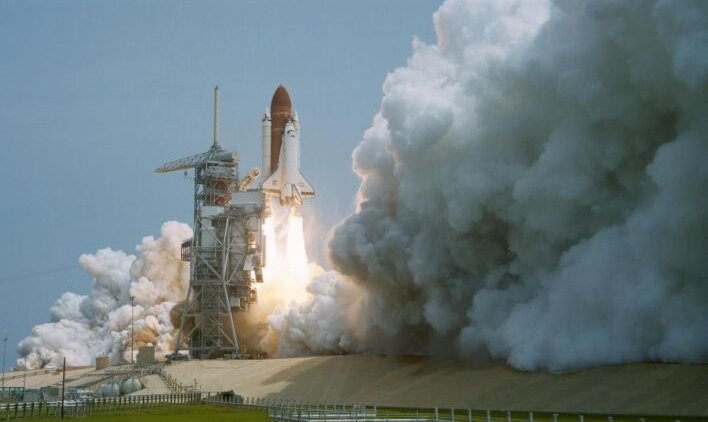 The STS-51-B mission begins with the liftoff of the Challenger from Pad 39A in April 1985.
.
.
Click the link below for the article:
.
__________________________________________
January 26, 2024
Mohenjo
Business, Food For Thought, Human Interest, Political, Science, Technical
amazon, business, Business News, current-events, Future, Hotels, human-rights, medicine, mental-health, research, Science, Science News, technology, Technology News, travel, vacation

Click the link below the picture
.
Albert Einstein was one smart cookie; there’s no doubt about it. But even he knew his general theory of relativity – the 21st century’s answer to Newton’s universal theory of gravity – wasn’t perfect.
Like the second-hand car you bought using your first paycheck, it does the job for day-to-day errands. Push it too hard up a steep hill or park it near a quantum strip mall, and that engine shudders to a standstill.
Peoples’ Friendship University of Russia astrophysics grad student Hamidreza Fazlollahi’s solution is to dive under the hood and see which components aren’t as essential as they seem.
Gravity describes the tendency for things with mass to come together. Whether it’s colliding galaxies, a moon struggling against inertia in its pull towards a planet, or an apple falling to Earth from the top branches of a tree, models of gravity need to explain why masses attract.
Yet such a theory also needs to operate in a Universe where objects of identical charge repel, explain why atomic nuclei stick together with incredible force, or why neutrons spontaneously decay to form protons. It also needs to work still when masses become so dense or space-time so compact, light itself can no longer escape.
And frankly, as good as it is, general relativity just isn’t up to the task.
“The problem of non-renormalizability of Einstein’s gravity is well known. It has led to dozens of attempts to treat it as a low-energy theory,” Fazlollahi says.
Renormalization is a magical sleight-of-hand used by theoretical physicists to make frustrating infinities in quantum fields disappear. When loops of reality seem to recede forever into the distance in a confusing fractal, pull a few of these techniques out of the bag, and your model is on solid ground once again
.

Astrophysicist ‘Fixes’ General Relativity by Throwing Out a Major Law © Provided by ScienceAlert
.
.
Click the link below for the article:
.
__________________________________________
January 26, 2024
Mohenjo
Business, Food For Thought, Human Interest, Political, Science, Technical
amazon, business, Business News, current-events, Future, Hotels, human-rights, medicine, mental-health, research, Science, Science News, technology, Technology News, travel, vacation

Click the link below the picture
.
Last year may have been the beginning of the end for plastic. It may have taken a while for the average person to wake up to its dangers, but many were shaken into action by the images and videos of plastic’s impact on the natural world that flooded the media in 2018.
A viral video showed a turtle with a straw stuck up its nose. Stories about the Great Pacific Garbage Patch revealed how island-sized trash mounds had collected in the ocean between Hawaii and California. And then there was that National Geographic cover of a plastic bag floating in the water, beneath the scrawled words “Planet or Plastic?” The issue publicized a remarkable statistic: Despite the world’s efforts to recycle, 91% ends up in the trash.
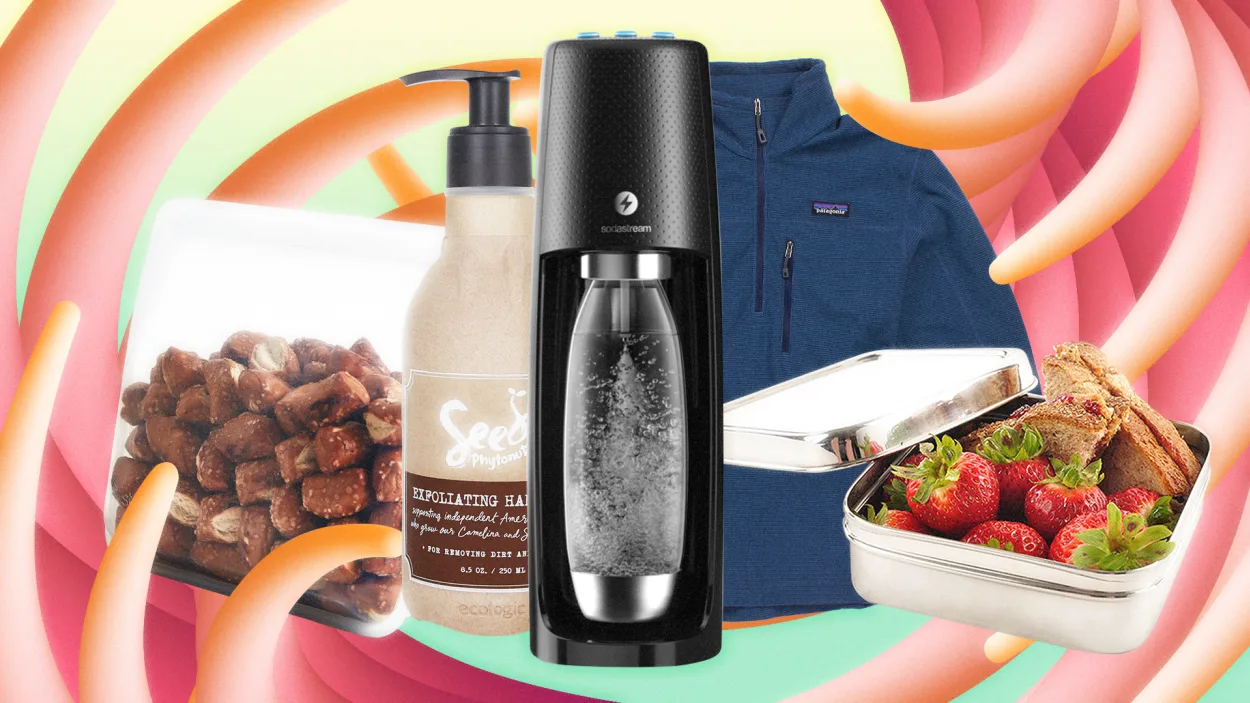
You may already be part of the growing number of people who are trying to ditch plastic. I’ve tried to faithfully bring my reusable Baggu bags ($12) to the grocery store, and carry my own metal straw ($4 for three) with me when I go out to restaurants. I use S’well and BKR bottles ($25 and $45) instead of plastic water bottles. I like to congratulate myself for these small steps, but something weird happened once I began cutting down. I suddenly saw how much other plastic filled my kitchen, bathroom, and closet. I saw it in my toddler’s sippy cups and toys, in the cling film enveloping the meat and produce at the grocery store, and in the contents of my medicine cabinet. How could I ever hope to curb plastic, given that it’s woven into every part of my life?
As I’ve begun to explore more ways to cut down, I’ve realized that the task ahead is not as painful as it might seem. This is partly thanks to a flock of new startups coming up with alternatives to everyday plastic products. I’ve researched many of these brands and tested many of their products to give you a totally achievable, relatively painless, and very convenient guide to get started curbing your plastic use.
.
.
.
Click the link below for the article:
.
__________________________________________
January 25, 2024
Mohenjo
Business, Food For Thought, Human Interest, Political, Science, Technical
amazon, business, Business News, current-events, Future, Hotels, human-rights, medicine, mental-health, research, Science, Science News, technology, Technology News, travel, vacation
Click the link below the picture
.
How long does it take a recruiter to decide if you’re right for a job? It’s actually around seven seconds, according to eye-tracking research. To put that into perspective, close your eyes and take two deep breaths. That’s the time, on average, hiring managers spend skimming your resume, sizing up your history, hopes, and dreams before either tossing it into the trash or moving you to the next round of the application process.
For those of us just entering the workforce or looking to make a career transition, one thing is clear: We need to find ways to stand out — and fast. While there is a plethora of guidance on the Internet surrounding how to be a “great” candidate, it can be contradictory or confusing depending on where and when you look.
I’ve spent the past few weeks catching up with recruitment experts who specialize in remote work, as well as diversity, equity, and inclusion (DEI), in attempt to decode the most up-to-date advice when it comes to applying for a new job — especially during this pandemic. I’ve asked them to weigh in on everything from how resumes are screened to how candidates can make connections that might help them land an actual interview.
Here is what I’ve learned:
Outsmart the Robots
According to Sulaiman Rahman, CEO of DiverseForce, recruiters may not be the only ones you need to impress. “Organizations are increasingly using automation to screen resumes, so it’s important for job seekers to use keywords that are also found in the actual job description,” he told me. In short, more and more artificial intelligence (AI) tools are being used to match the language in your resume to the language in the job posting.
.
 Antony Nagelmann/Getty Images
.
.
Click the link below for the article:
.
__________________________________________
January 25, 2024
Mohenjo
Business, Food For Thought, Human Interest, Political, Science, Technical
amazon, business, Business News, current-events, Future, Hotels, human-rights, medicine, mental-health, research, Science, Science News, technology, Technology News, travel, vacation

Click the link below the picture
.
It’s fair to say math is not everyone’s favorite subject. In fact, for many people, the feelings of tension and anxiety that arise when trying to solve a mathematical problem can be all-consuming. This is known as math anxiety — and this feeling of being a failure at math can affect people’s self-worth for years to come.
For those who suffer from math anxiety, it can be difficult to shift from a mindset of failure to a more positive outlook when it comes to dealing with numbers. This is why, for many people, math anxiety can become a lifelong issue.
But research shows that if teachers tackle math anxiety in the classroom and encourage children to try to approach a problem in a different way — by shifting their mindset — this can be an empowering experience. This is especially the case for pupils from a disadvantaged background.
Mindset Theory
US psychology professor, Carol Dweck, came up with the idea of “mindset theory.” Dweck realized that people can often be categorized into two groups, those who believe they are bad at something and cannot change, and those who believe their abilities can grow and improve.
This formed the basis of her mindset theory, which states that some people have a “fixed mindset,” meaning they believe their ability to be set in stone and unable to be improved. Other people have a “growth mindset,” meaning they believe their ability can change and improve over time with effort and practice.
 Math hack
.
.
Click the link below for the article:
.
__________________________________________
January 24, 2024
Mohenjo
Business, Food For Thought, Human Interest, Political, Science, Technical
amazon, business, Business News, current-events, Future, Hotels, human-rights, medicine, mental-health, research, Science, Science News, technology, Technology News, travel, vacation

Click the link below the picture
.
It’s not too late to make New Year’s resolutions. That’s because January is not over yet, but also because anything can be a temporal milestone if you want it to be. Some of the hype around such resolutions comes from what behavioral researchers call “the fresh start effect,” or the fact that people are more likely to change their behavior when a new time period begins. That juncture doesn’t necessarily have to be the start of a year, however.
Whether you want to set goals for a new year, month or week, there are evidence-backed ways to do so. Although research on New Year’s resolutions in particular is rather scarce, there is a branch of science that has been working to identify how to design goals that work for those who pursue them.
Starting in the 1960s, psychologists Edwin Locke and Gary Latham worked to develop a goal-setting theory based on scientific studies that were mostly performed in work settings. After looking at a bunch of papers, the pair realized that people with specific and challenging goals perform better. In 1990 Locke and Latham came up with five principles that successful goals should have: they should be clear; they should be challenging; they should not be too complex (and should be broken into smaller tasks if needed); people should be committed to them; and people should receive regular feedback on how they are being accomplished.
This research was initially done in a work setting, but these principles can be used for any type of goal, Latham says. Although it might be hard to get regular feedback on your New Year’s resolutions, you can still create a system to measure your progress or talk to a friend or family member to keep yourself accountable. You can also break big personal goals into simpler tasks, such as aiming to read one book per month instead of 12 in the whole year.
.
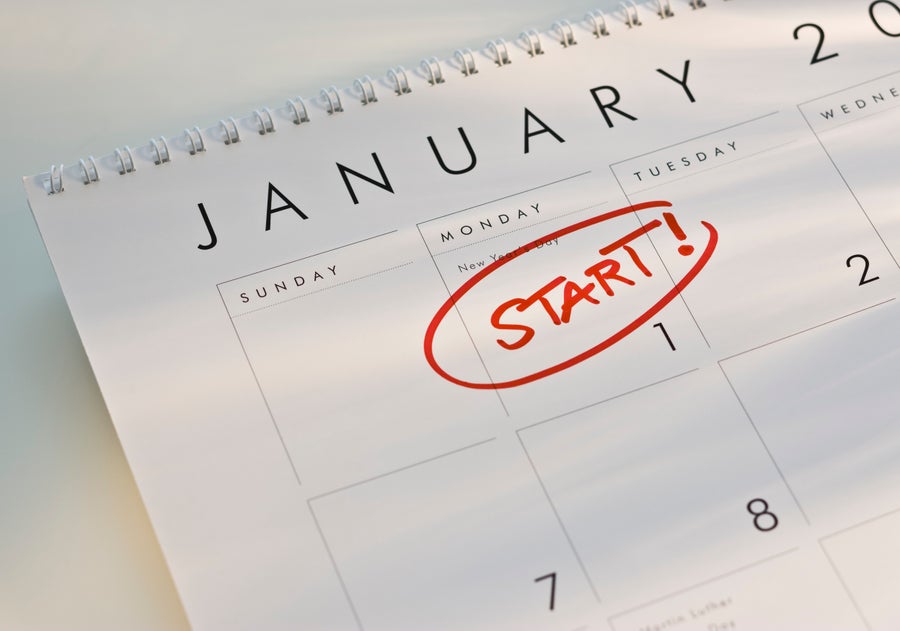 Credit: Tom Grill/Getty Images
.
.
Click the link below for the article:
.
__________________________________________
Older Entries
Newer Entries
 James' World 2