February 2, 2024
Mohenjo
Business, Food For Thought, Human Interest, Political, Science, Technical
amazon, business, Business News, current-events, Future, Hotels, human-rights, medicine, mental-health, research, Science, Science News, technology, Technology News, travel, vacation

Click the link below the picture
.
In the 1970s, officials in New York City banned in-sink kitchen garbage disposals over concerns about aging sewer systems and discharge of raw organic refuse into nearby rivers. Paper-waste recycling programs dominated conservation efforts at the time, and a green-waste management solution seemed less urgent without the looming specter of climate change. Plus, disposers weren’t an easy sell: the pulverizing devices were noisy and costly to install, their blades the stuff of kitchen-sink horror. (In fact, garbage disposers don’t use blades at all: spinning “lugs” or impellers use centrifugal force to continuously force food particles into a grind ring, which then liquefies the waste and flushes it into the sewer system.)
According to a 1997 Department of Environmental Protection (DEP) report, only about 25 percent of NYC households had a disposer in 1971. Organic waste was “the next big frontier” for the city, explains former First Deputy Mayor of New York City Norman Steisel, who played a key role in the legalization of garbage disposers during the Dinkins administration (1990-1993), and who served as Sanitation Commissioner for many years. Though Steisel recognized that the city was dependent on landfills and emitting sizable greenhouse gases, the city was still sorting out the details of its recycling program.
Steisel encouraged the Department of Sanitation and the DEP to work together, promoting life-cycle studies that showed both the financial and ecological potential of disposers—research that would shape legislation ultimately passed during the Giuliani administration. The city installed more than 200 of the devices in select city apartments for a 21-month trial run; they then compared apartment units that had disposers with disposer-less units in the same building. Careful analyses from this study and others formed the basis of DEP’s report: the projected impact of citywide disposal legalization was minimal, and the Department estimated a $4 million savings in solid waste export costs.
City officials lifted the ban on garbage disposers in 1997. Twenty years later, though, their adoption is slower here than almost anywhere else in the country. Why are New Yorkers so reluctant to install garbage disposers—and what’s at stake if we continue to dispose all of our trash curbside?
.
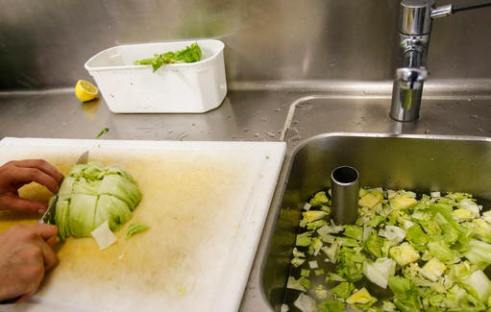 Photo by Dominic Ebenbichler/Reuters.
.
.
Click the link below for the article:
.
__________________________________________
February 2, 2024
Mohenjo
Business, Food For Thought, Human Interest, Political, Science, Technical
amazon, business, Business News, current-events, Future, Hotels, human-rights, medicine, mental-health, research, Science, Science News, technology, Technology News, travel, vacation
Some content on this page was disabled on April 15, 2025 as a result of a DMCA takedown notice from Guardian Media Group. You can learn more about the DMCA here:
https://wordpress.com/support/copyright-and-the-dmca/
February 1, 2024
Mohenjo
Business, Food For Thought, Human Interest, Political, Science, Technical
amazon, business, Business News, current-events, Future, Hotels, human-rights, medicine, mental-health, research, Science, Science News, technology, Technology News, travel, vacation

Click the link below the picture
.
Can you calculate 85 percent of 24 in your head? This is not as hard as it sounds. If you know how to halve numbers and divide by 10 you can probably do this in your head. This video explains how to calculate many percentages as a combination of ones that are easier to compute.
.
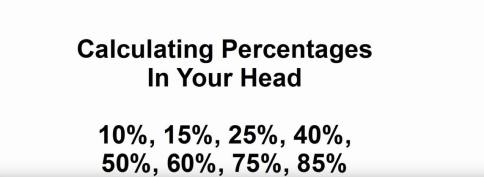 Can you calculate 85 percent of 24 in your head?
.
.
Click the link below for the video:
.
__________________________________________
February 1, 2024
Mohenjo
Business, Food For Thought, Human Interest, Political, Science, Technical
amazon, business, Business News, current-events, Future, Hotels, human-rights, medicine, mental-health, research, Science, Science News, technology, Technology News, travel, vacation

Click the link below the picture
.
From the outside, it looked as though Adam Alter was gliding along.
At 28, he had earned a doctorate in psychology from Princeton and soon afterward landed a job as a tenure-track professor at the N.Y.U. Stern School of Business.
But he felt stuck. Preparing to teach while simultaneously doing research became overwhelming, especially after having just emerged from five intense years of graduate school. And although he was often surrounded by people in New York City, he missed having a close network of friends.
He likened it to being trapped on a conveyor belt. “I was making a career for myself,” he said, “but I wasn’t sure if those were the ways I wanted to succeed.”
Dr. Alter, who has now been a professor for 15 years, has devoted much of his career to researching the notion of feeling stuck. In 2020, he surveyed hundreds of people on the topic, and every respondent said they felt stalled in at least one area: failed creative pursuits, stagnant careers, unsatisfying relationships, an inability to save money — the list went on.
Why we get stuck
Falling into a rut or feeling stagnant from time to time is a universal experience, said Dr. Alter, whose latest book, “Anatomy of a Breakthrough,” offers 100 ways to get unstuck.
Why? When tackling any long-term goal, you will inevitably hit a plateau, he said. And because some goals don’t have clear end points, it can be difficult to feel like you’re making progress.
Other sticking points can originate from big life changes like illness, having a baby, moving or being laid off. Dr. Alter found that people tend to be especially self-reflective when approaching a new decade, for example at ages 29 or 39, and that these turning points can feel overwhelming when life isn’t going as planned.
.

.
.
Click the link below for the article:
.
__________________________________________
February 1, 2024
Mohenjo
Business, Food For Thought, Human Interest, Political, Science, Technical
amazon, business, Business News, current-events, Future, Hotels, human-rights, medicine, mental-health, research, Science, Science News, technology, Technology News, travel, vacation

Click the link below the picture
.
Hidden cameras are being found in hotel rooms, house rentals, cruise ships, and even airplane bathrooms, leaving many travelers to wonder:
“Could a hidden camera be watching me?”
Spycams, as they’re called, are getting smaller, harder to find and easier to buy.
From alarm clocks to air fresheners, water bottles and toothbrush holders, cameras come embedded in common household items that seamlessly blend with home decor. They can be purchased in shops or online, and through retailers like Amazon and Walmart.
And rather than having to retrieve the camera to obtain the recording, owners can stream live images straight to their phones, said Pieter Tjia, CEO of the Singapore-based tech services company OMG Solutions.
Even worse, voyeurs can sell the footage to porn sites, where it can be viewed thousands of times.
It’s no wonder why websites, from YouTube to TikTok, are filled with videos of people recommending simple ways to find hidden cameras.
But do these suggestions work?
.

Reports of spy cams in hotels and home rentals have many travelers on edge. Nadia_bormotova | Istock | Getty Images
.
.
Click the link below for the article:
.
__________________________________________
January 31, 2024
Mohenjo
Business, Food For Thought, Human Interest, Political, Science, Technical
amazon, business, Business News, current-events, Future, Hotels, human-rights, medicine, mental-health, research, Science, Science News, technology, Technology News, travel, vacation

Click the link below the picture
.
It feels so good to be able to do something with the things we’d normally discard. Coffee grounds as rose fertilizer and clementine peels saved for DIY candles come to mind, not to mention composting in general.
If you’re a regular or occasional tea drinker, you can add your tea bags to the list of garbage you shouldn’t throw out just yet. Here are some ways to re-use them post brew:
-
Add a hint of flavor to rice or grains. Hang your used tea bags in boiling water to infuse your food with a touch of flavor. Think jasmine tea with rice or chai tea with oatmeal.
-
Protect house plants from fungal disease by re-brewing a used tea bag and using the weak tea (cooled) to water your plants.
(see the article for many more ways)
.
 Photo by Image credit: Stephanie Russo
.
.
Click the link below for the article:
.
__________________________________________
January 31, 2024
Mohenjo
Business, Food For Thought, Human Interest, Political, Science, Technical
amazon, business, Business News, current-events, Future, Hotels, human-rights, medicine, mental-health, research, Science, Science News, technology, Technology News, travel, vacation

Click the link below the picture
.
You probably haven’t had to do longhand math in years, but you do mental math every day. Or maybe you google math problems ten times a day, because you’ve forgotten how to do any math beyond your basic multiplication tables. Here are some shortcuts that will help you do more math in your head.
Calculate percentages backward
X% of Y = Y% of X. You can always swap those percentages if doing the math is easier the other way around. So 68% of 25 = 25% of 68 = 68/4 = 17.
That makes a lot of calculations easy, once you’ve memorized the percentages that equal basic fractions:
- 10% = 1/10
- 12.5% = 1/8
- 16.666…% = 1/6
- 20% = 1/5
- 25% = 1/4
- 33.333…% = 1/3
- 50% = 1/2
- 66.666…% = 2/3
- 75% = 3/4
Subtract without borrowing digits
Mental subtraction is easiest when you can subtract each digit without having to borrow from the next place up. If the second number has some bigger digits than the first, it gets more complicated. To avoid borrowing places, you want to get rid of those bigger digits. Here’s how:
Say you’re calculating 925-734. That tens place makes things a little complicated. It’d be easier to calculate 925-724, and then subtract that extra 10 separately: 925-724 = 201, and 201-10 = 191. There’s your answer.
.

Let me think…
.
.
Click the link below for the article:
.
__________________________________________
January 30, 2024
Mohenjo
Business, Food For Thought, Human Interest, Political, Science, Technical
amazon, business, Business News, current-events, Future, Hotels, human-rights, medicine, mental-health, research, Science, Science News, technology, Technology News, travel, vacation

Click the link below the picture
.
I teach people how to teach math, and I’ve been working in this field for 30 years. Across those decades, I’ve met many people who suffer from varying degrees of math trauma – a form of debilitating mental shutdown when it comes to doing mathematics.
When people share their stories with me, there are common themes. These include someone telling them they were “not good at math,” panicking over timed math tests, or getting stuck on some math topic and struggling to move past it. The topics can be as broad as fractions or an entire class, such as Algebra or Geometry.
The notion of who is – and isn’t – a math person drives the research I do with my colleagues Shannon Sweeny and Chris Willingham with people earning their teaching degrees.
One of the biggest challenges U.S. math educators face is helping the large number of elementary teachers who are dealing with math trauma. Imagine being tasked with teaching children mathematics when it is one of your greatest personal fears.
Math trauma manifests as anxiety or dread, a debilitating fear of being wrong. This fear limits access to life paths for many people, including school and career choices. There are many reasons people may develop negative associations with mathematics. The way students are positioned as “good at math” is often based on non-mathematical characteristics such as gender, race, language, or socioeconomic status. For example, Ebony McGee, an education researcher at Vanderbilt University, describes both fragile and robust mathematics identities that Black engineering and mathematics college students developed in response to negative stereotypes about their ability to learn and do mathematics.
While math trauma has multiple sources, there are some that parents and teachers have power to influence directly: outdated ideas of what it means to be good at math. These include speed and accuracy, which were important in decades past when humans were actual computers.
But research has confirmed what many people share with me anecdotally: Tying speed with computation debilitates learners. People who struggle to complete a timed test of math facts often experience fear, which shuts down their working memory. This makes it all but impossible to think, which reinforces the idea that a person just can’t do math – that they are not a math person.
.
 Even some teachers suffer from anxiety about math. Undrey/shutterstock.com
.
.
Click the link below for the article:
.
__________________________________________
January 30, 2024
Mohenjo
Business, Food For Thought, Human Interest, Political, Science, Technical
amazon, business, Business News, current-events, Future, Hotels, human-rights, medicine, mental-health, research, Science, Science News, technology, Technology News, travel, vacation

Click the link below the picture
.
You can find Dolomite all over the world. It’s a calcium magnesium carbonate found in the Dolomite Mountains in northern Italy (obviously), but also at Niagara Falls in North America and the White Cliffs of Dover in the U.K. Altogether, this useful construction mineral makes up some 2 percent of the Earth’s crust.
But in contrast to its relative natural abundance, scientists have failed to recreate dolomite in the lab for nearly two centuries, leading to what experts call the “Dolomite Problem.” But new work from scientists at the University of Michigan (UM) and Hokkaido University in Sapporo, Japan seems to have finally solved this geologic conundrum by leveraging proprietary software and dissolving crystalline defects with an electron beam. The results of the study were published in the journal Science this past November.
Dolomite is usually found in rocks older than 100 million years, meaning that this mineral take a long time to form. According to the researchers, this slow growth rate can be attributed to how dolomite’s crystalline structure forms. The mineral’s growth edge is made of alternating rows of calcium and magnesium, and in water, these elements randomly attach to the wrong places and prevent dolomite from forming. While the Earth has nearly infinite patience to wait out this slow growth (like, only one dolomite layer produced per 10 million years slow), humans—with their comparatively infinitesimally small lifespans—do not.
To figure out how to speed up this natural process, scientists needed to understand how these defects attach to the dolomite surface. Usually, this would take thousands of hours of supercomputing, but new UM software leverages a novel technique to complete these simulations “in 2 milliseconds on a desktop,” according to one researcher.
“Our software calculates the energy for some atomic arrangements, then extrapolates to predict the energies for other arrangements based on the symmetry of the crystal structure,” UM associate research scientist and co-author Brian Puchala, one of the software’s lead developers, said in a press statement.
.
A notorious crystal mystery has suddenly dissolved under the light of new science. © Marcin Szczepanski
.
.
Click the link below for the article:
.
__________________________________________
January 29, 2024
Mohenjo
Business, Food For Thought, Human Interest, Political, Science, Technical
amazon, business, Business News, current-events, Future, Hotels, human-rights, medicine, mental-health, research, Science, Science News, technology, Technology News, travel, vacation
Click the link below the picture
.
There is a rip in the armpit of Orsola de Castro’s jumper. She raises her hand high in the air so I can see it: a slash of pale skin peeks from tomato-red wool. This “memory hole”, as De Castro describes it, tells the story of the jumper’s long life. It was owned by her cousin, then her daughter. “It is very old Benetton, from when Benetton was still made in Italy. You can’t see it on Zoom, but this is really nice wool,” she says, arm still aloft.
De Castro, 54, is an activist, a lecturer, a former designer, and a co-founder of not-for-profit movement Fashion Revolution. With the release of her book Loved Clothes Last, she has also become a kind of anti-Marie Kondo. She advocates “radical keeping”, not decluttering. “The only antidote to throwaway culture is to keep. So I am an obsessive keeper,” she says.
The book is full of startling facts about fashion’s impact on the planet and its people. It is “as much about mending systems as mending clothing”, says De Castro. She had just four months to write it, so her daughter Elisalex de Castro Peake, who runs the independent sewing-pattern label By Hand London, and her colleague Bronwyn Seier helped with the research. “That meant that all I had to do was vomit words, which were nestling inside me, quite pumping to get out.” Those words are still pumping in today’s interview: she talks rapidly and lyrically, her eyes shining behind thick-rimmed cat-eye glasses, her salt-and-pepper curls trembling as she gestures energetically.
De Castro grew up in Rome. Her mother is an artist and runs a traditional printmaking school in Venice. Her father, who died when she was two, was a businessman. Her Venetian grandmother, whom she calls Nonna Stanilla, taught her how to crochet at the age of six. She moved to London at 16, did her A-levels, then had the first of her four children at 18. She made clothes for years, first with a small line of upcycled hats, then printed textiles.
.
 Embellish your imperfections. Photo by Iryna Khabliuk / EyeEm
.
.
Click the link below for the article:
.
__________________________________________
Older Entries
Newer Entries

 James' World 2