March 19, 2024
Mohenjo
Business, Food For Thought, Human Interest, Political, Science, Technical
amazon, business, Business News, current-events, Future, Hotels, human-rights, medicine, mental-health, research, Science, Science News, technology, Technology News, travel, vacation

Click the link below the picture
.
We’re closer than ever to mapping the entire brain to the microscopic level. Hundreds of neuroscientists across the world recently characterized more than 3,000 human brain cell types as part of the National Institute of Health’s BRAIN Initiative Cell Census Network, publishing almost two dozen papers in four Science journals today. This super-focused attention to detail could unlock many mysteries surrounding that complex organ, such as what happened in our brains to distinguish us from other primates.
“This is the first large-scale, detailed description of all the different kinds of cells present in the human brain,” says Rebecca Hodge, an assistant investigator at the Allen Institute in Seattle who co-authored multiple studies in the paper package. Her hope is that this brain atlas provides a community resource for scientists to explore how the wide variety of brain cells contribute to health and disease. This first suite of studies shows three main ways the brain map can be used for biology and medicine.
An evolving brain
Our cells’ composition and organization is similar to those of our close relatives. However, the biggest differences seemed to occur in a brain region called the middle temporal gyrus, which is involved in processing semantic memory and language. Humans had higher numbers of projecting neurons in this area compared to other species. What’s more, the researchers highlighted a difference in gene expression that promoted synaptic plasticity, which is the ability of neurons to strengthen brain connections. This feature is an important component for learning and memory, and it might explain how humans developed complex cognitive skills.
.

One of the human brains examined in the suite of new studies that created the atlas. © Lisa Keene and Amanda Kirkland of UW Medicine
.
.
Click the link below for the article:
.
__________________________________________
March 19, 2024
Mohenjo
Business, Food For Thought, Human Interest, Political, Science, Technical
amazon, business, Business News, current-events, Future, Hotels, human-rights, medicine, mental-health, research, Science, Science News, technology, Technology News, travel, vacation

Click the link below the picture
.
Myalgic encephalomyelitis/chronic fatigue syndrome (ME/CFS) is a debilitating multisystem disorder from which adults rarely recover. Researchers have struggled to find changes in the body that underlie the illness, which often appears following an infection, partly because it may arise in different forms. Now, scientists at the National Institutes of Health (NIH) have completed perhaps the most comprehensive study of ME/CFS to date by examining a carefully selected group of participants. In the study, which was published today in Nature Communications, the researchers observed changes that reveal how the disease disrupts the immune and nervous systems.
In addition to having overwhelming fatigue, people with ME/CFS experience a range of other symptoms such as brain fog, hypersensitivity to light, and short-term memory loss. Medical professionals have historically dismissed the condition as a psychosomatic disorder by implying the disease lacks a physiological basis.
These dismissive views have held back ME/CFS research, and scientists have made little progress toward developing diagnostics and therapies and understanding the mechanism behind the condition. In recent years some progress has been made in accepting ME/CFS as a real physiological condition, in part because of the emergence of long COVID (a condition that, according to some studies, qualifies for an ME/CFS diagnosis about half of the time). But doubt over its legitimacy lingers. Alison Sbrana, a person with ME/CFS who was a participant in the new study, says that she would be shocked to meet someone with ME/CFS who hasn’t had their concerns brushed aside at some point.
Avindra Nath, a neurologist at NIH, set out to unravel the condition’s inner workings. First, his team had to carefully select a cohort of ME/CFS participants for the study because the condition has numerous forms that might not share the same physiological manifestations. The researchers focused on a subset of people with ME/CFS who had developed the condition following an infection (before the COVID pandemic). They homed in on this group by pursuing a rigorous selection process, and they only included participants whom a panel of five clinicians unanimously agreed met the criteria. Only 17 ME/CFS participants remained after the selection process, alongside 21 healthy volunteers. With its carefully selected cohort, Nath’s team employed a slew of tests to study several body systems.
.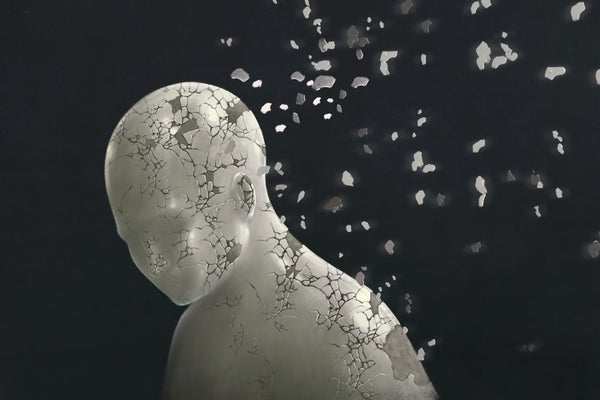 Credit: Jorm Sangsorn/Getty Images
.
.
Click the link below for the article:
.
__________________________________________
March 18, 2024
Mohenjo
Business, Food For Thought, Human Interest, Political, Science, Technical
amazon, business, Business News, current-events, Future, Hotels, human-rights, medicine, mental-health, research, Science, Science News, technology, Technology News, travel, vacation

Click the link below the picture
.
We tend to separate the brain and the muscle—the brain does the thinking; the muscle does the doing. The brain takes in complex information about the world and makes decisions, and the muscle merely executes. This has also shaped how we think about a single cell; some molecules within cells are seen as ‘thinkers’ that take in information about the chemical environment and decide what the cell needs to do for survival; separately, other molecules are seen as the ‘muscle,’ building structures needed for survival.
But a new study shows how the molecules that build structures, i.e., the muscle, can themselves do both the thinking and the doing. The study, by scientists with the University of Chicago, California Institute of Technology, and Maynooth University, was published in Nature and may suggest avenues for new ways to think about computation using the principles of physics.
“We show that a natural molecular process—nucleation—that has been studied as a ‘muscle’ for a long time can do complex calculations that rival a simple neural network,” said UChicago Assoc. Prof. Arvind Murugan, one of the two senior co-authors of the paper. “It’s an ability hidden in plain sight—the ‘doing’ molecules can also do the ‘thinking.’ Evolution can exploit this fact in cells to get more done with fewer parts, with less energy and greater robustness.”
Thinking using physics
.

Conceptual framework for pattern recognition by nucleation. When one set of molecules can potentially assemble multiple distinct structures, the nucleation process that selects between outcomes is responsive to high-dimensional concentration patterns. Assembly pathways can be depicted on an energy landscape (schematic shown) as paths from a basin for unassembled components that proceed through critical nucleation seeds (barriers) to a basin for each possible final structure. Seeds that colocalize high-concentration components will lower the nucleation barrier for corresponding assembly pathways. The resulting selectivity of nucleation in high-dimensional self-assembly is sufficiently expressive to perform complex pattern recognition in a manner analogous to neural computation. Credit: Nature (2024). DOI: 10.1038/s41586-023-06890-z © Provided by Phys.org
.
.
Click the link below for the article:
.
__________________________________________
March 18, 2024
Mohenjo
Business, Food For Thought, Human Interest, Political, Science, Technical
amazon, business, Business News, current-events, Future, Hotels, human-rights, medicine, mental-health, research, Science, Science News, technology, Technology News, travel, vacation

Click the link below the picture
.
In December 2023, I had surgery to remove my fibroids. Fibroids are benign tumors that grow in the uterine wall. I’d had the growths for nearly a decade and, even though they were benign, they certainly added difficulty to my life.
Heavy periods had plagued me since I was a teenager, but they had gotten worse as I’d gotten older. They often lasted over a week, leaving me tired and anemic. Often my cramps were so bad they made me nauseated. I went through pads and tampons quickly, and often worried that sneezing or coughing, or laughing at the wrong time would lead to an embarrassing leak and a day with a jacket tied around my waist.
Fibroids grow over time and new ones form. Over the years, my doctor found another sizable fibroid, and the one they first found had grown so large that it pressed on my stomach, leading to almost daily heartburn. Four months later, I got approved for a laparoscopic myomectomy, a surgery to have the fibroids removed. I woke up in the hospital groggy from anesthesia and sore from the five incisions the surgeon made, but excited for my new fibroid-free life. I later found out that I had more than two fibroids: they removed 10 in total, and the largest had grown to 15 centimeters — about the size of a mango.
It’s a familiar story, but despite the answers and clarity my myomectomy gave me, it’s also a mysterious one for a lot of people with uteruses. As many as 77 percent of women will have fibroids in their lifetimes, but we don’t know what causes them. This also means that we don’t know what’s behind fibroids’ racial disparities. Black women are more likely to experience symptoms because of their fibroids, and they are two to three times more likely to have them reoccur once they’re removed. We’re also more likely to be diagnosed at a younger age.
Doctors have theories about why that is. Some researchers think genetics are a factor; others think it could be chemicals we come in contact with. And some think it could be a phenomenon known as weathering.
Weathering is a term coined by researcher Arline Geronimus. It was not without controversy when it was first introduced, but more of the medical community points to it as a factor for a number of health disparities for Black Americans.
.
/cdn.vox-cdn.com/uploads/chorus_image/image/73156299/GettyImages_1215394350.0.jpg) Getty Images
Getty Images
.
.
Click the link below for the article:
.
__________________________________________
March 17, 2024
Mohenjo
Business, Food For Thought, Human Interest, Political, Science, Technical
amazon, business, Business News, current-events, Future, Hotels, human-rights, medicine, mental-health, research, Science, Science News, technology, Technology News, travel, vacation
Some content on this page was disabled on April 15, 2025 as a result of a DMCA takedown notice from Guardian Media Group. You can learn more about the DMCA here:
https://wordpress.com/support/copyright-and-the-dmca/
March 17, 2024
Mohenjo
Business, Food For Thought, Human Interest, Political, Science, Technical
amazon, business, Business News, current-events, Future, Hotels, human-rights, medicine, mental-health, research, Science, Science News, technology, Technology News, travel, vacation

Click the link below the picture
.
A man grunts and sighs in the crowded aisle next to you. His backpack swats your shoulder. “If an overhead bin is shut, that means it is full,” a flight attendant announces over the intercom. A passenger in yoga pants backtracks through the throng with a carry-on the size of a steamer trunk—“Sorry, sorry,” she mutters; the bag will need to be checked to her final destination. Travelers squish aside to make way for her, pressing against one another inappropriately in the process. Nobody is happy.
Among the many things to hate about air travel, the processing of cabin luggage is ascendant. Planes are packed, and everyone seems to have more and bigger stuff than the aircraft can accommodate. The rabble holding cheap tickets who board last are most affected, but even jet-setters with elite status seem to worry about bag space; they hover in front of gates hoping to board as soon as possible—“gate lice,” they’re sometimes called. Travelers are rightly infuriated by the situation: a crisis of carry-ons that someone must be responsible for, and for which someone must pay.
.
 Santiago Urquijo / Getty
.
.
Click the link below for the article:
.
__________________________________________
March 16, 2024
Mohenjo
Business, Food For Thought, Human Interest, Political, Science, Technical
amazon, business, Business News, current-events, Future, Hotels, human-rights, medicine, mental-health, research, Science, Science News, technology, Technology News, travel, vacation

Click the link below the picture
.
Peru’s Manu Biosphere Reserve is the largest rainforest reserve in the world and one of the most biodiverse spots on the planet. Manu is a UNESCO-protected area the size of Connecticut and Delaware combined, covering an area where the Amazon River Basin meets the Andes Mountain Range. This combination forms a series of unique ecosystems, where species unknown to science are discovered every year. The remoteness of the region has helped preserve its biodiversity but adds to the challenges faced by the scientists who are drawn to study it.
Trapping wildlife for research in the dense jungle is impractical, especially considering the great distances researchers have to travel within Manu, either through the forest or on the waterways. It’s an expensive proposition that inevitably exposes the trapped animals to some amount of risk. Trapping rare and endangered animals is even more difficult and comes with significant risks to the animal.
Trapping beetles, however, does not pose the same challenges. They’re easy to catch, easy to transport, and, most importantly, carry the DNA of many animals in and on them. Any animal a biologist could hope to study leaves tracks and droppings in the forest, and the beetles make a living by cleaning that stuff up.
Beetles as DNA collectors
Beetles are plentiful in the rainforest, and the species that Alejandro Lopera-Toro’s team studies are not endangered. The study does mean that the beetles are killed, but overall, the effect on the ecosystem is minimal.
According to Peruvian biologist and team member Patricia Reyes, “The impact depends on the abundance and reproductive cycle of each species. Reducing the beetle population could have an effect on their predators, such as birds, reptiles, and other insects. The health of the forest depends on the beetles’ function to break down organic matter and disperse seeds. Despite not having found any effect on the ecosystem so far, we still limit how many individual beetles we collect and identify sensitive areas where collecting is prohibited. We promote sustainable methods of collection to mitigate possible impacts in the future.”
.
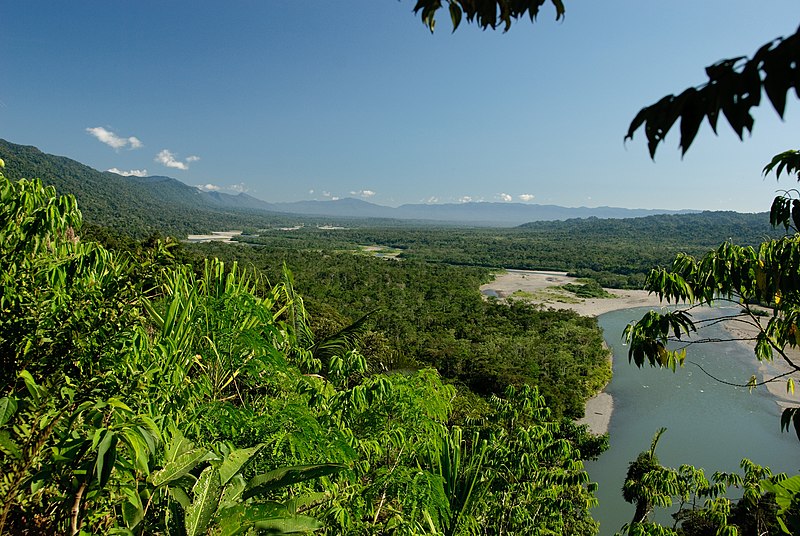 The Manu area of Peru contains a number of ecological zones.
.
.
Click the link below for the article:
.
__________________________________________
March 16, 2024
Mohenjo
Business, Food For Thought, Human Interest, Political, Science, Technical
amazon, business, Business News, current-events, Future, Hotels, human-rights, medicine, mental-health, research, Science, Science News, technology, Technology News, travel, vacation

Click the link below the picture
.
On a Tuesday evening this past October, I put $50,000 in cash in a shoebox, taped it shut as instructed, and carried it to the sidewalk in front of my apartment, my phone clasped to my ear. “Don’t let anyone hurt me,” I told the man on the line, feeling pathetic.
“You won’t be hurt,” he answered. “Just keep doing exactly as I say.”
Three minutes later, a white Mercedes SUV pulled up to the curb. “The back window will open,” said the man on the phone. “Do not look at the driver or talk to him. Put the box through the window, say ‘thank you,’ and go back inside.”
The man on the phone knew my home address, my Social Security number, the names of my family members, and that my 2-year-old son was playing in our living room. He told me my home was being watched, my laptop had been hacked, and we were in imminent danger. “I can help you, but only if you cooperate,” he said. His first orders: I could not tell anyone about our conversation, not even my spouse, or talk to the police or a lawyer.
Now I know this was all a scam — a cruel and violating one but painfully obvious in retrospect. Here’s what I can’t figure out: Why didn’t I just hang up and call 911? Why didn’t I text my husband, or my brother (a lawyer), or my best friend (also a lawyer), or my parents, or one of the many other people who would have helped me? Why did I hand over all that money — the contents of my savings account, strictly for emergencies — without a bigger fight?
.
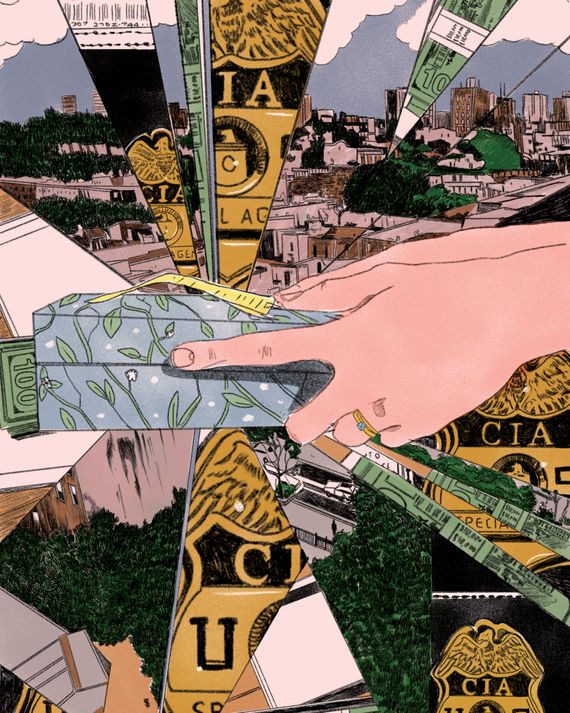 Illustration: Nicole Rifkin
.
.
Click the link below for the article:
.
__________________________________________
March 15, 2024
Mohenjo
Business, Food For Thought, Human Interest, Political, Science, Technical
amazon, business, Business News, current-events, Future, Hotels, human-rights, medicine, mental-health, research, Science, Science News, technology, Technology News, travel, vacation
Click the link below the picture
.
If you take it for granted that nobody can listen in on your innermost thoughts, I regret to inform you that your brain may not be private much longer.
You may have heard that Elon Musk’s company Neuralink surgically implanted a brain chip in its first human. Dubbed “Telepathy,” the chip uses neurotechnology in a medical context: It aims to read signals from a paralyzed patient’s brain and transmit them to a computer, enabling the patient to control it with just their thoughts. In a medical context, neurotech is subject to federal regulations.
But researchers are also creating noninvasive neurotech. Already, there are AI-powered brain decoders that can translate into text the unspoken thoughts swirling through our minds, without the need for surgery — although this tech is not yet on the market. In the meantime, you can buy lots of devices off Amazon right now that would record your brain data (like the Muse headband, which uses EEG sensors to read patterns of activity in your brain, then cues you on how to improve your meditation). Since these aren’t marketed as medical devices, they’re not subject to federal regulations; companies can collect — and sell — your data.
With Meta developing a wristband that would read your brainwaves and Apple patenting a future version of AirPods that would scan your brain activity through your ears, we could soon live in a world where companies harvest our neural data just as 23andMe harvests our DNA data. These companies could conceivably build databases with tens of millions of brain scans, which can be used to find out if someone has a disease like epilepsy even when they don’t want that information disclosed — and could one day be used to identify individuals against their will.
Luckily, the brain is lawyering up. Neuroscientists, lawyers, and lawmakers have begun to team up to pass legislation that would protect our mental privacy.
In the US, the action is so far happening on the state level. The Colorado House passed legislation this month that would amend the state’s privacy law to include the privacy of neural data. It’s the first state to take that step. The bill had impressive bipartisan support, though it could still change before it’s enacted.
.
:format(webp)/cdn.vox-cdn.com/uploads/chorus_image/image/73153787/V1_GettyImages_1349695388.0.png) Getty/Paige Vickers for Vox
Getty/Paige Vickers for Vox
.
.
Click the link below for the article:
.
__________________________________________
March 15, 2024
Mohenjo
Business, Food For Thought, Human Interest, Political, Science, Technical
amazon, business, Business News, current-events, Future, Hotels, human-rights, medicine, mental-health, research, Science, Science News, technology, Technology News, travel, vacation

Click the link below the picture
.
A network of white supremacist fitness clubs is spreading across the US, recruiting men to prepare for what they believe will be a race war.
The groups, known as “active clubs,” target disaffected white men by offering a sense of community, with members regularly meeting to practice martial arts or work out.
But the groups have a much darker agenda that’s rooted in white supremacist ideology.
Their Telegram channels reveal their extreme views — they are filled with neo-Nazi iconography, racist and antisemitic memes, and negative news articles about people of color and LGBTQ+ people.
“They are quickly becoming one of the most prominent vectors for white terrorist radicalization in the United States in recent years,” Jon Lewis, a Research Fellow at the Program on Extremism at George Washington University, told Business Insider.
“They’re training for what they view to be this kind of inevitable race war, this inevitable violent clash for the future of civilization,” he added.
One former member of an active club told Vice News last year that the group would slowly introduce extremist ideology to new members by making racist jokes and talking about stories in the news in which ethnic minorities attacked white people.
“They believe that there’s an inevitable cultural war that’ll come and because they tie culture directly to race, a culture war means race war,” they said.
.
 A fighter in a ring. Getty Images
.
.
Click the link below for the article:
.
__________________________________________
Older Entries
Newer Entries
 James' World 2