March 29, 2024
Mohenjo
Business, Food For Thought, Human Interest, Political, Science, Technical
amazon, business, Business News, current-events, Future, Hotels, human-rights, medicine, mental-health, research, Science, Science News, technology, Technology News, travel, vacation

Click the link below the picture
.
Humans are not the only species with music, but we are the only ones who had to make music completely from scratch.
According to Michael Spitzer, Professor of Music at the University of Liverpool, humans are not inherently musical. In fact, we come from a lineage less musically inclined than birds or even insects. This means that when it comes to our musical abilities, we had to rely on both cultural and biological evolution to make music a fundamental aspect of human life.
Our ability to create music is also partially due to how our bodies have developed over time. Contrary to our ape-like ancestors, we have dexterous fingers that allow us to use instruments, and a descended larynx that allows for a wider variety of vocal sounds. These developments paved the path toward human musicality, which eventually distinguished itself from animal vocalizations, transitioning into an art form that serves as a medium for social connection and identity expression.
Spitzer explores the emotional resonance of music, which tends to set us apart from other music-making species, emphasizing its power to express and evoke deep sensations through patterns and rhythms that mirror human experiences. This connection between music, emotion, and human identity highlights music’s role as its own universal yet deeply personal language.
.
 .
.
.
Click the link below for the article:
https://bigthink.com/series/explain-it-like-im-smart/origins-of-music/?utm_source=pocket_discover_science
.
__________________________________________
March 28, 2024
Mohenjo
Business, Food For Thought, Human Interest, Political, Science, Technical
amazon, business, Business News, current-events, Future, Hotels, human-rights, medicine, mental-health, research, Science, Science News, technology, Technology News, travel, vacation

Click the link below the picture
.
It was the first day of spring break in 1992 in Phoenix, and 12-year-old Heather Smith was excited for her family’s upcoming ski trip.
But before Smith and her family had even packed their snow pants, she realized she didn’t feel good. “I woke up feeling just a little bit nauseous, and I wasn’t sure why. Throughout the course of the day, I started to feel worse and worse and started to develop pain in the abdomen,” she says.
By about midafternoon, her father took her to urgent care. She ended up getting emergency surgery to have her appendix out.
Smith still has a small scar from the appendectomy. And after the surgery, she found herself intrigued by the part of her body she had so suddenly lost. “It inspired me to wonder: Why do we have this weird little organ in the first place? What does it do? Why does it get inflamed?”
Smith grew up to be a professor of anatomy at Midwestern University and editor-in-chief of a journal called The Anatomical Record. And all these decades later, Smith has made a mark in the field by studying the very organ that threw off her family’s vacation plans in 1992.
She acknowledges that the appendix has a bad rap as a useless organ that can cause you pain and require emergency surgery. “But it turns out recent research shows it does have functions that can help us,” she says.
NPR’s Short Wave spoke to Smith about what the appendix is good for and how a future where appendicitis can be prevented or treated without emergency surgery could be on the way.
What and where is the appendix?
The type of appendix that humans and some primates and rodents have looks like a little worm. It’s about the size of your pinky finger, and it projects off the cecum, which is the first part of the large intestine.
.

As an evolutionary anatomist, Heather Smith studies the fossil record of extinct species. A sudden appendectomy as a child made her curious about what the appendix is for and why it gets inflamed. Heather Smith
.
.
Click the link below for the article:
.
__________________________________________
March 28, 2024
Mohenjo
Business, Food For Thought, Human Interest, Political, Science, Technical
amazon, business, Business News, current-events, Future, Hotels, human-rights, medicine, mental-health, research, Science, Science News, technology, Technology News, travel, vacation

Click the link below the picture
.
The 2024 Abel Prize—the mathematics world’s Nobel Prize equivalent—has been awarded to Michel Talagrand for his advances in describing and predicting the universe’s randomness. Talagrand’s path into mathematics was marked with personal struggle and resilience, and his recognition came as a shock to him.
“There was a total blank in my mind for at least four seconds,” Talagrand tells Nature News’ Davide Castelvecchi, describing when he heard the news of his award. “If I had been told an alien ship had landed in front of the White House, I would not have been more surprised.”
Talagrand’s work focuses on stochastic systems, which model random variables within a given time and space. Examples include the height of a flowing river, stock prices, a hospital’s patient count, the movement of gas molecules, and even a stumbling drunkard’s swerving path. Over years of work, he came to make sense of such systems, using mathematical formulas known as inequalities, to better characterize the limits of their variability.
Where to safely build a house along a rushing waterway, or how to anticipate the growth of a bacterial population, for example, are problems with solutions that may be closely predicted using Talagrand’s methods. The water level in a river may be random, but the mathematician’s work can discern its likely maximum level, which would advise where to construct buildings to avoid flooding, writes the New York Times’ Kenneth Chang.
Essentially, his inequalities, which convert complex systems into geometrical terms, create precise estimates. They offer new tools for study and applications in other fields, including physics, chemistry, communications, and ecology.
“There are papers posted maybe on a daily basis where the punchline is ‘now we use Talagrand’s inequalities,’” Assaf Naor, a mathematician at Princeton University, tells Nature News.
.:focal(1280x719:1281x720)/https://tf-cmsv2-smithsonianmag-media.s3.amazonaws.com/filer_public/dd/d7/ddd78c12-a068-4ce4-a689-0205979e5e62/abelprize-micheltalagrand-bypeterbadge_typos1_abelprize2024-lede-scaled.webp) Michel Talagrand is the 27th recipient of the Abel Prize, which was first awarded in 2003. Peter Badge / Typos1 / Abel Prize 2024
Michel Talagrand is the 27th recipient of the Abel Prize, which was first awarded in 2003. Peter Badge / Typos1 / Abel Prize 2024
.
.
Click the link below for the article:
.
__________________________________________
March 27, 2024
Mohenjo
Business, Food For Thought, Human Interest, Political, Science, Technical
amazon, business, Business News, current-events, Future, Hotels, human-rights, medicine, mental-health, research, Science, Science News, technology, Technology News, travel, vacation

Click the link below the picture
.
Oatmeal is a breakfast staple for a bunch of reasons—it’s filling, quick to prepare, and packed with fiber and other nutrients. Problem is, eating the same old stuff morning after morning can start to get a little dull. After all, there’s only so much peanut butter or honey you can spoon into it before you’re left wanting something more.
But there are actually a lot of ways you can level up your oats into something you’re excited to get out of bed for. And you don’t need to put in loads of work to get it done, either. It’s possible to breathe new life into your bowl by swapping out traditional add-ins, experimenting with new flavor combos, and trying different cooking techniques. Test out these suggestions below, and we promise you’ll jump back on the oatmeal wave in no time.
1. Bake your oats.
You don’t always have to go the top-of-the-stove route. Jessie Shafer, RDN, a Denver-based registered dietitian, pops hers in the oven and cooks them in a casserole dish for a different kind of texture. “Baked oatmeal [is] a cross between a bowl of oatmeal and a breakfast bar,” Shafer tells SELF.
Keep in mind: You’ll want to use rolled or old-fashioned oats instead of slow-cooking steel-cut or instant options, since they hold up better under heat. Shafer suggests mixing with your choice of milk, maple syrup, chia seeds, berries, baking powder, cinnamon, and vanilla extract, then cooking until it reaches an apple-crisp-like consistency—golden brown on the top and gooey in the center. The resulting texture lends itself well to reheating, so you can make a big batch to eat throughout the week, she explains.
2. Brew your oats in tea.
Brew your favorite variety, like Earl Grey or matcha, then mix it into your oats. The result? A quick way to spice up the flavor of your bland bowl. If you want crunchy bites, you can add in some dried cranberries or granola too.
.
 Nora Carol Photography/Getty Images
.
.
Click the link below for the article:
.
__________________________________________
March 27, 2024
Mohenjo
Business, Food For Thought, Human Interest, Political, Science, Technical
amazon, business, Business News, current-events, Future, Hotels, human-rights, medicine, mental-health, research, Science, Science News, technology, Technology News, travel, vacation

Click the link below the picture
.
A super-charged hurricane season could spawn a near-record number of storms in the Atlantic this year, and forecasters may even run out of names for storms amid a frenzy of tropical systems.
The scene is being set for a turbulent year in the tropics, one that could approach a record-setting pace that may exhaust the entire list of names for tropical storms and hurricanes — and then some.
The Atlantic hurricane season officially gets underway on June 1 and runs through the end of November, and AccuWeather’s team of long-range forecasters say now is the time to prepare for a frenzy of tropical systems. There are signs that the first named system could spin up before the season kicks off as the calendar flips to June, a precursor of what’s to come.
“The 2024 Atlantic hurricane season is forecast to feature well above the historical average number of tropical storms, hurricanes, major hurricanes, and direct U.S. impacts,” AccuWeather Lead Hurricane Forecaster Alex DaSilva said. This echoes the early warning AccuWeather issued in late February, ringing the alarm bells about the potential for a surge in tropical activity.
Last hurricane season featured 19 named storms, but there were only four direct U.S. impacts. Hurricane Idalia was the storm of the year, which slammed into Florida as a powerful Category 3 hurricane in late August. Additionally, Tropical Storm Harold drenched southern Texas, and Tropical Storm Ophelia made landfall in North Carolina. Lee also swiped the New England coast as a tropical rainstorm before making landfall in Nova Scotia, Canada.
All signs continue to point toward the upcoming season being worse than the last, with the potential for the 2024 Atlantic hurricane season to rank as one of the most active in history.
Warm water is fuel for tropical systems, and there will be plenty of warm water for fledgling systems to tap into and strengthen.
.
 Alex De Silvia explains key points of the forecast to make sure that you’re prepared to make the best decisions to protect your family and property for this hurricane season.
.
.
Click the link below for the article:
.
__________________________________________
March 26, 2024
Mohenjo
Business, Food For Thought, Human Interest, Political, Science, Technical
amazon, business, Business News, current-events, Future, Hotels, human-rights, medicine, mental-health, research, Science, Science News, technology, Technology News, travel, vacation

Click the link below the picture
.
When Peter and Sjanna Leighton were in their early 20s, their marriage fell apart. Money was tight, and they each feared they were disappointing the other; neither one knew how to communicate their vulnerabilities and hurt.
So one day, almost a year after their vows, Peter packed his bags and moved out of their home in San Antonio, Texas. He got an apartment on his own and focused on building his career in the restaurant business.
“From the outside world, it may have looked like I’d recovered from our marriage failing,” says Peter, who became chronically depressed. “But the memories of how powerful our togetherness could have been, and what could have happened if we had continued developing — all of that churned in me.”
Peter and Sjanna both quietly carried their regret over giving up on their relationship through other marriages, children, and divorce. Then in 2007, 33 years later, Sjanna searched Peter’s name online and found his photography website. “The first photo that came up was a picture of him that he’d taken in our bathroom when we were married, and the second picture was me on our honeymoon, which he had titled ‘The Muse,’” says Sjanna. She realized that he lived in Austin, not far from her, and after a few weeks, she built up the courage to send him an email. They met up for coffee. When they met up a second time a few weeks later, she asked him, “What happened with us, Peter?” He replied, “I don’t know, but you were the love of my life.” Within a month of reconnecting, they were dating again.
Today, at 75 and 72 years old, Peter and Sjanna have been happily remarried for 16 years. “When we got back together, we did it with our regrets and our perceived mistakes,” says Peter. “Because of that, when there have been storms, we’ve been able to weather them.”
Few people have a second chance the way Peter and Sjanna did, but most of us live with regrets. We may not own up to them (maybe not even to ourselves), but we all have past actions we wish we could change — bullying a middle school classmate, not telling a loved one how much they meant to us, choosing a safe job rather than taking a creative risk — yet we rarely reckon with this universal feeling or recognize how it can benefit us. Since we can’t change the past, regret can seem useless and self-indulgent. But the emotion can clarify a disconnect between who we are and who we want to be. And it can show us how to change.
What causes regret
“There are three pieces to regret,” says Amy Summerville, a research scientist who has led studies on the emotion. “One, it feels bad; two, it’s based on a thought about how things could have been better; three, the thought is focused on your own actions.” In other words, if you feel bad after acing an interview and not getting the job, that’s not regret; if you feel bad because you stayed up late playing video games and slept through the interview, that could be.
.
/cdn.vox-cdn.com/uploads/chorus_image/image/73130256/GettyImages_1291540152.0.jpg) Getty Images
Getty Images
.
.
Click the link below for the article:
.
__________________________________________
March 26, 2024
Mohenjo
Business, Food For Thought, Human Interest, Political, Science, Technical
amazon, business, Business News, current-events, Future, Hotels, human-rights, medicine, mental-health, research, Science, Science News, technology, Technology News, travel, vacation

Click the link below the picture
.
New research seems to offer some long-sought insights into the perplexing and devastating condition known as myalgic encephalomyelitis, also called chronic fatigue syndrome. The National Institutes of Health-led study found several potentially key differences in the brains and immune systems of people with ME/CFS compared to healthy controls. The findings could help point to possible future treatments, the researchers say.
ME/CFS is a debilitating ailment. It’s characterized by three core symptoms, according to the Centers for Disease Control and Prevention: a greatly reduced ability to perform daily functions and long-term fatigue (lasting at least six months)—fatigue that isn’t driven by strenuous exertion or relieved by rest; a worsening of symptoms after bouts of activity that previously didn’t tire someone out, also known as post-exertional malaise; and sleep problems. Sufferers will also often experience a variety of other health issues, such as brain fog, blood pressure spikes upon standing up, chronic pain, and digestive problems.
The term chronic fatigue syndrome was first coined in the 1980s, though reports of a similar illness date back to the early 20th century. For much of its history, the public and some doctors have viewed ME/CFS as a purely psychological disorder, and patients have struggled to receive recognition and care as a result (this is one reason why advocates prefer the term myalgic encephalomyelitis over chronic fatigue). More recently, the medical establishment has come to a consensus view of ME/CFS as a physiological disease, though not one with easy answers.
ME/CFS is thought to predominantly be a post-infectious condition, triggered by the body’s dysfunctional reaction to a germ. There appear to be several pathogens that are more likely to cause ME/CFS than others, such as the Epstein-Barr virus. And some experts argue that at least a subset of long covid cases are effectively ME/CFS cases caused by the coronavirus. But only a small percentage of people seem to ever develop ME/CFS (according to one estimate from the National Academy of Medicine, up to 2.5 million Americans may be living with it). And scientists haven’t yet figured out how the condition emerges following an infection, nor established biomarkers that would allow us to diagnose it easily. There are no approved treatments for it, either.
.
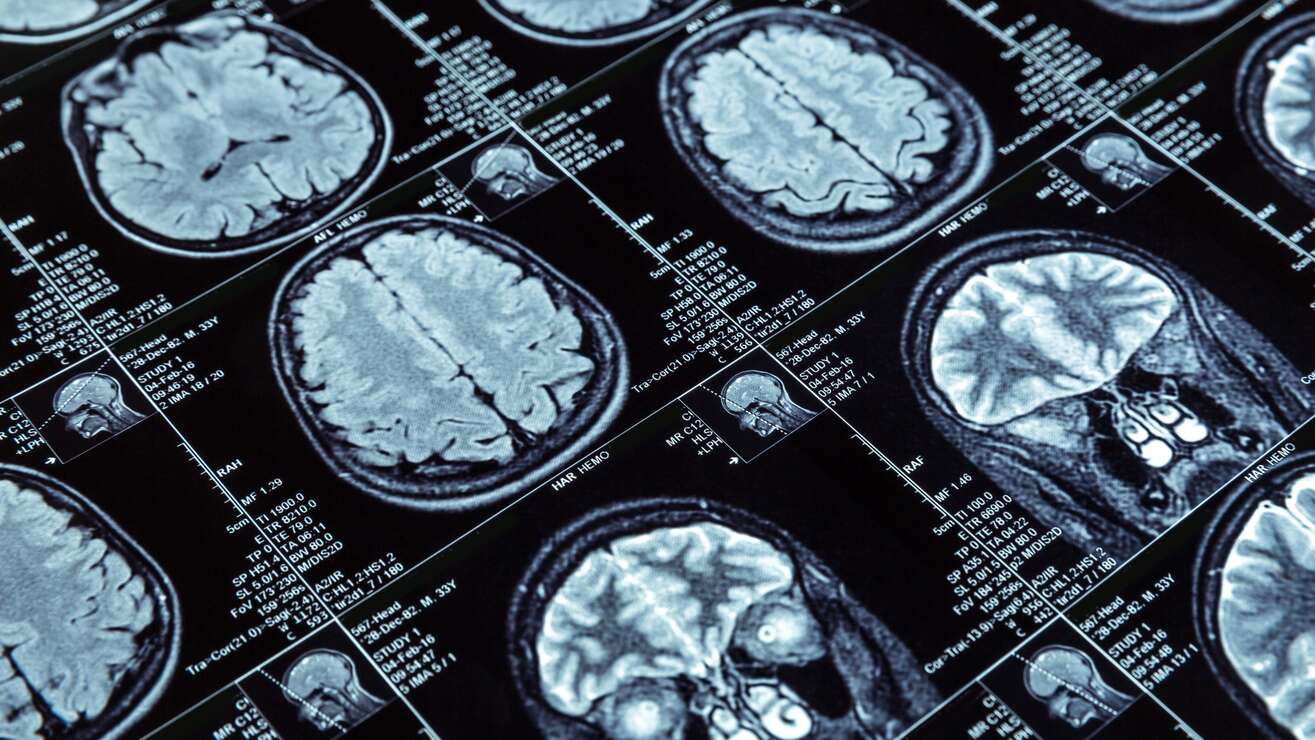
MRI brain scans. Image: Nomad_Soul (Shutterstock)
.
.
Click the link below for the article:
.
__________________________________________
March 25, 2024
Mohenjo
Business, Food For Thought, Human Interest, Political, Science, Technical
amazon, business, Business News, current-events, Future, Hotels, human-rights, medicine, mental-health, research, Science, Science News, technology, Technology News, travel, vacation

Click the link below the picture
.
According to government guidelines, fruit, along with vegetables, should form the cornerstone of your diet. Yet, the reality is that a mere 12% of adults meet the recommended 1 ½ to 2 cups of fruit (or the equivalent) daily.
There’s no denying that fruit is healthy. It’s loaded with fiber, essential vitamins and minerals, antioxidants, and other protective substances that guard against chronic diseases, from heart disease to cancer to mood disorders like depression and anxiety. But if you’re looking for the healthiest fruits to prioritize, here are some with impressive science-backed benefits.
What is the healthiest fruit?
Blueberries take the title of healthiest fruit. Blueberries’ stunning hue comes from their anthocyanins — an antioxidant believed to be responsible for their numerous health benefits. Long-term studies suggest that including blueberries in your regular lineup may lower the risk of heart disease and type 2 diabetes. Blueberries may also improve cognitive performance and strengthen your brainpower.
Additional research suggests that high blueberry intake may help you maintain a healthy weight. A study among healthy female twins found that the twin who ate more blueberries had lower body fat compared to the twin who ate less. Plus, high anthocyanin intake was associated with a 3% to 9% lower body fat mass and less belly fat among these ladies.
.
 Desserts to satisfy your sweet tooth (without the guilt)
.
.
Click the link below for the article:
.
__________________________________________
March 25, 2024
Mohenjo
Business, Food For Thought, Human Interest, Political, Science, Technical
amazon, business, Business News, current-events, Future, Hotels, human-rights, medicine, mental-health, research, Science, Science News, technology, Technology News, travel, vacation

Click the link below the picture
.
In two-thirds of American families with children, all parents work outside the home. But American society is still largely built around the assumption that one parent does not. The lack of affordable child care and the laughable mismatch between school hours and work hours (including summer vacation, when parents are left to figure out who will care for their kids for three months), have beneath them the idea that a stay-at-home parent (read: mother) should be around to take care of things. Yet paradoxically—and much less remarked upon—American society also gives stay-at-home parents a raw deal, ignoring them in policy and providing little material or cultural support while using them as a political cudgel.
.
 Illustration by The Atlantic. Source: yu-ji / Getty.
.
.
Click the link below for the article:
.
__________________________________________
March 24, 2024
Mohenjo
Business, Food For Thought, Human Interest, Political, Science, Technical
amazon, business, Business News, current-events, Future, Hotels, human-rights, medicine, mental-health, research, Science, Science News, technology, Technology News, travel, vacation

Click the link below the picture
.
For two years, my Netflix password has been: tricke22ry-notiLonal-freely-soSak-lice-slacken. Yes, really. It is a strong, unique password, and it ticked boxes for reducing the chances of me getting hacked. But for all its security protections, the password was a nightmare to type into an onscreen TV keyboard, and it constantly annoyed members of my family who shared my Netflix login. It’s just the tip of my password suffering, though.
I use a password manager to generate and store all the login details for the 337 accounts I’ve made—from pizza delivery and airlines to social media and online shopping—over more than a decade online. However, using a password manager compulsively and having hundreds of strong passwords likely puts me in the minority: Many people use the same password across multiple accounts or use passwords that can easily be guessed.
The way we use passwords has been broken for a long time, but that’s finally changing. Over the past year, it has become possible to ditch the password and move to passkeys instead. Passkeys are generated codes—created using public key cryptography—that are stored on your device or in your password manager and let you log in to websites and apps using your fingerprint, face recognition, or a PIN. They can’t be guessed, leaked, or stolen, and they stop phishing attacks in their tracks, according to those behind the technology. Passkeys are widely considered to be more secure than passwords.
.
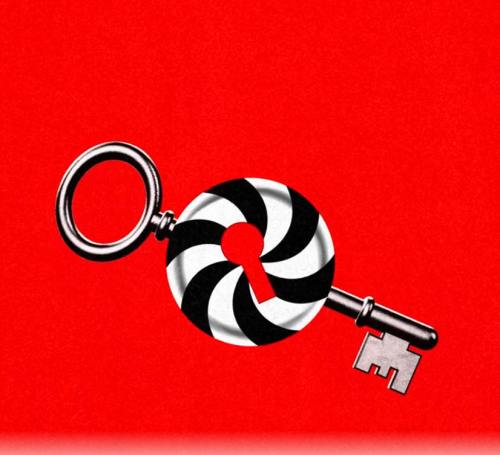 Animation: Jacqui VanLiew; Getty Images
.
.
Click the link below for the article:
.
__________________________________________
Older Entries
Newer Entries
 James' World 2