April 17, 2024
Mohenjo
Business, Food For Thought, Human Interest, Political, Science, Technical
amazon, business, Business News, current-events, Future, Hotels, human-rights, medicine, mental-health, research, Science, Science News, technology, Technology News, travel, vacation

Click the link below the picture
.
“I don’t think anyone in the United States government, Americans, do not support actual Nazis or white supremacists. I know that I certainly do not,” said Greene, who is well known for her white nationalist leanings.
“It’s interesting to hear my colleague just now talk about disavowing white supremacists when in 2022, she spoke at an event led by white supremacists and white nationalist Nick Fuentes,” said Frost.
“And when asked about it, doubled down on it and said ‘We’re going to focus on people not labels.’ So get out of here with that damn hypocrisy,” said Frost.
He was exactly right. Greene did attend the “America First Political Action Conference” in Orlando which was organized by noted anti-semite Nick Fuentes — the infamous hatemonger who would later team up with Kanye West and meet with Donald Trump.
The truth is that Marjorie Taylor Greene knows that her party is infested with white nationalists and she panders to that base to cement her political future.
.

.
.
Click the link below for the article:
.
__________________________________________
April 17, 2024
Mohenjo
Business, Food For Thought, Human Interest, Political, Science, Technical
amazon, business, Business News, current-events, Future, Hotels, human-rights, medicine, mental-health, research, Science, Science News, technology, Technology News, travel, vacation

Click the link below the picture
.
For tens of millions of years, Australia has been a playground for evolution, and the land Down Under lays claim to some of the most remarkable creatures on Earth.
It is the birthplace of songbirds, the land of egg-laying mammals, and the world capital of pouch-bearing marsupials, a group that encompasses far more than just koalas and kangaroos. (Behold the bilby and the bettong!) Nearly half of the continent’s birds and roughly 90 percent of its mammals, reptiles, and frogs are found nowhere else on the planet.
Australia has also become a case study in what happens when people push biodiversity to the brink. Habitat degradation, invasive species, infectious diseases, and climate change have put many native animals in jeopardy and given Australia one of the worst rates of species loss in the world.
In some cases, scientists say, the threats are so intractable that the only way to protect Australia’s unique animals is to change them. Using a variety of techniques, including crossbreeding and gene editing, scientists are altering the genomes of vulnerable animals, hoping to arm them with the traits they need to survive.
“We’re looking at how we can assist evolution,” said Anthony Waddle, a conservation biologist at Macquarie University in Sydney.
It is an audacious concept, one that challenges a fundamental conservation impulse to preserve wild creatures as they are. But in this human-dominated age — in which Australia is simply at the leading edge of a global biodiversity crisis — the traditional conservation playbook may no longer be enough, some scientists said.
“We’re searching for solutions in an altered world,” said Dan Harley, a senior ecologist at Zoos Victoria. “We need to take risks. We need to be bolder.”
The extinction vortex
The helmeted honeyeater is a bird that demands to be noticed, with a patch of electric-yellow feathers on its forehead and a habit of squawking loudly as it zips through the dense swamp forests of the state of Victoria. But over the last few centuries, humans and wildfires damaged or destroyed these forests, and by 1989, just 50 helmeted honeyeaters remained, clinging to a tiny sliver of swamp at the Yellingbo Nature Conservation Reserve.
.
 Credit…Photo illustration by Lauren Peters-Collaer
.
.
Click the link below for the article:
.
__________________________________________
April 17, 2024
Mohenjo
Business, Food For Thought, Human Interest, Political, Science, Technical
amazon, business, Business News, current-events, Future, Hotels, human-rights, medicine, mental-health, research, Science, Science News, technology, Technology News, travel, vacation

Click the link below the picture
.
Charles Duhigg is a Pulitzer Prize-winning reporter and New York Times best-selling author of The Power of Habit and Smarter Faster, Better. He is a graduate of Yale University and Harvard Business School. Duhigg has been a frequent contributor to This American Life, NPR, The Colbert Report, PBS’s NewsHour, and Frontline. He is a winner of the National Academies of Sciences, National Journalism, and George Polk awards.
Below, Duhigg shares five key insights from his new book, Supercommunicators: How to Unlock the Secret Language of Connection.
1. We are all supercommunicators.
We all access our instincts and figure out how to how to connect with someone else. We all have the ability to ask ourselves, “What kind of conversation is actually happening? Is this a social conversation, practical conversation, or emotional conversation?” We can then match the other person and invite them to match us. Within psychology, this is actually known as the matching principle. What it says is that we need to be having the same kind of conversation at the same time, if we want to connect with each other.
2. Ask deep questions.
Science has a pretty easy technique for figuring out our current type of conversation. This technique is to ask questions, but certain kinds of deep questions. Studies of supercommunicators have found that oftentimes, they ask 10 to 20 times as many questions as everyone else. But we don’t often notice that they’re asking these questions because so many of the questions are so easy to hear and respond to. These questions include: What do you think of that? Why do you think that happened? What happens next? What do you think was going on inside his head when he said that?
. Ketut Subiyanto/Pexels
.
.
Click the link below for the article:
.
__________________________________________
April 16, 2024
Mohenjo
Business, Food For Thought, Human Interest, Political, Science, Technical
amazon, business, Business News, current-events, Future, Hotels, human-rights, medicine, mental-health, research, Science, Science News, technology, Technology News, travel, vacation

Click the link below the picture
.
When Daniel Campos heard that the 99 Cents Only stores were shuttering all 371 locations late last week, a surprising wave of emotions hit him.
As the child of immigrants, Campos, a Los Angeles native, said the 99 Cents Store was “an institution” ― a place where you could get a dollar Hot Wheels toy or an ice cream bar while your parents stocked up on groceries, household cleaning items and chintzy decorations for family parties.
“For those of us that grew up in a low-income background, this place meant a lot to us,” Campos, the chief creative director at XXXDCD Clothing, told HuffPost. “As a kid, if your parents drove by it and stopped, you knew you were in for a treat.”
Because the inventory was always shifting in and out, there was a “treasure hunt” quality to visiting the store: One week you’d find off-brand Barbie dolls and Star Wars-branded “space punch,” the next, marked-down Halloween decorations and a hair cap with packaging that inexplicably featured Beyoncé. (Something tells us she didn’t license that one.)
Growing up, Campos usually beelined to the ice cream section before snatching up a bag of Hot Cheetos. As an adult, he valued the store for its healthier options: You could be dead broke but never feel like it because the 99 Cents Store kept you well-fed with Yukon Gold potatoes, tortillas, milk, rice, fresh produce (grapes, avocados, lettuce and bell peppers) and canned ones, too.
As columnist Gustavo Arellano wrote in the Los Angeles Times on Tuesday, “Even though it was a multibillion-dollar company, 99 Cents Only operated under a premise straight from the Great Depression: a fair shake for everyone who entered.”
That’s what Campos loves ― or loved, as it were ― about the store, too.
“They have vegetables, eggs, milk and so many of the name brand products you’d find at a regular grocery store,” he said. “For me, it turned into a nostalgia of remembering where I would get snacks too, wow, this is where I can get essentials at a much lower price.”
The discount chain, which operates in California, Arizona, Nevada and Texas, made the closure announcement on Friday, citing COVID setbacks, inflation, and product theft.
The stores, which first opened their doors in 1982, began liquidation sales on Friday. Social media, TikTok in particular, is full of videos of penny-pinchers scouring the aisles for one last haul.
The 99 Cents Store news comes on the heels of an announcement that nearly 600 Family Dollar locations are set to close this year, while 400 more stores under the Family Dollar and Dollar Tree banners are expected to close in the next few years as their leases expire.
.

Allen J. Schaben via Getty Images Shoppers at the 99 Cents Only store in Huntington Beach on April 5 ― the day the company announced it would be shuttering all 371 of its stores.
.
.
Click the link below for the article:
.
__________________________________________
April 16, 2024
Mohenjo
Business, Food For Thought, Human Interest, Political, Science, Technical
amazon, business, Business News, current-events, Future, Hotels, human-rights, medicine, mental-health, research, Science, Science News, technology, Technology News, travel, vacation

Click the link below the picture
.
I am an Aries through and through—bold, ambitious, fiery, and confident. Today, March 27, marks my 50th year on this planet, something I could never have imagined. I was diagnosed with an undetermined type of muscular dystrophy as a young child, and doctors told my parents I wouldn’t live to become an adult. My immigrant parents cried when they heard the news. Even though this news was devastating, they never treated me like a fragile egg about to break. In fact, as the first born child of three girls, I had a lot of responsibilities and expectations which only reinforced my Aries tendencies.
While my parents always supported me, I knew at an early age that my life was different. And since they didn’t sugarcoat anything to me, I had a very clear sense that my time was limited. In my bedroom, with a scary clown ceiling light above me at night, my vivid imagination wondered how I would die–would it be a slow and painful death? Would it be fast from a medical emergency? Knowing my muscles are progressively weakening as I struggled to walk as a child and breathe as a teenager always kept death at the forefront of my mind. Believing I had no future shaped me in ways I am still processing today.
Birthdays have given me pause for reflection, especially this year. I recently looked at a picture taken from my 40th birthday party and could not recognize myself. I wasn’t wearing a BiPap mask because at the time I only had to use it intermittently to support my breathing. I did not wear a belt across my chest which I need now because my upper body has grown weaker. I recalled being exhausted after the party. When I got home, I immediately put my mask on and turned on the ventilator. It was a sweet relief. Shortly after I started to use it for longer periods of time until I began using it all day and night. I didn’t see it as a failure of my body but part of the inevitable downward slide toward my final destination.
Two years ago, I experienced the most harrowing and traumatic series of medical crises that led to weeks in the ICU which left me without the ability to speak due to a tracheostomy, a tube in the throat connected to a ventilator, and the ability to swallow and eat or drink by mouth. This resulted in needing a feeding tube that goes into my stomach and intestine. During my hospitalization, I also lost sensation in my bladder so now I urinate through a catheter four to five times a day. Those weeks were like a fever dream–I couldn’t sleep for days because every time I closed my eyes I feared I would never wake up. I was in tremendous pain and could only communicate by mouthing words to my sisters or scrawling on a pad of paper. In the few moments when I could write, I outlined instructions to my sisters on what to do if I didn’t make it. Was this the way I would die? It was my closest brush with death in a series of many but I lived to tell another tale. But I was determined to claw my way forward to another day.
I am still adjusting to life again in a new body and way of life that requires a considerable number of resources, supplies, and machinery to stay alive and avoid institutionalization. The amount of maintenance and administrative work it takes to be disabled in America has also taken a toll—the additional out-of-pocket home care that I need now is $840 a day. With the donations from my GoFundMe dwindling, managing and directing a team of caregivers for my daily activities requires a lot of forethought and clear communication. Being disabled in a nondisabled world is precarious, one of constant adaptation. I remade myself into a new cyborg form that still has a voice, a breath, and a will to live.
.
 Courtesy of Alice Wong—Eddie Hernandez Photography
.
.
Click the link below for the article:
.
__________________________________________
April 15, 2024
Mohenjo
Business, Food For Thought, Human Interest, Political, Science, Technical
amazon, business, Business News, current-events, Future, Hotels, human-rights, medicine, mental-health, research, Science, Science News, technology, Technology News, travel, vacation

It ain’t over till it’s over!…
.
Whoops!
.
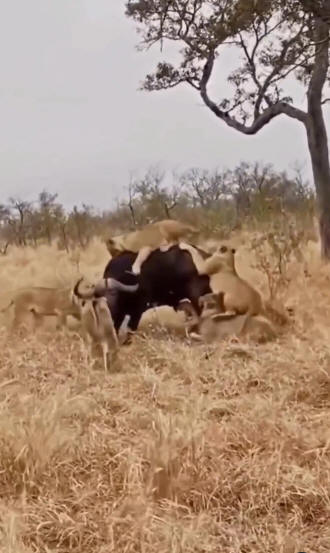 So sad! Nature!
.
.
Click the link below for the article:
.
__________________________________________
April 15, 2024
Mohenjo
Business, Food For Thought, Human Interest, Political, Science, Technical
amazon, business, Business News, current-events, Future, Hotels, human-rights, medicine, mental-health, research, Science, Science News, technology, Technology News, travel, vacation

Click the link below the picture
.
In late 2016 U.S. diplomats and family members based in Cuba began reporting a wide swath of neurological symptoms, including dizziness, headaches, deafness and difficulty concentrating, following exposure to ear-splitting noises around their homes. This “Havana syndrome” outbreak disrupted U.S. relations with Cuba, spawned congressional hearings on the “attacks” and left some people with years of disabling symptoms. Reports from people with these symptoms also occurred in other countries, and the U.S. government labeled these cases as “anomalous health incidents” (AHIs).
The abrupt onset of these symptoms led to years of debate among scientists and those affected about possible causes, which ranged from pesticides to group psychology to noise from crickets. Now two medical studies that were conducted by the National Institutes of Health and released on Monday morning might finally have an answer. The researchers compared more than 80 of these affected individuals with similar healthy people. The results, detailed in the Journal of the American Medical Association, show no clinical signs or brain image indications to explain those widely varied symptoms. The JAMA findings follow the 2023 release of an intelligence community assessment that found that the injuries were not the result of foreign attacks. More likely, the assessment suggested, they were tied to previous injuries, stress, environmental concerns and “social factors” such as group psychology, in which illness symptoms reported by one individual in a community can spread serially among its members. Such outbreaks have been seen everywhere, from hiccupping in high schools to “repetition strain” cases among Australian typists in the 1980s.
“These individuals have real symptoms and are going through a very tough time,” said NIH rehabilitation medicine expert Leighton Chan, who led one of the studies, at a briefing for reporters last Friday. Nothing in the new medical findings contradicts the assessment of the injuries in the intelligence community report, he said.
In the first study, led by Chan, investigators examined 86 people with AHIs, 42 women and 44 men, who last experienced an incident 76 days prior, on average. The participants were U.S. government staff and family members who had been in locations that included parts of Cuba, China and Austria, as well as the U.S. (All of these areas were past sites of Havana syndrome outbreak reports.) A third of these affected participants were unable to work because of their symptoms. (According to Chan, a few of the cases dated to 2015, which was prior to the previously reported cases in Cuba.) Clinical tests for hearing, balance, cognition, eyesight and blood work were matched against the results from 30 people with similar working backgrounds but no symptoms. The researchers found that the only significant differences between the two groups were increased self-reported symptoms of fatigue, stress and depression in people with AHIs, as well as self-reported trouble with balancing that was confirmed through testing.
.

Hundreds of Cubans and visitors from other countries gather across the street from the newly reopened U.S. Embassy to observe the flag-raising ceremony August 14, 2015, in Havana, Cuba. Chip Somodevilla/Getty Images
.
.
Click the link below for article:
.
__________________________________________
April 15, 2024
Mohenjo
Business, Food For Thought, Human Interest, Political, Science, Technical
amazon, business, Business News, current-events, Future, Hotels, human-rights, medicine, mental-health, research, Science, Science News, technology, Technology News, travel, vacation

First 3…
Click the link below the picture
.
50. Changing of the Guards (1978)
Street Legal delivered fans a shock: Dylan fronting a large band, with female backing singers to the fore. The words, meanwhile, might well represent an oblique personal history, from adolescence through marriage to religious conversion: whatever they were about, they reduced Patti Smith to tears on first hearing.
49. This Wheel’s on Fire (1967)
Subsequently covered by everyone from Siouxsie and the Banshees to Kylie Minogue, in every style from psychedelic to electro-glam stomp, the original Basement Tapes recording of This Wheel’s on Fire – both a great song and another of Dylan’s umpteen apocalyptic visions – has a uniquely intense, eerie quality that no one else has subsequently matched.
48. Pay in Blood (2012)
Should you wonder if Dylan’s capacity for rage had been dulled by his advancing years, listen to Pay in Blood, a gentle musical backdrop for an expression of literally murderous fury: at first he’s so angry that the lyrics are incomprehensible, his voice just a phlegmy snarling noise; when they come into focus, he’s demanding vengeance on bankers and politicians “pumping out [their] piss”. Bracing.
.
 Bob Dylan plays piano with a harmonica around his neck while recording the album ‘Highway 61 Revisited’ at Columbia’s Studio A during the summer of 1965 in New York City. Photo by Michael Ochs Archives / Getty Images.
.
.
Click the link below for the article:
.
__________________________________________
April 14, 2024
Mohenjo
Business, Food For Thought, Human Interest, Political, Science, Technical
amazon, business, Business News, current-events, Future, Hotels, human-rights, medicine, mental-health, research, Science, Science News, technology, Technology News, travel, vacation

Click the link below the picture
.
I found it while walking through the home-goods section of T.J. Maxx, the American retail equivalent of the Garden of Earthly Delights, at 8:00 on a Tuesday night in 2015. It was two days after Easter, and in this Hieronymus Bosch land of shopping anarchy, the shelves were stocked with pastel-colored objects of uncertain usefulness: sacks of fruit-medley popcorn dyed green and purple; a giant tub of millennial-pink Himalayan crystal salt. Somewhere among these novelties, I spotted a carelessly abandoned gadget calling itself the Dash Rapid Egg Cooker. The cashier who rang me up did not share my enthusiasm for the cheery cockiness of its packaging, which proclaimed that it “Perfectly Cooks 6 Eggs at a Time!” Baffled, she asked me a question, the answer to which would have embarrassed anyone but me: “Don’t you know how to boil water?”
No. I didn’t.
And at 22, not only did I not know how to boil water, I didn’t even know how to turn on a stove. Now, these may both seem like gaps in knowledge that could have been easily rectified with a 60-second trip to the kitchen, but you see: I did not have one.
Earlier that day, I had finally moved into my first solo “apartment”: the garden-level basement of a Manhattan brownstone that was rented to me by an absentee owner, which, in lieu of a real kitchen, came outfitted with a minifridge, a hot plate, and a microwave. That evening, after a long day of unpacking, I sat down on the building’s stoop, ate my way through a bag of discounted Cadbury Mini Eggs and, after 20 minutes spent wallowing in disbelief at where life had deposited me, broke into a series of earthquake-size sobs. But it wasn’t misery making me dry-heave — it was relief.
In 2013, I fled my old life for New York, the promised land for stunted young adults evading responsibility. I had spent my childhood, teenhood, and earliest adulthood consumed with daydreams of an imaginary future in which I lived alone — my only ambition in life. In these painstakingly detailed fantasies, the greatest luxury I could imagine was that my space and my empty hours all belonged to me and me only. In these visions, there was no one snatching “storybooks” (the beloved Indian-parent euphemism even if you read adult fiction) from my hands and barking at me to get up and make tea whenever guests came to visit, or grating at me to bring out hot rotis straight from the stove and put them onto the plates of fathers and uncles. The milieu I was raised in tried to drill into me the idea that keeping a home, and the domestic labor it entails — the cooking, the serving, the dusting, the wiping — were acts of profound nobility. That they were crucial to the formation of the only life I was predestined for, one that came prepackaged with a husband and children, two species, I had been warned, that were equally incapable of feeding themselves, and whose supervision would fall to me.
.
 Alistair Matthews for The New York Times
.
.
Click the link below for the article:
.
__________________________________________
April 14, 2024
Mohenjo
Business, Food For Thought, Human Interest, Political, Science, Technical
amazon, business, Business News, current-events, Future, Hotels, human-rights, medicine, mental-health, research, Science, Science News, technology, Technology News, travel, vacation

Click the link below the picture
.
When Steve Edsel was a boy, his adoptive parents kept a scrapbook of newspaper clippings in their bedroom closet. He would ask for it sometimes, poring over the headlines about his birth. Headlines like this: “Mother Deserts Son, Flees From Hospital,” Winston-Salem Journal, December 30, 1973.
The mother in question was 14 years old, “5 feet 6 with reddish brown hair,” and she had come to the hospital early one morning with her own parents. They gave names that all turned out to be fake. And by 8 o’clock that evening, just hours after she gave birth, they were gone. In a black-and-white drawing of the mother, based on nurses’ recollections, she has round glasses and sideswept bangs. Her mouth is grimly set.
.
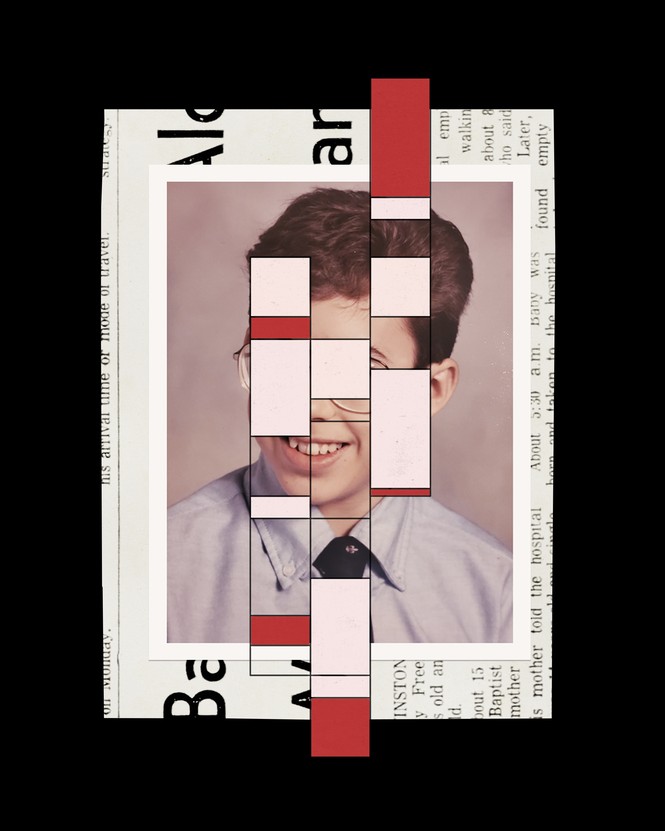 Illustration by The Atlantic. Sources: The Herald Sun; courtesy of Steve Edsel.
.
.
Click the link below for the article:
.
__________________________________________
Older Entries
Newer Entries
 James' World 2