May 10, 2024
Mohenjo
Business, Food For Thought, Human Interest, Political, Science, Technical
amazon, business, Business News, current-events, Future, Hotels, human-rights, medicine, mental-health, research, Science, Science News, technology, Technology News, travel, vacation

Click the link below the picture
.
Time heals all wounds, as the saying goes. But any medical professional can tell you that the hours required for recovery after an injury can vary widely. A person’s age, lifestyle, and level of social support, for example, are all known influences on how quickly their body heals.
Their thoughts can play a remarkably powerful role as well. In a recent experiment, we tested whether expectations about the time it takes to heal can affect how long it actually takes to recover. We found that people’s perception of the passage of time influenced how quickly their wounds healed. The work is just the latest in a larger collection of evidence—documented in a new book written by one of us (Langer), The Mindful Body—that underscores the unity of mind and body, an idea with profound implications for health and well-being.
For the past 45 years, members of the Langer Lab have studied the ways in which the mind shapes the physiology of the body, or what our lab refers to as mind-body unity. The basic idea is simple: when people conceive of the mind and the body as a single entity rather than separable units, they can see how the mind has enormous control over health and well-being. Wherever we put our mind, so too will be our body.
The first test of this concept was the counterclockwise experiment, which one of us (Langer) designed and ran in 1979. In that study, elderly men lived in a retreat that was retrofitted to appear as if it had existed 20 years earlier and had vintage furniture, appliances, and magazines. We asked the men to live as their younger self. They discussed past events in the present tense as if they were currently unfolding. The results were astonishing. Without any medical intervention, their hearing, vision, memory, and strength improved. They also were perceived to look noticeably younger in photographs by the end of the week.
Since that time, the Langer Lab has found further confirmation of mind-body unity. We have discovered that expecting fatigue can cause people to feel more tired, and that thinking you will catch a cold is associated with an increased likelihood of doing so. In another study, people who anticipated certain benefits such as weight loss from daily exercise did see those benefits, even as other people doing the same activities without those expectations saw no such changes.
.
 Jorm Sangsorn/Getty Images
.
.
Click the link below for the article:
.
__________________________________________
May 9, 2024
Mohenjo
Business, Food For Thought, Human Interest, Political, Science, Technical
amazon, business, Business News, current-events, Future, Hotels, human-rights, medicine, mental-health, research, Science, Science News, technology, Technology News, travel, vacation
Click the link below the picture
.
Nearly 40 percent of U.S. homes have gas stoves, which spew a host of compounds that are harmful to breathe, such as carbon monoxide, particulate matter, benzene, and high quantities of nitrogen dioxide.
Decades of well-established research have linked nitrogen dioxide, or NO2, to respiratory conditions such as asthma and chronic obstructive pulmonary disease, which especially affect children and older adults. This harmful link is so well established that some states have begun banning gas appliances in new construction. And now a new study has shown in stark detail just how long and far this gas spreads and lingers in a home. By sampling homes across the U.S., the researchers found that in many, levels of exposure to NO2 can soar above the World Health Organization’s one-hour exposure limit for multiple hours—even in the bedroom that is farthest from the kitchen.
“The concentrations [of NO2] we measured from stoves led to dangerous levels down the hall in bedrooms … and they stayed elevated for hours at a time. That was the biggest surprise for me,” says Rob Jackson, a sustainability researcher at Stanford University and senior author of the study, which was published on May 3 in Science Advances.
The researchers collected real-world data on NO2 concentrations before, during, and for several hours after the use of gas and propane stoves in houses and apartments in California, Colorado, Texas, New York State, and Washington, D.C. In six homes, they tested the levels of NO2 in the bedroom farthest from the kitchen for a basic “bread baking” scenario: they set the gas or propane oven to 475 degrees Fahrenheit (245 degrees Celsius) and left it on for an hour and a half. The team continued sampling the air for up to six hours after the oven was turned off.
In all six homes, the NO2 concentration in the bedroom quickly exceeded the WHO’s chronic exposure guideline of about five parts per billion by volume. And in three of the bedrooms, the levels soared even above the Environmental Protection Agency’s and the WHO’s respective one-hour exposure guidelines, which both set the limit at about 100 parts per billion by volume. (The EPA’s guidelines are intended for outdoor air exposure because the agency does not regulate indoor air pollution.)
.
 Lucas Ninno/Getty Images
.
.
Click the link below for the article:
.
__________________________________________
May 9, 2024
Mohenjo
Business, Food For Thought, Human Interest, Political, Science, Technical
amazon, business, Business News, current-events, Future, Hotels, human-rights, medicine, mental-health, research, Science, Science News, technology, Technology News, travel, vacation

Click the link below the picture
.
I first got started with online focus groups back in 2020. A friend posted an Instagram story about how research participants were needed for a study.
I had no idea what it was, but I clicked on the link and filled out the survey.
These days I make between $2,000 and $3,000 each month participating in focus groups. Over the past six months, I’ve made an average of $2,845 a month. I then created my own business, teaching others how to make money from focus groups.
I wondered why I would be paid to share my opinion
About two days after I filled out that initial survey in 2020, I got a call from a recruiter. She confirmed my answers and told me a little more about what the research study was. It was going to be about social media, and I would be paid $175 for spending 90 minutes on a Zoom call.
It was me, four other participants, and a moderator. The conversation just flew by, and it honestly felt like just a normal chat geared toward social media.
Two weeks later, I got a check in the mail for $175, and I was like, “Okay, so this was legit!” While it didn’t necessarily sound like a scam, I wondered how and why I would get paid to do something as fun as sharing my opinion on a specific topic.
I quit my retail job in search of more flexibility
At the time, I was working as a store manager. I had a decent job with benefits and stability, but the work had started to take a toll on my mental health, and I wanted more flexibility and freedom.
.
 Filipe
.
.
Click the link below for the article:
.
__________________________________________
May 8, 2024
Mohenjo
Business, Food For Thought, Human Interest, Political, Science, Technical
amazon, business, Business News, current-events, Future, Hotels, human-rights, medicine, mental-health, research, Science, Science News, technology, Technology News, travel, vacation
Click the link below the picture
.
CLIMATEWIRE | Self-driving trucks represent the future of freight transportation, advocates say. And to help ensure there is a future — at least for humanity — they argue that autonomous trucks can help fight climate change by reducing fuel consumption.
A new estimate, funded by one of the biggest players in the autonomous trucking sector, says self-driving trucks could cut fuel use 13 percent to 32 percent compared with standard diesel trucks. The findings come amid a broader campaign to build support among regulators and Congress for the technology, which backers say is getting close to reality.
The potential payoff is huge — trucking is a $1 trillion business in the U.S. alone, according to Aurora Innovation, the company that paid for the fuel-efficiency research. For freight carriers, autonomous trucking offers the promise of bigger profit margins because they won’t have to pay human drivers.
Aurora and like-minded companies such as Kodiak Robotics Inc. and Gatik AI have tested self-driving trucks for more than a year. With a safety driver behind the wheel, autonomous trucks have run routes in and around Dallas, and between points as distant as Houston, Atlanta, and El Paso.
All three companies say they plan to start making deliveries in fully autonomous trucks without a human driver sometime this year. Most states already allow self-driving trucks, either explicitly or implicitly, according to Aurora.
“As autonomous trucks make hauling freight safer, we have a responsibility to make logistics more sustainable as well,” said Garrett Bray, a product director at Aurora who wrote the paper. “Self-driving technology can fight climate change by increasing energy efficiency and reducing emissions in the supply chain.”
.

A worker directs an Aurora Innovation Inc. driverless truck at the company’s terminal in Palmer, Texas, US, on Wednesday, Dec. 28, 2023. Dylan Hollingsworth/Bloomberg via Getty Images
.
.
Click the link below for the article:
.
__________________________________________
May 8, 2024
Mohenjo
Business, Food For Thought, Human Interest, Political, Science, Technical
amazon, business, Business News, current-events, Future, Hotels, human-rights, medicine, mental-health, research, Science, Science News, technology, Technology News, travel, vacation

Click the link below the picture
.
I’m one of those people who can’t get comfortable at night until I’ve rotated through every possible sleeping position, ideally twice. But when I was pregnant, I kept hearing the message that we’re all supposed to sleep on our left side, specifically. On the other hand, there’s research suggesting the right side may be better for people with certain health conditions. Let’s consider all the factors and see whether there’s an optimal side for you.
Is it good or bad to sleep on your side?
If you have a sleeping position that is comfortable, and you don’t have any medical issues suggesting that you should change it, you’re probably fine to sleep any way you want.
That said, side-sleeping is often recommended as a good thing. If you’re pregnant, sleeping on your stomach stops being an option. Sleeping on your back while pregnant may impede blood flow, since some of our major blood vessels, the aorta and the vena cava, run along the back of our abdominal cavity. Once the uterus gets big enough, it can put pressure on these blood vessels.
If you have obstructive sleep apnea, you’ll probably be advised not to sleep on your back, since people tend to have more apneic episodes on their back. Sleeping on your back is also generally understood to make snoring worse. (PSA: If you haven’t been tested for sleep apnea, but find that you sleep better when you aren’t on your back, you might want to look into getting tested.)
And if you struggle with back pain, side-sleeping tends to be more comfortable than sleeping on your back or your stomach—although this varies from person to person.
. Credit: Ground Picture – Shutterstock
.
.
Click the link below for the article:
.
__________________________________________
May 8, 2024
Mohenjo
Business, Food For Thought, Human Interest, Political, Science, Technical
amazon, business, Business News, current-events, Future, Hotels, human-rights, medicine, mental-health, research, Science, Science News, technology, Technology News, travel, vacation

Click the link below the picture
.
This has the potential to be the biggest day in terms of impact and the number of incidents ranging from tornadoes to damaging winds and hail, AccuWeather meteorologists warn.
The number of severe thunderstorms and tornadoes will increase over the central United States with dangerous conditions to focus on portions of the Ohio, Tennessee, and mid-Mississippi valleys on Wednesday afternoon and Wednesday night, AccuWeather meteorologists warn.
This has the potential to be the biggest day in terms of impact and the number of incidents, ranging from tornadoes to damaging winds and hail.
“There could easily be over a dozen tornadoes produced at midweek alone,” AccuWeather Chief On-Air Meteorologist Bernie Rayno warned.
The high-risk zone extends from southeastern Missouri and northeastern Arkansas through southern Illinois, western and central Kentucky, and northwestern and middle Tennessee.
One key aspect affecting impact is that the severe weather and tornado potential will focus on more densely populated areas than the Great Plains. At least 75 million people are at risk of experiencing severe weather on Wednesday, from the Central states to parts of the East.
Major cities at risk of severe weather on Wednesday include Nashville and Memphis, Tennessee; Louisville and Paducah, Kentucky; Cincinnati; Indianapolis and Evansville, Indiana; St. Louis and Cape Girardeau, Missouri; Little Rock and Texarkana, Arkansas; Springfield, Illinois; and Dallas.
.
 The number of severe thunderstorms and tornadoes will increase
.
.
Click the link below for the article:
.
__________________________________________
May 7, 2024
Mohenjo
Business, Food For Thought, Human Interest, Political, Science, Technical
amazon, business, Business News, current-events, Future, Hotels, human-rights, medicine, mental-health, research, Science, Science News, technology, Technology News, travel, vacation
Click the link below the picture
.
It’s springtime in the Northern Hemisphere, and one of nature’s greatest spectacles is unfolding: the migration of billions of birds to their breeding grounds. They’ve spent the winter in balmier locales to the south, getting fat on insects, seeds, fruits, and aquatic plants and prey. Now they’re winging their way north to establish territories, find mates, and raise their young. In my corner of New England, the migrants have been trickling in—Tree Swallows, Ospreys, Greater Yellowlegs, Chipping Sparrows, and Hermit Thrushes, among others. Just the other day I heard my first Louisiana Waterthrush of the season, its song ringing throughout the forest. In a couple of weeks, we’ll hit peak migration, with loads of gorgeous warblers, vireos, thrushes, flycatchers, and sandpipers arriving on southerly winds.
For those people who enjoy watching birds, this is the most wonderful time of the year. Not only are these birds returning from their winter hiatus, but they are also decked out in their colorful breeding plumage, singing lovely songs, showing off their best courtship moves to prospective mates, and building nests for their babies. There’s so much to observe if you know what to look and listen for—and where to find it.
Before 2020 I had no interest whatsoever in this avian extravaganza. I barely registered its existence. I knew only a few of the birds that show up regularly in my yard—Northern Cardinal, Blue Jay, American Robin, Black-capped Chickadee. Gulls were just “seagulls”; terns were just terns. I was completely unaware that each of these groups encompassed numerous species, each one distinctive in its appearance, voice, and habits. But then the pandemic hit. There was nowhere to go, nothing to do. I started watching the birds in my yard out of sheer boredom, using the Merlin bird identification app from the Cornell Lab of Ornithology to figure out which species were visiting my feeder and recording my observations in the eBird online database, which helps me keep track of the species I’ve seen and supports scientific research.
Four years on, I have a full-fledged case of birding fever. I’ve driven to Maine at 2 A.M. on New Year’s Day to see a Steller’s Sea-Eagle, sat in mud and chiggers for three days waiting for a Fan-tailed Warbler in Texas (and missed it), sustained legions of bloodsucking mosquitoes and sand flies while searching for a Crescent-chested Puffbird in Brazil and logged countless hours prowling an urban cemetery near the town where I live that I suspect has the potential to attract some great birds.
A number of factors led me to this hobby (read: fixation). But I think a big one is the availability of the amazing technology that makes it easier than ever to find birds, identify them by their field marks, learn their songs and calls, and be part of a community of people who love to share their knowledge of these creatures. We’re living in the golden age of birding, and like any good cult member, I’m recruiting people to the cause.
.

.
.
Click the link below for the article:
.
__________________________________________
May 7, 2024
Mohenjo
Business, Food For Thought, Human Interest, Political, Science, Technical
amazon, business, Business News, current-events, Future, Hotels, human-rights, medicine, mental-health, research, Science, Science News, technology, Technology News, travel, vacation
Click the link below the picture
.
The most common fraud in the U.S. over the past year was the impostor scam. More than 856,000 instances, collectively draining $2.7 billion nationwide, were reported to the Federal Trade Commission in 2023. First, swindlers fake familiarity or authority—maybe by stealing the identity of a friend or relative or claiming to be a bank representative or a federal agent. Then, in that guise, they call, text or e-mail you and attempt to take your money.
And now artificial intelligence has larded these scams with an additional layer of duplicity: inexpensive voice-cloning services that an impersonator can easily abuse to make deceptive—and astonishingly convincing—phone calls in another person’s voice. These AI tools digest speech samples (perhaps snatched from videos posted online or from a supposedly “wrong number” phone call) and generate audio replicas of the stolen voice that can be manipulated to say basically anything.
If there were a golden rule to thwart AI-infused phone scams, it might be something like this: Online or on the phone, treat your family members and friends as though they were an e-mail log-in page. Make up a passcode—a safe word or private phrase—and share it with them in person. Memorize it. If they call you in alarm or under unusual pressure, especially if those concerns are connected to requests for money, ask for the code to verify who is on the other end of the line.
Adopting a computerlike countermeasure for a problem enabled by computer algorithms is admittedly an unnatural practice. It is a human impulse to trust a family member’s voice, said Jennifer DeStefano, a target of an attempted scam, to a Senate judiciary subcommittee last June. Perpetrators had called her phone, claimed her then 15-year-old daughter was kidnapped and demanded a ransom. The plot fell apart when DeStefano learned her child was safe on a ski trip—but only after DeStefano had at first been thoroughly deceived by an AI mimic of her daughter’s voice. “How many times has a loved one reached out to you in despair and you stopped them to validate their identity?” she wrote in her testimony. “The answer is, more than likely, never.”
.
 Tero Vesalainen/Getty Images
.
.
Click the link below for the article:
.
__________________________________________
May 7, 2024
Mohenjo
Business, Food For Thought, Human Interest, Political, Science, Technical
amazon, business, Business News, current-events, Future, Hotels, human-rights, medicine, mental-health, research, Science, Science News, technology, Technology News, travel, vacation
Click the link below the picture
.
In the last hour, tornadoes have been reported in Bison, Oklahoma; Covington, Oklahoma; and Ogden, KS. Tornado watches remain in effect from Texas to Nebraska until 11 p.m. CDT, while a new Tornado Watch for parts of Iowa extends until 3 a.m. CDT.
“We have a new tornado warning that includes Pottawattamie County, Kansas, as well as Riley County, Kansas. This is an area near where severe weather unfolded during the last severe weather outbreak in Westmoreland, Kansas. If you recall, unfortunately, Westmoreland got an EF3 tornado last week. Now, they’re not far away from this upcoming tornado warning, which is currently over Manhattan, Kansas, at this point in time.”
AccuWeather meteorologists say that, despite only a handful of tornado reports through 6:30 p.m. CDT, the tornado risk will increase through midnight. The greatest risk for tornadoes in the Oklahoma City area will be from 9 p.m. to 11 p.m. CDT.
Three severe thunderstorms have lined up across northwestern Oklahoma, and AccuWeather Meteorologist and Storm Chaser Tony Launch recently spotted a wall cloud near the town of Cherokee. A wall cloud hangs down below the base of a thunderstorm and is indicative that a tornado may soon develop. The storm to the south of Laubach is also potent, capable of spinning up a tornado, and has already produced a wind gust of 82 mph. All three storms are currently tracking eastward toward Interstate 35 between Wichita, Kansas, and Oklahoma City.
.
 Tornadoes have been reported
.
.
Click the link below for the article:
.
__________________________________________
May 6, 2024
Mohenjo
Business, Food For Thought, Human Interest, Political, Science, Technical
amazon, business, Business News, current-events, Future, Hotels, human-rights, medicine, mental-health, research, Science, Science News, technology, Technology News, travel, vacation
Click the link below the picture
.
CLIMATEWIRE | A move by the world’s wealthy, developed economies to end the use of coal-fired power by 2035 could further cement U.S. efforts to put an end to the most polluting form of energy and encourage other countries to follow.
G7 climate and energy officials reached an agreement to phase out coal in the first half of the 2030s during talks that started Sunday in Turin, Italy.
Under that decision, they committed to phase out “existing unabated coal power generation,” while reducing the use of coal power for energy up to 2035. They also pledged to work with other countries and the financial sector to end the approval of new coal-fired power plants “as soon as possible,” according to a communique ministers issued at the end of their meeting Tuesday.
That communique is more a statement of intent than a binding agreement, but it would mark the first time a group of advanced economies have set a common date for a coal phase-out, sending a strong political signal that could accelerate the shift to clean energy in growing economies in Asia, analysts say.
It also signals steps those countries are planning to take to meet a landmark agreement reached at COP28 climate talks last November to transition away from fossil fuels.
“To have the G7 nations come around the table and send that signal to the world that we, the advanced economies of the world are committing to phasing out coal by the early 2030s is quite incredible,” Andrew Bowie, the United Kingdom’s minister for energy security and net zero, told Class CNBC on Monday when previewing the decision.
.
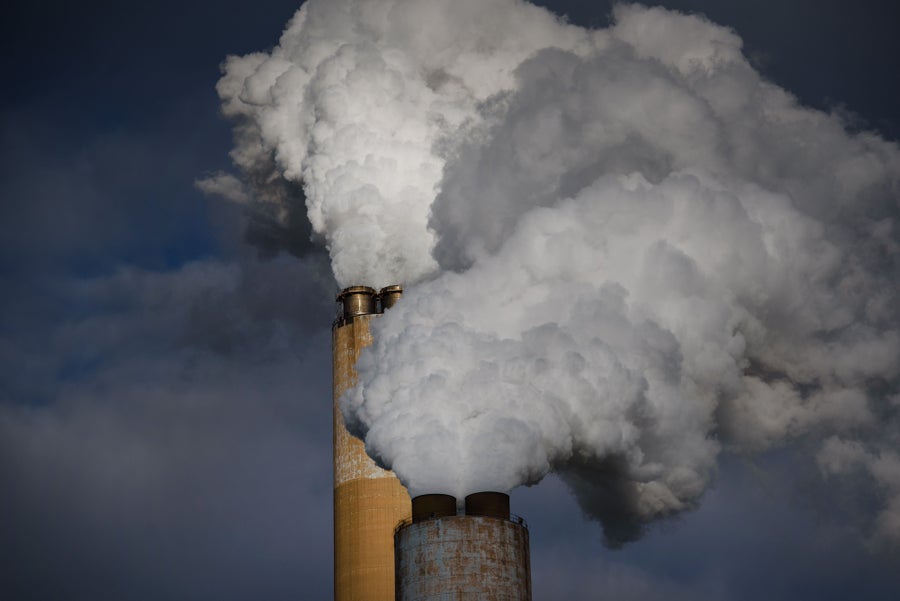
Steam billows out of the stacks at the FirstEnergy Corp. Bruce Mansfield coal-fired power plant in Shippingport, Pennsylvania, U.S., on Wednesday, Dec. 6, 2017. Justin Merriman/Bloomberg via Getty Images
.
.
Click the link below for the article:
.
__________________________________________
Older Entries
Newer Entries
 James' World 2