June 2, 2024
Mohenjo
Business, Food For Thought, Human Interest, Political, Science, Technical
amazon, business, Business News, current-events, Future, Hotels, human-rights, medicine, mental-health, research, Science, Science News, technology, Technology News, travel, vacation

Click the link below the picture
.
My father—my famous father—died in 2023, at the age of ninety. Two years before he passed, he got an email from a freelance writer named Ruth Crawford asking him for an interview. I read it to him, as I did all his personal and business correspondence, because by then he’d given up his electronic devices—first his desktop computer, then his laptop, and finally his beloved phone. His eyesight stayed good right up to the end, but he said that looking at the iPhone’s screen gave him a headache. At the reception following the funeral, Doc Goodwin told me that Pop might have suffered a series of mini-strokes leading up to the big one.
Around the time he gave up his phone—this would have been five or six years before he died—I took early retirement from my position as Castle County School Superintendent, and went to work for Dad full-time. There was plenty to do. He had a housekeeper, but those duties fell to me at night and on the weekends. I helped him dress in the morning and undress at night. I did most of the cooking, and cleaned up the occasional mess when Pop couldn’t make it to the bathroom in the middle of the night.
He had a handyman as well, but by then Jimmy Griggs was pushing eighty himself, and so I found myself doing the chores Jimmy didn’t get around to—everything from mulching Pop’s treasured flowerbeds to plunging out the drains when they got clogged. Assisted living was never discussed, although God knows Pop could have afforded it; a dozen mega-best-selling novels over forty years had left him very well off.
The last of his “engaging doorstoppers” (Donna Tartt, New York Times) was published when Pop was eighty-two. He did the obligatory round of interviews, sat for the obligatory photos, and then announced his retirement. To the press, he did so graciously, with his “trademark humor.” (Ron Charles, Washington Post) To me, he said, “Thank God the bullshit’s finished.” With the exception of the informal picket-fence interview he gave Ruth Crawford, he never spoke for the record again. He was asked many times and always refused; claimed he’d said all he had to say, including some things he probably should have kept to himself.
.
 Getty Images / Art Illustration by Mike Kim
.
.
Click the link below for the article:
.
__________________________________________
June 1, 2024
Mohenjo
Business, Food For Thought, Human Interest, Political, Science, Technical
amazon, business, Business News, current-events, Future, Hotels, human-rights, medicine, mental-health, research, Science, Science News, technology, Technology News, travel, vacation

Click the link below the picture
.
For decades, clinical algorithms that were used to diagnose disease have included race as a variable. Over the past several years, growing recognition that this may lead to diagnoses being entirely missed or undertreated in certain racial groups has led some doctors and researchers to push to remove race from these algorithms. But change has come slowly to the medical system, in part because clinicians don’t fully know what the ramifications of changing algorithms that are so central to their work will be.
A new analysis, published in the New England Journal of Medicine, estimated the impacts of removing race from spirometry, a test used to measure lung function. Historically, physicians in the U.S. expected Black people to have lower lung function, so algorithms that analyze spirometer data have corrected for this by using a different scale. The new study found that switching to a race-neutral equation would result in classifying the lung disease of nearly half a million Black Americans as more severe and increasing disability payments to Black veterans by more than $1 billion.
There are tradeoffs with changing such an important algorithm, but overall the new study “provides good support for the change from race-adjusted to global standards for pulmonary function test interpretation,” says Neil Schluger, a pulmonologist at New York Medical College, who was not involved with the research.
The spirometer is a device that measures the amount of air a person can blow in one breath—a gauge of how well that person’s lungs are functioning. The device has a long history of being used to legitimize racist views of lung function, says Lundy Braun, a historian at Brown University, who has written a book on the subject. Thomas Jefferson once speculated that Black people had different lung function than white people. So when spirometers—which were developed in Europe—were first used in the U.S., physicians here assumed their measurements differed by race, Braun says.
The idea persisted to the present day. But there’s been a growing recognition that “putting race into an algorithm is a flawed concept in that it is assuming something biologic about a person, even though we know that race is not representative of biological differences,” says Sidra Bonner, a general surgeon at the University of Michigan.
.
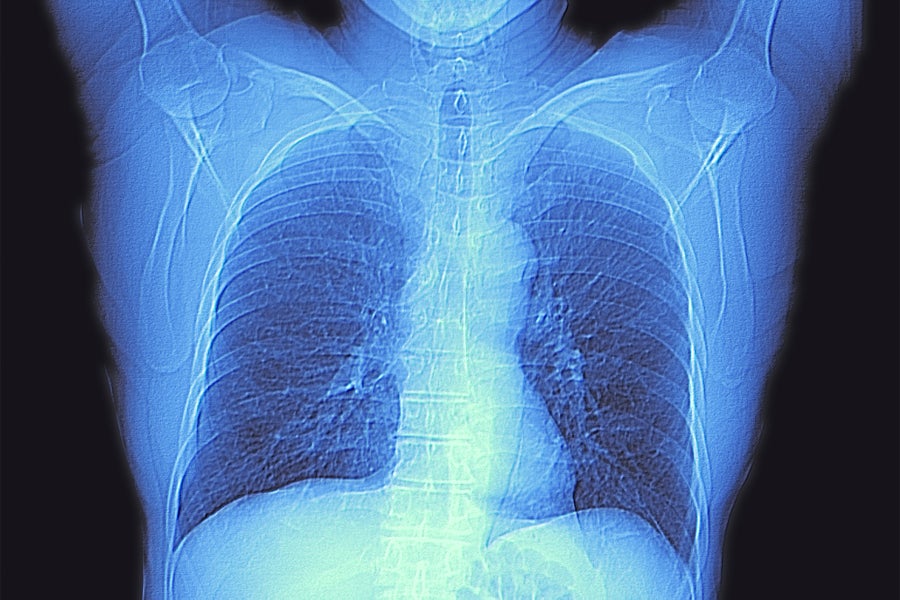
In addition to CT scans, pulmonary function tests are often used to diagnose lung disease. Alfred Pasieka/Science Photo Library/Getty Images
.
.
Click the link below for the article:
.
__________________________________________
June 1, 2024
Mohenjo
Business, Food For Thought, Human Interest, Political, Science, Technical
amazon, business, Business News, current-events, Future, Hotels, human-rights, medicine, mental-health, research, Science, Science News, technology, Technology News, travel, vacation

Click the link below the picture
.
Microwave ovens have long been a staple in kitchens worldwide, revolutionizing the way people cook and consume food. However, a small but growing movement is going microwave-free, driven by health risks and food quality concerns.
Conversations on social media platforms reveal a sentiment that microwaves are unsafe. Individuals, confident in the health benefits of going microwave-free, share their personal experiences in testimonials, often accompanied by sentiments like “I’ve never looked back.” Some claim that microwave cooking depletes food of nutrients and harms health.
But are these concerns legitimate?
Microwave ovens rely on a unique form of non-ionizing radiation, known as “microwaves,” that are distinct from the ionizing radiation found in x-rays and other high-energy sources. According to Christopher Baird, a physicist at West Texas A&M University who specializes in electromagnetics, the microwaves in our kitchens are a form of electromagnetic radiation similar to radio waves.
“It’s exceedingly rare for a microwave oven to malfunction badly enough to harm a nearby human,” Baird says. “Even in those exceedingly rare cases, no damage is done beyond burns and surface nerve damage.”
The inception of the microwave
Microwave ovens are a staple in American kitchens, but that wasn’t always the case. Microwave ovens were initially conceived by Percy Spencer in 1945 after he observed heat-generating microwaves emitted by a magnetron during a radar experiment. His first attempt at converting this to a kitchen tool was colossal, towering at around six feet and weighing over 750 pounds—a far cry from modern models.
When wartime technology was adapted for domestic use following WWII, it resulted in smaller, more user-friendly microwave ovens in American kitchens. Subsequently, the ‘70s saw a notable shift in American eating habits. Food companies increasingly catered to busy families and individuals or those who preferred not to cook, expanding their offerings to frozen, microwavable dinners and snacks—a trend that increased Americans’ dependence on prepared, convenient foods.
.

Microwave ovens have been a kitchen staple since the 1970s and the rise of the frozen dinner. Although some people may worry about the radiation, experts say they pose no threat—unlike those ultra-processed meals we typically heat up in them. Photograph by Peter Finch, Getty Images
.
.
Click the link below for the article:
.
__________________________________________
May 31, 2024
Mohenjo
Business, Food For Thought, Human Interest, Political, Science, Technical
amazon, business, Business News, current-events, Future, Hotels, human-rights, medicine, mental-health, research, Science, Science News, technology, Technology News, travel, vacation

Click the link below the picture
.
“SEE AMERICA FIRST,” proclaimed an April 1, 1906, headline in the New York Times, encouraging American tourists to expand their vacation horizons beyond Europe. The slogan, debuted by Utah boosters a few months earlier to promote westward travel, received the Times’ enthusiastic endorsement: “In a fortnight the Far Easterner can really go Far West and see things worth seeing, see many scenic wonders by the way.”
Today, affordable flights to far-flung destinations abound, and it’s easy for the American traveler to again lose sight of how much beauty and diversity exists in their own backyard. The great American road trip has long offered a cure for such complacency, and this summer should be no different: About 75 percent of Americans are expected to travel by car.
Seeking inspiration for your own road trip? These roads are more than just pathways to some of the nation’s most compelling destinations—they’re unforgettable in their own right. With scenic vistas, roadside attractions, and historic curiosities aplenty, these routes call to mind another bygone travel slogan: Getting there is half the fun!
Alaska Highway, Alaska
In the early days of World War II, fears of a potential attack on the Territory of Alaska spurred military officials to create the Alaska Highway. In just nine months, more than 10,000 members of the Army Corps of Engineers completed over 1,500 miles of roadway, a pace no doubt motivated by a healthy dose of competition. Take the 95th Regiment: an under-equipped unit of Black engineers who staked their paychecks on a bet with their white counterparts that they could finish a bridge in five days. It only took them three and a half, and not because of slapdash workmanship—the Sikanni Chief River Bridge was the first permanent structure on the highway and stood for half a century before arson destroyed it in 1992.
On the way to the permafrost of the Alaskan tundra, eagle-eyed motorists may spot caribou, moose, and grizzly bears along the road. Those keen on eyeing bald eagles should plan a stop near the Canadian border at the Tetlin National Wildlife Refuge. Its wetlands serve as a pit stop for 180 species of migratory birds, including America’s national bird, on their springtime journey towards the ice fields and glaciers at the road’s northernmost reaches. Drivers who opt to follow their wingbeats north can check out a very different type of air travel at Mukluk Land in Tok, Alaska. The junkyard-turned-amusement park is home to “Santa’s Rocket Ship” (a futuristically styled bus straight out of “The Jetsons”) as well as Skee-Ball, miniature golf, and— what else?—the world’s largest mukluk (a sealskin boot).
.
:focal(1060x706:1061x707)/https://tf-cmsv2-smithsonianmag-media.s3.amazonaws.com/filer_public/b3/a6/b3a65305-4361-408a-8d1a-0657bd724062/gettyimages-905296508.jpg) About 75 percent of Americans are expected to travel by car this summer. Taking the scenic route along such roadways as Highway 101, seen above in Del Mar, California, can make the trip even more worthwhile. Art Wager/Getty Images
About 75 percent of Americans are expected to travel by car this summer. Taking the scenic route along such roadways as Highway 101, seen above in Del Mar, California, can make the trip even more worthwhile. Art Wager/Getty Images
.
.
Click the link below for the article:
.
__________________________________________
May 31, 2024
Mohenjo
Business, Food For Thought, Human Interest, Political, Science, Technical
amazon, business, Business News, current-events, Future, Hotels, human-rights, medicine, mental-health, research, Science, Science News, technology, Technology News, travel, vacation
Click the link below the picture
.
The U.S. is bracing for another summer of powerful storms and wildfires, on the heels of an unusually warm winter and spring, and the monthly shattering of ocean heat records. Beyond the now-annual threat of smoke that last year blanketed the nation, a thickening haze of lies also looms—about everything from global warming and wildfire smoke to abortion and racism. To break through the dense fog of propaganda on media and social media, those who value scientific integrity will need to expose and rip apart the increasingly interconnected fantasies spun by the anti-reality industry.
With the presumptive Republican presidential nominee falsely calling climate change a “hoax” invented by China, a former tobacco and coal lobbyist brazenly lying to Fox News viewers that last summer’s dense wildfire smoke posed “no health risk,” and an Alabama court redefining frozen embryos as “children,” the consequences of indulging decades of antiscientific agitprop are clear. Conservative think tanks and lobbying groups have spent tens of millions to push false messaging and draft restrictive laws around abortion. The false messaging has included lies about its prevalence, basic biology, and reality in women’s lives. To energize far-right voters, these groups have attacked transgender health care with the same playbook, yielding more than 400 anti-trans laws in 2024 alone. They’ve demonized vaccines and masks, minimized harms from tobacco and wildfire smoke, and denied the realities of climate change and COVID. In the classroom, where many anti-reality crusaders have long fought against the teaching of evolution, they’ve expanded to banning books about race, sexual orientation, and gender identity, while attacking global warming education.
Overcoming the mounting harm from the parade of con artists gaslighting the public won’t be easy. More scientists and journalists must help clarify how right-wing ideologues have twisted science and weaponized anti-reality. Ongoing efforts, though, are already revealing the radical motives of such extremists, who share sophisticated ploys, influencers, and, often, deep-pocketed funders.
Meredithe McNamara, a pediatrician at Yale School of Medicine, describes denying reality as one of the main “disinformation playbook” tactics: “The first move is, if you want to ban some sort of care or advance a toxic policy, then deny that the condition for which care is sought even exists, or make false claims about it,” she told me. Denying the existence of dangerous pregnancies or gender dysphoria, directly parallels the denial of COVID, systemic racism, and air pollution.
A 2020 analysis by the climate change-focused journalism site DeSmog revealed that climate denialists share extensive overlaps with those “spreading COVID misinformation, touting false cures, ginning up conspiracy theories and fomenting attacks on public health experts.” Activists affiliated with the Heartland Institute, an oil and gas industry–funded booster of climate denialism, repeatedly attacked COVID public health measures. Some have woven those threads into a wild conspiracy theory about a plot by “eco-radicals” to restrict personal freedoms. Conservative scholars at the even more influential Heritage Foundation, also funded by oil and gas magnates, have misleadingly portrayed COVID and climate models as highly sensitive to “assumptions,” and suggested that climate model advocates “often try to beef them up to satisfy an agenda.”
.
 Thomas Jackson/Getty Images
.
.
Click the link below for the article:
.
__________________________________________
May 30, 2024
Mohenjo
Business, Food For Thought, Human Interest, Political, Science, Technical
amazon, business, Business News, current-events, Future, Hotels, human-rights, medicine, mental-health, research, Science, Science News, technology, Technology News, travel, vacation
Some content on this page was disabled on April 15, 2025 as a result of a DMCA takedown notice from Guardian Media Group. You can learn more about the DMCA here:
https://wordpress.com/support/copyright-and-the-dmca/
May 30, 2024
Mohenjo
Business, Food For Thought, Human Interest, Political, Science, Technical
amazon, business, Business News, current-events, Future, Hotels, human-rights, medicine, mental-health, research, Science, Science News, technology, Technology News, travel, vacation
Click the link below the picture
.
CLIMATEWIRE | Slovenia and Venezuela are the first two countries to lose their last-standing glaciers in a period of climate change induced by people — but they won’t be the last.
Some news outlets reported this month that Venezuela might be the first country in modern times to lose all of its glaciers. However, researchers told E&E News that Slovenia likely claimed the solemn title more than three decades ago.
“The two glacial remnants have not moved, [and] there were no glacial crevasses observed in the last few decades — these characteristics define real glaciers,” Miha Pavšek, who leads ice measurements at Slovenia’s Triglav mountain and Skuta peak with the Anton Melik Geographical Institute, told E&E News.
Melting glaciers are one of the iconic consequences of human-caused climate change, and even Arctic countries like Iceland have lost whole glaciers. But Slovenia and Venezuela appear to be the first countries since the 18th century to lose their last glaciers. It comes as the Intergovernmental Panel on Climate Change expects 18 to 36 percent of global glacial mass to be lost across the 21st century, due in large part to global warming.
A May post on X, formerly Twitter, by climatologist Maximiliano Herrera drew attention to the decline of La Corona — Venezuela’s last glacier — by citing December measurements from the Universidad de Los Andes showing a remaining area of 0.02 square kilometers.
“The disappearance of all the glaciers in Venezuela is a national tragedy,” Julio César Centeno, a professor at Universidad de Los Andes who studied the glaciers, told E&E News in an email. “It is a warning sign about the avalanche of additional effects that are coming to the country in the short term as a consequence of global warming.”
But Slovenia and Venezuela likely lost their last glaciers years earlier.
There’s no universally accepted point of death for a glacier, and no international organization is recognized as the authority on glacial classification. But Centeno said that “the minimum size for a glacier is 0.1 [square kilometers.]” The United States Geological Survey also uses that threshold and says it’s “the commonly accepted guideline.”
.
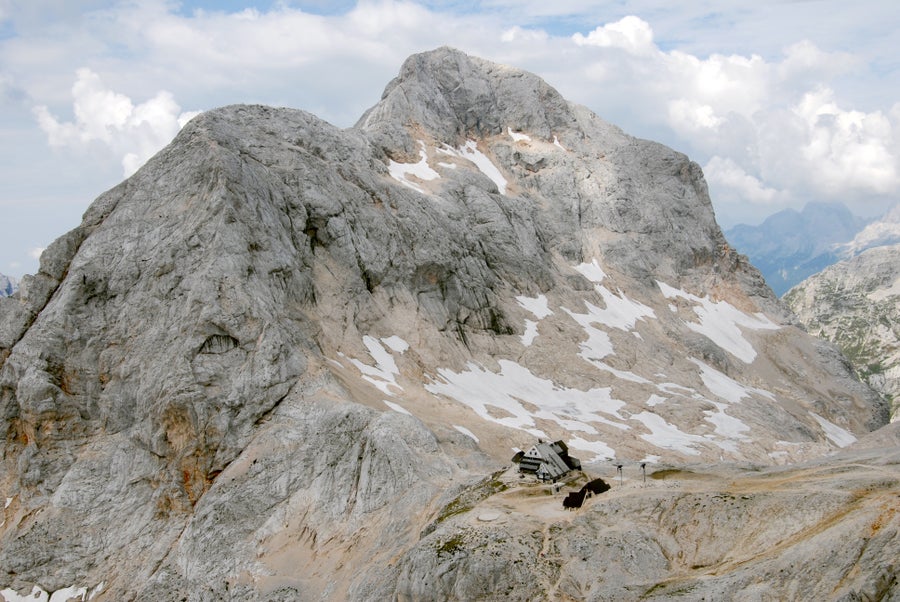
Triglav, Slovenia. Simonkr/Getty Images
.
.
Click the link below for the article:
.
__________________________________________
May 29, 2024
Mohenjo
Business, Food For Thought, Human Interest, Political, Science, Technical
amazon, business, Business News, current-events, Future, Hotels, human-rights, medicine, mental-health, research, Science, Science News, technology, Technology News, travel, vacation
Click the link below the picture
.
Severe turbulence on a Singapore Airlines flight from London to Singapore has left a 73-year-old man dead and injured more than 70 people. The incident, although rare, is raising questions about what caused such a serious disruption to the flight — and whether climate change will make the strength and frequency of turbulence on planes worse.
The plane, which departed on 20 May, experienced a sudden drop of around more than 1,800 metres that launched people and objects towards the cabin roof. It is the airline’s first fatal incident in 24 years.
“Severe turbulence is the one that turns you into a projectile,” says atmospheric researcher Paul Williams at Reading University, UK. “For anyone not wearing a seatbelt it would have been a bit like being on a rollercoaster without any restraint in place — it would have been terrifying,” he says.
Nature looks at the science of air turbulence and how climate change will influence it.
What causes turbulence in aeroplanes?
Most flights experience some level of turbulence. Near the ground, strong winds around the airport can cause turbulence as planes take off or land. At higher altitudes, up- and downwards flows of air in storm clouds can cause mild to severe turbulence as planes fly through or near them. “Nobody likes flying through a storm,” says Williams.
Air flows that move upwards over mountain ranges can also create turbulence. “As the air blows over the mountain, the plane gets lifted up and can become turbulent,” says Williams. Moreover, turbulence often occurs on the edges of jet streams, which are strong air currents that circle the globe. Any turbulence that occurs outside of clouds is called “clear air” turbulence. It could take weeks to establish what kind of turbulence caused the Singapore Airlines incident, says Williams. “Provisionally, there was a storm nearby, but also the conditions were right for clear air turbulence — we need to do some more digging before we can say,” he says.
Is climate change making turbulence worse and more frequent?
Climate change is making turbulence more frequent and severe, says atmospheric researcher Jung-Hoon Kim at Seoul National University.
.
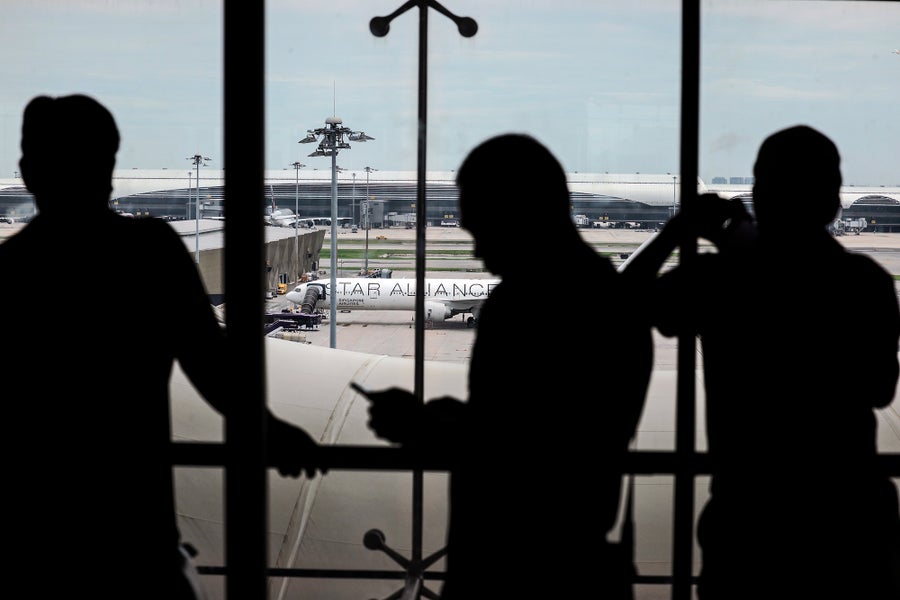 Valeria Mongelli/Bloomberg via Getty Images
.
.
Click the link below for the article:
.
__________________________________________
May 29, 2024
Mohenjo
Business, Food For Thought, Human Interest, Political, Science, Technical
amazon, business, Business News, current-events, Future, Hotels, human-rights, medicine, mental-health, research, Science, Science News, technology, Technology News, travel, vacation
Click the link below the picture
.
Leonard Baier is a graphic designer who lives in a small town in Germany. He’s the perfect person to meet at a party because he can always find a topic of conversation. If he goes into a bar alone, he comes out with a handful of new acquaintances. Yet, he also appreciates living alone in a cozy, two-room apartment. There he enjoys “closing the door every now and then and having some peace and quiet,” he says. After long visits with friends, for example, he is happy to be undisturbed for a while.
Baier meets the criteria for ambiversion, a trait in the middle of the continuum between extroversion and introversion. Whereas an introverted person draws most of their energy from being alone, an extroverted person becomes energized from interacting with other people. Introverts are more easily stressed by other people, whereas extroverts thrive in the company of others. But for Baier these dynamics depend on the circumstances: Sometimes he feels comfortable and relaxed in company. Other times people stress him out.
He’s far from the only one. Most people are not exclusively introverted or extroverted. “Ninety percent of people are somewhere in the middle,” says Jens Asendorpf, a personality researcher at Humboldt University of Berlin. People who tend to be extroverted also like to keep to themselves from time to time. “And since everyone needs social contact, introverts also seek interaction with others—just less so,” Asendorpf adds.
In other words, the vast majority of people are probably ambiverts. But it’s hard to clearly separate these categories, says psychologist Scott Barry Kaufman. “There is no magic line that clearly separates ambiversion from introversion and extroversion,” he says.
If you place people on the continuum according to their characteristics, the vast majority are probably in the middle, with fewer toward the extremes. This dimension of human personality is “normally distributed,” as the statistical term goes. There are also many more gradations than just introverted, ambiverted, and extroverted. “You could create even more subcategories—for example, mild extroversion and mild introversion,” Kaufman says.
Ambiversion: The Best of Everything?
Ambiversion combines the worlds of extroversion and introversion: When Baier’s friends spontaneously drop by on a Friday evening and want to take him to a party, he grabs his jacket and sets off. But if he has no plans, that doesn’t bother him either. On the contrary, he enjoys a quiet evening watching a TV series or drawing. “Ambivert people have a more flexible mindset, which can be very useful in everyday life,” Kaufman says.
.

Ambiverts benefit from a more even balance of social stimulation and time apart when compared with introverts or extroverts. Rivers Dale/Getty Images
.
.
Click the link below for the article:
.
__________________________________________
May 28, 2024
Mohenjo
Business, Food For Thought, Human Interest, Political, Science, Technical
amazon, business, Business News, current-events, Future, Hotels, human-rights, medicine, mental-health, research, Science, Science News, technology, Technology News, travel, vacation

Click the link below the picture
.
The high-rise apartments — some with panoramic views of Singapore’s tropical cityscape — are airy, light-filled, and spacious enough to comfortably raise a family. They are also public housing units, and for decades, were emphatically affordable, giving Singapore an enviable rate of homeownership.
Now, however, at least a few of the apartments are being sold at a price that would have been unthinkable not long ago: more than $1 million.
“I’m sad to see that — because public housing must equal affordability,” said Liu Thai Ker, the urban planner who gets much of the credit for creating the country’s widely lauded approach to housing its citizens.
Now 86, Mr. Liu is considered the architect of modern Singapore because of his role in overseeing the development of about half of the more than one million apartments that make up public housing in the small and exceptionally prosperous city-state of 5.6 million people.
But in the 1960s, the country’s economic standing was starkly different. It was one of the poorest cities in Southeast Asia, where three out of four residents lived in overcrowded and filthy slums, in ramshackle houses with tin walls known as “squatters.”
At that time, Mr. Liu was working in the New York office of the architect I.M. Pei. He had recently graduated from Yale University with a master’s degree in city planning.
“After four years, I felt that America really did not need me, they had way too many architects,” he said. “So I started thinking about coming back.”
He returned in 1969, accepting a job as head of the design and research unit at Singapore’s Housing and Development Board.
.
 Liu Thai Ker, known as the architect of modern Singapore, at his office, in March.
.
.
Click the link below for the article:
.
__________________________________________
Older Entries
Newer Entries
 James' World 2