July 26, 2024
Mohenjo
Business, Food For Thought, Human Interest, Political, Science, Technical
amazon, business, Business News, current-events, Future, Hotels, human-rights, medicine, mental-health, research, Science, Science News, technology, Technology News, travel, vacation

Click the link below the picture
.
A government investigation has revealed more detail on the impact and causes of a recent AT&T outage that happened immediately after a botched network update. The nationwide outage on February 22, 2024, blocked over 92 million phone calls, including over 25,000 attempts to reach 911.
As described in more detail later in this article, the FCC criticized AT&T for not following best practices, which dictate “that network changes must be thoroughly tested, reviewed, and approved” before implementation. It took over 12 hours for AT&T to fully restore service.
“All voice and 5G data services for AT&T wireless customers were unavailable, affecting more than 125 million devices, blocking more than 92 million voice calls, and preventing more than 25,000 calls to 911 call centers,” the Federal Communications Commission said yesterday. The outage affected all 50 states as well as Washington, DC, Puerto Rico, and the US Virgin Islands.
The outage also cut off service to public safety users on the First Responder Network Authority (FirstNet), the FCC report said. “Voice and 5G data services were also unavailable to users from mobile virtual network operators (MVNOs) and other wireless customers who were roaming on AT&T Mobility’s network,” the FCC said.
An incorrect process
AT&T previously acknowledged that the mobile outage was caused by a botched update related to a network expansion. The “outage was caused by the application and execution of an incorrect process used as we were expanding our network, not a cyber attack,” AT&T said.
The FCC report said the nationwide outage began three minutes after “AT&T Mobility implemented a network change with an equipment configuration error.” This configuration error caused the AT&T network “to enter ‘protect mode’ to prevent impact to other services, disconnecting all devices from the network, and prompting a loss of voice and 5G data service for all wireless users.”
While the network change was rolled back within two hours, full service restoration “took at least 12 hours because AT&T Mobility’s device registration systems were overwhelmed with the high volume of requests for re-registration onto the network,” the FCC found.
.

Getty Images | AaronP/Bauer-Griffi
.
.
Click the link below for the article:
.
__________________________________________
July 25, 2024
Mohenjo
Business, Food For Thought, Human Interest, Political, Science, Technical
amazon, business, Business News, current-events, Future, Hotels, human-rights, medicine, mental-health, research, Science, Science News, technology, Technology News, travel, vacation

Click the link below the picture
.
For new, human-made heavy elements on the periodic table, being “too ‘big’ for your own good” often means instability and a fleeting existence. The more protons and neutrons scientists squeeze together to construct a “superheavy” atomic nucleus—one with a total number of protons greater than 103—the more fragile the resulting element tends to be. So far, all the superheavy elements humans have managed to make decay almost instantaneously. Researchers who synthesized such hefty atoms via a particle accelerator at the Lawrence Berkeley National Laboratory, however, have now made a significant stride toward the elusive “island of stability”—a hypothesized region of the periodic table where new superheavy elements might finally endure long enough to buck the trend.
The team successfully forged element 116, livermorium, using a novel method involving titanium 50, a rare isotope that makes up about 5 percent of all the titanium on Earth. By heating this titanium to 3,000 degrees Fahrenheit and channeling it into a high-energy beam, the researchers were able to blast this particle stream at other atoms to create superheavy elements. Although livermorium has been made before using other techniques, this innovative approach paves the way for the synthesis of new, even heavier elements, potentially expanding the periodic table.
“This achievement is truly groundbreaking,” says Hiromitsu Haba, a researcher at the RIKEN Nishina Center for Accelerator-Based Science in Japan, who was not a part of the study. Haba adds that this feat is “necessary to further discover new elements.” The work was presented at July’s Nuclear Structure conference and is currently under review at the journal Physical Review Letters.
The “Simple” Math of Superheavy Fusion
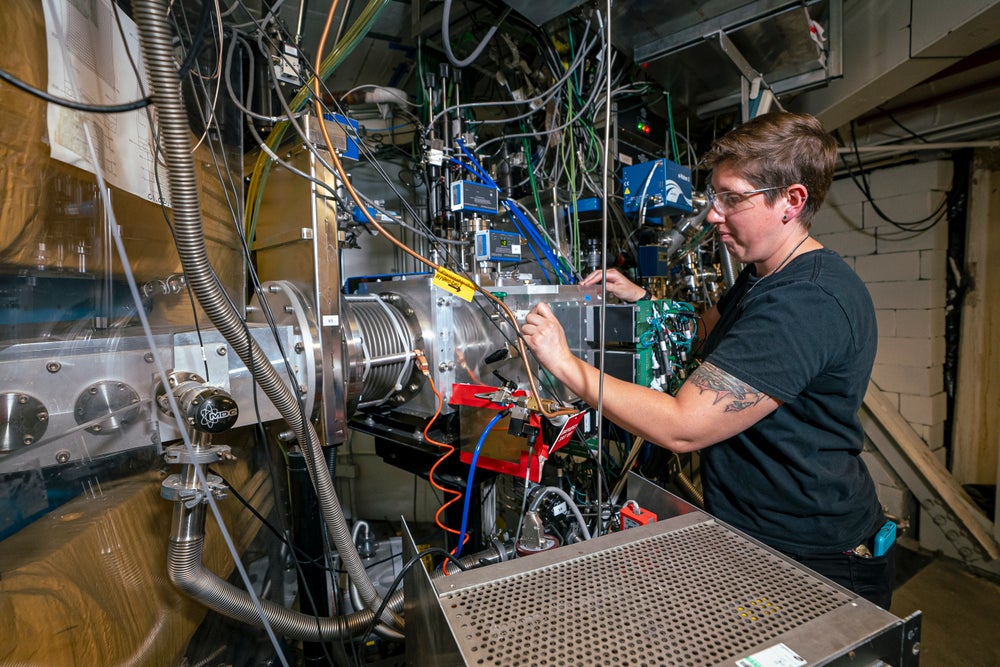
Berkeley Lab is home to the 88-Inch Cyclotron—a device that generates an electromagnetic field to nudge atomic nuclei into shedding some of their surrounding electrons and hurtle at a high speed toward other, stationary atoms. Using these machines, the synthesis of superheavy elements then boils down to simple math: to form an element with 116 protons, you need to fuse two atomic nuclei with that sum total of protons between them. As is often the case with nuclear physics, however, the process is not exactly so simple.
Traditionally, calcium 48 has been the gold-standard isotope for superheavy fusion reactions because of its “doubly magic” nature. Atomic nuclei are surrounded by orbital shells of whirling electrons; nuclei possessing “magic numbers” of protons or neutrons that completely fill in a shell are very stable, and ones with “doubly magic” numbers of both particle types are exceptionally so. But calcium 48’s low proton count limits its utility for creating heavier elements. The heaviest stable element that can be combined with calcium 48 (20 protons) is curium (96 protons), resulting in livermorium (116 protons). While calcium 48 and the heavier berkelium (97 protons) have been used to synthesize element 117, berkelium “is extremely difficult to produce,” says Witold Nazarewicz, chief scientist at the Facility for Rare Isotope Beams at Michigan State University, who wasn’t involved in the new study. “If we want to make most heavier elements, we need a beam with more protons [than calcium 48].”
To make such a beam, the research team turned to titanium 50, attempting to fuse it with plutonium to make livermorium. “Until we ran this experiment, nobody knew how easy or difficult it would be to make things with titanium,” emphasizes Jacklyn Gates, leader of the Heavy Element Group at Berkeley Lab and lead author of the study.
Unlike the doubly magic and highly stable calcium 48, titanium 50 is distinctly nonmagic and lacks extreme stability. It also has a melting point nearly twice that of calcium, making it harder to work with. And the lower stability of titanium 50 atoms decreases the probability of successful fusions, even when collisions occur. “It’s the difference between seeing a synthesized atom every day versus every 10 days or worse,” Gates explains. Despite these challenges, titanium 50 emerged as the next best candidate because it offered hope of creating superheavy elements beyond calcium’s reach.
.
.
.
Click the link below for the article:
.
__________________________________________
July 25, 2024
Mohenjo
Business, Food For Thought, Human Interest, Political, Science, Technical
amazon, business, Business News, current-events, Future, Hotels, human-rights, medicine, mental-health, research, Science, Science News, technology, Technology News, travel, vacation

Click the link below the picture
.
When my partner Adam asked what I thought of his girlfriend Leah coming out to visit for his birthday, I pragmatically decided to view it as the next step on my path. I’d read in “The Smart Girl’s Guide to Polyamory” that one of the best ways to combat jealousy was to meet your metamour. Since she would be coming to visit for a week in August (a whole week straight!), I decided to reach out. And thus began the most texting-intensive relationship of my life.
Indeed, it was actually a huge relief to text with Leah. Our exchanges were overtly kind; we were both going out of our way to signal politeness. It reminded me of how some femmes will reflexively compliment something about your outfit when they meet you at a party, as if to say, “I come in peace.” Or is it a keep your friends close, enemies closer kind of thing?
Leah was deferential to my “primacy” in a way that made me feel like she had no interest in stealing my place. She did this by sometimes saying so directly, but also demonstrated it by rarely referencing her relationship with Adam at all. The same unspoken code didn’t apply to me, with her making generous references to admiring our “primary relationship.” But I tried not to talk about Adam in any way that might come off as bragging.
On the rare occasion she did mention Adam with romantic undertones, I’d feel a twinge of jealousy, a feeling that it was somehow a passive-aggressive power play. And then I’d consciously try to shut the thought down, because it was unfair.
I became close to my partner’s girlfriend, Leah
When it came to everything but the man we “shared,” we were almost compulsively forthcoming. We dished about sex (except sex with Adam) in the kind of detail I’d seen on “Sex and the City.” Was it because we shared the same man? Were we backhand bragging? Bonding? All of the above, I’d suspect. Soon, we could even commiserate over Adam’s newer romantic prospects like more senior sister wives; admitting how attractive they were, the precarious feeling of constant competition.
I soon became very protective of Leah’s well-being, a sort of on-call counselor. I found she was sometimes even more anxious, insecure, and neurotic than I was, which was really rather impressive/a little disturbing. Is this Adam’s type? No matter. Now that she was a real person instead of an abstract threat, what was important was Leah was no longer she-who-must-not-be-named in my mind.
I was even able to talk with Adam about her like a mutual friend. Sometimes, I knew things that were going on with her before he did. That felt good, too, like I was less excluded and more in control. Leah and I congratulated ourselves often on our friendship. It was a choice we were making, and not an easy one, not to cast the other as the enemy. It felt not just evolved, but laced with real sisterhood.
.
 Rachel Krantz is the author of the memoir “Open: One Woman’s Journey Through Love and Polyamory.” Photo Credit: Malika Danae Photography
.
.
Click the link below for the article:
.
__________________________________________
July 24, 2024
Mohenjo
Business, Food For Thought, Human Interest, Political, Science, Technical
amazon, business, Business News, current-events, Future, Hotels, human-rights, medicine, mental-health, research, Science, Science News, technology, Technology News, travel, vacation

Click the link below the picture
.
President Biden told the American public in an Oval Office address on Wednesday that he had abandoned his re-election campaign because there is “a time and a place for new voices, fresh voices — yes, younger voices.”
His words, lasting 11 minutes in all, were the first extensive ones from Mr. Biden since his decision to step aside, and expanded on his initial announcement, delivered in a post on social media on Sunday, that he was dropping out of the race. His tone was wistful and his speech was an early farewell.
“It’s been the privilege of my life to serve this nation for over 50 years,” he said.
Sitting behind the Resolute Desk and surrounded by photos of his family, Mr. Biden ticked through the accomplishments of his term, ranging from the choice of the first Black woman to be a Supreme Court justice to pulling the country out of a paralyzing pandemic. He expressed gratitude to the American people for allowing a “kid with a stutter” from modest beginnings in Scranton, Pa., to reach the pinnacle of American politics.
Just beyond the camera, dozens of aides and several members of his family, including Jill Biden, the first lady, watched as Mr. Biden said he would walk away from the office they had worked to help him reach for decades.
“I revere this office,” he said, “but I love my country more.”
Ultimately, Mr. Biden said, he concluded that “the best way forward is to pass the torch to a new generation.” The president praised Vice President Kamala Harris — “she’s experienced, she’s tough, she’s capable” — but warned, as he has for years, that Americans faced a choice between preserving democracy and allowing it to backslide.
“History is in your hands,” Mr. Biden said. “The power is in your hands. The idea of America lies in your hands. We just have to keep faith, keep the faith, and remember who we are.”
.
 Speaking from the Resolute Desk in the Oval Office, President Biden defended his record and celebrated the vice president, Kamala Harris, saying it’s time for new, younger voices to lead the country.CreditCredit… Pete Marovich for The New York Times
.
.
Click the link below for the article:
.
__________________________________________
July 24, 2024
Mohenjo
Business, Food For Thought, Human Interest, Political, Science, Technical
amazon, business, Business News, current-events, Future, Hotels, human-rights, medicine, mental-health, research, Science, Science News, technology, Technology News, travel, vacation
Click the link below the picture
.
James Lange remembers the day he and a team of botanists and conservationists gathered at a rock formation encircled by a thicket of mangroves in Key Largo, Florida. They’d come to the nation’s last wild stand of a rare cacti to confront the inevitable. With sea level rise bringing the Atlantic Ocean ever closer to the withering plants, the group had made the difficult decision to remove the cacti’s remaining green material, preserve it in nurseries, and hope that it might one day be reintroduced in the wild.
Three years later, research published last week reveals what Lange and the others long suspected: The demise of the Key Largo tree cactus is the first recorded case of sea level rise driving a local species to extinction in the United States. Its collapse was a blow to Lange, a research botanist at Fairchild Tropical Botanic Garden in Coral Gables who coauthored the study. “It was one of the things that made the Keys so special,” he said. “Just a big, bold, beautiful plant.”
Tree cactus is a suitable name for Pilosocereus millspaughii, known to reach towering heights, yield white flowers that entice nectar-hungry bats, and produce reddish-purple fruits for birds and mammals to feast upon. Although the cactus still grows on a few scattered islands in the Caribbean, it was restricted to a single population in North America, a thriving stand of 150 plants discovered in the Florida Keys in 1992. By 2021, just six ailing stems remained.
It is a monumental loss, scientists say, in no small measure because of what it signifies. Anthropogenic planetary warming is no longer solely endangering human communities. It is eradicating the very species that make up the fabric of our natural world.
“This existential threat that everyone’s aware of, seeing the actual evidence of it happening, giving an expectation of what we can expect moving forward, is important,” said Lange. He remembers how “everything was just looking horrible,” as the sea rapidly encroached on the cluster of plants. “We just knew there was no long-term hope for this population in this area,” he said. “There’s no shortage of plants in the Keys that are threatened with this same fate.”
From the critically imperiled Big Pine partridge pea to the jumping prickly apple, any number of coastal species in the Florida Keys could be wiped out next in one of the places most vulnerable to sea level rise. And unlike the Key Largo cacti, which survives, if only barely, elsewhere, several of them are the last of their kind.
“It’s very alarming,” said Marcelo Ardón, who studies coastal ecology at North Carolina State University. “Climate change is compounding all of these different drivers that makes these populations even more vulnerable.”
A major herbivory event, in which a substantial amount of the plants were eaten by animals, stressed the Key Largo cactus species in 2015. (Researchers suspect it might have occurred as a result of tidal flooding causing a shortage of freshwater, driving a gaggle of thirsty racoons or other wildlife to gnaw on the stems.) The threat was magnified by an ensuing series of recurring king tides, in addition to storm surge and damage wrought by Hurricane Irma. Jennifer Possley, lead author of the new study, considers it a possible “bellwether for how other low-lying coastal species will respond to climate change.”
.
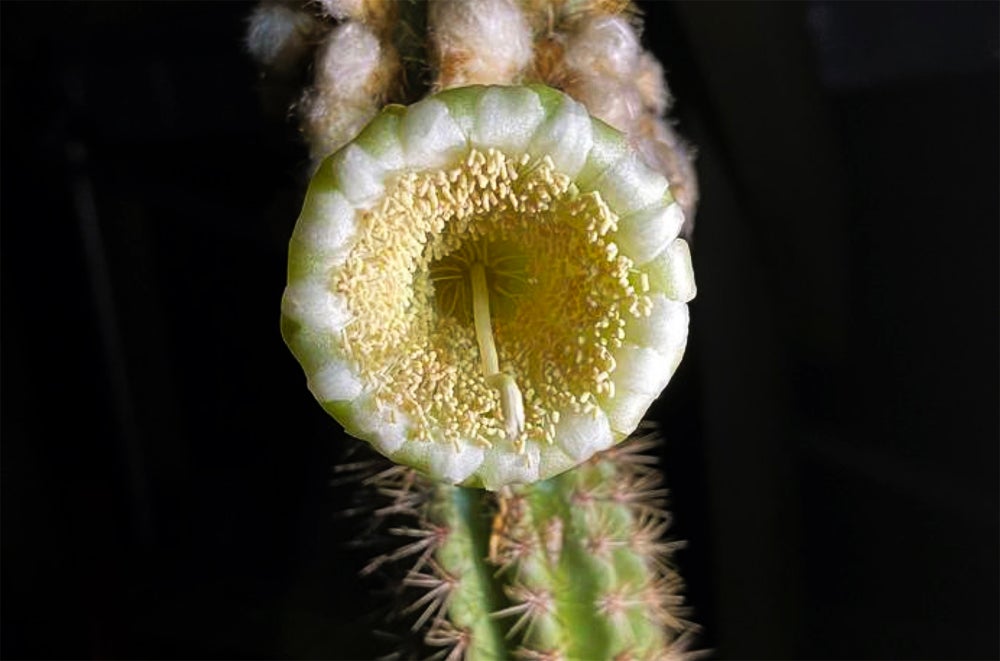
The Key Largo tree cactus was initially found growing in the United States in 1992 at a single site. That population has since been lost to a combination of rising sea levels and increasingly intense storms. Courtesy of Susan Kolterman
.
.
Click the link below for the article:
.
__________________________________________
July 24, 2024
Mohenjo
Business, Food For Thought, Human Interest, Political, Science, Technical
amazon, business, Business News, current-events, Future, Hotels, human-rights, medicine, mental-health, research, Science, Science News, technology, Technology News, travel, vacation

Click the link below the picture
.
When most of us think about how to get the perfect night’s sleep, we consider things like how firm our mattress is, how cool or dark our room is, and what time we go to bed. One factor we sometimes fail to consider? Our pillow setup.
“I think pillows are often incredibly overlooked,” says Dr. W. Christopher Winter, a neurologist, sleep specialist, and author of The Sleep Solution.
Winter says he always asks patients what kind of pillow they have and where they bought it. “It’s really surprising how few people can actually answer the question,” he says. “It’s like they just always had the pillow or it just showed up in their bed at some point, and they never really questioned it.”
Finding the perfect pillow is an opportunity for people to improve their sleep without buying a new mattress, which can be time-consuming and costly, says Winter, who also hosts the “Sleep Unplugged” podcast.
The following advice can help ensure your pillow setup will get you the best sleep possible.
Not too low, not too high
The most comfortable sleeping position is highly personal. Some people will feel most comfortable sleeping on their stomach, while others will get the best sleep on their side or back. (Generally speaking, side and back sleeping are best for the alignment of the spine.)
Pillow height is highly personal, too; there’s no scientific consensus yet on the ideal pillow height. But a good rule of thumb is to use a pillow that fills the gap between your shoulder and ear, as this helps align your neck and spine, says Craig Hensley, associate professor of physical therapy and human movement sciences at Northwestern University Feinberg School of Medicine.
Read More: Why You Sweat So Much at Night—And What to Do About It
“If the pillow is too thick, it will bend and put stress on your neck,” he says. “If it’s not thick enough, it’ll bend your neck the other way, which could compress some of your joints.”
Find the right firmness and material
Most people sleep better with a firmer pillow, Hensley says. Firm pillows support the head and neck better than soft ones. Just beware of a pillow that’s too firm, as this can cause stiffness from hyperextension of the neck, says Dr. Rachel Salas, a sleep neurologist at the Johns Hopkins Center for Sleep and Wellness.
.
 Illustration by TIME
.
.
Click the link below for the article:
.
__________________________________________
July 23, 2024
Mohenjo
Business, Crime, Food For Thought, Human Interest, missed News, Political, Science, Technical
amazon, business, Business News, current-events, Future, Hotels, human-rights, medicine, mental-health, research, Science, Science News, technology, Technology News, travel, vacation

.
News You might have missed!
Use your browser or smartphone back arrow (<-) to return to this table for your next selection.
.
__________________________________________
July 23, 2024
Mohenjo
Business, Food For Thought, Human Interest, Political, Science, Technical
amazon, business, Business News, current-events, Future, Hotels, human-rights, medicine, mental-health, research, Science, Science News, technology, Technology News, travel, vacation

Click the link below the picture
.
The Democratic Party appears to be injected with new hope in the aftermath of President Joe Biden’s decision on Sunday to drop out from the race and endorse Kamala Harris. She raised a record-breaking $81 million within 24 hours of announcing her candidacy, and as of Monday night, Harris has secured enough support from delegates at the Democratic National Convention to clinch the Democratic nomination.
But even if Harris becomes the Democratic nominee at the convention in August, concerns remain about her ability to compete in a general election against Donald Trump.
A slight majority of Americans have a negative opinion of Harris, according to FiveThirtyEight polling. Some 51% of Americans disapprove of Harris to 38% who approve. Former President Donald Trump has a higher disapproval rating at 53%, but 39% of Americans approve of him.
Election polls show Harris lagging behind the former President by a small, but not insurmountable, margin of 1.5 percentage points on average, according to an analysis done by the Washington Post of 11 different pollsters. These figures are only a slight improvement on President Joe Biden, who trails Trump by 1.9 percentage points. However, all of these polls were conducted before Biden’s drop-out announcement, and surveys about the potential performance of hypothetical candidates are often inaccurate.
With those caveats, here are what some of the most respected polls show:
ABC News/The Washington Post/Ipsos: +2 Harris
ABC News, The Washington Post, and Ipsos worked together to conduct a poll from July 6 to July 9 interviewing 2,431 U.S. adults. ABC News/The Washington Post polls are ranked second in FiveThirtyEight’s list of best pollsters after the New York Times/Siena College, which has yet to release a national survey on a Harris vs. Trump matchup.
Their survey found that Harris outperformed Trump by 2 percentage points. That is better than Biden, who is polling exactly the same as Trump.
The Economist/YouGov: +5 Trump
A poll conducted by The Economist and YouGov from July 13 to July 16 found that Harris trailed behind Trump by five percentage points, performing worse than Biden, who trailed Trump by two percentage points. The poll sampled 1,582 U.S. adult citizens.
.
 The Democratic Party appears to be injected with new hope in the aftermath of President Joe Biden’s decision on Sunday
.
.
Click the link below for the article:
.
__________________________________________
July 23, 2024
Mohenjo
Business, Food For Thought, Human Interest, Political, Science, Technical
amazon, business, Business News, current-events, Future, Hotels, human-rights, medicine, mental-health, research, Science, Science News, technology, Technology News, travel, vacation
Click the link below the picture
.
The global information technology outageon July 19, 2024, that paralyzed organizations ranging from airlines to hospitals and even the delivery of uniforms for the Olympic Games represents a growing concern for cybersecurity professionals, businesses, and governments.
The outage is emblematic of the way organizational networks, cloud computing services, and the internet are interdependent, and the vulnerabilities this creates. In this case, a faulty automatic update to the widely used Falcon cybersecurity software from CrowdStrike caused PCs running Microsoft’s Windows operating system to crash. Unfortunately, many servers and PCs need to be fixed manually, and many of the affected organizations have thousands of them spread around the world.
For Microsoft, the problem was made worse because the company released an update to its Azure cloud computing platform at roughly the same time as the CrowdStrike update. Microsoft, CrowdStrike, and other companies like Amazon have issued technical work-arounds for customers willing to take matters into their own hands. But for the vast majority of global users, especially companies, this isn’t going to be a quick fix.
Modern technology incidents, whether cyberattacks or technical problems, continue to paralyze the world in new and interesting ways. Massive incidents like the CrowdStrike update fault not only create chaos in the business world but disrupt global society itself. The economic losses resulting from such incidents – lost productivity, recovery, disruption to business and individual activities – are likely to be extremely high.
As a former cybersecurity professional and current security researcher, I believe that the world may finally be realizing that modern information-based society is based on a very fragile foundation.
The bigger picture
Interestingly, on June 11, 2024, a post on CrowdStrike’s own blog seemed to predict this very situation– the global computing ecosystem compromised by one vendor’s faulty technology – though they probably didn’t expect that their product would be the cause.
Software supply chains have long been a serious cybersecurity concern and potential single point of failure. Companies like CrowdStrike, Microsoft, Apple, and others have direct, trusted access into organizations’ and individuals’ computers. As a result, people have to trust that the companies are not only secure themselves, but that the products and updates they push out are well-tested and robust before they’re applied to customers’ systems. The SolarWinds incident of 2019, which involved hacking the software supply chain, may well be considered a preview of today’s CrowdStrike incident.
CrowdStrike CEO George Kurtz said “this is not a security incident or cyberattack” and that “the issue has been identified, isolated and a fix has been deployed.” While perhaps true from CrowdStrike’s perspective – they were not hacked – it doesn’t mean the effects of this incident won’t create security problems for customers. It’s quite possible that in the short term, organizations may disable some of their internet security devices to try and get ahead of the problem, but in doing so they may have opened themselves up to criminals penetrating their networks.
.
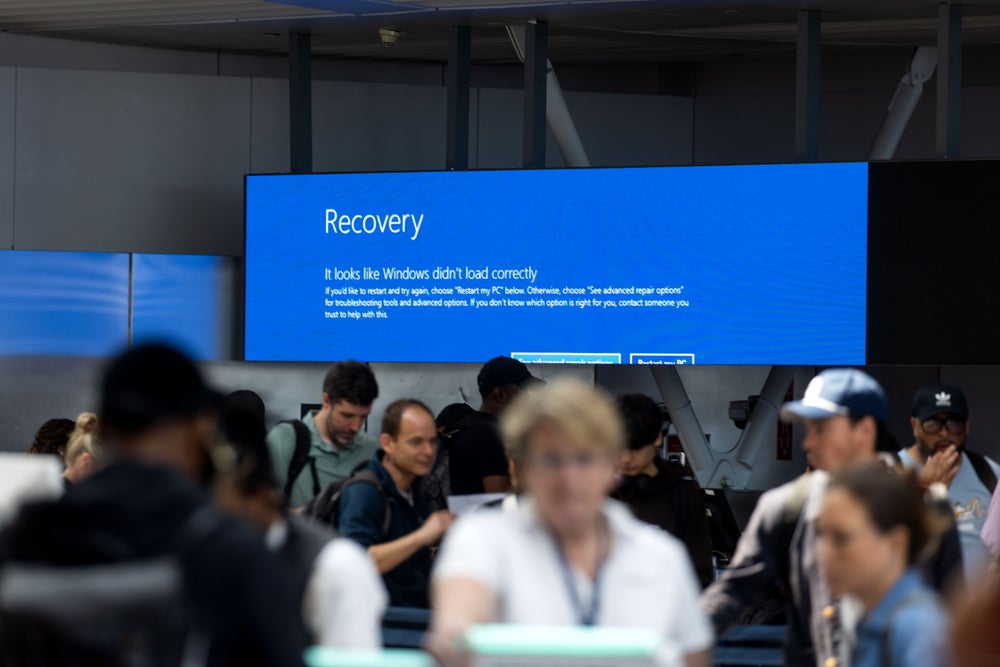
The Microsoft Corp. Windows Recovery screen displayed at John F. Kennedy International Airport (JFK) in New York, US, on Friday, July 19, 2024. Airlines around the world experienced disruption on an unprecedented scale after a widespread global computer outage grounded planes and created chaos at airports. Michael Nagle/Bloomberg via Getty Images
.
.
Click the link below for the article:
.
__________________________________________
July 23, 2024
Mohenjo
Business, Food For Thought, Human Interest, Political, Science, Technical
amazon, business, Business News, current-events, Future, Hotels, human-rights, medicine, mental-health, research, Science, Science News, technology, Technology News, travel, vacation
Click the link below the picture
.
The flat, pitch-black seabed of the Pacific Ocean’s Clarion-Clipperton Zone (CCZ) is littered with what looks like hunks of charcoal. These unassuming mineral deposits, called polymetallic nodules, host a unique deep-sea ecosystem, much of which scientists have yet to catalog. And the deposits are also a key target for companies that are looking to mine the deep sea because they contain metals, such as manganese and cobalt, that are used to make batteries.
Now researchers have discovered that these valuable nodules do something remarkable: they produce oxygen and do so without sunlight. “This is a totally new and unexpected finding,” says Lisa Levin, an emeritus professor of biological oceanography at the Scripps Institution of Oceanography, who was not involved in the research. The oxygen gas on planet Earth is typically understood to come from living organisms that convert sunlight, carbon dioxide and water into oxygen and sugar. The idea that some of the gas may come from these inanimate minerals and be produced in total darkness “really strongly goes against what we traditionally think of as where oxygen is made and how it’s made,” says Jeffrey Marlow, a microbiologist at Boston University and a co-author of the study, which was published on Monday in Nature Geoscience.
The story of discovery goes back to 2013, when deep-sea ecologist Andrew Sweetman was facing a frustrating problem. He was part of a research team that had been trying to measure how much oxygen organisms on the CCZ seafloor consumed. The researchers sent landers down more than 13,000 feet to create enclosed chambers on the seabed that would track how oxygen levels in the water fell over time.
But oxygen levels did not fall. Instead they rose significantly. Thinking the sensors were broken, Sweetman sent the instruments back to the manufacturer to be recalibrated. “This happened four or five times” over the course of five years, says Sweetman, who studies seafloor ecology and biogeochemistry at the Scottish Association for Marine Science. “I literally told my students, ‘Throw the sensors in the bin. They just do not work.’”
Then, in 2021, he was able to go back to the CCZ on an environmental survey expedition sponsored by a deep-sea mining firm called the Metals Company. Again, his team used deep-sea landers to make enclosed chambers on the seafloor. The chambers enclosed encased sediment, nodules, living organisms and seawater and monitored oxygen levels. Sweetman and his team used a different technique to measure oxygen this time, but they observed the same strange results: oxygen levels increased dramatically.
“Suddenly I realized that … I’d been ignoring this hugely significant process, and I just kicked myself,” Sweetman says. “My mindset completely changed [to] focus on what is causing this.”
“My first thought was microbiology, and that’s because I’m a microbiologist,” Marlow says. It wasn’t a far-fetched idea: scientists had recently uncovered some ways that microbes such as bacteria and archaea could generate “dark oxygen” in the absence of sunlight. In lab tests that reproduced conditions on the seafloor in the new study, the researchers poisoned the seawater with mercury chloride to kill off microbes. Yet the oxygen levels still increased.
If this dark oxygen didn’t come from a biological process, then it must have come from a geological one, the researchers reasoned. They tested and ruled out a few possible hypotheses—such as that radioactivity in the nodules was separating oxygen out of the seawater or that some other environmental factor was separating oxygen gas out of the manganese oxide in the nodules.
.
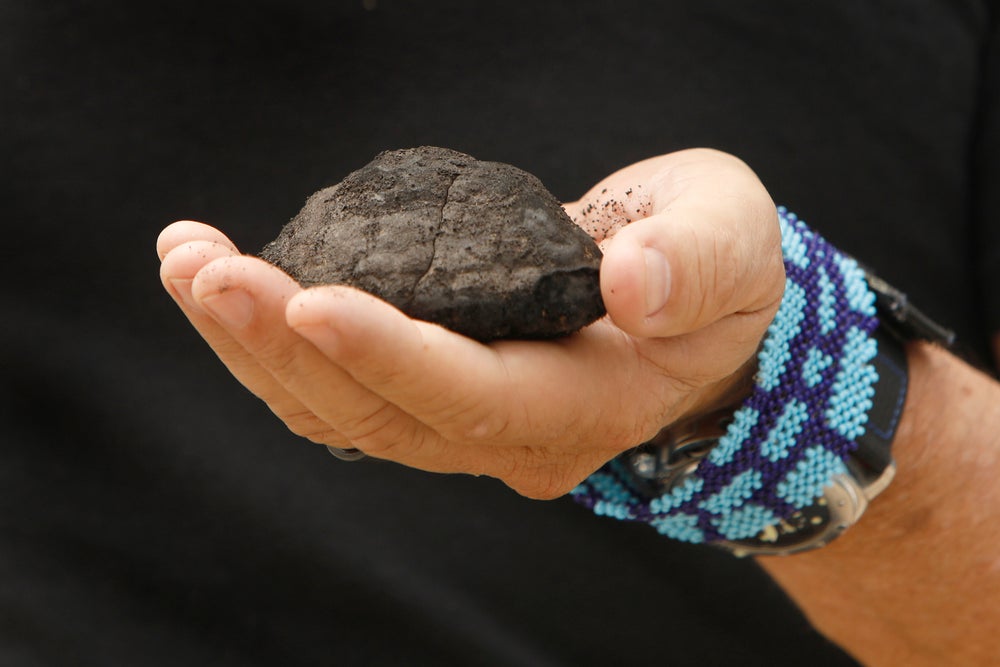
Gerard Barron, CEO of the Metals Company, holds a polymetallic nodule. The company helped fund new research that found that such nodules can produce oxygen without sunlight. Carolyn Cole/Los Angeles Times via Getty Images
.
.
Click the link below for the article:
.
__________________________________________
Older Entries
Newer Entries
 James' World 2