Home

Is Having a Boyfriend Embarrassing Now?

2 Comments

Click the link below the picture

.

If someone so much as says “my boyf–” on social media, they’re muted. There’s nothing I hate more than following someone for fun, only for their content to become “my boyfriend”-ified suddenly. This is probably because, for so long, it felt like we were living in what one of my favorite Substackers calls Boyfriend Land: a world where women’s online identities centered around the lives of their partners, a situation rarely seen reversed. Women were rewarded for their ability to find and keep a man, with elevated social status and praise. It became even more suffocating when this could be leveraged on social media for engagement and, if you were serious enough, financial gain.

However, more recently, there’s been a pronounced shift in the way people showcase their relationships online: far from fully hard-launching romantic partners, straight women are opting for subtler signs—a hand on a steering wheel, clinking glasses at dinner, or the back of someone’s head. On the more confusing end, you have faces blurred out of wedding pictures, or entire professionally edited videos with the fiancé conveniently cropped out of all shots. Women are obscuring their partner’s face when they post, as if they want to erase the fact they exist without actually not posting them.

So, what gives? Are people embarrassed by their boyfriends now? Or is something more complicated going on? To me, it feels like the result of women wanting to straddle two worlds: one where they can receive the social benefits of having a partner, but also not appear so boyfriend-obsessed that they come across as quite culturally loser-ish. “They want the prize and celebration of partnership, but understand the norminess of it,” says Zoé Samudzi, writer and activist. In other words, in an era of widespread heterofatalism, women don’t want to be seen as being all about their man, but they also want the clout that comes with being partnered.

But it’s not all about image. When I did a callout on Instagram, plenty of women told me that they were, in fact, superstitious. Some feared the “evil eye,” a belief that their happy relationships would spark a jealousy so strong in other people that it could end the relationship. Others were concerned about their relationship ending, and then being stuck with the posts. “I was in a relationship for 12 years and never once posted him or talked about him online. We broke up recently, and I don’t think I will ever post a man,” says Nikki, 38. “Even though I am a romantic, I still feel like men will embarrass you even 12 years in, so claiming them feels so lame.”

But there was an overwhelming sense, from single and partnered women alike, that regardless of the relationship, being with a man was an almost guilty thing to do. On the Delusional Diaries podcast, fronted by two New York-based influencers, Halley and Jaz, they discuss whether having a boyfriend is “lame” now. “Why does having a boyfriend feel Republican?” read a top comment. “Boyfriends are out of style. They won’t come back in until they start acting right,” read another with thousands of likes. In essence, “having a boyfriend typically takes hits on a woman’s aura,” as one commenter claimed. Funnily enough, both of these hosts have partners, which is something I often see online. Even partnered women will lament men and heterosexuality—partly in solidarity with other women, but also because it is now fundamentally uncool to be a boyfriend-girl.

It’s not just in these women’s imaginations—audiences are icked out by seeing too much boyfriend content, myself included, it seems (as indicated by my liberal use of the mute button). When author and British Vogue contributor Stephanie Yeboah hard-launched her boyfriend on social media, she lost hundreds of followers. “Even if we were still together, I wouldn’t post them here. There is something cringey and embarrassing about constantly posting your partner these days,” she tells me, adding that, “there is part of me that would also feel guilty for sharing my partner constantly—especially when we know the dating landscape is really bad at the moment. I wouldn’t want to be boastful.”

Sophie Milner, a content creator, also experienced people unfollowing her when she shared a romantic relationship. “This summer, a boy took me to Sicily. I posted about it on my subscribers section, and people replied saying things like, ‘please don’t get a boyfriend!’” She admits that her content perhaps becomes less exciting when she is in a relationship. “Being single gives you this ultimate freedom to say and do what you want. It is absolutely not every woman, but I do notice that we can become more beige and watered-down online when in a relationship—myself included.”

.

https://assets.vogue.com/photos/6902341b8d2485587b8de59f/master/w_1600,c_limit/584042390Photo: GraphicaArtis/Getty Images

.

.

Click the link below for the complete article (sound on to listen):

https://www.vogue.com/article/is-having-a-boyfriend-embarrassing-now#intcid=_vogue-verso-hp-trending_4c5d712a-8dc1-493e-9b5d-4bde73da1585_popular4-2

.

__________________________________________

Government Reopens Without Data That Guides Markets and the Fed

Leave a comment

Click the link below the picture

.

The government shutdown is over. The wait for data about the economy is not.

The Bureau of Labor Statistics said on Friday that it will release its jobs report for September on Thursday, breaking the more than six-week data drought that began when federal funding lapsed on Oct. 1.

But economists, policymakers, and investors will need to wait weeks for a more up-to-date picture of the labor market, as well as for fresh data on inflation, spending, home-building, and more. When the data does begin to flow, it may come with an asterisk — some of the reports may be based on partial information, making them subject to more uncertainty than usual.

And some data will probably never be produced, a permanent gap in understanding that could have lasting consequences.

“I just don’t think we’re ever going to know what happened in October, at least not very accurately,” said Tara Sinclair, an economist at George Washington University.

The lack of reliable information is a challenge for officials at the Federal Reserve, who were already struggling to interpret conflicting economic signals and were divided about how to respond. Policymakers will almost certainly head into their next meeting, on Dec. 9 and Dec. 10, without much of the data that they would usually use to inform their interest rate decisions.

Financial markets have stumbled in recent days as investors have grown nervous that the central bank won’t lower interest rates next month as expected — in part because policymakers won’t have the data they need to convince them that a cut is prudent.

Fed policymakers aren’t the only ones flying blind. State and local leaders rely on economic data to make budget decisions. Corporate executives rely on it when deciding whether to hire, where to invest, and how to set prices. Investors need it to accurately price government bonds.

Some economists also worry that the shutdown has done longer-term damage to a statistical system already strained by shrinking budgets and staff turnover.

President Trump fired the head of the B.L.S. in August after a disappointing jobs report. The agency is being run on a temporary basis by William Wiatrowski, the deputy commissioner, who is respected inside and outside the government. But roughly a third of senior leadership positions at the bureau are vacant, and it has already cut back some data collection because of staff shortages.

William Beach, who led the Bureau of Labor Statistics during the first Trump administration, said he worried that some agency employees simply would not return after the shutdown.

“You don’t know who’s quit, who’s retired, who’s taken another job,” Mr. Beach said.

Other than the September jobs report, it remains unclear exactly when the data releases will resume, and how long the delays will last. The Bureau of Labor Statistics, the Census Bureau and other federal statistical agencies are expected to release updated schedules for the delayed reports over the next few days.

The Census Bureau said on Friday that it would release its delayed reports on construction spending and international trade on Nov. 17 and Nov. 19.

The B.L.S. will be able to release the September jobs report quickly because it was originally scheduled to be released on Oct. 3 and was nearly complete when the government shut down. Some other data from September may also be relatively easy to produce.

But figuring out what was happening in the economy during the period of the shutdown itself could be more challenging. To calculate the Consumer Price Index each month, for example, government workers visit hundreds of businesses around the country to check the prices of thousands of individual items. That data is almost impossible to collect after the fact, as government price checkers can’t realistically visit stores and ask how much a bag of flour cost a month earlier.

White House officials in recent weeks have said they didn’t expect the B.L.S. to publish an October price index at all.

October jobs data is also in question. Monthly payroll figures are based on a survey of employers, which, in theory, should still be available; businesses presumably have records of how many employees they have had in a given period.

But to calculate the unemployment rate and other closely watched labor market measures, the government conducts a monthly survey of households, in which it asks detailed questions about people’s activity in a specific week: Were they working? If so, for how many hours? If not, why not? Were they looking for work, or caring for family, or in school? Many people are unlikely to remember weeks later.

“You can’t really ask households detailed questions about their labor market experience six weeks ago,” said Jed Kolko, an economist who oversaw economic statistics at the Commerce Department during the Biden administration.

Even if the government could run the survey late, there are practical considerations. The November employment survey is meant to begin next week. Any delay would jeopardize the next jobs report as well.

.

https://static01.nyt.com/images/2025/11/14/multimedia/14biz-econ-data-bhtv/14biz-econ-data-bhtv-jumbo.jpg?quality=75&auto=webpEconomists, policymakers, and investors will need to wait weeks for a more up-to-date picture of critical topics like inflation, spending, and the labor market. Credit…Hiroko Masuike/The New York Times

.

.

Click the link below for the complete article:

https://www.nytimes.com/2025/11/14/business/economy-data-shutdown.html

.

__________________________________________

Why We Struggle to Say No—And How to Get Better at It

Leave a comment

Click the link below the picture

.

Rachel Feltman: For Scientific American’s Science Quickly, I’m Rachel Feltman.

As children, many of us are taught that being “good” means being obedient: doing what we’re told by parents, teachers and authority figures. But that conditioning can make it incredibly difficult to speak up when we know something is wrong, whether that means correcting a mishandled coffee order or standing up against injustice. How can we learn to overcome these instincts when it really counts?

My guest today is Sunita Sah, a professor of management and organizations at Cornell University and the author of Defy: The Power of No in a World that Demands Yes. She thinks we could all stand to be a little more defiant, and she’s here to tell us why.

Thank you so much for coming on to chat with us today.

Sunita Sah: It’s wonderful to be here.

Feltman: So tell us a bit about your background. You know, what led you to studying defiance?

Sah: Ah, so this probably started way back in my childhood because as a child, I was really known for being an obedient daughter and student. And I remember asking my dad when I was quite young, “What does my name mean?” And he told me that Sunita means “good” in Sanskrit, and I mainly lived up to that: I was obedient at home. I was agreeable at school. I did all of my homework. I went to school on time. I even got my hair cut the way my parents wanted me to.

And these were the messages that I received, not just from parents but from teachers and the community: to be good. And what does that really mean? It means to do as you’re told, to obey, to be obedient, to be compliant. And I really internalized a lot of those messages, and I think they’re often messages that we give to children. You know, we like it when they’re obedient, and then we call that as being really good.

And I ended up studying medicine at the University of Edinburgh, which was really due to expectations. And while I was there, I did an intercalated degree in psychology, and I became fascinated by Stanley Milgram’s experiments on obedience to authority and why we go to the extent of that amount of compliance and obedience even when we’re causing harm, maybe even killing another person, with sort of dangerous electric shocks.

So that fascinated me, but I went back, and I finished my medical degree, and I worked as a junior doctor, and then I did some consulting work for the pharmaceutical industry. And during that time I became fascinated in how industry and the medical profession interact with each other, how they influence each other, how that affects physicians, and then how that trickles down to sort of decisions patients are making.

And I wanted to study all of this in more depth, and so I was doing an executive M.B.A. at London Business School, and I talked to a few professors there. They said if you wanna look at ethical dilemmas, I have to go to the U.S. So I traveled to the U.S., and I did a Ph.D. in organizational behavior, and that got me down the track of really being able to spend my time researching and studying this and teaching about why people take bad advice.

So at first I looked in medicine, then the finance industry got interested, then the criminal justice industry, and then basically, in all interpersonal interactions we have, I found this pattern of compliance everywhere.

Feltman: And for listeners who might need a little refresher, could you remind us what the Milgram experiments found?

Sah: So Stanley Milgram, he conducted his experiments in the early 1960s because he wanted to really investigate whether the Nazi refrain, “I was just following orders,” was a psychological reality or not. So he set up an experiment that basically was positioned as a learning or memory experiment, and whether people would learn better if they were—received some kind of punishment, which were electric shocks.

So we had people come in, and they met someone who was actually an actor, and they were told that this person would be the learner, and they would be strapped into something like—that looked like an electric chair that was gonna give them some electric shocks.

Then the participant was led to another room, and they were told that they were the teacher, and they were sat in front of a machine that had different levers on it, which were labeled with different voltages. And the lower voltages, it started at 15 volts, and it went up in 15-volt increments, all the way up to 450 volts, which was labeled “XXX.” And in advance, people, psychiatrists, predicted less than 1 percent would go up to 450 volts.

.

https://static.scientificamerican.com/dam/m/5f3629386e6cd4c/original/2511_SQ_WED_DEFIANCE-Podcast-Span-Art.jpeg?m=1762293436.088&w=900Tara Moore/Getty Images; Illustration composite by Scientific American

.

.

Click the link below for the complete article (sound on to listen:

https://www.scientificamerican.com/podcast/episode/the-psychology-behind-standing-up-and-saying-no/

.

__________________________________________

There’s a Reason This Time Feels Different With Epstein and Trump. It’s Right There in the Letters.

Leave a comment

Click the link below the picture

.

It is, admittedly, difficult to follow the Jeffrey Epstein story. The saga has been churning along for so long now—with so many twists and turns—that I don’t really blame anyone for not knowing what to make of this most recent wave of intrigue. Thankfully, I’ve been paying close enough attention to highlight what you should care about as Donald Trump barrels toward a confrontation with whatever his associations were with the elusive sex trafficker. Buckle up! It’s going to get weird.

OK, so why is a bunch of Epstein stuff coming out right now?

Epstein has been an obsession of the far right and far left for years. But that obsession didn’t fully catch on among liberal Democrats until Trump took office for a second time. That’s when the rarest of phenomena occurred: The MAGA base got mad at Trump over his failure to release the legendary Epstein files, a group of documents (that may or may not exist) that would blow the whole scandal wide open. But as Trump sat on the documents, the Democrats on the House Oversight Committee kicked into high gear—with the full backing of the liberal base. This has created a strange situation in which much of the country has suddenly remembered that the president once had close ties with the disgraced financier—despite the fact that those associations have never been a secret.

Regardless, the rest of the House is set to vote on releasing the contents of the Justice Department’s investigation into Epstein, which are colloquially known as those aforementioned Epstein files. Ahead of that discharge, though, the Oversight Committee has been releasing select cuts of its trove in a deliberately partisan way. On Wednesday, Democrats put out a couple of emails exchanged by Epstein that seemed to imply that Trump had extended contact with one of the women the financier sex trafficked. Republicans countered by releasing 20,000 more emails, which detailed Epstein’s wider social network.

And what in those files are germane to Trump?

The splashiest email was sent by Epstein to Ghislaine Maxwell—you may have heard of her—in 2011. In it, Epstein notes that Trump spent “hours at my house” with one of Epstein’s unnamed victims. He calls the president the “dog that hasn’t barked.” Generally speaking, this is not the way you want the world’s most famous pedophile characterizing you.

.

https://compote.slate.com/images/63089e6c-8f1f-4a0f-8fa2-6604b2fb0515.jpeg?crop=1382%2C922%2Cx0%2Cy0&width=1280Photo illustration by Slate. Photos by Joe Schildhorn/Patrick McMullan via Getty Images and Anna Moneymaker/Getty Images.

.

.

Click the link below for the complete article:

https://slate.com/news-and-politics/2025/11/donald-trump-jeffrey-epstein-files-congress.html

.

__________________________________________
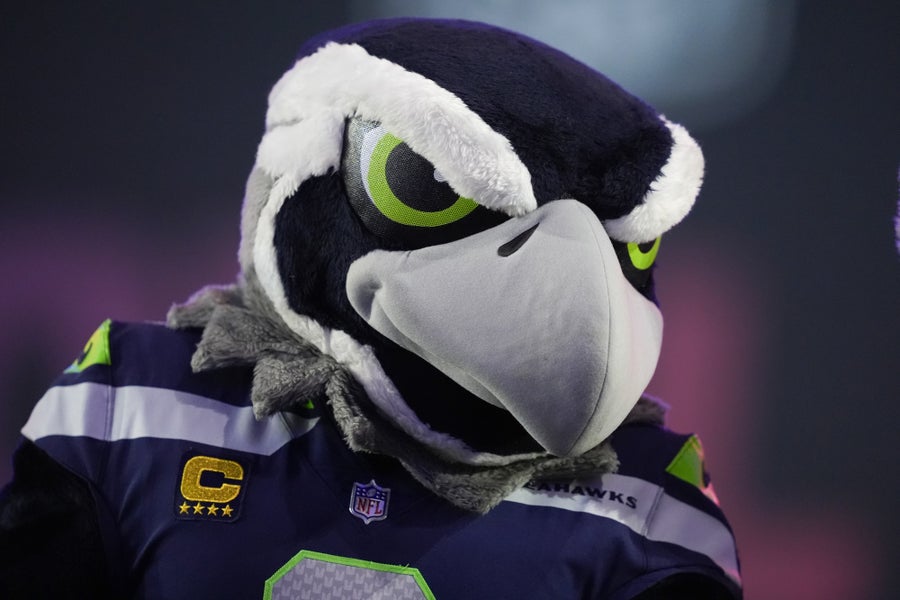
Trump Administration Live Updates: Federal Employees Return to Work as Government Reopens

Leave a comment

Click the link below the picture

.

  • Government reopens: With the end of the longest shutdown in U.S. history, federal workers were back in their offices, national parks were fully reopening, and the government was returning to normal operations. Some workers were getting $10,000 bonuses for their work during the shutdown. But the size of the federal bureaucracy meant it would take time to get back up to speed, and some workers were said to be unable to log back into their computer systems. Several states restarted food stamp payments, but millions of Americans were still awaiting the November deposits that the Trump administration resisted paying out in full.

  • Boat strike: The U.S. military killed another four people accused by the Trump administration of trafficking narcotics by sea, Pentagon officials said. The known death toll in the administration’s lethal campaign on boats to 80 since early September. Read more ›

  • Retribution campaign: A federal judge has begun reviewing whether the U.S. attorney handpicked by President Trump to prosecute two of his most prominent political opponents — James B. Comey, the former F.B.I. director, and Letitia James, the New York attorney general — was lawfully appointed to her job, which could have serious consequences for the cases.

The Justice Department joins a suit challenging California’s new congressional maps.

The U.S. Justice Department has joined a Republican lawsuit challenging new congressional maps that California voters approved last week to favor Democrats in next year’s midterm elections.

The case asserts that the maps, which were championed by Gov. Gavin Newsom, are unconstitutional because they improperly use voters’ race as a factor in determining district boundaries. It was filed last week by the California Republican Party, and on Thursday, the Justice Department announced it had filed to intervene in the suit, asking the courts to block the maps.

The Trump administration prepares tariff exemptions in a bid to lower food prices.

The Trump administration is preparing broad exemptions to certain tariffs in an effort to ease elevated food prices that have provoked anxiety for American consumers, according to three people briefed on the actions.

The change would apply to certain reciprocal tariffs the president announced in April, including on products coming from countries that have not struck trade deals with the administration, the people said, discussing a pending announcement on the condition of anonymity.

Noem begins handing out $10,000 checks to T.S.A. workers who ‘went above and beyond’ during the shutdown.

Air traffic controllers with perfect attendance through the shutdown are not the only government employees getting bonuses for working unpaid during the longest federal spending freeze in U.S. history.

The homeland security secretary, Kristi Noem, announced on Thursday that an unspecified number of Transportation Security Administration officers would also be awarded checks of $10,000 for going “above and beyond” during the shutdown, acting days after President Trump recommended $10,000 bonuses for air traffic controllers who never missed a shift during the shutdown, while seeming to prod those who were absent to quit.

.

https://static01.nyt.com/images/2025/11/13/multimedia/13trump-news-header-345pm-vjmt/13trump-news-header-345pm-vjmt-superJumbo.jpg?quality=75&auto=webpA tour guide at the United States Capitol in Washington on Thursday, as the federal government reopened following the longest shutdown in its history.Credit…Tierney L. Cross/The New York Times

.

.

Click the link below for the complete article:

https://www.nytimes.com/live/2025/11/13/us/trump-government-shutdown-news

.

__________________________________________

 

ARFID Is More Than Picky Eating—And the Condition Is on the Rise

Leave a comment

x

Click the link below the picture

.

Stella was eight years old when she stopped eating solid foods. She went from being a “foodie” to strictly consuming liquids, says Briana, Stella’s mother. That diet soon became problematic for Stella, too: later, she removed chunks from her soup and struggled to drink smoothies that contained small seeds. She grew so afraid of swallowing that she’d spit out her saliva. “She said she had a fear of choking,” Briana says. (The last names of Stella and Briana have been withheld for privacy.)

In less than a month, Stella became so tired and malnourished that her parents took her to the hospital. Doctors put her on a feeding tube, and they were concerned that the rapid weight loss for her age might cause heart issues. Within 24 hours of being hospitalized, a psychologist diagnosed Stella with avoidant/restrictive food intake disorder, or ARFID, a serious eating disorder that’s become steadily more prevalent globally in recent years. Health care providers and psychologists are now trying to untangle ARFID’s causes, signs, and disconcerting rise.

Clinicians emphasize that ARFID is much more than a dislike of certain foods. It’s developmentally normal for many kids to go through a picky eating phase between ages two and six. But ARFID presents as a food avoidance so persistent and pervasive that it can cause adults to drop below the minimum health body mass index, or BMI (a hotly debated measurement that links a person’s weight to their height), or to lose so much weight that they experience symptoms of malnutrition, such as vitamin deficiencies, irregular menstrual cycles, low testosterone, hair loss, muscle loss and a constant feeling of being cold. In kids, drastic weight loss from ARFID can cause children to fall off standard U.S. growth charts for healthy development. Developmental issues linked to the loss in weight and calories often spur doctors to recommend supplemental nutritional intake.

“We’re not just trying to treat kids who don’t like broccoli. It’s the kid who is malnourished as a result of their food choices,” says James Lock, a psychiatry professor and director of the Child and Adolescent Eating Disorder Program at the Stanford University School of Medicine.

An Increasingly Recognized Disorder

ARFID was formally recognized as a feeding and eating disorder in the Diagnostic and Statistical Manual of Mental Disorders in 2013. That enabled clinicians to put a name to a condition that had been around but had gone undetected for some time.

“Probably there were people who had this syndrome, but they didn’t really talk about it because there’s a stigma around it,” says Jennifer Thomas, co-director of the Eating Disorders Clinical and Research Program at Massachusetts General Hospital, who has treated people with ARFID.

Wider recognition of the condition is partly driving the recent increase in cases. Real-world data on ARFID cases are lacking, but some studies have reported a global prevalence ranging from 0.35 to 3 percent across all age groups. Certain countries and regions report much higher numbers: a recent study in the Netherlands, for example, found that among 2,862 children aged 10, 6.4 percent had ARFID. The eating disorder clinic, Equip, that provided specialized care to Stella after she was hospitalized, says it treated more than 1,000 people in the U.S. with ARFID in 2024—a 144 percent jump from 2023.

“I think that’s one of the things that has made ARFID a challenging eating disorder [to diagnose]—because it is a lot of different things.” —Jessie Menzel, clinical psychologist

And the National Alliance for Eating Disorders has found that ARFID now accounts for up to 15 percent of all new eating disorder cases. People can experience ARFID at any age, although recently diagnosed cases have mostly been in children and teens. The average age of diagnosis is 11 years old, and 20 to 30 percent of cases are in boys, a higher percentage than other eating disorders, according to the alliance.

Signs and Symptoms

Unlike other eating disorders, such as anorexia nervosa and bulimia, ARFID doesn’t appear to be associated with body image. The problem—and seeming cause—is the food itself and the emotional and physiological response toward it.

People with ARFID generally fall into one or several of three categories. According to one study of adults with ARFID, 80 percent of respondents said they were uninterested in eating, 55 percent said they stay away from many foods because of sensory issues, and 31 percent said they avoid food because they are afraid of adverse consequences such as choking or vomiting. About two-thirds of the participants were in more than one of these categories.

“I think that’s one of the things that has made ARFID a challenging eating disorder [to diagnose]—because it is a lot of different things,” says Jessie Menzel, a clinical psychologist who treats the condition and other eating disorders.

There are some common signs that signal ARFID, however. In addition to significant weight loss and signs of malnutrition, ARFID’s physical symptoms include gastrointestinal issues, low body temperature, and the growth of a type of soft, fine body hair called lanugo that is typically not present after infancy. Behavioral changes include a lack of appetite, difficulty paying attention, food texture avoidance, extreme selective eating, and a fear of vomiting or choking

.

https://static.scientificamerican.com/dam/m/dc9059c2f1bb4f7/original/GettyImages-646730522-ARFID.jpg?m=1762280050.58&w=900vadimguzhva/Getty Images

.

.

Click the link below for the complete article:

https://www.scientificamerican.com/article/what-is-arfid-doctors-explain-why-the-eating-disorders-rates-are-rising/

.

__________________________________________
Scientists Found 2 Existing Drugs Can Reverse Alzheimer’s Brain Damage in Mice

Leave a comment

Click the link below the picture

.

In an effort to combat Alzheimer’s disease, scientists are looking at existing drugs that could treat the condition, and a 2025 study identified two promising candidates that are currently used to treat cancer.

Already approved by regulators in the US – meaning potential clinical trials for Alzheimer’s could start sooner – the drugs are letrozole (usually used to treat breast cancer) and irinotecan (usually used to treat colon and lung cancer).

The team of US researchers started by investigating how Alzheimer’s altered gene expression in the brain.

They then searched a medical database called the Connectivity Map for drugs that reversed these changes in gene expression, as well as cross-referenced records of patients who had taken these medicines as part of cancer treatments. The drugs appeared to have decreased their risk of developing Alzheimer’s.

“Alzheimer’s disease comes with complex changes to the brain, which has made it tough to study and treat, but our computational tools opened up the possibility of tackling the complexity directly,” says computational biologist Marina Sirota, from UC San Francisco.

“We’re excited that our computational approach led us to a potential combination therapy for Alzheimer’s based on existing FDA-approved medications.”

Having picked out letrozole and irinotecan as the best candidates, the researchers tested them in mouse models of Alzheimer’s. When used in tandem, the drugs were shown to reverse some of the brain changes brought on by the disease.

The harmful clumps of tau protein that build up in brains affected by Alzheimer’s were reduced significantly, and the mice showed improvements in learning and memory tasks – two brain capabilities often impaired by Alzheimer’s.

By combining the two drugs, the researchers were able to target different types of brain cells affected by the disease. Letrozole seemed to counter Alzheimer’s in neurons, while irinotecan worked in glia.

“Alzheimer’s is likely the result of numerous alterations in many genes and proteins that, together, disrupt brain health,” says neuroscientist Yadong Huang, from UC San Francisco and Gladstone Institutes.

“This makes it very challenging for drug development, which traditionally produces one drug for a single gene or protein that drives disease.”

It’s a promising start, but there’s more work to be done: Obviously, the drugs have only been directly tested in mice so far, and these medications also come with side effects. These need to be considered alongside the benefits if the drugs are to be repurposed for a different disease than what they were originally approved for.

One of the next steps should be clinical trials for people with Alzheimer’s disease. According to the researchers, this approach could lead to more personalized and effective treatments, based on how gene expression has been altered in each case.

It’s estimated that more than 55 million people have Alzheimer’s, and as the world’s population ages, that’s expected to more than double in the next 25 years. Finding ways to prevent the disease and even reverse symptoms would have a huge impact on global health.

“If completely independent data sources, such as single-cell expression data and clinical records, guide us to the same pathways and the same drugs, and then resolve Alzheimer’s in a genetic model, then maybe we’re on to something,” says Sirota.

.

https://www.sciencealert.com/images/2025/11/Illustration-of-Protoplasmic-Astrocyte-.jpg(Juan Gaertner/Science Photo Library/Getty Images)

.

.

Click the link below for the complete article:

https://www.sciencealert.com/cancer-drugs-show-alzheimers-promise-in-mice

.

__________________________________________

Good Morning America!

Leave a comment

Good Morning America!

Chris Hemsworth, Alzheimer’s and why Hollywood is suddenly obsessed with caregiving

Leave a comment

Click the link below the picture

.

Chris Hemsworth is joining a growing list of Hollywood stars opening up about caring for their aging and sick loved ones.

Care advocates gathered at the Australian Embassy in Washington, D.C. on Nov. 5 for a screening of Hemsworth’s new documentary, “A Road Trip to Remember,” which follows Hemsworth and his father, Craig Hemsworth, on a motorbike trip across Australia. Craig Hemsworth is one of over 55 million people worldwide living with dementia or Alzheimer’s disease.

“I just find myself wanting to spend more time with him,” Hemsworth says in the film’s trailer.

Hemsworth’s documentary will premiere on National Geographic and be available for streaming on Disney Plus and Hulu on Nov. 23, just six months after Bradley Cooper’s “Caregiving” documentary released on PBS in June. Emma Heming Willis has become the face of spousal caregiving through various media appearances and her new book, “The Unexpected Journey,” where she talks about caring for her husband, Bruce Willis. Seth Rogen produced a documentary that released in January 2025, “Taking Care,” which brought viewers inside his family’s life as he and his wife cared for his wife’s mother.

“For many years, people just didn’t talk about it,” said Jane Root, CEO and founder of Nutopia, the film production company that made Hemsworth’s documentary. “And suddenly, influential people like Chris and Seth and people are suddenly, like, this is something that needs to be talked about. We need to stop being scared of it, we need to take away the stigma of it.”

The United States is at a critical moment where family caregivers are holding up their families and the country’s long-term care system, said Megan O’Reilly, vice president for health and family for AARP government affairs.

“The more that folks are talking about it and sharing their stories, they’re empowering those around them to share their stories,” O’Reilly said. “I’ve increasingly seen it over the last couple of years… this has been building to this moment.”

‘If Chris can do it, I can do it.’

Hemsworth isn’t new to documentaries or the team that helped make “A Road Trip to Remember.” The film is backed by the same creators (including Nutopia) who made Hemsworth’s “Limitless” series, where he investigated various ways to try and live better for longer.

“My Dad and I had always spoken about taking a trip back to the Northern Territory, where our family had lived years ago, but we had never been able to set aside the time to actually do it,” Hemsworth said in a Facebook post on Oct. 16. “More recently, the idea of taking that road trip reemerged with more pressing importance. The result was a more profound, more moving, and more surprising journey than I ever anticipated.”

Charlie Parsons, senior vice president of global development for National Geographic Channel, has worked with Hemsworth since the beginning of his “Limitless” series. He said National Geographic doesn’t look to work with big names for the sake of having a celebrity on a poster. There needs to be an “honest to goodness passion for the subject matter,” Parsons said. And Hemsworth cares deeply about health and his family.

“He was just very vulnerable,” Parsons said. That vulnerability leads to connection, and hopefully will lead to more people sharing their caregiving and Alzheimer’s stories. Parsons said he has found himself opening up more about his own mother’s dementia journey in recent years. “If Chris can do it, I can do it.”

“Now she’s at a point where she doesn’t know who I am,” Parsons said of his mother. “I go in there, and sometimes she’s kind of asleep or kind of dozing off. I just, I hold her hand for 45 minutes, and I tell her I love her.”

Unlike other stories of caregiving that tend to focus on the difficult parts of care and aging, Root said Hemsworth’s documentary is a celebratory story.

“It’s a film that makes you smile,” Root said. “It’s about Chris saying, ‘I want to spend time with my dad.’ And he really enjoyed it.”

.

Chris Hemsworth and Dad

.

.

Click the link below for the complete article:

https://www.msn.com/en-us/health/other/chris-hemsworth-alzheimer-s-and-why-hollywood-is-suddenly-obsessed-with-caregiving/ar-AA1PWdXI?cvid=69130b1b62fe4dad930e964fb371394b&ei=20

.

__________________________________________

Veterans Day 2025, Thank You For Your Service

3 Comments

.

__________________________________________

Older Entries Newer Entries

TradingClubsMan

Algotrader at TRADINGCLUBS.COM

Comedy FESTIVAL

Film and Writing Festival for Comedy. Showcasing best of comedy short films at the FEEDBACK Film Festival. Plus, showcasing best of comedy novels, short stories, poems, screenplays (TV, short, feature) at the festival performed by professional actors.

Bonnywood Manor

Peace. Tranquility. Insanity.

Warum ich Rad fahre

Take a ride on the wild side

Madame-Radio

Découvre des musiques prometteuses dans la sphère musicale française (principalement, mais pas que...).

Ir de Compras Online

No tiene que Ser una Pesadilla.

Kana's Chronicles

Life in Kana-text (er... CONtext)

Cross-Border Currents

Tracking money, power, and meaning across borders.

Jam Writes

Where feelings meet metaphors and make questionable choices.

emotionalpeace

Finding hope and peace through writing, art, photography, and faith in Jesus.

Essu Center

Eyasu The Wonderful

Wearing Two Gowns.COM

MOVING FORWARD...That's how WINNING is done!”-Rocky Balboa

...

love each other like you're the lyric to their music

Luca nel laboratorio di Dexter

Comprendere il mondo per cambiarlo.

Tales from a Mid-Lifer

Mid-Life Ponderings

Hunza

Travel,Tourism, precious story "Now in hundreds of languages for you."

freedomdailywriting

I speak the honest truth. I share my honest opinions. I share my thoughts. A platform to grow and get surprised.

The Green Stars Project

User-generated ratings for ethical consumerism

Cherryl's Blog

Travel and Lifestyle Blog

Sogni e poesie di una donna qualunque

Questo è un piccolo angolo di poesie, canzoni, immagini, video che raccontano le nostre emozioni

My Awesome Blog

“Log your journey to success.” “Where goals turn into progress.”

pierobarbato.com

scrivo per dare forma ai silenzi e anima alle storie che il mondo dimentica.

Thinkbigwithbukonla

“Dream deeper. Believe bolder. Live transformed.”

Vichar Darshanam

Vichar, Motivation, Kadwi Baat ( विचार दर्शनम्)

Komfort bad heizung

Traum zur Realität

Chic Bites and Flights

Savor. Style. See the world.

ومضات في تطوير الذات

معا نحو النجاح

Broker True Ratings

Best Forex Broker Ratings & Reviews

Blog by ThE NoThInG DrOnEs

art, writing and music by James McFarlane and other musicians

fauxcroft

living life in conscious reality

Srikanth’s poetry

Freelance poetry writing

JupiterPlanet

Peace 🕊️ | Spiritual 🌠 | 📚 Non-fiction | Motivation🔥 | Self-Love💕

Sehnsuchtsbummler

Reiseberichte & Naturfotografie

Spotlight Choices

astrology - life coaching - optimistic reality

INFINITE ENERGY

"قوتك تبدأ من هنا"

Mesime ÜNALMIŞ

Her çocuk hikayelerle büyümeli

Treasurable Life: The Dirty, Divine Truth of Becoming

No shame. No filters. Just everything we were told to hide.

Dr. Edward McInnis

Doctor of Medicine

Ishaya Zephaniah

Explore the dynamic relationship between faith and science, where curiosity meets belief. Join us in fostering dialogue, inspiring discovery, and celebrating the profound connections that enrich our understanding of existence.

Through Pain Suffering , Mental Health , Addictions , Cancer , Death , Drs

Living with Purpose: Finding Meaning Amidst Life's Challenges