August 19, 2024
Mohenjo
Business, Food For Thought, Human Interest, Political, Science, Technical
amazon, business, Business News, current-events, Future, Hotels, human-rights, medicine, mental-health, research, Science, Science News, technology, Technology News, travel, vacation

Click the link below the picture
.
Yoga has long been associated with better physical flexibility and health, and now it is being linked to improved cognition as well, according to growing research.
A recent study also suggests that yoga may benefit some older people at risk for cognitive decline and Alzheimer’s disease.
The holistic mind-body practice of yoga provides physical and mental health benefits through four main components: breathing, physical relaxation, mindfulness meditation, and postures.
Together, they make up a “smorgasbord” that allows people to reap benefits and gravitate to what speaks to them the most, said Sat Bir Singh Khalsa, associate professor of medicine at Harvard Medical School and editor in chief of the International Journal of Yoga Therapy. “It’s about optimizing your functioning and performance as a human being on all levels,” Khalsa said.
Research suggests that yoga may sharpen our minds by honing our ability to regulate stress and use our cognitive resources efficiently. Studies have found that yoga is associated with changes in the brain.
“That’s what yoga is all about. It’s about enhancing psychological and physiological performance,” said Khalsa, who has practiced yoga since he took an undergraduate course on it in 1971.
Yoga may protect against cognitive decline
Yoga has been found to improve attention, processing speed, executive function, and memory in healthy children and adults, according to a 2015 meta-analysis. A 2021 review of randomized controlled trials found that yoga was associated with improved cognition, memory, and executive functions in healthy older adults.
A new study suggests that yoga may also be beneficial for older adults at increased risk for cognitive decline.
Researchers conducted a randomized controlled trial with 79 women, at least 50 years of age, who self-reported cognitive decline and were at increased risk for developing Alzheimer’s disease because of menopause or cardiovascular risk factors.
.
 Benjavisa/Getty Images
.
.
Click the link below for the article:
.
__________________________________________
August 18, 2024
Mohenjo
Business, Food For Thought, Human Interest, Political, Science, Technical
amazon, business, Business News, current-events, Future, Hotels, human-rights, medicine, mental-health, research, Science, Science News, technology, Technology News, travel, vacation

Click the link below the picture
.
Geophysicists have discovered a gigantic hidden ocean beneath Mars’ surface, and they say it could harbor life.
The massive underground reservoir, discovered using seismic data taken by NASA’s InSight Lander, contains enough liquid to cover the entire planet with a mile of water. However, it is far too deep to access by any known means.
Trapped inside a layer of fractured rock 7 to 13 miles (11.5 to 20 kilometers) beneath the Red Planet’s outer crust, reaching the water would require a drilling operation that has yet-to-be achieved on Earth.
But if humans do access it one day, its discoverers say it’s a promising place to search for life. The researchers published their findings Aug 12. In the journal Proceedings of the National Academy of Sciences (PNAS).
“Water is necessary for life as we know it,” study co-author Michael Manga, a professor of earth and planetary science at UC Berkeley, said in a statement. “I don’t see why [the underground reservoir] is not a habitable environment. It’s certainly true on Earth — deep, deep mines host life, the bottom of the ocean hosts life.”
“We haven’t found any evidence for life on Mars, but at least we have identified a place that should, in principle, be able to sustain life,” Manga added.
Dried-up river channels, deltas, and lake beds crisscross Mars’ surface, giving scientists ample evidence that water once existed in abundance on the surface of the barren planet. Yet roughly 3.5 billion years ago, an abrupt change in Mars’ climate stripped the water from its surface.
What caused the rapid desiccation is unclear, although scientists have suggested it could be due to a sudden loss of the planet’s magnetic field, an asteroid impact, or ancient microbial life that broke the planet with climate change. Pinning down the right explanation, and finding out where the water went, has become an important question.
To investigate the planet’s interior for clues, the researchers behind the new study used data collected by NASA’s InSight lander — a robotic seismology lab that studied the interior workings of the Red Planet from 2018 to 2022. InSight’s sensors enabled it to record quakes of up to magnitude 5, which reverberated through the planet in the wake of meteor impacts and shifts from volcanic activity.
By feeding this data into a mathematical model similar to those used to find aquifers and oil deposits on Earth, the scientists mapped out Mars’ interior to find “the thickness of the crust, the depth of the core, the composition of the core, even a little bit about the temperature within the mantle,” Manga said.
Investigation of the deeper crust revealed that it most likely consists of a patchwork of fragmented igneous rock containing more than enough liquid water to fill Martian oceans. This is a sign that the water did not escape into space all those billions of years ago, but instead dripped down into the planet’s crust.
.
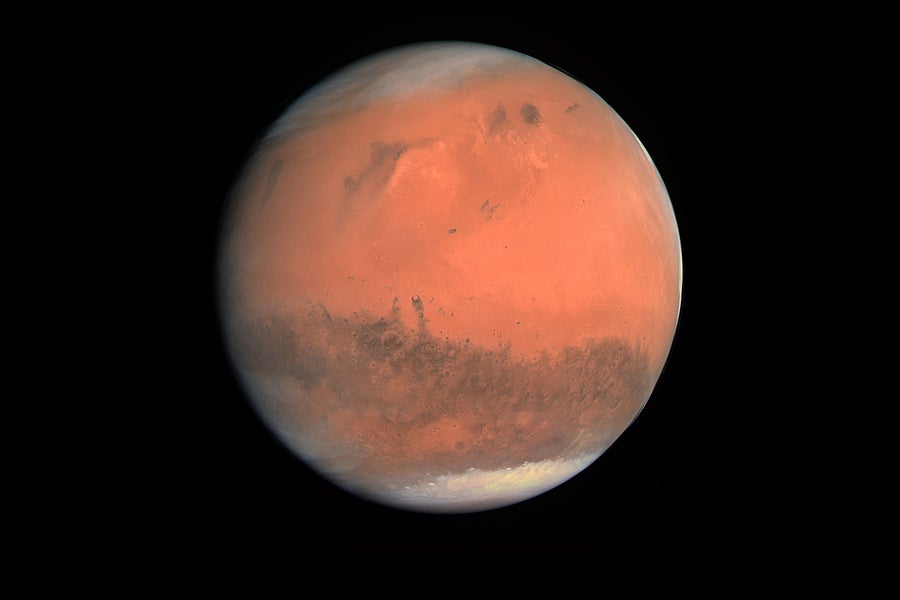
Using data collected by NASA’s InSight Lander, researchers have detected what might be a massive reservoir deep beneath the Martian surface.
ESA & MPS for OSIRIS Team MPS/UPD/LAM/IAA/RSSD/INTA/UPM/DASP/IDA (CC BY-SA 3.0 IGO)
.
.
Click the link below for the article:
.
__________________________________________
August 18, 2024
Mohenjo
Business, Food For Thought, Human Interest, Political, Science, Technical
amazon, business, Business News, current-events, Future, Hotels, human-rights, medicine, mental-health, research, Science, Science News, technology, Technology News, travel, vacation

Click the link below the picture
.
I hate doing the laundry, which is why I usually send mine out with a service to avoid it altogether. Sometimes, that’s just not possible, though, and I find myself with the boring task of washing and folding a ton of clothes. I don’t believe in needless suffering, so I’ve invested some time and money into making this neverending task less tedious and miserable. Here are some products that help make your laundry day more efficient.
Rethink your hamper
I’ve talked about this before, but you need a hamper upgrade. You need one with wheels (or at least a shoulder strap of some kind) so you can take the laundry to the machine with ease, whether it’s in another room or down the street at a laundromat. Ideally, you should also get one with sections, so you can sort by color, family member, or type of clothing. Overall, look for something like this:
Get tools to help with the job
Keeping your clothes in order and getting them to the machine easily is just the first step toward doing the laundry more efficiently. What you use while actually washing the clothes is also important. My first recommendation is the SockDock, which I’ve had for about two years and has completely cut out the stress of matching my socks up after a wash.
It’s really basic: It’s a stretchy cord on a foot-shaped hook that has dividers along it. I keep mine by the hamper and put each pair of socks I take off right into one of the spaces along the cord. The entire device gets popped in the wash and the socks stay stuck together while they’re in there, so when you pull it out, they’re already in pairs. The time this saves after each wash is significant.
There are other ways to keep your socks in order while you wash, like individual sock clips ($17.90 for 20) or mesh bags ($19.79 for four bags with seven compartments each). I prefer the SockDock because it’s not fussy; I just clip the socks to it, and I’m done without having to zip a bunch of compartments. Still, the mesh bags are handy for a variety of things including and beyond socks, like intimates, headbands, sleep masks, bonnets, scrunchies, or any other small fabric items you need to wash.
Speaking of mesh bags, consider this one that’s specially designed for shoes. Washing shoes can be stressful because they bang around in the machine, which is noisy and can be damaging to both your footwear and your appliances. Use this bag instead, since it attaches to the inside of the washer’s door, stopping the shoes from getting tossed around in there.
Another option is these really fluffy bags that keep the shoes and washing machine safe by surrounding them in padding ($29.99). With these, the shoes still fly around in there, but it won’t hurt your machine. And while you’re at it, pick up this special cage to wash baseball caps ($9.99). It’s shaped just like a hat, so it helps them keep their shape while they’re tumbling through the machines. I’ve been using these since I was a kid and the design hasn’t changed much in 30 years, but that’s just because when something isn’t broken, you don’t need to fix it.
.

Credit: Images courtesy of Amazon
.
.
Click the link below for the article:
.
__________________________________________
August 17, 2024
Mohenjo
Business, Food For Thought, Human Interest, Political, Science, Technical
amazon, business, Business News, current-events, Future, Hotels, human-rights, medicine, mental-health, research, Science, Science News, technology, Technology News, travel, vacation
Click the link below the picture
.
All living organisms are made of cells, which are the smallest unit of life. Plants and animals have up to trillions of cells that work together to produce ever more intricate organization and function. Within cells are organelles, or little organs, that do specific jobs. Plant and animal cells have mitochondria, for example, which generate energy, and a nucleus that contains most of the genetic information and acts as a control center. These well-known organelles are enclosed within membranes that maintain their shape and separate them from the cytoplasm, the fluid that fills the cells.
But this textbook account of cells, with its neat division of labor into tidy membrane-bound packages, is incomplete. Not all organelles have membranes, and over the past decade, biologists have come to realize that membraneless organelles—such as tiny droplets of concentrated protein or other biomolecules—may be more plentiful and carry out more diverse tasks in cell function than was previously realized. Scientists call these droplets biomolecular condensates, an analogy to the droplets of water that condense on a cold glass of water on a humid day.
Their physics is somewhat of a mystery. Why don’t these little workers need walls to keep them contained, and how do they keep their elements separate from the cytoplasm around them? By understanding how condensates form and operate, we hope to finally figure out what they do.
This research is still emerging, but scientists think the droplets play vital roles related to gene regulation, cell division, and the transportation of materials within cells. There are even hints that biomolecular condensates are important in cellular processes related to human diseases, including amyotrophic lateral sclerosis (ALS) and other neurodegenerative disorders. So far, however, most of the evidence about biomolecular condensates comes from test tube experiments. In the coming years, researchers aim to understand how these droplets act in the more complex environment of a living cell. As we continue to discover new types of condensates and uncover new clues about their purposes, we hope we might even find a universal theory that will describe them all.
Under a microscope, biomolecular condensates look like tiny objects adrift in a sea of cytoplasm packed with organelles and other structures. Though suspended in this liquid, they act like a liquid themselves—they’re spherical in shape and deformable when poked with a micropipette. When two droplets come into contact, they merge into one. The recent discoveries about their possible biological significance have generated interest in how biomolecular condensates form. To a biophysicist like me, this looks like a question of thermodynamics.
Thermodynamics is the branch of physics concerned with the relationship between heat and other forms of energy. Its principles apply to everything from chemical reactions to meteorology. For our purposes, thermodynamics describes liquid-liquid phase separation—the division of a fluid into two compartments (or phases) with different concentrations and compositions. A classic example is oil and water. If I pour oil into a glass of water, at first the two fluids will mix somewhat. After several minutes, however, they will separate and form two phases: one that is enriched with oil and very little water and another that contains water and very little oil. In contrast, a case where entropy wins is the combination of milk and coffee, which become well mixed.
Thermodynamics tells us that this phase separation results from a competition between entropy and energy. Entropy is the amount of disorder in a system; it favors a uniform mixture of oil and water. Energy includes the energy contained in chemical bonds within each molecule, as well as the energy of interactions between molecules. In this case, the energy for oil molecules to interact with one another is lower than the energy for molecules of oil and water to interact, which drives the oil and water to split into distinct layers. The reduction of energy in the interactions between molecules outweighs the opposing contribution from entropy to stay evenly mixed.
.
 coldsnowstorm/Getty Images
.
.
Click the link below for the article:
.
__________________________________________
August 17, 2024
Mohenjo
Business, Food For Thought, Human Interest, Political, Science, Technical
amazon, business, Business News, current-events, Future, Hotels, human-rights, medicine, mental-health, research, Science, Science News, technology, Technology News, travel, vacation

Click the link below the picture
.
It was a grainy video, autoplaying in my Facebook feed, that first grabbed my attention. It seemed vaguely familiar — like a home movie from my childhood in suburban Boston but without the main characters, leaving only a warm, generic 1980s ambience. In the clip, kids in wide-collared shirts amble around a school cafeteria with burgers, tater tots, and little square boxes of chocolate milk served by lunch ladies in those big buglike eyeglasses my grandmother used to wear. The video ended after about two minutes. Next, I watched a street glide by from the window of a moving vehicle: Kenmore Square, Boston, January 1977. The camera panned across storefronts — Strawberries, Paperback Booksmith, College Donuts — but I didn’t recognize anything until it zoomed out and the famous Citgo sign was revealed, perched atop the building where it still sits today.
Discovering these videos felt like time-traveling back to some precise moment when nothing of note happened. They are just short, contextless clips of old B-roll — the background film cut into broadcasts to break up the main footage — culled from the collections of WGBH, a 69-year-old Boston public-television station. In 2018, James Auclair, a station employee, began regularly posting the videos to social media. They infiltrated my own Facebook algorithm in the fall of 2023, which, it turns out, was just when I needed them. That August, I eagerly applied for a dream-job faculty position at a university, and I knew I was in for months of consistent, nagging anxiety about my professional future. When I came across the footage Auclair was posting under the handle GBH Archives (they dropped the “W” a few years ago), I was hooked: Here, finally, was a reprieve from the swirl of negative thoughts in my head.
I’ve devoured, by now, countless hours of B-roll. I’ve watched shoppers peruse CDs at the long-shuttered Tower Records on Newbury Street in the ’90s, transporting me back to Saturdays in high school when my friends and I browsed the rap and hip-hop racks for hours. Cars as big as boats — station wagons, sedans, and vans like my parents drove — roll over the Tobin Bridge in 1979; drivers reach out their arms to pass cash and coins to toll attendants. I’ve watched ice skaters gliding over the frozen Charles River in the late ’70s and hairsprayed teenagers in leather and oversize sweaters smoking cigarettes outside their high school in the ’80s.
I’m not the only one hooked on these B-roll clips: YouTube is full of “retro B-roll” material, and GBH Archives alone has more than 200,000 combined followers on Facebook, X, and Instagram. For some viewers, the appeal is pure nostalgia — many comment wistfully on the absence of cellphones or the predominance of suits and ties, and dresses. Others note changes in the ever-evolving cityscape. Every so often, someone recognizes their younger self in a video.
What I love most is that the videos contain no narrative; they feel like ambient music — hypnotic, meditative. Rather than tell you what to think or fear, they just show you things. There’s a funny intellectual twist here: Television is an entertainment medium, and the primary purpose of these B-roll clips was to keep viewers visually engaged so they wouldn’t get bored watching a single shot of a newscaster talking. Watching this remediated B-roll subverts that purpose. There are no quick shots and snappy edits, no breaking news alerts or sensational chyrons, just slow and boring slices of life. Where the format of television news can crowd out thought, these videos create space for it.
.
 Photo illustration by Karl Russell Vickers
.
.
Click the link below for the article:
.
__________________________________________
August 16, 2024
Mohenjo
Business, Food For Thought, Human Interest, Political, Science, Technical
amazon, business, Business News, current-events, Future, Hotels, human-rights, medicine, mental-health, research, Science, Science News, technology, Technology News, travel, vacation
Click the link below the picture
.
When tropical meteorologists peer at satellite images, they often catch sight of subtle cloud formations hinting at something more ominous brewing.
The first signs of a potential hurricane can be detected days before a storm gains its fierce momentum. Wispy cirrus clouds radiating outward, the appearance of curved banding low-level clouds, and a drop in atmospheric pressure are all clues.
These early clues are crucial for predicting the onset of what might develop into a catastrophic hurricane.
I am a meteorology professor at Penn State, and my research group uses satellites and computer models to improve forecasting of tropical weather systems. With an especially fierce Atlantic storm season forecast for 2024, being able to detect these initial signals and provide early warnings is more important than ever. Here’s what forecasters look for.
Conditions ripe for a hurricane
Hurricanes typically start as atmospheric tropical waves, areas of low pressure associated with clusters of thunderstorms. As these tropical waves move westward across tropical oceans, some of them can develop into hurricanes.
The formation of a hurricane hinges on several specific conditions:
Distance from the Equator: Tropical cyclones usually form at least 5 degrees from the equator. This is because the Coriolis force, crucial for the initial spin-up of the cyclonic system, is weaker near the equator. The Coriolis force is caused by the Earth’s rotation, which makes moving air turn and swirl.
Warm sea surface temperatures: The sea surface temperature must be at least 26.5 degrees Celsius (about 80 Fahrenheit)for a hurricane to form. The warm water provides energy that drives the storm as the storm absorbs heat and moisture from the ocean.
Atmospheric instability and moisture: For tropical cyclones to form, the atmosphere needs to be unstable. This means that warm surface air rises and remains warmer than the surrounding air, allowing it to keep rising and forming thunderstorms. There also needs to be plenty of moisture, as dry air can cause clouds to evaporate and weaken the upward motions within thunderstorms. These factors are essential for the development of clustered thunderstorms within the tropical waves.
Low vertical wind shear: Strong vertical wind shear can tear a developing hurricane apart. Vertical wind shear is changes in wind direction or speed at different elevations. It disrupts a storm’s formation and growth and makes it hard for a hurricane to keep its vortex aligned.
Early forecasting requires more than satellites
Recognizing the early stages in the life cycle of a hurricane has been very challenging because there aren’t large numbers of surface stations and weather balloons to provide detailed atmospheric information over the open ocean.
.
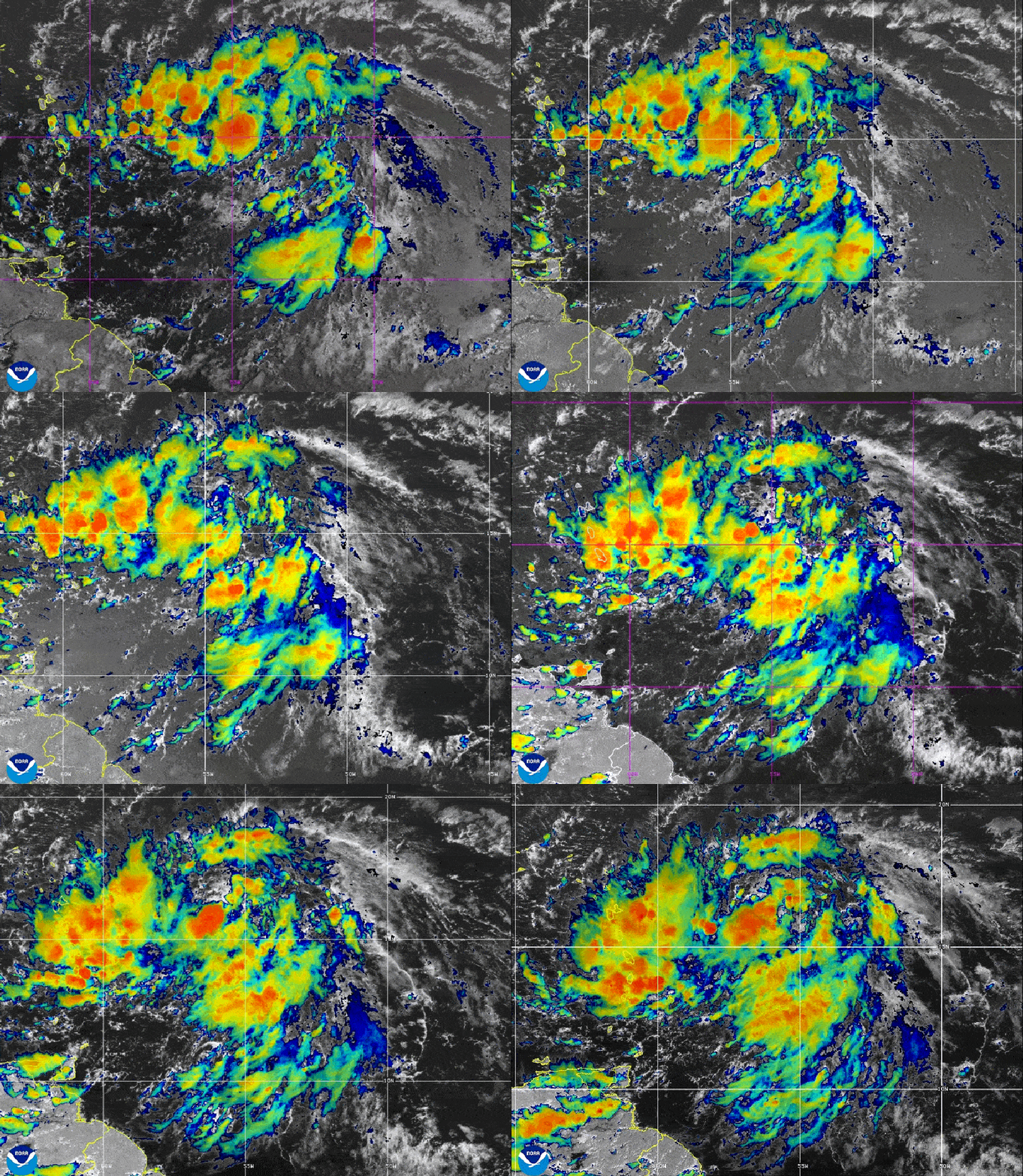
On August 12, 2024, forecasters were watching for signs that Potential Tropical Cyclone Five would develop into a hurricane. Later that day, it became Tropical Storm Ernesto and was forecast to become a hurricane later in the week. NOAA/NESDIS/STAR – GOES-East
.
.
Click the link below for the article:
.
__________________________________________
August 16, 2024
Mohenjo
Business, Food For Thought, Human Interest, Political, Science, Technical
amazon, business, Business News, current-events, Future, Hotels, human-rights, medicine, mental-health, research, Science, Science News, technology, Technology News, travel, vacation

Click the link below the picture
.
As with football or violin practice, young people could gain versatile life skills through routine contemplative training
When I was a child, I was introduced to contemplative practices that changed my life. Starting in the fourth grade, I regularly walked to my grandmother’s house after school. I vividly recall walking along the streets of that neighborhood, watching squirrels scurry up and down giant pine trees. When I arrived at her house, my grandmother greeted me at the side door and the two of us sat at her kitchen table to enjoy a snack and glass of juice. After small talk about my day, we went upstairs into the ‘blue room’, named because it was painted pale azure, where I laid down. Surrounded by walls of clear daytime sky, she guided me to close my eyes, rest my body, and enter new imaginal worlds.
Over time, drawing from her years of personal practice, she taught me how to calm my body with my breath, focus my attention on a chosen image or sensation, and mobilize my imagination. Forty years later, my appreciation for these fundamental life skills runs deep and, as a researcher, I seek to understand how contemplative practices such as these work so that others can derive their rewards too.
Contemplation, in this sense, refers to a diverse suite of practices and emergent experiences born from the capacity of the human mind to know itself – a feature shared with a few animals, including chimpanzees, bottlenose dolphins, and magpies – but, more so, from the mind’s ability to transform itself. Contemplative practices harness this capacity to transform and enhance individuals, communities, and lived worlds (including social, cultural, and ecological worlds). Across times and cultures, humans have devised a capacious repertoire of practices used to free the self from its felt confines, improve wellbeing, and access new knowledge about being human.
Contemplation is popularly associated with mindfulness and yoga, but it’s a big umbrella that covers many other practices, including techniques to cultivate prosocial emotions (such as compassion), to use the imagination to shape perceptions, to appraise and analyze critical topics, to contextualize the self within broader contexts, and to push the body and mind to total exaltation. By refining skills such as attentional balance, emotional regulation, empathic response, perspective-taking, and bodily awareness, practices of contemplation help us navigate and modulate the human experience.
Historically, practices of contemplation were inextricable from the rest of life, including its cultural, philosophical, cosmological, and religious dimensions. But since at least the 16th century in the West, due to the systematic rupture with traditions of contemplation, cultural attitudes towards contemplation have gotten skewed. It has consequently been marginalized in many societies, and people have grown estranged from it. To be estranged from contemplation means to no longer recognize your ability to apply specific practices designed to transform and enhance your life – the ability to which my grandmother opened my eyes.
.
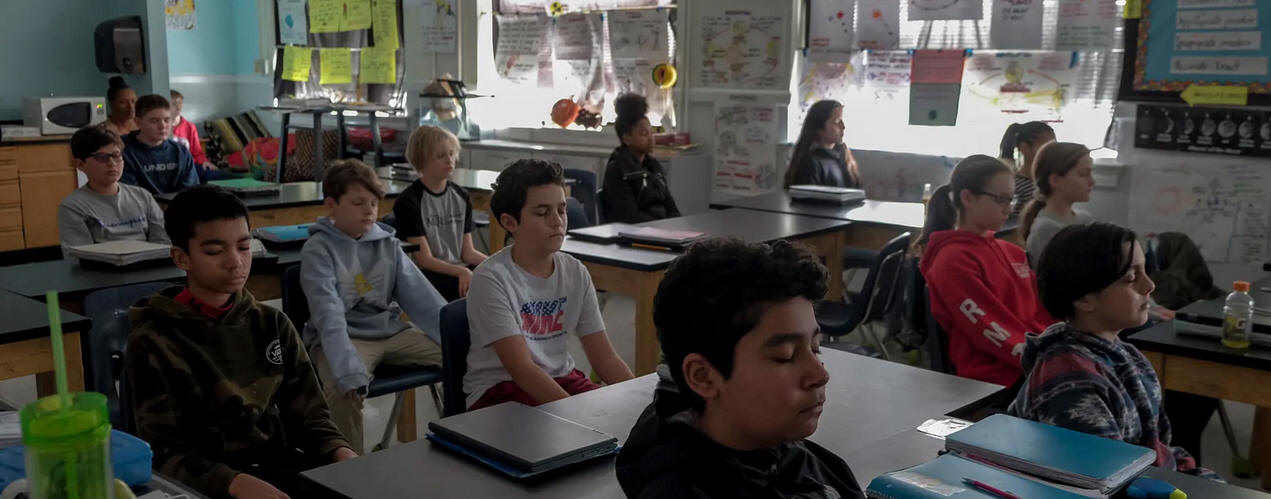 George Washington Middle School in Alexandria, Virginia, February 2020. Photo by Jahi Chikwendiu/The Washington Post/Getty
.
.
Click the link below for the article:
.
__________________________________________
August 15, 2024
Mohenjo
Business, Food For Thought, Human Interest, Political, Science, Technical
amazon, business, Business News, current-events, Future, Hotels, human-rights, medicine, mental-health, research, Science, Science News, technology, Technology News, travel, vacation
Click the link below the picture
.
The brain is a mere piece of furniture in the vastness of the cosmos, subject to the same physical laws as asteroids, electrons, or photons. On the surface, its three pounds of neural tissue seem to have little to do with quantum mechanics, the textbook theory that underlies all physical systems, since quantum effects are most pronounced on microscopic scales. Newly proposed experiments, however, promise to bridge this gap between microscopic and macroscopic systems, like the brain, and offer answers to the mystery of consciousness.
Quantum mechanics explains a range of phenomena that cannot be understood using the intuitions formed by everyday experience. Recall the Schrödinger’s cat thought experiment, in which a cat exists in a superposition of states, both dead and alive. In our daily lives, there seems to be no such uncertainty—a cat is either dead or alive. But the equations of quantum mechanics tell us that at any moment the world is composed of many such coexisting states, a tension that has long troubled physicists.
Taking the bull by its horns, the cosmologist Roger Penrose in 1989 made the radical suggestion that a conscious moment occurs whenever a superimposed quantum state collapses. The idea that two fundamental scientific mysteries—the origin of consciousness and the collapse of what is called the wave function in quantum mechanics—are related, triggered enormous excitement.
Penrose’s theory can be grounded in the intricacies of quantum computation. Consider a quantum bit, a qubit, the unit of information in quantum information theory that exists in a superposition of a logical 0 with a logical 1. According to Penrose, when this system collapses into either 0 or 1, a flicker of conscious experience is created, described by a single classical bit.
Penrose, together with anesthesiologist Stuart Hameroff, suggested that such collapse takes place in microtubules, tubelike, elongated structural proteins that form part of the cytoskeleton of cells, such as those making up the central nervous system.
These ideas have never been taken up by the scientific community as brains are wet and warm, inimical to the formation of superpositions, at least compared to existing quantum computers that operate at temperatures 10,000 times colder than room temperature to avoid destroying superposition states.
Penrose’s proposal suffers from a flaw when applied to two or more entangled qubits. Measuring one of these entangled qubits instantaneously reveals the state of the other one, no matter how far away. Their states are correlated, but correlation is not causation, and, according to standard quantum mechanics, entanglement cannot be employed to achieve faster-than-light communication. However, per Penrose’s proposal, qubits participating in an entangled state share a conscious experience. When one of them assumes a definite state, we could use this to establish a communication channel capable of transmitting information faster than the speed of light, a violation of special relativity.
.
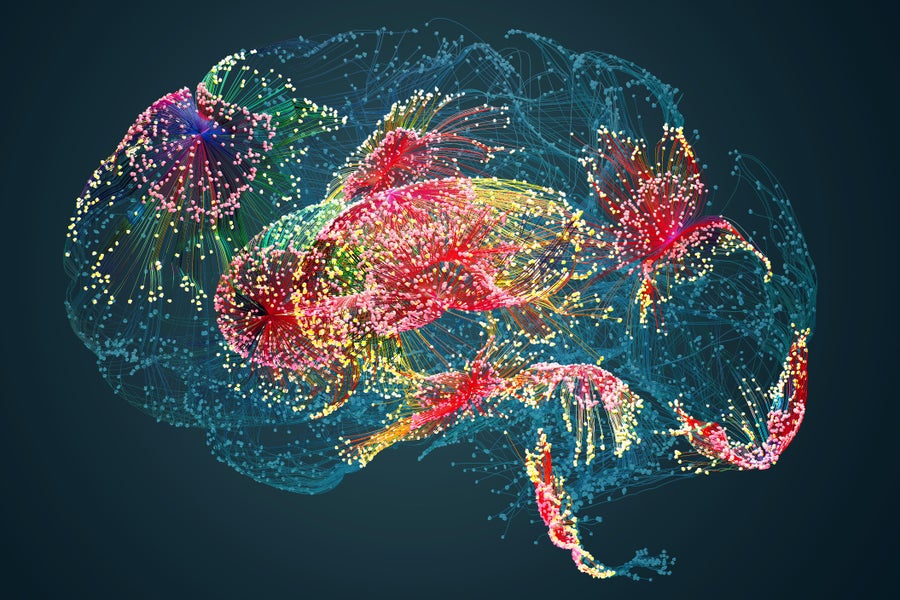 nopparit/Getty Images
.
.
Click the link below for the article:
.
__________________________________________
August 15, 2024
Mohenjo
Business, Food For Thought, Human Interest, Political, Science, Technical
amazon, business, Business News, current-events, Future, Hotels, human-rights, medicine, mental-health, research, Science, Science News, technology, Technology News, travel, vacation

Click the link below the picture
.
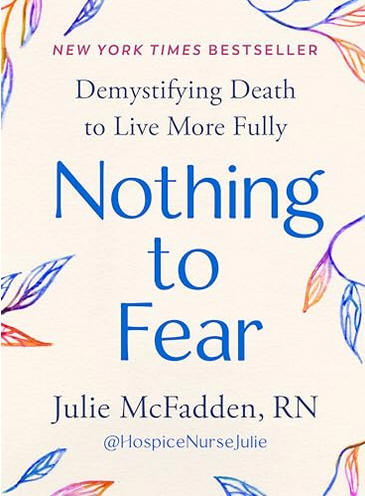
There are some people who just know when they’re going to die. I don’t know how they know, but they know. There are others who even seem to choose when they’ll die. Of course, not everyone appears to have control over their time of death, but when they do, I often see one of three things happen:
- The person waits to die until every last one of their family members or friends arrives to be present with them.
- The person waits to die until every last family member or friend leaves the room or the house.
- The person waits to die until after a milestone has occurred.
All of these scenarios are so common in my experience, and I’ve seen each of them play out many, many times. Let’s take a closer look at them.
The Person Dies When Everyone Has Arrived
Sometimes a person will wait until all of their loved ones have flown or driven in from other places to say goodbye before they die. Or they’ll wait for every person to be physically present in the room with them, and then they’ll let go. This most often happens with a person who’s social and extroverted, who thrives off the energy of others.
Rachel had turned one hundred just five months before I met her when she came on hospice. At that time, a huge crowd of children, grandchildren, great-grandchildren, and even a few great-great-grandchildren gathered to celebrate the life of the family matriarch.
When I evaluated Rachel, it was very evident that she was in the stage of actively dying. All the signs were there. I saw it in the pallor of her skin. I heard it in her breathing. I noticed it in her lack of interest in or ability to eat food. The end was near.
“So,” I explained to Rachel’s two daughters who were in the home when I stopped by to do the admission. “What I’m seeing is that she’s actively dying. That means that in the next few days, she’ll die. So whoever needs to be here, get them here.”
Nodding, the sisters, who were in their seventies, agreed to mobilize everyone who’d want to come and say goodbye to Rachel.
Rachel had turned one hundred just five months before I met her when she came on hospice. At that time, a huge crowd of children, grandchildren, great-grandchildren, and even a few great-great-grandchildren gathered to celebrate the life of the family matriarch.
When I evaluated Rachel, it was very evident that she was in the stage of actively dying. All the signs were there. I saw it in the pallor of her skin. I heard it in her breathing. I noticed it in her lack of interest in or ability to eat food. The end was near.
“So,” I explained to Rachel’s two daughters who were in the home when I stopped by to do the admission. “What I’m seeing is that she’s actively dying. That means that in the next few days, she’ll die. So whoever needs to be here, get them here.”
Nodding, the sisters, who were in their seventies, agreed to mobilize everyone who’d want to come and say goodbye to Rachel.
.
.
.
Click the link below for the article:
.
__________________________________________
August 14, 2024
Mohenjo
Business, Food For Thought, Human Interest, Political, Science, Technical
amazon, business, Business News, current-events, Future, Hotels, human-rights, medicine, mental-health, research, Science, Science News, technology, Technology News, travel, vacation
Click the link below the picture
.
Setting an alarm for 4:00 A.M. on August 14 is a big ask, but the payoff will be worth it: Mars and Jupiter will shine like a double star in the sky. And if you’re lucky, you’ll also see a few Perseid meteors at the same time.
All the major planets in the solar system orbit the sun in roughly the same plane, which, as seen from Earth, means they follow an imaginary line in the sky called the ecliptic. They all move at different speeds around our star, so sometimes we see one lapping another, with the two appearing close together for a short time.
Such an event is commonly called a conjunction (though “appulse” is the more technically correct term, if you want to impress people at parties). Most times the planets pass relatively far apart, but during the early morning of August 14 in the Americas, Europe, and Africa, Mars and Jupiter will be a mere third of a degree apart in the sky: less than the apparent size of the full moon. (In Australia and much of Asia, this will occur on the morning of August 15.) This is a rare treat that’s worth getting up early for.
The conjunction is a slow process that will take many days, and even closest approach will last for many hours. The best time to see it will be from 3 to 4 A.M. wherever your location is (assuming you live in the midlatitudes) because that’s when the sky is still dark and the planets are high enough in the sky to see clearly.
You won’t need any fancy equipment to see it, either. Just go outside before sunrise while the sky is still dark, find a spot with a relatively clear horizon to the east, and look up. Jupiter will be the brightest “star” in the sky, 30 degrees above the horizon (which is roughly three times the size of your fist at arm’s length). Mars will be very close to it, a red spark next to Jupiter’s more brilliant white appearance.
If you could witness this from high above the solar system, you’d see Earth, Mars, and Jupiter in very nearly a perfectly straight line (technically called a syzygy, which is fun to say out loud). In reality, the two outer planets are quite far apart; Jupiter is 800 million kilometers from Earth while Mars is a mere 230 million km. Despite Mars being far closer to us, Jupiter is so much larger physically and more reflective of sunlight that the gas giant will appear 15 times brighter.
If you do have binoculars handy, you can also spot Jupiter’s four largest moons—Io, Europa, Callisto, and Ganymede (itself larger than the planet Mercury)—all lined up on either side of the planet. A small telescope will also reveal broad stripes across Jupiter, which represent darker and lighter wind patterns that wrap all the way around the planet.
Mars and Jupiter will appear close together for some time before and after August 14. On such occasions, I like to go out a night or two early so I can appreciate the approach as the two planets slowly close the gap between them in the sky night after night.
.
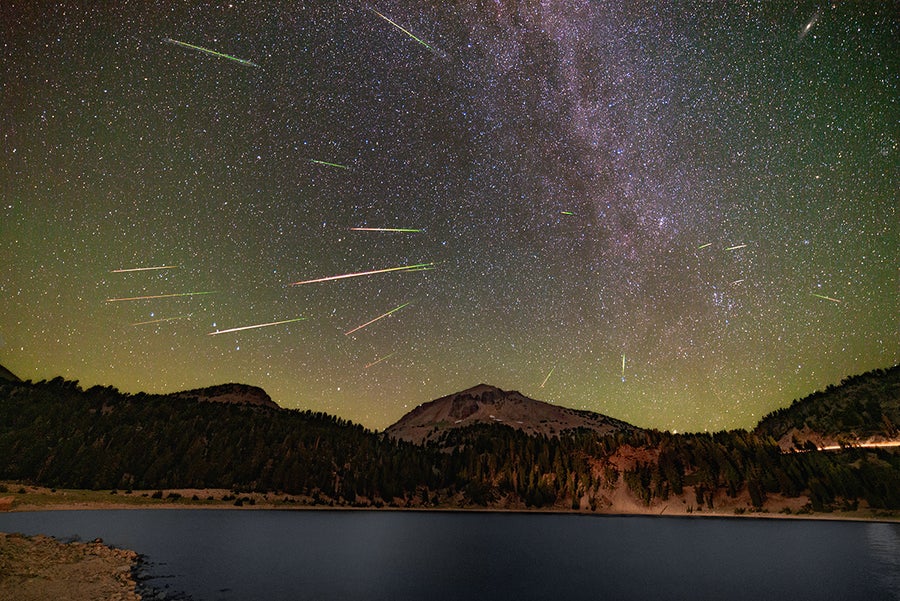
Perseid meteor shower over Lassen Volcanic National Park in California. Jerry Hamblen/Getty Images
.
.
Click the link below for the article:
.
__________________________________________
Older Entries
Newer Entries
 James' World 2