August 23, 2024
Mohenjo
Business, Food For Thought, Human Interest, Political, Science, Technical
amazon, business, Business News, current-events, Future, Hotels, human-rights, medicine, mental-health, research, Science, Science News, technology, Technology News, travel, vacation

Click the link below the picture
.
It’s a rite of passage for men. You’re in your 40s, you’re at your annual checkup, and suddenly you hear the snap of a rubber glove. The doctor slathers on some lube and tells you to bend over. Boom—a finger right up your butthole.
The digital rectal exam, or DRE, has long been used to screen for signs of prostate cancer—the most common non-skin cancer in men, killer of over 30,000 a year. Most men understand that’s important. We may even know fathers or uncles or friends who’ve suffered from prostate cancer. But it’s still a little bit of a shock to be probed so intimately by a person you only see once a year, at most. The DRE is so infamous a procedure that it’s turned into a kind of folk knowledge, a proto-meme every guy hears about long before it happens to him. It’s the subject of uncomfortable jokes in the locker room, in the examination room, and in Hollywood. Who can forget M. Emmet Walsh lubing up before enthusiastically plugging Chevy Chase in Fletch?
But at my most recent physical, my longtime primary care physician did not seem to be prepping for the probe. I’m pushing 50. When I asked—a little hesitantly—she told me that she’s phased out the DRE for her patients in favor of a blood test that, while not foolproof, is less likely to result in false-positive results. And she’s not the only one. I soon learned that thanks to a wave of research on the benefits of blood screening and the drawbacks of the digital exam, the DRE is nearing extinction as a screening tool. While I doubt anyone, doctor or patient, will miss the DRE, the test had so much mythology associated with it that its quiet death felt a little shocking. The doctor’s not gonna stick a finger up my butt anymore? All that for nothing?
“Before we had a really good blood test, the rectal exam was really the only way we had to screen the prostate for cancer,” Adam Weiner, a urologic oncologist at Cedars-Sinai in Los Angeles, told me. In the exam, the physician inserts a finger in a patient’s rectum and presses against the prostate from the back. “You’re looking for nodularity—a bump that’s firmer than the area around it,” Weiner said.
The day med students learn the DRE has long been “a special day,” as Weiner put it: “Nobody misses it, as you can imagine.” Paid medical actors serve as subjects as the students practice the test—not only the actual prostate exam but the bedside manner that makes the exam easier, specifically “what you’re saying and how you’re positioning the patient.”
Because prostate cancer is such a threat, for many years, screening with the DRE was a standard part of every primary care physician’s job. Daniel Stone, a PCP in Los Angeles, recalled one of his med school instructors telling a classmate who’d expressed distaste at the idea of a DRE, “If you don’t do the rectal exam, you’re the asshole.”
After doing such exams their whole career, doctors assured me, they do not find DREs onerous or particularly gross. Sure, they don’t love them—mostly because they make patients so nervous—but they’re fine. “My patients will often say, ‘Oh, I feel sorry for you, having to do that exam,’ ” Stone said. He reminds them that he’s been performing DREs for 30 years: “It’s like looking in your ears or your mouth,” he tells them.
That jocular sympathy expressed by patients is illustrative: The digital rectal exam just plain makes men nervous. Many try to defuse their anxiety with jokes in the exam room. “Probably a third of the men who get the exam say ‘Oh, my favorite part,’ ” Stone said. “That’s almost routine.” My PCP told me she often had men jokingly (but also not jokingly) note the smallness of her fingers. Though the discomfort of a DRE pales in comparison to what basically any woman endures in a garden-variety OB-GYN appointment, many men have long viewed the exam as a barely bearable indignity. I certainly heard it described this way by wincing older relatives, often accompanied by casual homophobia or a feeble joke about prison rape. (“Doc, you ever serve time?” Fletch cracks.)
.
 Illustration by Natalie Matthews-Ramo
.
.
Click the link below for the article:
.
__________________________________________
August 22, 2024
Mohenjo
Business, Food For Thought, Human Interest, Political, Science, Technical
amazon, business, Business News, current-events, Future, Hotels, human-rights, medicine, mental-health, research, Science, Science News, technology, Technology News, travel, vacation

Click the link below the picture
.
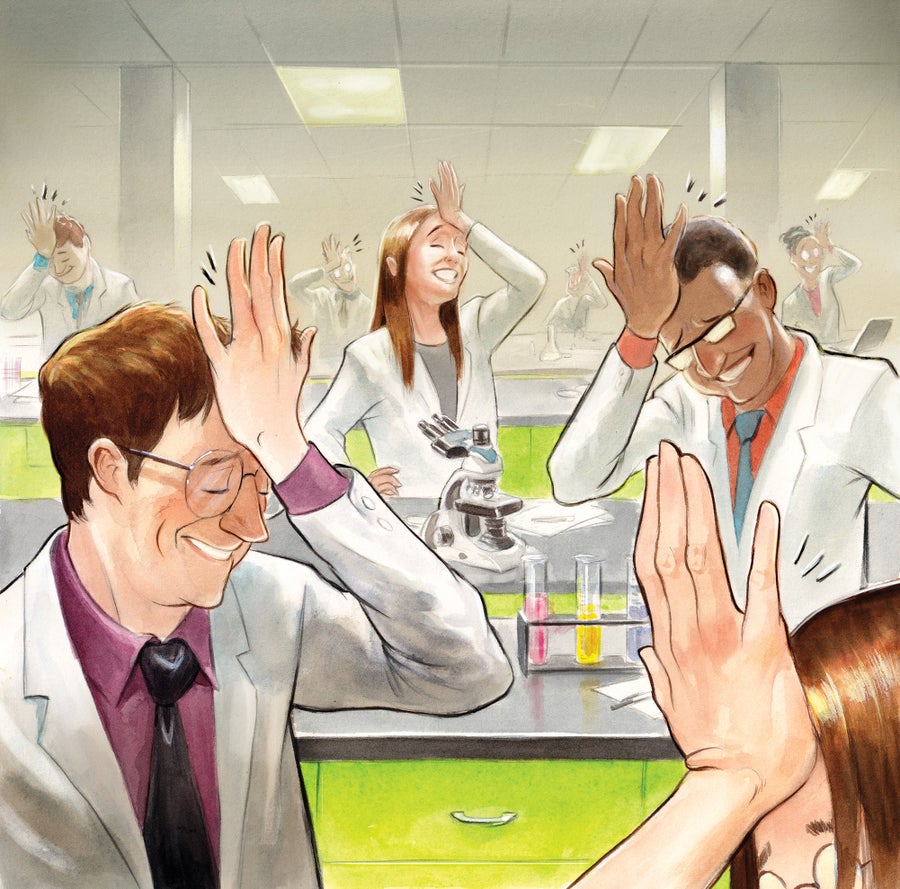
Many traits that are expected of scientists—dispassion, detachment, prodigious attention to detail, putting caveats on everything, and always burying the lede—are less helpful in day-to-day life. The contrast between scientific and everyday conversation, for example, is one reason that so much scientific communication fails to hit the mark with broader audiences. (One observer put it bluntly: “Scientific writing is all too often … bad writing.”) One aspect of science, however, is a good model for our behavior, especially in times like these, when so many people seem to be sure that they are right and their opponents are wrong. It is the ability to say, “Wait—hold on. I might have been wrong.”
Not all scientists live up to this ideal, of course. But history offers admirable examples of scientists admitting they were wrong and changing their views in the face of new evidence and arguments. My favorite comes from the history of plate tectonics.
In the early 20th century German geophysicist and meteorologist Alfred Wegener proposed the theory of continental drift, suggesting that continents were not fixed on Earth’s surface but had migrated widely during the planet’s history. Wegener was not a crank: he was a prominent scientist who had made important contributions to meteorology and polar research. The idea that the now separate continents had once been somehow connected was supported by extensive evidence from stratigraphy and paleontology—evidence that had already inspired other theories of continental mobility. His proposal did not get ignored: it was discussed throughout Europe, North America, South Africa and Australia in the 1920s and early 1930s. But a majority of scientists rejected it, particularly in the U.S., where geologists objected to the form of the theory and geophysicists clung to a model of Earth that seemed to be incompatible with moving continents.
In the late 1950s and 1960s the debate was reopened as new evidence flooded in, especially from the ocean floor. By the mid-1960s some leading scientists—including Patrick M. S. Blackett of Imperial College London, Harry Hammond Hess of Princeton University, John Tuzo Wilson of the University of Toronto and Edward Bullard of the University of Cambridge—endorsed the idea of continental motions. Between 1967 and 1968 this revival began to coalesce as the theory of plate tectonics.
Not, however, at what was then known as the Lamont Geological Laboratory, part of Columbia University. Under the direction of geophysicist Maurice Ewing, Lamont was one of the world’s most respected centers of marine geophysical research in the 1950s and 1960s. With financial and logistical support from the U.S. Navy, Lamont researchers amassed prodigious amounts of data on the heat flow, seismicity, bathymetry and structure of the seafloor. But Lamont under Ewing was a bastion of resistance to the new theory.
It’s not clear why Ewing so strongly opposed continental drift. It may be that having trained in electrical engineering, physics and math, he never really warmed to geological questions. The evidence suggests that Ewing never engaged with Wegener’s work. In a grant proposal written in 1947, Ewing even confused “Wegener” with “Wagner,” referring to the “Wagner hypothesis of continental drift.”
And Ewing was not alone at Lamont in his ignorance of debates in geology. One scientist recalled that in 1965 he personally “was only vaguely aware of the hypothesis” [of continental drift] and that colleagues at Lamont who were familiar with it were mostly “skeptical and dismissive.” Ewing was also known to be autocratic; one oceanographer called him the “oceanographic equivalent of General Patton.” It wasn’t an environment that encouraged dissent.
One scientist who did change his mind was Xavier Le Pichon. In the spring of 1966 Le Pichon had just defended his Ph.D. thesis, which denied the possibility of regional crustal mobility. After seeing some key data at Lamont—data that had been presented at a meeting of the American Geophysical Union just that week—he went home and asked his wife to pour him a drink, saying, “The conclusions of my thesis are wrong.”
.
 Scott Brundage
.
.
Click the link below for the article:
.
__________________________________________
August 22, 2024
Mohenjo
Business, Food For Thought, Human Interest, Political, Science, Technical
amazon, business, Business News, current-events, Future, Hotels, human-rights, medicine, mental-health, research, Science, Science News, technology, Technology News, travel, vacation

Click the link below the picture
.
Last year, a 28-year-old E.R. nurse named Tristin Smith took her own life. Her father found a note among her effects, titled Letter to My Abuser. “Ever since I was young, I expressed interest in healthcare,” she wrote. “I gave my heart, my body, and my mind to you.” But as “unnecessary” support staff was cut, the quality of care plummeted. Requests for more resources were met with online training sessions telling nurses “to just smile more and be friendlier to patients.” Instead of receiving the “support we deserve, we get a pizza party and free pens for the ‘healthcare heroes.’” Her disillusionment deepened: “You use and exploit us to line your pockets, using the common citizen’s money for overpriced healthcare.” For me, as an emergency physician, Tristin’s words ring with startling clarity. I know firsthand the challenges of constantly doing more with less. I recognize the surreal disorientation of having real needs met with empty gestures, like free pens or a hospital potato. I have felt that the systems in which I work no longer value me, or the patients whom I treat. But the most astute aspect of Tristin’s letter is the culprit she points to for these problems: an obscenely expensive health care system that values profit above all else, to the detriment of patients and providers alike.
We in the medical profession are all, to varying degrees, like Tristin. A survey of over 12,000 physicians released last month by the American Medical Association found that 48 percent of them had at least one symptom of burnout. Another survey last month found that nearly two-thirds of physicians would not recommend a career in medicine to their children. It’s not just physicians, of course: Health care providers of all kinds are burned out and considering leaving their jobs. “That’s a disaster for a system that is already struggling to fill critical roles,” said L. Casey Chosewood, an official at the National Institute for Occupational Safety and Health, NIOSH.
This is a massive problem not only for our health care system but for every single person in America who depends on it. Burnout is associated with medical errors and malpractice litigation; hospital-acquired infections; and anxiety, depression, and suicidality among providers. Physicians with burnout are twice as likely to leave their jobs and five times more likely to quit medicine entirely, at an annual cost as high as $6 billion. For nurses, the annual cost of turnover related to burnout is estimated at $9 billion.
The pandemic clearly made burnout worse, for obvious reasons. But things aren’t improving, even though the acute crisis of Covid has passed. Why not?
There was a time when remedies for burnout in health care emphasized resilience and individual action. In 2021, at the height of the delta variant of Covid, I assessed my own level of burnout using a standard metric, the Maslach Burnout Inventory. No surprise: I was suffering from significant burnout. The MBI offered unhelpful suggestions like “step up self-care practices” and “attend presentations, meetings, and workshops on burnout.”
Fortunately, this attitude seems to be evolving. Last year, the U.S. surgeon general published a report that called for “systems-oriented, organizational-level solutions” over “individual-level support.” In November, NIOSH launched a new campaign to address burnout called Impact Wellbeing. Chosewood, whose office will coordinate the effort, acknowledged that resilience training was like a “Band-Aid on a gaping wound.” Instead, the campaign promises to help hospital leaders “address the systemic factors at the root of staff burnout.”
Directing attention toward the health care system itself is progress. But what are the systemic factors at the root of burnout? According to the National Academy of Medicine, they include excessive workload, longer working hours, inadequate staffing, insufficient time with patients, and high administrative task burden. I can attest that all of these contribute to burnout. However, these factors are only symptoms of a larger, more central problem.
.
 Gabrielle Lurie/The San Francisco Chronicle/Getty Images
.
.
Click the link below for the article:
.
__________________________________________
August 21, 2024
Mohenjo
Business, Food For Thought, Human Interest, Political, Science, Technical
amazon, business, Business News, current-events, Future, Hotels, human-rights, medicine, mental-health, research, Science, Science News, technology, Technology News, travel, vacation
Click the link below the picture
.
As I watched my parents’ generation reach their 80s, I was struck by the dramatic differences among them. A handful suffered from dementia, but many others remained cognitively sharp—even if their knees and hips didn’t quite keep up with the speed of their thoughts.
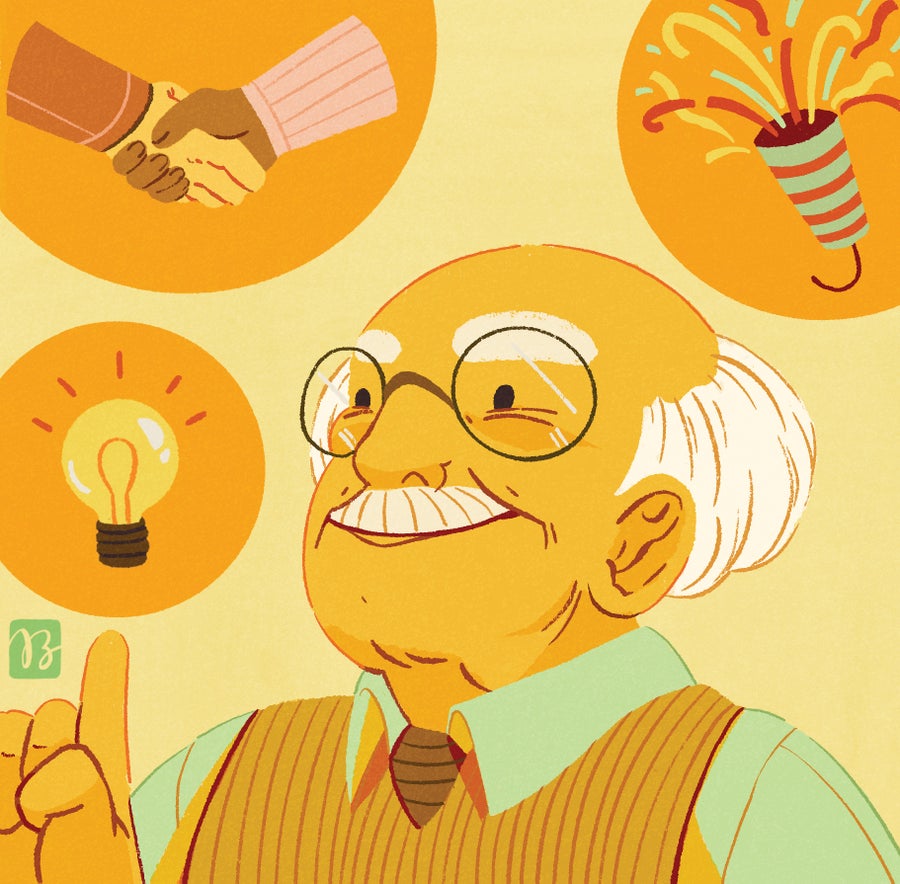
That observation runs counter to prejudices about aging, which were highlighted early in the 2024 presidential race between elderly candidates, but these biases permeate society in general. “The belief about old people is that they’re all kind of the same, they’re doddering, and that aging is this steady downward slope,” says psychologist Laura Carstensen, founding director of the Stanford Center on Longevity. That view, she says, is a great misunderstanding.
Instead, research highlights the very differences I noticed. In our 40s, most people are cognitively similar. Divergences in cognition appear around age 60. By 80 “it’s quite dramatically splayed out,” says physician John Rowe, a professor of health policy and aging at Columbia University’s Mailman School of Public Health. Yes, there will be a group diminished by dementia and cognitive decline, but in general the 80-somethings “include the wisest people on the planet,” Carstensen says.
Focusing on only those with poor brain health misses more than half the population. Rowe led research showing that in the six years after turning 75, about half of people showed little to no change in their physical, biological, hormonal and cognitive functioning, whereas the other half changed quite a lot. A longer-term study followed more than 2,000 individuals with an average age of 77 for up to 16 years. It showed that the three quarters who did not develop dementia showed little to no cognitive decline.
Some of this is related to genetics. Studies of successful aging have shown that genes account for 30 to 50 percent of physical and cognitive changes. But factors like a healthy way of life and good self-esteem are also consequential. So to an extent, Rowe says, “this is really good news because it means that you are, in fact, in control of your old age.”
Research has also busted the myth that there is no upside to aging past 70 or so. “We have found very clearly that there are things that improve with age,” Rowe says. The ability to resolve conflicts strengthens, for instance. Aging is also associated with more positive overall emotional well-being, which means older adults are more emotionally stable than younger adults, as well as better at regulating desires.
The normal aging process does bring changes to the brain, says Denise Park, a neuroscientist at the University of Texas at Dallas. There is some shrinkage in the frontal lobes and some damage to neurons and their connections. Cognitive processing slows down. Yet that slowdown is usually on the order of milliseconds and doesn’t always make a meaningful difference in daily life. And to compensate, older people activate more of the brain for tasks such as reading. “Older adults will often forge additional pathways” for particular activities, Park says. “Those pathways may not be as efficient as the pathways that younger adults use, but they nonetheless work.”
.
 Jay Bendt
.
.
Click the link below for the article:
.
__________________________________________
August 21, 2024
Mohenjo
Business, Food For Thought, Human Interest, Political, Science, Technical
amazon, business, Business News, current-events, Future, Hotels, human-rights, medicine, mental-health, research, Science, Science News, technology, Technology News, travel, vacation

Click the link below the picture
.
Since mindfulness is something you can practice at home for free, it often sounds like the perfect tonic for stress and mental health issues.
Mindfulness is a type of Buddhist-based meditation in which you focus on being aware of what you’re sensing, thinking, and feeling in the present moment.
The first recorded evidence for this, found in India, is over 1,500 years old. The Dharmatrāta Meditation Scripture, written by a community of Buddhists, describes various practices and includes reports of symptoms of depression and anxiety that can occur after meditation.
It also details cognitive anomalies associated with episodes of psychosis, dissociation, and depersonalization (when people feel the world is “unreal”).
In the past eight years, there has been a surge of scientific research in this area. These studies show that adverse effects are not rare.
A 2022 study, using a sample of 953 people in the US who meditated regularly, showed that over 10 percent of participants experienced adverse effects which had a significant negative impact on their everyday life and lasted for at least one month.
According to a review of over 40 years of research that was published in 2020, the most common adverse effects are anxiety and depression. These are followed by psychotic or delusional symptoms, dissociation or depersonalization, and fear or terror.
Research also found that adverse effects can happen to people without previous mental health problems, to those who have only had a moderate exposure to meditation and they can lead to long-lasting symptoms.
The western world has also had evidence about these adverse effects for a long time.
In 1976, Arnold Lazarus, a key figure in the cognitive-behavioural science movement, said that meditation, when used indiscriminately, could induce “serious psychiatric problems such as depression, agitation, and even schizophrenic decompensation”.
There is evidence that mindfulness can benefit people’s wellbeing. The problem is that mindfulness coaches, videos, apps, and books rarely warn people about the potential adverse effects.
Professor of management and ordained Buddhist teacher Ronald Purser wrote in his 2023 book McMindfulness that mindfulness has become a kind of “capitalist spirituality”.
.
(guruXOOX/Canva Pro)
.
.
Click the link below for the article:
.
__________________________________________
August 20, 2024
Mohenjo
Business, Food For Thought, Human Interest, Political, Science, Technical
amazon, business, Business News, current-events, Future, Hotels, human-rights, medicine, mental-health, research, Science, Science News, technology, Technology News, travel, vacation
Click the link below the picture
.
CLIMATEWIRE | Wind and solar generated more power than coal through the first seven months of the year, federal data shows, in a first for renewable resources.
The milestone had been long expected due to a steady stream of coal plant retirements and the rapid growth of wind and solar. Last year, wind and solar outpaced coal through May, before the fossil fuel eventually overtook the pair when power demand surged in the summer.
But the most recent statistics showed why wind and solar are on track in 2024 to exceed coal generation for an entire calendar year — with the renewable resources maintaining their lead through the heat of July. Coal generation usually declines in the spring months, due to falling power demand and seasonal plant maintenance, and picks up when electricity demand rises in the summer.
Renewables’ growth has been driven by a surge in solar production over the last year. The 118 terawatt-hours generated by utility-scale solar facilities through the end of July represented a 36 percent increase from the same time period last year, according to preliminary U.S. Energy Information Administration figures. Wind production was 275 TWh, up 8 percent over 2023 levels. Renewables’ combined production of 393 TWh outpaced coal generation of 388 TWh.
“I think it is an important milestone,” said Ric O’Connell, who leads GridLab, a clean electricity consulting firm. “I think you’re seeing a solar surge and a coal decline, and hence the lines are crossing.”
EIA previously reported that renewable generation eclipsed coal in 2020 and 2022 and then repeated the feat in 2023. But those figures notably included other resources, such as hydropower. Now, wind and solar are posed to overtake coal on their own. The pair accounted for 16 percent of U.S. power generation through July, slightly more than coal’s share of the power generation market.
The development comes at a time when the reliability of the electric grid is in the spotlight amid increasing power demand due to the growth of artificial intelligence, data centers, and more frequent and severe heat waves — which drive up air conditioning use. EIA statistics show electricity demand through the first seven months of the year was up 4 percent to 2,436 TWh through the end of July.
The growth in demand has been a boon for power generators. Nuclear generation was 459 TWh through July, a 3 percent increase helped by two new reactors in Georgia coming online within the last year. Hydro was up a slight 1 percent to 159 TWh. Gas has been particularly important for supplying additional demand, increasing 5 percent over 2023 levels to 987 TWh.
Mark Repsher, an analyst who tracks the power industry at PA Consulting Group, said the figures point to larger challenges facing the power grid. Additional power plants that can be turned on at the flip of a switch will be needed to meet demand, he said. The question is whether it will come from natural gas or zero-carbon resources, such as nuclear or geothermal.
“Renewables will continue to be a huge part of the industry, but I think there will be an inflection point where the incremental value of an additional megawatt-hour from renewables will be less than some other alternatives,” he said.
Others were less sure. The rapid growth of wind, solar, and batteries in Texas shows that renewables can be built quickly and stabilize the electric grid, said O’Connell. The state is “sailing through a crazy summer” thanks to record wind, solar, and battery output, he said.
Coal may yet hold off wind and solar with a strong five months to close 2024. But renewables are likely to overtake the former king of the power sector sooner rather than later.
The last coal plant built in the continental United States came online in 2013. American coal capacity then declined 38 percent over the following decade.
.
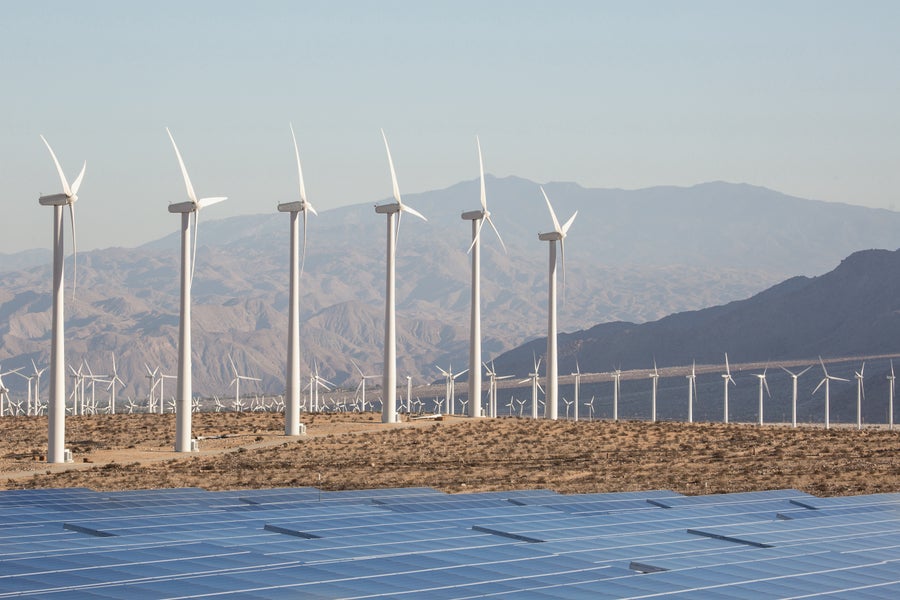
Wind turbines spin near rows of solar panels in the California desert. hinkreaction/Getty Images
.
.
Click the link below for the article:
.
__________________________________________
August 20, 2024
Mohenjo
Business, Food For Thought, Human Interest, Political, Science, Technical
amazon, business, Business News, current-events, Future, Hotels, human-rights, medicine, mental-health, research, Science, Science News, technology, Technology News, travel, vacation

Click the link below the picture
.
The human eye is a wondrous thing.
It is considered the body’s most complex organ after the brain and contains over 2 million working parts. About 80% of all learning happens through vision.
So how can we keep our eyes in tip-top condition? And what should we never do if we want them to stay as healthy as possible?
That’s what we — Raj Punjabi and Noah Michelson, the hosts of HuffPost’s “Am I Doing It Wrong?” podcast — asked Dr. Amanda Redfern, an ophthalmologist and assistant professor at Oregon Health & Science University’s Casey Eye Institute, when she recently dropped by our studio.
″[Sleeping with contact lenses in your eyes] is bad. It’s real bad. Don’t do it,” Redfern told us, adding that this even applies to naps. “It’s like a game of Russian roulette.”
That’s because you can get a corneal ulcer, which is an infection on part of the eye that a contact covers.
“It’s not going to happen every time, but when it happens, it’s terrible,” Redfern said. “It can be so bad you could, in really terrible cases, lose your eyeball.”
In less severe situations, Redfern said you could end up with a scar on your cornea.
“If that scar is in the center of your vision, that could affect your vision permanently, unless you get a corneal transplant,” she said.
Redfern also warned us not to engage in any activity that could cause lenses to become compromised or contaminated, including swimming in a pool or lake while wearing contacts or even showering with them.
“The problem with contact lenses is that it will sandwich bacteria between the lens and your cornea, and you can get infected and then have all the complications we talked about,” she said. “In general, we frown upon anything where your eye is going to expose to something nonsterile.”
That includes using tap water to rinse or store lenses.
When asked what she would suggest if someone were on vacation and forgot to bring contact lens solution, pushing them to choose between sleeping while wearing contacts or using tap water to store them, Redfern refused to pick either choice.
“Both of those are awful options,” she said. “I’d rather you [throw the contacts out] and just walk around a little bit blurry for the weekend.”
One thing Redfern does want us to do to keep our eyes healthy? Use eye protection more regularly.
“I always wear eye protection if I’m doing a house project where I’m hammering, sawing — anything where something can fly at my eye,” she said. “Always wear eye protection, because I actually spend half my time seeing hospital consults, and the trauma that you see is just crazy.”
If you end up getting something lodged in your eye, don’t try to remove it yourself. Instead, tape a paper cup over your eye and immediately see a medical professional.
“Pulling it out in an uncontrolled fashion [could cause] the inner contents of the eye to come out with it,” Redfern said.
She also busted some myths about other activities that may be harmful or beneficial for the eyes (spoiler alert — reading in the dark isn’t going to ruin your vision), why we get floaters (and when we should see a doctor about them), and lots more.
.
 Ayo Banton via Getty Images
.
.
Click the link below for the article:
.
__________________________________________
August 19, 2024
Mohenjo
Business, Food For Thought, Human Interest, Political, Science, Technical
amazon, business, Business News, current-events, Future, Hotels, human-rights, medicine, mental-health, research, Science, Science News, technology, Technology News, travel, vacation

Click the link below the picture
.
August’s full moon is known as the Sturgeon Moon, but this year, it also will be a supermoon and a rare blue moon. Here’s how to see it on Monday night. Stargazers will be treated to a rare celestial event on Monday night as a blue moon rises, although it won’t be a typical blue moon. It will also be the first of four consecutive supermoons.
The blue moon that most people have heard about occurs when there are two full moons in a calendar month, a phenomenon that happens once every two or three years. When this happens, the second one of the month is considered a blue moon.
Monday night’s event falls into a different category, known as a seasonal blue moon.
Each season usually has three full moons, but every few years, a season will have four, with the third of the series being dubbed a blue moon. This summer is one of those rare occasions, and it won’t happen again until May 20, 2027.
After Monday, the fourth and final full moon of the season will rise on Sept. 17, just five nights before the end of astronomical summer.
Despite what the nickname suggests, Monday’s blue moon will not take on any strange color and will look like many other full moons throughout the year.
The moon will rise in the east shortly after sunset and will slowly slide across the southern sky throughout the night before setting in the west right around daybreak.
August’s full moon will have many other nicknames, including the Sturgeon Moon, the Black Cherries Moon, the Corn Moon, and the Mountain Shadows Moon.
.
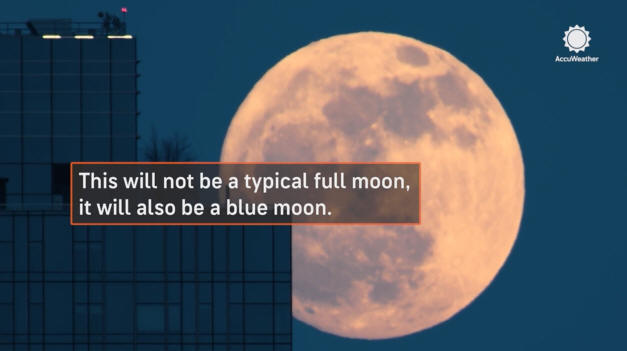 August’s full moon will not only be known as the Sturgeon Moon, but it will also rise as a rare seasonal blue moon. Catch the rise of the Blue Sturgeon Moon on Aug. 19.
.
.
Click the link below for the article:
.
__________________________________________
August 19, 2024
Mohenjo
Business, Food For Thought, Human Interest, Political, Science, Technical
amazon, business, Business News, current-events, Future, Hotels, human-rights, medicine, mental-health, research, Science, Science News, technology, Technology News, travel, vacation
Click the link below the picture
.
Any primary care doctors have had a complicated relationship with tests designed to screen their patients for Alzheimer’s disease. Beyond recommending a few lifestyle changes—tweaks to diet, exercise, and sleep most would recommend anyway—there was little they could do to help patients with a confirmed diagnosis.
As new drugs expand the options for treating and preventing Alzheimer’s, demand from older people worried about their mental fitness and seeking routine screening for Alzheimer’s and other dementia is expected to rise quickly. In anticipation, several commercial firms are racing to bring to market new digital screening tools that can detect warning signs that the disease could be developing. (Diagnostic tools, by contrast, are used to establish the presence of the disease, usually by detecting amyloid.) Many of these new screening tools use artificial-intelligence algorithms and can be administered by medical assistants without extensive training. They hold out the promise of inexpensive and noninvasive methods of screening people for Alzheimer’s.
“Dementia is the number-one fear of people over 55,” says David Bates, CEO of Boston-based Linus Health, a digital assessment company. “You have drug companies that are about to be advertising their drugs. And you’re going to have commercials and marketing stoking that fear to drive people to ask for the drug. So you’re going to have this onslaught of demand in the health system. Primary care doctors will not be able to meet that demand. They’re going to get overwhelmed.”
PET imaging and tests of cerebrospinal fluid, which document the presence of amyloid beta plaques in the brain, are currently the gold standard for providing a diagnosis of Alzheimer’s. But these tests are too expensive and cumbersome to administer to meet the anticipated need for Alzheimer’s screening in large populations. Although blood tests that can flag the buildup of amyloid are beginning to emerge from the lab, they are not yet widely available.
For years, primary care physicians have instead relied on pen-and-paper cognitive tests to screen patients with mild cognitive impairment, but these tests can take 20 to 30 minutes to complete and require a trained administrator. The “reality is primary care doctors don’t have that time,” says Brad O’Connor, CEO of CogState in Australia.
A test sold by Linus Health combines an established pen-and-paper test based on a simple drawing test with added artificial intelligence to make it easier to administer and more powerfully analytic. In the test, a patient is asked to draw a clock with the clock hands indicating a specific time. The task engages disparate areas of the brain involved in motor, visual, analytical and other functions that are often impaired by dementia.
.

Digital cognitive tests, including one that involves drawing on a tablet, could soon be available to consumers. Image courtesy of Linus Health
.
.
Click the link below for the article:
.
__________________________________________
August 19, 2024
Mohenjo
Business, Food For Thought, Human Interest, Political, Science, Technical
amazon, business, Business News, current-events, Future, Hotels, human-rights, medicine, mental-health, research, Science, Science News, technology, Technology News, travel, vacation

Click the link below the picture
.
Yoga has long been associated with better physical flexibility and health, and now it is being linked to improved cognition as well, according to growing research.
A recent study also suggests that yoga may benefit some older people at risk for cognitive decline and Alzheimer’s disease.
The holistic mind-body practice of yoga provides physical and mental health benefits through four main components: breathing, physical relaxation, mindfulness meditation, and postures.
Together, they make up a “smorgasbord” that allows people to reap benefits and gravitate to what speaks to them the most, said Sat Bir Singh Khalsa, associate professor of medicine at Harvard Medical School and editor in chief of the International Journal of Yoga Therapy. “It’s about optimizing your functioning and performance as a human being on all levels,” Khalsa said.
Research suggests that yoga may sharpen our minds by honing our ability to regulate stress and use our cognitive resources efficiently. Studies have found that yoga is associated with changes in the brain.
“That’s what yoga is all about. It’s about enhancing psychological and physiological performance,” said Khalsa, who has practiced yoga since he took an undergraduate course on it in 1971.
Yoga may protect against cognitive decline
Yoga has been found to improve attention, processing speed, executive function, and memory in healthy children and adults, according to a 2015 meta-analysis. A 2021 review of randomized controlled trials found that yoga was associated with improved cognition, memory, and executive functions in healthy older adults.
A new study suggests that yoga may also be beneficial for older adults at increased risk for cognitive decline.
Researchers conducted a randomized controlled trial with 79 women, at least 50 years of age, who self-reported cognitive decline and were at increased risk for developing Alzheimer’s disease because of menopause or cardiovascular risk factors.
.
 Benjavisa/Getty Images
.
.
Click the link below for the article:
.
__________________________________________
Older Entries
Newer Entries

 James' World 2