September 1, 2024
Mohenjo
Business, Food For Thought, Human Interest, Political, Science, Technical
amazon, business, Business News, current-events, Future, Hotels, human-rights, medicine, mental-health, research, Science, Science News, technology, Technology News, travel, vacation

Click the link below the picture
.
About one-third of the global population, around 3 billion people, don’t have access to the Internet or have poor connections because of infrastructure limitations, economic disparities, and geographic isolation.
Today’s satellites and ground-based networks leave communications gaps where, because of geography, setting up traditional ground-based communications equipment would be too expensive.
High-altitude platform stations – telecommunications equipment positioned high in the air, on uncrewed balloons, airships, gliders, and airplanes – could increase social and economic equality by filling internet connectivity gaps in ground and satellite coverage. This could allow more people to participate fully in the digital age.
One of us, Mohamed-Slim Alouini, is an electrical engineer who contributed to an experiment that showed it is possible to provide high data rates and ubiquitous 5G coverage from the stratosphere. The stratosphere is the second lowest layer of the atmosphere, ranging from 4 to 30 miles above the Earth. Commercial planes usually fly in the lower part of the stratosphere. The experiment measured signals between platform stations and users on the ground in three scenarios: a person staying in one place, a person driving a car, and a person operating a boat.
My colleagues measured how strong the signal was in relation to interference and background noise levels. This is one of the measures of network reliability. The results showed that the platform stations can support high-data-rate applications such as streaming 4K resolution videos and can cover 15 to 20 times the area of standard terrestrial towers.
Early attempts by Facebook and Google to commercially deploy platform stations were unsuccessful. But recent investments, technological improvements, and interest from traditional aviation companies and specialized aerospace startups may change the equation.
The goal is global connectivity, a cause that brought the platform stations idea recognition in the World Economic Forum’s 2024 Top 10 Emerging Technologies report. The international industry initiative HAPS Alliance, which includes academic partners, is also pushing toward that goal.
Fast, Cost-Effective, Flexible
Platform stations would be faster, more cost-effective, and more flexible than satellite-based systems.
Because they keep communications equipment closer to Earth than satellites, the stations could offer stronger, higher-capacity signals. This would enable real-time communications speedy enough to communicate with standard smartphones, high-resolution capabilities for imaging tasks, and greater sensitivity for sensing applications. They transmit data via free-space optics, or light beams, and large-scale antenna array systems, which can send large amounts of data quickly.
Satellites can be vulnerable to eavesdropping or jamming when their orbits bring them over adversarial countries. However, platform stations remain within the airspace of a single country, which reduces that risk.
High-altitude platform stations are also easier to put in place than satellites, which have high launch and maintenance costs. The regulatory requirements and compliance procedures required to secure spots in the stratosphere are likely to be simpler than the complex international laws governing satellite orbits. Platform stations are also easier to upgrade, so improvements could be deployed more quickly.
.
 (Credit: Thales Alenia Space via Wikimedia Commons, CC BY-SA)
.
.
Click the link below for the article:
.
__________________________________________
August 31, 2024
Mohenjo
Business, Food For Thought, Human Interest, Political, Science, Technical
amazon, business, Business News, current-events, Future, Hotels, human-rights, medicine, mental-health, research, Science, Science News, technology, Technology News, travel, vacation

Click the link below the picture
.
Doris Tsao is the 2024 recipient of The Kavli Prize in Neuroscience for her research on facial recognition. Her work has provided insights into the complex workings of the brain and has the potential to advance our understanding of perception and cognition.
Megan Hall: When we see a friend’s face, how do we instantly know who they are? Doris Tsao looks closely at the brain patterns of monkeys to help unravel this mystery. This year, she received The Kavli Prize in Neuroscience with Nancy Kanwisher and Winrich Freiwald, for identifying a specialized region of the brain where facial recognition happens.
Scientific American Custom Media, in partnership with The Kavli Prize, spoke with Doris to learn more about her discoveries and how she’s using them to unlock a bigger question – how do our brains represent the world?
As a kid, Doris Tsao was surrounded by science. Her mother was a computer programmer and her father is a mathematician.
Doris Tsao: I always had grew up with the sense that being a scientist was the most noble life calling. That really came from my parents talking to them. It was part of our family.
Megan Hall: But Doris didn’t think she’d be a scientist.
Doris Tsao: I didn’t think of myself as particularly interested in science. I like math. My parents gave me geometry problems, and I loved that. I certainly didn’t think about the brain when I was a kid. I liked to play. I played with Barbie dolls. I loved to read biographies.
Megan Hall: That all changed when she was in sixth grade.
Doris Tsao: I remember just waking up one morning and, suddenly, for no real reason, wondering if space is infinite or not. Because it seemed like if space is infinite, that seems incredible. I’d never thought about infinity before. And if it wasn’t, how could that be? Right? So, I just kept going in these loops, and I remember obsessing about this for days.
Megan Hall: She revisited this question in high school as she started reading about artificial intelligence and neuroscience. Books by philosophers like Immanuel Kant made her think about how our minds perceive space. Why do you think that question gripped you so much?
Doris Tsao: It’s kind of funny, I always thought I was special, but my kids, they’re like six years old and they ask me that nowadays. So, I think it’s such a natural question. Maybe every kid wonders about this at some point.
Megan Hall: But Doris kept wondering about it. Still, she couldn’t pinpoint exactly what she was looking for. She says she went to the California Institute of Technology for college because she liked the idea of being a scientist.
Doris Tsao: And I had read all these books about the brain, and so on. So, I had romantic notions about that, but it was like sort of a fantasy about what my life could be like rather than motivated in a question about the world.
Megan Hall: Then something pretty common happened. She was on a camping trip with her dad and he asked her to proofread one of his academic papers. His first language is Chinese, so…
Doris Tsao: He would give me his papers to correct English mistakes. And I did this starting in middle school, high school, and I had no idea what his papers were – they were like gobbledygook – but I could figure out that the verb was not agreeing with the subject.
Megan Hall: But this time was different. With her training from Caltech, Doris actually understood what he was writing about.
Doris Tsao: It was kind of astonishing to me, like, the idea.
.
 Getty Images
.
.
Click the link below for the article:
.
__________________________________________
August 31, 2024
Mohenjo
Business, Food For Thought, Human Interest, Political, Science, Technical
amazon, business, Business News, current-events, Future, Hotels, human-rights, medicine, mental-health, research, Science, Science News, technology, Technology News, travel, vacation

Click the link below the picture
.
Tracing a medieval trade route through the Swiss Alps and valleys, the GoldenPass Express isn’t just one of the world’s most scenic train rides; it’s an engineering marvel.
As I sink into the plush, cream-coloured leather recliner, a glass of Champagne in hand and hiking boots raised, I’m ready for a three-hour spectacle where nature takes center stage. But the stage isn’t just in front of me – it’s all around.
I’m not in a theater; I’m in Switzerland aboard the GoldenPass Express: a state-of-the-art panoramic train where floor-to-ceiling windows reveal stunning views of the Swiss countryside – from turquoise lakes that mirror towering mountain peaks to rolling meadows dotted with storybook chalets – that rival the grandest cinematic experiences. Sitting in the nine-seat Prestige Class carriage in a specially designed heated, swiveling chair feels both private and personal – as if I’ve got the snowcapped Alps, wildflower-laced pastures, and bell-adorned cows to myself.
Opened in December 2022 and fully relaunched in June 2023 after addressing problems with track wear, The GoldenPass Express (GPX) is one of Europe’s newest (and most luxurious) high-tech trains. Its 115km journey follows a medieval trade route connecting Interlaken’s glaciers to Montreux’s terraced vineyards, and thanks to a technological innovation, the GPX allows travelers to take one of the world’s most scenic train routes without transferring, as passengers did previously. The GPX is one of five premium panoramic trains within the Swiss Travel System. Individual tickets range from 56-145 Swiss francs (roughly £50-130). It’s also included in the Swiss Travel Pass (starting from 244 Swiss francs – roughly £219 – and children under 16 ride free of charge) which offers unlimited access to all public transportation (trains, trams, buses and passenger ferries), 50% off mountain railways and gondolas, and free admission to more than 500 museums.
The train’s midnight-blue exterior and classic design evoke the bygone era of the original Orient Express that still connects Paris to Istanbul. Inside, the interior is crisp and cutting-edge, the Prestige Class specially designed chairs are by Ferrari-designer firm Pininfarina and are the only such rail seats in Europe. Need lower back support? There’s a button for that. Tired feet? Elevate your legs. Feeling chilly? Just press the seat warmer. Want a different view? Simply pivot your seat to face the direction of your choice. Just don’t fall asleep!
But what truly sets the GPX apart from other luxury trains is something you can’t see: it can seamlessly jump between tracks of different gauges and voltages.
Built by Montreux-Oberland-Bernois Railway (MOB) in collaboration with BLS AG (BLS) in Bern, the train winds its way down from the heights of the Bernese Alps, passing the luxurious town of Gstaad, beloved by A-listers for its exclusivity and isolation, and Château d’Oex, famous for its hot air balloon festival (25 January-2 February 2025), before snaking through vineyards as it makes its dramatic descent towards the Vaudois Riviera. Finally, it reaches sun-soaked Montreux, where palms sway on the glistening shores of Lake Geneva.
.
 (Credit: MOB)
.
.
Click the link below for the article:
.
__________________________________________
August 30, 2024
Mohenjo
Business, Food For Thought, Human Interest, Political, Science, Technical
amazon, business, Business News, current-events, Future, Hotels, human-rights, medicine, mental-health, research, Science, Science News, technology, Technology News, travel, vacation
Click the link below the picture
.
John McFall, a Paralympic sprinter who later became an orthopedic and trauma surgeon, has had an esteemed career fueled by his intense drive and curiosity. Now he’s adding yet another acclaimed career to the mix: astronaut.
Following a serious motorcycle accident when he was 19, doctors amputated McFall’s right leg above the knee. With the use of a prosthetic leg, which he has worn ever since, he won a bronze medal in the 100-meter sprint event at the 2008 Paralympic Games, where he represented the U.K. In 2022, after a competitive selection process, the European Space Agency (ESA) inducted McFall into its astronaut corps, making him its first physically disabled member, or parastronaut. McFall was specifically chosen to participate in ESA’s groundbreaking “Fly!” feasibility study, which aims to systematically assess the barriers that exist in spaceflight for individuals with physical disabilities. The Fly! study is set to conclude this autumn. McFall has yet to fly in space, let alone to be assigned a slot on any upcoming mission, but that could soon change.
He now awaits his chance to launch and continues his training. Scientific American spoke with McFall about the process of becoming an astronaut and the unique physiological challenges uncovered in the latest feasibility study.
Why did you apply to participate in this study? What aspects of your background made you feel particularly suited for this project?
What was interesting about the application for this study was that there was never any guarantee of a flight to space. The notice was just for a candidate with a physical disability to participate in a feasibility study, with ESA’s goal being to hopefully create an opportunity to fly someone with such a disability to space. For me, it was like, “What have I got to lose?” I didn’t have going to space on my radar at all, but a friend of mine sent me a message suggesting that I look into it. I saw it as a bold and innovative opportunity, and it’s commendable that ESA is the first space agency to take on such a brave initiative. In the back of my mind, I thought that if I could get selected, this would tick all the boxes for things I love doing in my life: being curious while challenging myself academically, physically, and emotionally.
In terms of my background: As an amputee and surgeon, I know a lot about medicine and my disability specifically—especially what is and isn’t feasible with my condition. As an athlete, I know that I’m fit and physically capable—probably an ideal person to demonstrate how capable people with physical disabilities can be. I thought I might be an ideal candidate to help answer this question.
It’s somewhat surprising that we haven’t had someone with a physical disability in space yet. Before doing this study, why do you think other groups hadn’t tried to do this?
I don’t think there is a definitive answer. If you look at the history of human spaceflight, especially in the last 20 years, the space station has been inhabited with a constant human presence since the year 2000. In the first decade [after 2000], essentially until the end of the shuttle era, the space station was still being built. We were also learning a lot about long-term human habitation in orbit. Around 2014 or 2015 we started gathering good long-term data on the effects of living in low-Earth orbit with microgravity on astronauts. Since then, the idea of whether this would be possible for someone with a physical disability has been floating around. Dave Parker, then director of human and robotic space exploration for ESA, went to all the ESA member states to get approval for selecting someone with a physical disability in 2021. It takes time, but I think the idea has been there for a while. Now that we’ve learned more about human spaceflight and how the body responds to prolonged microgravity, we’re ready to move to the next step.
.
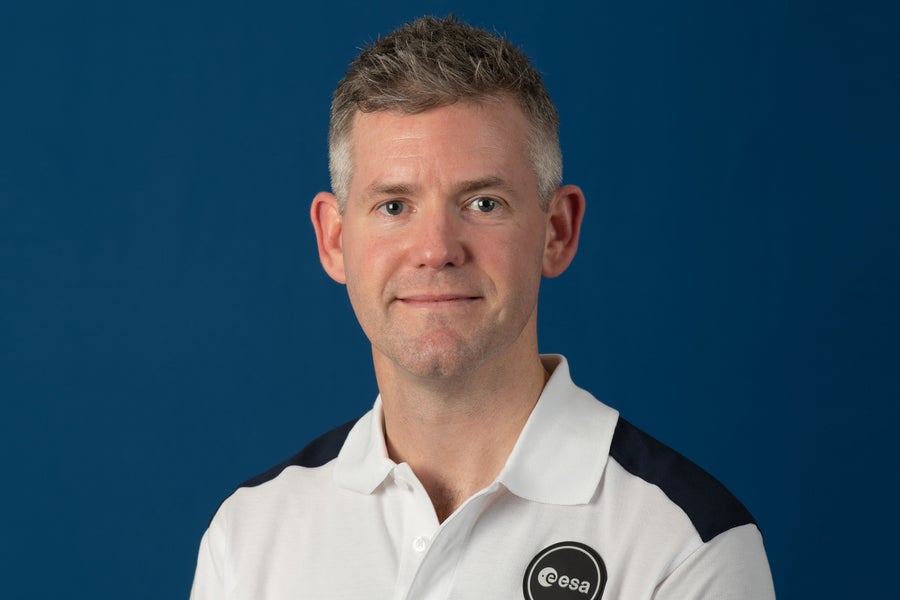
John McFall, member of the European Space Agency’s astronaut class of 2022. ESA – P. Sebirot
.
.
Click the link below for the article:
.
__________________________________________
August 30, 2024
Mohenjo
Business, Food For Thought, Human Interest, Political, Science, Technical
amazon, business, Business News, current-events, Future, Hotels, human-rights, medicine, mental-health, research, Science, Science News, technology, Technology News, travel, vacation

Click the link below the picture
.
Conventional wisdom has it that only children are smarter and less sociable. Parents, freed from the shackles of constantly settling sibling disputes, devote more time and money to the singleton, exposing them to a greater variety of higher-level activities (there’s a term for what happens when you spread that time and money over more kids: resource dilution). Conversely, since those only children never have to share a toy, a bedroom, or a parent’s attention, it is assumed they miss out on that critical life skill of forever-having-to-get-along.
But are their actual brains different?
Jiang Qiu, a professor of psychology at Southwest University in Chongqing, China, and director of the Key Laboratory of Cognition and Personality in the ministry of education, led a team of Chinese researchers that sought to answer this question with more than 250 college-aged Chinese students. They used standard tests of intelligence, creativity, and personality type to measure their creativity, IQ, and agreeableness. They also studied their brains, to see if growing up as an only child affects the structure of them. It did.
On the behavioral tests, only children displayed no differences in terms of IQ, but higher levels of flexibility—one measure of creativity—and lower levels of agreeableness than kids with siblings.
The brain scans then confirmed these findings, showing significant differences between only children and non-only children in the brain regions associated with flexibility, imagination, and planning (supramarginal gyrus) and with agreeableness and emotional regulation (medial prefrontal cortex). The scans also revealed differences in the parahippocampal gyrus, which helps manage emotional and mood regulation.
The study concluded that the family size we choose, or end up with, affects not only the environment in which children grow up, but also the architecture of their brains. The research was published in Brain Imaging and Behavior.
The idea that only children are somehow deficient was started 125 years ago by Granville Stanley Hall, a leader in the child-study movement, writes Lauren Sandler, author of One and Only: The Freedom of Having an Only Child, and the Joys of Being One. Having worked on the 1896 study “Of Peculiar and Exceptional Children,” Hall cast only children as “oddballs” as “permanent misfits,” descriptions that have stuck over the years with remarkable persistence. “Being an only child is a disease in itself,” he claimed.
There is ample evidence suggesting the stereotypes of the “lonely only” are wrong. Toni Falbo, a professor of educational psychology at the University of Texas at Austin and research methodologist Denise Polit undertook a meta-study looking at only children and intelligence and personality. They found that only children, along with firstborns and people who have only one sibling, score higher IQ marks and achieve more, but aren’t markedly different personality-wise (context matters: an only child in an unhappy household may be disagreeable; so might a child with five siblings in a poor family).
Jiang and his co-authors hypothesized a few reasons for their findings. Creativity —defined as having original ideas that have value—is strongly influenced by everything from family structure and parental views, to interactions and expectations (one older study showed that children were more likely to excel if they had a mother whose abilities matched her expectations). Parents of only children may interact more with their children, and seek out more opportunities to extend their children’s creativity. A parent might also have higher expectations of an only child, or they might give the child more independence, and some studies have shown that independence fosters creativity.
.

Creative genius or budding misanthrope? Photo by Reuters/Navesh Chitrakar.
.
.
Click the link below for the article:
.
__________________________________________
August 29, 2024
Mohenjo
Business, Food For Thought, Human Interest, Political, Science, Technical
amazon, business, Business News, current-events, Future, Hotels, human-rights, medicine, mental-health, research, Science, Science News, technology, Technology News, travel, vacation
Click the link below the picture
.
There is a glaring gap in our knowledge of the physical world: none of our well-established theories describe gravity’s quantum nature. Yet physicists expect that this quantum nature is essential for explaining extreme situations such as the very early universe and the deep interior of black holes. The need to understand it is called the problem of “quantum gravity.”
The established classical concept of gravity is Einstein’s general theory of relativity. This spectacularly successful theory has correctly predicted phenomena from the bending of light and the orbit of Mercury to black holes and gravitational waves. It teaches us that the geometry of space and time—spacetime—is determined by gravity. So when we talk about the quantum behavior of gravity, we’re really talking about the quantum behavior of spacetime.
We don’t currently have an established theory of quantum gravity, but we do have some tentative theories. Among them, loop quantum gravity (which one of us, Rovelli, helped to develop) and string theory are two leading contenders. The former predicts that the fabric of spacetime is woven from a network of tiny loops, whereas the latter posits that particles are fundamentally vibrating strings.
Testing these theories is difficult because we can’t study the early universe or black hole interiors in a laboratory. Physicists have mostly assumed that experiments that could directly tell us something about quantum gravity require technology that is many years away.
This situation might be changing. Recent developments suggest it may be possible to perform laboratory experiments that will reveal something about the quantum behavior of gravity. This potential is extremely exciting, and it has raised real enthusiasm among theoretical and experimental physicists, who are actively trying to develop the means to carry out the investigations. The proposed experiments could test the predictions of quantum gravity theories and provide support for the assumptions they’re based on.
The experiments all involve events happening at low energies, where the predictions of strings, loops, and the like agree, so they aren’t going to tell us which specific theory of quantum gravity is correct. Still, experimental evidence that gravity is actually quantized would be groundbreaking.
We already have plenty of observations about gravity’s effects on the quantum behavior of matter. Albert Einstein’s theory works fine in these situations, from stellar dynamics, to the cosmological formation of galaxy clusters, all the way to laboratory experiments on the effect of Earth’s gravity on quantum systems. But in all these scenarios, gravity itself behaves in a way that is consistent with classical physics; its quantum features are irrelevant. What’s much more difficult is to observe phenomena in which we expect gravity to behave quantum mechanically.
.
 Mark Ross
.
.
Click the link below for the article:
.
__________________________________________
August 29, 2024
Mohenjo
Business, Food For Thought, Human Interest, Political, Science, Technical
amazon, business, Business News, current-events, Future, Hotels, human-rights, medicine, mental-health, research, Science, Science News, technology, Technology News, travel, vacation

Click the link below the picture
.
From our earliest days, guys are overcome with urges that cause others to raise an eyebrow or shake their heads. As babies and toddlers, we instinctively and mindlessly twiddle our boy parts. When adolescence sets in, we impulsively jump up to smack every door jam we pass under. And when we reach fatherhood, something deep inside us yearns to throw our babies in the air playfully.
The paternal urge to toss babies is an outlier, as it runs antithetical to most parenting practices. Babies are securely buckled in car seats at the beginning of each road trip, even those just a couple of blocks in length, to pick up older siblings from school. They are gently cradled like footballs and strapped into chest carriers to keep them safe wherever we move about the house.
And yet, so many fathers at some point in time look their baby square in the eye, flash a big grin, employ their best baby babble voice, and gently give their baby a toss before making the catch and then asking some version of “Wasn’t that fun?”
The most generous reading of this routine is that it’s related to the paternal longing for rough-and-tumble play that kids grow to love. It’s the precursor to family wrestling matches in the living room and seemingly unending requests for dads to launch their kids across the swimming pool.
“When I was looking forward to becoming a dad, one of the things I was most excited about was playing with my kids and making them laugh,” shared Jacob, a father of three young kids who admitted to tossing at least one of his babies without incident. “But babies aren’t interactive at first, and occasionally, I’d give my kid a little toss out of this desire to have a fun connective moment.”
I actually don’t think I ever did a baby toss when my wife wasn’t in the room … So yeah, part of it was knowing that my wife would freak out…
But the adrenaline rush of the baby toss must inform our understanding of where this urge originates. Alex, whose son just turned 3, remembers the warm wave of excitement that came over him on the couple of occasions he gently tossed his son in the air.
“I wasn’t getting wild and crazy with the tosses. But I think so many aspects of life slowed down in the year after my son was born that the toss felt like a needed quick hit of stimulus,” he says.
There’s also an ornery side to the baby toss for many dads. They know it will garner a reaction from others — especially partners and spouses — making the practice a bid for connection. But, and this is the age-old question when dads attempt to deploy humor, is something truly funny if you’re the only one laughing?
“I actually don’t think I ever did a baby toss when my wife wasn’t in the room,”
Alex recalls. “So yeah, part of it was knowing that my wife would freak out a little bit, and we’d have an interaction that, in hindsight, I probably viewed as funnier and much more playful than she did. Having an audience also probably upped the adrenaline factor.”To be clear, the dirty looks, gasps, and even full-on freak-outs from worried parties are justified, especially concerning babies. Not only are guys notorious for overestimating their athletic prowess — in this case, their surehandedness under pressure — but babies are fragile. Perhaps one of the reasons the baby toss feels exciting is because, on a deep instinctual level, we know it’s dangerous.
.
.
.
Click the link below for the article:
.
__________________________________________
August 28, 2024
Mohenjo
Business, Food For Thought, Human Interest, Political, Science, Technical
amazon, business, Business News, current-events, Future, Hotels, human-rights, medicine, mental-health, research, Science, Science News, technology, Technology News, travel, vacation
Click the link below the picture
.
Voting in local elections is critical for ensuring the best possible representation in the laws and actions that affect your daily life. But once your ballot is cast, getting involved in a local project allows you to flex your strengths for the betterment of society. Using your voice at public hearings or organizing neighbors can be invigorating and informative, and the actions you take on behalf of your town or city can deeply tie you to your community in a way that few other actions can.
Take environmental issues, for instance. Recent U.S. Supreme Court rulings have weakened the Environmental Protection Agency’s ability to fight pollution and to use the best available science in enacting regulations. The situation makes it seem like efforts to fight climate change are hopeless. Even the most stubborn optimists—people who fight against apathy and encourage others to do the same—would be forgiven for wanting to tune out.
But depending on where you live, opportunities for involvement might be vast. Many cities already have made commitments to reduce greenhouse gases, but smaller, rural municipalities may not. One place to begin, if your town doesn’t have a plan, is with the Global Covenant of Mayors for Climate and Energy, which provides municipalities of any size with tools and guidance to help limit climate change.
If your town already has a climate committee dedicated to setting goals and systems for tracking progress, reach out to see how you can help. There may be a local advocacy group you can join or, if time is an issue, support. If nothing like that exists, attend a town board meeting and ask your elected officials about their plans for developing resilience and adaptation strategies. Check for grants at the county, state and even federal level that can be applied to a local project. Town officials aren’t necessarily stonewalling progress—they might be genuinely overwhelmed or unfamiliar with possible resources, and you can help bridge that gap. This work will give you clarity into the specific challenges of your community, which is often how people end up running for a board seat themselves.
Local environmental projects rooted in science will be trickier to find in areas where the phrase “climate change” is synonymous with “liberal agenda.” You may even be in a place, such as Florida, where the state government is openly adverse to climate mitigation. But these obstacles give you a chance to get creative. If you live in a hilly area that has experienced repeated economic losses from river flooding, for example, speak out about how trees and shrubs are excellent forms of erosion control and should be protected as critical infrastructure. Look at meeting agendas to see what development projects are being proposed—and then organize your neighbors to fight extractive ones that will harm the environment while leaving your community more vulnerable.
Use the weight of your professional background to be powerfully persuasive: Civil engineers can poke holes in developers’ plans, landscape architects can encourage native planting, wildlife biologists can explain why a certain habitat that might look unimportant plays a critical role for an endangered species, and attorneys can point out the disingenuous use of environmental laws that block climate-friendly policies such as congestion pricing and high-density housing. Medical professionals can speak to the harmful effects of pollution and excessive heat on health, and people who work in communications can write press releases and keep their communities informed on social media.
.
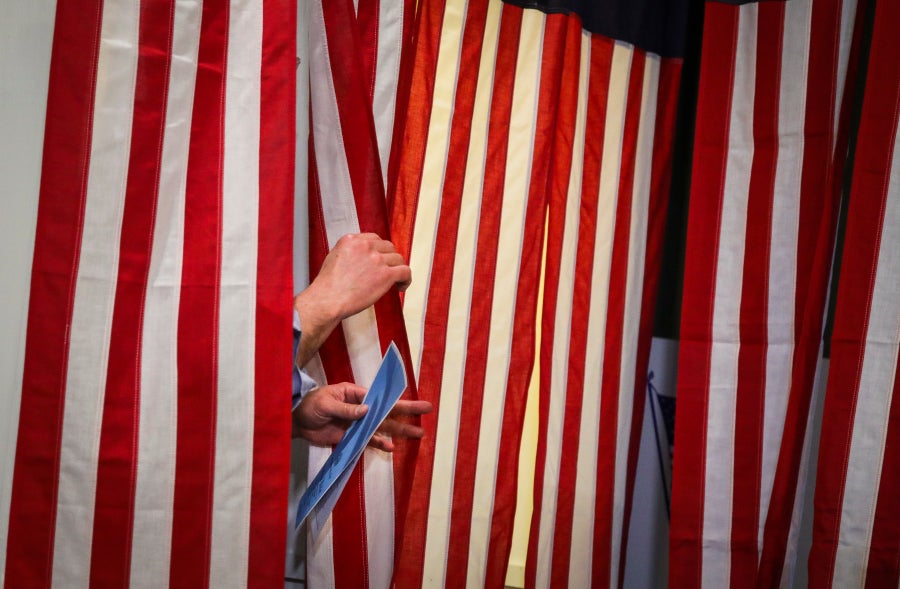 Erin Clark/The Boston Globe via Getty Images
.
.
Click the link below for the article:
.
__________________________________________
August 28, 2024
Mohenjo
Business, Food For Thought, Human Interest, Political, Science, Technical
amazon, business, Business News, current-events, Future, Hotels, human-rights, medicine, mental-health, research, Science, Science News, technology, Technology News, travel, vacation

Click the link below the picture
.
Five hundred years ago, writing in The Prince, Nicolo Machiavelli offered advice to leaders trying to grow their power. “It would serve [the Prince] to appear pious, faithful, humane, true, religious, and even to be so,” he wrote, “but only if he is willing, should it become necessary, to act in the opposite manner.”
In other words, don’t hold on tightly to your values, because no one else will either.
Centuries later, that passage still perfectly encapsulates a cynical world view. Cynics believe that human beings are fundamentally self-interested. This also means that interactions between people are at their core a ruthless, Darwinian struggle for survival, where the path to success requires stepping past, over, or on the people around you.
Many of us follow this bleak logic. More than half of parents believe that to succeed, their children should think of the world as harsh and dangerous. According to the legendary management professor Sumantra Goshal, MBA students are taught that “companies must compete not only with their competitors but also with their suppliers, employees, and regulators.” In Silicon Valley, where I work, brilliant but toxic leaders such as Steve Jobs are celebrated and — too often — emulated.
Following Machiavelli’s advice, cynics sacrifice relationships and principle to win. Instead, research demonstrates they lose. A wave of new behavioral science has found that, over the course of one’s career, cynical thinking stands in the way of success. Parents might think their kids will thrive if they see the world as competitive, but people with that mindset earn less money and report lower satisfaction at work.
Other research follows people over time, testing their cynicism at one point and following up years later to measure professional outcomes. The news here is clearer, and even worse for cynics. Over a decade-long span, their salary grows at barely a third the rate of non-cynics, and they are less likely to be elevated to leadership positions.
Why? Compared to their more trusting counterparts, cynics report a greater hunger for power and pursue it in different ways. Confident that others will take advantage of them if given the chance, they go on the offensive, manipulating others first. Machiavelli would be proud. He urges leaders to dominate others, preferring to be feared than loved. Researchdoes find that dominant actions, such as intimidating coworkers and kissing up to higher-ups, tend to build people’s power in the workplace. But so do communal actions, such as sharing generously with colleagues. Research on disagreeable people who share cynics’ competitive streak finds that they use only dominant strategies to get ahead. This leaves them isolated and eventually puts a ceiling on their success.
Put simply, cynics are playing the wrong game. Success is not a winner-take-all battle royale. People most often win by building trusting connections and alliances. And even if an individual manages to shove their way to the top, their team often pays the price. Psychologists recently analyzed levels of narcissism in NBA players’ tweets and found that teams with higher levels of narcissism won fewer games. Why? To compete at the highest level, teammates must first stop trying to outdo each other. If they hog the ball, narcissistic players cost their teams a cooperativeadvantage. As the NBA champion Bill Bradley put it, “the success of the group assures the success of the individual, but not the other way around.”
Cynicism can bleed workplaces of creativity, openness, and morale, and the bottom line. The good news is that cynicism is not a life sentence. Researchsuggests that barely a quarter of it is genetic, meaning that the social environment significantly shapes our willingness to give and earn trust. Through the right habits, cynics can build new mindsets and lean into connection.
As a research psychologist and author, I’ve studied the science of cynicism for years. I also work with organizations and leaders to help them fight cynicism and bring the cooperative advantage to their teams. Here are a few places to begin.
.
 keithsutherland/Getty Images
.
.
Click the link below for the article:
.
__________________________________________
August 27, 2024
Mohenjo
Business, Food For Thought, Human Interest, Political, Science, Technical
amazon, business, Business News, current-events, Future, Hotels, human-rights, medicine, mental-health, research, Science, Science News, technology, Technology News, travel, vacation
Click the link below the picture
.
We cover Mars mission updates, a new brain implant that shows promise for Parkinson’s, the latest on the mpox outbreak, and more in this week’s new roundup.
Happy Monday, listeners! Let’s kick off the week by catching up on the latest science news. For Scientific American’s Science Quickly, I’m Rachel Feltman.
Last week, NASA’s Perseverance rover started a slow but steady slog. The bot landed in Jezero Crater when it first arrived on Mars back in February 2021. Now it’s busting out—but very slowly and cautiously. NASA says it will take Perseverance months to ascend the rough terrain of the crater’s western rim. The hope is that Perseverance will persevere (sorry) long enough to study a couple sites at the top of the crater.
Speaking of Mars, the Red Planet has really been popping off lately. Earlier this month, a study suggested that Mars might be hiding an ocean’s worth of water deep below its surface. Data from NASA’s late Insight lander revealed seismic signals of liquid water some six to 12 miles beneath the planet’s crust. Then, just a couple of weeks ago, a study showed that rock samples taken by Perseverance contained sulfates. That indicates they probably used to sit in salty water. And back in May, NASA’s tried-and-true Curiosity rover drove over and cracked open a rock that turned out to be packed with pure sulfur. Scientists can’t actually explain how sulfur would have formed in that area, which means there must be something about its past that they don’t know yet.
Now, let’s get into some health news. Last Monday, a study in Nature Medicine described an implant that acts like a pacemaker for the brain. The device builds on the idea of using deep-brain stimulation to treat Parkinson’s, and that generally works by delivering a constant electrical current. Instead, this new treatment uses algorithms to track symptoms, and it delivers brain stimulation only as needed. In a study of four people with Parkinson’s, the researchers said that the tech reduced each person’s most bothersome motor symptom by half when compared with conventional deep-brain stimulation.
Now onto weight-loss drugs. Now, most of the headlines about weight-loss drugs hype a growing number of proposed benefits, but a study out last week argues that doctors should be on the lookout for a troubling side effect. Researchers say that a statistical analysis flagged that people taking semaglutide, which is sold under the brand name Ozempic for diabetes and Wegovy for weight loss, have a higher chance of reporting suicidal thoughts than folks taking other kinds of medication. This was especially true for people who were also taking antidepressants. Now, this is, of course, a preliminary finding that doesn’t prove causation. But some experts say it’s smart to be cautious—especially if you start experiencing new feelings of depression after starting this medication. And honestly, that’s true for any medication and any new signs of depression.
.
 Anaissa Ruiz Tejada/Scientific American
.
.
Click the link below for the article:
.
__________________________________________
Older Entries
Newer Entries
 James' World 2