September 27, 2024
Mohenjo
Business, Food For Thought, Human Interest, Political, Science, Technical
amazon, business, Business News, current-events, Future, Hotels, human-rights, medicine, mental-health, research, Science, Science News, technology, Technology News, travel, vacation

Click the link below the picture
.
Two-thirds of U.S. adults do not have a proper will and could potentially leave the remaining family with serious implications because of it.
Founding Partner of VanNess Law, Thomas VanNess, stresses the importance of maintaining control of distribution of one’s hard-earned assets by putting it in official writing.
Creating a will is essential for estate planning, guiding asset distribution after your passing. Appoint a power of attorney for financial decisions and set medical directives for your healthcare preferences. Make sure to regularly update your plans as life changes and consult a professional if necessary.
.
 Two-thirds of U.S. adults lack a will, risking family strife and loss of control
.
.
Click the link below for the article and sound on for video:
.
__________________________________________
September 26, 2024
Mohenjo
Business, Food For Thought, Human Interest, Political, Science, Technical
amazon, business, Business News, current-events, Future, Hotels, human-rights, medicine, mental-health, research, Science, Science News, technology, Technology News, travel, vacation

Click the link below the picture
.
Last year, when doctors told a patient that the headaches he was experiencing were due to a highly invasive brain tumor called a glioblastoma that could only be removed during a complex surgery, he had one very specific request.
He wanted the people who would be slicing the cancerous tissue out of his brain (from an area just to the left of the crown of his head) to make sure “to preserve a relevant aspect of his identity—his ability to play chess,” a paper in the journal Cortex reported this month.
The man, a then-45-year-old computer programmer, was identified only as “AB.” He had been playing the game as a hobby for 25 years and had achieved an Elo rating of 1,950, which is just one level below expert in the chess world.
AB made his request to conserve his chess skills to one of his surgeons, Andreu Gabarrós, head of neurosurgery at Bellvitge University Hospital in Spain, which is affiliated with the University of Barcelona. Gabarrós has a reputation for going out of his way for his patients, a commitment that sometimes carries over into his after-work activities. As leader of a band called Dorigen, he has recorded an album with 10 tracks—one choral number and nine solo songs. Each of the latter was composed for a different patient from whom he had removed a brain tumor while trying to protect areas needed to sing or play an instrument.
Upon hearing AB’s request, Gabarrós contacted his neuroscientist colleagues at the university in early March 2023. He asked if they could come up with a plan to map AB’s brain before and during the procedure, which would help his surgical team spare the brain tissue AB needed to return to his passion after recovery.
Two researchers at the university, part of a group led by cognitive neuroscientist Antoni Rodríguez-Fornells, began a mad dash in the ensuing weeks to develop a chess-preserving surgical protocol that Gabarrós’s team could use for the March 27 procedure. “We had a small amount of time to prepare everything,” Rodríguez-Fornells says.
The team combed the existing scientific literature on the topic and scanned AB’s brain using functional magnetic resonance imaging (fMRI) to isolate the regions linked to his own individual chess performance. “I started checking what was in the literature to find how can we divide chess into cognitive processes that are more easy to evaluate during the surgery,” says Victor Cepero-Escribano, one of the researchers.
The most critical phase of AB’s chess brain preservation—and the one that turned out to be the most insightful—would have to wait until the surgery itself began. Surgeons performed a craniotomy, removing a piece of skull to expose a portion of AB’s left superior parietal lobe while he was awake. Next, they touched a live electrode to different spots on the surface of his cerebral cortex, asking him to answer questions and complete tasks in order to determine whether his cognitive abilities remained intact at the targeted spot, where the current shuts down or triggers a particular action.
.
 Style-Photography/Getty Images
.
.
Click the link below for the article:
.
__________________________________________
September 26, 2024
Mohenjo
Business, Food For Thought, Human Interest, Political, Science, Technical
amazon, business, Business News, current-events, Future, Hotels, human-rights, medicine, mental-health, research, Science, Science News, technology, Technology News, travel, vacation

Click the link below the picture
.
Editor’s Note: This CNN series is, or was, sponsored by the country it highlights. CNN retains full editorial control over subject matter, reporting, and frequency of the articles and videos within the sponsorship, in compliance with our policy.
On the northern edge of the Rub al-Khali, there are secrets buried in the sand.
The vast 250,000 square miles (650,000 square kilometer) desert on the Arabian Peninsula is known as “The Empty Quarter.” And to most, aside from waves of ocher dunes, it does look empty.
But not to artificial intelligence.
Researchers at Khalifa University in Abu Dhabi have developed a high-tech solution to searching huge, arid areas for potential archaeological sites.
Traditionally, archaeologists use ground surveys to detect potential sites of interest, but that can be time-consuming and difficult in harsh terrains like the desert. In recent years, remote sensing using optical satellite images from places like Google Earth has gained popularity in searching large areas for unusual features — but in the desert, sand and dust storms often obscure the ground in these images, while dune patterns can make it difficult to detect potential sites.“We needed something to guide us and focus our research,” says Diana Francis, an atmospheric scientist and one of the lead researchers on the project.
The team created a machine learning algorithm to analyze images collected by synthetic aperture radar (SAR), a satellite imagery technique that uses radio waves to detect objects hidden beneath surfaces including vegetation, sand, soil, and ice.
Neither technology is new: SAR imagery has been in use since the 1980s, and machine learning has been gaining traction in archaeology. But the use of the two together is a novel application, says Francis, and to her knowledge, is a first in archaeology.
She trained the algorithm using data from a site already known to archaeologists: Saruq Al-Hadid, a settlement with evidence of 5,000 years of activity that is still being uncovered in the desert outside of Dubai.N
She trained the algorithm using data from a site already known to archaeologists: Saruq Al-Hadid, a settlement with evidence of 5,000 years of activity that is still being uncovered in the desert outside of Dubai.“Once it was trained, it gave us an indication of other potential areas (nearby) that are still not excavated,” says Francis.
She adds that the technology is precise to within 50 centimeters and can create 3D models of the expected structure that will give archaeologists a better idea of what’s buried below.
In collaboration with Dubai Culture, the government organization that manages the site, Francis and her team conducted a ground survey using a ground-penetrating radar, which “replicated what the satellite measured from space,” she says.
Now, Dubai Culture plans to excavate the newly identified areas — and Francis hopes the technique can uncover more buried archaeological treasures in the future.
.
 A satellite view of the Saruq al-Hadid site, showing the western zone that was under excavation (right) and the eastern zone which is not excavated yet. – Khalifa University/Ben Romdhane et al., 2023
.
.
Click the link below for the article:
.
__________________________________________
September 25, 2024
Mohenjo
Business, Food For Thought, Human Interest, Political, Science, Technical
amazon, business, Business News, current-events, Future, Hotels, human-rights, medicine, mental-health, research, Science, Science News, technology, Technology News, travel, vacation
There is no gallery of hummingbird pictures with this post (sorry).
Click the link below the picture
.
Hummingbirds are not only quick and beautiful little birds but are also important pollinators that are beneficial to the health of your yard and garden. On top of being ecologically important, these territorial and lightning-fast iridescent birds are an absolute joy to watch. Because of this, many of us try to do certain things to attract more hummingbirds to our yards — whether that is by adding more red garden decorations, hanging up plenty of feeders, reducing noise levels, or planting more pollinator-friendly native flowers. However, one thing that most people don’t know about hummingbirds is that they love water but struggle to bathe in traditional bird baths which are too large and deep for them.
So, to bring more hummingbirds to your yard, you can add a bathing system that they can actually use — the best of which is a simple water mister. In fact, hummingbirds love bathing in misters, and they do so by flying back and forth through the mist and rubbing their small bodies on wet leaves to get clean. These misters can also help keep hummingbirds cool on hot summer days and wash away any sticky pollen from their beaks and feathers.
The best thing about adding a water mister to your garden (besides attracting more hummingbirds) is that it serves a dual purpose of also watering your plants. Plus, basic water misters are pretty affordable and easy to find. If you want to buy your mister in person, you can head to your local garden center. You can also find plenty of mister options that are specifically made for hummingbirds and other pollinators sold online.
.

Garden mister or sprinkler © Olga Ilina/Shutterstock
.
.
Click the link below for the article:
.
__________________________________________
September 25, 2024
Mohenjo
Business, Food For Thought, Human Interest, Political, Science, Technical
amazon, business, Business News, current-events, Future, Hotels, human-rights, medicine, mental-health, research, Science, Science News, technology, Technology News, travel, vacation
Click the link below the picture
.
As recently as 10 years ago most scientists I interviewed and heard speak at conferences did not support geoengineering as a way to counteract climate change. Whether the idea was to release large amounts of sulfur dioxide into the stratosphere to “block” the sun’s heating or to spread iron across the ocean to supercharge algae that breathe in carbon dioxide, researchers resisted on principle: don’t mess with natural systems because unintended consequences could ruin Earth. They also worried that trying the techniques even at a small scale could be a slippery slope to wider deployment and that countries would use the promise of geoengineering as an excuse to keep burning carbon-emitting fossil fuels.
But today more and more climate scientists openly support experimenting with these and other proposed strategies, in part because entrepreneurs and organizations are going ahead with the methods anyway—often based on little data or field trials. Scientists want to run controlled experiments to see if the methods are productive, to test consequences, and perhaps to show objectively that the approaches can cause serious problems.
“We do need to try the techniques to figure them out,” says Rob Jackson, a professor at Stanford University, chair of the international research partnership Global Carbon Project, and author of a book on climate solutions called Into the Clear Blue Sky (Scribner, 2024). “But doing research does make them more likely to happen. That is the knotty part of all this.”
A tacit race may be starting among scientists and entrepreneurs. More funding is being offered to researchers, and investments are growing in companies that would pursue geoengineering. In 2023 a start-up called Make Sunsets launched balloons containing sulfur dioxide into the stratosphere, selling “cooling credits” to companies and individuals. In early September, 23 academics at the not-for-profit consortium Exploring Ocean Iron Solutions unveiled a plan to assess how much CO2 iron fertilization could sequester in the deep sea, and they hope to start trials across the northeastern Pacific Ocean in 2026. Big corporations, including oil companies, are already building large industrial facilities to pull CO2 from the air, and the U.S. government is offering them billions of dollars.
There is confusion, too. Some scientists say the term “geoengineering” should refer only to techniques that alter Earth systems. For example, sulfur dioxide in the stratosphere creates tiny droplets that reflect incoming sunlight back to space, an approach called solar radiation management (SRM). But this method could also affect weather patterns or weaken the ozone layer that protects us from ultraviolet radiation. Brightening clouds by spraying them with ocean mist from below can reduce sunlight but could interfere with rain patterns. Spreading iron across the ocean helps phytoplankton to grow and consume CO2, yet these organisms would also consume other nutrients, which could possibly starvesea life. Spreading certain kinds of pulverized rock across the sea surface can make the water more alkaline, allowing it to absorb more CO2 from the air, but it could affect ocean chemistry, too.
In contrast, using machines to pull CO2 from the air, a technique known as direct air capture (DAC), doesn’t directly interfere with natural systems and so shouldn’t be called geoengineering, some argue. Social concerns could still be high, however; for example, millions of these machines would be needed to reduce warming by a meaningful extent, and that would require huge amounts of energy. If they were powered by wind and solar, as they ideally would be to avoid more greenhouse gas emissions, the installations could compete with agriculture for land.
.
 Meinzahn/Getty Images
.
.
Click the link below for the article:
.
__________________________________________
September 25, 2024
Mohenjo
Business, Food For Thought, Human Interest, Political, Science, Technical
amazon, business, Business News, current-events, Future, Hotels, human-rights, medicine, mental-health, research, Science, Science News, technology, Technology News, travel, vacation

Click the link below the picture
.
The women walk into the surgeons’ offices with photos cued up on their phones. Miley Cyrus. Keira Knightley. Bella Hadid. I want my breasts to look like this, they say. They’ve already spent hours on YouTube watching plastic surgeons’ infomercials, on Instagram poring over before-and-afters, and on TikTok, where an army of ordinary women post about their breast reductions. “Ask me,” they say. Whether their nipple sensation has changed. What their boyfriends said. Whether they cared.
Sometimes a woman walks into her initial consultation with the bralette she hopes to wear. Or she’ll say, “I can’t wait for my braless summer.” Or that she looks forward to shopping for a $15 bikini top at Target, something cute and bright or floral, signaling a life so carefree its wearer might never need fat straps or eye hooks again. Breast reduction patients use words like “fit” and “strong.” They talk about “yoga boobs.”
Friends tell friends about their breast reductions. A surgeon named Donald Mowlds, in Newport Beach, Calif., sees a photo on his feed of a group of women at lunch and realizes he’s operated on all of them. Kelly Killeen, a surgeon in Beverly Hills, says one of her patients flashed her breasts to a friend at the makeup counter at Neiman Marcus and the friend walked across the street to make an appointment. Jamie Hanzo, who is 26 and lives in New Orleans, uses the same plastic surgeon as her mother.
Tiffany Dena Loftin, who is 35 and a labor organizer in Atlanta, was emboldened to undergo breast reduction after scrutinizing the naked breasts of her friend Jamira Burley, 36, over FaceTime: her bandages, her incisions, her bruised nipples. Loftin doesn’t like hospitals. Needles terrify her. But, Burley said, “Tiffany, the relief and the joy that I’m feeling is also available to you on the other side of your fear.”
After liposuction, breast augmentation is the most popular cosmetic surgery procedure in the country, with about 300,000 women choosing implants each year. But the growth area in cosmetic breast surgery is in making them smaller. In 2023, more than 76,000 American women had elective breast-reduction surgery, a 64 percent increase since 2019, according to the American Society of Plastic Surgeons. (That number doesn’t include gender-affirming top surgeries or breast reconstructions after illness.) The increase is reflected across all age groups, but especially among women under 30, who are enthusiastic consumers of plastic surgery in general, including face- and forehead lifts, procedures favored mostly by women their mothers’ age. Girls younger than 19 represent a small but fast-growing part of the market.
“I had big breasts my whole life,” a teenager’s mother will tell Dr. Mowlds in his office. “Here’s my daughter. She has questions.”
Reduction surgeries deemed “medically necessary” and covered by insurance represent a far smaller group than cosmetic operations, but the broad trend lines — a recent, sudden increase, especially among younger women — are the same, according to an analysis by the Health Care Cost Institute.
Not only do more women want to be small; they want to be smaller. Jerry Chidester, a plastic surgeon in Salt Lake City, said his patients used to ask for C cups. Now, they want Bs. He often does five breast reductions a week, mostly on young, postpartum mothers.
.
 Credit…Maggie Shannon for The New York Times
.
.
Click the link below for the article:
.
__________________________________________
September 24, 2024
Mohenjo
Business, Food For Thought, Human Interest, Political, Science, Technical
amazon, business, Business News, current-events, Future, Hotels, human-rights, medicine, mental-health, research, Science, Science News, technology, Technology News, travel, vacation

Click the link below the picture
.
Hummingbirds are birds native to the Americas and comprise the biological family Trochilidae. With approximately 366 species and 113 genera, they occur from Alaska to Tierra del Fuego, but most species are found in Central and South America. As of 2024, 21 hummingbird species are listed as endangered or critically endangered, with numerous species declining in population.
Hummingbirds have varied specialized characteristics to enable rapid, maneuverable flight: exceptional metabolic capcity, adaptations to high altitude, sensitive visual and communication abilities, and long-distance migration in some species. Among all birds, male hummingbirds have the widest diversity of plumage color, particularly in blues, greens, and purples. Hummingbirds are the smallest mature birds, measuring 7.5–13 cm (3–5 in) in length. The smallest is the 5 cm (2.0 in) bee hummingbird, which weighs less than 2.0 g (0.07 oz), and the largest is the 23 cm (9 in) giant hummingbird, weighing 18–24 grams (0.63–0.85 oz). Noted for long beaks, hummingbirds are specialized for feeding on flower nectar, but all species also consume small insects.
They are known as hummingbirds because of the humming sound created by their beating wings, which flap at high frequencies audible to other birds and humans. They hover at rapid wing-flapping rates, which vary from around 12 beats per second in the largest species to 80 per second in small hummingbirds.
Hummingbirds have the highest mass-specific metabolic rate of any homeothermic animal. To conserve energy when food is scarce and at night when not foraging, they can enter torpor, a state similar to hibernation, and slow their metabolic rate to 1⁄15 of its normal rate. While most hummingbirds do not migrate, the rufous hummingbird has one of the longest migrations among birds, traveling twice per year between Alaska and Mexico, a distance of about 3,900 miles (6,300 km).
Hummingbirds split from their sister group, the swifts and treeswifts, around 42 million years ago. The oldest known fossil hummingbird is Eurotrochilus, from the Rupelian Stage of Early Oligocene Europe.
.
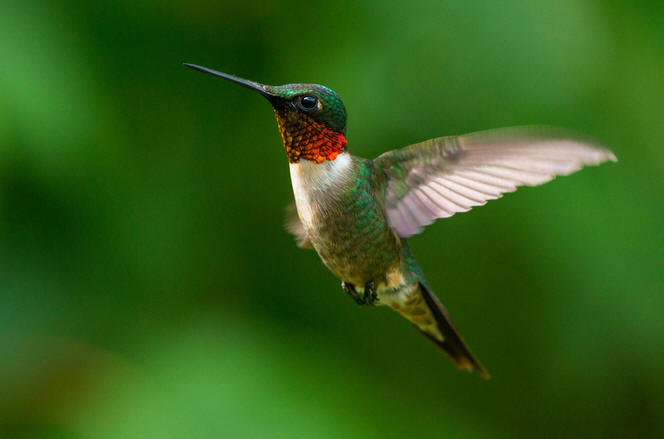 Beautiful Hummingbird
.
.
Click the link below for the article:
.
__________________________________________
September 24, 2024
Mohenjo
Business, Food For Thought, Human Interest, Political, Science, Technical
amazon, business, Business News, current-events, Future, Hotels, human-rights, medicine, mental-health, research, Science, Science News, technology, Technology News, travel, vacation
Click the link below the picture
.
Imagine cruising down the highway when you notice your fuel tank running low. Your GPS indicates 10 gas stations lie ahead on your route. Naturally, you want the cheapest option. You pass the first handful and observe their prices before approaching one with a seemingly good deal. Do you stop, not knowing how sweet the bargains could get up the road? Or do you continue exploring and risk regret for rejecting the bird in hand? You won’t double back, so you face a now-or-never choice. What strategy maximizes your chances of picking the cheapest station?
Researchers have studied this so-called best-choice problem and its many variants extensively, attracted by its real-world appeal and surprisingly elegant solution. Empirical studies suggest that humans tend to fall short of the optimal strategy, so learning the secret might just make you a better decision-maker—everywhere from the gas pump to your dating profile.
The scenario goes by several names: “the secretary problem,” where instead of ranking gas stations or the like by prices, you rank job applicants by their qualifications; and “the marriage problem,” where you rank suitors by eligibility, for two. All incarnations share the same underlying mathematical structure, in which a known number of rankable opportunities present themselves one at a time. You must commit yourself to accept or reject each of them on the spot with no take-backs (if you decline all of them, you’ll be stuck with the last choice). The opportunities can arrive in any order, so you have no reason to suspect that better candidates are more likely to reside at the front or back of the line.
Let’s test your intuition. If the highway were lined with 1,000 gas stations (or your office with 1,000 applicants, or dating profile with 1,000 matches), and you had to evaluate each sequentially and choose when to stop, what are the chances that you would pick the absolute best option? If you chose at random, you would only find the best 0.1 percent of the time. Even if you tried a strategy cleverer than random guessing, you could get unlucky if the best option happened to show up quite early when you lacked the comparative information to detect it, or quite late at which point you might have already settled for fear of dwindling opportunities.
Amazingly, the optimal strategy results in you selecting your number one pick almost 37 percent of the time. Its success rate also doesn’t depend on the number of candidates. Even with a billion options and a refusal to settle for second best, you could find your needle-in-a-haystack over a third of the time. The winning strategy is simple: Reject the first approximately 37 percent no matter what. Then choose the first option that is better than all the others you’ve encountered so far (if you never find such an option, then you’ll take the final one).
Adding to the fun, mathematicians’ favorite little constant, e = 2.7183… rears its head in the solution. Also known as Euler’s number, e holds fame for cropping up all across the mathematical landscape in seemingly unrelated settings. Including, it seems, the best-choice problem. Under the hood, those references to 37 percent in the optimal strategy and corresponding probability of success are actually 1/e or about 0.368. The magic number comes from the tension between wanting to see enough samples to inform you about the distribution of options, but not wanting to wait too long lest the best pass you by. The proof argues that 1/e balances these forces.
The first known reference to the best-choice problem in writing actually appeared in Martin Gardner’s beloved “Mathematical Games” column here at Scientific American. The problem spread by word of mouth in the mathematical community in the 1950s, and Gardner posed it as a little puzzle in the February 1960 issue under the name “Googol,” following up with a solution the next month. Today the problem generates thousands of hits on Google Scholar as mathematicians continue to study its many variants: What if you’re allowed to pick more than one option, and you win if any of your choices are the best? What if an adversary chose the ordering of the options to trick you? What if you don’t require the absolute best choice and would feel satisfied with second or third? Researchers study these and countless other when-to-stop scenarios in a branch of math called “optimal stopping theory.”
.
 Jonathan Kitchen/Getty Images
.
.
Click the link below for the article:
.
__________________________________________
September 24, 2024
Mohenjo
Business, Food For Thought, Human Interest, Political, Science, Technical
amazon, business, Business News, current-events, Future, Hotels, human-rights, medicine, mental-health, research, Science, Science News, technology, Technology News, travel, vacation

Click the link below the picture
.
I am a physician and a scientist. Over 12 years, I had the privilege of serving Presidents Barack Obama, Donald Trump and Joe Biden as the director of the National Institutes of Health. Before that, I led the U.S. component of the Human Genome Project.
I am amazed by the medical progress that has been possible in the past few decades, both in alleviating suffering and saving lives. But I am also deeply troubled by the growing distrust of science in our society, just at the time when its insights are most needed. No recent experience highlights that disconnect more starkly than the last five years of the Covid pandemic. From my vantage point on the front lines of that battle against a dangerous virus, let me highlight both the triumphs and tragedies, and propose some actions that we can all take to re-anchor our troubled society to truth, science, faith, and trust — and put us back on an individual and collective journey that might be called the road to wisdom.
Go with me back to early 2020, as the worst pandemic in more than a century was spreading across the globe, and deaths in the United States were in the thousands every day. For me and hundreds of scientists who joined together during Operation Warp Speed, the most hopeful strategy was to develop a vaccine. We all worked to be sure the large-scale trials were scrupulously conducted, and that they involved a wide range of men and women of different racial and ethnic backgrounds.
What would success look like? The Food and Drug Administration had set the threshold for approval of this effort at 50 percent efficacy, about what the flu vaccine achieves most years. My colleague Tony Fauci and I frequently discussed our hopes for the outcome. Maybe it could be possible to reach 70 percent? I confess that I was fearful of failure. I also prayed a lot.
The results were revealed in late November 2020. For both the Pfizer-BioNTech and Moderna mRNA vaccines, there was 90 to 95 percent efficacy in preventing illness that caused respiratory symptoms and close to 100 percent efficacy in preventing severe disease and death. Side effects were minimal in the tens of thousands of volunteers who had taken part in each trial. It was a moment of profound relief, of gratitude toward all who had made this possible, of answered prayer. As I tried to speak to the dedicated team about the significance of what had just happened, I could not find words that could fully express the emotions of the moment. I was unable to hold back the tears.
Future historians will judge the development of safe and effective mRNA vaccines for Covid in 11 months as one of the greatest medical achievements in human history. We felt that at last we were on a path to conquering this disease and stopping the terrible death toll. And to a major extent, that came true: Current estimates by the Commonwealth Fund, a nonprofit foundation supporting research on health care, are that more than three million lives were saved in the United States between December 2020 and November 2022 by Covid vaccines. If you were vaccinated, you might be one of them. I might be also.
Yet ultimately more than 50 million adult Americans declined vaccination — even after the shots were made widely available at no cost. Though medicine and public health make poor bedfellows with politics, one’s political party was a strong predictor of resistance. So was religion, with white evangelical Christians (my own group) the most resistant of all. Public distrust, driven by social media, cable news and even some politicians, reflected a host of concerns: whether Covid-19 was real, whether it was really all that serious, whether the vaccines were rushed, whether there were common and serious side effects that had been hidden, whether the mRNA would alter the recipient’s DNA, and whether companies had skirted the rules about safety. More outlandish conspiracies also circulated on social media: that the vaccines contained microchips or cells from recently aborted fetuses, for example. People of faith were particularly hard hit by misinformation.
.
 An artwork from the series “Let no one say we were not here,” 2020-23. Credit…Lydia See
.
.
Click the link below for the article:
.
__________________________________________
September 23, 2024
Mohenjo
Business, Food For Thought, Human Interest, Political, Science, Technical
amazon, business, Business News, current-events, Future, Hotels, human-rights, medicine, mental-health, research, Science, Science News, technology, Technology News, travel, vacation
Click the link below the picture
.
At a latitude of 78 degrees north lies the northernmost city in the world. It is an odd place. Way above the Arctic Circle—a mere 814 miles from the North Pole—Longyearbyen, in Norway’s Svalbard archipelago, is home to only 2,400 people but more than 1.3 million seeds.
The Svalbard Global Seed Vault is an underground storage facility designed to secure seeds to “ensure that food crop varieties are not lost” in the event of a global crisis such as war, terrorism, or climate change. Touted as “our insurance policy that we’re going to be able to feed the world in 50 years,” the vault has been situated at a location and depth in the Arctic intended to ensure that the seeds will not rot or sprout and will be available for use when needed. For further safety, the vault is refrigerated to zero degrees Fahrenheit and designed to withstand a magnitude 10 earthquake. (For comparison, the quake that produced the tsunami that devastated Fukushima, Japan, was magnitude 9.) On the surface, the seed repository sounds like a very solid idea. But it rests on shaky foundations.
The vault opened in 2008, following on an earlier iteration in which seeds were stored in a nearby coal mine. It is not specifically a response to the threat of climate change, but it is an epitome of climate-adaptation thinking. The logic behind it goes like this: Climate change is underway, and our political systems seem to be incapable of meaningful action to stop it, so we have little choice but to plan for a future when we will face serious climate disruption.
Chief among the disturbances will be disruptions to the food supply as punishing droughts and heat waves lead to widespread seasonal crop failures and important individual food species become impossible to grow in the places where people are used to growing them. When that happens, a supply of diverse seeds—including some adapted to hotter, harsher climates—may be just the thing we need to protect our food systems and stave off disaster.
It’s good to be realistic about the climate future we are facing, but the seed vault embeds a conceit common to many adaptation plans: we know what we are facing, so if we plan well, things will go well. But already chinks in the vault’s armor have appeared. In 2017 the vault suffered a flood caused, ironically, by climate change. A very warm (but increasingly not exceptional) winter combined with heavy spring rain to thaw part of the surrounding permafrost, flooding the entrance and threatening the safety of the seeds. Changes have been made to the vault’s entrance to lessen this particular risk, but the breach—less than a decade after the vault opened—shows that we humans are not very good at anticipating change, even in the short run.
Boosters of the seed vault sustain the logic of their effort in part by effacing the embarrassment of the flood. The timeline of the vault on the website of the vault’s partner, CropTrust, does not mention it. When asked about the flood by a reporter for the Guardian, a representative of the Norwegian government, which owns and operates the vault, said: “It was not in our plans to think that the permafrost would not be there and that it would experience extreme weather like that … The question is whether this is just happening now, or will it escalate?”
You don’t have to be a climate scientist to know the Arctic is losing permafrost; in Svalbard, the dislocation is obvious even to an untrained eye. And it’s long been known that the Arctic would warm more rapidly than the rest of the globe: Princeton University geophysicist Syukuro Manabe predicted this effect—known as polar amplification—in the 1970s (he belatedly won a Nobel Prize in 2021 for this work). Today the Arctic is warming four times faster than the rest of the planet. Even if the entire world were to stop burning fossil fuels now, global temperatures would not return to normal for decades or centuries to come. Given the state of action (or inaction) on climate, we don’t have to ask whether Arctic warming and permafrost loss will escalate. It is a near certainty.
.
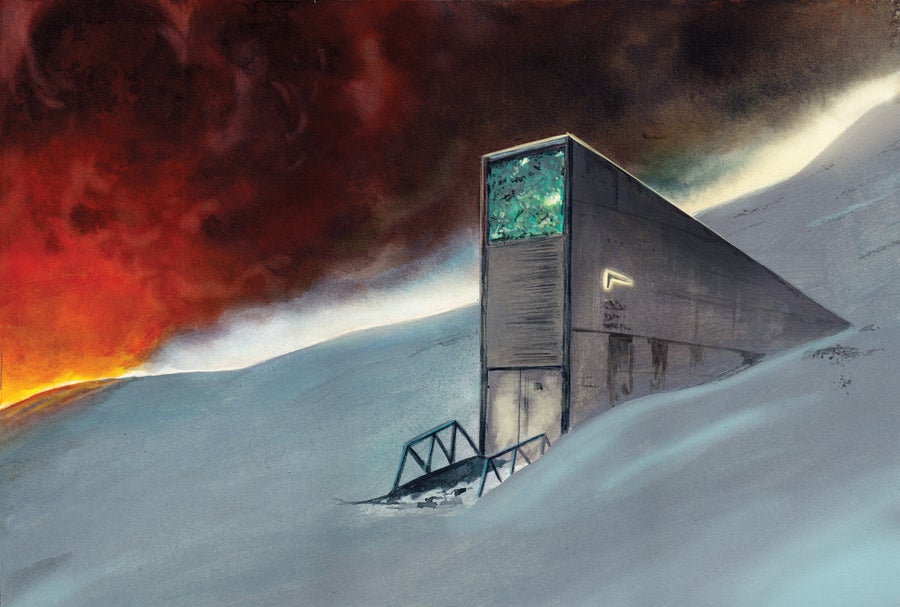 Scott Brundage
.
.
Click the link below for the article:
.
__________________________________________
Older Entries
Newer Entries
 James' World 2