September 30, 2024
Mohenjo
Business, Food For Thought, Human Interest, Political, Science, Technical
amazon, business, Business News, current-events, Future, Hotels, human-rights, medicine, mental-health, research, Science, Science News, technology, Technology News, travel, vacation

Click the link below the picture
.
On some days, worries can cloud the typically upbeat mood at the Synval Santos Day Center, a modest care facility for the elderly with Alzheimer’s disease, in Volta Redonda, the old steel town 60 miles west of Rio de Janeiro. But Danielle Freire knows just what to do.
Freire, a psychologist, and the center’s coordinator, takes the anguished “patron” (no “patients” here, please!) by the arm and coaxes her (8 of 10 clients are female) to the faux “bus stop” in an arbored patio. There, they sit, chat, and reminisce about childhood and the old days, until the panic subsides, as they wait for a bus that never comes.
Years of trial and error have taught Freire’s team of 22 caretakers at Synval Santos how to manage sundown syndrome—a pique of late afternoon distress or the sudden urge to flee that is common to Alzheimer’s patients. Nimble intervention, one-on-one attention, patience, and a gentle sleight of hand is the routine for the facility’s 75 elderly patrons, who have moderate stage Alzheimer’s. (At the facility, which is part of the Davos Alzheimer’s Collaborative’s Healthcare System Preparedness Program, patients come for the day and go home in the evenings.)
“If you show concern, stay calm, and never argue,” Freire told me on a recent visit to the Center, “the stress passes, and even those anxious to flee soon forget their troubles.”
Brazil is a country the size of a continent, with staggering inequalities, where the wealthy enjoy world-class private health services and the poor languish at understaffed public hospitals. Synval Santos Day Center, however, is a rare exception in Latin America: a publicly financed and managed social service that works.
The institution’s decade-long record of caring for those with Alzheimer’s is already a beacon for Brazil and elsewhere. Its success makes it a magnet for people from surrounding towns and even out of state.
Volta Redonda, however, is atypical. It is one of just 106 towns among Brazil’s 5,568 municipalities to provide no-fee services—workshops, exercise, and cognitive calisthenics—for the elderly. The city boasts Brazil’s first and perhaps its only public center dedicated to Alzheimer’s. It’s much the same across Latin America, where the number of people with dementia is expected to soar from 7.8 million in 2013 to more than 27 million by 2050.
Many poor nations have islands of excellence in medicine and clinical care, but only for the well-off. Just 25 percent of Brazilians have private health insurance and access to top-tier treatment. In theory, Brazil’s Universal Health System (SUS, in Portuguese) tends to the other three-quarters through a nationwide network of free neighborhood clinics and hospitals. The system proved vital during the pandemic, treating COVID emergencies and administrating vaccines to millions, even as the central government downplayed the contagion and dismissed the advice of public-health experts.
But SUS is plagued by chronic underfunding, red tape, and patchy services that vary according to the agendas of local officials and national political class.
.

Patrons of the Synval Santos Day Center waiting at the “bus stop.” Image courtesy of Synval Santos Day Center
.
.
Click the link below for the article:
.
__________________________________________
September 30, 2024
Mohenjo
Business, Food For Thought, Human Interest, Political, Science, Technical
amazon, business, Business News, current-events, Future, Hotels, human-rights, medicine, mental-health, research, Science, Science News, technology, Technology News, travel, vacation

Click the link below the picture
.
If sciatica symptoms prevent you from working, exercising, or performing daily tasks easily, try these 3 core exercises for sciatica and lower back pain.
When you have sciatica, finding core exercises to build a stronger torso can be challenging — even some of the best abs exercises are off the table. That’s why Dr. Grant Elliot of Rehab Fix suggests these three exercises to help alleviate pain instead.
I recommend performing these moves using one of the best yoga mats to ensure your back gets the most support possible. If you’ve already got the kit you need, check out each exercise below, the benefits, and how to perform them.
“Say goodbye to sciatica pain with our expert guidance on selecting the right core exercises,” says Dr. Elliott. “We understand the challenges that come with managing sciatica, and that’s why we’re here to provide you with safe and effective options.
Our video walks you through three carefully chosen core exercises that are specifically designed to bring relief to those struggling with sciatica.”
Whether you struggle with a tight lower back and want to relieve tension, build core strength, or ease the trickier symptoms of sciatica, these tailored exercises are explained in the video below step by step, allowing you to incorporate them into your routine at your own pace.
Before you get started, it’s worth briefly explaining why some core exercises aren’t working for you. Dr. Elliott says some exercises can push or pull against the sciatic nerve, which exacerbates symptoms in the lower back, glutes, or legs.
.
 (Image credit: Getty Images)
.
.
Click the link below for the article:
.
__________________________________________
September 29, 2024
Mohenjo
Business, Food For Thought, Human Interest, Political, Science, Technical
amazon, business, Business News, current-events, Future, Hotels, human-rights, medicine, mental-health, research, Science, Science News, technology, Technology News, travel, vacation
Click the link below the picture
.
Imagine you filmed a time-lapse video of a garden over the course of a year: you’d see details of flowers transitioning from day to night and season to season. Scientists would love to watch similar transitions on a molecular scale, but the intense light used to snap microscopic pictures of plants disrupts the processes biologists want to observe—especially at night. Writing in the journal Optica, physicist Duncan Ryan of Los Alamos National Laboratory (LANL) and his colleagues recently demonstrated a tool for imaging live plant tissues while exposing them to less light than they’d receive under the stars.
A technique called ghost imaging, first demonstrated in 1995, involves splitting a light source to create two different-wavelength photons at precisely the same time and location. The photons are entangled—a quantum phenomenon that allows researchers to infer information about one particle in a pair by measuring the other. Thus, a sample can be probed at one wavelength and imaged at another.
For plants, that means researchers can image the objects with visible-light photons and get knowledge about infrared photons that interact with water-rich molecules that are important to biological functions. To do so in the new study, the team directed a stream of infrared photons at a plant in a transparent box with a photon counter behind it while aiming the visible counterparts to those particles at an empty box at the same distance with a camera behind it. Each visible photon directed at the empty box hit a pixel and was detected in its precise location—a measurement that was much more precise than an infrared camera could achieve. Meanwhile, the infrared photons traveled to the plant box, but not all of them were counted: the plant absorbed some percentage of photons at a given spot. A computer logged the position of a pixel only when a photon hit both the camera and the counter simultaneously. This way, the researchers could construct an image of a leaf of the plant using photons that never touched it, essentially forming an infrared image on a visible camera. “It’s like a game of Battleship,” Ryan says.
Ghost imaging has proved successful in capturing pictures of simpler test designs. But for low-light-transmission samples such as plants, microscopic features often differ in absorption by just a few percent. The trick lies in an extremely sensitive detector developed at LANL that tracks the arrival of each infrared photon with trillionth-of-a-second precision—letting them map leaf tissues and peer into live plants’ nighttime activities. “We saw [leaf pores called] stomata closing as the plants reacted to darkness,” Ryan says.
Ghost imaging “creates possibilities for long-timescale dynamic imaging that does not damage live samples,” says laser spectroscopy and quantum optics researcher Audrey Eshun of Lawrence Livermore National Laboratory, who calls the new investigation a “truly innovative study.”
Observations like these make it possible to track how plants use water and sunlight throughout their circadian cycle. “We’re watching plants react to their environment,” Ryan says, “and not to our observations of them.”
.
 Thomas Fuchs
.
.
Click the link below for the article:
.
__________________________________________
September 29, 2024
Mohenjo
Business, Food For Thought, Human Interest, Political, Science, Technical
amazon, business, Business News, current-events, Future, Hotels, human-rights, medicine, mental-health, research, Science, Science News, technology, Technology News, travel, vacation

Click the link below the picture
.
Mindfulness is everywhere. Everyone from Gwyneth Paltrow to the US military has extolled the virtues of this ancient spiritual practice.
But what, exactly, is mindfulness? And can it help us deal with the stress of everyday life?
Or should we be skeptical about its secularization and commercialization?
A psychiatry researcher, a Tibetan Buddhist monk, and a practitioner-turned-scholar all have different answers.
What is mindfulness?
Mindfulness and meditation — two different but interconnected practices — are present in several ancient faiths, including Hinduism and Jainism.
But mindfulness, which dates back 2,500 years, is most commonly associated with Buddhism.
According to the Venerable Thubten Dondrub, a resident teacher at Adelaide’s Buddha House, the practice is about keeping your mind focused on an object — and that could be your breath or a “virtuous” thought.
“[It’s about asking] ‘Is my mind on the object or not? Is it fully on the object?'” he tells ABC Radio National’s Soul Search.
He says it’s also about abandoning negative behaviors and states of mind, such as anger.
Of course, this level of focus can be incredibly difficult to maintain.
Our brains naturally race at a million miles an hour, with ideas, memories, anxieties, and other thoughts constantly popping up.
But Ven Dondrub says to achieve mindfulness, you must keep reining your thoughts back in.
“If my mind keeps wandering off the topic — the object of meditation — then I’m not going to get anywhere,” he says.
“I can be sitting … so-called meditating for an hour, but most of the time my mind’s everywhere. It’s not all that beneficial.”
It should be noted that ‘mind wandering’ can also be constructive. It’s thought to play a role in generating new ideas, planning goals and helping unlock creativity.
So don’t feel deterred if you start off trying to be mindful, but your mind ends up wandering instead.
What are the benefits?
The physiological and psychological benefits of mindfulness have been studied for decades.
American professor and scientist Jon Kabat-Zinn is a leading figure in this field.
In 1979, he pioneered an eight-week program known as Mindfulness-Based Stress Reduction (MBSR) for people living with chronic pain.
The course drew on Dr Kabat-Zinn’s experience with Zen meditation and yoga, and it offered a secular, rather than spiritual, version of mindfulness.
Multiple studies have shown MBSR can reduce experiences of anxiety, depression, and stress among participants, and increase levels of self-compassion.
This is something that Harvard neuroscientist Sara Lazar has long been fascinated by, ever since a physical therapist recommended she try yoga.
“After two or three classes, it really had a profound impact on me,” she says.
.
 Is mindfulness simply awareness? Or something deeper? (Pexels: Karolina Grabowska)
.
.
Click the link below for the article:
.
__________________________________________
September 29, 2024
Mohenjo
Business, Food For Thought, Human Interest, Political, Science, Technical
amazon, business, Business News, current-events, Future, Hotels, human-rights, medicine, mental-health, research, Science, Science News, technology, Technology News, travel, vacation

Click the link below the picture
.
At Oktyabrskaya metro station, in Moscow, a towering bronze statue of Vladimir Lenin glares along Krymsky Val Boulevard toward Gorky Park. Below Lenin’s feet, among the proletariat entourage, a sculpted woman stands with one arm raised in triumphant solidarity, her armpit exposed and victorious. I decide that this is a good omen. I am, after all, en route to a smell-dating event, where Russians will be judging the attractiveness of my armpit aroma.
Billions of dollars are spent every year trying to avoid this exact judgment. For many people, body odor is so unappealing that they mask it with perfumes, deodorants, and antiperspirants. But what if our obsession with blocking BO is interfering with important lines of communication, those helpful messages aromas send about anxiety, illness, or even romance? When we spray or roll on a product, could we be blocking our chances of finding love, of finding the person—or perhaps people—who might desire us even more because of our scent?
In this era of swiping left and right in the search for a tryst or a soul mate, smell dating operates on a more analog premise. Instead of swiping, the strategy is wiping: namely, one’s perspiration onto a cotton pad. The premise is straightforward: smell-dating contenders work up a sweat doing high-intensity exercise, their perspiration-rich cotton pads are collected and placed in anonymous containers, and everyone lines up to sniff through the smelly samples. Participants then secretly rate their top preferences and give their picks to organizers, who reveal the matches. Like on the dating app Tinder, a match occurs only when two individuals pick each other’s pong.
The only criterion for a romantic match is scent, which is about as logical as any other dating filter. I mean, who cares if you both share a love of taxidermy, say, or the novels of Haruki Murakami? You’ll eventually smell the body odor of your lover, and it’s probably going to be a make-or-break moment. Smell dating skips to the chase (or, more accurately, it entirely skips the chase) and uses body odor as the first elimination round for mate selection—or date selection, at any rate.
There would be several afternoon and evening smell-dating rounds in the city’s most bustling green space, Gorky Park, as part of a larger science-and-technology festival that takes place over a weekend in May. Random people wandering around the park, science nerds attending the festival, and those attracted to the event after seeing it advertised in local media would all participate—or at least that’s what Olga Vlad, the event organizer, told me. This being Russia, people who match up at the smell-dating event would be given exclusive entrance bracelets to a nearby VIP lounge tent so that couples could get to know each other over free, all-you-can-drink vodka cocktails.
A tall German woman with impossibly straight hair and a friendly smile adds my name to the list, hands me some wet wipes, and instructs me to remove the deodorant in my armpits and any other perfumed products I might have put on today.
About forty people are milling around. A twenty-seven-year-old woman named Sofya, wearing a blue bomber jacket and a headband composed of tiny red rosebuds, is surveying the crowd. I ask whether she has ever been attracted to someone on the basis of body odor. “Yes, that’s the only way I choose a partner. I prefer that, when my partner wears no deodorant, that he smells okay. I have been repelled by a man’s body odor.” Sofya gives me a significant look that I don’t know how to interpret.
.
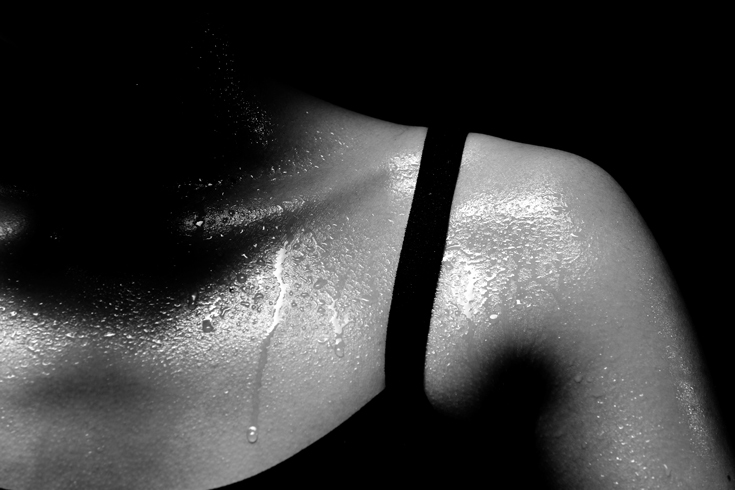 JadeThaiCatwalk/iStock
.
.
Click the link below for the article:
.
__________________________________________
September 28, 2024
Mohenjo
Business, Food For Thought, Human Interest, Political, Science, Technical
amazon, business, Business News, current-events, Future, Hotels, human-rights, medicine, mental-health, research, Science, Science News, technology, Technology News, travel, vacation
Click the link below the picture
.
People generally don’t confuse the sounds of singing and talking. That may seem obvious. But it’s actually quite impressive—particularly when you consider that we are usually confident that we can discern between the two even when we encounter a language or musical genre that we’ve never heard before. How exactly does the human brain so effortlessly and instantaneously make such judgments?
Scientists have a relatively rich understanding of how the sounds of speech are transformed into sentences, and how musical sounds move us emotionally. When sound hits our ear, for example, what’s actually happening is that sound wavesare activating the auditory nerve within a part of the inner ear called the cochlea. That, in turn, transmits signals to the brain. These signals travel the so-called auditory pathway to first reach the subregion for processing all kinds of sounds, and then to dedicated music or language subregions. Depending on where the signal ends up, a person comprehends the sound as meaningful information and can distinguish an aria from a spoken sentence.
That’s the broad-strokes story of auditory processing. But it remains surprisingly unclear how exactly our perceptual system differentiates these sounds within the auditory pathway. Certainly, there are clues: music and speech waveforms have distinct pitches (tones sounding high or low), timbres (qualities of sound), phonemes (speech sound units), and melodies. But the brain’s auditory pathway does not process all of those elements at once. Consider the analogy of sending a letter in the mail from, say, New York City to London or Taipei. Although the letter’s contents provide a detailed explanation of its purpose, the envelope must include some basic information to indicate its destination. Similarly, even though speech and music are packed with rich information, our brain needs some basic cues to rapidly determine which regions to engage.
The question for neuroscientists is therefore how the brain decides whether to send incoming sound to the language or music regions for detailed processing. My colleagues at New York University, the Chinese University of Hong Kong, and the National Autonomous University of Mexico and I decided to investigate this mystery. In a study published this spring, we present evidence that a simple property of sound called amplitude modulation—which describes how rapidly the volume, or “amplitude,” of a series of sounds changes over time—is a key clue in the brain’s rapid acoustic judgments. And our findings hint at the distinct evolutionary roles that music and speech have had for the human species.
Past research had shown that the amplitude modulation rate of speech is highly consistent across languages, with a rate of four to five hertz, meaning four to five ups and downs in the sound wave per second. Meanwhile, the amplitude modulation rate of music is consistent across genres, at about 1 to 2 Hz. Put another way: when we talk, the volume of our voice changes much more rapidly in a given span of time than it does when we sing.
Given the cross-cultural consistency of this pattern in past research, we wondered whether it might reflect a universal biological signature that plays a critical role in how the brain distinguishes speech and music. To investigate amplitude modulation, we created special white noise audio clips in which we adjusted how rapidly or slowly volume and sound changed over time. We also adjusted how regularly such changes occurred—that is, whether the audio had a reliable rhythm or not. We used these white noise clips rather than realistic audio recordings to better control for the effects of amplitude modulation, as opposed to other aspects of sound, such as pitch or timbre, that might sway a listener’s interpretation.
.
 Peterschreiber.media/Getty Images
.
.
Click the link below for the article:
.
__________________________________________
September 28, 2024
Mohenjo
Business, Food For Thought, Human Interest, Political, Science, Technical
amazon, business, Business News, current-events, Future, Hotels, human-rights, medicine, mental-health, research, Science, Science News, technology, Technology News, travel, vacation

Click the link below the picture
.
Liz Gabor calls the odor “man sweat.” And though she’s loath to admit it, the aromatic scent makes her feel, as she calls it, a little frisky. “My friends think I’m crazy, but I think male sweat is kind of pleasant and, well, kind of hot,” says Gabor, 28, a customer service rep and happily married mother of two young girls.
Gabor doesn’t have a honker that’s on the fritz. Rather, her penchant for “man sweat” is all in her genes, according to new research from Rockefeller and Duke Universities published this week in the journal Nature. Scientists have previously found an association between male sweat and female arousal, but this study is the first to find a gene that is linked to the ability to smell a specific chemical in the sweat. And that, they say, may be a revolution in the understanding of how our olfactory sense functions.
According to the Rockefeller and Duke researchers, about 70 percent of adult men and women have the genetic capacity to perceive a particular chemical called androstenone in male body odor. To them, the testosterone-laden substance can take on a pleasant bouquet similar to vanilla or other sweet or woodsy scents. Others who have a functional copy of the gene perceive androstenone as less than pleasurable, akin to the aromatic elixir of stale urine. About 30 percent of adult men and women can’t smell androstenone at all, leading researchers to suspect they might be missing the gene responsible for smelling the aroma.
To figure out exactly who could smell the manly-man scent of androstenone, researchers presented 400 participants with 66 different odors, including woodsy scents like pine, strong scents like garlic, and esoteric odors like methanethiol, a man-made scent that is similar to the smell of urine after a person has eaten asparagus.
DNA taken from blood samples was then analyzed, and those individuals who could smell androstenone were found to have genetic variations in a single odorant receptor called OR7D4. Whether they perceived androstenone as pleasant or foul smelling was due to two tiny changes in the gene, called single nucleotide polymorphisms, that made the odorant receptor stop functioning.
For researchers who are trying to unravel the complicated way people perceive certain aromas, finding a genetic link to at least one smell—male body odor—is akin to finding a Rosetta Stone. “There is a mystery as to how the nose works, well beyond the whole realm of male sweat,” says neuroscientist Charles J. Wysocki, Ph.D., a member of the Monell Chemical Senses Center in Philadelphia and one of the world’s leading olfactory science researchers. “Quite frankly, I am jealous of them.”
While being able to smell androstenone may seem like an attribute that you can live without, the chemical may have some broader implications than making us scream “ewwww.” Or in the case of some women, “aaahhh.”
.
 Male sweat
.
.
Click the link below for the article:
.
__________________________________________
September 27, 2024
Mohenjo
Business, Food For Thought, Human Interest, Political, Science, Technical
amazon, business, Business News, current-events, Future, Hotels, human-rights, medicine, mental-health, research, Science, Science News, technology, Technology News, travel, vacation

Click the link below the picture
.
The incomparable Dame Maggie Smith, known for her myriad roles in film, TV, and onstage, died Friday in London, her family said. She was 89.
“She passed away peacefully in hospital early this morning, Friday 27th September. An intensely private person, she was with friends and family at the end,” her sons Toby Stephens and Chris Larkin said in a statement. “She leaves two sons and five loving grandchildren, who are devastated by the loss of their extraordinary mother and grandmother.”
They wrote, “We would like to take this opportunity to thank the wonderful staff at the Chelsea and Westminster Hospital for their care and unstinting kindness during her final days.”
Maggie Smith was born Margaret Natalie Smith on Dec. 28, 1934, in Ilford, England, to Nathaniel and Margaret Smith. When she was 4, her family, including her older twin brothers Alistair and Ian, moved to Oxford, where Smith’s father worked as a public health pathologist at the university. Smith attended Oxford High School until she was 16, when she left to study acting at the Oxford Playhouse.
The freckle-faced redhead began her career at the Playhouse in 1952, transforming for roles including Viola in “The Twelfth Night.” In 1956, she made her film and Broadway debuts, appearing as one of the party guests in the movie “Child in the House” and playing several roles in the review “New Faces of ’56” at the Ethel Barrymore Theatre in New York City.
“There was one very famous one, which was the one with Eartha Kitt. And I think everybody who was in it thought they were all going to be Eartha Kitt or be big stars,” Smith told NPR of starring in “New Faces.” “That didn’t happen, but it was a wake-up call to have one’s first professional job on Broadway, I must say.”
Throughout her over-60-year career, Smith starred in more than 80 films and TV series and appeared in dozens of plays, including four on Broadway.
Smith starred in movies including “Othello” (1965), “The Prime of Miss Jean Brodie” (1969), “Clash of the Titans” (1981), “The Secret Garden” (1993), “Gosford Park” (2001), “The Best Exotic Marigold Hotel” (2012) and “The Lady in the Van” (2015). She won a Best Actress Oscar for “Jean Brodie” and a Best Supporting Actress Oscar for “California Suite” (1978). She also won five BAFTAs, four Emmys, three Golden Globes, and a Tony award.
In recent years, Smith was well-known for her portrayal of Violet Crawley in the “Downton Abbey” TV series and movies, as well as her role as Professor McGonagall in the “Harry Potter” film franchise, which was beloved by many, including herself.
.
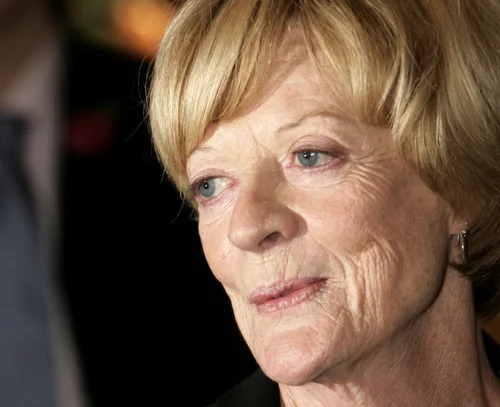
Dame Maggie Smith arrives at the world premiere of “Harry Potter and the Goblet of Fire” in London in 2005.
Dave Hogan via Getty Images
.
.
Click the link below for the article:
.
__________________________________________
September 27, 2024
Mohenjo
Business, Food For Thought, Human Interest, Political, Science, Technical
amazon, business, Business News, current-events, Future, Hotels, human-rights, medicine, mental-health, research, Science, Science News, technology, Technology News, travel, vacation

Click the link below the picture
.
Intro – 1 of 10 in gallery
There’s nothing like the breathtaking and iridescent blues, purples, and greens of a hummingbird to bring a bit of joy and color to your yard. However, these winged wonders are extremely picky about what environments they choose to grace with their presence. There’s a whole host of reasons why your yard is not benefitting from their soothing hum, their sublime hovering, and their chirpy nature. However, the good news is that if your home is situated in a geographical hummingbird hotspot, then there’s no reason you cannot make it hummingbird friendly.
There are over 350 species of hummingbirds, but the ones most commonly found feeding in America’s backyards include the ruby-throated hummingbird, black-chinned hummingbird, Rufous hummingbird, and Anna’s hummingbird. And depending on where you live, you could encounter even more variety. However, you may find that you aren’t seeing even the most common native species stop by your home. Here are the reasons why they’re probably steering clear of your yard, as well as the steps you can take to make your yard more hospitable.
.
 Raul Baena/Shutterstock 1 of 10
.
.
Click the link below for 9 reasons:
.
__________________________________________
September 27, 2024
Mohenjo
Business, Food For Thought, Human Interest, Political, Science, Technical
amazon, business, Business News, current-events, Future, Hotels, human-rights, medicine, mental-health, research, Science, Science News, technology, Technology News, travel, vacation
History is a good thing. Type Alzheimer’s in the search box for all Alzheimer’s articles – Every article that has the word Alzheimer’s in it will be shown, there are a lot of Alzheimer’s articles on this website!
Click the link below the picture
.
Dementia has been around since antiquity, but scientists identified Alzheimer’s as a brain disease only a century ago. Clues to its biology emerged slowly, and the field struggled. But discoveries accelerated since the 1990s, through advances in numerous fields, including genomics, brain imaging and immunotherapies. Today, as scientists chase new diagnostics and therapies, the stakes remain high.
.
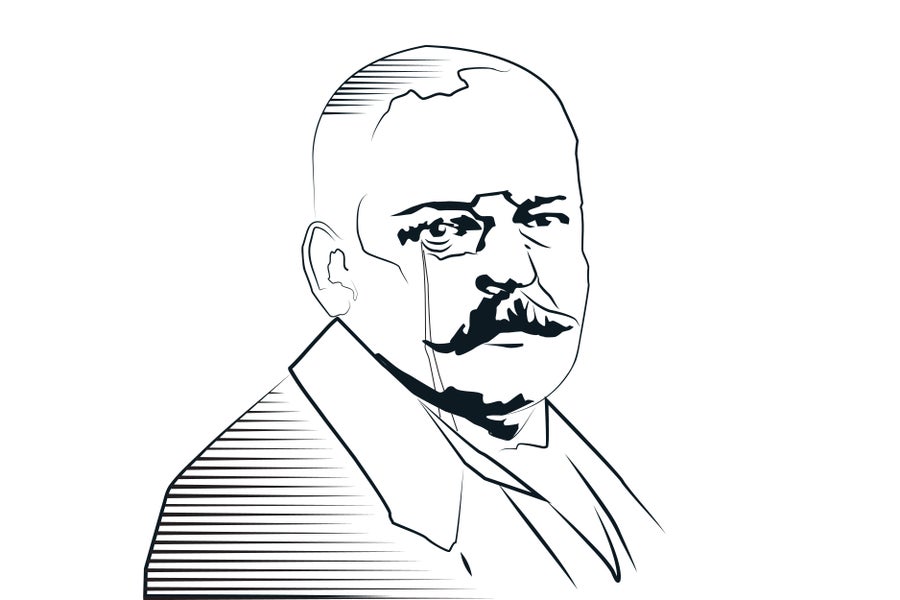 Joelle Bolt
.
.
Click the link below for a brief history of Alzheimer’s:
.
__________________________________________
Older Entries
Newer Entries
 James' World 2