After attending the first annual Global Sickle Cell Disease Congress in Accra, Ghana, in 2010, Obiageli Nnodu returned home to Nigeria with a deep resolve to combat the disease in her own country. Nigeria is estimated to have the world’s largest population of people with sickle cell disease, and Nnodu, a clinical hematologist and sickle cell researcher at the University of Abuja, has been treating adults with the illness since 1985. She knew she would have had far more impact if she could have intervened when they were young. Most people who die from sickle cell disease in Africa are children who have never been diagnosed, so instituting widespread newborn screening would be the most effective way to help them survive.
At the time, the efforts to screen newborns in Nigeria were small and isolated, with little communication or collaboration among groups. Nnodu co-founded the Sickle Cell Support Society of Nigeria (SCSSN), a nongovernmental organization that brings together other NGOs, doctors, researchers, parents, and patients. Her first goal: collect as much data as possible about the disease in her country.
Nnodu quickly learned that diagnostic tests in Nigeria required tedious sample collection, transportation to one of only six sickle cell centers across the nation, reliable power for the diagnostic machines at those centers, and highly trained personnel to collect and process the samples. In a country like Nigeria, with a largely rural population, scaling up this process was simply not feasible.
By 2017 more practical tests had been developed—ones with a low learning curve that didn’t require electricity and could be conducted at the patient’s location. Between September and December of that year, Nnodu’s team used those simple devices to test more than 1,000 newborns across Nigeria and proved they could reliably and accurately diagnose day-old babies. Shortly thereafter, a study of infants at immunization clinics in the capital city of Abuja showed their approach could be integrated into a public health system.
Based on Nnodu’s foundational studies, a health-care network, the Consortium on Newborn Screening in Africa, was created; by 2021 it included seven countries. It works to establish and expand newborn screening and early-intervention programs at medical centers and hospitals. Nnodu is also the principal Nigerian investigator for another multicountry collaboration, the Sickle Pan African Research Consortium, which is working to develop infrastructure for sickle cell disease research, care, education, and training in sub-Saharan Africa.
In just 15 years, “she has taught those working with her the power of networking, collaboration, and attention to detail,” says Adekunle Adekile, the previous chair of the SCSSN and a sickle cell researcher and professor of pediatric hematology at Kuwait University.
Nnodu acknowledges that it’s unusual for a hematologist who works with adults to focus on newborn screening. She hopes that by identifying sickle cell disease early, she can get these tiny patients to pediatricians who will look after them so they can grow up, be educated, take on grown-up responsibilities “and come to me.”
Running red lights. Falling for scams. Shutting out friends.
Memory loss is the most well-known symptom of dementia, particularly Alzheimer’s disease. However, experts say there are other warning signs that can signal early brain changes — ones that are especially important for types of dementia where forgetfulness is not the primary symptom.
Just like occasional lapses in memory, these issues can also be attributed to other age- or health-related changes (or just a bad day), so experts emphasized that they aren’t necessarily red flags for dementia in isolation. But, especially in combination, they might be a sign that it’s time to see a doctor.
1. Financial Problems
People with dementia can experience money problems or declining credit scores years before memory loss, or other cognitive symptoms, emerge. They might forget to pay their bills, for instance, or no longer be able to stick to a budget.
“One of the reasons why financial mismanagement can be a sensitive indicator is just because it’s so complicated,” involving the interplay of multiple brain regions, said Dr. Winston Chiong, a professor of neurology at the University of California, San Francisco. Consequently, finances can be one of the first areas where cracks in someone’s cognition start to appear.
Poor financial decision-making is especially a concern for those with frontotemporal dementia, a relatively rare form of dementia where judgment is affected very early on in the disease. Some people with this condition might make big, impulsive purchases. Others might trust people they would not normally, increasing their risk of being scammed.
“People with frontotemporal dementia are less sensitive to potential negative consequences,” Dr. Chiong said. Because of this, they may have increased “susceptibility to different kinds of manipulation,” or they may be “more likely to be wasteful with money or careless with money.”
2. Sleep Issues
Sleep disorders can become more common as people age, and older adults tend to sleep more lightly and go to bed and wake up a little earlier than they used to — that is completely normal. But if there are dramatic changes in someone’s sleep habits, where they are starting their morning at 3 a.m. or are unable to stay awake during the day, it can be a sign of dementia.
“Some of the brain regions, like in the brainstem, that are really important for regulating sleep and wake cycles are the first that are affected by Alzheimer’s disease,” said Joe Winer, an instructor of neurology and neurological sciences at Stanford University. “So years before someone has any signs of memory symptoms,” they might experience changes in their sleep patterns.
One change that can occur specifically with dementia with Lewy bodies — another type of progressive brain disorder — is that a person might begin acting out their dreams. This is also true for Parkinson’s disease, which is related to dementia with Lewy bodies. Ordinarily, our muscles become paralyzed while we’re in REM sleep, which is when we tend to have the most vivid dreams. But in these two neurodegenerative disorders, toxic proteins attack the cells in the brainstem that control sleep paralysis.
3. Personality Changes
In a study published last year, researchers found that people with dementia experienced slight drops in extroversion, agreeableness, and conscientiousness before they showed any signs of cognitive impairment. Those personality changes accelerated as more dementia symptoms emerged, said Angelina Sutin, a professor of behavioral sciences and social medicine at Florida State University, who led the study.
While the research was conducted using a standardized personality test, there are a few changes in everyday behavior that you can watch out for. A decrease in extroversion, for example, may look like a person becoming more withdrawn, or a narrowing of their social circle.
It may be easier to tell that someone is “not going out as frequently anymore than to recognize how much their memory has declined,” Dr. Sutin said.
Some of these personality changes might happen spontaneously, as a result of the damage occurring in the brain. With frontotemporal dementia, for instance, a decline in agreeableness, where the person becomes less trusting and friendly, is linked to decreased brain volume in the frontal cortex — a key component of the condition.
Other times, the changes might arise because of the cognitive symptoms. For example, a person with Alzheimer’s disease might appear to be less conscientious, becoming increasingly disorganized or having difficulty completing work or household tasks as their memory declines.
4. Driving Difficulties
Along with handling finances, driving is one of the most complex cognitive behaviors people perform every day. Ganesh Babulal, an associate professor of neurology at Washington University in St. Louis, has demonstrated in his research that problems behind the wheel can manifest years before they do elsewhere.
Driving “is this ultimate blend of the cognitive system,” Dr. Babulal said. “And if there’s one thing that’s out of whack, that unfortunately will compromise and shift the driver from being in control to being at a risk for a crash or a collision.”
Cognitive impairment can show up as scratches on a car, getting into a fender bender (or a near miss) or running stop signs or stoplights. People may also brake or accelerate suddenly or take turns too fast. As a result, Dr. Babulal said that they may stop driving as much — especially at night, in bad weather, or during rush hour — or they may feel reluctant to drive with grandchildren or other passengers in the car.
Of course, other physical issues that can occur with old age, like vision problems, neuropathy, or medication side effects, can affect people’s driving. But if you notice troubling changes in someone’s ability, it might be worth having the “car key conversation.”
As Hurricane Rita bore down on the bayous of southeastern Texas in 2005, Caitlin Eaves’s family made the wrenching decision to evacuate and leave their longtime home to an uncertain fate. After they returned, they spent several months sleeping on what was left of their floor and repairing the extensively flood-damaged house bit by bit, hampered in part by the long delay in restoring power. The storm also destroyed the local high school, leaving then-16-year-old Eaves and her peers in their 200-person rice-farming community without any formal schooling for weeks.
When Hurricane Harvey barreled toward the same area in 2017, Eaves’s parents and her then 91-year-old grandmother opted to stay put based on the forecasts. But the storm stalled over the region, inundating some areas with more than 60 inches of rain. The resulting floods trapped her family in their home. Eaves, by then grown and living elsewhere, frantically called local high school friends. Within minutes they rushed to successfully rescue the family by airboat.
The experiences exacted a mental toll on the family. “These kinds of things keep happening over and over, and I think my parents are finally getting worn down with everything they have to do,” Eaves says. But people such as her parents can’t just sell a house in small-town Texas for enough to buy a home farther inland, away from the danger of future storms. Their story is one of thousands of similar accounts among hurricane survivors. Almost 300 hurricane-related disasters have struck the U.S. since 2001, and such events are predicted to become increasingly frequent and ferocious. Two massive storms—Fiona and Ian—recently wrought their damage within days of each other, stressing already stricken places such as Puerto Rico to the breaking point.
Just one major destructive event such as this has immediate and sometimes long-term mental health effects, which can worsen when the disaster and its aftermath are severe and lingering. And research shows that people who are subjected to a conveyor belt of catastrophes are at even greater risk for mental health struggles related to anxiety, post-traumatic stress disorder (PTSD), and mood disorders. The level of support and resources available in an affected location can determine how resilient residents are to these difficulties—and a key strategy may rely on developing what are called “concentric circles of community.” With the individual at the center, family and friends form the closest such circle, followed by neighborhood acquaintances and then the support structures around these communities, from government policies to literal structures that can protect them. “Local government and local organizations need to be active, along with targeted states and national government,” says Sarah Lowe, a social and behavioral scientist at the Yale School of Public Health.
Immediate Aftermath
Many people suffer acute stress in the immediate aftermath of a massive disaster, Lowe says. They might have nightmares or want to avoid reality completely, and they can experience a heightened sense of watchfulness that leaves them jumpy and struggling to fall asleep. As a teen, Eaves stopped buying things that wouldn’t fit into her emergency “go bag.” “You catch yourself doing weird things like that,” she says, “and being used to the ongoing inconvenience of it, never feeling stable.”
.
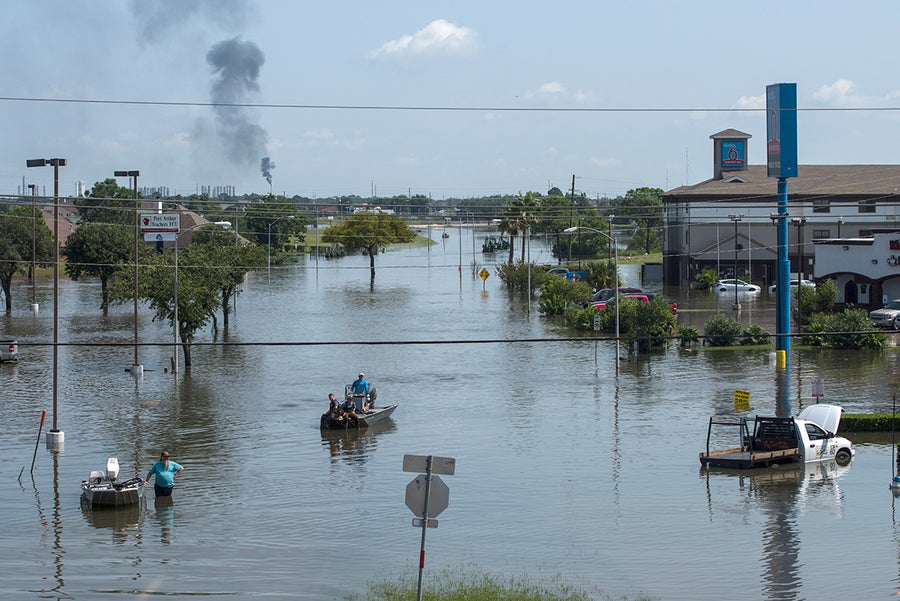
Residents return to their homes in Port Arthur, Texas to survey the damage wrought by Hurricane Harvey in September 2017. Michael Robinson Chavez/The Washington Post via Getty Images
If you are naturally more focused and proactive in the evenings, with your preferred bedtime anywhere beyond the 12am mark, then you might consider yourself a ‘night owl’. However, if you’re among the population who struggle to keep your eyes open past 10pm, you’re probably a ‘morning lark’.
A new study by Imperial College London analysed the data of 26,000 people and found that night owls performed better in cognitive tests compared to those who enjoy an early morning, leading them to the conclusion that night owls are generally more mentally sharp than morning larks.
Key takeaways from the study
Study showed ‘night owls’ generally performed better in cognitive tests
early-risers consistently showed the lowest cognitive scores in both groups analysed
Sleeping for fewer than 7 hours had detrimental effects on brain function
The study, published in BMJ Public Health in July, found that our natural bedtime preferences can have a big impact on our mental alertness. These finding come from 26,000 people who took part in cognitive tests that included Fluid intelligence/reasoning, Pairs Matching, Reaction Time and Prospective Memory.
The results showed that self confessed ‘night owls’ generally performed better in cognitive tests compared to ‘morning larks.’
Here, we’ll explore in finer detail the findings of the study and take a closer look at whether you can change the time you naturally feel inclined to sleep and what that means for your mental alertness.
What are night owls?
Night owls and morning larks are colloquial names for specific chronotypes, which are determined by genetics, age and other factors. A chronotype is the body’s natural waking and sleeping schedule. Night owls generally refers to people who sleep between the hours of 12am and 11am.
This can be influenced by genetics and circadian rhythms. So, if you feel naturally energised in the morning, but your partner struggles to get out of bed, it’s likely you have different chronotypes. While there are no right or wrong chronotypes, this study has found that they can impact cognitive ability.
Researchers looked at the data from 26,000 people who described themselves as ‘morning people’ or ‘evening people’ to find out how different aspects of sleep – including duration, patterns, and quality – affected mental sharpness and overall cognitive ability.
What did the study find?
The results from the study were highly significant, due to the notable differences in test scores. Night owls scored about 13.5% higher than morning types in one group and 7.5% higher than morning types in another group.
Democratic star Congresswoman Jasmine Crockett goes viral with a fiery speech about why every patriotic American must vote for Kamala Harris this election — and what’s really at stake.
This is how it’s done…
“This is a very real thing. This isn’t about games for me. It’s not about games for the Harris-Walz ticket. We are literally trying to save lives because we’re losing them,” Crockett said during an appearance on MSNBC.
“Whether we’re talking about the storms that are caused because we have people that want to pretend as if climate change isn’t real,” she continued. “They don’t want to make the investments and make sure that we can protect our environment.”
“Or whether we’re talking about women that have been degraded to second rate citizens in this country, that will not have an opportunity to number one determine whether or not they can live,” she said.
“Number two, determine whether or not they bring forth a family when they can afford one,” she continued. “Or determine that when they have been victimized, whether or not the government will then seek to victimize them again.”
“This isn’t a game for us because we know what lies on the other side,” she went on. “We know that we weren’t necessarily born with $400 million that was given to use and therefore we may end up in a situation where even if there’s a national abortion ban, there’s people on Trump’s side that can always go somewhere else. That’s not a reality for all of us, and honestly, we shouldn’t have to leave our states.”
“We should have elected officials that will take care of us because that is what they have promised to do,” added Crockett. “Once you swear that oath, you are supposed to protect and defend against all enemies. And right now it definitely feels as if we have a lot of people that are working against us and not for us.”
We couldn’t agree more. If you care about the future of this country, you have a moral duty to vote for Kamala Harris and Tim Walz! Together, we can defeat MAGA fascism.
Rachel Feltman: Happy Monday, listeners! And happy autumn. I hope you’re enjoying some lovely crisp sweater weather wherever you are right now. For Scientific American’s Science Quickly, I’m Rachel Feltman. You’re listening to our weekly science news roundup. But before we get into some of the science stories you might have missed last week, we’ve actually got a special little segment to share with you —so let’s just dive right in.
The SciAm multimedia team spent part of last week at the General Assembly of the United Nations, we were hanging out to hear updates on the U.N.’s 17 Sustainable Development Goals. I got to chat with the U.N.’s undersecretary-general for global communications Melissa Fleming, who shared her thoughts on how misinformation and distrust in science are impacting global well-being—plus, what we can do about it. Here’s our conversation:
Feltman: Melissa, thanks so much for taking the time to chat.
Melissa Fleming: It’s great to be with you.
Feltman: What’s your sense of how public trust of science has changed in recent years?
Melissa Fleming: Well, I think with the rise of social media and the potential for anyone to claim to know science or to communicate science, it’s really in trouble because science can be uncomfortable, especially when it relates to a global pandemic and youre having to give guidelines to people who don’t want to receive it or around climate, for example, and actions that people are afraid to take. So it’s easier for certain actors to say #climatescam and climate change isn’t real than it is for a scientist to say, “Yes, manmade climate change is real.”
The challenge for scientists is going to be, now, not just how do we navigate in this toxic information ecosystem where we have an infodemic of good information mixed with bad information, and people finding it impossible to navigate, and how do we communicate more effectively as scientists?
Feltman: And so, what is the U.N. doing? What tactics have you found success with?
Fleming: Well, we study the disinformation trends and we design our communications not to debunk those trends or to fact check them because if they’re already out there, nobody really pays attention to your correction. What we can do is look at where that information is traveling and to also be in those spaces as an alternative source of information.
And then we also work with influencers, similar to what disinformation actors do. And there are so many out there who wanted to help be forces for spreading good information, information you can trust, information that will help inform people, get them to care about the issues that really matter to them, and also to get them to act.
So we have people, you know, communicating in languages that people speak, all over the world, trying to help us just deliver information that we think is really needed.
Feltman: Yeah, and what are the ways that misinformation and distrust in science is impacting people in their everyday lives?
Fleming: Well, I mean, we saw this very clearly during the COVID-19 pandemic, but I mean, I remember I had breast cancer and one of the first things I did was go online. And one of the first websites I encountered in my search was one called The Truth About Cancer. It had a million followers in this group on Facebook, and it was all over the Internet.
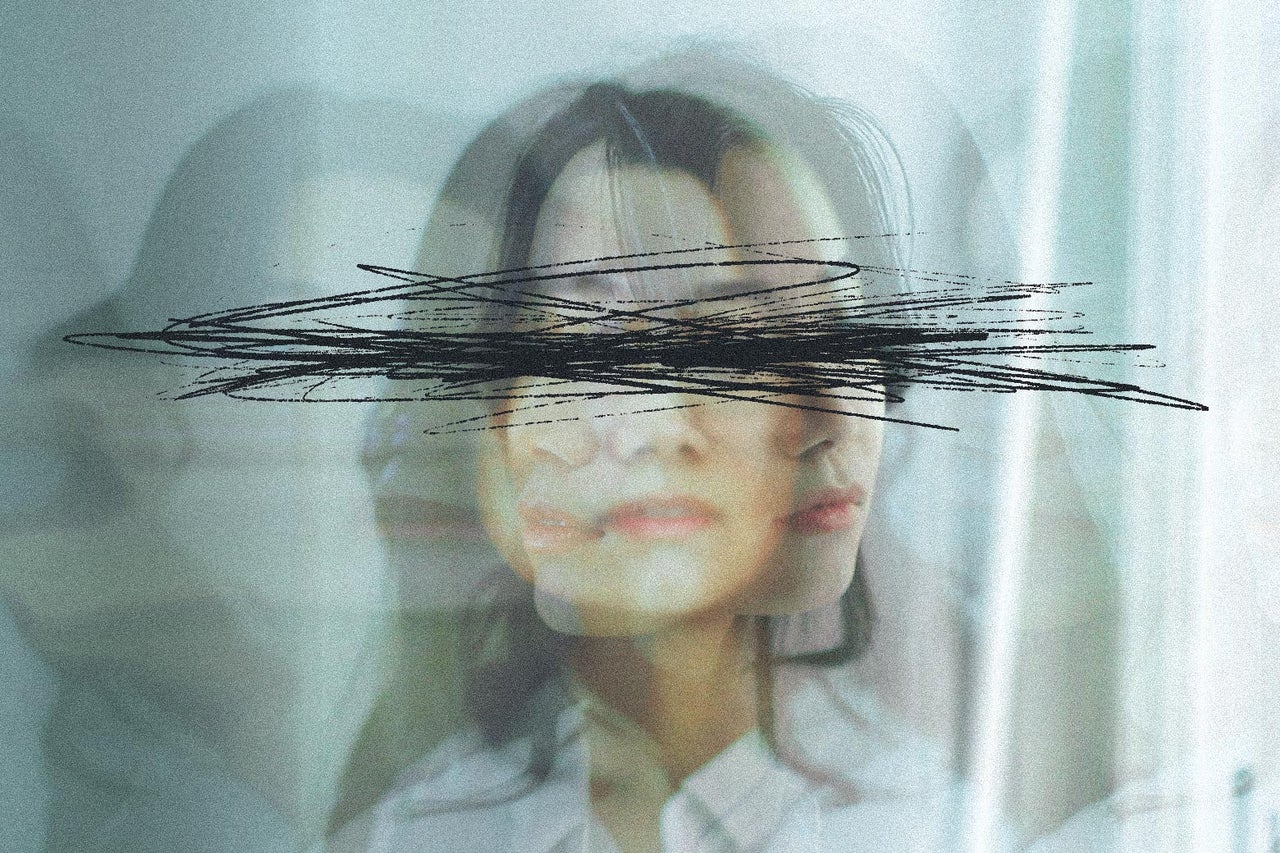
By age 11, Kassondra Ola had been prescribed the following psychiatric medications at one point or another: Zoloft, Concerta, Celexa, Lexapro, risperidone, Neurontin, Depakote, Seroquel, lithium, Topamax, Trileptal, Abilify, and Adderall. It’s a mix of antidepressants, antipsychotics, a stimulant, and a few things for seizures.
Growing up in northern Virginia, Ola was a skinny and anxious preteen. She got good grades, but she was withdrawn and easily distracted. She ate little; the textures of some foods did not seem right. Internally, she was processing the rift between her parents that would eventually lead to their divorce, as well as the aftermath of a childhood trauma. Her parents got her into mental health treatment, and when she was 10, a psychiatrist diagnosed her with bipolar disorder.
The meds he prescribed made her sleepy and caused tremors and body pains. They brought on a mental haze, and the frustration of struggling against it led to more moodiness and outbursts, Ola recalls. She once yelled at a teacher that she was in so much pain she didn’t want to live anymore.
“The medications seemed to induce more behavioral problems than they helped,” said Ola. “I was always in trouble for something, and they were always adjusting the meds or sticking me in the psychiatric unit for something.” She felt as if she had little self-esteem or even a sense of identity.
By age 20, Ola was living with her grandmother and muddling through community college classes. At church, she met someone who was diagnosed with Asperger’s syndrome, a condition that today would be considered autism spectrum disorder. He noted that, like him, she had trouble socializing and experienced sensory aversions. They even had the same slow, precise speech pattern.
After a neuropsychological test, Ola was diagnosed with Asperger’s too. Her signs of maladjustment as a preteen? Maybe they were how a neuroatypical kid dealt with stress.
.
Photo illustration by Slate. Photo by Jessica Ticozzelli/Pexels.
Pete Rose, one of baseball’s greatest players and most confounding characters, who earned glory as the game’s hit king and shame as a gambler and dissembler, died on Monday. He was 83.
His death was confirmed by the Cincinnati Reds, the team with which he spent most of his career. No cause was given.
For millions of baseball fans, Rose will be known mainly for a number, 4,256, his total of hits, the most for any player in the history of the game. But he was a deeply compromised champion.
Few sports figures have been the lightning rod for controversy and public opinion that he turned out to be, an athlete who maximized his gifts, earned a legion of fans with his competitive zeal and achieved wide celebrity and acclaim — only to fall from grace with astonishing indignity.
Had Shakespeare written about baseball, he might well have seized on the case of Rose, whose ascent to the rarefied heights of sport was accompanied by the undisguised hubris that undermined him.
A lifelong adrenaline junkie who often operated out of sheer gall, Rose was long known to baseball officials as a fevered horse player with a network of unsavory associates and a rumored out-of-control gambling habit. During his nonpareil career as a player, mostly with the Cincinnati Reds, his hometown team, he was warned repeatedly by major league officials to curtail his gambling, and in the late 1980s, Rose, then the Reds manager, was investigated by baseball to determine if any of his activity was illegal.
The report by the investigator, John Dowd, revealed that Rose had bet regularly with bookmakers on a variety of sports, and though Rose vehemently denied it, baseball included. In August 1989, he was banned from the game by the commissioner, A. Bartlett Giamatti, and he was subsequently declared ineligible for election to the Baseball Hall of Fame, which would otherwise have been a certainty.
One of the tawdrier episodes in baseball history and one of the most public — Rose’s farewell news conference was televised nationally — it was also, for Rose, monumentally costly. Not only did he lose his livelihood; he subsequently spent several months in jail for evasion of taxes related to his gambling income as well as his baseball memorabilia sales and autograph appearances. (For Giamatti, a former president of Yale who had served as baseball commissioner for only five months, the aftermath was far worse. A heavy smoker, he died at 51 a week after announcing his decision, the stress of the Rose case possibly contributing to the heart attack that killed him.)
.
Pete Rose sliding into home during a Reds game against the Giants in 1972. Credit…Bettmann/Getty Image
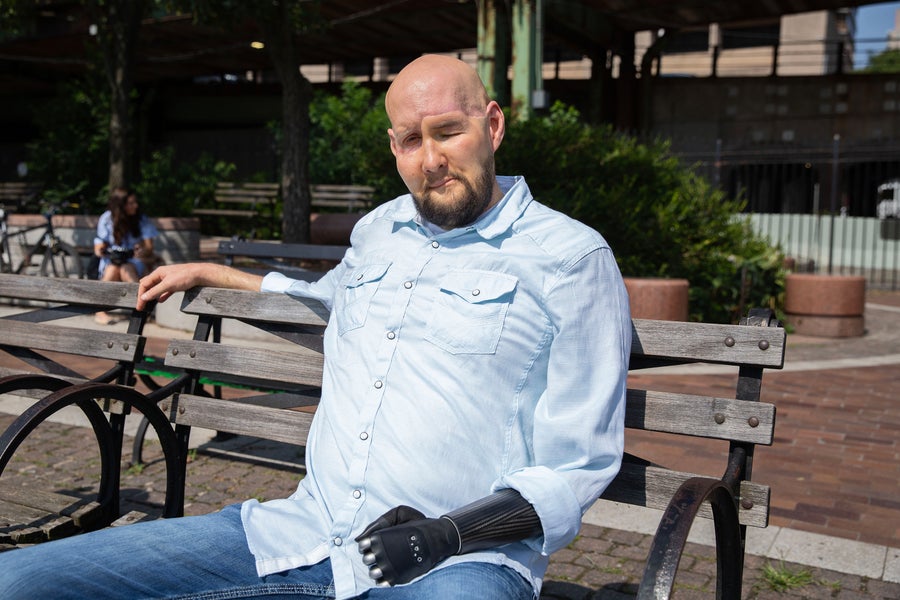
In June of 2021, Aaron James experienced a terrible accident while working as an electrical lineman. The 46-year-old military veteran and Arkansas resident lost much of the left side of his face—including his left eye—to severely disfiguring electrical burns that also destroyed his left arm.
Two years later, James received the first-ever partial face and whole-eye transplant, performed by surgeons at NYU Langone Health in New York City. And now, more than a year after that, James has made a strong recovery with no evidence of tissue rejection, his medical team reported in a paper published on Monday in JAMA. He still lacks any vision in the transplanted eye, but the eye itself has maintained its shape and blood flow—and there is evidence of electrical activity in the retina in response to light.
Other researchers say the findings represent a step toward successful whole-eye transplants while illustrating the challenge of regenerating the optic nerve after a major injury.
“It’s a delightful surprise that the surgery has worked so well, that the patient is so happy, that the aesthetic or cosmetic outcome has worked so well. The eyeball itself has stayed alive and is able to stay in that space and can continue to contribute to the overall success of hemifacial transplant,” says Jeffrey Goldberg, a professor, and chair of ophthalmology at the Byers Eye Institute at Stanford University, who was not involved in the study but wrote a commentary on it that was published in the same issue of JAMA.
The lack of restored vision was not unexpected, Goldberg says, because preclinical studies in animals have shown the difficulty of regrowing an optic nerve. He notes that the surgical team’s technique of injecting the tissue surrounding the optic nerve with stem cells from James’s bone marrow has not been validated in animals and could pose a safety risk if the cells grew into a tumor. Fortunately, there is no evidence of this happening to date. Another risk was that if the donor eye’s optic nerve had regrown, it could have compromised the vision in James’s other eye because of the way input from the two eyes can interact in the brain. There is no sign of this complication either, however. This exciting first case helps lay the groundwork to push whole-eye transplant into a vision-restoring reality, Goldberg says.
Whole-eye transplants have long been a dream among doctors and scientists seeking to treat people with serious eye injuries or blindness. The first corneal transplant took place in 1905. But efforts to transplant an entire eye have been thwarted by the devilish difficulty of regrowing the optic nerve, which carries signals from the eye’s light-sensitive retina to the brain’s visual centers, where they are perceived as sight. While there had previously been limited success in efforts to regenerate the optic nerve in some animals, no one had succeeded in transplanting a whole eye into a human until now.
.
Aaron James a little over a year after receiving a whole-eye and partial face transplant. Haley Ricciardi/NYU Langone Health
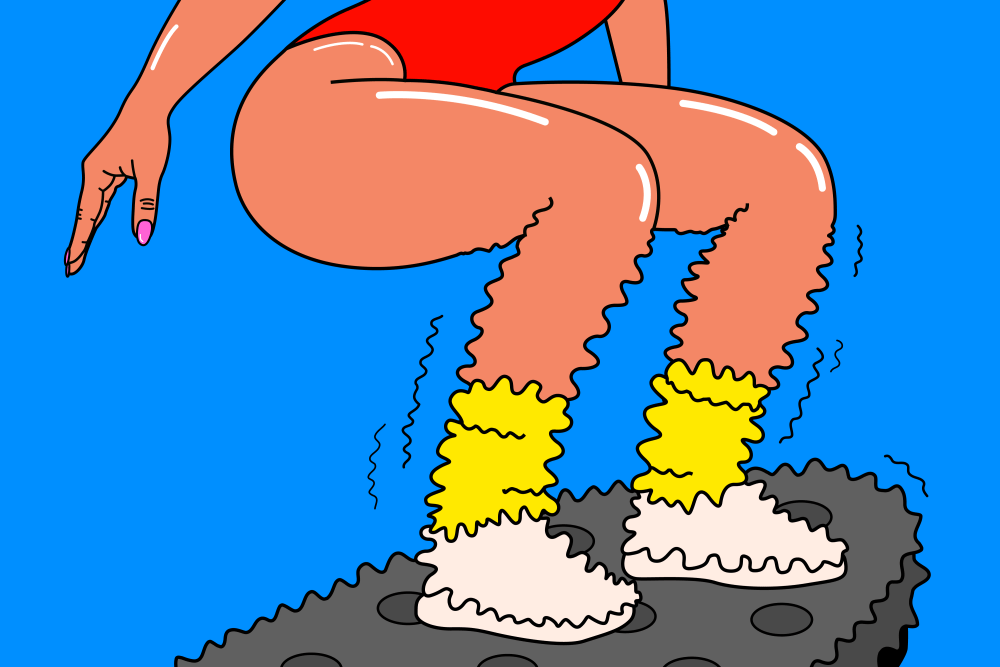
It’s a question that’s been reverberating around TikTok as users flood the platform with videos of themselves balancing on shaking vibration plates, bodies quivering, often in an attempt to hawk the devices as the latest cure-all.
Their efforts have certainly made waves. Online searches for vibration plates — which look like a hybrid between a griddle and a trembling surfboard — have sharply increased since April, and products on TikTok Shop have racked up tens of thousands of sales.
People use them in different ways. Some focus on standing upright while the plate shakes them; others go further and engage in various exercises like squats or pushups.
The purported health benefits of whole-body vibration range from weight loss and increasing bone density to promoting lymphatic drainage, improving circulation, and beyond.
But what does the evidence actually say?
Do vibration plates have health benefits?
“It’s not a silver bullet, but it has its certain merits,” said Dr. Jörn Rittweger, head of the division of muscle and bone metabolism at the German Aerospace Center and a professor of space physiology at the University of Cologne in Germany.
He said the calorie-burning and cardiovascular benefits are similar to “brisk walking for the same amount of time.”
It also matters how much exercise you’re already getting in. “If people don’t do anything” in terms of exercise, Rittweger said, “then the effects are moderate or even better. For the general public, if they’re exercising already, the effect is marginal or nonexistent.”
For example, Rittweger said he uses the device in the children’s rehabilitation unit to help ward off muscle atrophy in kids who can’t walk.
What about strengthening bones? Rittweger says the evidence is mixed. “The effects are probably not tremendous,” he said.
.
Some users do exercises like squats while balancing on vibration plates. Others just focusing on staying upright. Claudia Chanhoi for NBC News
Film and Writing Festival for Comedy. Showcasing best of comedy short films at the FEEDBACK Film Festival. Plus, showcasing best of comedy novels, short stories, poems, screenplays (TV, short, feature) at the festival performed by professional actors.

 Joel Kimmel




 Anaissa Ruiz Tejada/Scientific American



 James' World 2