Gary Lockwood doesn’t believe in motivation. He didn’t get the body he has today (lean, gristly, a bit scary) simply by being motivated. He didn’t become the CEO of 24/7 Fitness because he wanted it enough. And he says as much to his clients. ‘It doesn’t matter how much motivation you have,’ he declares, pronouncing the word as if it were a nasty kind of intestinal worm. ‘There is no substitute for just fucking doing it.’
As for willpower – usually defined as the ability to resist short-term rewards in pursuit of longer-term goals – Lockwood is similarly dismissive. ‘You will not get what you want in fitness or life relying on willpower.’ Willpower is fragile. You might win the battle with your will one day, then lose it the next. The key to ‘just fucking doing it’ is what he terms discipline. ‘Discipline kicks your butt out of bed on cold winter mornings and drags you to the gym for an hour of mind-numbing cardio.’
Some people think there’s some magic pill they can take, he says, or some mystical hack to do with carbs. ‘The truth is, you have to be disciplined. The harder it is, the more discipline you need. How much you want it? It’s irrelevant.’
The Dopamine Trap
In the past 10 or 12 years – the Instagrammian Epoch, if you will – we’ve happily embraced the idea that the people who are rich, thin, toned, successful and happy must have incredible amounts of motivation. They have the power to resist Krispy Kremes, Instagram Reels, Five Guys fries, the Devil himself. By implication, those of us whose lives are a little flabbier, carbier, sloppier, sinnier, must be lacking in these virtues.
But whether or not you buy into Lockwood’s approach – inspired by the neo-Stoic philosopher Joe Rogan, incidentally – it’s hard to disagree with his central thesis: that mere desire to change is in itself insufficient for change. Moreover, he’s far from the only person who has come to view the word ‘willpower’ with suspicion. (Whether ‘discipline’ is really so different is another matter.)
‘Those of us who don’t overeat aren’t white-knuckling it. Our urges simply aren’t that strong’
‘I’m not sure willpower is the best name any more,’ says Pete Williams, a scientist at the Institute for Functional Medicine, who takes a gentler approach with his clients. The main problem for him is that willpower comes with a lot of baggage. It implies a moral failing that only increases the stress and shame associated with being overweight. Which helps no one to actually lose weight.
‘A lot of patients have a very negative relationship with themselves because they believe they don’t have willpower,’ he says. ‘Most patients who come to us generally understand what they need to do to get better.’ The problem is that much of our unhealthier behaviors are driven by the unconscious. ‘They don’t know why they do it. They just can’t help going to the fridge.’
Williams has devoted much of his professional life to understanding why this should be. Some people are irresistibly drawn to high-calorie foods; others can happily sit next to a plate of biscuits and not take a bite. Some skip cheerfully to the gym in the mornings; others find it difficult just to drag themselves out of bed. ‘The question we’ve asked is: is there any genetic basis to that variation?’ says Williams. ‘And the answer to that is yes.’
Williams’ research focuses specifically on dopamine, which plays the central role in our brain’s reward centers. Dopamine acts as both a hormone (it’s a close relative of adrenaline) and a neurotransmitter, which means it sends messages down pathways in our brain that govern different behaviors. One of those pathways, the mesolimbic pathway, has strong associations with reward and anticipation, and thus habit formation, motivation, and addiction.
Every entrepreneur dreams of coming up with a groundbreaking business idea and riding it to success. However, the reality is that very few have the good fortune to make it big on their first try. It’s far more common for entrepreneurs to work for years, looking for an idea that could offer their big break.
Every now and then though, new platforms emerge that create opportunities for potential entrepreneurs. For example, Shopify and Etsy made it incredibly easy to launch online stores, creating a new wave of business owners. Right now, Amazon’s Audible audiobook platform is creating similar opportunities, especially as Amazon makes a push to promote it.
Entrepreneur Rob Anderson has a unique perspective on how others can capitalize on this. Here’s his story and his advice to others looking for the next great entrepreneurial side hustle.
An insider’s perspective
Rob started out on Amazon as a third-party reseller who eventually built a 7-figure business. While he was successful as a private label seller of his own brand, it was a full-time job that consumed all of his attention and time and required considerable capital.
Then it occurred to him that there might be a better way to leverage Amazon’s unprecedented reach to make a profit. He began to notice that advertisements for Amazon’s audiobook platform were beginning to appear everywhere. They were sponsoring well-known personalities on YouTube and were all over the social media ad space. They even enjoyed a prominent position on Amazon’s home page.
Rob says, “Because I was already selling through Amazon, I’d seen what it looked like when the company threw its weight behind a new product, and I started to wonder if it meant there was an opportunity for people like me to capture some of the traffic their big push was no doubt creating. So I started to look at the types of audiobooks that were available through Audible. And to my surprise, most of what was there wasn’t coming from big publishing houses, it was self-published works from people all over the place.”
Sharing unique insight and experience
Rob had spent years learning how to be successful as a third-party reseller on Amazon. Given he already understood how to work within Amazon’s system to achieve prominent product placements on the site, he decided to try and publish audiobooks based on the insights he gained as a third-party reseller on the platform.
It’s time to stop nap shaming. While napping can absolutely affect your sleep at night if you aren’t careful, there is a way to get the best of both worlds — great daytime naps and still sleep soundly at night. That’s where we come in. When you recharge with your mid-day nap, remember these six daily strategies to do it right.
While some people — as noted above — should generally avoid naps, with the right strategy, most people can savor an afternoon nap and still get quality shut-eye when the world goes dark. Here are seven do’s and don’ts to keep in mind before your next nap.
1. Aim to nap in the early afternoon
The earlier you can nap (once you start to feel drowsy), the better. Just like long naps, late naps can interfere with your sleep cycle and keep you up at night. Though everyone’s circadian rhythm is unique, most people experience a dip in alertness around 1 to 3 p.m. If you can make it to a restful area within this timeframe, that’s your best bet for a good nap that doesn’t mess with nighttime sleep.
2. Set the scene
If you’re going to take a nap, you may as well optimize it. Your napping environment should be just as restful as your sleeping environment. Ideally, you’ll nap in the same place you sleep. Napping in a restful environment — with little to no light, a comfortable temperature, and a pillow that suits your sleeping style — can help you fall asleep faster and fully reap the benefits of a short power nap.
3. Nap without guilt
Naps should make you feel better, not worse. Don’t let your nap guilt you into working late or doing more — you needed the extra rest for a reason. Saying things like, “If I nap now, I have to stay up later to do [insert task],” can further disrupt your sleep cycle and cause you to develop a shameful mindset around napping, as if it’s something you should never do. So nap without guilt, as long as you’re still fulfilling your major obligations.
And if you still feel guilty about your afternoon snooze, remember that some cultures literally build naps into their collective daily routine, which should be evidence enough that naps are good for you.
.
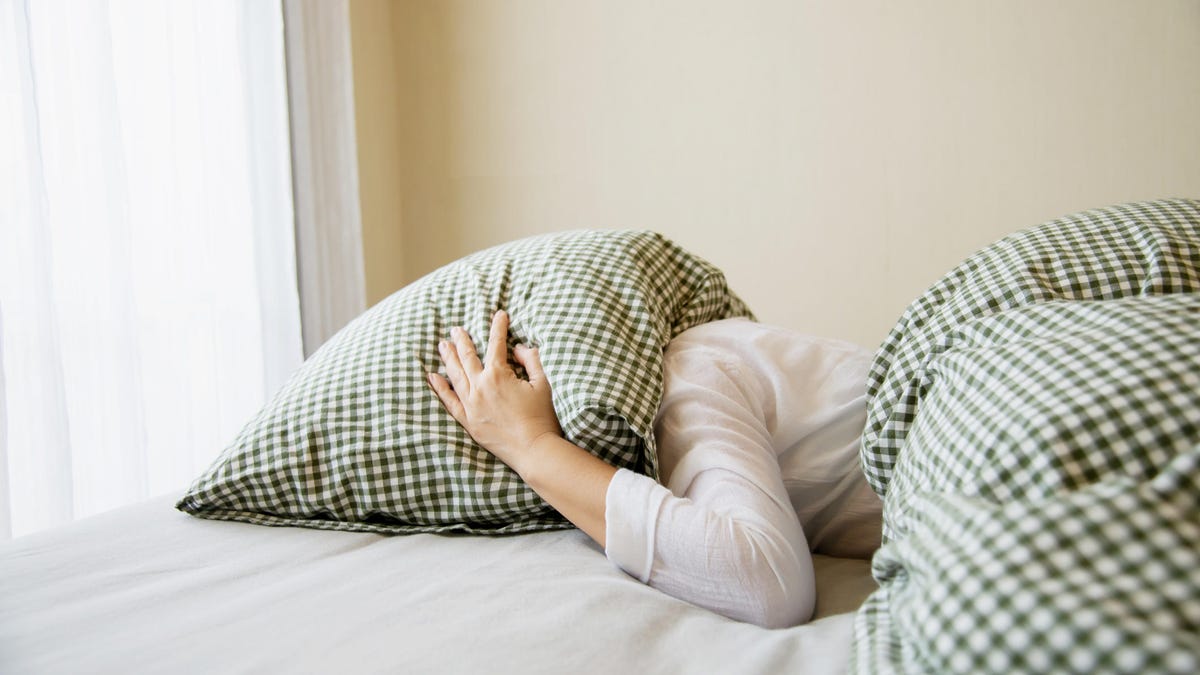
Ever avoid a nap because you know you’ll end up like this at night? If you nap the right way, you can still get a good night’s sleep. Getty Images
This article is part of a series on what the 2024 presidential election means for science, health, and the environment. Editors with expertise on each topic delved into the candidates’ records and policies and the evidence behind them.
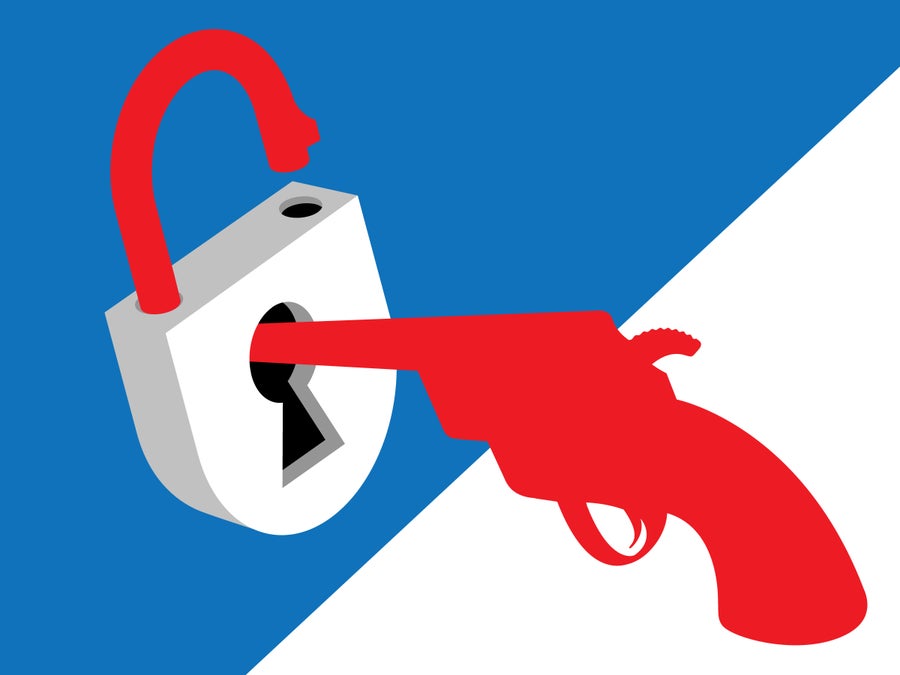
The U.S. is home to more guns than people. The toll of this abundance of firearms is staggering: Guns killed more than 48,000 people in the U.S. in 2022, the equivalent of one person every 11 minutes. More than half of those deaths were suicides, and guns are the overall leading cause of death in children aged one to 17. Mass shootings—600-some per year in recent years, although definitions vary—have stoked fear and anger, reshaping the American school experience. Yet mass shootings make up only a tiny fraction of firearm fatalities. And about a third of Americans say they own a gun, even as six in 10 say they favor stricter gun laws.
The rage, despair, carelessness, and greed behind the deaths may be universal, but such numbers are unique to the U.S. Here “our interpersonal conflicts are much more likely to be lethal because we’re more likely to be armed with guns,” says Daniel Webster, a gun violence researcher at Johns Hopkins University.
But there’s nothing inevitable about the prevalence of gun deaths in the U.S. It’s a reality that policies have created and that policies could change, if the political will existed. Evidence suggests that if Vice President Kamala Harris were to become the next U.S. president, she would move toward policies that would reduce gun violence—and that if former president Donald Trump were reelected, he would support laxer policies that could permit gun violence to worsen.
Compared with other common health issues in the U.S., data about gun violence are limited; data about nonfatal gun injuries are almost nonexistent. These gaps, combined with the usual scientific difficulties of distinguishing between causation and correlation, mean researchers lack much of the detailed information they need to analyze the effects of different gun-related policies. That said, the existing research does show that more guns do not keep people safer.
Here’s a rundown of what we can expect from each presidential candidate when it comes to gun policy:
Harris on Gun Policy
Harris has a long history of working with gun policy: She did so when she held a string of district attorney offices in the 1990s and 2000s and when she became California’s attorney general in the 2010s. Throughout those periods, she encouraged the development of stricter restrictions on gun ownership, as well as stronger enforcement of existing regulations. Later, as a U.S. senator, Harris worked on legislation to mandate universal background checks and to better regulate gun dealer licensing. She has in the past also called for both a ban on and a mandatory buyback of assault weapons, although Webster says studies suggest that assault weapon bans can be evaded too easily to impact violence rates.
In 2022, during the Biden-Harris administration, Congress passed the first sweeping gun legislation in nearly three decades. This included important funding mechanisms, as well as a few policy changes, such as requiring stronger background checks on gun buyers under 21 years old, requiring more gun sellers to conduct background checks, and broadening a measure meant to keep guns away from domestic violence offenders. The latter now include those who have abused dating partners, as well as spouses and close family members.
The single most effective policy to reduce gun deaths, according to Webster’s research, is an independent licensing process for gun ownership—not merely a background check managed by gun dealers themselves—that includes vetting the fingerprints and other information an applicant provides. Webster also finds positive results from regulations that take guns away from domestic violence offenders.
President Joe Biden created a White House Office of Gun Violence Prevention, which Harris oversees and which works on policies at both the state and local levels. “This is the first office of gun violence prevention that was initiated in the White House and overseen by a vice president,” says Joseph Richardson, Jr., a medical anthropologist at the University of Maryland. “I don’t think most Americans are even aware that she runs that office.”
Habit stacking is a powerful tool, especially for busy entrepreneurs who need to maximize their time and efficiency. While the topic has been discussed in depth and well documented by James Clear, author of Atomic Habits, the idea of habit stacking is to stack up a new habit on top of a current habit.
So, for example, Clear references a meditation habit: “After I brew my morning coffee, I will meditate for one minute.” Or a gratitude habit: “Before I eat my first bite of dinner, I will say one thing I am grateful for that day.”
I confess that I am a multitasker unless I’m working on a deep project or having conversations with friends and family. Below are some of the go-to habit stacks I practice regularly.
1. Morning digital detox and movement
I like to exercise first thing in the morning, and during my workouts, I do not use my phone. I am focused on my workout, my music and making sure I get the most out of my time in the gym, which I thoroughly enjoy.
It’s also wonderful to kick off the morning off my phone, not scrolling and keeping my mind clear, energized, and my overall self in a healthy flow state. Morning routines are critical for productivity and positivity
2. Driving and focused time with kids or partner
I speak with many parents who drive their kids to school and talk about how their children are glued to their phones. While I do take business and personal calls while I drive solo, I have always prioritized conversations with my two boys and husband when we are in the car together.
Most of us have chaotic days, and the time in the car together is a nice time to catch up, talk about the day, and listen to music together. Instead of asking your kids, “How was school?” try something more like, “Who made you laugh today?” Or “What was the coolest class today?”
3. Podcasts and protein
I prioritize nutrition and am not one to skip meals. Lately, my breakfast is a skillet-sized chocolate protein pancake with no sugar and about 50g of protein. It’s basically raw cacao powder, protein powder, and egg whites or eggs.
2. Driving and focused time with kids or partner
I speak with many parents who drive their kids to school and talk about how their children are glued to their phones. While I do take business and personal calls while I drive solo, I have always prioritized conversations with my two boys and husband when we are in the car together.
Most of us have chaotic days, and the time in the car together is a nice time to catch up, talk about the day, and listen to music together. Instead of asking your kids, “How was school?” try something more like, “Who made you laugh today?” Or “What was the coolest class today?”
3. Podcasts and protein
I prioritize nutrition and am not one to skip meals. Lately, my breakfast is a skillet-sized chocolate protein pancake with no sugar and about 50g of protein. It’s basically raw cacao powder, protein powder, and egg whites or eggs.
Thank goodness for the USA’s 3 branches of government, Legislative, Executive, and Judicial! Which ensures that no individual or group will have too much power.
Click the link below the picture
.
In a newly unsealed court filing, special counsel Jack Smith provides the most detailed picture yet of his criminal case against Donald Trump for allegedly trying to overturn the 2020 election and why the former president isn’t immune from prosecution.
U.S. District Judge Tanya Chutkan, who is presiding over the case, released the filing, with minor redactions, on Wednesday.
The special counsel uses the 165-page document to make his case that Trump’s actions around the election were made in a private capacity and not in his official role as president.
The filing comes after the Supreme Court ruled this summer that presidents enjoy broad immunity for official acts while in office, but not for unofficial acts as a candidate or a private citizen.
“When the defendant lost the 2020 presidential election, he resorted to crimes to try to stay in office,” the special counsel’s team writes. “With private co-conspirators, the defendant launched a series of increasingly desperate plans to overturn the legitimate election results in seven states that he had lost.”
A D.C. grand jury indictment accused Trump of actions that culminated in the violent siege at the U.S. Capitol on Jan. 6, 2021. If he regains the White House, Trump is expected to direct new Justice Department leaders to drop the landmark case.
Prosecutors accuse Trump of spearheading a conspiracy to overturn the results of the 2020 election and disenfranchise millions of American voters.
“At its core, the defendant’s scheme was a private criminal effort,” the special counsel writes. “In his capacity as a candidate, the defendant used deceit to target every stage of the electoral process.”
The filing offers several new details about Trump’s actions
The broad strokes of the special counsel’s allegations against Trump have long been known. The filing, though, adds some new details, including sensitive testimony from witnesses and notes taken by former Vice President Mike Pence.
It also offers some colorful details, largely designed to tie Trump to overlapping conspiracies to overturn the 2020 election.
In one section, the filing details what Trump was doing on Jan. 6, 2021, as a violent mob of his supporters stormed the U.S. Capitol. Trump, it says, settled into the dining room off the Oval Office around 1:30 p.m. and spent the afternoon reviewing Twitter on his phone while Fox News played in the background.
At one point, a staffer rushed into the dining room to tell Trump that Pence had been rushed to a secure location because of the rioters. The staffer hoped, the filing says, that Trump would do something to ensure Pence’s safety.
Instead, the document says, Trump “looked at him and said only, ‘So what?'” The new filing also provides a closer look at Trump’s interactions with his former political aide, podcaster Steve Bannon, including a phone call the two men had the day before the Capitol riot, the new court filing says.
.
Special counsel Jack Smith delivers remarks about the Trump election interference case in August 2023 in Washington, D.C. Drew Angerer/Getty Images
Quantum physicists are familiar with wonky, seemingly nonsensical phenomena: atoms and molecules sometimes act as particles, sometimes as waves; particles can be connected to one another by a “spooky action at a distance,” even over great distances; and quantum objects can detach themselves from their properties like the Cheshire Cat from Alice’s Adventures in Wonderland detaches itself from its grin. Now researchers led by Daniela Angulo of the University of Toronto have revealed another oddball quantum outcome: photons, wave-particles of light, can spend a negative amount of time zipping through a cloud of chilled atoms. In other words, photons can seem to exit a material before entering it.
“It took a positive amount of time, but our experiment observing that photons can make atoms seem to spend a *negative* amount of time in the excited state is up!” wrote Aephraim Steinberg, a physicist at the University of Toronto, in a post on X (formerly Twitter) about the new study, which was uploaded to the preprint server arXiv.org on September 5 and has not yet been peer-reviewed.
The idea for this work emerged in 2017. At the time, Steinberg and a lab colleague, then doctoral student Josiah Sinclair, were interested in the interaction of light and matter, specifically a phenomenon called atomic excitation: when photons pass through a medium and get absorbed, electrons swirling around atoms in that medium jump to higher energy levels. When these excited electrons lapse to their original state, they release that absorbed energy as remitted photons, introducing a time delay in the light’s observed transit time through the medium.
Sinclair’s team wanted to measure that time delay (which is sometimes technically called a “group delay”) and learn whether it depends on the fate of that photon: Was it scattered and absorbed inside the atomic cloud, or was it transmitted with no interaction whatsoever? “At the time, we weren’t sure what the answer was, and we felt like such a basic question about something so fundamental should be easy to answer,” Sinclair says. “But the more people we talked to, the more we realized that while everyone had their own intuition or guess, there was no expert consensus on what the right answer would be.” Because the nature of these delays can be so strange and counterintuitive, some researchers had written the phenomenon off as effectively meaningless for describing any physical property associated with light.
After three years of planning, his team developed an apparatus to test this question in the lab. Their experiments involved shooting photons through a cloud of ultracold rubidium atoms and measuring the resulting degree of atomic excitation. Two surprises emerged from the experiment: Sometimes photons would pass through unscathed, yet the rubidium atoms would still become excited—and for just as long as if they had absorbed those photons. Stranger still, when photons were absorbed, they would seem to be remitted almost instantly, well before the rubidium atoms returned to their ground state—as if the photons, on average, were leaving the atoms quicker than expected.
The team then collaborated with Howard Wiseman, a theoretical and quantum physicist at Griffith University in Australia, to devise an explanation. The theoretical framework that emerged showed that the time these transmitted photons spent as an atomic excitation matched perfectly with the expected group delay acquired by the light—even for cases where it seemed as though the photons were remitted before the atomic excitation had ebbed.
To understand the nonsensical finding, you can think of photons as the fuzzy quantum objects they are, in which any given photon’s absorption and remission through an atomic excitation is not guaranteed to occur over a certain fixed amount of time; rather, it takes place across a smeared-out, probabilistic range of temporal values. As demonstrated by the team’s experiments, these values can encompass instances when an individual photon’s transit time is instantaneous—or, bizarrely, when it concludes before the atomic excitation has ceased, which gives a negative value.
.
Time can take on negative values in the quantum realm. Sean Gladwell/Getty Images
Over the past couple of decades, attention spans have shrunk. Tethered to our computers and smartphones, we carry our little devices everywhere, a few clicks away from all the information we need to survive.
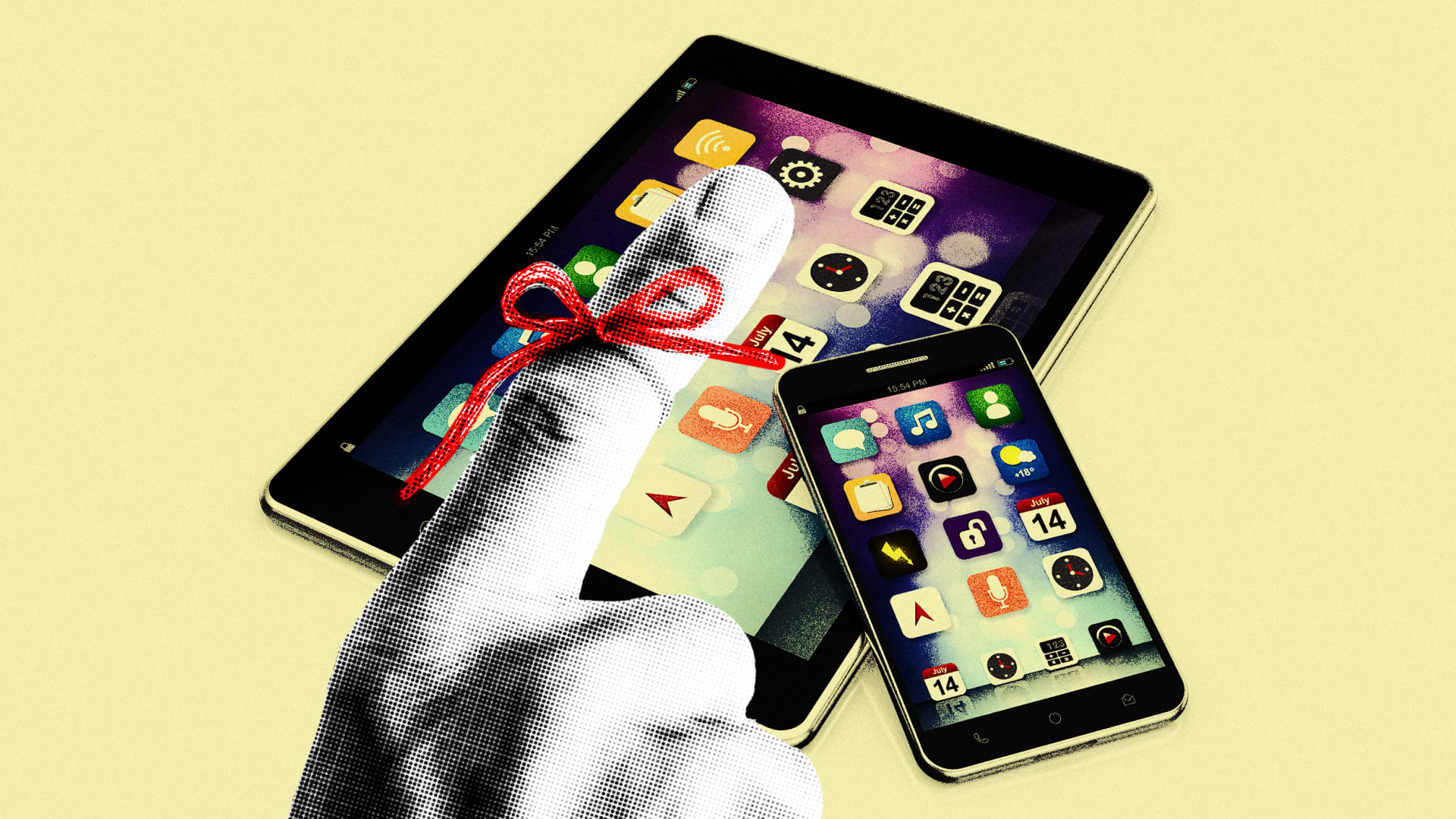
The rise of the digital age has impacted our ability to focus and remember. We’re living at a time when memorizing isn’t required to get through day-to-day life. Worried about forgetting someone’s birthday? Just set an automatic reminder. Don’t know the route you’re supposed to take to that restaurant you’ve driven to only once? Enter the destination on your GPS of choice. Forget about remembering your emergency contact’s phone numbers. In a 2023 survey of 423 respondents older than 16, 21% admitted to typing “What’s my phone number” into Google.
What is memory?
Memory is the process by which our brains filter and retain important information, helping us make sense of the world and navigate its uncertainties. Memory allows us to reason, plan, and imagine, and it’s crucial for communication, connection, identity formation, and grounding ourselves in time and space.
Rather than being a perfect record of past events, memory serves as a dynamic resource that evolves based on new experiences and insights, according to professor Charan Ranganath, director of the Memory and Plasticity program at the University of California, Davis.
The things we usually call memories are part of the episodic memory system, which stores memories of episodes of your life, like having a conversation with a colleague or going to the grocery store, explained Art Markman, a professor of psychology at the University of Texas at Austin, in a previous Fast Company report.
When we recall a memory, we don’t simply replay the past as it happened. Instead, we reimagine how the past could have been, adapting our memories to fit the present context. For instance, if someone you trust lies to you, or you get food poisoning after enjoying a meal at a restaurant, you revise your memories based on this new information to better navigate similar situations in the future. This adaptability helps our memories stay relevant as our lives and environments change.
“When we look at memory as a resource to pull from, as opposed to a comprehensive archive of the past, we can make mindful choices in the present to curate a rich set of memories to take with us into the future,” Ranganath said in a previous Fast Company report.
One approach to thinking about how the brain stores memories is based on economics, Markman wrote in a previous Fast Company report. The currency of the brain is energy, and the brain itself is an energy-hungry organ. To build a new memory, structures have to grow that influence the neurons in the pathway that is storing that memory, to ensure that the pattern of brain activity associated with that memory can be created again.
Memories are more likely to be stored when the cost of creating the new connection is likely to reduce the time the brain will have to spend doing something in the future. The brain is investing energy now to reduce future costs.
For example, if you have an important and deep conversation with a colleague, there is likely to be future time savings in storing a memory of that conversation. When you see that colleague again, remembering that conversation will make the next discussion more efficient.
This energy-based evaluation is further influenced by two key factors, according to Markman: desirable difficulty and intense emotions. Desirable difficulty is when a task is challenging but productive, signaling to the brain that it is worth storing the memory to improve future performance.
On the other hand, intense emotions—whether positive, like excitement, or negative, like shock or pain—amplify the brain’s calculation that the memory will be useful later.
By leveraging these mechanisms, the brain dynamically stores memories likely to enhance our ability to navigate similar future scenarios, rather than simply serving as a comprehensive archive of every experience.
Three situations when you’re more likely to forget—and what to do about it
When multitasking: This one feels obvious. You can’t remember something if you aren’t paying attention.
Multitasking is a major culprit when it comes to memory issues. Studies show that most people are not good at multitasking, despite thinking otherwise. Every time you switch tasks—such as checking emails or responding to messages while in a meeting—you pay a “switching cost,” according to Ranganath.
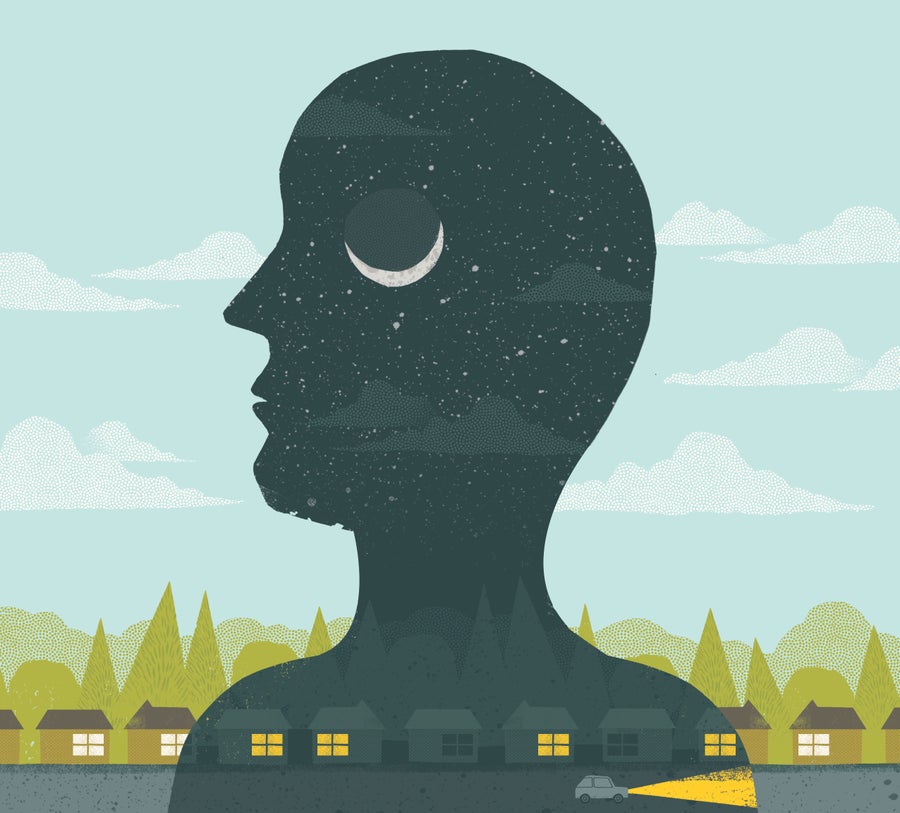
Julie Flygare was 21 when the symptoms started. First her knees would buckle briefly, but only when she laughed. She awoke one night to the sight of a burglar attacking her, while she lay paralyzed and terrified—then realized later there was no burglar and no attack. As a law student the next year, she would read her textbooks diligently for hours, then couldn’t recall what she had read. She got so tired on a 15-minute drive to law school one morning that she couldn’t remember arriving.
Her bizarre symptoms mystified her, and multiple doctors were also perplexed. Finally, a sleep specialist sent her for a sleep study. She was diagnosed with narcolepsy, a rare neurological disorder that causes excessive daytime sleepiness, brief episodes of muscle weakness, and dream-like experiences.
The diagnosis helped, but she still had to deal with its fallout. “I would say to people, ‘Oh, I have narcolepsy,’” Flygare says. “They’d be like, ‘Oh, you’re gonna fall asleep right now?’ They just tried to make a joke right away.”
Flygare stopped telling people because she didn’t like their reactions. “And then I felt just so alone. That was really rock bottom for me,” she says.
The experience prompted Flygare to write a memoir: Wide Awake and Dreaming: A Memoir of Narcolepsy. She went on to found a sleep advocacy group called Project Sleep, which is devoted to raising awareness about sleep health, sleep equity and sleep disorders. To further raise awareness and reduce stigma, in 2019 she worked with narcolepsy advocacy organizations around the world to help establish September 22 as World Narcolepsy Day.
In the Sleep Lab
Narcolepsy, which affects an estimated four million people worldwide, affects the brain’s ability to regulate the sleep-wake cycle. This causes episodes of excessive daytime sleepiness, which can occur at any time and significantly impact daily life.
Diagnosing narcolepsy remains something of an art and can take up to a decade or more, says Andrew Spector, a neurologist and sleep medicine specialist at Duke University.
The symptoms are nonspecific and can be mistaken for other conditions such as depression, epilepsy or other sleep disorders, and current clinical tests “are limited at confirming narcolepsy,” Spector says. “So even patients who don’t test positive for narcolepsy may still have it.”
Narcolepsy is usually diagnosed in a sleep lab. “We start with an overnight sleep study, mainly to ensure there aren’t any other sleep disorders like sleep apnea that are leading a patient to be really sleepy during the day,” Spector says. Then comes the daytime nap test. People with narcolepsy fall asleep in under eight minutes, on average, across five naps, while those without it fall asleep in anywhere from 10 to 20 minutes.
Clinicians also measure whether the person enters rapid eye movement (REM) sleep. “People without narcolepsy tend not to go into REM sleep within 15 minutes,” Spector explains. “But a hallmark of narcolepsy is that when you fall asleep, you go right into REM sleep.” Individuals who go into REM sleep during two or more of five naps—in addition to having met the criterion of falling asleep in under eight minutes across the naps—get a narcolepsy diagnosis.
Doctors can also confirm the diagnosis by testing spinal fluid for orexin (also known as hypocretin), a neurotransmitter in the brain that regulates wakefulness and sleep. “If you have low levels of orexin in your spinal fluid, the odds of narcolepsy are very high,” but normal levels don’t rule it out, Spector says.
As a result, he says, recognizing symptoms is what’s most important for diagnosis. Nevertheless, many patients misinterpret them for years.
Diagnosis Delays
Professional football player Josh Andrews was just 12 when he noticed he had an unusual trait—a tendency to fall asleep anywhere and everywhere. He’d fall asleep while playing video games and in the car while riding with other members of his school’s basketball team from tournament to tournament. He would “be passed out in the car,” even if he’d “woken up from a good night’s sleep,” he recalls.
Later, he noticed he would start to doze off while speaking, slurring his words mid-conversation. And when he was 18, Andrews rammed his car into the back of another vehicle after falling asleep at the wheel.
Finally, years later, after getting into another car accident, Andrews decided to seek help. “I realized I was endangering other people at that point,” Andrews says. “It pushed me to find a diagnosis for what was going on.”
Doctors diagnosed him with narcolepsy and began to help him manage it. He ultimately made it to the NFL, playing offensive line for the Philadelphia Eagles, Indianapolis Colts and New York Jets. But he wishes he had sought a diagnosis years earlier. Now he’s raising awareness about narcolepsy as a spokesperson for Flygare’s advocacy group, Project Sleep, and a program called Progress at the Heart run by the pharmaceutical company Harmony Biosciences that addresses disparities and inequities in rare neurological diseases.
Finding time to get vaccinated can be tricky, and it’s understandable to want to minimize trips to the pharmacy or doctor. With that, it’s fair to wonder if you can get your COVID and flu shots at the same time.
Advice around this has flip-flopped since the COVID-19 pandemic began, creating a little confusion on whether you can double up or if it’s best to space out your shots. And with flu season and COVID waves potentially overlapping, getting vaccinated is more important than ever.
Here’s what doctors want you to know about getting your COVID and flu vaccines at the same time, what side effects to expect, and what to generally consider if you’re thinking of going this route.
Can I get the COVID and flu shots at the same time?
Yes, you can get your COVID and flu shots at the same time. In fact, the Centers for Disease Control and Prevention (CDC) says that you can get the COVID-19 vaccine and other vaccines, including the flu vaccine, at once.
“Getting them at the same time won’t affect the immune response,” says Thomas Russo, M.D., professor and chief of infectious disease at the University at Buffalo in New York.
“The immune system is amazing and can handle multiple vaccines at the same time,” says Jennifer Walsh, D.N.P., an associate professor of nursing at George Washington University. “Rarely, some individuals might have a slightly more intense reaction with the mRNA vaccines—perhaps more soreness or achiness, but it is still absolutely safe to get both at the same time and what we recommend for most.”
Some doctors will do this, too. “I got mine simultaneously last year, and in the same arm,” says William Schaffner, M.D., an infectious disease specialist and professor at the Vanderbilt University School of Medicine. “It’s not only permitted but encouraged because a vaccine deferred is often a vaccine that’s not received.”
When should I get my COVID and flu shots?
The updated COVID-19 vaccine is now available, and doctors recommend getting it as soon as possible. However, you have a little more time on your flu shot—the CDC just suggests getting it before Halloween.
Potential side effects of getting the COVID and flu shot at the same time
The flu shot and COVID-19 shot each come with their own potential side effects. Here’s what you may experience in terms of side effects when you get the flu shot:
Soreness, redness, and swelling where the shot is given
Fever
Muscle aches
Headache
And these are the most common potential side effects of the COVID-19 vaccine:
Pain, swelling, and redness on the arm where the shot was given
Fatigue
Headache
Muscle pain
Chills
Nausea
Fever
“If you do get them simultaneously, there’s no evidence of adding on side effects,” Dr. Schaffner says. “You might get two sore arms, but that’s it.”
Here’s the thing: If you tend to have side effects after getting your flu or COVID-19 shot, or after both, it’s still likely you may have them when you get both at once. And, if you’ve reacted to both in the past, you could end up dealing with both side effects at once, Dr. Russo points out.
“If you’re an individual that gets reactogenic symptoms, you might feel worse by getting the shots together,” he says. His recommendation: Try to get your flu shot the afternoon before you’re off, like on a Friday, if you’re off on Saturdays. That can give you some time to relax and rest if you need it.
Which shot should I get first, if I space them out?
Again, you can definitely get the flu and COVID vaccines at the same time. But if you decide to space them out, it’s probably better to get the COVID-19 vaccine first.
“I would definitely get the COVID vaccine first, particularly if you’re high risk,” Dr. Russo says. “COVID is circulating everywhere, but there’s very little flu circulating now.”
Film and Writing Festival for Comedy. Showcasing best of comedy short films at the FEEDBACK Film Festival. Plus, showcasing best of comedy novels, short stories, poems, screenplays (TV, short, feature) at the festival performed by professional actors.



 Thomas Fuchs




 [Photo: aey/Adobe Stock; LIGHTFIELD STUDIOS/Adobe Stock]
 Chris Madden/Getty Images
 Women’s Health (video)
 James' World 2