October 26, 2024
Mohenjo
Business, Food For Thought, Human Interest, Political, Science, Technical
amazon, business, Business News, current-events, Future, Hotels, human-rights, medicine, mental-health, research, Science, Science News, technology, Technology News, travel, vacation

From Wikipedia
Click the link below the picture
.
The Wilmington insurrection of 1898, also known as the Wilmington Massacre of 1898 or the Wilmington coup of 1898, was a coup d’état and a massacre which was carried out by white supremacists in Wilmington, North Carolina, United States, on Thursday, November 10, 1898. The white press in Wilmington originally described the event as a race riot caused by black people. In later study from the 20th century onward, the event has been characterized as a violent overthrow of a duly elected government by a group of white supremacists.
The coup was the result of a group of the state’s white Southern Democrats conspiring and leading a mob of 2,000 white men to overthrow the legitimately elected local Fusionist biracial government in Wilmington. They expelled opposition black and white political leaders from the city, destroyed the property and businesses of black citizens built up since the American Civil War, including the only black newspaper in the city, and killed from 14 to an estimated 60 to more than 300 people.
The Wilmington coup is considered a turning point in post-Reconstruction North Carolina politics. It was part of an era of more severe racial segregation and effective disenfranchisement of African Americans throughout the South, which had been underway since the passage of a new constitution in Mississippi in 1890 which raised barriers to the registration of black voters. Other states soon passed similar laws. Historian Laura Edwards writes, “What happened in Wilmington became an affirmation of white supremacy not just in that one city, but in the South and in the nation as a whole”, as it affirmed that invoking “whiteness” eclipsed the legal citizenship, individual rights, and equal protection under the law that black Americans were guaranteed under the Fourteenth Amendment. tangie
.


 .
.
.
Click the link below for the article:
.
__________________________________________
October 26, 2024
Mohenjo
Business, Food For Thought, Human Interest, Political, Science, Technical
amazon, business, Business News, current-events, Future, Hotels, human-rights, medicine, mental-health, research, Science, Science News, technology, Technology News, travel, vacation

.
The inventor of the treadmill died at the age of 54 😳
The originator of gymnastics died at the age of 57 😳
The past world bodybuilding champion died at the age of 41 😳
The best soccer player in history, Maradona, died at the age of 60 😔
And then . . .
KFC inventor died at 94 😊
Inventor of Nutella brand died at the age of 88 😊
Cigarette maker Winston died at the age of 102 😜
The inventor of opium died at the age of 116 in an earthquake 😜
Hennessy cognac, Irish inventor died at 98 😊
How did doctors come to the conclusion that exercise prolongs life?
The rabbit is always jumping, but it lives for only 2 years.
The turtle that doesn’t exercise at all, lives 400 years.
So . . .
Have a drink,
Take a nap,
And if you wake up, have bacon and eggs.
.
__________________________________________
October 25, 2024
Mohenjo
Business, Food For Thought, Human Interest, Political, Science, Technical
amazon, business, Business News, current-events, Future, Hotels, human-rights, medicine, mental-health, research, Science, Science News, technology, Technology News, travel, vacation

Click the link below the picture
.
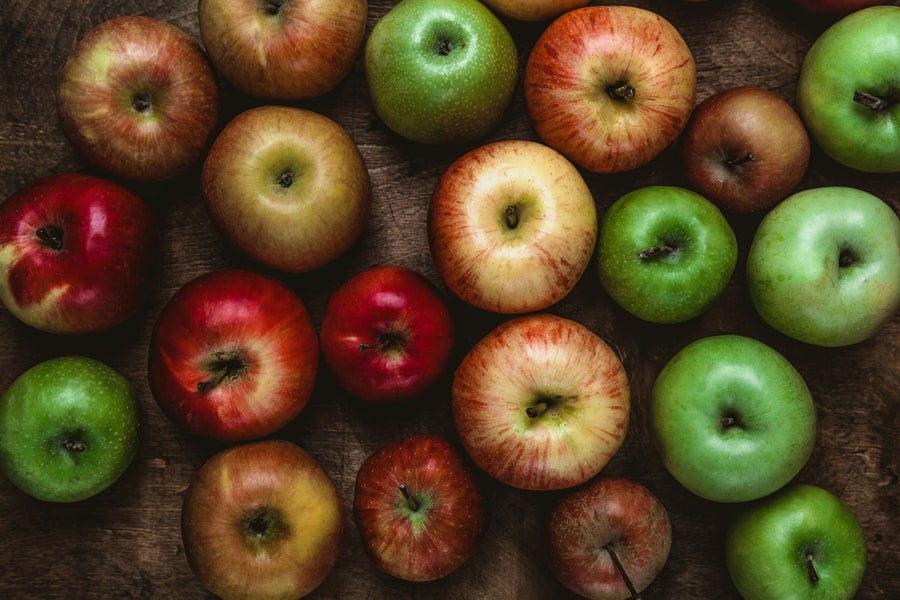
We are living in a golden age of apples, a time of delicious, diverse, mouth-watering abundance that we could barely have imagined at the turn of the millennium. How did we get to a time when most of us, most of the year, can eat our choice of fragrant, juicy, sweet, crisp (oh so crisp) apples?
We can thank a mix of science, innovations, investment in long-term research, the multi-multi-multi-generational transmission of knowledge, communal action, and people who joyfully dedicate their lives to a cause.
What’s your favorite apple? I asked this question on the social media platform Bluesky, and this is a sample of people’s answers: Macoun, Winesap, Gravenstein, Winter Banana, CrimsonCrisp, SnapDragon, SweeTango, Jazz, Cosmic Crisp, Jonathan, Empire, Envy, RubyFrost, Hidden Rose, Sonata, Pink Lady, Regent, Honeycrisp, Honeycrisp, Honeycrisp. (My favorite? Evercrisp.)
Many of us remember that the U.S. apple market was dominated for decades by one variety: Red Delicious, which is a bold name for a bland apple. It is certainly red, with a lovely rich jewel color and a handsome shape. But delicious? The main alternative was Golden Delicious, a perfectly fine but similarly uninspiring yellow variety. Tart, green Granny Smiths, which were propagated in Australia in 1868 by an orchardist named Maria Ann Sherwood Smith, started taking a decent share of the market in the U.S. in the 1980s. And that’s where we were stuck.
David Bedford, an apple researcher at the University of Minnesota who helps develop new varieties (his favorite apples: Honeycrisp, SweeTango and Rave) says, “I still remember some big marketers telling me: we have a red apple, a yellow apple, and a green apple. Do we really need any more?”
Apple History
Today’s cultivated apples are produced by the tree Malus domestica. Its ancestor is Malus sieversii, which still grows wild in what is now Kazakhstan and bears small and variable fruit. Farmers began domesticating apples sometime between 10,000 and 4,000 years ago in the Tian Shan Mountains of Central Asia, according to genetic analyses. These cultivated varieties then quickly spread along the Silk Road trade route, where breeders crossed them with another wild species, Malus sylvestris. The ancient Romans developed techniques for apple grafting (more on that in a sec) and propagated the trees across their empire.
It’s a little challenging to track the cultural history of apples because in many languages, the word that came to mean “apple” could refer to any type of fruit. There weren’t apples in Mesopotamia, for instance, so the tempting fruit in the Garden of Eden story was more likely a fig. When the Greek goddess of discord inscribed a fruit with “For the most beautiful” and started the Trojan War, that fruit may have been a quince. And William Tell probably didn’t shoot an arrow through an apple on top of his son’s head. Isaac Newton wasn’t hit on the head, but he did say that observing an apple falling from a tree helped inspire his theory of gravity.
.
 LightFieldStudios/Getty Images
.
.
Click the link below for the article:
.
__________________________________________
October 25, 2024
Mohenjo
Business, Food For Thought, Human Interest, Political, Science, Technical
amazon, business, Business News, current-events, Future, Hotels, human-rights, medicine, mental-health, research, Science, Science News, technology, Technology News, travel, vacation

Click the link below the picture
.
STEM toys are a fantastic way to combine fun and learning, sparking curiosity and creativity in children of all ages. Whether shopping for science gifts for kids or searching for activities that teach valuable skills, these toys offer engaging ways to explore science, technology, engineering, and math. From hands-on activities like the GraviTrax JUNIOR Starter-Set for younger kids to the advanced challenges of the LEGO Technic NASA Mars Rover Perseverance for teens, the best STEM toys offer something for every age and interest.
STEM toys can range from really high-tech gadgets to simple, hands-on activities like marble runs and model rocket kits to even more traditional options like classic paper toys. These toys are designed to build essential skills in science, technology, engineering, and math, providing fun ways to learn while encouraging problem-solving and creativity. Whether your child loves tinkering with building sets, experimenting with science kits, or exploring engineering challenges, there’s something for every budding inventor. High-tech children’s STEM toys can introduce coding and robotics, while simpler toys offer valuable lessons in physics and engineering. They all help foster critical thinking, making STEM toys for kids an excellent choice for playtime and learning. Explore our recommendations to find the perfect educational gift that balances fun and learning for every child.
- Best overall: Yoto Player and collection of STEM cards
- Best splurge: Makeblock mBot Ultimate
- Best for little kids (age 3-7): GraviTrax JUNIOR Starter-Set
- Best for big kids (age 8-12): 3 Doodler Start+ Maker Bundle
- Best for teens (age 13+): LEGO Technic NASA Mars Rover Perseverance
- Best budget: STEM Explorers Superhero Science
How we chose the best STEM toys
Our top STEM toy recommendations are based on extensive research. We reviewed expert opinions, user feedback, and product reviews to compile a list of standout options and tested them thoroughly. Read on to discover the best STEM toys that balance innovation, ease of use, and educational value, providing your child with engaging opportunities to explore science, technology, engineering, and math in a fun and exciting way.
The best STEM toys: Reviews & Recommendations
We’ve handpicked the best STEM toy options to suit a variety of skill levels. Whether you’re looking for something simple for beginners or more complex projects for advanced learners, our detailed reviews will guide you in choosing the perfect STEM toy to inspire creativity and help your child build something amazing.
.
 We may earn revenue from the products available on this page and participate in affiliate programs.
.
.
Click the link below for the article:
.
__________________________________________
October 24, 2024
Mohenjo
Business, Food For Thought, Human Interest, Political, Science, Technical
amazon, business, Business News, current-events, Future, Hotels, human-rights, medicine, mental-health, research, Science, Science News, technology, Technology News, travel, vacation
Click the link below the picture
.
An alcohol-only diet would throw most species for a loop, but new research suggests that hornets can live—apparently unimpaired—with an 80 percent ethanol sugar solution as their sole food source.
Fruit flies, tree shrews, and many other animals naturally consume alcohol in fruits that ferment; this happens when yeast or certain bacteria are around to break down sugars in ripe fruit, creating small amounts of ethanol. Most animal species show signs of impairment or toxicity after consuming this substance at concentrations above 4 percent. But animal nutrition researcher Sofia Bouchebti, now at Ben-Gurion University of the Negev in Israel, suspected that hornets and wasps might tolerate alcohol better—or even use it as a food source. After all, these insects’ gut is known to host yeast that converts fruit sugar to alcohol. When hornets or wasps pollinate and feed, some of this yeast rubs off onto plants and their fruits—playing a key role in the fermentation process.
Bouchebti turned her attention to the hornet Vespa orientalis, a type of social wasp. In a study this week in Proceedings of the National Academy of Sciences USA, she and her colleagues at Tel Aviv University fed both hornets and honeybees sugar solutions containing 0 to 80 percent ethanol with a trackable carbon isotope. The researchers found that hornets’ exhaled breath contained up to 300 percent more labeled carbon than the honeybees’, suggesting the hornets’ bodies broke down the alcohol that much faster.
“There’s lots of energy in ethanol, and it’s a great metabolic fuel,” says study co-author and zoologist Eran Levin. The problem for humans and many other animals, of course, is that there are behavior and health consequences as the substance interacts with the brain and organs. But when provided with nest-building materials, the ethanol-fed hornets in the study completed construction tasks as efficiently as sugar-fed ones. When faced with an intruder, they did not delay sending “back off” signals. Moreover, hornets fed with 80 percent ethanol lived out their typical three-month-long lifespan; their honeybee counterparts died within 24 hours. Still, hornets showed no preference between sugar and ethanol when given a choice. “If ethanol is more nutritious and without bad effects, shouldn’t they want more? Maybe they can’t taste it,” Bouchebti suggests.
To distill the secret behind this metabolic mastery, study co-author and zoologist Dorothée Huchon led a hunt for genetic clues. She found that hornets possess multiple copies of the gene responsible for the enzyme that breaks down alcohol—an adaptation perhaps fueled by their relationship with yeast.
University of Rochester biologist James Fry, who was not involved in the new study, says it tells an “interesting evolutionary story.” But he cautions that the methods are too different from those of other studies to directly compare ethanol resistance between species.
Robert Dudley, an insect flight specialist at the University of California, Berkeley, notes that insects would never encounter such high ethanol values in nature. Bouchebti says the researchers “aimed to find a maximum limit, and we still didn’t find it.” Next up is examining gene expression during ethanol consumption and seeking patterns in this among animals known to be attracted to alcohol (some beetles and bats, for example). Dudley agrees: “A broader survey of social Hymenoptera and other insects is clearly called for,” he says.
.
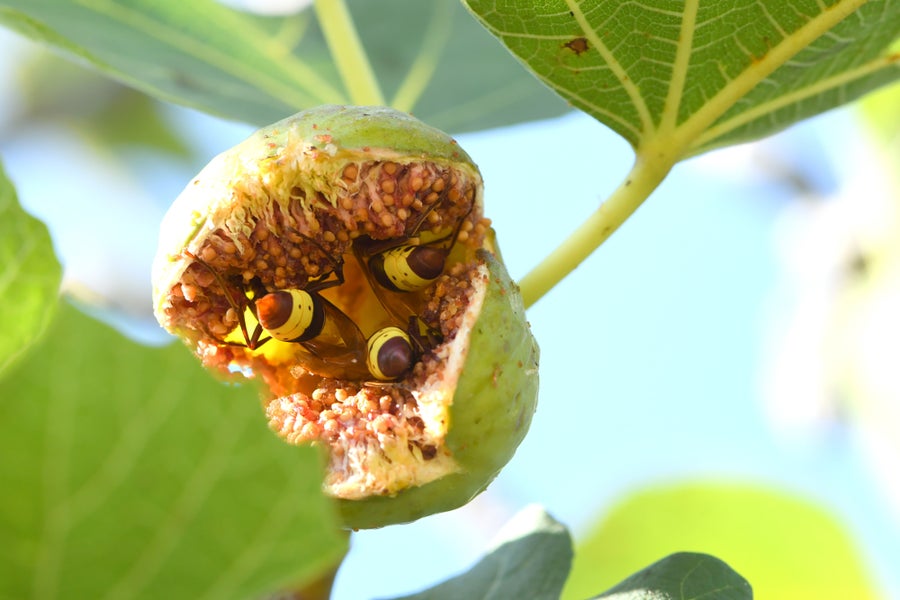
Three hornets feed on a ripe fig, which could provide naturally occurring ethanol. Eran Levin
.
.
Click the link below for the article:
.
__________________________________________
October 24, 2024
Mohenjo
Business, Food For Thought, Human Interest, Political, Science, Technical
amazon, business, Business News, current-events, Future, Hotels, human-rights, medicine, mental-health, research, Science, Science News, technology, Technology News, travel, vacation

Click the link below the picture
.
When you enter a relationship, you’re not just embracing the shared present, you’re also stepping into the emotional landscape shaped by your partner’s past. Previous relationships can leave behind unresolved fears, scars, and insecurities that inevitably affect your dynamic.
While this emotional baggage may seem heavy, it can provide valuable insights into your partner’s needs and vulnerabilities. Yet, if these feelings go unspoken or unmanaged, they have the potential to cloud your connection and make you feel like you’re navigating someone else’s unresolved history.
The challenge lies in supporting your partner through their emotional residue without compromising your own boundaries. How can you offer empathy without becoming the emotional caretaker? How do you respect your partner’s past without letting it shape your future together? These are questions many couples grapple with.
Here are three steps to help balance empathy and self-care, allowing both you and your partner to thrive without being weighed down by past shadows.
1. Be A Mirror, Not A Healer
When someone you love struggles with emotional pain from their past, it’s natural to want to help. Our empathy drives us to heal those we care about, but in romantic relationships, attempting to “fix” your partner’s wounds can backfire. This approach places an undue burden on you that isn’t yours to carry.
Your role isn’t to erase their past hurts or provide a magical solution. Instead, you can be a mirror—reflecting their emotions back to them with empathy and understanding. This means listening deeply, offering validation, and creating a space where they feel seen and heard.
Research indicates that “partner-orientation thinking,” which involves evaluating both your feelings and your partner’s regarding the relationship, can lead to greater relationship satisfaction. Often, what your partner needs most is not a fix for their pain but for you to hold space as they work through it themselves.
Why is this important?
Trying to heal your partner can blur emotional boundaries and lead to burnout, resentment, or even codependency. Conversely, being a reflective listener fosters a healthy emotional balance, allowing both partners to maintain their independence while offering support.
In practice, when your partner expresses insecurity or anxiety tied to their past, you might say, “I understand why what happened before makes you feel this way. I’m here with you now, but how do you think we can approach this together?”
2. Watch For Trigger Loops
Emotional baggage from past relationships often brings triggers—specific situations that provoke strong emotional reactions tied to unresolved experiences like betrayal or abandonment. These triggers can create recurring patterns of conflict, known as “trigger loops,” where your partner reacts not to the present but to past hurts.
For instance, if your partner was betrayed in a previous relationship, they might
become anxious when you’re late or don’t respond to messages promptly. Their reaction is less about the current situation and more about the fear of being hurt again.
Initially, these triggers may seem like minor disagreements, but if they keep surfacing, it’s essential to recognize the underlying pattern. Ask yourself, “Is my partner responding to the present or to their past?” Acknowledging this distinction can help defuse tension and clarify the situation.
Why is this important?
Left unaddressed, trigger loops can erode trust and lead to misunderstandings, leaving both partners feeling frustrated or confused. Recognizing these patterns early helps interrupt the cycle and prevents small triggers from escalating into larger conflicts.
In practice, if your partner has trust issues stemming from past betrayal and begins questioning your actions, it’s crucial to acknowledge the trigger instead of reacting defensively—one of the “horsemen” that predicts the end of a relationship. You might say, “I understand why this brings up old fears, but I’m committed to being honest with you. Let’s talk about what’s making you feel uneasy.”
.

There are multiple ways to steer through past hurts without hitting rough waters. Here are a few of … [+] Getty
.
.
Click the link below for the article:
.
__________________________________________
October 23, 2024
Mohenjo
Business, Food For Thought, Human Interest, Political, Science, Technical
amazon, business, Business News, current-events, Future, Hotels, human-rights, medicine, mental-health, research, Science, Science News, technology, Technology News, travel, vacation
Click the link below the picture
.
It’s said that lightning never strikes the same place twice and a watched pot never boils.
But neither statement is true—especially when your “pot” is an enormous tropical lightning storm bristling with thunderbolts, and you’re watching it from far above in the stratosphere. Two recent studies in Nature found that some storms are indeed at a rolling boil—one that emits powerful bursts of gamma rays, not steam. And some of these emissions occur in mysterious, previously unrecognized patterns, split-second flickers that seem to spark ordinary lightning discharges.
“How lightning gets started inside thunderstorms is a big mystery,” says Joseph Dwyer, a physicist at the University of New Hampshire, who served as a reviewer for both studies. “Decades of balloon and aircraft measurements have failed to find electric fields inside storms large enough to make a spark, and yet thunderstorms manage to make more than eight million flashes per day around the planet. We are clearly missing something important. These new observations could be that ‘something.’”
Scientists have long known that thunderstorms can produce gamma rays, extremely high-energy light that is more often associated with astrophysical phenomena, such as exploding stars and matter-devouring black holes. In earthly tempests, the physics behind such emissions is relatively well-understood: swirling, windblown water droplets and ice crystals build up an electric charge within a storm, with positively charged particles rising to the cloud tops and negatively charged ones sinking to the bottom. This results in a sprawling electric field on the order of 100 million volts—powerful enough to accelerate electrons inside the storm to nearly the speed of light, slamming the charged particles into air molecules that give off further electrons and setting off a cascade of collisions so energetic that gamma rays are ultimately produced.
Researchers had observed two forms of thunderstorm gamma-ray emissions: relatively long-lived “glows” lasting hundreds of seconds, as well as intense, microsecond-scale bursts known as terrestrial gamma-ray flashes (TGFs), bright enough to be visible to Earth-observing satellites.
But scientists also knew this picture was incomplete, built as it was on piecemeal readings from airborne and ground-based instruments. “We still have significant uncertainties in the electrical nature of storms, from the details of how charge is separated by particles within the cloud to the physics of lightning initiation and channel development,” says Vanna Chmielewski, an atmospheric scientist at the National Oceanic and Atmospheric Administration’s National Severe Storms Laboratory, who was not involved in the new research. “Many of these processes are difficult if not impossible to accurately capture in a laboratory setting or model, given the number of contributing factors, known variability within even a single storm and limited observational datasets which can be used for validation.”
To get a clearer view, in 2023 a team led by Nikolai Østgaard and Martino Marisaldi, both atmospheric physicists at the University of Bergen in Norway, monitored the gamma-ray emissions of large storms from up close and on high, chasing down thunderheads with 10 flights of a NASA-owned modified U-2 spy plane over the Caribbean and Central America. The program, called ALOFT (Airborne Lightning Observatory for Fly’s Eye Geostationary Lightning Mapper Simulator and Terrestrial Gamma-Ray Flashes), constitutes the most comprehensive and focused airborne surveillance of thunderstorm gamma-ray emissions yet performed.
“ALOFT was designed to try to definitively answer the question ‘Are these gamma-ray flashes and glows common or rare?’” says Steve Cummer, an electrical engineer at Duke University and co-author of both studies. “And it delivered big time… The gamma-ray production process is way, way more important than we thought.”
The flights revealed glows and TGFs, as expected, but also much more: Both phenomena proved far more abundant than predicted, with most of the TGFs being dim enough to escape the notice of any overwatching satellites. The glows also weren’t steadily emanating from isolated regions in the storms as anticipated, but rather bubbled up in surges of radiation for hours across regions about 100 kilometers wide. And amid the hundreds of recorded events, the researchers also glimpsed something new—so-called flickering gamma-ray flashes (FGFs), pulsing spikes of emission that lasted for milliseconds and seemed to spring from glows. Most intriguingly, Østgaard says, “all the transient gamma-ray events were followed by intense lightning.”
.
 Stuart Westmorland/Getty Images
.
.
Click the link below for the article:
.
__________________________________________
October 23, 2024
Mohenjo
Business, Food For Thought, Human Interest, Political, Science, Technical
amazon, business, Business News, current-events, Future, Hotels, human-rights, medicine, mental-health, research, Science, Science News, technology, Technology News, travel, vacation

Click the link below the picture
.
Whether you have a newborn, a busy toddler, or an active preschooler, the question—” When will my child learn to read?”—has likely crossed your mind. According to experts, most kids learn to read by the time they are 6 or 7 years old.1
But the process of reading begins long before that.
In fact, the first 3 years of your child’s life is the most important time for speech and language development. For this reason, you should be reading to your baby, singing to them, and talking about things that are happening in their day. These actions stimulate their brain development and build literacy skills.2
“Pre-literacy skills can begin as early as a newborn and into the first few months of life,” says Kristin Miller, director of education at the Celebree School. “Reading out loud regularly to your infant helps…build vocabulary, and encourages a love of reading into their toddler years and beyond.”
Average Age Kids Learn to Read
By the time children are in kindergarten, they are expected to recognize their name and know how to hold a writing utensil. They also should be able to identify all 26 uppercase and lowercase letters, says Yvette Manns, MEd, a language and literacy specialist, author, certified dyslexia practitioner, and creator of Phonics Read-Alouds book series.
“Beyond the letters’ names, children also need to know the 44 sounds of English, called phonemes,” explains Manns. “These phonemes are important because children will learn the sound-symbol (letter) relationships, which is what we know as phonics. Phonics will help them break the code of words and learn to be successful readers.”
Equipping your child with these early literacy skills before kindergarten is important to their success at becoming a reader by the time they are 6 or 7 years old. This means introducing them to books, letters, sounds, words, and more long before you fill out the school enrollment forms.
However, the American Academy of Pediatrics (AAP) reports that as many as one in three children enter kindergarten without the needed language skills to learn how to read.2 This could potentially put them behind and make it challenging for them to keep up. It also may slow them down in making the crucial transition in third grade from learning to read to reading to learn.
Reading Milestones to Watch For
The first step in helping a child learn to read is simply reading aloud to them frequently from the time they are a baby and giving them a collection of books to “read” on their own, says Kathryn Starke, MS, a former elementary school teacher, national literacy consultant, and author of Tackle Reading.
In fact, research shows that reading books to your child as an infant can boost vocabulary and reading skills years later—long before the start of elementary school. And, by the time they reach their fourth birthday, they could be displaying emergent literacy skills, such as name-writing.3 As they get older, they will identify letters or combinations of letters, and then connect those letters to sounds.
Here are some other milestones you might notice along the way.
Toddlers
By 18 months, toddlers are continuing to develop their language and communication skills and laying the groundwork for future literacy, says Miller. Pre-literacy milestones you might observe in an 18-month old include:
.
:max_bytes(150000):strip_icc():format(webp)/Parents-When-Children-Learn-to-Read-25234ac44b27498a873eec8e402b1fc2.jpg) Parents/Getty.
Parents/Getty.
.
.
Click the link below for the article:
.
__________________________________________
October 22, 2024
Mohenjo
Business, Food For Thought, Human Interest, Political, Science, Technical
amazon, business, Business News, current-events, Future, Hotels, human-rights, medicine, mental-health, research, Science, Science News, technology, Technology News, travel, vacation

Click the link below the picture
.
E-cigarette usage declined among kids, as did cigarette and cigar smoking, and hookahs, according to the CDC’s annual National Youth Tobacco Survey. In fact, overall tobacco use saw a marked drop from the 2023 poll, with an estimated 2.25 million students having consumed a tobacco product in the past 30 days, compared to 2.8 million students the year before. But one product saw an increase in usage: nicotine pouches.
Unlike cigarettes, cigars, or pipes, nicotine pouches don’t contain any actual tobacco leaves, though the nicotine they contain can be derived from tobacco plants. Even so, for the purpose of the survey, the CDC still classifies them as a tobacco product. Nicotine pouches are composed of a powder made up of nicotine (which by itself is extremely addictive and dangerous) and flavorings. Users insert them between their gums and lips, and the nicotine is absorbed through the gums and mouth lining as the powder dissolves, according to the CDC.
The pouches have become something of a culture war issue over the past few years, with conservative heavy hitters, including congresspeople Mike Collins and Marjorie Taylor Green, adopting them as an anti-regulation cause célèbre. Though they’ve been on the market for decades, their popularity has exploded over the past decade. One study found sales of the product increased over 300% between 2016 and 2020, while tobacco company Phillip Morris, which owns the popular Zyn brand, reported a 78% increase in sales of the pouches in the fourth quarter of 2023.
Tucker Carlson even told comedian/podcaster/walking haircut nightmare Theo Von that he believed the pouches enhanced his acumen in the boudoir. If you need a scare before Halloween, just try picturing that. Horrifying. It should also be noted that this claim is almost definitely false. Study after study has found a link between tobacco use and erectile dysfunction, including e-cigarettes. Even without a delivery mechanism that involves tobacco, nicotine constricts blood vessels, which can contribute to sexual dysfunction.
Now, we know that the trend has reached young people. In 2023, the pouches were the fourth most popular tobacco product among the middle and high school students, behind vapes, cigarettes, and cigars. This year, they’ve moved into second place, with 1.4% of replying students saying they had used them in the past 30 days, up from 1.2% the previous year. Vapes remain, by far, the most popular product, but their usage declined from 7.7% to 5.9%. Cigarettes came in third (hitting the lowest rate ever recorded by the survey, which the CDC has conducted since 1999), followed by cigars.
Experimenting with tobacco now seems less likely to lead to a habit. In this year’s survey, 42.9% of students who had ever used a tobacco product said they had done so in the past month, down from 46.7% the previous year.“We’re headed in the right direction when it comes to reducing tobacco product use among our nation’s youth,” said Brian King, director of the FDA’s Center for Tobacco Products, in a statement. “But we can’t take our foot off the gas. Continued vigilance is needed to continue to reduce all forms of tobacco product use among youth. Addressing disparities remains an essential part of these efforts to ensure that we don’t leave anyone behind.”
Each year, the CDC conducts the National Youth Tobacco Survey through an online questionnaire, which middle and high school students (grades six through 12) voluntarily fill out on a self-administered basis. For the 2024 survey, data was collected on May 22, with 29,861 students taking part.
You should all know this by now, but nicotine use is tied to a wide variety of health problems (on top of ED), including hardening of artery walls, threats to pregnancy, and even affecting brain development in people under 25. Just as a general rule, if Tucker Carlson likes something, it probably produces human misery, and that’s a lesson we should be teaching our kids.
.
 Kids are smoking less, but the popularity of nicotine pouches has made its way to the youth, according to CDC data. © Swenico.com via Flickr
.
.
Click the link below for the article:
.
__________________________________________
October 22, 2024
Mohenjo
Business, Food For Thought, Human Interest, Political, Science, Technical
amazon, business, Business News, current-events, Future, Hotels, human-rights, medicine, mental-health, research, Science, Science News, technology, Technology News, travel, vacation
Click the link below the picture
.
Scholars have long contemplated the connection between language and thought—and to what degree the two are intertwined—by asking whether language is somehow an essential prerequisite for thinking.
British philosopher and mathematician Bertrand Russell answered the question with a flat yes, asserting that language’s very purpose is “to make possible thoughts which could not exist without it.” But even a cursory glance around the natural world suggests why Russell may be wrong: No words are needed for animals to perform all sorts of problem-solving challenges that demonstrate high-level cognition. Chimps can outplay humans in a strategy game, and New Caledonian Crows make their own tools that enable them to capture prey.
Still, humans perform cognitive tasks at a level of sophistication not seen in chimps—we can solve differential equations or compose majestic symphonies. Is language needed in some form for these species-specific achievements? Do we require words or syntax as scaffolding to construct the things we think about? Or do the brain’s cognitive regions devise fully baked thoughts that we then convey using words as a medium of communication?
Evelina Fedorenko, a neuroscientist who studies language at the McGovern Institute for Brain Research at the Massachusetts Institute of Technology, has spent many years trying to answer these questions. She remembers being a Harvard University undergraduate in the early 2000s, when the language-begets-thought hypothesis was still highly prominent in academia. She herself became a believer.
When Fedorenko began her research 15 years ago, a time when new brain-imaging techniques had become widely available, she wanted to evaluate this idea with the requisite rigor. She recently co-authored a perspective article in Nature that includes a summary of her findings over the ensuing years. It makes clear that the jury is no longer out, in Fedorenko’s view: language and thought are, in fact, distinct entities that the brain processes separately. The highest levels of cognition—from novel problem-solving to social reasoning—can proceed without an assist from words or linguistic structures.
Language works a little like telepathy in allowing us to communicate our thoughts to others and to pass to the next generation the knowledge and skills essential for our hypersocial species to flourish. But at the same time, a person with aphasia, who are sometimes unable to utter a single word, can still engage in an array of cognitive tasks fundamental to thought. Scientific American talked to Fedorenko about the language-thought divide and the prospects of artificial intelligence tools such as large language models for continuing to explore interactions between thinking and speaking.
[An edited transcript of the interview follows.]
How did you decide to ask the question of whether language and thought are separate entities?
Honestly, I had a very strong intuition that language is pretty critical to complex thought. In the early 2000s, I really was drawn to the hypothesis that maybe humans have some special machinery that is especially well suited for computing hierarchical structures.And language is a prime example of a system based on hierarchical structures: words combine into phrases and phrases combine into sentences.
And a lot of complex thought is based on hierarchical structures. So I thought, ‘Well, I’m going to go and find this brain region that processes hierarchical structures of language.’ There had been a few claims at the time that some parts of the left frontal cortex are that structure.
But a lot of the methods that people were using to examine overlap in the brain between language and other domains weren’t that great. And so I thought I would do it better. And then, as often happens in science, things just don’t work the way you imagine they might. I searched for evidence for such a brain region—and it doesn’t exist.
You find this very clear separation between brain regions that compute hierarchical structures in language and brain regions that help you do the same kind of thing in math or music. A lot of science starts out with some hypotheses that are often based on intuitions or on prior beliefs.
My original training was in the [tradition of linguist Noam Chomsky], where the dogma has always been that we use language for thinking: to think is why language evolved in our species. And so this is the expectation I had from that training. But you just learn, when you do science, that most of the time you’re wrong—and that’s great because we learn how things actually work in reality.
.
 Comstock/Getty Images
.
.
Click the link below for the article:
.
__________________________________________
Older Entries
Newer Entries
 James' World 2