Great Idea… His advisor seems to be Joseph Goebbels! The Republican constituency is in political thralldom. Below, is a compilation from several sources.
.
Matthew 12:37
New Living Translation
37 The words you say will either acquit you or condemn you.
.
REPENTANCE PRAYER
Lord Jesus, for too long I’ve kept you out of my life. I know that I am a sinner and that I cannot save myself. No longer will I close the door when I hear you knocking. By faith, I gratefully receive your gift of salvation. I am ready to trust you as my Lord and Savior. Thank you, Lord Jesus, for coming to earth. I believe you are the Son of God who died on the cross for my sins and rose from the dead on the third day. Thank you for bearing my sins and giving me the gift of eternal life. I believe your words are true. Come into my heart, Lord Jesus, and be my Savior. Amen
.
The reformation of manners, the restoration of purity, the due administration of public justice, and the prevailing of honesty and fair dealing among men, are the strength and stability of any church or state. The confederate force of hell and earth will be renewing their assaults. As long as there is a devil in hell, and a persecutor out of it, God’s people must expect frequent alarms. (Matthew Henry)
When Chris Mancinelli walked into his father’s home for the first time after the 79-year-old man died last summer, he stopped to look at family photos displayed on the refrigerator door. Near a crayon drawing spelling out “grandpa” in rainbow colors were photos of his father’s three granddaughters at a swimming pool.
But one image jumped out: a photo of Alexa Bliss, a professional wrestling personality.
Mr. Mancinelli’s father, Alfred, was completely smitten with the star — or at least with the con artist impersonating her. He was convinced he was in a romantic relationship with Ms. Bliss, leading him to give up about $1 million in retirement savings (and his granddaughter’s college fund) to the impostor and a varied cast of online fraudsters he interacted with over several years.
When Mr. Mancinelli tried to intervene, moving his father’s last $100,000 to a safe account, Alfred sued him — his loyalty was to “Lexi.”
“There was nothing we could do to convince him,” said Mr. Mancinelli, 47, a chemical engineer in Collegeville, Pa. An elder care specialist deemed Alfred “really sharp,” he said, but lacking purpose.
Mr. Mancinelli and others who have tried to awaken their loved ones from this trance often feel powerless, even after they’ve done everything to shatter the fiction and protect their assets. They say it’s as if their parent had been brainwashed into a cult.
In some ways, they were: These victims were slowly groomed by con artists posing as love interests, investment advisers or government officials, among others. Once ensconced inside this bubble, they are unable or unwilling to acknowledge that they have become victims. Even when their own children are warning them of the con.
“Romance scams are the most pernicious,” said Darius Kingsley, head of consumer banking practices at JPMorgan Chase. Some victims have become confrontational after being told that their wires were not going to lovers but were being used for nefarious purposes.
“They don’t believe it,” Mr. Kingsley added, which means banks may need to shut down their accounts if the behavior continues.
Americans lost an estimated $12.5 billion to online criminals in 2023, according to the Federal Bureau of Investigation’s Internet Crime Complaint Center, including $652 million in losses tied to romance and confidence scams. Many more go unreported.
Technology has put just about everyone in scammers’ cross hairs, but older Americans are disproportionately targeted for some of the costliest cons, often because they are perceived to have more money, to have less familiarity with technology, and to be potentially experiencing cognitive decline. Still, fully competent people fall for scams, too.
“For many people, what is going on is they are looking to fulfill an unmet need for companionship, an unmet need for financial security, an unmet need for a purpose,” said Marti DeLiema, an interdisciplinary gerontologist and assistant professor at the University of Minnesota’s School of Social Work, who researches financial fraud and exploitation.
Victims are often caught up in fantasies created by perpetrators, isolating them from their real-life existence and families.
That’s what happened with Alfred Mancinelli, who had already endured tragic losses in his life. He and his wife lost their first child to leukemia when she was 3; then, he lost his wife when their boys were 9 and 14, raising them largely on his own. Later, he was forced into early retirement from his position as an electronic technician for Con Ed, the New York power company.
Chris Mancinelli said his father had “opened his heart” with some of his scammers, which may have played into how he was manipulated.
Before the Alexa Bliss impostor, Alfred sent money to someone called “Kate,” who said she had a sick 4-year-old daughter. He also sent money to “Anna,” who was helping a friend caring for unwell children.
“I believe they crafted stories that pulled on those heart strings,” Mr. Mancinelli said.
Alfred’s involvement in scams dated back to 2018, but worsened during the isolating days of the pandemic. By the spring of 2021, his once $900,000 nest egg had dropped to $128,000. Mr. Mancinelli estimates that most of his father’s money went to one or more Alexa Bliss impostors — her persona is frequently used in scams — and what seemed to be a satellite of associates.
His chat messages with the sham Alexa read like a soap opera. There were the battles with his son, whom he disowned, after Mr. Mancinelli tried to safeguard his money; other “evil” meddlers trying to spoil their relationship; and ongoing references to Vince McMahon, the former wrestling promoter, whom the fake Alexa accused of humiliating her after she refused his advances. But Alfred was always there, ready to extend emotional and financial support.
.
“There was nothing we could do to convince him,” Chris Mancinelli said of his father, who lost nearly $1 million in savings to a cast of online fraudsters. Credit…Hannah Yoon for The New York Times
Parents of tweens and teens like me are always in need of a brush up on current slang terms, such as lala bop, and rizz. Now, there’s another term making the rounds in middle and high schools, as well as on TikTok: “crashing out.”
If you’re unfamiliar with the term, you’re not alone. Here’s your guide to what crashing out means and what to do about it.
What Does ‘Crashing Out’ Mean?
My 14-year-old explained “crashing out” to me as meaning “you’re going to flip out,” or “you can’t pull it together.” A popular TikTok also explains the term as essentially being an overreaction to a minor problem—like having your shoe stepped on.
We may have called it something else, but kids (and adults!) have been “crashing out” since the beginning of human history. And there’s no denying that emotional regulation is a tough skill for people of all ages to master.
That’s especially true for tweens and teens, who are battling changing hormones, and pressures ranging from school to social media. Teens are also just learning how to navigate tough situations on their own, so “crashing out” happens.
But sometimes “crashing out” becomes a habit, and a default response to problems big and small. In those cases, experts say it’s important for parents to step in.
Why ‘Crashing Out’ Happens
Many factors can lead to adolescents’ emotions becoming unmanageable—aka “crashing out,” says Kristie Tse, LMHC, a New York-based psychotherapist and founder of Uncover Mental Health Counseling.
“Hormones can amplify emotions, making small issues seem insurmountable,” she tells Parents. “External stressors like academic pressure, social media, and peer relationships exacerbate these challenges.”
Especially when left unaddressed, emotional dysregulation can result.1 But a lot of it also comes down to development.
“The brains and bodies of tweens and teens are in a dynamic state of growth and development, as are their abilities to regulate emotions, make well-thought-out decisions, and manage social, school, family, and personal pressures,” says Tom Milam, MD, MDiv, Chief Medical Officer of Iris Telehealth, Associate Professor of Psychiatry and Behavioral Medicine at the Virginia Tech Carilion School of Medicine, and Attending Psychiatrist at Carilion Clinic.
Sanam Hafeez, PsyD, a New York City-based neuropsychologist and Director of Comprehend the Mind, adds, “Teens go through intense hormonal shifts in impulse control, and the prefrontal cortex—which regulates self-control—is still developing.”
How Parents Can Help Kids Avoid ‘Crashing Out’
Understanding the underlying emotions that cause kids to “crash out” can help prevent outbursts and encourage healthier emotional expression, according to Tse.
Meanwhile, modeling appropriate reactions to stressful situations is one of the most important things parents can do to help kids do the same.
Yet another strain of the virus that causes mpox might be readily spreading from person to person, according to an analysis of the pathogen’s genome. This development could further complicate efforts to halt the spread of the disease in Central Africa, which has seen a surge in infections over the past year. And it has left researchers scratching their heads over what is currently driving this surge.
The findings hint that the strain, called clade Ia, is spreading in a sustained fashion between people — possibly through sexual contact — in an outbreak in Kinshasa, the capital of the Democratic Republic of the Congo (DRC). Previously, the viral variant was known to transmit predominantly from animals to humans in Central Africa.
“We know that viruses evolve — we have seen it with Ebola, we have seen it with COVID and we expected to see it with mpox as well,” says Placide Mbala, head of epidemiology and global health at the National Institute of Biomedical Research in Kinshasa, who co-led the analysis. “We don’t know how far these adaptations can go, and we are gathering data to understand how this evolution is occurring.”
The preliminary results, which have not yet been peer-reviewed, were posted on 22 October to the genomic-epidemiology discussion forum Virological.
Mpox diversifies
There are four known variants of the monkeypox virus: clades Ia, Ib, IIa, and IIb (see ‘Quick guide to the strains of monkeypox virus’). Historically, clade I viruses have appeared mostly in Central Africa, and clade II viruses have cropped up in West Africa.
This all changed in the mid-2010s, when a clade II strain sparked an outbreak in Nigeria. At the time, some researchers suggested that the variant might be capable of transmission through sexual contact. Their insights proved prescient: a similar clade II strain, called IIb, sparked a global outbreak of mpox in 2022 that has infected more than 90,000 people and continues today.
Meanwhile, clade I viruses have caused sporadic infections in people for more than 50 years — largely in rural regions of Central Africa. But in late 2023, researchers identified a rapidly growing outbreak in more densely populated, urban areas in eastern regions of the DRC that disproportionately affected sex workers, suggesting that this strain of the virus could, like IIb, spread readily between people.
Genomic sequencing confirmed that the variant causing this outbreak contained several key differences from other clade I viruses, leading researchers to name it Ib. This strain has been detected in the United Kingdom, Sweden, Thailand, India, Germany, and six African countries that had never reported mpox infections before. The DRC has been hit particularly hard: the country has reported nearly 36,000 suspected infections and more than 1,000 deaths from mpox in 2024.
But now — about one year after researchers detected an outbreak of clade Ib in eastern DRC — clade Ia is worrying health officials, too. The strain has also been on the rise in western regions of the DRC and in Kinshasa. In particular, having both Ia and Ib circulating in the capital city threatens the 17 million people living there and raises the possibility of clade I spreading internationally, given that Kinshasa is a travel hub.
Quick guide to the strains of monkeypox virus
Clade Ia: a strain that has been spreading in Central Africa since the virus was first discovered to infect humans in 1970. Most infections have been in children, and it was known to mainly transmit from animal to human — until recently.
Clade Ib: the strain that has caused a surge of cases in Central Africa since its discovery in late 2023. Known to spread from person to person, including through sexual contact.
Clade IIa: the least-studied mpox strain. It has mainly spread in Guinea, Liberia, and Côte d’Ivoire. Modes of transmission are not fully understood; there is no documented evidence of sexual transmission, but it is likely that all forms of close contact contribute to its spread.
Clade IIb: the strain responsible for the still-simmering 2022 global outbreak. Known to spread from person to person, including through sexual contact. Most affected population has been men who have sex with men.
Signs of evolution
Health officials have been using genomic-sequencing tools to track the outbreak. As part of the effort, Mbala and his colleagues sequenced virus samples from infections in Kinshasa. In samples of both the clade Ia and Ib virus, they found a specific pattern of single-letter genetic mutations indicative of the ongoing battle between the human immune system and the virus — a pattern that would be unlikely to appear unless there was sustained human-to-human spread.
.
Colorized transmission electron micrograph of monkeypox virus particles (pink and yellow) found within an infected cell, cultured in the laboratory. NIH-NIAID/IMAGE POINT FR/BSIP/Universal Images Group via Getty Images
Thousands of computers across the world are currently scouring the number line in a scavenger hunt for rare mathematical gems. Prime number enthusiasts, looking for larger and larger numbers that are divisible only by 1 and themselves, muster vast amounts of computing power and algorithmic ingenuity in hopes of etching their name into the scrolls of math history.
The latest entry comes from Luke Durant, a researcher in San Jose, Calif. Durant’s discovery overturned the former record holder, which sat uncontested for nearly six years, an unprecedentedly long reign in the modern search for ever larger prime numbers. The gap makes sense: as primes grow, they spread further apart, making each new find harder than the last.
The new prime contains a mind-boggling 41,024,320 digits. To put that in perspective, the estimated number of atoms in the observable universe clocks in at around 80 digits. Every additional digit increases a number by 10 times, so the size of the new prime lives far beyond human intelligibility. Primes play a major role in pure math, where they’re main characters in a field called number theory, and in practice, where, for example, they underlie widely used encryption algorithms. A prime with 41 million digits won’t immediately join the ranks of useful numbers, but for now, it adds a feather in the cap of a community that longs to apprehend the colossal.
Durant’s success stems in part from new clever software from the Great Internet Mersenne Prime Search and in part from heavy-duty hardware and computational muscle that he personally mobilized for the pursuit. By assembling a “cloud supercomputer” spanning 17 countries, he ended a long tradition of personal computers discovering primes.
Prime numbers are often called the “building blocks of math” because every whole number greater than 1 has a fingerprint as the product of a unique collection of primes. For example, 15 is the product of the primes 5 and 3, whereas 13 cannot be subdivided like this because 13 is prime. The study of these numbers dates back at least to the ancient Greeks. In 300 B.C.E. Euclid proved in his textbook Elements that infinitely many primes exist, and mathematicians, both professional and amateur, have relished the hunt for them ever since.
While the first string of primes—2, 3, 5, 7, 11, and so on—is easy to find, the task gets considerably more challenging as the numbers get larger. For millennia, people found primes by hand—until 1951, when computers took over the search. But even silicon bounty hunters struggle to spot primes in the far reaches of the number line because testing the primality of an enormous number is nontrivial. To cope, researchers deploy every little optimization trick they can to speed up their tests or narrow their hunting ground, thereby boosting their chances of finding a new prime.
Consider the number 99,400,891. How would you determine whether or not it’s prime? You could simply divide it by every smaller number and check if it has any divisors (in addition to 1 and itself). But that’s nearly 100 million cases to check for a relatively puny eight-digit number. You would save significant work by realizing that you don’t need to check every number up to the target, just the prime numbers. Why? You only need to find one divisor (one number that cleanly divides 99,400,891 with no remainder). We know that any nonprime divisor could be further broken down into its prime factors—if your target is divisible by 15, then it’s also divisible by the primes 5 and 3, so you only need to check the latter to determine primality. Further savings would come from the insight that you don’t need to check every smaller prime either, only those up to the square root of 99,400,891 (the number that when multiplied by itself gives you this eight-digit result). If none of those smaller primes divide it cleanly, then you can stop looking because the product of any two numbers larger than the square root of 99,400,891 will exceed it. These efficiency tricks slash our search drastically, from around 100 million numbers to only 1,228 (the number of primes less than the square root of 99,400,891). For those curious, 99,400,891 = 9,967 × 9,973, so it’s not prime.
Those shortcuts did wonders for an eight-digit number, but how did Durant reach 41,024,320 digits? To graduate the search from the merely massive to the truly gargantuan, he and many other seekers focus on particular types of prime numbers. Mersenne primes, named for Marin Mersenne, the French theologian who studied them in the 17th century, take a special form. You get them by multiplying 2 by itself some number of times and then subtracting 1, as described in the equation 2n – 1. Mersenne noticed that when you plug in different values for n, you sometimes get a prime number. Specifically, 2n – 1 can only yield a prime when n itself is prime, and even then it’s not guaranteed. What makes Mersenne primes special from a prime hunter’s perspective is that we know a fast method (called the Lucas-Lehmer primality test) for checking whether numbers of the form 2n – 1 are prime. That test is much faster than any known general methods for numbers without that special form.
The Lucas-Lehmer test fuels the Great Internet Mersenne Prime Search project, which launched in 1996 and enables any volunteer to download a free code that searches for Mersenne primes to run on their computers. The crowdsourced approach and the focus on Mersenne primes have proved successful. The seven largest known primes are all Mersenne primes and were all found by participants of the project. Note that smaller unknown primes certainly exist, but because we don’t know efficient methods for checking them, they’ll remain in the shadows for now.
.
After Euclid revealed that infinitely many prime numbers exist in 300 B.C.E., mathematicians have been on the hunt. Tostphoto/Getty Images
Just about everybody is really worried about the U.S.’s Election Day, which is coming up on us fast. In a recent poll from the American Psychological Association, 72 percent of people said they were concerned that the results of the election could lead to violence. And 56 percent said it could end democracy in the country. Nina Vasan, a psychiatrist at the Stanford University School of Medicine, who has researched Internet-based anxiety treatments and sees patients at her clinical practice, says she has never encountered this level of depression and concern about the future. And she is seeing it both in people who support Kamala Harris and in people who support Donald Trump. Scientific American senior health editor Josh Fischman spoke with Vasan this week about the reasons for this extreme stress level. Vasan also described several self-help methods that people can use to reduce their fears and worries—practices that they can employ even if uncertainty over the winner extends past Election Day.
[An edited transcript of the interview follows.]
Are people exceptionally on edge for this presidential election?
Oh, yes. I’m hearing things like “I don’t want to get out of bed in the morning” and “I wake up in the night, or I can’t even sleep because I’m so anxious” and “I’m having nightmares of what could happen in two weeks or next year.” I have one patient who lives in Washington, D.C., but is going to stay with her mother in Oregon because she’s afraid of the possibility of violence in the nation’s capital. There are a lot of real symptoms of anxiety and depression. Some people feel it very physically. They feel nauseous, or their heart is racing, or they’re sweating, or they feel incredibly tired. We all experience anxiety and fear differently.
Is this level of stress worse than what you’ve seen in past elections?
Definitely, and I think there are several reasons for that. One is that a sense of stress has been building up for years. It’s not just this election. Go back to October 7, 2023, and Hamas’s terrible attack on Israel and then the awful destruction and loss of life brought by Israel’s war in Gaza. Before that there was Russia’s ongoing war with Ukraine. Here at home there are mass shootings and the mob attack on the Capitol on January 6, [2021]. Whether it’s the New York Times or Facebook or TikTok, we get this constant stream of very negative news about humanity that has really made people depressed and sad and upset about the world.
Now it’s Donald Trump and Kamala Harris. Trump was already president four years ago, right? If you’re a Republican, you probably think of his four years as when life was great. If you’re a Democrat, you likely think of those four years as when life was horrible. For both, there’s this fear that “if all that returns, my life is going to suck.”
Does this fear take its toll on relationships, too?
We’re a diverse country with diverse beliefs. Now opinions are so divided that people feel they can’t talk to their boss or friends or family because they’ll disagree about politics. People feel silenced or harassed into silence. I’ve heard some people say they’re not going home for Thanksgiving because they’ll just argue about politics with family.
Just reading news about politics seems to make people upset.
There are people who are just consuming news nonstop. They get overwhelmed and anxious. They stop spending time with friends and doing the work they need to do because it’s this huge thing that’s taken over their lives.
What can people do to relieve this sense of dread?
The recommendation that I give to everyone is that you have to put very strong boundaries around your consumption. So when I wake up in the morning, I can read the news for 30 minutes, I can scroll TikTok or Instagram or whatever for 10 minutes. But then I stop, and I’m not allowed to go back until tomorrow morning.
Do you really tell people “30 minutes and you’re done”?
I do. I think in half an hour, you can consume what you need, especially if you’re a daily news reader. Whether its politics or sports or entertainment or stocks or whatever. Beyond that, it gets repetitive. I see that people watch or read something, get concerned by it and feel driven to read four more articles on the same subject, thinking that will make them feel better. And you know what? It never makes them feel better. They feel worse.
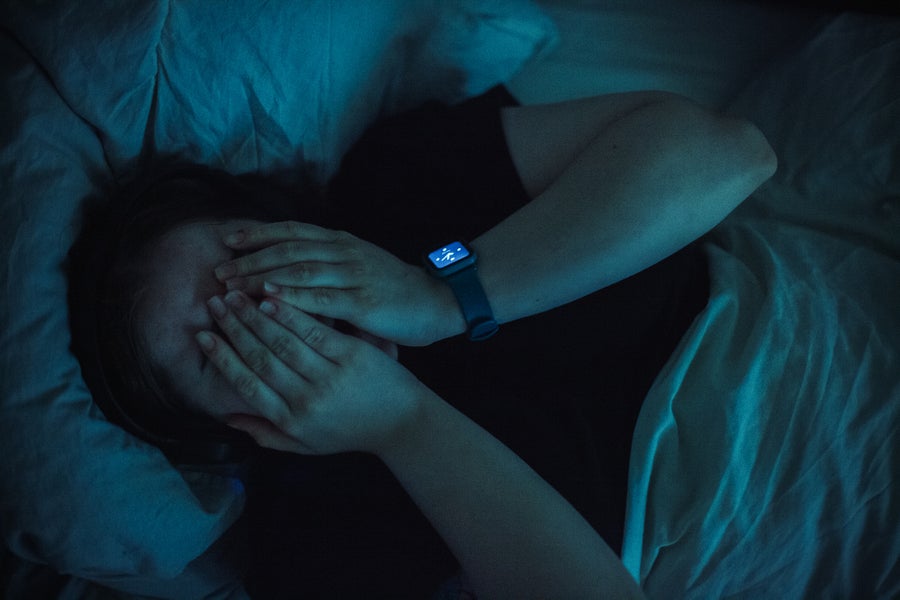
If the nerve-racking buildup to the U.S. presidential election has stolen your sleep, you’re not alone. An American Psychological Association survey released last week found that more than 82 percent of adults have felt that this election cycle “has been an emotional rollercoaster” and that 25 percent say they have lost sleep over it. But experts in the field have some good news: a few actionable, science-based steps can help.
Since the moment the first campaign signs went up, sleep physician Sally Ibrahim says, she has been providing advice for what she calls “electsomnia.”
“You can have acute insomnia or very short-term issues around sleep, like if you’re about to get married, for example. But election season drags on so much [that] people can develop these sort of chronic issues with their sleep loss,” says Ibrahim, a pediatric and adult sleep specialist at the University Hospitals health system in northeastern Ohio and an associate professor at the Case Western Reserve University School of Medicine. “What studies have found is our thoughts around our situation can be much more impactful than the situation itself.”
Anxiety about anything can disrupt sleep, but research suggests that unpredictable, high-stakes, world-scale events—such as the coming U.S. election—can have a particularly intense effect, says clinical psychologist Tony Cunningham, director of the Center for Sleep and Cognition at Beth Israel Deaconess Medical Center and Harvard Medical School. Cunningham ran a study that tracked people’s moods, mental health, alcohol consumption, and sleep in 2020, right around that year’s presidential election and the COVID pandemic. He found that those who experienced more stress and depression on election day were more likely to have worse sleep that night.
“Sleep was uniquely terrible, [as well as] almost every metric we collected,” Cunningham says. “Stress and negative mood were probably the most dramatically affected. There were several days of significant increase leading up to the election, and then it was kind of a slow-burn couple of days until it got back down to normal.” People reported napping more the day after the election, he adds.
“Take stock of how you are doing in the moment, especially day-to-day, leading up to and following the election.”
—Tony Cunningham, clinical psychologist
The four-day delay in the 2020 voting results also likely worsened things, Cunningham says. He was surprised that even many non-U.S. study participants reported similar stress and shifts in sleep that rose and fell with the election cycle. “This is a major sociopolitical event that is driving an acute stress response in a large proportion of the population,” he says.
Cunningham, who is collecting data again for the 2024 election, warns that people in the U.S. may experience a “double whammy” when the clocks switch from daylight saving time to standard time during the weekend before election day. This could be “particularly damaging” to sleep, he says. Luckily, there are ways to cope. “The first thing is just to try to acknowledge your feelings and recognize your limits,” Cunningham says. “Take stock of how you are doing in the moment, especially day-to-day, leading up to and following the election.”
Cunningham also notes that research links overconsumption of news during stressful events to psychological distress. “There’s a level between being informed and then doomscrolling at four in the morning,” he says, adding that the latter “is not going to be helpful to you.”
“Performance anxiety” about sleep can also beget less sleep. “We actually tell people with insomnia, ‘Don’t worry about not sleeping,’” Ibrahim says.
Habit stacking is a powerful tool, especially for busy entrepreneurs who need to maximize their time and efficiency. While the topic has been discussed in depth and well documented by James Clear, author of Atomic Habits, the idea of habit stacking is to stack up a new habit on top of a current habit.
So, for example, Clear references a meditation habit: “After I brew my morning coffee, I will meditate for one minute.” Or a gratitude habit: “Before I eat my first bite of dinner, I will say one thing I am grateful for that day.”
I confess that I am a multitasker unless I’m working on a deep project or having conversations with friends and family. Below are some of the go-to habit stacks I practice regularly.
1. Morning digital detox and movement
I like to exercise first thing in the morning, and during my workouts, I do not use my phone. I am focused on my workout, my music and making sure I get the most out of my time in the gym, which I thoroughly enjoy.
It’s also wonderful to kick off the morning off my phone, not scrolling and keeping my mind clear, energized and my overall self in a healthy flow state. Morning routines are critical for productivity and positivity.
2. Driving and focused time with kids or partner
I speak with many parents who drive their kids to school and talk about how their children are glued to their phones. While I do take business and personal calls while I drive solo, I have always prioritized conversations with my two boys and husband when we are in the car together.
Most of us have chaotic days, and the time in the car together is a nice time to catch up, talk about the day and listen to music together. Instead of asking your kids, “How was school?” try something more like, “Who made you laugh today?” Or “What was the coolest class today?”
3. Podcasts and protein
I prioritize nutrition and am not one to skip meals. Lately, my breakfast is a skillet-sized chocolate protein pancake with no sugar and about 50g of protein. It’s basically raw cacao powder, protein powder and egg whites or eggs.
While I make this, I usually take calls, usually internal or more casual calls that do not require me to be in front of a screen. I also catch up on learning via podcasts. Most importantly, you should kick off your day with protein as it is the best fuel for your brain and body and will help prevent poor eating habits.
4. Sunlight, steps and creative thinking
I like to combine walking with brainstorming and thinking, and although it can be difficult, I schedule a few short walks where I don’t make a call, listen to a podcast or play music. Instead, I think. This ‘phone completely off’ habit stack ensures healthy physical activity and beneficial sunlight (when the sun is out!) and usually leads to creative ideas or problem-solving.
This habit is also an effective exercise to do with a work colleague. I’ve come up with multiple new ideas or solved problems while on a walk or hike. The endorphins and movement are proven to support this. If you really want to maximize this habit stack, plan this no-phone walk immediately after a meal, as this will help prevent the post-lunch energy slump.
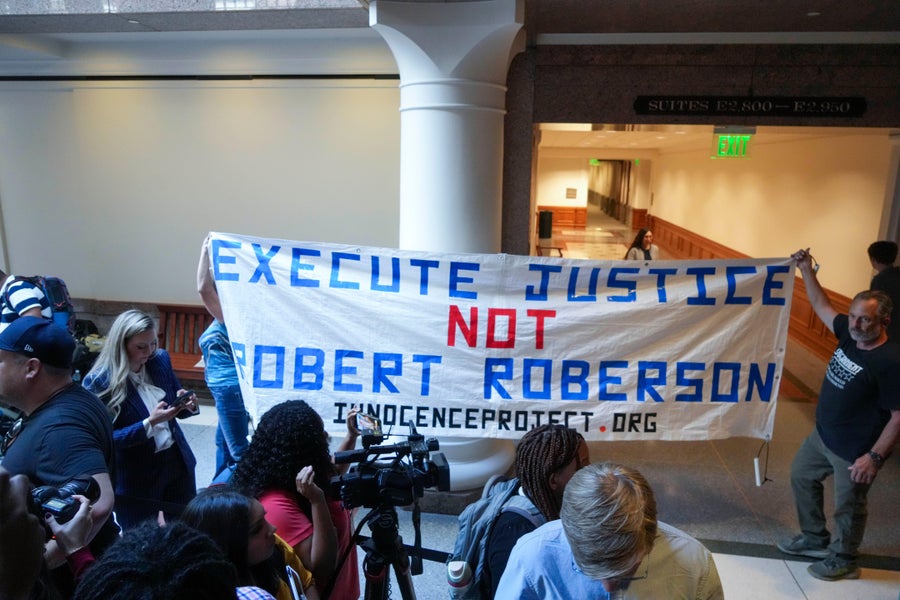
In a last-minute effort to save the life of a man on death row, a bipartisan group of Texas legislators has just done something extraordinary: they have unanimously subpoenaed Robert Roberson, convicted in 2003 of killing his daughter based on the now-discredited theory of shaken baby syndrome, to testify before them five days after he was scheduled to be executed, effectively forcing the state to keep him alive.
Roberson is one of many people who have been imprisoned for injuries to a child that prosecutors argue resulted from violent shaking. But research has exposed serious flaws in these determinations, and dozens of other defendants who have been wrongly convicted under this theory have been exonerated. Yet
Roberson remains on death row, even as politicians, scientists, and others—including the lead detective who investigated him and one of the jurors who convicted him—have spoken out on his behalf. If his execution proceeds, they and many others believe that Texas will be killing an innocent man for a “crime” that never happened.
As our scientific understanding of shaken baby syndrome has evolved over the past 20 years, justice requires that courts reexamine old convictions in light of new findings. This is especially true for Roberson, who would be the first person in the U.S. to be executed for a conviction based on shaken baby syndrome. No matter one’s view of the death penalty, the ultimate punishment must be held to the ultimate standard of proof—and Roberson’s case falls woefully short of that standard.
The theory behind shaken baby syndrome dates back to the early 1970s, when two medical researchers—Norman Guthkelch and John Caffey—separately published the first scientific papers explaining that shaking an infant can cause fatal internal injuries even absent external injuries. Over time physicians and law enforcement officers, among others, widely began to rely on a triad of symptoms—brain bleeding, brain swelling, and retinal bleeding—as definitive proof that someone had abused a child by shaking. To support this theory, researchers cited cases in which a child displayed these symptoms and a caretaker confessed to shaking the child, which ostensibly confirmed the triad as a reliable way to diagnose abuse.
There is no doubt that shaking a child can cause injuries, including those that compromise the shaken baby syndrome triad. Newer research, however, has shown that shaking is not the only way to cause those injuries: They can also result from an accidental “short fall” (e.g., falling off a bed) as well as from other medical causes (e.g., pneumonia, improper medication)—all of which were true of Roberson’s daughter. In fact, a 2024 study found that the injuries historically used to diagnose shaking are actually more likely to result from accidents than from shaking. In short, modern science understands that the presence of these symptoms does not necessarily mean that a child was abused, nor does their absence mean that they were not abused.
Why did clinicians wrongly trust this triad of symptoms for so long? The short answer is that correcting misconceptions requires a feedback loop that is often lacking in child abuse investigations. When a doctor diagnoses a living adult and prescribes a treatment, the effectiveness of that treatment provides feedback on the correctness of their diagnosis; if the treatment proves ineffective, doctors can learn from this misdiagnosis and adjust future diagnoses accordingly. Such feedback, however, is not always sufficient; for instance, doctors practiced bloodletting for centuries because it was generally accepted and seemed to work for some patients, though it was an illusory correlation. With respect to shaking, doctors rarely learn whether a child was actually shaken because the child is typically deceased or unable to articulate what happened, and thus doctors rarely receive feedback that the triad led to an incorrect diagnosis.
As for the studies that used a caretaker’s confession to establish that abuse occurred, it is now well-known that innocent people sometimes confess to crimes they did not commit, such that confessions are not synonymous with truth. Some scholars have even argued that the unique circumstances of suspected shaking cases (e.g., suspects’ emotional state) create an especially high risk of false confession.
Further complicating matters, child abuse determinations are subject to cognitive bias, in which extraneous information leads experts to interpret the same injury in different ways—at least one of which must be incorrect. In one study, for example, medical professionals more often judged the same childhood injury as abuse rather than an accident if told that the child’s parents were unmarried or drug users—both of which appear to be true of Roberson. Another study found that those same extraneous factors led emergency room doctors to misdiagnose accidental injuries as abuse in a staggering 83 percent of cases.
.
Protesters from the Innocence Project in the hallway outside a hearing room in Texas. Legislators issued an unusual last-minute subpoena to save death-row inmate Robert Roberson from his scheduled execution. Bob Daemmrich/Alamy Live News
If you’re ready to relax and unwind, a trip to the sauna can do the trick. There are many ways to enjoy sauna benefits these days—from a post-workout ritual to soaking up the heat on a chilly day—and it appears the buzzy wellness trend is here to stay.
Whether you prefer sweating it out in a sauna or a steam room (which is more humid), both settings are loaded with benefits, says Michele Bailey, DO, a primary care physician at Rush University Medical Group. Visiting a sauna regularly may help you manage various health conditions including rheumatologic and skin diseases like psoriasis, she says.
High temperatures can also boost your circulation, alleviate chronic pain, reduce joint stiffness, and even strengthen your immune system, according to a recent study. But can sauna usage help you achieve other goals like weight loss, healthy skin, and stress relief? Ahead, experts break down what saunas are, the potential benefits, and who should (and shouldn’t!) bring on the heat.
What is a sauna vs a steam room?
A sauna is a room that people use to enjoy dry heat. It is typically heated between 82.2 and 90.5 degrees Celsius (180 and 195 degrees Fahrenheit) with very low humidity. The most traditional type is a wood-burning sauna, which uses fire to heat up the space. There are also electric saunas, which produce heat with electricity (think: the kind someone might install in their home).
Some versions are designed to make the heat easier to tolerate. Infrared saunas, for example, utilize infrared light waves to warm your body up directly without raising the temperature of the air around you. They are said to spark the same effects in your body as a traditional sauna but at a lower temp.
Steam rooms, on the other hand, are characterized by moist heat, making them more humid than traditional saunas. Steam rooms are usually heated between 37.8 and 48.9 degrees Celsius (100 and 120 degrees Fahrenheit) and have nearly 100% humidity, says Purvi Parikh, MD, an internal medicine physician and clinical assistant professor at NYU Grossman School of Medicine. Although steam rooms are not technically as hot as saunas, you will likely feel warmer in a steam room because of the extra moisture in the air, she says.
11 sauna benefits
1. It may improve your circulation
Anything that raises your body temperature will increase your heart rate, which in turn increases your circulation, says Denise Millstine, MD, an internist at Mayo Clinic’s family medicine office in Scottsdale, Arizona.
Sitting in a sauna is almost like walking on a treadmill at a regular pace, says Dr. Parikh. Because of the heat, your heart has to pump harder to circulate your blood, which means you’re getting some cardio benefits even though all you’re doing is sitting in the heat. Keep in mind, though, it’s still no replacement for exercise, which has tons of other body benefits.
2. It may help lower your blood pressure
Spending time in a sauna may help lower blood pressure for some people, says Dr. Millstine. ‘Physiologically, much like exercise, your blood pressure [goes up] initially…then, long-term, it results in better management and lowering of your blood pressure,’ she says. Traditional sauna bathing is also associated with overall lower blood pressure, research shows.
Film and Writing Festival for Comedy. Showcasing best of comedy short films at the FEEDBACK Film Festival. Plus, showcasing best of comedy novels, short stories, poems, screenplays (TV, short, feature) at the festival performed by professional actors.









:max_bytes(150000):strip_icc()/Parents-Mom-Yelling-at-Teen-e4c6944f4c364ccb9f37c5f60181ea9c.jpg)


 Jena Ardell/Getty Images
 Dmytro Betsenko/Getty Images



 James' World 2