December 8, 2024
Mohenjo
Business, Food For Thought, Human Interest, Political, Science, Technical
amazon, business, Business News, current-events, Future, Hotels, human-rights, medicine, mental-health, research, Science, Science News, technology, Technology News, travel, vacation

Click the link below the picture
.
Jupiter will be visible all night along — no telescope required. However, stargazers who have a telescope or pair of binoculars can also catch a glimpse of its four largest moons.
The biggest planet in the solar system will be on display in the December sky as it shines brighter than it has all year.
On Saturday, Dec. 7, Jupiter will reach opposition, the point in its orbit when it appears in the exact opposite part of the sky than the sun. This is also around the time when the planet is closest to the Earth, making it appear particularly bright.
Jupiter will be visible all night along — no telescope required. However, stargazers who have a telescope or pair of binoculars can also catch a glimpse of its four largest moons.
Although the event takes place during the first full weekend of December, any night throughout the month with favorable weather will be good for viewing the planet as it will remain incredibly bright into the start of the new year.
The next time Jupiter appears this bright will not be until January of 2026.
Next week, look for one of the best meteor showers of the year. The Geminid meteor shower peaks on the night of Thursday, Dec. 12, into the early hours of Friday, Dec. 13. Most years, it boasts up to 120 meteors per hour; however, a nearly full moon will outshine many of the dimmer me
.
 The gas giant Jupiter will reach opposition on the night of Dec. 7. The gas giant will continue to shine bright for the remainder of the month. Catch our solar system’s largest planet at its best!
 An image of what Jupiter and its four largest moons look like through a telescope. (ScienceAtNASA)
.
.
Click the link below for the complete article:
.
__________________________________________
December 8, 2024
Mohenjo
Business, Food For Thought, Human Interest, Political, Science, Technical
amazon, business, Business News, current-events, Future, Hotels, human-rights, medicine, mental-health, research, Science, Science News, technology, Technology News, travel, vacation

Click the link below the picture
.
With a job market heating up and employee resentment boiling over, “revenge quitting” looks to be on the horizon for 2025.
Edel Holliday-Quinn, a business psychologist, told Business Insider that some workers feel burned out and undervalued in part due to increased workloads and a back-and-forth about hybrid working.
In 2025, she said, many people are therefore thinking: “New year, new job.”
“The job market is starting to loosen up, and for those who have been simmering with frustration, this might be the year they finally quit—not just quietly, but loudly,” Holliday-Quinn said.
“Revenge quitting,” she said, is where employees leave not just to move on “but to make a point.”
Burnout and toxicity
Employment analysts previously told BI that the Great Detachment is plaguing workplaces and is one of the biggest challenges leaders face.
Partner that with the fact it might be easier to switch jobs next year, and employers could soon realize their best talent is jumping ship.
“If we as HR leaders don’t act now, we do run the risk that a lot of those employees will just decide the opportunities are not there for them in the current company,” Ciara Harrington, the Chief People Officer of the corporate training platform Skillsoft, told BI.
.

.
.
Click the link below for the complete article:
.
__________________________________________
December 7, 2024
Mohenjo
Business, Food For Thought, Human Interest, Political, Science, Technical
amazon, business, Business News, current-events, Future, Hotels, human-rights, medicine, mental-health, research, Science, Science News, technology, Technology News, travel, vacation

Click the link below the picture
.
Feeling emotionally drained at work? Is your patience exhausted? Your energy low? If so, you’re showing clinical markers of burnout.
And you’re not alone. In a January 2024 mental health survey conducted by NAMI, more than half of all managers (54%) indicated that they had felt burned out during the past year because of their job. Among employees of all levels, 36% said their mental health had suffered due to work demands. Even folks in the C-suite are heading for the exits.
No one ever said leadership was easy. But in recent years, as with so many jobs, being a leader has, in fact, become harder. Leaders rush from meeting to meeting feeling like lunchroom attendants for an unruly junior high. With exponentially escalating business complexity; diminished civility; and intrusive, pervasive technological interruptions, you may feel like it’s barely possible to keep order, let alone lead employees on an inspiring journey.
It’s Not Your Imagination: Where Leadership Is Tougher
Four specific areas that most leaders care about have genuinely become more difficult in the past few years: hyping up their teams, getting to the truth, focusing on strategy, and staying sane themselves. But understanding how and why each of these leadership loads has become more difficult to carry can set you on the path to doing better.
1. Leader as Cheerleader: Hyping Up Your Team
Sometime in 2011, my boss brought me a chocolate muffin. I mention this not only because it was my introduction to the idea of servant leadership (thank you, Dave!) but also because it remains an excellent example of the simplicity of morale-building. You don’t have to hire a brass band and shoot off fireworks; you do have to say thank you, send a nice email, and offer a bit of chocolate at around 3:00 p.m. Consistently appreciate the humans around you. Be a mensch.
The basics of keeping your team energized haven’t changed. But the environment in which you’re doing so certainly has. Work in 2024 has been noisy. For instance, the average worker receives 121 emails a day — and that’s not counting instant messaging pings, texts, or, God forbid, phone calls. Let’s say that you, as their manager, send 10% of those emails. That’s still more than 100 messages a day that you didn’t send. Those messages could be morale-destroying, truly exciting, or anywhere in between — and don’t even get employees started on dealing with the oversharers and negativity-dispensers in group chat (and private group chats). You’re bringing a chocolate muffin into an environment akin to Times Square at high noon. It’s hard to be loud enough to get people’s attention, and the pressure to be authentic has never been higher.
What to do: First of all, don’t get knocked off your game. It’s tempting, in the face of so much cross-talk, to retreat behind a robotic facade and a series of irritatingly bland and distinctly corporate-flavored communications. Don’t do that. Continue your “ground game” for keeping the team’s spirits up, in a way that’s authentic to you. But adapt your approach to fight the clutter and the conflicting messages around you. Relentlessly join in the conversation wherever it occurs — and be punchy. A quick, funny GIF, a one-line email, or a two-minute conversation at someone’s desk can all be effective, if that’s where folks are listening. In general, think shorter, more frequent communication, varied across more channels. You can’t be everywhere, but you can make your personal warmth felt in bursts.
2. Leader as Detective: Getting to the Truth
Data-driven leadership was supposed to save the world — or at least bring us closer to a shared view of what was actually going on inside any given organization. No more turmoil: We had dashboards! The truth was going to be right at our fingertips, and every decision was going to be smarter as a result.
Instead, a proliferation of data of questionable quality, housed within a host of competing systems, now just confuses many people further. You could compare the current state of play to Akira Kurosawa’s classic 1950 film Rashomon — in which a terrible crime is described by four different narrators, none of whose accounts match.
Worse, though, the right comparison might not exist in the world of thrillers but rather in science fiction. Many organizations have enough data telling different stories that they qualify as a full-on metaverse — with different leaders living in different realities, with their own streams of data attached. That’s painful: Instead of starting every conversation from a shared understanding, you’re more at cross purposes than ever.
What to do: Think like a data scientist — not in the sense of learning to code or performing advanced analytics, but in the sense of asking better questions of information, in a structured and methodical way. Don’t be afraid to ask where data came from, what the gaps in a data set might be, or what kinds of analytics were performed to get to the numbers you’re seeing. Come in with a hypothesis and see if it proves out rather than just taking the numbers at face value. It’s slightly counterintuitive, but being a tougher data analyst makes you a better truth sleuth.
.
 Carolyn Geason-Beissel/MIT SMR | Getty Images
.
.
Click the link below for the complete article:
.
__________________________________________
December 7, 2024
Mohenjo
Business, Food For Thought, Human Interest, Political, Science, Technical
amazon, business, Business News, current-events, Future, Hotels, human-rights, medicine, mental-health, research, Science, Science News, technology, Technology News, travel, vacation
Click the link below the picture
.
The body of a Pennsylvania woman believed to have fallen into a fresh sinkhole this week while searching for her cat has been found in a long-abandoned mine that the sinkhole exposed, state police said Friday.
Elizabeth Pollard, 64, was found dead Friday in the mine in the southwestern Pennsylvania community of Marguerite shortly after 11:15 a.m., Pennsylvania State Police spokesperson Trooper Steve Limani said. Crews still were working to recover her body early Friday afternoon, he said.
Pollard’s family has been notified, Limani said.
“The family … kept telling us, ‘We really want to have the body back so we can lay her to rest,” Limani said. “As a group, we just really wanted to make sure that we were able to do that.”
Pollard’s body was found “not far away from where we believe that she’d been when she fell through the sinkhole,” Limani said. “It was just a matter of the work to remove all the dirt.”
Officials are expected to hold a news conference about the situation Friday afternoon, Limani said.
The discovery ends a dayslong search that started early Tuesday when, according to state police, a relative told authorities that Pollard and her 5-year-old granddaughter had left in a car to look for her cat Monday afternoon and had not been heard from since.
Police who were looking for the woman then discovered her vehicle early Tuesday – with her granddaughter unharmed inside after being there nearly 12 hours – parked near a restaurant. A fresh, deep sinkhole was just steps away.
.
 Rescue workers searched Thursday for Elizabeth Pollard at a sinkhole in Marguerite, Pennsylvania. (Photo credit: Matt Freed/AP via CNN Newsource)
.
.
Click the link below for the complete article:
.
__________________________________________
December 7, 2024
Mohenjo
Business, Food For Thought, Human Interest, Political, Science, Technical
amazon, business, Business News, current-events, Future, Hotels, human-rights, medicine, mental-health, research, Science, Science News, technology, Technology News, travel, vacation

Click the link below the picture
.
Spices bring up feelings of comfort, cultural belonging, and holidays. They can make our homes smell amazing and our food taste delicious. They can satisfy our cravings, expand our culinary horizons, and help us eat things that we might normally dislike. Spices have health-enhancing properties and, in medicine, have been used to heal people since the ancient times.
Recently, however, spices have been getting a bad rep.
In September 2024, Consumer Reports, a nonprofit organization created to inform consumers about products sold in the U.S., investigated more than three dozen ground cinnamon products and found that 1 in 3 contained lead levels above 1 part per million, enough to trigger a recall in New York, one U.S. state that has published guidelines for heavy metals in spices.
The Food and Drug Administration issued three alerts throughout 2024, warning consumers about lead in certain brands of cinnamon products. Such notices rightfully put consumers on alert and have people wondering if the spice products they buy are safe – or not.
As an environmental epidemiologist with training in nutritional sciences, I have investigated the relationship between nutritional status, diets, and heavy metal exposures in children.
There are several things consumers should be thinking about when it comes to lead – and other heavy metals – in cinnamon.
Why is lead found in cinnamon?
Most people are familiar with cinnamon in two forms – sticks and ground spice. Both come from the dried inner bark of the cinnamon tree, which is harvested after a few years of cultivation. For the U.S. market, cinnamon is largely imported from Indonesia, Vietnam, Sri Lanka, India, and China.
One way that lead could accumulate in cinnamon tree bark is when trees are cultivated in contaminated soil. Lead can also be introduced in cinnamon products during processing, such as grinding.
When ground cinnamon is prepared, some producers may add lead compounds intentionally to enhance the weight or color of the product and, thus, fetch a higher sale price. This is known as “food adulteration,” and products with known or suspected adulteration are refused entry into the U.S.
However, in the fall of 2023, approximately 600 cases of elevated blood lead levels in the U.S., defined as levels equal to or above 3.5 micrograms per deciliter – mostly among children – were linked to the consumption of certain brands of cinnamon apple sauce. The levels of lead in cinnamon used to manufacture those products ranged from 2,270 to 5,110 parts per million, indicating food adulteration. The manufacturing plant was investigated by the FDA.
More broadly, spices purchased from vendors in the U.S. have lower lead levels than those sold abroad.
There is some evidence that cinnamon sticks have lower lead levels than ground spice. Lead levels in ground cinnamon sold in the U.S. and analyzed by Consumer Reports ranged from 0.02 to 3.52 parts per million. These levels were at least 1,500 times lower than in the adulterated cinnamon.
.

Homemade Snickerdoodle cookies rolled in cinnamon and sugar. indasPhotography/Getty Images
.
.
Click the link below for the complete article:
.
__________________________________________
December 6, 2024
Mohenjo
Business, Food For Thought, Human Interest, Political, Science, Technical
amazon, business, Business News, current-events, Future, Hotels, human-rights, medicine, mental-health, research, Science, Science News, technology, Technology News, travel, vacation

Click the link below the picture
.
“Second place is the first loser.”
We’ve all been in that situation where we competed hard to win, only to come up short. At times like these, it can be tough to remain focused on your achievements and instead dwell on the feeling of having lost. For me, that moment came when I was nominated as a finalist for Young Entrepreneur of the Year—and I came in second place.
Don’t worry, I eventually built a successful career as a leader at some of the world’s biggest companies including Deloitte and Meta. But at the time, coming in runner-up felt like a crushing defeat from which I’d never recover.
Here are five lessons I learned along the way.
Don’t fixate on goals, focus on outcomes
It might seem presumptuous, but I had fully expected to win the award. I had started my first business at the age of 8, was the founder of a tech startup by age 21, and by 31 Australian Financial Review had published a full-page feature on me. Who could possibly be more deserving?
Along the journey to what I saw as my defeat, I had lost sight of those achievements and how they’d positively impacted the lives of my cofounders, colleagues, and clients. The collective benefit of these outcomes far outweighed the glory of a single award.
Be mindful of the halo effect as you work towards personal milestones and professional achievements. When you’re doing it right, the impact of your work can be used as a powerful tool to raise the bar and create positive effects for those around you.
Follow the leader
When you lose out on a deal to a competitor or get passed over for a promotion in favor of a colleague, it’s natural to focus on the negatives and obsess about all the reasons you were more deserving. At these times, you have two choices: You can grumble about it or use it as an opportunity to get better.
I asked for feedback when I placed second for Young Entrepreneur of the Year. The judges told me it was a dead heat between me and the winner. The only difference was the winner had worked abroad to gain international experience and I hadn’t. So after licking my wounds for a few weeks, I decided to fill that gap. Within a few months, I had secured a new role in Singapore and boarded a flight that would transport me to the next chapter of my life and career.
They say comparison is the thief of joy but if you can look at your losses objectively and are willing to act on the feedback you receive, coming in second place can be just the motivation needed to see what’s been holding you back.
Make your failures public
For the longest time, I was ashamed to share that I’d come second place. I agonized over the decision of whether to speak about it publicly or not. As it turns out, no one even knew I was in the running. Once they found out I had been a finalist, people congratulated me and thought it was great news.
The truth is no one cares about what we’re doing as much as we do ourselves. The message people take away is usually not about winning or losing, but rather that we deserve a seat at the table.
As leaders, we are often pressured to always paint a good news story. More often than not, talking about the high-stakes opportunities we lost or resulted in failure can be beneficial. Being invited to pitch for a huge account and coming in second place can be something you hide away, or it can be the very thing that gets you invited to compete for other large deals.
.
 [Source Photo: Joshua Golde/Unsplash]
.
.
Click the link below for the complete article:
.
__________________________________________
December 6, 2024
Mohenjo
Business, Food For Thought, Human Interest, Political, Science, Technical
amazon, business, Business News, current-events, Future, Hotels, human-rights, medicine, mental-health, research, Science, Science News, technology, Technology News, travel, vacation
Click the link below the picture
.
CLIMATEWIRE | President-elect Donald Trump’s pick for NASA administrator is an experienced commercial astronaut who staunchly supports increased investment in human-crewed space exploration.
But Jared Isaacman’s views on climate change — a major NASA research priority — remain unclear.
The billionaire has described himself as a “moderate who occasionally weighs in on various issues” and who is “firmly anchored in the middle.” Some of his posts on the social media platform X suggest he may be supportive of climate action. He has also responded occasionally to other posts criticizing commercial space travel for environmental reasons, suggesting that humans can prioritize both space exploration and threats to humans on Earth.
“[W]e can attempt to unlock the mysteries of the universe and improve the climate here at home,” he said in an Aug. 30 post on X. “Those who see this as a binary choice, where resources must be allocated to one side or the other, are incredibly shortsighted.”
But Isaacman hasn’t publicly commented on his climate change views in interviews, to the knowledge of POLITICO’s E&E News. That leaves some researchers unsure about the future of NASA’s vast Earth science functions, given Trump’s denial of climate change and conservative plans to dismantle climate research initiatives across the federal agencies.
“It’s clear that he’s a big fan of human spaceflight and would go every day if he could. He understands science because he jam-packed as much science as he possibly could into his missions,” said former NASA employee Keith Cowing, who runs the watchdog site NASAWatch.com. “But as far as the other stuff like climate, I don’t know what his stance is on there.”
Isaacman did not respond to a direct message on X asking him to clarify his views on global warming, and the Trump transition team did not respond to a request for comment.
Isaacman’s stance on climate change is also unlikely to be “the final arbiter of what NASA does,” Cowing said. “That will come from the bigger picture that the Trump administration will put forth, and you know they’ve expressed doubts about climate change being a priority.”
Trump has repeatedly questioned the science of human-caused climate change, has vowed to withdraw the U.S. from the Paris Agreement for a second time, and has doubled down on his promise to expand the development of fossil fuels. Climate scientists are also concerned that Trump may turn to Project 2025, a 900-page conservative policy plan spearheaded by the Heritage Foundation, as a road map for federal research priorities.
Project 2025 calls for major overhauls of some federal science agencies, particularly those focused on climate change. The plan suggests that Trump should dismantle NOAA and calls for his administration to “reshape” the U.S. Global Change Research Program, which coordinates federal research on climate and the environment.
The blueprint doesn’t outline specific plans for NASA’s Earth science capabilities. But it asserts that the “Biden Administration’s climate fanaticism will need a whole-of-government unwinding.”
While Trump distanced himself from Project 2025 during his campaign, he recently tapped a number of the plan’s architects and supporters for his new administration. The announcements have rekindled concerns among climate scientists that the Project 2025 blueprint will heavily shape the incoming administration’s strategies.
.
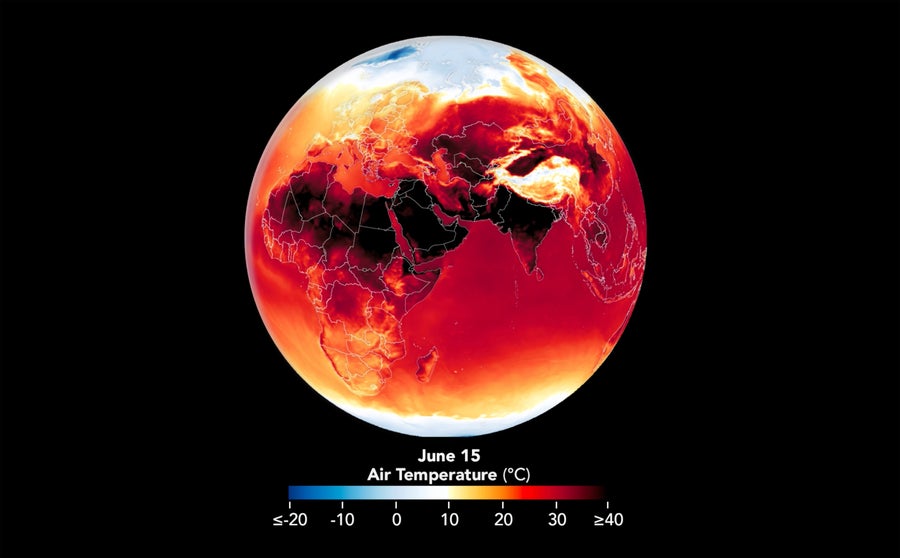
NASA conducts crucial climate science, such as monitoring Earth’s rising temperature. NASA Earth Observatory video by Lauren Dauphin, using GEOS data from the Global Modeling and Assimilation Office at NASA GSFC
.
.
Click the link below for the complete article:
.
__________________________________________
December 5, 2024
Mohenjo
Business, Food For Thought, Human Interest, Political, Science, Technical
amazon, business, Business News, current-events, Future, Hotels, human-rights, medicine, mental-health, research, Science, Science News, technology, Technology News, travel, vacation

Click the link below the picture
.
Have you ever worked for a leader who made a mistake, a bad decision, or didn’t know the answer to something and, rather than admit it, they deflected it by blaming someone else, justifying it, or acting like it didn’t happen? This lack of accountability happens all too often in the workplace and it undermines trust, engagement, and communication. Leadership accountability is at the heart of any organization’s ability to achieve optimal performance and build a strong culture.
Workers today place a higher premium on their leaders walking the talk and being more accountable. At a time when we continue to experience accelerated change, increased complexities, growing pressures, and competing priorities, demonstrating accountability as a leader couldn’t be more critical. In fact, accountability was one of eight key factors driving positive work-related outcomes according to McKinsey & Company’s The State of Organizations 2023 report. The report also found that organizations with high leadership accountability tend to be healthier.
Without accountability, even the most talented and well-intentioned leaders fail. They fail to meet their performance goals, develop their teams, hire top talent, coach their employees, communicate clearly, and optimize performance. In short, they fail the business overall. This is a lot of failings, but when leaders are committed to achieving optimal performance by aligning their thinking, behaviors, and attitude with their words, they can avoid these kinds of failures.
I’m a big believer that leaders are the thermostat in any organization—meaning they have the power to set the right temperature and create the right environment for how things are done and how people are treated. Here are five behaviors that matter the most for leaders to demonstrate accountability and make a real impact on team performance, personal relationships, and the success of the organization.
Consistency matters
Being predictable is okay. The reality is employees want to be led. They want to work for a leader who provides them with guidance and helps them navigate the terrain of uncertainty and change. When people know what to expect from you and how you’ll respond, it enhances engagement, increases satisfaction, and improves decision making . . . all of which leads to greater productivity. I asked more than 50 people what it meant for a leader to be consistent. The most consistent responses were:
“They do what they say they’re going to do.”
“Who I see today is the same person I will see tomorrow.”
.
 [Source Photo: Pro5/Pexels]
.
.
Click the link below for the complete article:
.
__________________________________________
December 5, 2024
Mohenjo
Business, Food For Thought, Human Interest, Political, Science, Technical
amazon, business, Business News, current-events, Future, Hotels, human-rights, medicine, mental-health, research, Science, Science News, technology, Technology News, travel, vacation
Click the link below the picture
.
Sweeping restrictions on abortion across the U.S. have already had major ripple effects in reproductive health care. During president-elect Donald Trump’s next administration, restrictions on abortion are likely to ramp up, and birth control may be next. The double hit is causing some people to urgently consider long-acting reversible contraception such as intrauterine devices (IUDs), or permanent contraception such as sterilization.
“I’ve definitely noticed a change post-Dobbs,” says Rachel Flink-Bochacki, an ob-gyn who practices in New York State, referencing the 2022 Supreme Court decision in Dobbs v. Jackson Women’s Health Organization that eliminated the nationwide right to abortion. In particular, Flink-Bochacki noticed an increased level of interest in sterilization among her patients. “It was a common conversation among ob-gyns, where we were all sort of saying, ‘Does anyone feel like we’re getting way more consults for this?’”
The data suggest this perception had some truth to it, says Xiao Xu, a health economist at Columbia University Irving Medical Center. In a recent report in JAMA, she and her colleagues found a statistically significant increase in sterilization procedures nationwide in the immediate aftermath of the Dobbs decision, which overturned the 1973 Roe v. Wade ruling that legalized abortion. The study also found that states with abortion restrictions continued to show higher rates of sterilization six months later. Other research has shown increases in long-acting reversible contraception use and sterilization procedures since Dobbs. These measures can prevent pregnancy for years at a time or for the rest of someone’s life. They are also less prone to failure than a daily pill and other short-term and temporary contraception.
The results of the 2024 election appear to have further amplified this interest: reports from Planned Parenthood, which provides family planning and other reproductive health services, suggest sharp increases in appointments for vasectomies, IUDs, and birth control implants at centers nationwide. That’s not surprising. “If abortion is becoming more difficult to do, women may turn to contraception to prevent a need for abortion,” Xu says. “Any abortion-targeted policy can have an impact broader than abortion care itself.”
Long-Acting Contraception
Three methods of long-term birth control are currently available: an arm implant, several varieties of IUDs, and sterilization procedures. All are extremely effective, with fewer than one pregnancy per year for every 100 people using them. In a survey conducted between 2017 and 2019, when abortion remained legal nationwide, some 24 percent of women relied on either their own or a partner’s sterilization for birth control, while 10 percent relied on an IUD or arm implant. People interested in any of these approaches will first consult with their doctor before scheduling the IUD or implant insertion or surgery, all of which are usually outpatient procedures.
Sterilization involves procedures such as a vasectomy, which cuts or blocks the tubes that carry sperm out of the testes, or a bilateral salpingectomy, which removes the fallopian tubes that carry eggs to the uterus. Both procedures are conducted under anesthesia but are typically minimally invasive; they are also irreversible. Flink-Bochacki notes that the consultation process includes a doctor evaluating that someone has fully thought through the decision, although some practitioners may refuse to perform these procedures on people without children. In the wake of Dobbs, she notes, reproductive health advocates have created online lists of doctors who are willing to perform these procedures on people without children.
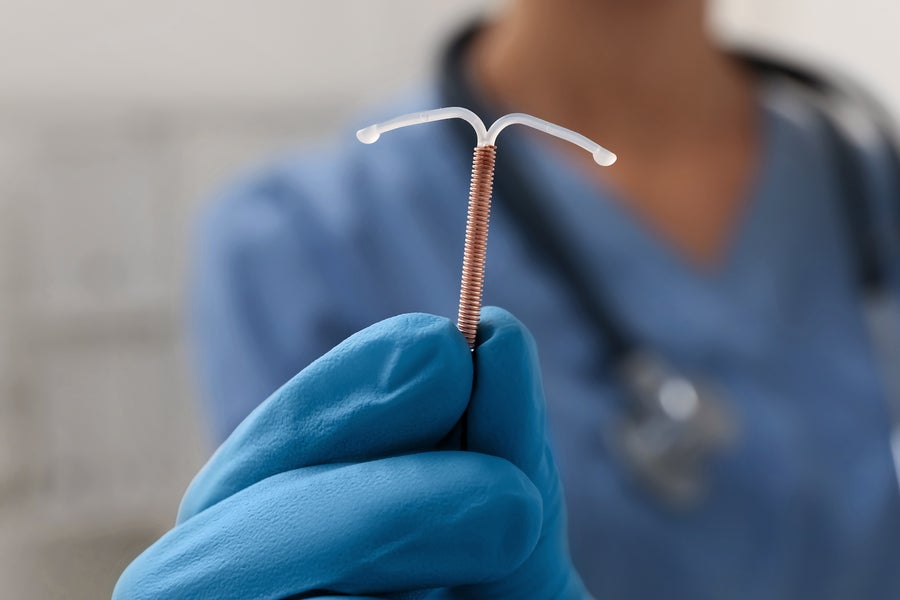
The arm implant and IUDs only work on people who can get pregnant, and they are long-lasting but not permanent. “They are phenomenal options, and they are reversible, so if you don’t like [them], you can obviously have [them] removed, and your fertility returns and there’s no long-term effects,” Flink-Bochacki says. (She notes that IUDs and implants are also the most popular form of contraception among ob-gyns themselves.)
.
 Liudmila Chernetska/Getty Images
.
.
Click the link below for the complete article:
.
__________________________________________
December 4, 2024
Mohenjo
Business, Food For Thought, Human Interest, Political, Science, Technical
amazon, business, Business News, current-events, Future, Hotels, human-rights, medicine, mental-health, research, Science, Science News, technology, Technology News, travel, vacation
Click the link below the picture
.
“Brain rot” is the official Word of the Year for 2024, according to the Oxford English Dictionary’s publisher, Oxford University Press. Here’s how that august chronicler of English defines the phrase: brain rot is the “supposed deterioration of a person’s mental or intellectual state,” resulting from the “overconsumption” of trivial material—especially stuff found on the Internet.
Brain rot is a symptom of mindless scrolling through nonsense memes and sludge content. It is the sensation of faculties warmly smothered by one too many AI-generated pictures; see the off-putting depictions, popular on Facebook, of Jesus fused with crustaceans.
Of course, the term doesn’t describe literal decomposition, which happens rapidly to most dead human brains (although, curiously, not all of them). “‘Brain rot’ speaks to one of the perceived dangers of virtual life, and how we are using our free time,” Oxford Languages president Casper Grathwohl said in a press release. “It feels like a rightful next chapter in the cultural conversation about humanity and technology.”
The expression’s usage frequency spiked 230 percent between 2023 and 2024, the dictionary-maker says, and it was especially common this year on TikTok. It beat out five other words du jour curated by Oxford’s linguists and submitted for public voting, in which 37,000 people participated. (Another shortlisted word was “slop,” which describes the low-quality images and text churned out by large language models.)
Notably, the expression is probably most used by the people who consume or produce most of the content blamed for brain rot. Gen Z and Gen Alpha have readily adopted the phrase, Grathwohl notes, with an attitude both tongue-in-cheek and self-aware. It’s a joke, but it may have some teeth: 2024 was also a year of pronounced concerns about mental health harms and Internet use. In June U.S. Surgeon General Vivek Murthy called for warning labels on social media platforms.
To be sure, brain rot has been with us for years. Before the Internet, television was the great brain-rotter of its time. And Oxford has traced the expression to its first recorded use in Walden, the 1854 book by protohippie Henry David Thoreau. “While England endeavours to cure the potato rot,” Thoreau wrote, “will not any endeavour to cure the brain-rot—which prevails so much more widely and fatally?” Our distractions may change, but our worries and complaints about them are ageless.
.
 Orla/Getty Images
.
.
Click the link below for the complete article:
.
__________________________________________
Older Entries
Newer Entries
 James' World 2