Most astronomers would love to find a planet, but Mike Brown may be the only one proud of having killed one. Thanks to his research, Pluto, the solar system’s ninth planet, was removed from the pantheon—and the public cried foul. How can you revise our childhoods? How can you mess around with our planetariums?
About 10 years ago Brown’s daughter—then around 10 years old—suggested one way he could seek redemption: go find another planet. “When she said that, I kind of laughed,” Brown says. “In my head, I was like, ‘That’s never happening.’”
Yet Brown may now be on the brink of fulfilling his daughter’s wish. Evidence he and others have gathered over the past decade suggests something strange is happening in the outer solar system: distant subplanetary objects are being found on orbits that look sculpted, arranged by an unseen gravitational force. According to Brown, that force is coming from a ninth planet—one bigger than Earth but smaller than Neptune.
Nobody has found Planet Nine yet. If it’s really out there, it’s too far and too faint for almost any existing telescope to spot it. But that’s about to change. A new telescope, the Vera C. Rubin Observatory in Chile, is about to open its mechanical eyes. When it does, it should catch millions of previously undetected celestial phenomena, from distant supernovae to near-Earth asteroids—and, crucially, tens of thousands of new objects around and beyond Pluto.
If Brown’s hidden world is real, Rubin will almost certainly find it or strong indirect evidence that it exists. “In the first year or two, we’re going to answer that question,” says Megan Schwamb, a planetary astronomer at Queen’s University Belfast in Northern Ireland—and, just maybe, the solar system will once again have a ninth planet.
Pluto was discovered in 1930 and always seemed to be a lonely planet on the fringes of the solar system. But in the early 2000s skywatchers found out that Pluto had company: other rime-coated worlds much like it were popping up in surveys of that benighted frontier. And in 2005, using California’s Palomar Observatory, Brown—an astronomer at the California Institute of Technology—and two of his colleagues spied a far-flung orb that would change the way we perceive the solar system.
That orb was Eris. It was remarkably distant—68 times as far from the sun as Earth. But at roughly 1,500 miles in diameter, it was just a little larger than Pluto. “The day I found Eris and did the calculation about how big it might be, I was like, ‘Okay, that’s it. Game’s up,’” Brown says. Either Eris was going to become a new planet, or Pluto wasn’t what we thought.
Finding a ninth planet would be huge. Such a discovery could change what we know about our solar system’s past.
In 2006 officials at the International Astronomical Union decided that to qualify as a planet, a body must orbit a star, must be sufficiently massive for gravity to squish it into a sphere, and must have a clear orbit. Pluto, which shares its orbital neighborhood with a fleet of other, more modest objects, failed to overcome the third hurdle. Pluto became a “dwarf planet”—but its demotion didn’t make it, or its fellow distant companions, any less beguiling to astronomers.
If you think the world is changing faster than ever before, you’re probably right. According to Accenture, the rate of change in businesses has accelerated 183% since 2019—and 33% in just the last year. As the saying goes, change has never been this fast, and will never be this slow again.
Hybrid workplaces, AI transformation, global conflicts, and increased polarization have all contributed to the breakneck pace of change. It’s not surprising many leaders are experiencing whiplash. A staggering 71% of CEOs suffer from imposter syndrome, as they’re being required to tackle challenges they’ve never been trained for.
With so much change in the business world, which issues will rise to the forefront for leaders in 2025? Here are four leadership trends to watch.
Leadership trend: Continue to invest in DEI but call it something else
With the recent election of Donald Trump as U.S. President, many are worried that diversity, equity, and inclusion (DEI) initiatives will come under even more intense fire than they did following the 2023 Supreme Court ruling on affirmative action.
Although these concerns are valid, it’s important to recognize that not all organizations slashed their DEI budgets in response to the Supreme Court ruling. In a 2024 Littler survey, 57% of executives said their organizations expanded their DEI commitments, and 36% have maintained their efforts, while just 1% reported a significant decrease. DEI spending isn’t growing at the same explosive rate as in 2020, but it’s still growing.
Because of legal concerns and political backlash, however, many firms maintaining or expanding their DEI commitments have started calling it something else. For example, “inclusive leadership,” or just good leadership. We predict this leadership trend will increase in 2025, with DEI woven into the fabric of leadership rather than considered a separate concept.
According to the NeuroLeadership Institute’s DEI Impact Case, there are three actions organizations can take to maintain their investments in DEI, no matter what they’re calling it:
Prioritize diversity by aligning it with specific business goals.
Habituate inclusion through targeted learning and performance tools that integrate it into daily practices.
Systemize equity by examining policies and procedures to embed and sustain fairness throughout.
With a science-based approach, leaders can build DEI programs that are legally compliant and strategically beneficial, as well as being the right thing to do.
Leadership trend: Decide on hybrid work
In the past few months, several large organizations have announced that their employees will soon be required to return to the office five days per week. In the third quarter of 2024, 33% of companies required workers to be in the office for five days, up from 31% in the second quarter. Notably, this ends a streak over the previous five quarters, when the rate had steadily fallen.
We think that 2025 will be a year of reckoning for companies to make a long-term decision on hybrid work. After experimenting with flexible remote policies for the past five years, many organizations are going to double down on where and how they want their employees to work—and face the consequences, one way or the other.
Although it may seem logical to go back to the office full-time, research suggests clear advantages to a hybrid workplace. For example, a study published in the journal Nature in 2024 showed that hybrid work at the company Trip.com did not affect productivity or performance—but it did reduce the quit rate by one-third, saving millions of dollars on recruitment and training.
Our research indicates that, although connections among colleagues often increase when everyone’s in the same building, other connections—with leaders, employers, and roles—can suffer, causing return-to-office policies to backfire. That’s one reason we recommend a four-part approach to hybrid work that maximizes the benefits of time together while preserving employees’ sense of autonomy.
Leadership trend: More caution about AI
The first wave of GenAI implementation was characterized by broad enthusiasm and hype. Leaders saw opportunities to revolutionize the way they do business, eliminating monotonous tasks while providing data-driven insights, increasing efficiency, and boosting innovation. In the second wave, they began experimenting with GenAI and implementing it on a wide scale within their organizations.
Climbing rates of colon and rectal cancer among people under 50 years old is a striking recent trend that has alarmed and puzzled clinicians racing to figure out why. Now a new study published in Gut offers what might be a crucial insight: specific lipids, or fatty acids, that are abundantly found in ultra-processed foods may be promoting inflammation that causes cancerous colon cells to run amok.
Colorectal cancer tumor samples from 81 people in the U.S. had excessive amounts of inflammation-boosting lipids, called omega-6 fatty acids—and lacked helpful lipids called omega-3 fatty acids, which help stop inflammation.
Inflammation is a normal defensive response that the immune system switches on to heal wounds or fight off infection. But researchers in the 1800s found that colon tumors under a microscope looked like “poorly healed wounds,” says Timothy Yeatman, a co-author of the study and a professor of surgery at the University of South Florida. Rampant inflammation over long periods of time damages cells and hampers their ability to fight potentially cancerous cell growth. Omega-6 fatty acids often come from our diet, and Yeatman suspects ultraprocessed food is likely a major source of them.
“We don’t know the full effects of these ultraprocessed foods on our body, but we do know that that’s a major thing that’s changed from 1950 onward,” Yeatman says. “Young people today, particularly rural and impoverished people, are being exposed to more of these processed foods than anybody else because they’re cheap and they’re in all the fast-food restaurants.”
Many ultraprocessed foods and fast foods are prepared with seed oil—a cheap, common type of vegetable-based cooking oil that is chemically processed from seeds such as canola (rapeseed), corn, grapeseed, and sunflower. These oils contain high amounts of omega-6 fatty acids. The study was not able to definitively connect the lipids detected in the colon cancer tumors to any specific food or oil, however.
“I think the study confirms that diet is important but probably one of many factors,” says Andrew Chan, a gastroenterologist at Massachusetts General Hospital and a professor of medicine at Harvard Medical School, who was not involved in the new research. Chan and other researchers note that genetics, exercise, lifestyle, and chemical or environmental exposures may influence colon cancer risk, too. Additionally, “there’s a lot of complexity to the food we eat, how it’s converted, how it’s metabolized, and how it might eventually lead to tissue changes around things like lipids,” Chan says. “So there are still some pieces that need to be filled in before we can really tell a cohesive story about it.”
In my life, I’ve personally witnessed three elite salespeople at work. The first was in the Johnson County, Iowa, jail, where I spent July 4 and 5 some years ago for reasons I’d rather not go into here. It was so overcrowded that we had to sleep head to foot on foam pads, and on the second day, as the discharge process dragged into the afternoon and hangovers set in, the inmates became restive. Among us was a nondescript heavyset guy who started to hold forth: Y’all want to know how to disable a burglar alarm with aluminum foil? Want to know how to cook meth without using fertilizer? Did you know there’s a way to open the door of a squad car from the inside? Soon, almost the entire jail had gathered around him like kindergartners at story time, listening raptly as he dispensed criminal wisdom. Possibly he was making it all up as he went; a guy lying on the floor next to me with his forearm over his eyes would periodically mutter that’s not true, uh-huh, that’s a great way to burn down your house, that kind of thing. But if anything, that only increased my admiration—this guy had installed himself as top dog just by bullshitting.
I know a good salesman when I see one. I was, briefly, the No. 1 telemarketer in the United States. I can’t prove it; this was around 20 years ago, and I haven’t kept any of my framed “top seller” certificates or the daily sales sheets showing me already hitting 350 percent of my weekly quota by Tuesday afternoon. But the company I worked for had one of the biggest telemarketing divisions in the world, and during my hot streak there were several weeks in which I was the top salesperson in the entire company. Believe me or not, but who’d lie about being good at telemarketing? It’s like falsely claiming to have gonorrhea.
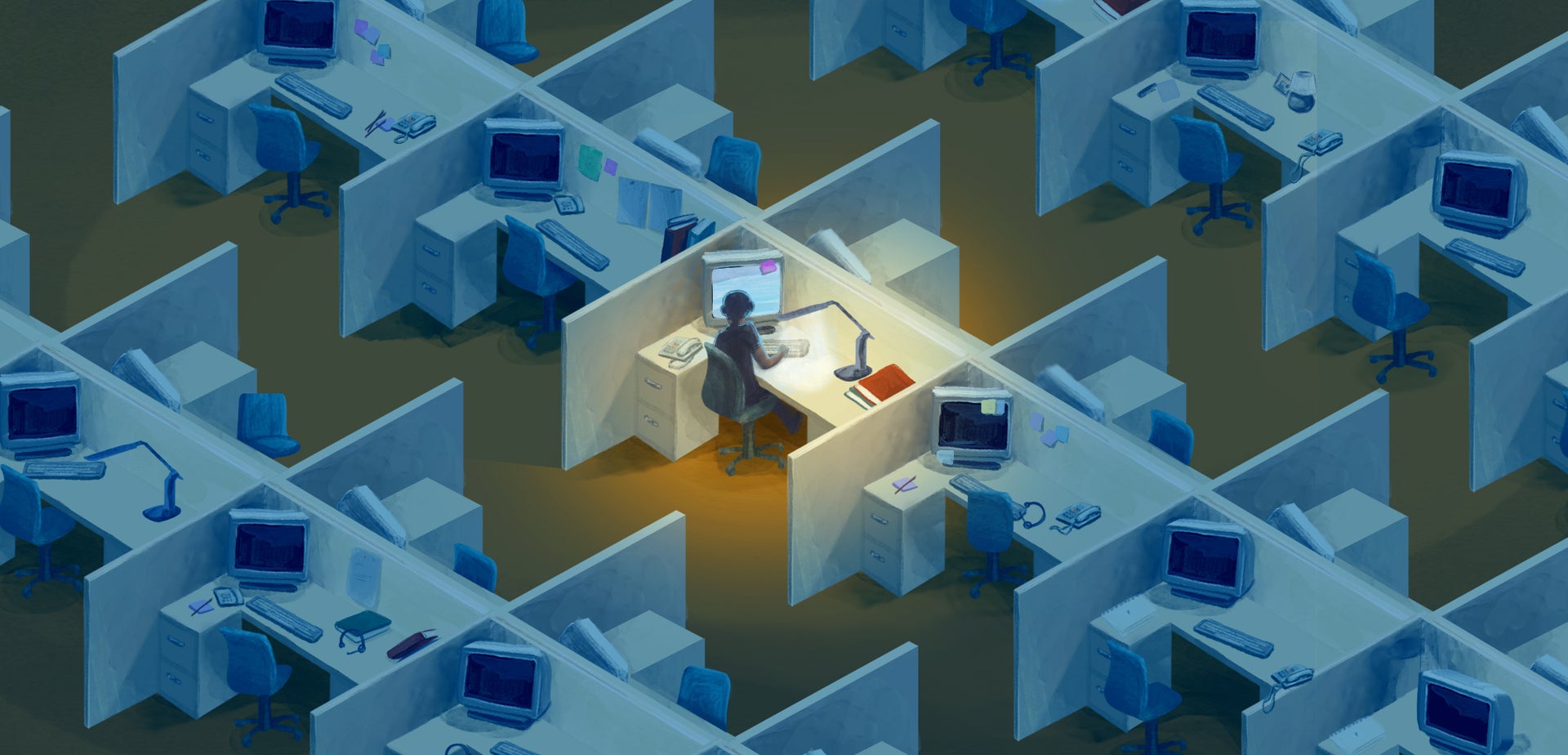
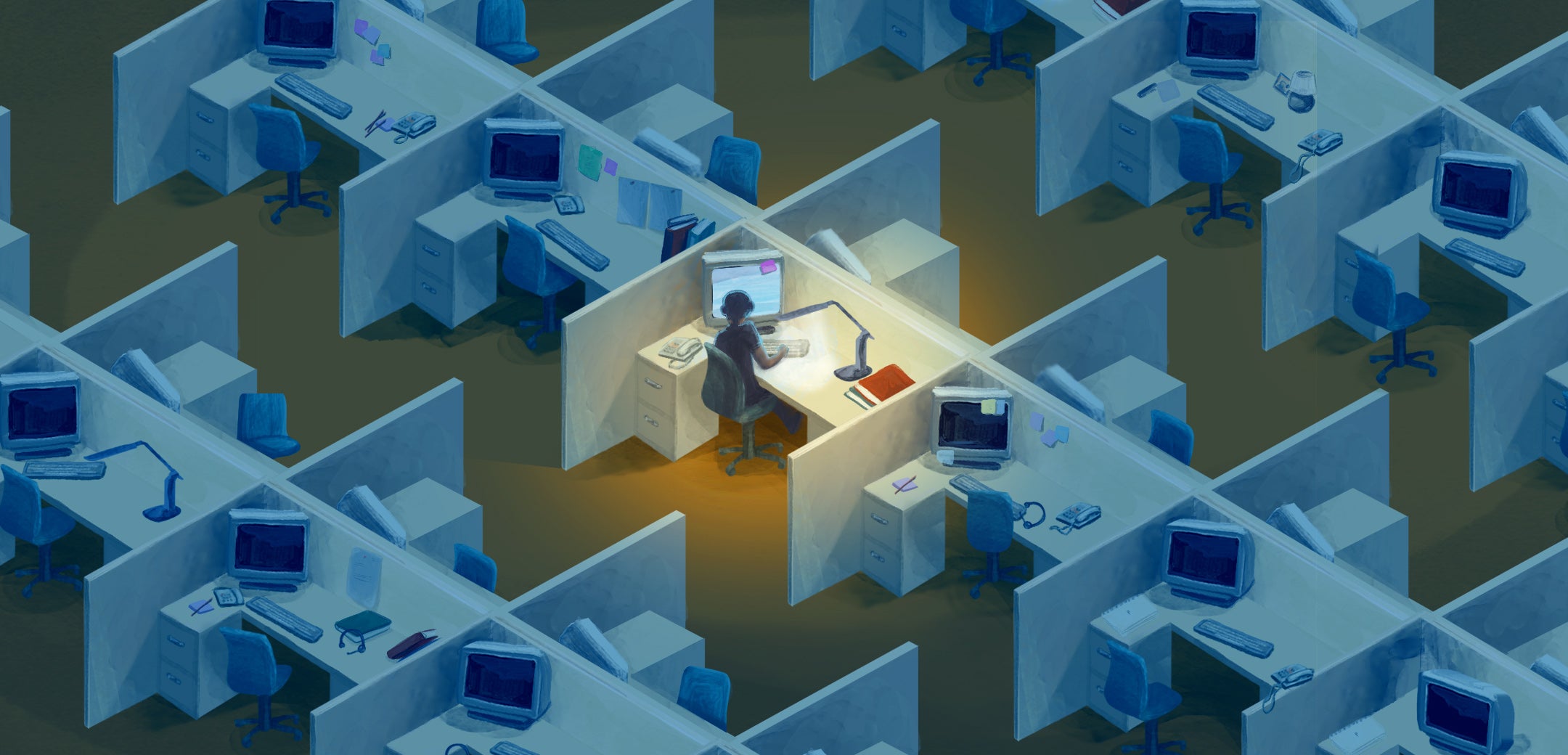
What’s strange is how completely I’d forgotten about this period in my life in the decades since, as one “forgets”—maybe represses is the more accurate word—certain embarrassing exes or haircuts. But it all came back to me recently, when I watched the HBO docuseries Telemarketers. If you’ve ever worked in telemarketing, you’ll immediately recognize the setting: the low-ceilinged, fluorescent-lit office building at the edge of town, the empty liquor bottles piled up in the men’s room, a time capsule of a world that came and went nearly unnoticed. You may even recognize yourself in the grainy VHS footage: an alternative but otherwise identical self, hunched over in an upholstered cubicle, rattling off canned rebuttals to some baffled retiree as you mime the jack-off motion for the amusement of the temporarily bankrupt drug dealer in the next cubicle. It was the Y2K-adjacent midpoint between the door-to-door salesmen of the boomer era and the present-day dystopia of A.I.–enhanced robocalling—the last few years before American credulity (and disposable income) was decisively strip-mined by post–9/11 disillusionment, the emergence of the internet, an economy that seemed to lurch from crisis to crisis, and, well, petty cheats like me, the bedrock of this nation.
I became a telemarketer only because I’d bombed out of every other job in Iowa City, from making the federal minimum wage at a video arcade in Iowa’s largest shopping mall (fired for abusing the “free game” key) to working the graveyard shift at a 24-hour adult video store (fired for being “too horny”). There was unlimited demand for telemarketers in those days; this was in the early aughts, at the tail end of the long-distance wars, when more than 25 million people a year were switching phone companies in pursuit of lower rates on long-distance calls, a sentence that might as well be written in ancient Sumerian to anyone under 30. You didn’t really even have to apply back then. You just put your name in and they told you what day you were starting.
Everyone said that telemarketing was the worst job in town, and for once, everyone was right. Your very first day, you understood that this was the culmination of a long series of bad decisions, the consequences of which you thought you’d escaped—but no, you realized as you walked past the cars in the parking lot with trash bags duct-taped over shattered windows and avoided eye contact with the loiterers in the break room who checked the change slot after you bought a drink from the Coke machine—you’d only put them off until right now. After a short training period that seemed designed mostly to weed out the people who weren’t capable of sitting in a chair for four hours at a time (about half the applicants), we spent some time listening in on the calls of top sellers. I expected them to be devilishly persuasive, modern-day snake charmers, but there didn’t seem to be much to it. They’d tell people they could save them money on their phone bills. If the prospect said they weren’t interested, the seller would either keep talking as if they hadn’t heard or, if a hang-up seemed imminent, recite a “resistance buster” like “I am going to send YOU a check!” The abruptness of this non sequitur, half-shouted over the tail end of the conversation, almost always derailed the lead’s attempts at disengagement, and few people could resist asking, “For how much?”
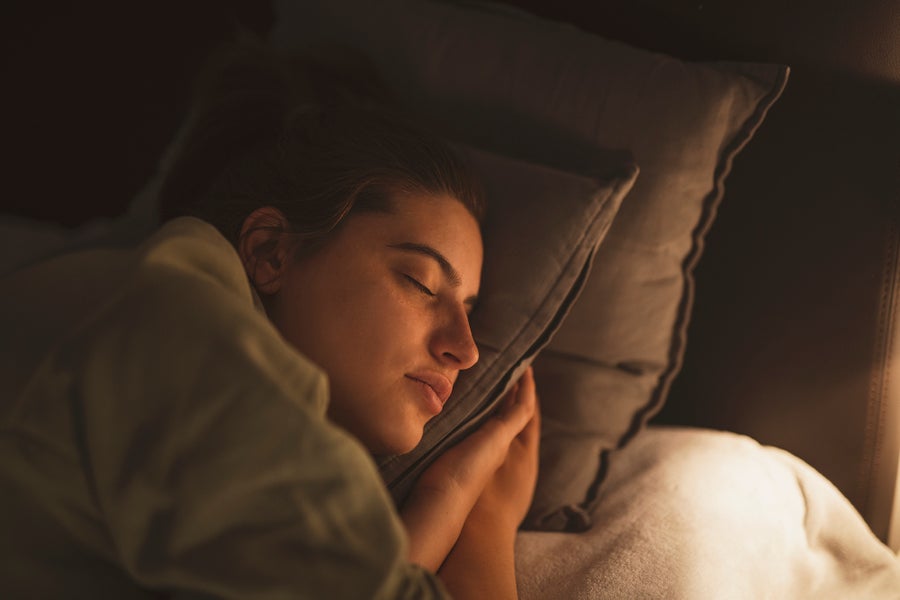
Between jobs, school, kids, and other physical and mental tolls on our time and energy, we could all use better, more restful sleep. There’s no question that good shut-eye is important for our health. Research has linked poor sleep with imbalanced sugar levels and metabolism and with elevated risk of cardiovascular issues and neurological conditions, including dementia. And slumbering bodies are very fickle: sleep quality can be easily thrown off by any number of environmental disturbances or emotional or physical stressors.
We’re channeling some of the most helpful science-backed tips and findings that sleep experts have shared with us this year—so hopefully we feel more refreshed and reenergized in 2025.
Short Daytime Naps Sharpen the Mind
If you’re feeling sluggish in the middle of the day, a short snooze could be the refresher the brain needs. Growing evidence suggests that daytime power naps can actually give a boost to critical thinking skills, memory, productivity, and mood. As Science of Health columnist Lydia Denworth reports, there is a science to napping effectively.
It’s best to keep napping sessions 20 to 30 minutes long and before 5 P.M., for those who are regularly awake during daytime hours. That’s enough time to get in a cycle of “light sleep,” which is easier to wake up in, while avoiding disruptions to regular sleep at night. But note that regularly taking very long naps could be a sign of an underlying health issue.
Staying in Bed All Day, or “Bed Rotting,” Can Worsen Sleep
“Bed rotting,” or opting to stay in bed for prolonged periods of time, is one of social media’s favorite mental health trends. Conditions or disabilities may cause people to remain in bed, but bed rotting is seen as a kind of elective counterculture to “productive” activities—the opposite of working, exercising or studying. People who bed rot often claim that they feel rejuvenated after hours or even days during which they stay in bed, only leaving to go to the bathroom or get food.
But experts say this behavior can throw off the body’s internal clock, or circadian rhythm, which controls sleep-wake cycles. This could alter someone’s sleep drive (making them feel restless when they should be normally asleep) and sleep cues (making them less likely to associate their bed with sleepy times). To get out of a bed rotting cycle, experts say to first evaluate the reason why you feel the need for that kind of mental recharge. Then try to consistently wake up early in your sleep-wake cycle, no matter what time you went to sleep, and get natural light for an hour upon waking, if possible.
The “Sleepy Girl Mocktail” Reminded Us Magnesium Is Important for Sleep
The “sleepy girl mocktail,” a concoction of cherry juice, seltzer, and magnesium, was another trend that took off this year. People on TikTok touted that the homemade sip helped them slip into slumber more easily. But evidence that it works is up in the air. That said, one of the ingredients, magnesium, has been shown to play a role in sleep. The mineral can help relax muscles and affect pathways in the brain that stabilize mood and anxiety. Magnesium supplements can be found at local drugstores—but some types can act as a laxative that can disrupt sleep.
Have you ever wondered what visiting Phuket, the Thai island beloved by celebrities, felt like before throngs of tourists transformed its fishing villages and isolated beaches into a world-renowned destination? The Cambodian island of Koh Rong, in the Gulf of Thailand, has just started down that development path. A 40-minute ferry ride from the coastal port of Sihanoukville, it still has rustic charm aplenty for explorers who like their island adventures a little on the wild side. Like Phuket, Koh Rong is the quintessential tropical island, complete with palm trees, white sand beaches, and jungle waterfalls. In fact, several seasons of the global “Survivor” franchise have filmed there over the years.
Paved roads and electricity have appeared only recently, so you can happily zip around the island from beach to beach on rented scooters without the traffic risks you’d face in Thailand. But if your party is large enough to, well, have a party, then renting a traditional long boat, which comes with a captain, to tour the more remote beaches is a decadent, day-long must-do. Visitors rave that Sok San Beach is the prettiest they’ve seen anywhere in the world. Whether you’re on a gap-year backpacking tour or a romantic anniversary trip, there’s a beach shack with your name on it at day’s end, though it’s up to you and your budget whether it will be a bungalow on stilts over a river in a real fishing village or a villa at a resort.
Touristy (in a good way) Koh Touch beach is a burgeoning backpacker-circuit party mecca lined with beachfront bars and hotels where you can sun, swim, dance ride a zip line, kayak, or even sail a catamaran without ever needing to don shoes or put down your beer can. Did you really do the limbo under a flaming pole at the Nest Beach Club’s Saturday night “Nestival” rager last night? Apparently so! Local nightclubs can keep going until the wee hours, so you might want to pack the ibuprofen and plan to spend Sunday lounging in a hammock strung between two palm trees.
Just up the beach, a favorite place to stay is the Tree House Bungalows. Its thatched or wood-slatted beach shacks sit high up on stilts, tucked into the jungle along the beach. Grab a loaner snorkel and mask and wade right on into the pristine waters for some float time with the fishes.
For more wildlife and less nightlife, you can find a more serene scene by seeking out a bungalow at the less-developed north end of the island, where you can canoodle the day away in one of the many signature swing sets built for two. If you’re ready to go off grid, you can go for a thatched-hut dorm bed or private bungalow in Sangkat village’s Coconut Beach, where daylight filters through the wood slat walls, waking you in time for just another day in paradise. The Lonely Beach Resort also offers solar-powered thatched cottages called “bird’s nests” right on the beach. From there, you can trek through the jungle to a quaint Khmer fishing village.
When Purple’s partner first told her about the FIRE movement — which stands for Financial Independence, Retire Early — in 2013, she wasn’t convinced.
“The first thing I said was, ‘What do I even do with all that time? Why would I want to retire early?’” she says. “I was like, ‘I just need to find my dream job, and then I’ll be happy to work for another 40 years.’”
But in October 2020, Purple retired at just 30 years old with $540,000 in savings, according to documents reviewed by CNBC Make It. She goes by Purple online and in the media to maintain her privacy.
In 2014, she got the dream job she mentioned — but it didn’t bring the satisfaction she thought it would. So the next year, she revisited the FIRE idea and started calculating.
She estimated she could live on roughly $20,000 a year in retirement and would need $500,000 set aside upfront based on the 4% rule, which contends that you can safely withdraw 4% of your portfolio per year to cover your expenses without running out of money. Purple figured if she could boost her income and reduce her spending, she could reasonably retire in 10 years — a goal she hit five years early.
So far, she’s enjoying the freedom to spend her days however she likes and has no problem filling her time. “I’m very good at doing nothing and relaxing and finding new random hobbies,” she says.
Purple wishes she had gotten on board with FIRE when her partner first told her about it. Otherwise, “I don’t have any regrets in retirement,” she says. Her partner hit his FIRE number of $777,000 in November 2023, but he plans to keep working for a few more years to help support some of his loved ones.
Here are the three major moves Purple made to be able to retire early.
1. Job-hopping to maximize her income
Before Purple officially started her FIRE journey, she was making $48,000 a year working in advertising and living in New York City, leaving her virtually ”$0 after rent,” she says. When she decided to increase her income, she knew the best way to do it was through job-hopping.
“In my experience, [job-hopping] has been the only way I can get significant raises and even promotions,” she says.
She also learned early in her career that it doesn’t always pay off to be blindly loyal to a company; it won’t necessarily earn you a raise or promotion. As a result, Purple got very comfortable leaving jobs and companies she felt didn’t meet her financial or psychological needs.
That mindset paid off. Five years and as many jobs later, Purple had more than doubled her salary. As of 2017, at age 28, she earned nearly $107,000 a year. By the time she was getting ready to retire in 2020, her final salary was $114,230.
2. Cutting her spending
A major factor that allowed Purple to stack her savings was moving from New York to Seattle in 2015 to drastically reduce her cost of living. In Seattle, “they pay Manhattan salaries, in my experience, but the cost of living is about half of New York City,” she says.
.
Purple, an anonymous blogger, retired at 30 and now travels the world purple of A Purple Life
Marie Maynard Daly should have received a Nobel Prize. She was the first Black woman in the country to earn a Ph.D. in chemistry, and in the 1950s and 1960s, she discovered the critical relationship between high cholesterol, high blood pressure and clogged arteries, and how this could cause heart attacks, strokes, and other medical issues. This was a huge discovery in medicine, paving the way for the development of statins, which millions of Americans are still prescribed each year to reduce their risk of heart attack.
Such a discovery easily embodies Alfred Nobel’s legacy to award the Nobel Prizes to those who “conferred the greatest benefit to humankind.” And later research on cholesterol metabolism and regulation did earn several other scientists Nobels. So why didn’t Daly, who made the initial connections, win this prestigious award during her lifetime?
We think it’s because the Nobel Committees, whose selection process is notoriously secretive, place emphasis on the way scientists reference one another’s work as grounds for how important that work is. Typically, Nobel Prize–winning research is referenced more than 1,000 times before the scientists who conducted that research win. These references, known as citations, are a proxy for scientific importance but leave room for bias.
Despite their own discoveries leaning heavily on Daly’s initial findings, neither Konrad Bloch and Feodor Lynen, who won the Nobel in Physiology or Medicine in 1964, nor Michael Brown and Joseph Goldstein, who won that award in 1985, mentioned her in their awards speeches. As those researchers and others made discoveries and published findings, they rarely referenced her work at all. Without such references and credit deserved, Daly and other Black scientists have not been awarded Nobels they could have rightfully earned—and instead have been suppressed, even erased, from the historical record of science.
We believe the Nobel Committees need to recognize that, whether overtly or subconsciously, scientists can and do show gender and racial bias when they recognize people as leaders in their fields. While there have been 17 Black Nobel laureates in peace, literature and economics, a Black scientist still has never won a Nobel in physiology/medicine, physics, or chemistry. Asking the question “Why have Black scientists not been awarded?” is a first step toward acknowledging the contributions that Black scientists have made throughout history.
As current and future Black doctors and scientists, we are disheartened by reports that the published research of Black scientists is referenced far less often than that of their white peers. In the hierarchy of publications, the first author of a paper is typically the scientist who has done much of the experimental work it describes, while the last author is usually the scientist who has overseen the research program or the individual project—typically a very senior scientist. In studying who cites whom in neuroscience research papers, neuroscientist Maxwell A. Bertolero and others discovered that papers with white first and last authors were cited 5.4 percent more than expected, while papers with first and last authors of color were cited 9.3 percent less than expected. Inspired by this study, Fengyuan Liu, Talal Rahwan, and Bedoor AlShebli, all at New York University Abu Dhabi, asked a similar question but looked deeper into four racial categories and several scientific fields. They found that Black scientists’ research is significantly undercited compared with similar research published by scientists of other races.
With such studies revealing that Black scientists’ research is often not recognized, we have been intently investigating how this difference in citation numbers could be diminishing the paradigm-shifting discoveries made by Black scientists. It is clear that the number of times a scientist’s research is referencedis important to the Nobel Committees that select each prize. The more cited you are, the more impact your work appears to have on your field. But how can this be an objective measure when citations are affected by such underlying biases? Collating all that we’ve read, it is also clear that the use of citations as a proxy for the importance of a scientific discovery unintentionally ignores the contributions of Black scientists, who are already less likely to be cited regardless of the true impact of their research. And this emphasis on citations over true impact explains scenarios such as that of Marie Maynard Daly, whose research was foundational to work that received two Nobel Prizes but whose name was not deemed worthy of such recognition. It also explains why the major scientific discoveries made by other Black scientists, such as Percy Lavon Julian, Katherine Johnson, and Charles Drew, to name a few, have been overlooked by awarding bodies and the field as a whole. This is a further reflection of systemic inequities in education, mentorship, funding, and recognition, all of which have been described and explored, not just in the U.S. but around the world.
Recognizing the biases in the criteria used by the Nobel Committees, and broader biases woven into academic fields when it comes to underciting Black scientists, is the first step toward creating more equal measures of scientific impact. Further addressing this underlying bias in the Nobel Committees selection process and beyond will not just help the work of Black scientists gain well-deserved recognition; it will also enrich science and society as a whole. This is not about representation; it’s about scientific innovation and progress, especially with research indicating that scientists from minority backgrounds are highly innovative.
.
The Nobel Prize Awards Ceremony 2024 at Stockholm Concert Hall on December 10, 2024, in Stockholm, Sweden. Pascal Le Segretain/Getty Images
In 1943, a Greek war veteran named Stamatis Moraitis came to the United States for treatment of a combat-mangled arm. He’d survived a gunshot wound, escaped to Turkey, and eventually talked his way onto the Queen Elizabeth, then serving as a troopship, to cross the Atlantic. Moraitis settled in Port Jefferson, N.Y., an enclave of countrymen from his native island, Ikaria. He quickly landed a job doing manual labor. Later, he moved to Boynton Beach, Fla. Along the way, Moraitis married a Greek-American woman, had three children, and bought a three-bedroom house and a 1951 Chevrolet.
One day in 1976, Moraitis felt short of breath. Climbing stairs was a chore; he had to quit working midday. After X-rays, his doctor concluded that Moraitis had lung cancer. As he recalls, nine other doctors confirmed the diagnosis. They gave him nine months to live. He was in his mid-60s.
Moraitis considered staying in America and seeking aggressive cancer treatment at a local hospital. That way, he could also be close to his adult children. But he decided instead to return to Ikaria, where he could be buried with his ancestors in a cemetery shaded by oak trees that overlooked the Aegean Sea. He figured a funeral in the United States would cost thousands, a traditional Ikarian one only $200, leaving more of his retirement savings for his wife, Elpiniki. Moraitis and Elpiniki moved in with his elderly parents, into a tiny, whitewashed house on two acres of stepped vineyards near Evdilos, on the north side of Ikaria. At first, he spent his days in bed, as his mother and wife tended to him. He reconnected with his faith. On Sunday mornings, he hobbled up the hill to a tiny Greek Orthodox chapel where his grandfather once served as a priest. When his childhood friends discovered that he had moved back, they started showing up every afternoon. They’d talk for hours, an activity that invariably involved a bottle or two of locally produced wine. I might as well die happy, he thought.
In the ensuing months, something strange happened. He says he started to feel stronger. One day, feeling ambitious, he planted some vegetables in the garden. He didn’t expect to live to harvest them, but he enjoyed being in the sunshine, breathing the ocean air. Elpiniki could enjoy the fresh vegetables after he was gone.
Six months came and went. Moraitis didn’t die. Instead, he reaped his garden and, feeling emboldened, cleaned up the family vineyard as well. Easing himself into the island routine, he woke up when he felt like it, worked in the vineyards until midafternoon, made himself lunch and then took a long nap. In the evenings, he often walked to the local tavern, where he played dominoes past midnight. The years passed. His health continued to improve. He added a couple of rooms to his parents’ home so his children could visit. He built up the vineyard until it produced 400 gallons of wine a year. Today, three and a half decades later, he’s 97 years old — according to an official document he disputes; he says he’s 102 — and cancer-free. He never went through chemotherapy, took drugs or sought therapy of any sort. All he did was move home to Ikaria.
I met Moraitis on Ikaria this past July during one of my visits to explore the extraordinary longevity of the island’s residents. For a
decade, with support from the National Geographic Society, I’ve been organizing a study of the places where people live longest. The project grew out of studies by my partners, Dr. Gianni Pes of the University of Sassari in Italy and Dr. Michel Poulain, a Belgian demographer. In 2000, they identified a region of Sardinia’s Nuoro province as the place with the highest concentration of male centenarians in the world. As they zeroed in on a cluster of villages high in Nuoro’s mountains, they drew a boundary in blue ink on a map and began referring to the area inside as the “blue zone.” Starting in 2002, we identified three other populations around the world where people live measurably longer lives than everyone else. The world’s longest-lived women are found on the island of Okinawa. On Costa Rica’s Nicoya Peninsula, we discovered a population of 100,000 mestizos with a lower-than-normal rate of middle-age mortality. And in Loma Linda, Calif., we identified a population of Seventh-day Adventists in which most of the adherents’ life expectancy exceeded the American average by about a decade.
.
Stamatis Moraitis tending his vineyard and olive grove on Ikaria.Credit…Andrea Frazzetta/LUZphoto for The New York Times
Film and Writing Festival for Comedy. Showcasing best of comedy short films at the FEEDBACK Film Festival. Plus, showcasing best of comedy novels, short stories, poems, screenplays (TV, short, feature) at the festival performed by professional actors.

 Ron Miller

 fcafotodigital/Getty Images
 ArtistGNDphotography/Getty Images







 James' World 2