December 29, 2024
Mohenjo
Business, Food For Thought, Human Interest, Political, Science, Technical
amazon, business, Business News, current-events, Future, Hotels, human-rights, medicine, mental-health, research, Science, Science News, technology, Technology News, travel, vacation

Click the link below the picture
.
Donald Trump has moved at warp speed to nominate people to serve in his Cabinet and other important government posts who have chosen loyalty to him as their most important virtue, making a mockery of merit even as the nominees claim to uphold meritocracy.
Moreover, like Trump himself, his nominees denigrate science and scientific expertise, subscribe to conspiracy theories, are eager to impose litmus tests in the arts and education, and seem hostile to the world beyond America’s borders.
Elections have consequences, so the saying goes.
And if that wasn’t enough to remind us that elections have consequences, the president-elect announced that on the first day of his administration, he will order a mass deportation of millions of immigrants and impose stiff tariffs on this nation’s most important trading partners.
While much of the post-election commentary has focused on its implications for American democracy, there is another side to what will unfold starting on Jan. 20. When he takes office, Trump, who promised to Make America Great Again, seems determined to lead America into a period of scientific, cultural, educational, and global retrenchment, which collectively might be called the new “Dark Ages.”
Some see Trump as reviving the so-called Gilded Age of the late 19th and early 20th centuries, an era of great prosperity as well as technological and industrial growth. It was an era dominated by corrupt “captains of industry” or “robber barons” whose corrupting influence also extended to government and politics.
However, leaders in the Gilded Age did not reject science and rationality. Quite the contrary, they embraced both because they saw them as essential to the growth of capitalism. And they invested in culture and the arts, rather than trying to make them hue to a particular orthodoxy.
Yes, Trump’s era may ultimately have some attributes of the Gilded Age, I think it will be much worse.
Trump and his MAGA followers reject the cultural legacy of the people who founded this nation. The people who led the American Revolution and wrote the Constitution were, deeply impressed by “the seventeenth-century Scientific Revolution and its emphasis on empiricism, objective observation, and using rationality over faith or tradition as the foundations of truthful knowledge.”
They founded “an Enlightenment country” and borrowed from the Enlightenment hostility toward the “hierarchically ordered societies of Europe.”
The president-elect seems determined to end all that.
In 2017, Suzanne Nossel, the CEO of the writers group PEN America, warned of Trump’s “repudiation of the American ideals — grounded in the Enlightenment — of self-expression, knowledge, dissent, criticism, and truth.” What Nossel predicted then seems even more apt today.
During the 2024 campaign and transition period, Trump and his cronies have broadcast their determination “to entrench within the machinery of the U.S. government… elemental disdain for intellectuals, analysts, and experts.” They regularly denigrate rationality and elevate superstition, tradition, and hierarchy.
I call their program a recipe for the return of the “Dark Ages.”
Though the term is now much disputed, the phrase “Dark Ages” is used by some historians to describe a “’ period of intellectual depression in Europe from… the fifth century to the revival of learning about the beginning of the fifteenth….’” During that time, Europe experienced “a decline in culture (and) learning…. and a shift towards a feudal society with limited literacy and widespread superstition.”
.
 Donald Trump and Jared Kushner (Photo illustration by Salon/Getty Images)
.
.
Click the link below for the complete article:
.
__________________________________________
December 28, 2024
Mohenjo
Business, Food For Thought, Human Interest, Political, Science, Technical
amazon, business, Business News, current-events, Future, Hotels, human-rights, medicine, mental-health, research, Science, Science News, technology, Technology News, travel, vacation

Click the link below the picture
.
When Lene was a child, she took comfort in a strange nighttime routine. While lying in bed just before she fell asleep, her bedroom would begin to warp, and her body would do so along with it. The far wall would stretch away from her head, her legs lengthening to meet it until she felt like she could touch the door with her toe if she tried. And all the while, it seemed as if she was floating in the corner, observing her distorted body.
“The first time I was very scared,” Lene says, recalling she was between seven and nine years old at the time. “I didn’t tell anyone, because if I told my mom, she would just say, ‘Eh, it’s nothing.’” She recalls that the episodes began happening every night, and eventually they became somewhat comforting. By adolescence, they had stopped, and she largely forgot about them.
Then, a few years ago, Lene, now age 59, learned that her experience had a name. She was at a hospital in Denmark where she works as a secretary in the neurology department. During a meeting where she was taking notes, a neurologist mentioned a patient with something called Alice in Wonderland syndrome. Intrigued, Lene did some research on Google, where she immediately recognized her own experience.
“All my life, since I was a child, I had this thing I couldn’t explain. And suddenly there was a word for it,” Lene says. During episodes of Alice in Wonderland syndrome, the world appears distorted, in many of the same ways that are described in Lewis Carroll’s famous novel, Alice’s Adventures in Wonderland. Bodies can morph out of shape; time can speed up or slow down; colors can fade or intensify. Often, these symptoms come with a sense of unreality called depersonalization or derealization. These distortions usually last between minutes and days and are known to be triggered by migraine, epilepsy, brain injury, drugs and infections.
While it’s rare to be diagnosed with the condition—fewer than 200 clinical cases have been officially reported since 1955, mainly in children, and it doesn’t appear in any mainstream diagnostic handbooks—Alice-like symptoms appear to be relatively common. One survey study published in 1999 found that some 30 percent of participants had experienced at least one kind of visual distortion in their life. And around 16 percent of migraine patients in a recent study also reported symptoms of Alice in Wonderland syndrome throughout their life. Some researchers have theorized that Carroll experienced these symptoms himself because he was known to experience migraines.
“The symptoms are as fantastical as the narrative of the book,” says Alberto Paniz-Mondolfi, an infectious disease physician at Mount Sinai in New York City, who has encountered the condition throughout his career. “When you don’t have answers, that is an enigma. And this is a condition that remains, in all of its aspects, largely unanswered.”
Still, researchers have begun to assemble many of the pieces of the Alice in Wonderland syndrome puzzle. The number of published studies on the condition has more than doubled since 2010, giving researchers important new insights into what causes these symptoms, says Jan Dirk Blom, a psychiatrist at Leiden University in the Netherlands and author of a 2020 book on the syndrome. And most recently, researchers have uncovered a potential answer to one of the syndrome’s biggest mysteries: What happens in the brain when people enter the rabbit hole?
The Looking Glass
We often think that our five senses allow us to observe the world as it truly exists—that “our brain is some sort of canvas or display for the reality” around us, says Maximilian Friedrich, a neurologist at University Hospital of Würzburg in Germany. “But it turns out that this is not the case. Perception is an active process.” The brain does not record reality through sensory input like a camera; it synthesizes, interprets, and reconstructs it.
.
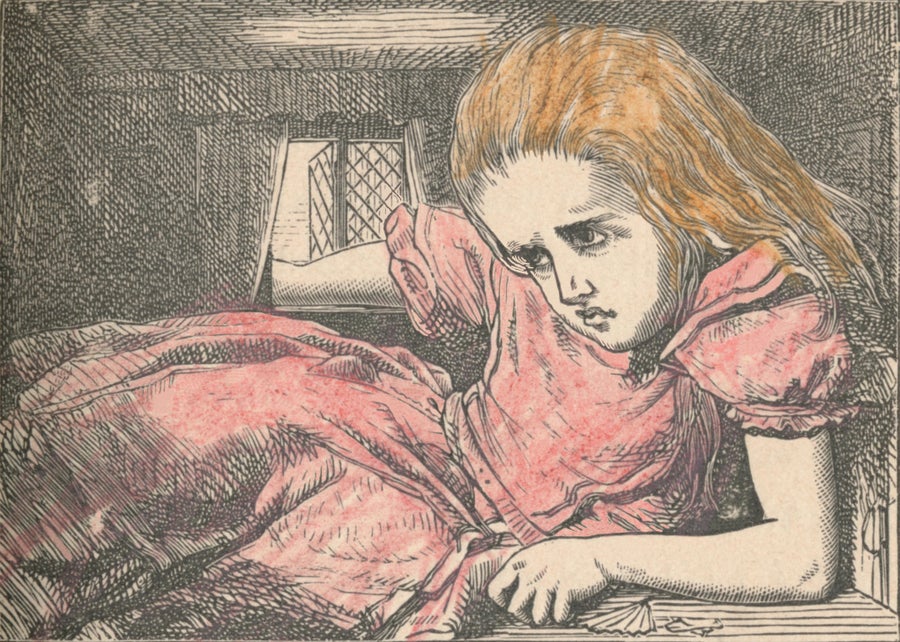
An illustration by John Tenniel depicts a scene in Alice’s Adventures in Wonderland. The Print Collector/Heritage Images/Alamy Stock Photo
.
.
Click the link below for the complete article:
.
__________________________________________
December 28, 2024
Mohenjo
Business, Food For Thought, Human Interest, Political, Science, Technical
amazon, business, Business News, current-events, Future, Hotels, human-rights, medicine, mental-health, research, Science, Science News, technology, Technology News, travel, vacation

Click the link below the picture
.
Weeks before President-elect Donald J. Trump is to take office, a major rift has emerged among his supporters over immigration and the place of foreign workers in the U.S. labor market.
The debate hinges on how much tolerance, if any, the incoming administration should have for skilled immigrants brought into the country on work visas.
The schism pits immigration hard-liners against many of the president-elect’s most prominent backers from the technology industry — among them Elon Musk, the world’s richest man, who helped back Mr. Trump’s election efforts with more than a quarter of a billion dollars, and David Sacks, a venture capitalist picked to be czar for artificial intelligence and cryptocurrency policy.
The tech industry has long relied on foreign skilled workers to help run its companies, a labor supply that critics say undercuts wages for American citizens.
The dispute, which late Thursday exploded online into acrimony, finger-pointing, and accusations of censorship, frames a policy quandary for Mr. Trump. The president-elect has in the past expressed a willingness to provide more work visas to skilled workers, but has also promised to close the border, deploy tariffs to create more jobs for American citizens, and severely restrict immigration.
Laura Loomer, a far-right activist, and fervent Trump loyalist, helped set off the altercation earlier this week by criticizing Mr. Trump’s selection of Sriram Krishnan, an Indian American venture capitalist, to be an adviser on artificial intelligence policy. In a post, she said she was concerned that Mr. Krishnan, a naturalized U.S. citizen who was born in India, would have influence on the Trump administration’s immigration policies, and mentioned “third-world invaders.”
“It’s alarming to see the number of career leftists who are now being appointed to serve in Trump’s admin when they share views that are in direct opposition to Trump’s America First agenda,” Ms. Loomer wrote on X, the social media platform owned by Mr. Musk.
Ms. Loomer’s comments surfaced a simmering tension between longtime supporters of Mr. Trump, who embrace his virulent anti-immigrant rhetoric, and his more recently acquired backers from the tech industry, many of whom have built or financed businesses that rely on the government’s H-1B visa program to hire skilled workers from abroad.
In response, Mr. Sacks called Ms. Loomer’s critiques “crude,” while Mr. Musk posted regularly this week about the lack of homegrown talent to fill all the needed positions within American technology companies.
.
 Elon Musk has been involved in an online battle against Trump loyalists who are immigration hard-liners. Credit…Brian Snyder/Reuters
.
.
Click the link below for the complete article:
.
__________________________________________
December 27, 2024
Mohenjo
Business, Food For Thought, Human Interest, Political, Science, Technical
amazon, business, Business News, current-events, Future, Hotels, human-rights, medicine, mental-health, research, Science, Science News, technology, Technology News, travel, vacation
Click the link below the picture
.
Medical accounts of red wine headaches go back to Roman times, but the experience is likely as old as winemaking – something like 10,000 years. As chemistsspecializing in winemaking, we wanted to try to figure out the source of these headaches.
Many components of red wine have been accused of causing this misery – sulfites, biogenic amines, and tannin are the most popular. Our research suggests the most likely culprit is one you may not have considered.
The common suspects
Sulfites have been a popular scapegoat for all sorts of ailments since it became mandatory in the 1990s to label them on wines in the U.S. However, not much evidence links sulfites directly to headaches, and other foods contain comparable levels to wine without the same effects. White wines also contain the same amount of sulfites as red wines.
Your body also produces about 700 milligrams of sulfites daily as you metabolize the protein in your food and excrete it as sulfate. To do so, it has compounds called sulfite oxidases that create sulfate from sulfite – the 20 milligrams in a glass of wine are unlikely to overwhelm your sulfite oxidases.
Some people point the finger for red wine headaches at biogenic amines. These are nitrogenous substances found in many fermented or spoiled foods, and can cause headaches, but the amount in wine is far too low to be a problem.
Tannin is a good guess, since white wines contain only tiny amounts, while red wines contain substantial amounts. Tannin is a type of phenolic compound – it’s found in all plants and usually plays a role in preventing disease, resisting predation or encouraging seed dispersal by animals.
But there are many other phenolic compoundsin grapes’ skin and seeds besides tannin that make it into red wines from the winemaking process, and are not present in white, so any of them could be a candidate culprit.
Tannin is also found in many other common products, such as tea and chocolate, which generally don’t cause headaches. And phenolics are good antioxidants– they’re unlikely to trigger the inflammation that would cause a headache.
A red wine flush
Some people get red, flushed skin when drinking alcohol, and the flushing is accompanied by a headache. This headache is caused by a lagging metabolic step as the body breaks down the booze.
The metabolism of alcohol happens in two steps. First, ethanol is converted to acetaldehyde. Then, the enzyme ALDH converts the acetaldehyde to acetate, a common and innocuous substance. This second step is slower for people who get flushed skin, since their ALDH is not very efficient. They accumulate acetaldehyde, which is a somewhat toxic compound also linked to hangovers.
So, if something unique in red wine could inhibit ALDH, slowing down that second metabolic step, would that lead to higher levels of acetaldehyde and a headache? To try to answer this question, we scanned the list of phenolics abundant in red wine.
We spied a paper showing that quercetin is a good inhibitor of ALDH. Quercetin is a phenolic compound found in the skins of grapes, so it’s much more abundant in red than white wines because red grape skins are left in longer during the fermentation process than white grape skins.
.

Some people get headaches after drinking red wine. Hongjie Han/Getty Images
.
.
Click the link below for the complete article:
.
__________________________________________
December 27, 2024
Mohenjo
Business, Food For Thought, Human Interest, Political, Science, Technical
amazon, business, Business News, current-events, Future, Hotels, human-rights, medicine, mental-health, research, Science, Science News, technology, Technology News, travel, vacation

Click the link below the picture
.
One of the most pleasant surprises about this year’s best new apps have nothing to do with AI.
While AI tools are a frothy area for big tech companies and venture capitalists, there’s plenty of app innovation happening outside of that arena, in categories such as productivity, social media, and streaming music.
As in previous years, we define apps loosely to include not only mobile software, but desktop applications, browser extensions, and app-like websites. Along with apps that are entirely new, we also look for existing ones that received significant updates in the past year.
Here are the best of the best:
Productivity
Fantastical: Formerly a first-rate calendar app for Apple devices, it’s now available for Windows as well, with natural language event creation and a pop-up calendar view available from the taskbar. (iOS, Mac, Windows)
Proton Docs: Like Google Docs, but with end-to-end encryption to ensure that no one but you (and, optionally, your collaborators) can access what you’ve written. (iOS, Android, web)
Clear: A to-do list app that’s extraordinarily pleasant to use, with colorful items and clever shortcuts such as pinch-to-close and screenshot-to-share. (iOS)
Clipbook: A simple Mac app for accessing previously-copied text or images with a keyboard shortcut, perfect for when you copy something, then copy another thing, then realize you need the original thing. Other tools like it exist, but this one’s free and easy to use—much like Windows’ built-in clipboard manager. (Mac)
Apple Passwords: With a proper Passwords app for iOS and MacOS, Apple’s password manager feels like a full-featured alternative to the likes of 1Password and Bitwarden. Just don’t hold your breath for an Android version. (iOS, Mac)
.
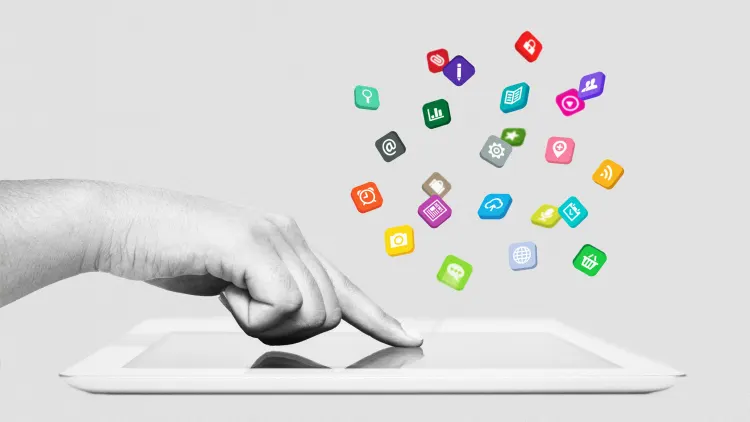 [Image: Myst/Adobe Stock]
.
.
Click the link below for the complete article:
.
__________________________________________
December 26, 2024
Mohenjo
Business, Food For Thought, Human Interest, Political, Science, Technical
amazon, business, Business News, current-events, Future, Hotels, human-rights, medicine, mental-health, research, Science, Science News, technology, Technology News, travel, vacation
Click the link below the picture
.
This year is projected to be the hottest on record. The latest United Nations estimates indicate that, without radical and immediate action, we are headed toward an increasingly unlivable planet with an increase of up to 3.1 degrees Celsius by the end of the century. Solving the climate crisis requires urgent, global cooperation.
But the yearly global climate meeting (called the Conference of the Parties, or COP) held in November in the petrostate of Azerbaijan upheld the status quo, at best. The current economic system that underpins that status quo is rooted in the extraction of natural resources and exploitation of cheap or unpaid labor, often done by women and marginalized communities. This system therefore drives the climate crisis while perpetuating inequalities based on gender, race and class. It prioritizes the interests of corporations, governments, and elites in positions of power and wealth, while destroying the natural environment that poor and marginalized people depend on the most.
We need a different tack to move the needle. As gender-equality researchers at the U.N., we see growing evidence that women, girls and gender-diverse people are bearing the brunt of climate change. And that raises a question: What if we approached climate from a feminist perspective?
Feminism offers an analysis of how inequalities structure our world and therefore drive the climate crisis, among other global concerns. We believe that it provides a vision of a better climate future, and a practical approach for moving towards it. That sound future is not just about ending fossil fuel–based economies—though that is urgent and necessary—but a more fundamental transformation of our economic and political systems.
Women worldwide have unequal access to economic resources, such as jobs, bank accounts, land, and technology. This means that when weather patterns change, disrupting infrastructure and public services, they are less able to adapt, recover, and rebuild. As a result, their livelihoods and economic security are particularly at risk. U.N. Women’s latest research finds that, globally, climate change may push up to 158 million more women and girls into poverty, and 236 million more women and girls into food insecurity, by 2050 under a worst-case scenario. In addition to income poverty, women and girls face rising time poverty. As water, fuel and nutritious food are harder to come by and the health care needs of family members increase, women and girls have to spend more time on unpaid care work. This reduces the time they have to do paid work, go to school or take care of themselves.
This toxic combination of time and income poverty has far-reaching, long-term consequences. After years of slow progress in reducing rates of child marriage, for example, this practice is on the rise again in places experiencing environmental stress, as families struggle financially and see early marriage as a form of security for their girls. In drought-prone areas, girls are increasingly likely to drop out of school, as families cannot afford fees and need their girls to contribute to household work, stunting their opportunities for life.
.
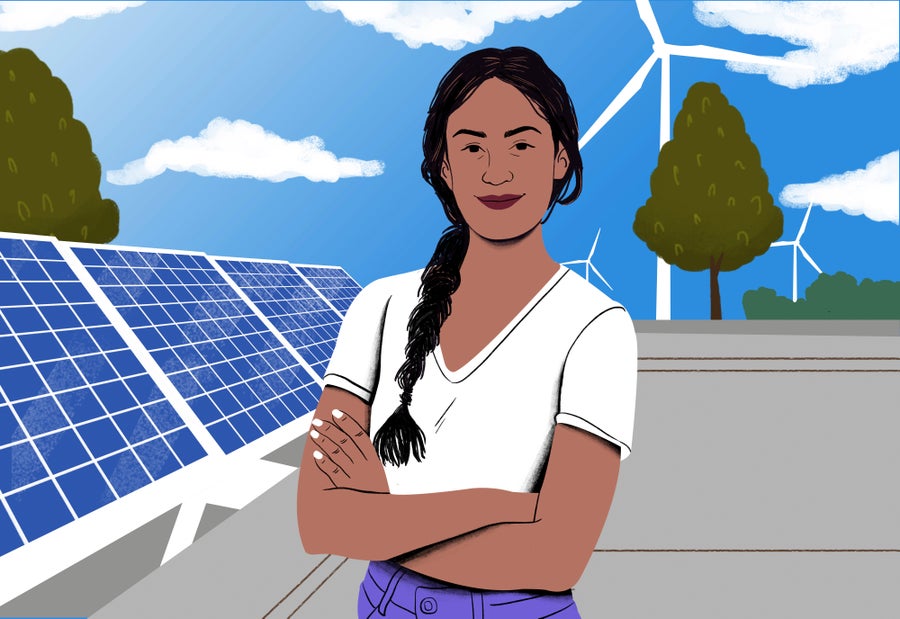 Amr Bo Shanab/Getty Images
.
.
Click the link below for the complete article:
.
__________________________________________
December 26, 2024
Mohenjo
Business, Food For Thought, Human Interest, Political, Science, Technical
amazon, business, Business News, current-events, Future, Hotels, human-rights, medicine, mental-health, research, Science, Science News, technology, Technology News, travel, vacation

Click the link below the picture
.
-
Lithium-ion batteries are the backbone of mobile devices and electric cars, but lithium can be costly and explosive.
-
Proton batteries—which rely on more abundant materials—have been touted as a good replacement, and a new anode material could help overcome some of their shortcomings, such as limited voltage range.
-
This new material can last 3,500 cycles of recharging, maintain high capacity, and operate in colder weather, but scientists still need to improve manufacturing costs and cathode performance before proton batteries can go mainstream.
.Lithium-ion batteries are the top dogs of the battery world. This 50-year-old technology forms the electronic backbone of billions of mobile devices around the world, and is the current frontrunner for powering the world’s electric-vehicle future. But that doesn’t mean there isn’t competition.
When it comes to storing renewable energy, for example, other concepts like iron-air batteries (which use oxidation to store energy) could potentially be better options than the more expensive and explosive lithium. And more options are being explored all the time. For instance, the idea of proton batteries—which use protons split from water which then bond with a carbon electrode—is starting to grow in popularity. This is good news, seeing as proton batteries don’t require rare elements such as lithium. And now, scientists at the University of New South Wales (UNSW) Sydney want to make them mainstream.
“There are many benefits to proton batteries,” Sicheng Wu, a Ph.D candidate at UNSW Sydney, said in a press statement. “But the current electrode materials used for proton batteries, some of which are made from organic materials, and others from metals, are heavy,” and still cost quite a lot.
In addition to this cost, the few carbon electrodes that do exist have a limited voltage range, and both of these shortcomings currently make proton batteries unfit to be true lithium-ion replacements. However, UNSW Sydney scientists have developed a new carbon electrode called tetraamino-benzoquinone (TABQ) to fix the problem. The team first started with a small molecule called Tetrachloro-benzoquinone (TCBQ), which doesn’t have a high enough redox potential to be a cathode or a low enough potential to be an anode.
So, Wu’s team replaced the four chloro- groups in the molecule with amino- groups (hence the name change), and found that the resulting lower potential both made TABQ a great anode candidate and improved the material’s ability to store protons. While still paired with a TCBQ cathode, the all-organic battery could sustain 3,500 cycles of fully recharging, maintain high capacity, and perform well in cold conditions—a helpful side effect, as we’ll need battery farms, especially in the colder, darker parts of the world, and lithium loses efficiency when it gets too cold.
Oh, and another bonus: they don’t explode.
“The electrolyte in a lithium-ion battery is made of lithium salt, a solvent which is flammable and therefore is a big concern,” Chuan Zhao, a professor at UNSW Sydney, said in a press statement. “In our case, we have both electrodes made of organic molecules, and in between we have the water solution, making our prototype battery lightweight, safe, and affordable.”
.

koto_feja//Getty Images
.
Click the link below for the complete article:
.
__________________________________________
December 25, 2024
Mohenjo
Business, Food For Thought, Human Interest, Political, Science, Technical
amazon, business, Business News, current-events, Future, Hotels, human-rights, medicine, mental-health, research, Science, Science News, technology, Technology News, travel, vacation
Joy to the world!

.
__________________________________________
December 25, 2024
Mohenjo
Business, Food For Thought, Human Interest, Political, Science, Technical
amazon, business, Business News, current-events, Future, Hotels, human-rights, medicine, mental-health, research, Science, Science News, technology, Technology News, travel, vacation
From uTube music
Click the link below the picture
.
Yolanda Adams – Gospel like you never heard!
.

Yolanda Adams – In the mist of it all.mp3
.
.
Click the link below for the song (Then hit the play button at the bottom left of the page) :
.
__________________________________________
December 25, 2024
Mohenjo
Business, Food For Thought, Human Interest, Political, Science, Technical
amazon, business, Business News, current-events, Future, Hotels, human-rights, medicine, mental-health, research, Science, Science News, technology, Technology News, travel, vacation
Click the link below the picture
.
When I was 17 I was nearly killed when a fight broke out after a high school football game and someone fired a gun. A stray bullet struck my throat, tearing through my trachea and damaging my carotid artery.
This near-death experience deeply traumatized my entire family. Yet my parents couldn’t focus solely on my survival and healing. In the hospital, they were overwhelmed by a labyrinth of paperwork, billing inquiries, and questions about insurance coverage. Even after I was discharged, the challenges continued. Instead of focusing on my recovery, we spent our energy addressing delayed approvals for follow-up care, denied access to physical therapy, and endless requests to clarify reimbursements.
Our health insurance system made a catastrophic time for me and my parents needlessly worse. Now, as a trauma surgeon, I have seen how pervasive such
struggles are. And with the killing of UnitedHealthcare CEO Brian Thompson, long-simmering and widespread anger about the harm that health insurers have caused seems to be reaching a boiling point. After decades of public outcry over health care policies that prioritize profits over people—policies that deny lifesaving treatments, cause bankruptcy over uncovered medical treatments, and leave entire communities behind—the demand for reform is growing too loud to ignore. For too many, health insurance is a brick wall—a bureaucratic gatekeeper that creates barriers instead of providing solutions.
We cannot justify his killing; so how do we channel our collective grief and frustration into meaningful change? How do we build a health care system that offers healing, not harm—a system that values human life over corporate gain? It will take courage, accountability, and a willingness to reimagine a system where patients are seen as people, not as financial transactions.
The average annual cost of health care in the U.S. is estimated at a staggering $15,074 per person. We purchase health insurance, either on the open market or through our employer, with the expectation that if we need to see a doctor or undergo treatment, our insurance will cover most—if not all—of the expenses. Yet nearly two-thirds of U.S. bankruptcies are tied to obscenely high medical expenses, even among people who have insurance. Around 41 percent of Americans carry medical debt, highlighting the system’s profound failure to provide financial security when it’s needed most.
On top of these ruinous costs—which patients rarely know up front and have little time to understand during medical emergencies—insurers also decide whether they will pay for care, regardless of whether a patient’s doctor says such care is necessary. The delay of care through bureaucratic hurdles like prior authorizations and denied claims are carefully designed to force people and their doctors to fight their way through outdated systems like fax machines and endless phone trees to ask for appeals or reconsideration of denied treatments or examinations. All too often the mental effort and excessive time required to navigate claims, denials, and appeals wears people down, leading them to simply give up on getting the coverage they are owed. This isn’t just inefficiency; it’s a predatory failure of empathy for people during their most vulnerable moments. And it perversely exacerbates anxiety and depression for the sick person and their caregivers alike, compounding the very challenges the system is meant to address.
I’ve spent countless nights fighting to save lives in operating rooms. I’ve witnessed how gun violence intersects with healthcare inequities, leaving families to confront not only grief but insurmountable medical bills. Survivors often endure years of physical and financial pain as they battle not only their injuries but also insurance denials for necessary care. I know firsthand what my patients go through. Every step of my own recovery felt like a negotiation—not just for my health but for access to the care I needed. At times, I questioned whether I was viewed as a patient or a cost to be managed. These frustrations extended to my family, who bore the emotional and logistical burden of dealing with appeals and authorizations while supporting my recovery.
.
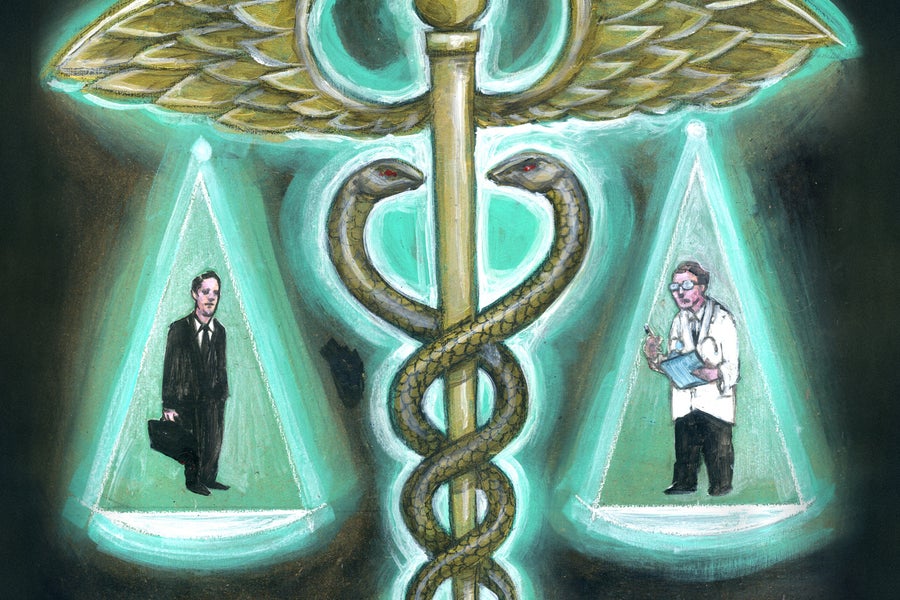 Fanatic Studio/Alamy Stock Photo
.
.
Click the link below for the complete article:
.
__________________________________________
Older Entries
Newer Entries
 James' World 2