Home

‘Bigorexia’ Is On The Rise. Here’s What Parents Should Know.

Leave a comment

Click the link below the picture

.

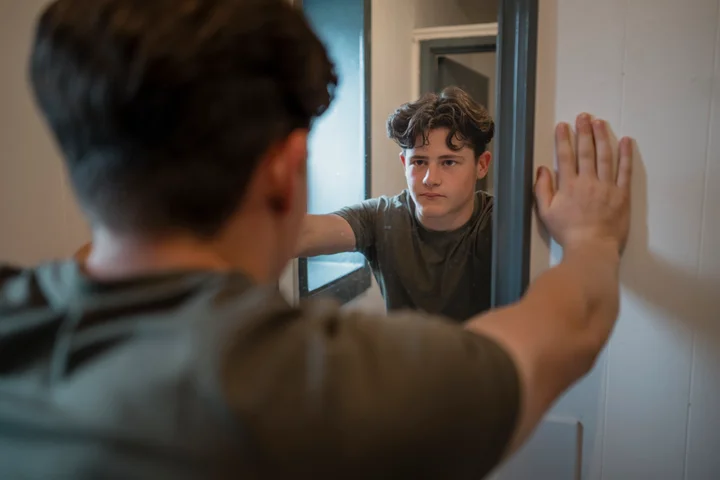
Parents today are generally aware of mental health conditions that relate to body image, including common disorders like anorexia. But experts warn a lesser-known issue is on the rise, particularly among boys: muscle dysmorphia, aka “bigorexia.”

“Bigorexia is a psychological condition and type of body dysmorphic disorder which involves a distorted self-image that focuses specifically on muscle size and physical appearance,” Kara Becker, a certified eating disorder therapist and national director of eating disorder programs at Newport Healthcare, told HuffPost.

With bigorexia, the afflicted person is obsessed with becoming more muscular and preoccupied with the idea that their body isn’t brawny enough ― even if they actually have the physique of a bodybuilder.

“Individuals may have an inaccurate view of their bodies, often believing they are smaller or less muscular,” said Amy Gooding, a clinical psychologist at Eating Recovery Center, Baltimore. “This belief and subsequent preoccupation can lead to unhealthy behaviors, including obsessive exercise, and may lead to changing one’s eating to be as lean as possible.”

Although muscle dysmorphia can affect anyone, it’s more common in males, and research suggests the disorder is on the rise. A 2019 study indicated that 22% of adolescent boys engaged in “muscularity-oriented disordered eating behaviors” in an attempt to bulk up or gain weight and found that supplements, dietary changes and even steroid use were common among young adult males.

“Eating disorders in boys are often under-recognized and under-diagnosed, said Jason Nagata, a pediatrician specializing in eating disorders in boys and men, who co-authored the study.

He noted that a recent Canadian study found that hospitalizations for eating disorders in male patients had risen dramatically since 2002.

“While there’s more awareness around eating disorders, muscle dysmorphia can be overlooked for several reasons ― one reason being that it can lead to behaviors often encouraged in the weight room,” Gooding said. “Lack of awareness of the disorder may lead to the disorder being missed in someone who is struggling, as this is one of the less well-known disorders. Those who struggle may hesitate to reach out for help due to shame, secrecy or the normalization of the behaviors in the community.”

.

https://img.huffingtonpost.com/asset/679d39031600002500636a0d.jpeg?cache=2TDITYOiii&ops=scalefit_720_noupscale&format=webp

SolStock via Getty Images Social media has become a dangerous influence on young people’s body image and self-esteem.

.

.

Click the link below for the complete article:

https://www.huffpost.com/entry/bigorexia-parents-boys_l_6786dc1ee4b0a673540f92d2?utm_source=pocket_discover_parenting

.

__________________________________________

Tuberculosis Outbreak, Highly Pathogenic Bird Flu Strain and Polar Bear Hair

Leave a comment

Click the link below the picture

.

Rachel Feltman: Happy Monday, listeners! For Scientific American’s Science Quickly, I’m Rachel Feltman. Hope your February is off to a great start. Let’s kick off the week by catching up on all the science news you might have missed.

First, a quick note on some presidential moves that might impact health and science. Robert F. Kennedy Jr. faced at least some bipartisan pushback during confirmation hearings for his nomination for secretary of the U.S. Department of Health and Human Services. On Thursday the chair of the Senate Committee on Health, Education, Labor and Pensions, Republican Bill Cassidy, pressed Kennedy to take a definitive pro-vaccine stance. Cassidy, who practiced medicine for decades, claims he has constituents who credit Kennedy—at least in part—for their decision not to vaccinate.

After a lot of back and forth, Cassidy asked Kennedy to agree that if he were to be confirmed, the U.S. Food and Drug Administration would not “deprioritize or delay review and/or approval of new vaccines and that vaccine review standards will not change from historical norms.” Kennedy replied in the affirmative—but it’s important to note that the nominee has a long history of promoting vaccine misinformation.

You can read more about RFK Jr.’s health care track record at ScientificAmerican.com, and we’ll keep you updated on the confirmation hearings as they proceed.

Last week was also pretty chaotic in terms of executive orders, a federal funding freeze, and more. As of last Friday afternoon, there were reports of webpages disappearing from government health agency sites. Stat News reported that data from the Youth Risk Behavior Surveillance System, a large national survey on youth behavioral habits that includes information on gender and sexual identities, had disappeared and was no longer accessible to researchers. The CDC’s Social Vulnerability Index, which highlights groups particularly vulnerable to disasters because of factors like poverty, also appeared to be down on Friday, as did some resources about HIV. That’s not an exhaustive list by any means, and this story was very much still developing as of the time of this recording on the afternoon of January 31. We’re working on a deeper dive on these changes and their implications for this week’s Friday episode, so let us know if you have any specific questions. You can send those over to us at sciencequickly@sciam.com.

Feltman: Now let’s get into some public health news. You may have seen some headlines last week about a record-breaking outbreak of tuberculosis in Kansas. Initial reports dubbing it the nation’s largest TB outbreak since the CDC started keeping track of cases seem to have stemmed from an incorrect statement from the state health department. After the CDC refuted that, a state health official offered clarification, claiming this outbreak has seen the country’s highest case numbers over a one-year period.

The discrepancy has led to some confusion about the nature of this—very real and serious—outbreak. The health department says that as of January 31, more than 60 people in Wyandotte and Johnson counties have been diagnosed with active TB associated with the outbreak, though some have completed treatment since their diagnoses; “active” refers to a type of tuberculosis, not whether someone currently has the illness—more on that shortly. According to a state official, two people have died in the outbreak. Here to unpack the situation for us is Bek Shackelford-Nwanganga, a health equity reporter for the Kansas News Service and KCUR.

Bek Shackelford-Nwanganga: The first cases related to this specific outbreak were, we’ve been told, recorded in January of 2024. There was a pretty large spike over the summer, which is actually when the state came in and started assisting, and that’s when the CDC also came in and started assisting.

Shackelford-Nwanganga: They’re pretty confident that they’ve got the situation under control. They do expect to find more cases. They have to do a lot of contact tracing and a lot of investigations to try and figure out who is in touch with who. But for the most part, they are happy with how numbers are trending downward, and they are monitoring it pretty closely.

Tuberculosis is a bacterial infection. It can settle in other places in your body, but typically it settles in a person’s lungs. You know, when that person coughs or is singing, things like that, it can spread that way. Tuberculosis requires a lot of extended, close contact with a person to catch it.

And then there are two types of tuberculosis. There’s one that’s known as active tuberculosis. This is when a person is displaying symptoms—you know, persistent cough, coughing up blood, pain in the lungs, and then things like night sweats and fevers and weight loss. That means they have an active infection and they can spread it to others. For the other version of tuberculosis, latent tuberculosis—people sometimes call it sleeping tuberculosis—this means that someone has the bacteria in their body, but it’s not causing an active infection. It has to become active for it to spread to others. And if you have a latent case, you won’t be experiencing symptoms.

.

https://static.scientificamerican.com/dam/m/450fc996fe659a91/original/SQ-Monday-EP-Art.png?m=1717792183.71&w=1000Anaissa Ruiz Tejada/Scientific American

.

.

Click the link below for the complete article:

https://www.scientificamerican.com/podcast/episode/h5n9-in-poultry-tuberculosis-outbreak-in-kansas-and-rfk-jr-s-confirmation/

.

__________________________________________

Can a child legally take puberty blockers? What if their parents disagree?

Leave a comment

Click the link below the picture

.

Young people’s access to gender-affirming medical care has been making headlines this week.

Today, federal Health Minister Mark Butler announced a review into health care for trans and gender-diverse children and adolescents. The National Health and Medical Research Council will conduct the review.

Yesterday, The Australian published an open letter to Prime Minister Anthony Albanese calling for a federal inquiry, and a nationwide pause on puberty blockers and hormone therapy for minors.

This followed Queensland Health Minister Tim Nicholls earlier this week announcing an immediate pause on access to puberty blockers and hormone therapies for new patients under 18 in the state’s public health system, pending a review.

In the United States, President Donald Trump signed an executive order this week directing federal agencies to restrict access to gender-affirming care for anyone under 19.

This recent wave of political attention might imply gender-affirming care for young people is risky, controversial, perhaps even new.

But Australian courts have already extensively tested questions about its legitimacy, the conditions under which it can be provided, and the scope and limits of parental powers to authorise it.

What are puberty blockers?

Puberty blockers suppress the release of oestrogen and testosterone, which are primarily responsible for the physical changes associated with puberty. They are generally safe and used in paediatric medicine for various conditions, including precocious (early) puberty, hormone disorders and some hormone-sensitive cancers.

International and domestic standards of care state that puberty blockers are reversible, non-harmful, and can prevent young people from experiencing the distress of undergoing a puberty that does not align with their gender identity. They also give young people time to develop the maturity needed to make informed decisions about more permanent medical interventions further down the line.

Puberty blockers are one type of gender-affirming care. This care includes medical, psychological and social interventions to support transgender, gender-diverse and, in some cases, intersex people.

Young people in Australia need a medical diagnosis of gender dysphoria to receive this care. Gender dysphoria is defined as the psychological distress that can arise when a person’s gender identity does not align with their sex assigned at birth. This diagnosis is only granted after an exhaustive and often onerous medical assessment.

After a diagnosis, treatment may involve hormones such as oestrogen or testosterone and/or puberty-blocking medications.

Hormone therapies involving oestrogen and testosterone are only prescribed in Australia once a young person has been deemed capable of giving informed consent, usually around the age of 16. For puberty blockers, parents can consent at a younger age.

In the United States, President Donald Trump signed an executive order this week directing federal agencies to restrict access to gender-affirming care for anyone under 19.

This recent wave of political attention might imply gender-affirming care for young people is risky, controversial, perhaps even new.

But Australian courts have already extensively tested questions about its legitimacy, the conditions under which it can be provided, and the scope and limits of parental powers to authorise it.

What are puberty blockers?

Puberty blockers suppress the release of oestrogen and testosterone, which are primarily responsible for the physical changes associated with puberty. They are generally safe and used in paediatric medicine for various conditions, including precocious (early) puberty, hormone disorders and some hormone-sensitive cancers.

International and domestic standards of care state that puberty blockers are reversible, non-harmful, and can prevent young people from experiencing the distress of undergoing a puberty that does not align with their gender identity. They also give young people time to develop the maturity needed to make informed decisions about more permanent medical interventions further down the line.

Puberty blockers are one type of gender-affirming care. This care includes medical, psychological and social interventions to support transgender, gender-diverse and, in some cases, intersex people.

Young people in Australia need a medical diagnosis of gender dysphoria to receive this care. Gender dysphoria is defined as the psychological distress that can arise when a person’s gender identity does not align with their sex assigned at birth. This diagnosis is only granted after an exhaustive and often onerous medical assessment.

After a diagnosis, treatment may involve hormones such as oestrogen or testosterone and/or puberty-blocking medications.

Hormone therapies involving oestrogen and testosterone are only prescribed in Australia once a young person has been deemed capable of giving informed consent, usually around the age of 16. For puberty blockers, parents can consent at a younger age.

Can a child legally access puberty blockers?

Gender-affirming care has been the subject of extensive debate in the Family Court of Australia (now the Federal Circuit and Family Court).

Between 2004 and 2017, every minor who wanted to access gender-affirming care had to apply for a judge to approve it. However, medical professionals, human rights organisations and some judges condemned this process.

In research for my forthcoming book, I found the Family Court has heard at least 99 cases about a young person’s gender-affirming care since 2004. Across these cases, the court examined the potential risks of gender-affirming treatment and considered whether parents should have the authority to consent on their child’s behalf.

When determining whether parents can consent to a particular medical procedure for their child, the court must consider whether the treatment is “therapeutic” and whether there is a significant risk of a wrong decision being made.

.

https://images.theconversation.com/files/645943/original/file-20250130-15-og5rwc.jpg?ixlib=rb-4.1.0&rect=1%2C68%2C997%2C498&q=45&auto=format&w=1356&h=668&fit=cropMirasWonderland/Shutterstock

.

.

Click the link below for the complete article:

https://theconversation.com/can-a-child-legally-take-puberty-blockers-what-if-their-parents-disagree-248651?utm_source=pocket_discover_parenting

.

__________________________________________

Trump Tariffs Spark Fears of Clean Energy Supply Chain Chaos

Leave a comment

Click the link below the picture

.

CLIMATEWIRE | Clean energy has gotten steadily cheaper for years thanks to a global network of research facilities and factories.

That’s over now.

President Donald Trump’s decision on Saturday to slap steep tariffs on Canada, Mexico and China signals the birth of a new global trade regime: one focused on nationalist protections, with potentially expensive repercussions for Americans. And although clean energy is a bit player in the president’s trade war, the tariffs could hit the solar, battery, wind, and electric vehicle industries particularly hard.

“It probably slows down the energy transition because it drives up cost, especially the tariffs on China, and creates chaos” in supply chains, said David Victor, a professor of innovation and public policy at the University of California, San Diego. It “probably also introduces a large amount of uncertainty about the credibility of international rules on trade investment, insofar as those seem to matter at all anymore.”

Trump’s order — which is scheduled to go into effect Tuesday — places a 25 percent tariff on goods from Canada and Mexico and a 10 percent tariff on Chinese imports. It imposes a lower levy of 10 percent on Canadian oil imports.

A White House fact sheet posted Saturday night called tariffs “a powerful, proven source of leverage” for stemming the flow of immigration and drugs like fentanyl. The order could significantly increase prices for goods, with organizations like the U.S. Chamber of Commerce and American Petroleum Institute raising concerns over the impact on the U.S. economy.

“Energy markets are highly integrated, and free and fair trade across our borders is critical for delivering affordable, reliable energy to U.S. consumers,” API President and CEO Mike Sommers said in a statement.

The tariffs come as clean energy industries race to curb costs in a bid to displace fossil fuels, the main drivers of climate change.

Trade has been a key reason behind the global decline in clean energy costs in recent decades. The average lifetime cost of utility-scale storage fell 83 percent between 2009 and 2024, even after accounting for a post-Covid bump in solar costs, according to Lazard, an investment bank. Onshore wind costs were down 65 percent over that time.

Tariffs threaten those gains. The American Clean Power Association, a trade group, said it was “concerned that increasing the costs of energy production inputs will put upward pressure on consumer energy costs and diminish our capacity to unleash energy abundance.”

“While the fuel relied upon by wind and solar energy — complemented by battery storage — is free, some parts for these machines that harness these renewable resources are manufactured in Canada and Mexico,” the group added.

Roughly three-quarters of the world’s lithium-ion batteries are made in China, according to the International Energy Agency.

.

https://static.scientificamerican.com/dam/m/58a5f91c53f64491/original/Solar-panels-and-wind-turbines-in-field-at-sunset.jpg?m=1738596688.823&w=1000

The president’s new tariffs on Canada, Mexico, and China could hit the solar, battery, wind, and electric vehicle industries particularly hard. Peter Cade/Getty Images

.

.

Click the link below for the complete article:

https://www.scientificamerican.com/article/trump-tariffs-potential-clean-energy-effects-explained/

.

__________________________________________

Adaptive Screens Are Great, But I Still Want My Son To Learn Braille

Leave a comment

Click the link below the picture

.

I was born with nystagmus, a neurological condition that affects my vision, and until I was in my 30s, I’d only met one person that shared it. At a holiday party with my parents when I was probably 8 or 9, my mom pointed out a boy across the room. “He has nystagmus like you,” she said. “But not exactly. Your eyes bop all over your head and his just move back and forth. He also has albinism, which is why his eyes do that. We don’t know what causes yours.” I regarded the ice blond teen across the room. I don’t think we spoke. What would I have said to him? My vision was a point of shame and something I tried to hide. If kids pointed it out, I usually ended up in tears.

My son inherited my nystagmus. It’s given me the unusual opportunity to watch how people react to his vision as a window into how the world reacts to me. Being able to watch my child closely — the flickering of his eyes as he nursed, the tilt of his head as he searched for me among the waiting moms (yes, they were always all moms) at school pickup, as he struggled to read the routes on the approaching buses just like I did — these were moments of familiarity but also of novelty, as I observed how the world observed him. The social stigma of appearing disabled trained out of me many of the behaviors that mark him as “different,” movement patterns that I have no personal recollection of, but can pick up from the family photos in which I always was tilting my head, my eyes struggling like his do to make contact with the aperture of the lens.

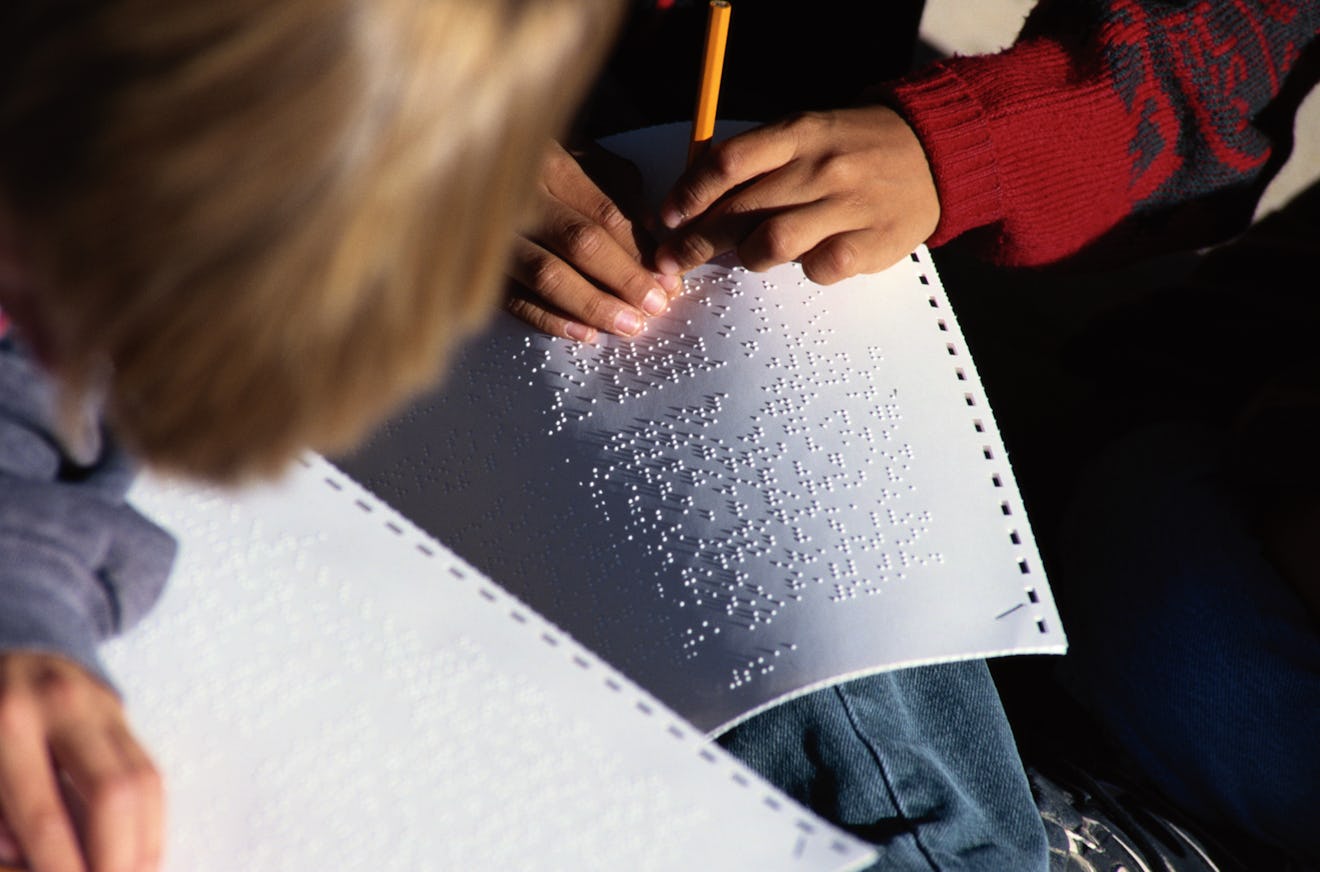
In some ways, it has given me the opportunity to revisit my own childhood experience of disability. And one of my main regrets, if I have any, is that I never learned braille. According to the National Federation of the Blind, only about 10% of blind and low-vision children in the U.S. are learning braille. Much of this is due to our bias toward learning through sight, and so children who have any vision are pushed toward text magnification as a replacement. But like me, every person I’ve asked who is blind or low-vision wishes they’d been taught braille as a child or, if they’d been introduced to it, wish they’d been pushed to gain true fluency. Access to language is power. That’s why I’m determined to make sure my kid learns it.

In middle school, I learned to hate public speaking. I was in every sense an “overachiever,” so I remember preparing fastidiously for my first presentation in English class, where we had to present instructions about how to perform a skill or task for our classmates. I had rainbow pastel index cards where I’d written my presentation talking points.

Then I got my grade. It wasn’t perfect. I’d been marked down because I held the note cards in front of my face and I’d failed to make eye contact with my classmates. It wasn’t so much the grade that bothered me, but the awareness that when I spoke publicly, my disability was super visible. In my attempt to assimilate and be “normal,” I feared that visibility more than anything else. From that point on, any kind of speaking in front of other people made me extremely nervous. I dreaded when other people had to watch me talk and avoided it as much as I could.

There are moments where my throat catches as I watch my kid encountering situations l can remember from my own childhood.

It wasn’t until my mid-30s when I started to work with other disabled people and from their comfort with themselves and speaking publicly, I pushed myself to get through my shame. But even with this new confidence, public speaking is still a struggle for me. The more stressed I get, the more my eyes move and so I stumble over words and easily lose my place.

To compensate, I stopped using written notes for my presentations. Instead of reading from my book at author’s events, I used slides with images to prompt me through the outline of my presentation.

Then I watched as a blind advocate read a proclamation at a public hearing using braille. Her presentation was flawless — the kind of flawlessness I’d been dreaming of since my stumbles in middle school. I wanted that skill. But braille, like any language, is difficult to learn in adulthood. If I worked really hard at it, maybe someday I’d be able to read it fluently enough to crib notes for a talk, but I’d never have the speed of someone who learned it as a child.

In the 1820s, braille was created by and embraced by students at the National Institute for the Blind in Paris. But soon their sighted educators tried to stop its adoption, at one point burning all the braille books. These educators preferred a language that they too had access to, like raised letter shapes embossed on the page. Braille was harder for sighted educators to read and it threatened their control and their careers.

.

https://imgix.bustle.com/uploads/getty/2025/1/28/41ff51e0/getty-ed000944.jpg?w=1320&h=872&fit=crop&crop=faces

Scott T. Baxter/Photodisc/Getty Images

.

.

Click the link below for the complete article:

https://www.romper.com/parenting/braille-blindness-vision-screens?utm_source=pocket_discover_parenting

.

__________________________________________

Bonobos Can Tell When a Human Doesn’t Know Something

1 Comment

Click the link below the picture

.

A few captive bonobos recently faced a seemingly simple task: locate a tasty snack hidden under one of three cups. Because bonobos are brainiacs, pinpointing the cup with the treat should have been no sweat.

But there was a wrinkle: the apes were relying on a human, not another member of their own species, to flip over the correct cup. What’s worse, this person sometimes did not see where the food was placed. So the bonobos took it upon themselves to point out the correct cup to their human partner.

“The bonobos knew when their partner was ignorant, and they communicated proactively to make sure that their ignorant partner still made the correct choice,” says Christopher Krupenye, an evolutionary cognitive scientist at Johns Hopkins University, who helped run the experiment.

Krupenye and his graduate student Luke Townrow described the bonobos’ behavior in a paper published today in the journal Proceedings of the National Academy of Sciences USA. Their findings provide compelling evidence that the apes can infer someone’s ignorance and also act to help clear up the confusion.

The ability to infer the mental states of others is often referred to as theory of mind. Humans utilize theory of mind to successfully communicate and coordinate with one another. For example, intuiting when someone lacks certain information helps us determine when and how to share knowledge.

Researchers have proposed that humans’ closest evolutionary cousins, chimpanzees and bonobos, may also possess theory of mind. But few have examined this idea in controlled experimental environments, according to the authors.

Krupenye and Townrow worked with three male bonobos living at Ape Cognition and Conservation Initiative, a research center in Des Moines, Iowa. During the experiment, one of the male bonobos would sit across from Townrow as a treat, like a grape or a peanut, was placed under one of three cups on the table between them. If Townrow flipped over the correct cup, the bonobo would receive the reward.

In some trials, Townrow could see the treat being placed under the cup. In others, his view was blocked by cardboard. Once the treat was stashed, he would wait 10 seconds before flipping over a cup.

The bonobos appeared to know when Townrow had his eye on the treat. In the trials where he had observed the placement of the treat, the apes patiently waited for him to flip over the correct cup. In the trials where Townrow’s view was blocked, however, the bonobos pointed toward the correct cup in an effort to fill him in on what he had missed. “They got the task immediately and knew where to point,” Townrow says.

.

https://static.scientificamerican.com/dam/m/5143ec34ba2d6e3b/original/female-bonobo.jpg?m=1738610578.458&w=1000

Female bonobo. Anup Shah/Getty Images

.

.

Click the link below for the complete article:

https://www.scientificamerican.com/article/bonobos-can-tell-when-a-human-doesnt-know-something/

.

__________________________________________

Feeling Burnt Out? Here’s Why “Slow Parenting” Might Be Right for Your Family

Leave a comment

Click the link below the picture

.

Between ever-evolving technology, social media influence, and a society that thrives on competition and instant gratification, parents these days are stressed. That’s where slow parenting comes in. Slow parenting emphasizes the importance of stepping back from the fast-paced world of modern parenting and instead focusing on spending meaningful time with your kids. There’s no need to pack their days with activities, sports, and social events to help them thrive—sometimes, all you need are the little moments when you can relax, connect, and appreciate each other’s company.

A slow parenting approach is not about doing less or being hands-off—it’s about being more present and mindful while remembering that childhood is not a competition or a race, but it is fleeting. Those moments you share with your kids should be treated as precious. Here, we look at what slow parenting entails, the pros and cons, and how to be a slow parent in an increasingly fast-paced society.

What is Slow Parenting?

Slow parenting is a parenting style that encourages parents to take a break from the constant need to plan outings and extracurricular activities. The idea is that without a packed schedule, kids have more time to play, explore, and develop at their own pace. And for parents, its an opportunity to take a break from the high-speed, competitive world of modern parenting, which demands more and more of parents’ time and energy. 

At its core, the slow parenting style emphasizes quality over quantity—how your time is spent is more important than the number of activities you participate in.

“You can just take a step back, follow [your child’s] lead, and [let them] show you what they’re really interested in and what they’re curious about,” says Liz Conradt, Ph.D., a clinical and developmental psychologist and Associate Professor of Pediatrics at Duke University. 

Slow Parenting Characteristics

These are some of the most common traits of slow parents: 

  • They are patient regarding their children’s interests, avoiding the urge to rush them into activities or sports. “A lot of times kids will say, ‘I want to do this,’ or ‘I don’t want to do that,’ [so] then you let them develop their own passions and interests,” says Dr. Conradt.

  • They appreciate quality time with their kids—even if that means spending more time at home. 

  • They are flexible and open to changing plans or adjusting schedules based on their children’s needs, rather than sticking to a rigid routine—perhaps even sharing some characteristics with Type B parents.

  • They believe childhood is not a competition, focusing instead on their children’s well-being and personal growth rather than comparing them to their peers.

  • They prioritize strengthening the parent-child bond over constantly trying to schedule activities to keep them busy.

  • They don’t feel the need to keep their kids busy all the time—relaxation and downtime are a priority.

.

https://www.parents.com/thmb/30AY8ZTG9JusZjAFoje3xamhQis=/750x0/filters:no_upscale():max_bytes(150000):strip_icc()/slow-parenting-GettyImages-1506935230-eab04c69e3634093b55b84f48f478ea7.jpgParents/Getty Images

.

.

Click the link below for the complete article:

https://www.parents.com/slow-parenting-8776471?utm_source=pocket_discover_parenting

.

__________________________________________

AI’s Energy Demands Threaten a Nuclear Waste Nightmare

2 Comments

Click the link below the picture

.

Long in decline, the U.S. nuclear industry is hoping for resurrection at two sites of its greatest failures: Three Mile Island in Pennsylvania and the Hanford Site in Washington state. Nuclear power, the industry claims, will help satisfy the surging power demands from data centers and the growing AI economy. But such a wrong turn ignores the long-unresolved problems of radioactive nuclear wastes that AI cannot wish away.

In September Constellation Energy announced plans to restart a shuttered reactor at Three Mile Island, prodded by Microsoft, which will need many gigawatts of power to perform extensive AI calculations in its expanding fleet of data centers. Amazon followed suit and announced in November that it will invest $334 million to develop small modular nuclear reactors (SMRs) at Hanford, site of the world’s first plutonium-production facility.

Google and Meta are also hoping to bring nuclear power back. In October 2024 Google announced it eventually plans to purchase 500 megawatts of electricity from Kairos Power, which is developing a novel SMR in Oak Ridge,

Tenn., on the site of the national lab that long refined uranium for the nuclear industry. And Facebook parent Meta is seeking bids for nuclear power plants for its data centers.

These tech giants recognize that the next generation of microprocessors to be used for AI calculations at data centers will require oodles of electricity to power and cool them. A single Nvidia Blackwell chip, for example, can draw up to two kilowatts, more than what is needed for a typical house. Cram thousands of them in servers inside a data center, and they will need as much power as a small city.

So-called hyperscale data centers require over 100 megawatts (100 MW)—a sizeable fraction of the output of a major power plant. And that power should be cheap, steady, and reliable.

An authoritative December 2024 report from the U.S. Department of Energy, written by energy experts at the Lawrence Berkeley National Laboratory, is especially illuminating. The growth in U.S. data-center energy usage over the next five years, they state, would correspond “to a total power demand for data centers between 74 and 132 [gigawatts].” That would represent some 7 to 12 percent of the U.S. electricity consumption forecast for 2028.

Where on Earth is all this power going to come from? Given the challenges electric utilities face in supplying electricity to meet other growing needs, including electric vehicles, it’s small wonder that big tech has turned back to the atomic nucleus. But the power demands outlined in the DOE report would require building or resurrecting the equivalent of at least 40 Three Mile Island reactors over the next five years. That’s impossible.

.

https://static.scientificamerican.com/dam/m/329986eef4cb26e3/original/three_mile_island_cooling_towers_at_sunset.jpg?m=1738282800.501&w=1000

Three Mile Island Nuclear Generating Station in Londonderry Township, Dauphin County, Pennsylvania was shutdown following the partial meltdown of its Unit 2 reactor (TMI-2) on March 28, 1979. Andre Jenny/Alamy Stock Photo

.

.

Click the link below for the complete article:

https://www.scientificamerican.com/article/ais-energy-demands-threaten-a-nuclear-waste-nightmare/

.

__________________________________________

7 Phrases That Teach Kids How To Be Assertive

Leave a comment

Click the link below the picture

.

Teaching kids how to share, take turns, and be considerate of others is often top of mind for parents and caregivers. But kids also need to learn to how be assertive and stand up for themselves — even if that’s a skill parents don’t talk about as often.

“Assertiveness is all about teaching kids to express their needs and boundaries confidently without being aggressive,” said Ann-Louise Lockhart, pediatric psychologist, parent coach, and owner of A New Day Pediatric Psychology. “[This] equips kids with skills to make it through challenges like bullying, peer pressure and interpersonal conflict.”

We talked to experts about phrases parents can teach kids so they’re able to verbalize their feelings, develop confidence and set boundaries — all while still being respectful.

Why is it important to raise kids who are assertive?

It’s important “to teach our kids to be assertive so they can advocate for both themselves and others,” said Amy McCready, founder of Positive Parenting Solutions and author of “The ‘Me, Me, Me’ Epidemic — A Step-by-Step Guide to Raising Capable, Grateful Kids in an Over-Entitled World.” “Kids need to learn this skill in childhood so they can carry it with them through their teenage years and into adulthood.”

Knowing how to be assertive also helps kids be open with their emotions and avoid bottling them up, she explained.

“Assertive communication [also] creates healthier relationships in both personal and professional life and … more successes in all areas of life,” added Lisa Schab, licensed clinical social worker and author of “Cool, Calm, and Confident: A Workbook to Help Kids Learn Assertiveness Skills.”

Teach kids simple phrases that are direct, but not aggressive.

“I don’t like that. Please stop.”

Whether your kid is being pushed on the playground or teased by a friend, this simple and clear phrase sets an instant boundary.

“By saying, ‘I don’t like that,’ your child acknowledges their emotions, which helps them own their perspective without blaming or shaming,” Lockhart said. “The follow-up, ‘Please stop,’ is a firm yet polite demand for a specific behavior to end.”

.

https://img.huffingtonpost.com/asset/6786c94b1500002600b599d5.jpeg?ops=scalefit_720_noupscale&format=webpmgorthand via Getty Images

.

.

Click the link below for the complete article:

https://www.huffpost.com/entry/phrases-that-teach-kids-how-to-be-assertive_l_6786c317e4b0a673540f8292?utm_source=pocket_discover_parenting

.

__________________________________________

Watch a Frog Walk on Water with High-Speed Belly Flops

Leave a comment

Click the link below the picture

.

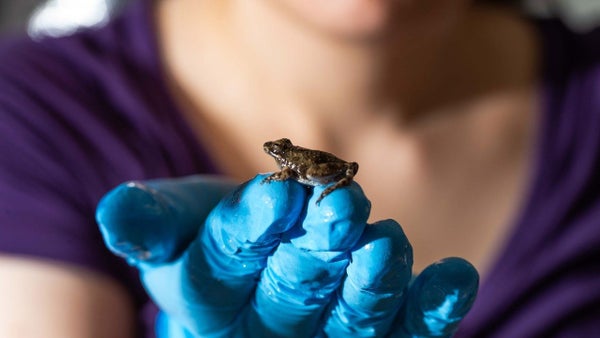
If you flick a flat stone toward a pond at just the right angle, it skips across in a series of smooth jumps. Inch-long cricket frogs also seem to skitter over the surface of water with physics-defying grace. But when Talia Weiss, then a bioengineering graduate student at Virginia Tech, filmed the frogs with a high-speed camera, she saw a very different picture.

“The motion is so fast that if you look at it with the naked eye, you really can’t tell the difference,” Weiss says.

For a new study in the Journal of Experimental Biology, Weiss and her co-authors recorded skittering cricket frogs from above and below the surface at 500 frames per second and then played the videos back much more slowly. The researchers found that instead of hopping with just their feet breaking the surface, as older studies had described anecdotally, the frogs were actually doing a series of belly flops—sinking for a fraction of a second and then kicking themselves upward with each jump.

Rather than actually skittering across water like basilisk lizards do, the frogs were “porpoising”—leaping from the water as they swim. Weiss says their legs may be too slow for true surface hopping.

“To jump on the water surface, you have to have your legs retracted and ready to push down again by the time you’re approaching the water in every jump,” she explains. “And these [frogs] don’t prepare for their landing at all; they sort of just belly flop. They don’t retract their legs fast enough to immediately jump again” from the surface itself.

“Fast animal movements can be really deceiving,” and the new camerawork reveals what the frogs are actually doing, says Jasmine Nirody, an organismal biologist at the University of Chicago, who was not involved in the study. By carefully analyzing such motions, “we can think about how we might be able to use [the frog’s] strategy in various bioinspired robots,” she adds. “Now we know what to look for.”

.

A small frog sits on fingertips of a blue gloved hand

Graduate researcher Talia Weiss observes a cricket frog, whose unusual locomotion lets it appear to skip across the water’s surface.  nJake Socha

.

.

Click the link below for the complete article:

https://www.scientificamerican.com/article/watch-a-frog-walk-on-water-with-high-speed-belly-flops/

.

__________________________________________

Older Entries Newer Entries

Heart of Loia `'.,°~

so looking to the sky ¡ will sing and from my heart to YOU ¡ bring...

Michael Ciullo

CEO and Founder of Nsight Health

MRS. T’S CORNER

https://www.tangietwoods

Nelson MCBS

Catholic News, Prayers, HD Images, Rosary, Music, Videos, Holy Mass, Homily, Saints, Lyrics, Novenas, Retreats, Talks, Devotionals and Many More

Global geopolitics

Decoding Power. Defying Narratives.

Talk Photo

A creative collaboration introducing the art of nature and nature's art.

Movie Burner Entertainment

The Home Of Entertainment News, Reviews and Reactions

Le Notti di Agarthi

Hollow Earth Society

C r i s t i a n a' s Fine Arts ⛄️

•Whenever you are confronted with an opponent, conquer him with love.(Gandhi)

TradingClubsMan

Algotrader at TRADING-CLUBS.COM

Comedy FESTIVAL

Film and Writing Festival for Comedy. Showcasing best of comedy short films at the FEEDBACK Film Festival. Plus, showcasing best of comedy novels, short stories, poems, screenplays (TV, short, feature) at the festival performed by professional actors.

Bonnywood Manor

Peace. Tranquility. Insanity.

Warum ich Rad fahre

Take a ride on the wild side

Madame-Radio

Découvre des musiques prometteuses (principalement) dans la sphère musicale française.

Ir de Compras Online

No tiene que Ser una Pesadilla.

Kana's Chronicles

Life in Kana-text (er... CONtext)

Cross-Border Currents

Tracking money, power, and meaning across borders.

Jam Writes

Where feelings meet metaphors and make questionable choices.

emotionalpeace

Finding hope and peace through writing, art, photography, and faith in Jesus.

WearingTwoGowns.COM

The Community for Wounded Healers: Former Medical Students, Disabled Nurses, and Faith-Fueled Pivots

...

love each other like you're the lyric to their music

Luca nel laboratorio di Dexter

Comprendere il mondo per cambiarlo.

Tales from a Mid-Lifer

Mid-Life Ponderings

Creative

Travel,Tourism, Life style "Now in hundreds of languages for you."

freedomdailywriting

I speak the honest truth. I share my honest opinions. I share my thoughts. A platform to grow and get surprised.

The Green Stars Project

User-generated ratings for ethical consumerism

Cherryl's Blog

Travel and Lifestyle Blog

Sogni e poesie di una donna qualunque

Questo è un piccolo angolo di poesie, canzoni, immagini, video che raccontano le nostre emozioni

My Awesome Blog

“Log your journey to success.” “Where goals turn into progress.”

pierobarbato.com

scrivo per dare forma ai silenzi e anima alle storie che il mondo dimentica.

Thinkbigwithbukonla

“Dream deeper. Believe bolder. Live transformed.”

Vichar Darshanam

Vichar, Motivation, Kadwi Baat ( विचार दर्शनम्)

Komfort bad heizung

Traum zur Realität

Chic Bites and Flights

Savor. Style. See the world.

ومضات في تطوير الذات

معا نحو النجاح

Broker True Ratings

Best Forex Broker Ratings & Reviews

Blog by ThE NoThInG DrOnEs

art, writing and music by James McFarlane and other musicians

fauxcroft

living life in conscious reality

Srikanth’s poetry

Freelance poetry writing

JupiterPlanet

Peace 🕊️ | Spiritual 🌠 | 📚 Non-fiction | Motivation🔥 | Self-Love💕

Sehnsuchtsbummler

Reiseberichte & Naturfotografie